
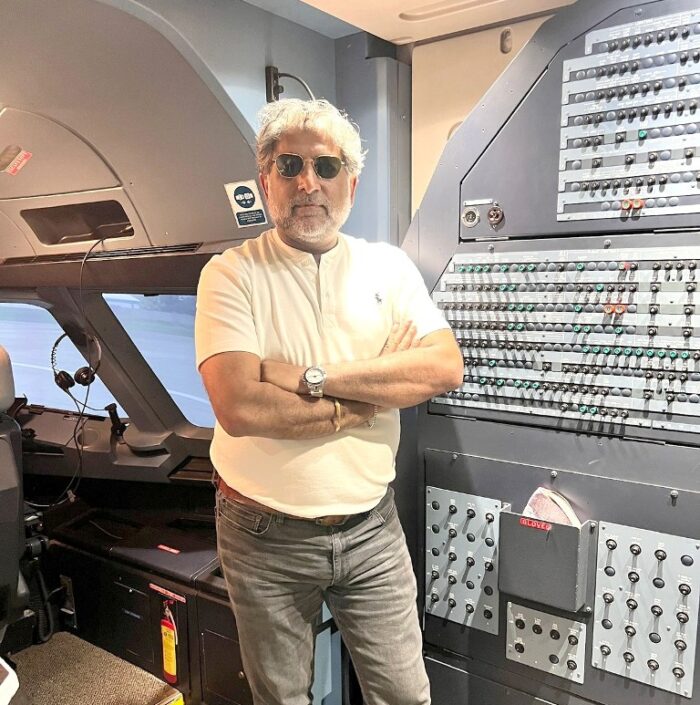
His journey from an AME to a business leader is a testament to what’s possible when passion, perseverance, and purpose align. He is hopeful that it serves as an inspirational engagement for young aspirants in the aviation ecosystem — especially those in technical roles — to dream beyond boundaries and rise to leadership.In this special series, we bring this exclusive feature derived from the candid conversation with seasoned Aviation professional, Ashwani Acharya, who in Indian aviation is well known as an aviator, entrepreneur, engineer, executive management expert and a mentor. He explains his real life experiences and thoughts on the present status and what need to be done to make Indian Aviation sector more successful. He possess loads of leadership knowledge spanned over two decades of active presence in aviation industry. Vishal Kashyap, Managing Editor, Aviation World curates this exclusive feature highlighting the thoughts of Ashwani Acharya, who is a role model for many aviation enthusiasts.What keeps me going is a simple belief, “Aviation is not just a profession, it’s a passion and a purpose.” This is what Ashwani Acharya thinks about his professional journey. For him, the journey began with a passion for machines and flying — a fascination that turned into a profession when he pursued Aeronautical Engineering and later became an Aircraft Maintenance Engineer.
He recalls, “ Back then, aviation was seen as niche and inaccessible. Today, with increased connectivity, the growth of LCCs, government push through initiatives like UDAN, and the emergence of robust training ecosystems, aviation is more aspirational and within reach.” “There’s significantly more awareness, structured career paths, and international exposure available to young aspirants,” he adds on.
So, how did the transition came? Ashwani Acharya wear’s many hats and every journey has a notable script which one follows. He narrates, “The transition has been both organic and intentional. I began my career as an engineer with a deep focus on technical excellence, but I always had a curiosity about the larger picture — operations, strategy, customer experience, and leadership. Over the years, I consciously embraced roles that pushed me beyond my comfort zone. The key lies in being a lifelong learner, building strong teams, and maintaining a razor-sharp focus on value creation. Leadership, to me, is about empowering others, taking bold yet informed decisions, and being resilient in the face of uncertainty.”
THE STEP TOWARDS AVIATION
After years of leading high-impact aviation ventures and scaling businesses, Ashwani Acharya took a conscious step back from the corporate grind to reconnect with his deeper passions. He immersed himself in theatre and acting, rekindled his love for travel, and allowed space to pause, reflect, and renew. This intentional break was not a retreat, but a reset—a time to recharge creatively and emotionally.During this period, Ashwani also gravitated back to his first love: fixing planes. His hands-on engagement with aircraft maintenance and engineering reminded him of the roots of his aviation journey. With a fresh perspective and entrepreneurial spirit, he emerged reinvigorated, ready to chart new paths—combining creative expression, technical mastery, and business leadership.
THE PROFESSIONAL JOURNEY
In his own way of narration, Ashwani Acharya says, “Adaptability stems from self-awareness and clarity of purpose. When making a career move, it’s crucial to know why you’re doing it — is it for growth, challenge, learning or impact? Once that’s clear, stay humble, listen more than you speak in the beginning, and quickly understand the culture and dynamics of the new environment. Being open to unlearning and relearning is vital. Every experience adds a new dimension to your leadership toolkit.”
INDIAN AVIATION AND WAY AHEAD
While the growth is exciting, one must not overlook the gaps — particularly in infrastructure readiness, skilled manpower, and regulatory pace. There’s also a risk of overcapacity if the ecosystem doesn’t grow proportionally. One needs to address pilot and engineer shortages, ensure financial sustainability for smaller players, and build world-class MRO capabilities indigenously.
Policy consistency and industry-academia collaboration will be the pillars that determine whether this growth is sustainable. It’s been often seen that there has been mass transition in manpower particular in the Aviation sector as being the highest skill set sector, sometimes it becomes very tough to adapt everyone who need s a job.
The survival is the key and to make it more successful, one need to have equal say in the process of development. Well, ironically sometime exploitation of manpower specially in the skilled category is being noticed which is alarming. Ashwani Acharya says, “That perception, though historically grounded, is changing. Indian AMEs are globally respected for their skill, dedication, and adaptability. However, the remuneration has not always matched the responsibility they shoulder. With the growing demand, evolving regulations, and India positioning itself as an MRO and aviation training hub, I see a definitive shift in valuation of skills. The next decade will belong to those who can upskill, think globally, and deliver with precision. It’s time we move from being a low-cost to a high-value aviation workforce.”
Looking ahead, as he mentions,” I am deeply excited about the tremendous potential of the aviation industry. We are at the cusp of transformational shifts, and I am keen to contribute to the next wave — including revolutionary initiatives like IndiVTOL, electric pod taxis, and the integration of advanced drones into urban mobility. Whether on the ground or in the air, the future of aviation belongs to bold thinkers and relentless doers.”
( This interview is published in the July-August 2025 edition of Aviation World)