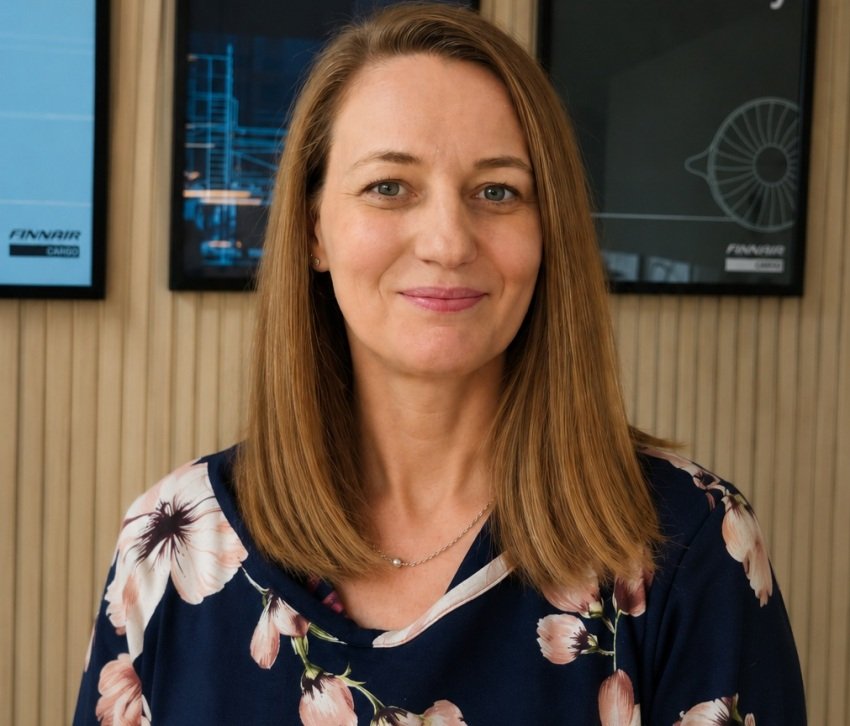


Shveta Gupta, Director, Divyanshi Aviation Services: Transforming Aerospace Supply Chain In India
As the Indian aviation sector ascends to new heights, Divyanshi Aviation Services Pvt. Ltd. (DASPL) has carved out a vital niche as a specialised aerospace supply chain and distribution leader with a robust global footprint. In this edition of Aviation World, we sit down with Shveta Gupta, Director of Divyanshi Aviation Services Pvt. Ltd.(DASPL) who shares key insights into the company’s expanding suite of services and reflects on how her leadership has solidified DASPL as a trusted, reliable partner in the MRO landscape. Excerpts… AW: What inspired you to step into the aviation sector, and how do you see the initial journey as a woman leader establishing Divyanshi Aviation? A: My journey into aviation was far from conventional. After completing my B.Tech in Textile Chemistry, I began my career with SGS India and later pursued an MBA, followed by a role with SBI Life Insurance. These experiences gave me a strong foundation in quality systems, business operations, customer engagement, and leadership. As I explored entrepreneurial opportunities, my father-in-law encouraged me to look at the aerospace consumables sector. It was an industry I had never considered before, but its technical nature immediately intrigued me. Having always enjoyed chemistry, I was fascinated by the specialized materials and technologies that contribute to aviation safety and reliability. What began as an opportunity to learn soon became a passion. The more I understood the industry’s emphasis on precision, quality, and accountability, the more convinced I became that this was where I wanted to build my entrepreneurial journey. The initial years were a continuous learning experience. Aviation is a highly specialized industry where credibility is earned through knowledge, consistency, and results. Looking back, I believe leadership in aviation is defined by competence, vision, and perseverance, not by gender. AW: For AW readers, could you highlight the core services that your company provides? And how does it differentiate you from competitors? A: Divyanshi Aviation is a specialized aerospace supply chain and distribution company serving the aviation, defense, MRO, and electronics sectors. We provide globally compliant aerospace consumables, specialty chemicals, adhesives, sealants, coatings, composites, fasteners, cleaning solutions, and electronic assembly materials that support critical operations across these industries. Over the years, we havebuiltstrongpartnershipswithleadingglobalmanufacturersincluding3M, Henkel, PPG, ZOK, HB Fuller, Sandstrom, Arrow Solutions, Star Hentzen Coatings, AHG, and UMPCO, enabling us to bring world-class technologies closer to Indian customers. What defines our approach is a strong focus on quality, responsiveness, and long-term value creation. Rather than viewing ourselves simply as distributors, we see ourselves as trusted partners helping customers access critical materials efficiently and reliably. As customer requirements continue to evolve, we have also expanded our capabilities through Divyanshi Global Logistics, strengthening our ability to provide more integrated supply chain solutions. Ultimately, our focus remains simple: helping customers access global technologies with confidence while contributing to the growth of India’s aerospace and defense ecosystem. AW: Divyanshi Aviation has evolved into a major authorised distributor for global aerospace giants. What were the operational hurdles in scaling up a specialised consumable supply chain in India? A: Building a specialized aerospace consumable supply chain in India has required balancing global complexities with local customer expectations. Aerospace is an industry where there is little room for error. Product availability, traceability, quality, and compliance are all equally important. One of the biggest challenges was creating an organization capable of scaling while maintaining the same level of precision and reliability that customers expect. We realized early on that sustainable growth requires much more than inventory. It requires strong systems, disciplined processes, clear accountability, and a culture that consistently prioritizes quality and execution. As the business expanded, we continued investing in infrastructure, compliance, technology, and operational capabilities to support growing customer requirements while maintaining aerospace-grade standards. Looking back, the biggest lesson has been that success in this industry is built on trust. Products can be sourced from many places, but trust is earned over years of consistently delivering on commitments. That trust has been the foundation of Divyanshi Aviation’s growth journey. AW:With the expansion into hubs like Hyderabad and Bengaluru, how do these localized foot prints support the regional MROs and defense facilities? A: Hyderabad and Bengaluru have emerged as key aerospace, defense, and advanced manufacturing hubs in India. As these ecosystems continue to grow, we felt it was important to be closer to our customers and support them through more localized supply chain solutions. Our presence in these regions enables faster response times, improved material availability, and closer collaboration with MROs, defense organisations, and manufacturing partners. To support this, we have established AS9120-certified operations in Hyderabad and Bengaluru, along with bonded warehousing capabilities in Bengaluru, ensuring high standards of quality, compliance, and traceability. For us, this expansion is not just about geographic growth. It is about building a stronger and more responsive supply chain network that supports the evolving needs of India’s aerospace ecosystem and brings critical products and services closer to our customers. AW:The aviation sector has faced unprecedented shifts over recent years. What strategies are being adapted by you to maintain growth and stability? A: The aviation industry has faced significant disruptions in recent years, from global supply chain challenges to geopolitical uncertainties. These experiences have reinforced the importance of agility, resilience, and long-term thinking. Our approach has always been to stay close to our customers, understand their evolving requirements, and adapt quickly to changing market conditions. We focus on strengthening strategic partnerships, embracing new opportunities, and continuously improving the way we serve our customers. At the same time, we continue to invest in our people, processes, and capabilities to ensure that we remain responsive and future-ready. For me, stability is not about avoiding change; it is about building an organization that can adapt, learn, and continue creating value regardless of external circumstances. In a rapidly evolving industry, resilience comes from staying agile, staying relevant, and staying committed to customers. AW:Aviation supply network disruptions are a challenge. How do you design your strategy to maintain uninterrupted service delivery to your partners? A: In aviation, continuity