RCS

RCS

DGCA India awards Type Certification to Embraer’s E-Jets family

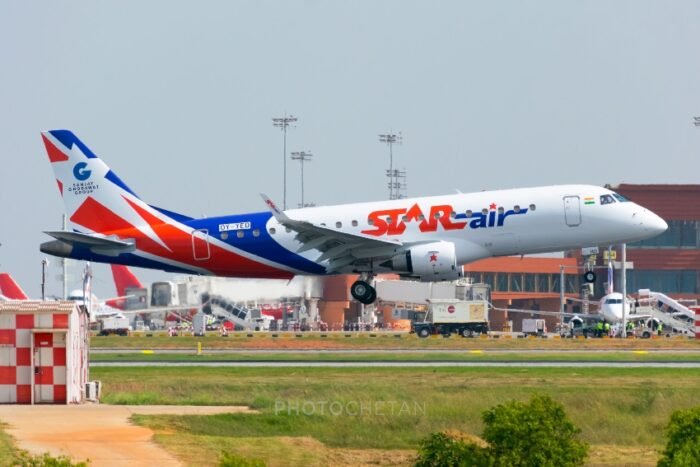
New Delhi, India, July 7, 2026: Embraer’s family of E-Jets has received Type Certification from India’s Directorate General of Civil Aviation (DGCA). The certification covers multiple aircraft from the E-Jets family, including the E190, E195, and the E195-E2, the world’s quietest and most fuel-efficient small narrowbody aircraft. “We welcome the type certification of Embraer’s aircraft and thank the DGCA for its thorough assessment,” said Raul Villaron, Senior Vice President Sales & Marketing, Head of Region Asia Pacific, Commercial Aviation. “With remarkable performance, economics, and passenger comfort, Embraer’s E-Jets are set to reshape regional aviation in India and support the Indian government’s UDAN vision.” The E-Jets is one of the most successful aircraft program in commercial aviation with more than 1,900 deliveries and continues to operate worldwide with more than 80 airlines across more than 50 countries. The E195-E2 has low operating cost and is the most fuel-efficient small narrowbody aircraft in operation today. It features a modern cabin with 2×2 seating with no middle seats, large overhead bins and individual passenger service units. The E175 is already type certified for India and is operated by Star Air. In February 2026, Adani Defence & Aerospace and Embraer announced an enhanced Memorandum of Understanding (MoU) aimed at establishing a Final Assembly Line (FAL) for the E175 regional jet, aligned to India’s Regional Transport Aircraft (RTA) program. The next generation E195-E2 was triple certified by three key civil aviation authorities – the FAA (USA), EASA (Europe) and ANAC (Brazil) in 2018 and 2019 respectively. The E195-E2 is the most fuel-efficient single-aisle aircraft in operation today. “The E-Jets offers enhanced range of up to 7-hours and performance capabilities to operate from challenging airports with short runways or low pavement strength,” said Adity Shekhar, Regional Vice President, Sales, Embraer. “This certification enables us to support airlines expanding their networks and opening unique routes by tapping into ‘blue ocean’ opportunities that are too small for a large narrowbody or too far for a turboprop.” Embraer has a strong and growing presence in India, with nearly 50 aircraft across 11 different Embraer models currently in operation spanning commercial aviation, defense, and business aviation. Star Air operates a fleet of 11 Embraer E175 and ERJ145 aircraft.

RCS

Prime Minister launches the Next Phase of UDAN – Viksit UDAN

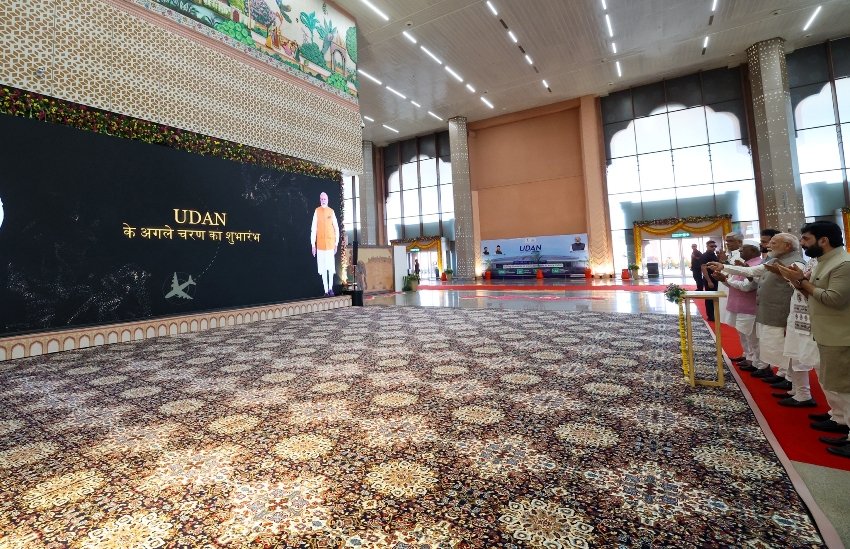
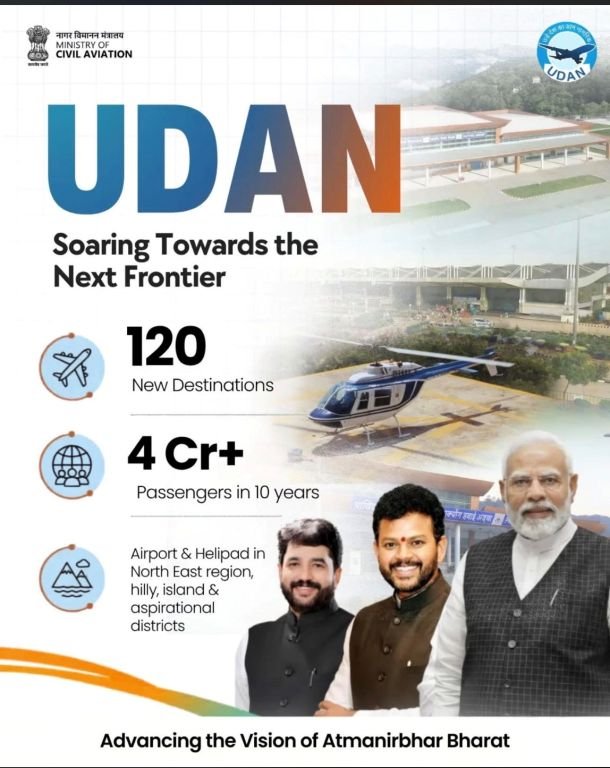
Jodhpur, 4th July 2026: In a major boost to India’s civil aviation sector, Prime Minister  Narendra Modi today launched the next phase of UDAN (Ude Desh ka Aam Nagrik) and inaugurated the New Terminal Building (NTB) at Jodhpur Airport, reaffirming the Government’s commitment to expanding regional air connectivity and developing world-class aviation infrastructure. The event was held in the august presence of Haribhau Kisanrao Bagde, Governor of Rajasthan; Bhajan Lal Sharma, Chief Minister of Rajasthan; Rammohan Naidu Kinjarapu, Union Minister of Civil Aviation; Gajendra Singh Shekhawat, Union Minister of Culture and Tourism; Murlidhar Mohol, Union Minister of State for Civil Aviation and other dignitaries. Launched in October 2016, the UDAN Scheme has transformed regional connectivity by operationalising 669 routes and connecting 95 airports, heliports and water aerodromes, benefitting over 1.66 crore passengers. Building on this success, the Union Cabinet, chaired by the Hon’ble Prime Minister, approved the Modified UDAN Scheme on 25 March 2026 with an outlay of approximately ₹29,000 crore over the next ten years to accelerate aviation-led development and advance the vision of Viksit Bharat 2047. The Modified UDAN Scheme focuses on expanding regional aviation infrastructure through the development of 100 aerodromes from existing unserved airstrips with an investment of ₹12,159 crore. It also provides ₹2,577 crore towards Operations and Maintenance support for regional airports, development of 200 modern helipads with an investment of ₹3,661 crore, and continued Viability Gap Funding of ₹10,043 crore to sustain regional airline operations. Further strengthening the vision of Atmanirbhar Bharat, the scheme promotes the induction of indigenous aircraft and helicopters, including HAL Dhruv and Dornier platforms, for operations in underserved and remote regions. Union Minister of Civil Aviation Ram Mohan Naidu Kinjarapu, speaking on the occasion, said, “The launch of the Modified UDAN Scheme with a historic outlay of nearly ₹29,000 crore under the visionary leadership of Prime Minister Shri Narendra Modi Ji marks the beginning of a new chapter in India’s aviation journey. Since 2016, UDAN has transformed the Prime Minister’s vision of ‘Hawai Chappal se Hawai Jahaz’ into a national movement by making air travel affordable, accessible and aspirational for every Indian. Today, UDAN is not merely a connectivity scheme—it is a celebration of India’s aspirations, empowering farmers, students, entrepreneurs, artisans and businesses with new opportunities for growth. From Tier-2 and Tier-3 cities to the remotest regions, aviation has become a powerful engine of economic development, tourism, employment and social inclusion. As we move towards Viksit Bharat 2047, the next phase of UDAN will further strengthen last-mile connectivity and ensure that the vision of ‘Sabki Udaan, Sabka Vikas’ becomes a reality across every corner of the country.” On this occasion, the Prime Minister also inaugurated the New Terminal Building at Jodhpur Airport, a significant infrastructure milestone developed by the Airports Authority of India at a cost of ₹480 crore. The new terminal will strengthen connectivity for Jodhpur—Rajasthan’s renowned “Blue City” and gateway to the Thar Desert, while supporting the region’s growing tourism, trade and economic potential. Spread across 23,342 square metres, the terminal is designed to handle 1,500 passengers during peak hours and 20 lakh passengers annually. It features 20 check-in counters, advanced security screening systems, modern baggage handling facilities and six aerobridges, ensuring a seamless passenger experience. The newly developed apron can accommodate 11 A-321 aircraft and one ATR-72 aircraft, while the city-side infrastructure provides parking for approximately 320 cars. Adding about the inauguration of the New Terminal Building, Union Minister of Civil Aviation Shri Ram Mohan Naidu Kinjarapu said, “I congratulate the people of Jodhpur and the entire western Rajasthan region on this magnificent new terminal, which beautifully reflects the rich cultural and architectural heritage of Marwar. From its royal Rajasthani facade to interiors inspired by the region’s vibrant traditions, the terminal will offer every passenger, especially visitors from across the world, their very first experience of Rajasthan’s warmth and the spirit of ‘Padharo Mhare Desh.’ Under the visionary leadership of Prime Minister Shri Narendra Modi Ji, we are building airports that seamlessly combine world-class infrastructure with India’s cultural identity. Every such new terminal, every new route brings us one step closer to the vision of Viksit Bharat 2047.” The existing terminal, with an annual capacity of about 4 lakh passengers, had reached saturation due to sustained traffic growth. The new facility addresses future demand while incorporating sustainable features such as energy-efficient systems, water conservation measures and green building practices aimed at achieving a 5-Star GRIHA rating. Architecturally inspired by Rajasthan’s royal heritage, the terminal blends traditional elements such as arches and jharokhas with contemporary design. Union Minister of State for Civil Aviation Shri Murlidhar Mohol remarked, “I congratulate the people of Rajasthan on the inauguration of the magnificent new terminal at Jodhpur Airport. The terminal beautifully showcases the rich cultural heritage of Marwar and will offer visitors a memorable first glimpse of Rajasthan’s heritage. Also, the landmark extension of UDAN for another decade by the PM also took place from Jodhpur. The Modified UDAN scheme will further democratize aviation in the country by integrating every region into India’s growth story.” The launch of the Modified UDAN Scheme and the inauguration of the New Terminal Building at Jodhpur Airport together mark another significant milestone in India’s aviation journey. These initiatives reinforce the Government’s vision of creating an integrated, accessible and future-ready aviation ecosystem that enhances regional connectivity, strengthens airport infrastructure, promotes tourism and trade, and drives inclusive socio-economic development across the nation. ( Courtesy: PIB ) 

RCS

FLY91 marks its entry into Hubballi,announces three new sectors

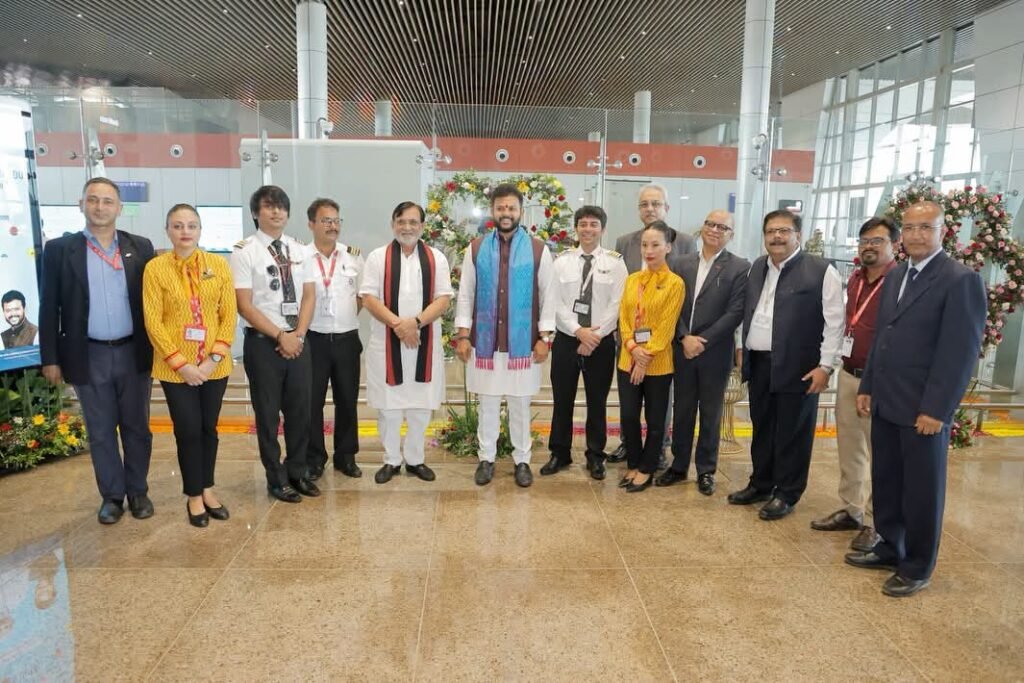
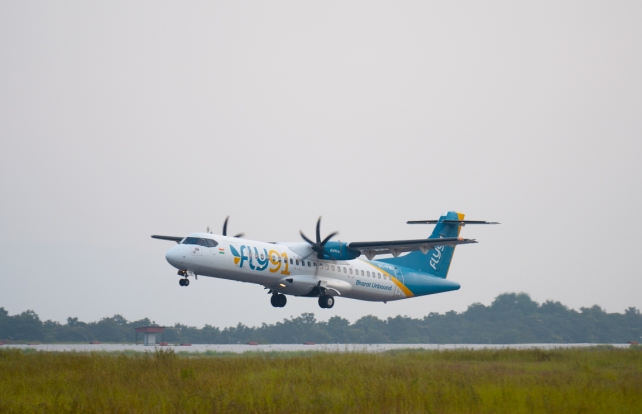
Hubballi, 18th April 2026: Indian regional airline FLY91 has inaugurated operations to Hubballi on Friday,April 17 onwards.The airline flagged off three routes on the same day, further strengthening its footprint across key regional corridors. FLY91 commenced operations on three new routes, Solapur–Hyderabad, Hubballi–Hyderabad and Hubballi–Bengaluru, even as the airline stays committed to Solapur increasing the frequency of its Goa–Solapur service, responding to growing passenger demand for reliable and convenient travel options in the sector. Hubballi, a prominent trade, education and industrial hub in North Karnataka, plays a critical role in driving regional economic activity. Improved air connectivity to cities such as Hyderabad and Bengaluru is expected to further support business travel, educational access and industrial linkages, while offering passengers a safe, reliable and convenient alternative to surface transport. Commenting on the expansion, Manoj Chacko, Managing Director and CEO, FLY91, highlighted that the addition of Hubballi reinforces the airline’s focus on strengthening regional connectivity. “The addition of Hubballi to our network reflects our continued commitment to building reliable, trustworthy and convenient regional air connectivity through our vision of ‘Connecting Bharat’. Hubballi is our regional airline’s 12th domestic destination after just two years of starting operations. Connecting as many as two dozen tier 2 and tier 3 destinations in central and southern India within that relatively short timespan is testimony to FLY91’s pursuit of measured growth and commitment to connecting underserved destinations in the country.” Further, addressing seasonal demand, he added, “Due to the peak demand during the summer holidays, we are introducing additional flights on the Agatti–Kochi route twice a week from April 16 to May 20, 2026. This has been a successful route for us, and the increased frequency will help us better serve rising passenger demand.”

RCS

Star Air adds 70 weekly flights including first direct Mundra to Delhi NCR route

New Delhi, 13th April 2026: Star Air has announced the launch of 70 new direct flights weekly across its network, now including a vital new link between Hindon (Delhi NCR) and Mundra, Gujarat’s port city. With Mundra joining as Star Air’s 32nd destination, travellers from Delhi NCR gain direct access to a key economic hub, further strengthening business and leisure ties across northern and western India. Starting 25th April 2026, Star Air will operate 38 direct weekly flights and a total of 54 weekly connections, linking Mundra to six key cities across Western and Northern India. With over 17,000 additional seats now available each month, this landmark move stands among the largest boosts to air connectivity and economic growth the region has ever seen. The expansion sees Mundra directly linked to Hindon (Delhi-NCR), Mumbai, Goa (Mopa), and Surat, offering business and leisure travellers unmatched access and convenience. In addition to the 38 direct weekly flights, Star Air will introduce 16 weekly one-stop connections, strengthening ties with Kolhapur and Bhuj which will add 4,104 seats weekly and 17,000 seats monthly in its operating network. Captain Simran Singh Tiwana, CEO of Star Air, said, “Mundra isn’t just a port, it’s a springboard for India’s industrial and economic ambitions. By seamlessly connecting Mundra with leading cities across Northern and Western India, we’re energising trade, business, and opportunity, while ensuring our passengers enjoy unparalleled comfort on every journey. This expansion is about empowering people and industries, and setting a new standard for regional air travel.”

Civil Aviation, RCS

RCS – Modified UDAN with a total outlay of Rs.28,840 crore approved by the Govt.

New Delhi,26th March 2026: The Govt. of India approved the launch and implementation of the Regional Connectivity Scheme(RCS) – Modified UDAN for a period of ten years from FY 2026-27 to FY 2035-36 with a total outlay of Rs.28,840 crore with the budgetary support of the Government of India. Impact of RCS Modified version on Indian Aviation: Enhanced regional air connectivity to underserved and unserved areas. Boost to economic growth, trade and tourism in Tier-2 and Tier-3 cities. Support affordable air travel for common citizens. Improved emergency response and healthcare access in remote and hilly regions. Greater viability and sustainability for regional aerodromes and airline operators. Promotion of the indigenous aerospace sector under Atmanirbhar Bharat. Progress towards Viksit Bharat 2047 goal. The key components of the scheme are as under: (a) Development of Aerodromes (CAPEX) Under the Modified UDAN Scheme, it is proposed to develop 100 airports from existing unserved airstrips to enhance regional connectivity, in line with the Viksit Bharat 2047 vision of infrastructure expansion and transforming India into a globally competitive aviation ecosystem with a total outlay of Rs.12,159 crore over the next eight years. (b) Operation & Maintenance (O&M) of Aerodromes Given the high recurring O&M costs and limited revenue streams for Regional Connectivity Scheme (RCS)-only aerodromes, the Scheme proposes to provide O&M support for three years capped at Rs.3.06 crore per annum per airport and Rs.0.90 crore per annum per heliport/water aerodrome, estimated at Rs.2,577 crore for around 441 aerodromes. (c) Development of Modern Helipads To address connectivity challenges in hilly, remote, island and aspirational regions, the Scheme proposes developing 200 modern helipads at Rs.15 crore each, amounting to a total requirement of Rs.3,661 crore over the next eight years (inflation-adjusted), focused on priority and aspirational districts to improve last-mile connectivity and emergency response. (d) Viability Gap Funding (VGF) Under the Regional Connectivity Scheme, airline operators receive financial support in the form of VGF for operating awarded routes. Recognising the need for longer market development, VGF support to airline operators is proposed amounting to Rs.10,043 crore over 10 years. (e) Atmanirbhar Bharat Aircraft Acquisition To address the shortage of small fixed-wing aircraft and helicopters required for operations in remote and difficult terrains and to advance the Atmanirbhar Bharat vision, the scheme also proposes to procure two HAL Dhruv helicopters for Pawan Hans and two HAL Dornier aircraft for Alliance Air. RCS Background: The original UDAN Scheme was launched in October 2016 with the objective of making air travel affordable and strengthening connectivity to Tier-2 and Tier-3 cities. Over nine years of implementation: 663 routes have been operationalised across 95 airports, heliports and water aerodromes (as on 28 February 2026). More than 3.41 lakh flights have been operated, carrying 162.47 lakh passengers. Connectivity has been established in remote, hilly and island regions, boosting tourism, healthcare access and emergency services. The scheme has fostered growth in regional airlines and diverse fleet operations, laying a strong foundation for the Modified UDAN Scheme.

RCS

Pan Européenne places first firm order for ERA, AURA AERO’s hybrid-electric aircraft

Toulouse, 5th March 2026: AURA AERO* has signed the first firm order for its regional 19-seater hybrid-electric aircraft ERA, with Pan Européenne Air Service (PEAS). The French private airline has been supporting AURA AERO and the ERA program from the outset, demonstrating its unwavering confidence in the manufacturer’s vision and progress. As the first airline to make a firm commitment for ERA, Pan Européenne confirms, after having recently taken part in electric flight tests with INTEGRAL E, its pioneering role in decarbonized aviation. This commitment marks a new and important step both for Pan Européenne and for the ERA program, moving from a dynamic of development to a phase of implementation, driven by close collaboration and a shared ambition to accelerate the transition of regional aviation. Headquartered in Chambéry and Lyon, Pan Européenne is a French private airline that has specialized in customized business flights for nearly 50 years. It operates five Embraer aircraft (5 to 49 seats) and serves up to 500 destinations in Europe, North Africa, and the Middle East. The company aims to be one of the first in the world to operate a hybrid-electric aircraft with paying passengers. Designed to revive regional aviation while accelerating the decarbonization of aviation, ERA will be powered by eight electric motors (ENGINeUS, developed by Safran and the world’s first certified electric aircraft engine) and two SAF (Sustainable Aviation Fuel) compatible turbogenerators. It will automatically alternate between hybrid and electric modes depending on the flight phase, with a range of up to 900 NM (1,500 km). Addressing the environmental challenges of the 21st century, ERA reduces CO2 emissions by up to 80% compared to thermal aircraft in its category. It is a versatile aircraft that can be configured for passenger transport, business aviation, cargo, or special missions. By combining sustainability and economic viability, ERA is redefining the future of aviation and revitalizing regional aviation, whether connecting islands and archipelagos or offering direct flights between regional destinations. For Antoine Foessel and Clément Jacquot, co-CEOs and owners of Pan Européenne: “AURA AERO’s ambition and values are perfectly aligned with our vision of the aviation of tomorrow. The technological and industrial choices made in the design and production of ERA since the launch of the company have always proved extremely relevant, and it was only natural that we chose this aircraft in order to be able to offer the first decarbonized air transport service in history”. “Pan Européenne is much more than a launch customer; it is a trusted partner that has been with us since the beginning of the ERA program. We are very proud to have the commitment of a company that has chosen to support a French manufacturer, because we share the same values and vision,” added Jérémy Caussade, President and co-founder of AURA AERO. To date, the order book for ERA includes nearly 700 Letters of Intent from 16 international airlines and fleet operators, valued at $12 billion.

RCS

FLY91 acquires two brand new ATR 72-600 from Dubai Aerospace Enterprise

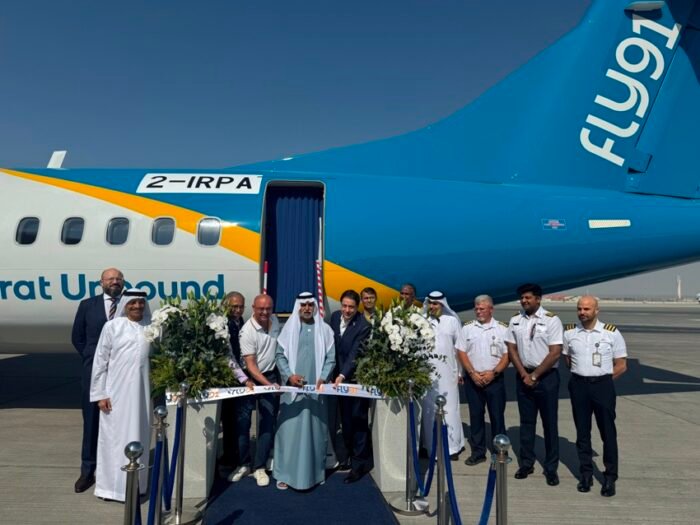
Dubai,February 25th 2026: FLY91 has inducted two brand new ATR 72-600 aircraft into its fleet from Dubai Aerospace Enterprise.With this induction, FLY91’s fleet now stands at six aircraft since commencing operations in March 2024, and the aircraft acquired from Dubai Aerospace Enterprise (DAE), will be deployed across underserved, emerging regional destinations in India. Manoj Chacko, Founder, Managing Director and CEO of FLY91, said the twin induction marks another measured step in the airline’s expansion strategy. “We are honoured to welcome two new aircraft into our fleet in Dubai, a city that represents global best practice in aviation infrastructure, services, and partnerships. This milestone reinforces our commitment to building India’s most dependable regional airline while deepening collaboration with leading institutions in the UAE. As we expand, our focus remains on disciplined and sustainable growth — ensuring that every aircraft enhances connectivity, reliability, and long-term value for the communities we serve,” he said. H.E. Sheikh Nahyan bin Mubarak Al Nahyan, Minister of Tolerance and Coexistence, said: “The ATR 72-600 is globally recognised for its efficiency, reliability, and performance. It is ideally suited to operate in the communities FLY91 seeks to serve.” He further observed that Dubai Aerospace Enterprise has grown into one of the world’s leading aviation services providers, built on the conviction that its success strengthens communities, improves quality of life and contributes to social and economic development regionally and globally. According to Harsha Raghavan, Chairman of FLY91 and Managing Partner at Convergent Finance, the induction reflects the airline’s structured approach to scaling operations. “FLY91 was built on the belief that regional connectivity in India requires long-term commitment, financial discipline and strong institutional partnerships,” he said. “This addition reinforces that approach as we continue to expand in a calibrated manner.” Firoz Tarapore, Chief Executive Officer of Dubai Aerospace Enterprise (DAE), said the lessor is pleased to support FLY91’s continued expansion as it strengthens regional connectivity across India. “Aircraft such as the ATR 72-600 are well suited to developing regional markets efficiently and sustainably. This official induction underscores DAE’s commitment to working with airlines that are building durable and forward-looking aviation platforms,” he said. Nathalie Tarnaud Laude, CEO of ATR, said India is entering a strong phase of aviation growth, with regional connectivity playing a vital role. “This partnership also highlights the strength of Indo-French cooperation in aviation, with Dubai continuing to serve as an important global hub for collaboration and industry development.” FLY91 currently operates to nine destinations across India connecting emerging regional centres. Before the end of March 2026, the airline will expand to six additional destinations namely, Rajahmundry and Vijayawada in Andhra Pradesh, Hubballi in Karnataka, Nanded in Maharashtra, Dabolim in South Goa and Indore in Madhya Pradesh, continuing its structured and sustained regional growth strategy.

RCS

FLY91 leases two aircraft from TrueNoord for regional expansion

Panaji, 5th February 2026: Regional airline FLY91 has inducted two aircraft under long-term operating leases from regional aircraft lessor TrueNoord, as it continues a measured fleet expansion focused on strengthening connectivity across Tier-2 and Tier-3 markets. The first aircraft entered service in December 2025, while the second, delivered in January 2026, is scheduled to begin operations in February. With this transaction, TrueNoord becomes FLY91’s second aircraft lessor. “This partnership gives us the flexibility to scale our fleet in a disciplined manner, aligned with demand and our long-term regional strategy,” said Manoj Chacko, Managing Director and CEO, FLY91. “The addition of a second leading global lessor to our portfolio is a significant reaffirmation of FLY91’s operational strengths, governance standards and execution capability,” he added. One of the newly inducted aircraft will be based in Goa, the airline’s home base, while the other will operate from Hyderabad, reinforcing FLY91’s dual-hub strategy and its focus on underserved regional routes. According to Harsha Raghavan, Chairman of FLY91 and Managing Partner at Convergent Finance, the collaboration supports responsible scaling. “The partnership with TrueNoord enables growth while maintaining financial and operational discipline,” he said. India’s regional aviation market continues to gain momentum, driven by rising demand from smaller cities and policy support under the UDAN scheme. “TrueNoord is delighted to partner with FLY91 and support its growth plans,” said Anne-Bart Tieleman, CEO of TrueNoord. Abhineet Awasthi, Commercial & Transaction Manager at TrueNoord shares the lessor’s perspective on FLY91’s operating approach. “FLY91 is an agile, execution-driven airline with a clear regional connectivity focus. The team demonstrated a pragmatic, solution-oriented approach throughout the transaction.” With this induction, FLY91’s fleet expands to four aircraft. The airline currently serves nine destinations and plans to grow its network to 15 destinations in the first quarter of 2026, with two additional aircraft expected to join the fleet by the end of Q1 FY2026.

RCS

FLY91 leases two ATR 72-600 Aircraft from Dubai Aerospace Enterprise

Panaji,5th January 2026: FLY91 has leased two ATR 72-600 turboprop aircraft from Dubai Aerospace Enterprise (DAE), a UAE-headquartered global aviation services provider. The two brand-new aircraft are scheduled for delivery later this month from ATR’s manufacturing facility in Toulouse, France. Following induction, FLY91 will enhance capacity, increase frequencies across its existing routes, and expand operations to Hubballi (Karnataka); Vijayawada and Rajahmundry (Andhra Pradesh); Nanded (Maharashtra); and Dabolim (Goa). With the addition of these aircraft, FLY91’s fleet strength will increase to six. The expansion aligns with the airline’s strategy to deepen connectivity across India’s tier-2 and tier-3 cities while strengthening regional air links. “This transaction reinforces our commitment to building a resilient and scalable regional airline through measured growth,” said Manoj Chacko, Chief Executive Officer and Managing Director, FLY91. “The ATR 72-600 is integral to our operational philosophy, offering an optimal balance of efficiency, reliability and performance for short-haul regional routes. Partnering once again with DAE enables us to expand our fleet while maintaining financial discipline and capital efficiency.” FLY91 had earlier inducted its first two aircraft through DAE.

RCS

Alliance Air introduces “Fare se Fursat” fixed airfare scheme

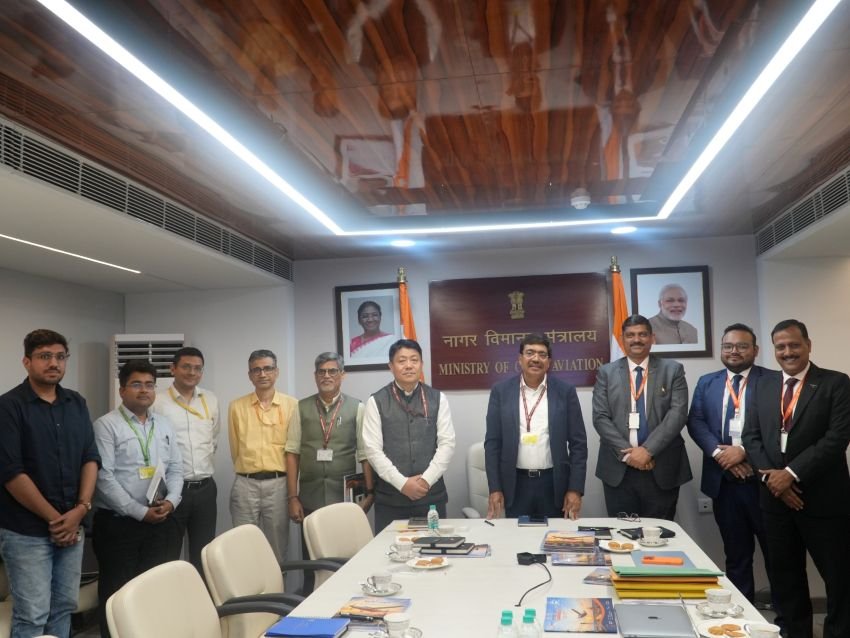
Delhi, 13th Oct 2025: Minister of Civil Aviation, Rammohan Naidu Kinjarapu, inaugurated ‘Fare Se Fursat’, scheme of government-owned regional carrier, Alliance Air. The scheme is aimed at giving passengers freedom from the stress of fluctuating airfares and promoting ease of flying in the country. The launch event was graced by Secretary, Civil Aviation, Samir Kumar Sinha, Chairman, Alliance Air, Amit Kumar and CEO, Alliance Air, Rajarshi Sen. Under this scheme, Alliance Air will offer a single, fixed fare that remains constant regardless of the booking date, even on the day of departure. The initiative will be implemented on a pilot basis from October 13 to December 31, 2025 across select routes, to evaluate its operational feasibility and passenger response. Speaking at the launch, the Minister said, “The ‘Fare Se Fursat’ scheme perfectly aligns with the core principles of the UDAN scheme. Today, Alliance Air is carrying forward Prime Minister Shri Narendra Modi’s vision of democratizing aviation and making it affordable for the middle class, lower-middle class and neo-middle class.” The static fare system eliminates uncertainty and stress associated with fluctuating airfares, ensuring predictability of costs, even for last-minute bookings. The Minister also shared his broader vision for making Indian aviation more passenger-centric: “Since taking charge of the Ministry, my focus has been on making aviation more people-oriented. Inspired by Prime Minister Shri Narendra Modi’s vision under UDAN, we have launched Udan Yatri Cafes offering tea for ₹10, coffee for ₹20 and snacks for ₹20 at airports. It is making air travel more dignified and affordable. Now we are taking a step further and addressing the major concern of passengers which is the airfare.” Emphasizing the contribution of the regional carrier, Rammohan Naidu described Alliance Air as the backbone of the Government’s Regional Connectivity Scheme UDAN, connecting Tier-2 and Tier-3 cities to the national aviation network. “Alliance Air has taken a bold and exemplary step with the idea of One Route, One Fair. It is truly ‘Naye Bharat ki Udaan’ thinking beyond profitability and keeping the focus on public service,” he said. India’s aviation market largely operates on a dynamic pricing model, where ticket prices vary in real time based on demand, seasonality and competition. While effective for revenue management, it often causes passenger frustration due to unpredictable last-minute fares. “Fare Se Fursat” aims to address this long-standing challenge by introducing transparency and stability in pricing. The initiative is also expected to encourage first-time flyers from smaller towns to opt for air travel, strengthening Prime Minister Shri Narendra Modi’s vision of making air travel available, accessible and affordable. Courtesy: PIB/MOCA

FOREWORD

Dear Reader’s,


The current edition of Aviation World has covered many areas of Aerospace & Defence based on the latest development in the sector. The front cover highlights three different images, first for the Union Civil Aviation Minister ….. who is leading from the front to steer Indian Civil Aviation sector to witness one of the most interesting phases. He is also facing most tumultuous timing due to the ongoing financial stress in the Aviation sector due to ATF rising cost and long airspace restrictions resulting in mounting losses for Indian carriers. Despite of all the ground level challenges,the minister is addressing new things on regular basis which keeps the sector motivated. We have featured many such developmental works in this edition done under his guidance which will be interesting to read.

Our lead story on “ The West War” is another important feature which covers the ground level reality of the challenges faced by the Aviation sector. Its though time ahead and we believe it will pass soon .

There are features on Regional connectivity and MoCA revised rules on the UDAN 2.0 and how its going to transform the flying experience within India.

In this edition, we have covered topics on MRO,Various Policy changes,Sea Plane Operations by SkyHop Aviation, TATA-Airbus joint project on C295 military aircraft under Make In India which is expected to roll out soon and many other interesting contents which will be good to read.

We are covering Farnborough International Airshow 2026 from 20-24July 2026 in London and our next edition will be based on the same event.For features, you may contact our team on priority basis.


Happy Reading!

NEWSLETTER

Aviation World Magazine is India’s premier aviation magazine and has been actively supporting the development of the Indian and global civil aviation sector. We started our journey in year 2015 and its been 12 years now and the response and acceptance is really encouraging. Thanks to all our associates and writers who remained with us in our progressive journey.

We have started 2026 on a very positive note and we look forward to increase our footprints to more locations and induct many more new companies in our campaign.. Do write to us at : editor@aviationworld.in

Disclaimer

The contents published in this website are news covering Aviation, Aerospace and Defence sector. The objective is to provide news in informative form to keep our readers updated of the latest development. We also publish content featured in our print publication Aviation World.We try our best to avoid any factual errors or image displayed here but we ensure immediate corrections to any such thing brought to our notice that might have been published inadvertently. All images and contents are sourced from the relevant organisations media team.

Copyright ©2014 – 2026. AVIATION WORLD. All rights reserved.

Scroll to Top