
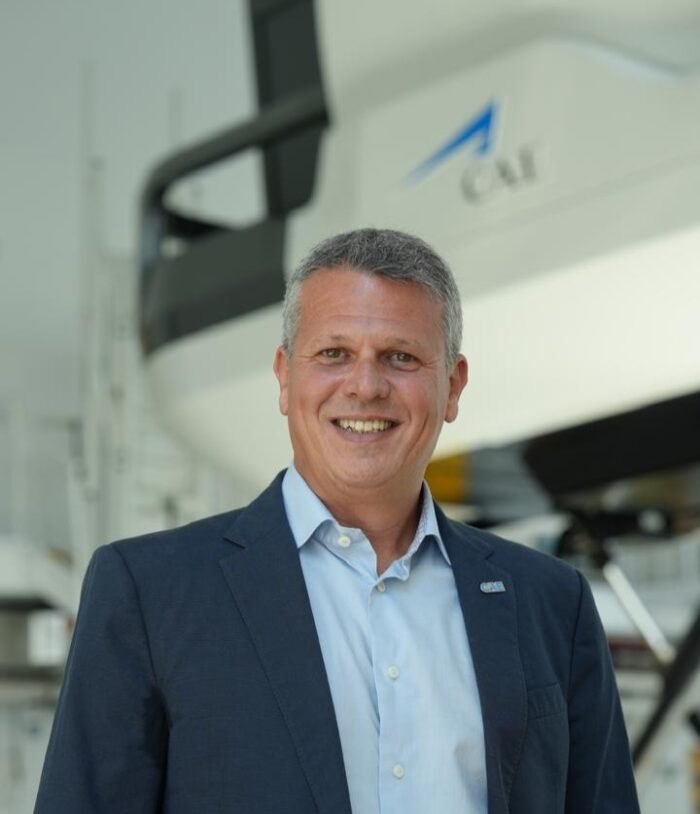
“India is an amazing market and has always been a key pillar for our growth in the region.”
The growth of the business aviation sector has also increased the demand for training mainly pilots, aircraft maintenance technicians, air traffic controllers and cabin crews. CAE has established itself at the forefront, as a leader in training all of these aviation professionals, with its 240 sites and training locations in 40 countries around the world. With India as an emerging market for business aviation and many new intakes of large- to mid-size private jets, CAE firmly believes that as India continues to grow and develop, there will be more opportunities to be the training partner of choice for more professionals and operators. In an exclusive interview with Aviation World, Nimrod Meuleman, VP for Business Aviation and Helicopter Training in Europe, Middle East, Africa and Asia, CAE shares his vision for India. Excerpts…
Q: How does CAE support Business Aviation’s training needs?
A: The market for CAE, anything from Middle East all the way to Southeast Asia, is very critical for our business aviation training portfolio. We’ve been serving the Asia-Pacific market in business aviation for over 22 years. Our focus has been supporting our customers in India, Southeast Asia, China and in Australia.
We have three training centers in the U.A.E. that offer training on a wide variety of business aircraft, which makes us well-positioned to support the regional growth of the aviation industry. These three training centers alone offer complete pilot training on aircraft from Boeing, Bombardier, Beechcraft, Dassault, Embraer, Gulfstream, and Hawker covering many of the models popular in India. We also have a Gulfstream G650 simulator at our Singapore training centre, which supports the operators in the entire region.
Our other business aviation training centers located in Vienna, in Burgess Hill in the UK, in Morristown, New Jersey, in Las Vegas, in Dallas, in Montreal, and in Orlando also receive pilots from India and Asia-Pacific to train on specific models.
CAE is also the global training leader for commercial aviation We have three joint venture training centres in India with IndiGo, called CAE Simulation Training Private Limited (CSTPL). One is in Delhi-NCR, another is in Bengaluru, and we recently announced a new training centre in Mumbai.
We offer training on various aircraft types, such as Airbus, Boeing and ATR aircraft models, that meet the requirements for our customer base and state DGCA training requirements. This positions us well to serve and support the growing demand that’s emerging from Southeast Asia. The UAE seems to be a large BA training hub.
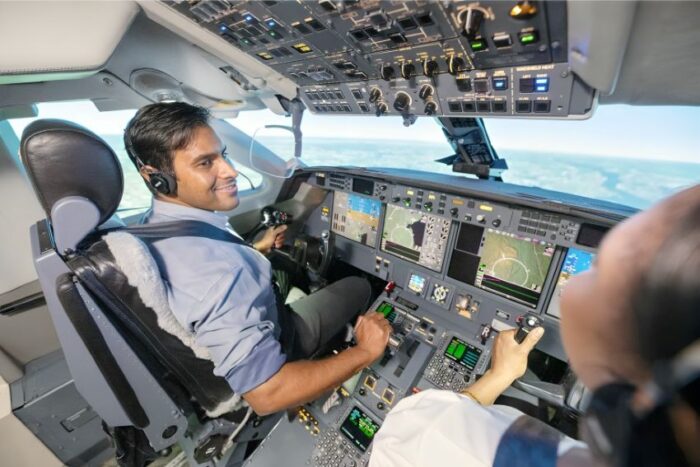
Q: On which aircraft type does CAE provide training there?
A: At our two training centers in Dubai and our training centre in Abu Dhabi, we provide training on the following aircraft series:
:Boeing Business Jet 737-800
:Bombardier Challenger 604 & 605
:Global 5500,6000, 6500,7500, soon the 8000 and the Global Express.
:Gulfstream G450,G550 and G650
:Dassault Falcon 900 EX EASy II, 2000 EX-EASy II and 7XEASy II
:Embraer 145, Legacy
:Hawker Beechcraft 800, 800XP, 750, 850XP, 900 XP., King Air 350 Fusion, King Air 350 Pro Line 21
:Our training centers in Europe and the UK also offer training on more aircraft types.
:In Burgess Hill, UK, we have Dassault Falcon 6X and 8x full-flight simulators (FFS), as well as an Embraer Phenom 300.
:At CAE Vienna, we have Phenom 100 and 300 FFSs, as well as a Bombardier Challenger 3500 and a Pilatus PC-24, which will be launched in the second half of 2026.
Q: Any plans to expand into the FTO segment for business aviation in any of the regions?
A: In business aviation, operators often look for pilots with experience, as they are hiring people to fly their families and their business colleagues. This is especially true when it comes to larger cabin jets. Many operators or owners look for the cream of the crop of pilots, so there are few opportunities for new pilots right out of flight school to get hired. That said, there are opportunities on smaller business jets such as Cessna Citation Jets 2 and 3, the Embraer Phenom series, Beechcraft King Air 350s etc. and these aircraft are flying around in this part of the world.
Q: Which region across the globe has promising growth?
A: We see a lot of growth in the Middle East now. There is also a period of growth in India. Though the country’s business aviation sector has gone through ups and downs, I would say right now it is really on the up side. There are new large cabin business jets coming in as we see high-net-worth individuals are now interested in aircraft. There are also many financial technology firms and startups younger billionaires – looking at investing in business jets.
In Southeast Asia and the Pacific region, the markets that are really growing are Indonesia, Malaysia, Singapore, and Australia. At the moment, China is stabilising but we do see some signs of optimism coming in the next couple of years.
Q: How do you see the growth pattern of the sector in coming years?
A: I think growth can only happen if we have enough aviation professionals. We did a recent market study, which came out mid-2025, in which we forecasted over the next 10 years, the world will need about 1.5 million civil aviation professionals. I’m talking about pilots, air traffic controllers, cabin crew, and aircraft maintenance technicians. In the Asia-Pacific region, we calculate there will be a requirement for about 3,000 pilots and around 4,000 aircraft mechanics in business aviation alone over the next 10 years.
In addition to pilot training, CAE also trains aircraft maintenance technicians, air traffic controllers and commercial cabin crew. These professionals are highly important as no aircraft can fly without them – and the industry needs to work on attracting and retaining them.
This workforce shortage – whether we’re talking about pilots, aircraft maintenance technicians, air traffic controllers, or cabin crew – affects the entire industry and there is a need for various sectors of the industry to work together to really promote aviation amongst our youth. More available professionals will also drive continued growth. Without any of these professionals, OEMs can sign as many contracts as they want, but they’re not going to be able to fly without the staff.
Q: What’s your take on helicopter pilot training in India?
A: Helicopter training is one of the core areas that really need attention. We have a joint venture with Hindustan Aeronautics Ltd(HAL) in India to serve this segment called the Helicopter Academy to Train by Simulation of Flying (HATSOFF) in Bengaluru.HAL is delivering in-house training and there is a roll-on/roll-off (RO/RO) simulator which enables cockpits representing various helicopter types to be used in the simulator. There are now three training programs offered there – a Hindustan Aeronautics Ltd (HAL) Dhruv, Airbus Helicopters Dauphin, and a Bell 412, all of which have been certified to Level D, the highest qualification for flight simulators, by India’s Directorate General Civil Aviation (DGCA).
In Dubai, we’ve trained many of the Juhu Airport operators that work in the oil and gas industry in India on the Bell 412. As new helicopter types emerge into the Indian market, whether they’re western types or Indian, CAE has always been positioned to help develop that and support with training.
Q: Do you find any challenges in India?
A: Indeed, there are some challenges in India, some of which could be overcome with changes in legislation. For example, there are heliports built in Mumbai but one is not allowed to use them. In most countries, that doesn’t happen. In most countries, once a heliport is built, there’s legislation to go with the infrastructure, allowing helicopters to fly in and out. Some helicopter pilots seem to often feel that the kind of training they require is not provided to them in India and there is always a requirement for modifications and a new level of training. This is again something that revised regulations could fix. As you know, with eVTOLs on the way, India will need to further develop. It just needs more legislation and openness to new ideas. This could help with training, safety, and a commitment to growth as well.
Q: Any plans to do set-up for your ATO into India?
A: We have a good commercial aviation training presence in India, and while business aviation demand is still emerging, we are well-positioned to support growth in this region. We have three training centers located very close in the UAE, as well as one in Singapore and two in Europe/the UK.
When we strategize on where to establish business aviation training centers, must make sense for us. We need economies of scale and therefore there must be a minimum number of each type of aircraft in India for which we’d have a FFS for us to invest. That said, we constantly look at the market and demand, and analyse what’s best for our customers. We will continue monitoring India closely, as it remains a very important country for us to serve.