
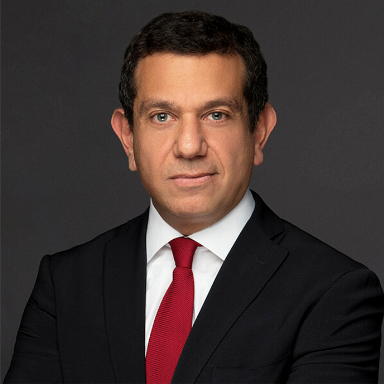
The Business Aviation sector in Middle East has witnessed a significant growth with addition in the number of aircraft and the private airports to support the infrastructure. In this region, Alton Aviation aims to deepen relationships with existing clients and provide them support on strategic, operational, and financial challenges. At the recently held Dubai Airshow, Mr. Raffi Kasparian, Managing Director of Alton Aviation Consultancy, Middle East interacted with Vishal Kashyap, Managing Editor of Aviation World and shares his views on the various factors that will drive the future of business aviation in this part of the world. Excerpts…
Q: What are the services that Alton Aviation Consultancy provides to the business Aviation segment in the Middle East?
A: We focus on different segments of aviation including business and general aviation. We support operators and investors on different strategy and investment management related topics.
Q: What’s the size and scope of Business Aviation in Middle East Region?
A: Middle East is a very large market for consultancy but maybe shifting more on the actual segment of business aviation, it’s still at a nascent stage. I would think it’s a growing market, still represents a small portion of demand in terms of aircraft movement, which is less than five percent of global aircraft movement to and from Middle East and within Middle East.
The largest market being US and Europe, though in the region we have seen a significant growth of business aviation traffic of around 14 percent Compound Annual Growth Rates(CAGR) over the last five years. A lot of momentum post-COVID with a strong base of customers travelling for government or religious and tourism are also using private aviation. A core base of travel originated from a royal segment and then finally the third pillar would be travel for the oil and gas sector, where some oil and gas companies have their own small operation, private aviation operation or subcontract that to other third-party operators.
Q: Middle East is a very big region, so in particular which country in this region has high business potential?
A: I would focus on the countries in the GCC, particularly UAE and Saudi Arabia where we have seen a significant growth, especially here at Al Maktoum. There is a strong ecosystem when it comes to FBOs, so as well as MRO for the private jets. The developing number of movements and number of aircraft and jets that are being based here also has significantly increased, driven by growth in the number of ultra-high net worth individual moving to the region.
Additionally, we have seen airports in Abu Dhabi specialising solely on private aviation like Al-Batin Executive Airport. Similarly, in Ras Al Khaimah in the North there will be also a good potential for business aviation.
And moving to Saudi, places like Al-Ula and the Red Sea, has already a strong base of private aviation movements, not only because of the remote location, but because of the very premium nature of the destination. Similarly, in the Red Sea where the airport has been already also designed to accommodate special pods or mini terminals just for that segment.
Q: How do you support the aviation companies involved into oil and gas related operations?
A: With Oil & Gas companies, we partner with them to optimise their aviation operations. We have seen a need there also as these companies either outsource that logistics portion to third party operators or even have, for example, in-house aviation capabilities.
We very much help them to optimise anything that is from planning, scheduling of their internal network,fleet planning, long-term procurement, and then touching on different functions internally, whether it’s also procurement of third party charter operations and including the review of performance and optimisation of their asset, whether it’s for fixed-wing jets or actual helicopter and rotary wing operations. So post-COVID, there is a significant change and development in this sector and the growth as well.
Q: With new operators joining the sector, how the sector is responding in this region?
A: In general, the segment of private aviation has benefited from the pandemic with the closure of commercial airlines and that momentum we still see, especially in the region, is still going on. There’s a lot of traction and new business models, including the charter. So not so much on the fractional ownership like the Net Jets of this world, you would see more in North America, but here maybe more charter operations developing more stronger presence and having the ability to have this concept of floating fleet being temporarily based in key hubs here like Al Maktoum, Dubai.
Q: What’s your thought on fractional ownership?
A: I would say it’s more shifting towards more of subscription based rather than fractional ownership. That has been a model that is proven to be more interesting for end users, whereas the typical fractional ownership is not something that I would call quite common still, like more as infancy. And one challenge that most of these operators face in the leasing process.
Q: Does Alton Aviation Consultancy also assist in the leasing part?
A: We tend to cover aircraft selection, financing strategy, including leasing as we have people from that industry and having worked with major lessors on transaction for large fleets and commercial, but also on more smaller jets.
So indeed, this is something we keep track and we have engagements where though most of it will be more on the planning and the selection of aircraft. In some cases, we’re also partnering with operators or aircraft owners to also advise on financing structure and also leasing terms and conditions.
Q: How do you see the regulatory approach in this region?
A: Well, we have seen some efforts from different authorities and particularly KSA on streamlining those regulations, whether it’s registration of aircraft and also more harmonisation with international standards. Also in the UAE, there have been a lot of government-led initiatives to also even pioneer some of the new concept on regulation.
Q: What are the catch-points that will be of importance in future?
A: The ability to really have a very streamlined integration end-to-end in the journey of travel and also being at the forefront of sustainability, enabling also more uplift of sustainable aviation fuel as also one of the enablers for that particular demand and something that could be also achieved like we’re also seeing here in the region. And our role as a consultancy will be to really team up with operator or FBOs to really support them in their most challenging issues in long term, be it integration with other or partnership with other players or improvements on their internal performance.