

In an exclusive interview with Aviation World, Juergen Kappler, Director of Critical Infrastructure and Aviation, Smiths Detection highlights their presence across most of the larger airports in India and they would work directly with BCAS to secure the necessary approvals for deployment as regulatory alignment is always a core part of their rollout strategy. Excerpts…
Q: Could you give us a concise overview of Smiths Detection and the key markets it serves within the aviation sector?
A:Smiths Detection has been active in the aviation market for several decades and is a market leader in many areas. We serve three main segments: (i) Checkpoint security for passenger control (ii) Hold baggage screening (iii) Air cargo. We provide complete solutions – not just hardware, but also software and full integration into airport environments. Our portfolio includes scanners, CT systems, lanes, trace detection, and, more recently, X-ray diffraction technology. We also work with partners on body and people screening, whether it’s at checkpoint, hold baggage, or cargo.
Q: Focusing on airport operations, could you outline the exact products you supply to airports? And as you also have a presence in India, are you able to name a few of the Indian airports where your solutions are currently deployed?
A:Smiths Detection is across most of the airports in India, the larger ones being Bangalore, Hyderabad, Mumbai, Delhi, Kolkata, and Kochi. We serve all metros and also many smaller airports, and have efficient service team across 50 locations across India.
In the checkpoint segment, we provide automated tray return systems – commonly referred to as lanes. Passengers place their backpacks or personal items in a tray, which then passes through the scanner and is automatically returned at the end of the process. In many cases, these systems also include disinfection features to minimise contamination risks. We also supply the scanners themselves. In India, the majority of checkpoints currently use 2D X-ray scanners. However, we know that India is preparing to transition towards 3D computed tomography (CT) scanners as the next step, and we are ready to support that evolution with our CT technology portfolio.
Beyond hardware, we deliver extensive digitalisation and software capabilities. These include advanced detection algorithms not only for explosives but also for other prohibited or high-risk items such as knives, firearms, narcotics, cigarettes, and even organic materials like plants or food.
Importantly, what we deliver is not just a standalone product but a complete solution integrated into the airport’s operational environment. Depending on the requirements of the airport, the system shares data to support alarm resolution workflows – helping operators determine whether a detected threat requires manual inspection or if it can be cleared as a false alarm.
Q: This integration is key to maintaining both security efficiency and passenger flow. And on the hold baggage side, how does the process differ?
A: Hold baggage screening takes place deeper within the airport — typically in automated systems located out of sight. Once a passenger drops off their suitcase at the check-in counter, it enters a high-speed baggage handling system. These automated lanes move luggage rapidly through a series of checks, starting with X-ray screening.
In India, as in many other regions, hold baggage screening is now largely based on CT technology. These CT scanners provide a detailed 3D analysis of each bag, enabling security teams to assess contents more accurately than traditional 2D systems.
While explosive detection remains the primary objective, the same systems can be configured to identify additional threats or prohibited items. Depending on the software algorithms installed, the machines can detect narcotics, weapons, smuggled currency, and other contraband. By tuning the software, airports can extend the system’s capabilities far beyond explosives alone, allowing for a more comprehensive security posture.
Q: So, with your technology, are you able to detect even very small or minute items that might otherwise pass through airport security unnoticed?
A: Yes, absolutely. Depending on the instrument used, especially at checkpoints where smaller bags and backpacks are scanned, the systems are capable of identifying extremely small objects.
One of the critical items we are trained to detect is detonators, components that can initiate an explosion, and these are typically very small in size. Our systems are also calibrated to detect fine elements such as very thin cables, which can be a strong indicator of a potential explosive device. These small signatures are important because, in many cases, it is these minute components rather than large objects that signal a real threat. The ability to detect such fine details significantly enhances overall security effectiveness.
Q: Airports worldwide are moving towards seamless, paperless and contactless travel experiences. What are the key factors that you believe Smiths Detection is providing or can provide to make the transition a smooth and hassle-free process?
A: The way modern checkpoints are being implemented globally is moving exactly in this direction. In the past, going through security meant long queues and multiple trays — typically between one and four, depending on what you were carrying. You would place your backpack in the first tray, your laptop in the second, your jacket in the third, and so on. This process created delays and disrupted passenger flow.
With our current technology, passengers can now leave everything inside their backpacks — including liquids and electronic devices. Our scanners analyse contents from all angles in full 3D, which means the system can inspect liquids and electronic items without requiring them to be removed.
Previously, laptops were a major issue because they acted as a shield in traditional X-ray views. X-rays would be absorbed by the device, making it impossible to see what was behind it. With rotational 3D imaging, our systems scan from the front, back, and every angle, eliminating that blind spot.
This is one of the most significant advancements in enabling seamless travel. The tray handling mechanism also operates at extremely high speed, allowing trays to be placed very close together and moved through the scanner efficiently. Thanks to very low false alarm rates, there is minimal need for manual checks.
As a result, if you compare the newest generation of checkpoints with older installations, the difference is clear: passengers now typically use only one tray, walk through the body scanner, collect their items, and continue their journey. Queues are drastically reduced, and the overall experience is far more seamless.
Q: Since most of our readers are based in India, I’d like to focus on the regional perspective. India has seen rapid airport expansion over the past decade, with both greenfield and brownfield developments, and the government has announced plans to build around 100 new airports in the coming years. From a business standpoint, how do you view the potential of this market for Smiths Detection?
A: First of all, it’s impressive to see the new airports coming up in India. Just recently, I saw footage of the Navi Mumbai Airport — it’s modern, highly digitalised, and makes extensive use of biometrics to create a seamless passenger journey. It represents a state-of-the-art approach to airport infrastructure.
Looking at what we currently deliver in India, many large airports are already using our CT technology for baggage screening. And with the new hold baggage screening solution we have just launched — a next-generation CT system for hold baggage — we have introduced major improvements over previous models.
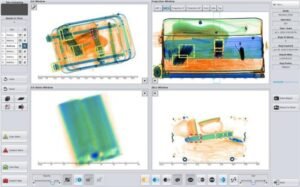
Q: Could you summarise the key impact of your latest hold baggage screening system launched recently?
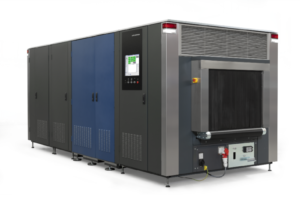
A: For both airports and airlines, the top priority is simple: move bags into the aircraft as quickly as possible with minimal manual intervention. Time and cost are the two key factors. From a time perspective, our new system- the SDX 10080 SCT-delivers the highest throughput in the market. It can process more bags, packed closer together, than competing systems, which directly improves efficiency.
The design also helps prevent bag jams- a common issue that causes delays. The tunnel opening is large and rectangular, which significantly reduces the chance of bags getting stuck. This is especially useful in real-world scenarios – for example, when passengers travel with empty suitcases to bring items back on the return journey. Lightweight luggage can sometimes stall due to the X-ray containment curtains, but our system ensures that even empty bags pass through smoothly without stoppage.
Another important advantage is image quality. When the system triggers an alarm, security operators need to quickly determine whether it is a genuine threat or a false alarm. We believe our imaging is among the best currently available, allowing skilled operators to make fast decisions and clear false alarms quickly — again reducing manual handling.
Finally, the system is highly modular. Traditional CT machines are large — around four metres in length — which makes installation in existing brownfield airports a challenge. Our solution is designed in four modules, allowing it to be brought in section by section. It also matches the footprint of standard systems, making it a true drop-in replacement. This means airport operators can remove the old unit and install the new one with minimal reconstruction work, greatly simplifying upgrades.
Q:For the SCT launch, where are the first installations planned? Are there any airports already confirmed or under consideration for future deployment?
A:Since the launch only took place on October 7th, the first confirmed installations are not at airports but with customs authorities in Europe. Customs agencies also use this type of screening technology, and we currently have around 15 installations planned for customs operations in Europe.
Looking ahead, we have airport trials scheduled in Europe for next year. While Europe is our starting point, our goal is to achieve all relevant certifications needed to serve the global aviation and cargo sectors, including approvals for the U.S., India, and markets across Asia.
Typically, European certification processes move faster than TSA certification in the U.S., which is why we begin evaluations and trials in Europe. Once TSA certification is secured — which is also commonly required by the Indian market — we will proceed with rollouts in the U.S., India, and other international regions. The intention is to take this product to the global market once all regulatory milestones are met.
Q: In India, the Bureau of Civil Aviation Security (BCAS) is the authority that approves security systems for airports. So, when you move towards deployment in India, will you also be seeking regulatory approval from BCAS as part of the process?
A: Yes, absolutely. We work very closely with regulators in every region. Whether it is for hold baggage systems or checkpoint screening solutions, we ensure that all products go through the required certification processes. In India, that would include working directly with BCAS to secure the necessary approvals for deployment. Regulatory alignment is always a core part of our rollout strategy.
Q: Looking ahead, what emerging priorities are shaping your product development, beyond performance and AI integration?
A:Sustainability is becoming a major design principle. We are increasingly focused on reducing power consumption and using environmentally considerate materials. Total cost of ownership is a growing concern for airports, and energy efficiency is a key part of that. Our latest generation systems reflect this shift, making sustainability a core part of product innovation alongside detection performance and automation.