
By Kiran S. Pillai
Aviation has transformed the way people and goods move across the world, but the industry faces a fundamental challenge. Conventional aircraft depend heavily on fossil fuels, while demand for air travel continues to increase. The search for cleaner propulsion systems is therefore becoming an important part of the future of aviation.
Electric aviation offers one possible pathway
The concept is relatively simple. Instead of relying entirely on combustion engines, aircraft can use electric motors powered by batteries, hybrid systems or other forms of electricity generation. The engineering challenge, however, is substantial because aircraft require extremely high energy density and reliability.
This makes electric aviation different from the electrification of automobiles
A car can carry a large battery because its weight can be accommodated by the vehicle. An aircraft must continuously overcome gravity. Every additional kilogram affects its efficiency. Battery technology therefore becomes one of the central factors determining how quickly electric aviation can develop.
The first major applications are likely to appear in smaller aircraft
Short-distance flights, training aircraft, regional aviation and specialised air mobility could provide the initial market for electric propulsion. Smaller aircraft require less energy and can operate on routes where the limitations of current battery technology are more manageable.
This creates an interesting opportunity for India
India has a large population, rapidly expanding cities and significant demand for regional connectivity. Many communities remain separated by geographical distance, while major cities face increasing congestion on roads.
Electric aircraft could eventually complement existing transportation systems
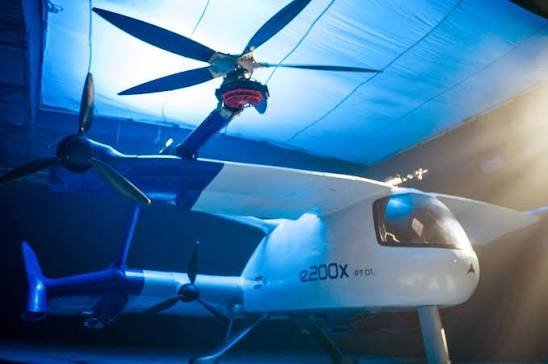
One particularly interesting development is the emergence of electric vertical take-off and landing aircraft, commonly known as eVTOLs. These aircraft combine characteristics of helicopters and airplanes and are being developed for urban and regional transportation.If the technology becomes commercially viable, eVTOLs could create a new category of transportation between conventional road travel and traditional aviation.
India’s cities could eventually require dedicated infrastructure for such aircraft. Vertiports, charging facilities, navigation systems and digital airspace management could become part of urban transportation planning. However, electric aviation should not be viewed only as a transportation technology. It could also become an industrial opportunity.
India has developed substantial capabilities in automotive manufacturing, electronics, software and engineering. These capabilities could be redirected toward electric aircraft components, batteries, power electronics, sensors, motors and control systems.
The aerospace industry has traditionally required extremely specialised supply chains. Electric propulsion could create new points of entry for companies that already possess advanced engineering capabilities but have limited involvement in conventional aircraft manufacturing.
Battery technology will remain one of the largest constraints
Current batteries are considerably heavier than aviation fuels for the same amount of usable energy. This makes fully electric long-distance commercial aviation difficult with present technology.Research into higher-energy-density batteries, improved thermal management and alternative energy systems could gradually expand the range of electric aircraft.
Hybrid-electric aircraft may therefore play an important transitional role
Instead of replacing conventional propulsion immediately, hybrid systems can combine electric motors with other power sources. Such aircraft could reduce fuel consumption while allowing greater range than purely battery-powered designs.
The transition will also require new charging infrastructure
Airports are already complex energy environments. Large-scale electric aviation would require high-capacity electrical connections, charging systems and energy-management infrastructure. Airports could increasingly become energy hubs combining electricity generation, storage and aircraft charging.
Renewable energy could strengthen this transition
Solar power, energy storage and smart-grid systems could help airports reduce the carbon intensity associated with electric aircraft operations. This creates a connection between aviation policy and India’s broader renewable-energy strategy.
The economics will be equally important
Electric aircraft will need to compete with conventional aircraft on operating costs, reliability and passenger experience. Lower fuel and maintenance costs could provide an advantage if the technology reaches sufficient maturity. Regional routes could become particularly attractive because aircraft operating shorter distances can potentially achieve higher utilisation without requiring enormous battery capacity.
Electric aviation could also reshape regional connectivity
India’s aviation network is concentrated around major airports and metropolitan centres. Smaller electric aircraft could potentially support new regional routes if operating economics improve. This could strengthen tourism, business travel and access to economic opportunities in smaller cities.
Yet regulation will determine how quickly these possibilities become reality
Electric aircraft require certification standards, pilot training, maintenance procedures, battery safety standards and emergency protocols. eVTOL operations will additionally require new approaches to urban airspace management. India should therefore begin preparing regulatory frameworks before the technology reaches mass deployment.
The country should also invest in research
Universities, aerospace companies, energy companies and technology startups can work together on electric propulsion, battery systems, lightweight materials, flight controls and autonomous aviation. Government research programmes can help reduce the cost and risk of early experimentation. The future of aviation is unlikely to become completely electric overnight. Large passenger aircraft travelling thousands of kilometres will remain technologically difficult to electrify for some time.
The transition will probably occur in stages.
Small aircraft may become electric first. Regional aircraft may follow. Hybrid systems could bridge the gap toward larger aircraft. Advances in batteries and alternative energy technologies may eventually expand the possibilities further.
India should approach this transition strategically
Rather than waiting for electric aviation technologies to mature elsewhere, India can participate in their development and build the supporting industrial ecosystem at home. Electric aviation could eventually become more than a cleaner form of flying. It could become a new industrial platform connecting aerospace engineering, energy, electronics, artificial intelligence and advanced manufacturing.
The skies of the future may therefore contain not only larger and faster aircraft, but quieter, smarter and increasingly electric machines.For India, preparing for that future today could create both an environmental opportunity and a major new technology industry.
Image Courtesy: The ePlane Company (Used for editorial representation purpose )
( Views expressed are personal. The author of this article is the Founder of Vastuta Think Tank, working on technology, public policy, economic development and emerging technology ecosystems.)