

Interview

Interview

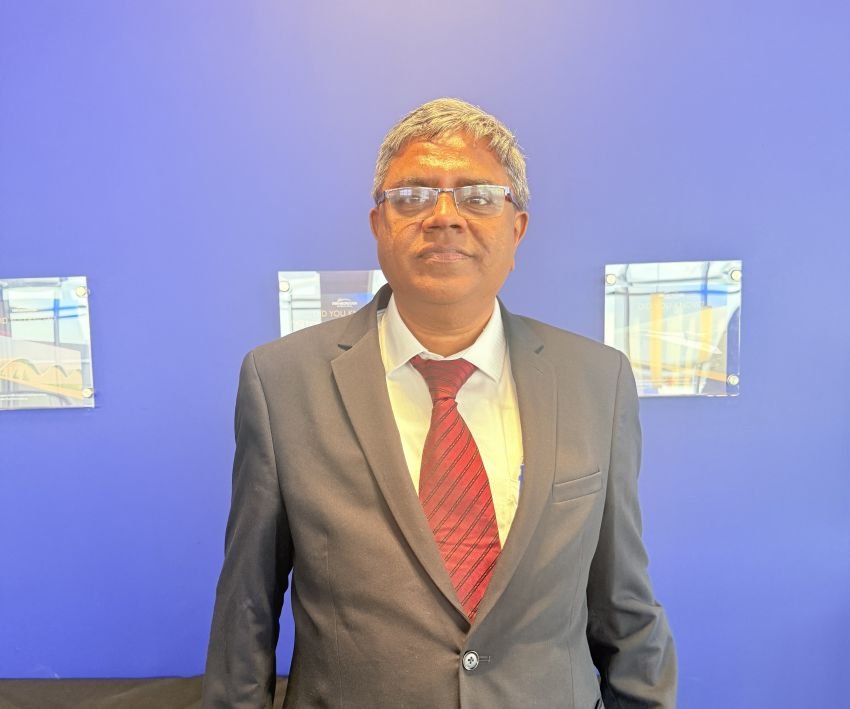
Acron Avionics division priorities in the SAARC region: Ron Nye

As civil aviation across the SAARC region—led by India’s massive fleet expansions— airspace modernisation, safety infrastructure, and fleet compliance have taken center stage. In this exclusive interview, Vishal Kashyap, Managing Editor of Aviation World, speaks with Ron Nye, President of Avionics at Acron Aviation, about the company’s strategic push into the South Asian market, modernising safety compliance with advanced flight recording systems, rollout of NextGen ADS-B surveillance, and localised sustainment partnerships. Excerpts… AW: What are your key priorities for Acron Aviation’s avionics division in the SAARC region? A: Our top priority across the SAARC region is bringing Acron Aviation closer to the customers who rely on our systems every day. That starts with our avionics MRO center in Bangalore, which is already reducing turnaround times and logistics costs for operators across South Asia, and began with flight recorder repair and will expand over the next three years to cover TCAS and display systems. Beyond the physical footprint, we’re focused on three things: building deep local technical talent, aligning our safety systems with each country’s evolving regulatory requirements, and making sure our supply chain can keep pace with the region’s growth. India in particular is one of the fastest-growing aviation markets in the world, and we intend to grow with it, not just sell into it. AW:How is Acron Aviation navigating current global supply chain dynamics and rising demand for its products and services in India? A: Like most of our industry, we’ve had to build more resilience into our supply chain over the past few years, qualifying additional sources for critical components, carrying strategic inventory closer to our customers, and investing in regional repair capability rather than routing everything back through our home facilities. India is a good example of that shift: rising fleet growth and traffic there have driven real demand for our recorders, displays, and surveillance products, and our Bangalore facility is a direct response. It shortens the loop between when a customer needs a repair and when they get their aircraft back in the air. We’re planning our capacity in India around where the market is going over the next five to ten years, not just where it is today. AW: India’s defense sector is strongly prioritizing “Make in India” and defense offset obligations. Is Acron Aviation looking into joint ventures or local manufacturing partnerships for avionics assembly in India? A: We take “Make in India” and the country’s offset framework seriously, because they reflect where a lot of our customers’ fleets and defense programs are headed. We’re actively evaluating what local manufacturing and assembly could look like for parts of our avionics platform, and conversations with potential Indian partners are ongoing. I don’t have a joint venture to announce today, but our approach with ACSS, our long-running venture with Thales on surveillance and collision-avoidance systems, shows how we like to build these relationships: deep technical integration, not just a label on a factory door. Any move we make in India will be built the same way: substantive, long-term, and aligned with what the Indian government and our customers actually need. AW:How do your latest flight data recorders and surveillance systems address specific regulatory frameworks across India and neighboring countries? A: Regulatory frameworks across India and its neighbors aren’t identical, and our systems have to work within each one. Our flight and cockpit voice recorders are already designed to meet the toughest applicable standards, including ED-112 crash-survivability requirements, and our Bangalore facility is pursuing DGCA CAR 145 certification now, with FAA, EASA, and CAAC approvals planned so we can support operators flying across multiple regulatory regimes on the same day. On the surveillance side, our SafeRoute+ and Lynx systems are built to the ICAO standards and regional mandates driving ADS-B adoption. Our job is to stay ahead of where each civil aviation authority in the region is heading, not just where the rules stand today. AW:To meet the airspace challenges, how are Acron Aviation’s TCAS and ADS-B solutions helping its customers improve flight path efficiency and airspace safety? A: South Asian airspace is getting busier every year, and that puts a premium on precise, predictable separation. Our Lynx ADS-B In/Out systems and SafeRoute+ surveillance platform give operators and air navigation service providers much more accurate real-time position data than legacy radar-based separation allows, which supports tighter, more fuel-efficient routing and reduces the padding controllers have to build into flight paths. On the collision-avoidance side, our TCAS systems, developed through our ACSS partnership with Thales, remain a core layer of protection as traffic density increases. Together, those systems let our customers fly more direct routes and closer schedules without compromising the safety margins that matter most in crowded airspace. AW:What initiatives are being taken toward expanding Acron Aviation’s MRO and customer support network? A: Bangalore is the clearest example of where we’re headed: a full-service avionics MRO center that started with recorder repair and is expanding over three years to cover TCAS and display systems too. But it’s part of a broader pattern for us. We want repair and support capability closer to where our customers actually operate, not concentrated in a handful of legacy locations. That means continued investment in field support, engineering resources, and spares availability across the Asia-Pacific region, built on the same quality standards across our global network. Customers should get the same turnaround and the same quality whether their aircraft is being serviced in Bangalore, London, or the United States. AW: What role do strategic partnerships play in Acron Aviation’s product roadmap moving forward? A: Partnerships are central to how we develop products, not an afterthought. Our joint venture with Thales through ACSS has shaped our surveillance and collision-avoidance roadmap for years, and our agreement with Deutsche Aircraft to supply flight recorder and standby systems for the D328eco program shows how we like to work with airframers early, as programs are being defined, rather than bidding after the fact. Going forward, I expect partnerships — with OEMs, with airlines, with regulators, and potentially with

Interview

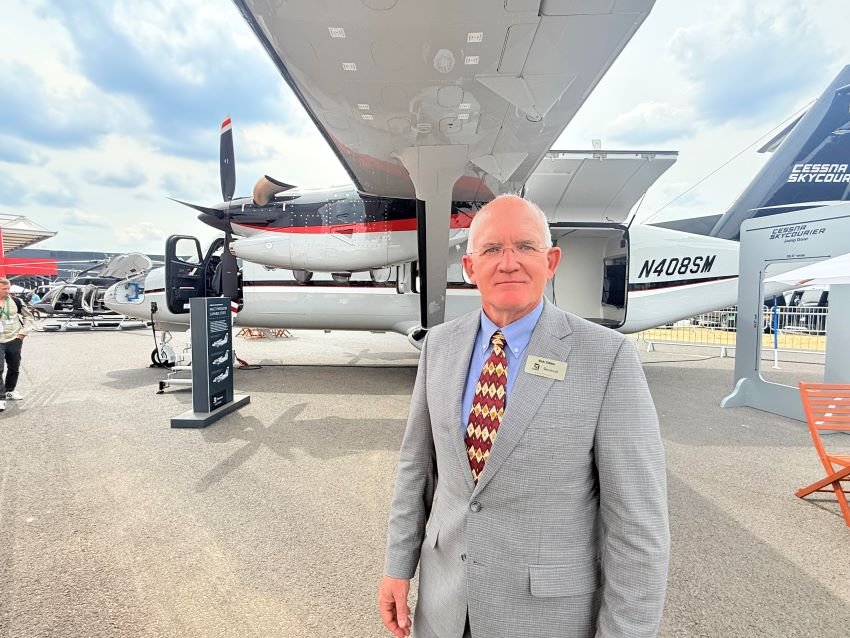
“The Multi-Mission Powerhouse: Bob Gibbs on Why the Cessna SkyCourier is a Game-Changer for India”

As India’s regional connectivity needs continue to grow, Textron Aviation is positioning the Cessna SkyCourier as a flexible, lower-cost aircraft built for commercial, government and special mission operators. In an exclusive conversation with Aviation World Managing Editor Vishal Kashyap, Bob Gibbs, Vice President, Defense & Special Missions Sales, Textron Aviation, explains why the SkyCourier’s simple, durable design makes it well suited for India, Asia-Pacific and a wide range of mission needs. Excerpts: AW: Could you brief us the key capabilities of the Cessna SkyCourier, and share your strategy for expanding its footprint in regional markets? A:The Cessna SkyCourier is our newest clean-sheet aircraft, and it has been in production since 2022. We designed it to do a few things very well: keep operating costs low, deliver strong dispatch reliability and give operators an airplane that is simple to maintain and designed for quick loading, unloading and turnarounds. The flexibility is the key point. SkyCourier can operate as a dedicated freighter, a 19-seat passenger aircraft or a combi aircraft with passengers up front and cargo in the back. The seat tracks run the length of the cabin, so operators have a lot of freedom to configure the aircraft around the mission. Crew requirements depend on the country, configuration and operating rules. In markets where regulations allow single-pilot operations, SkyCourier can give operators additional flexibility, while the 19-passenger configuration requires two pilots. For multi-mission operations, that flexibility matters because a commercial operator, government agency or military customer can configure the aircraft around what it needs to accomplish that day. AW: Focusing on the technical side, what specific engines power the SkyCourier, and how robust are its and avionics in rugged operating environments? A:The SkyCourier is powered by two Pratt & Whitney Canada PT6A-65SC engines and McCauley aluminum propellers. That combination gives operators dependable performance, strong reliability and lower maintenance costs. The aircraft uses the Garmin G1000 NXi avionics suite. The cockpit was designed to feel familiar for pilots coming from aircraft such as the Cessna Caravan or King Air. That was intentional. We wanted the transition to be straightforward, especially for operators moving pilots into their first larger twin-engine turboprop. In markets where regulations allow single-pilot operations, operators can tailor passenger-and-cargo layouts to meet local requirements, keep utilization high and still match the aircraft to the route. That is why we offer that combi-configuration. If an operator faces a regulatory threshold at nine seats, it can reduce passenger count, add cargo and still complete the mission efficiently. AW:Is this flexibility the primary reason commercial operators in APAC are choosing this specific configuration for their fleets? A:Yes, flexibility is a major reason operators are interested in the aircraft. In Asia-Pacific, public operators include Air Marshall Islands and operators in the Philippines, with continued regional interest across Asia-Pacific. Those operators are looking for an aircraft that can move passengers, cargo or a mix of both without adding complexity. Some missions will use the combi setup. Others will be all passengers or all freight. The point is that the aircraft gives operators choices. They are not buying a single-purpose airplane; they are buying a platform they can put to work in several ways. AW: In terms of performance, what is the aircraft’s maximum range in nautical miles, and what is its service ceiling? The SkyCourier is not pressurized, so most operators typically fly it in the 10,000- to 12,000-foot range. The aircraft is certified up to 25,000 feet, which gives crews flexibility when terrain or weather requires it. For operations above 14,000 feet, passenger oxygen requirements apply, but most missions do not need to operate that high. The aircraft offers more than 900 nautical miles of range, depending on configuration. In day-to-day commercial service, the sweet spot is usually a one- to two-hour sector, or roughly 200 to 400 miles. It can go farther when needed, but the economics are especially strong on regional routes. AW: What kind of special missions or specialized roles can this aircraft be configured for? A:The short answer is almost anything. We continue to develop air ambulance configurations and related special-mission capabilities. We are also working on additional utility-mission options, including jump-door and related configurations, subject to program timing and customer requirements. For surveillance and security missions, we are looking at provisions for electro-optical/infrared cameras, radar pods, LiDAR and aerial survey equipment. Those kinds of missions are exactly where the aircraft’s cabin size, payload and endurance become valuable. So whether the need is maritime patrol, border surveillance, medical evacuation, mapping, cargo, personnel transport or disaster response, SkyCourier gives customers a practical platform they can adapt to the mission. AW: Regarding the emergency medical services configuration, how many stretchers can the aircraft accommodate at once, or is that layout customizable for the operator? A:Air medical configurations can be tailored around operator requirements, including one or two medical beds and standard life-support equipment such as oxygen, vacuum, defibrillators and stretchers. Operators can also adapt the layout for mission-specific medical equipment, depending on their requirements. We are also evaluating medical-evacuation layouts that could support disaster response or mass-casualty missions, depending on customer requirements and release approvals. That is different from a traditional air ambulance. It is more about moving several patients safely rather than providing full bedside care in flight. AW: Are you targeting this aircraft primarily at government and institutional clients rather than private or commercial buyers? A:No. Both markets are important. Commercial operators have been important early customers, and government interest continues to grow. Operators are using the aircraft for regional airline service, charter, air taxi and freight. Government interest is strong as well, but those programs tend to take longer. Military and government customers often need more time to validate the aircraft, define requirements and move through procurement. That is normal. The important point is that the same aircraft can support both commercial and government missions. AW: What is the current production and delivery status of the Cessna SkyCourier program? A:SkyCourier deliveries continue to grow, with aircraft operating across

Interview

We are the only firm in India representing both fixed-wing and rotary-wing OEMs in India

In an exclusive conversation with Aviation World, Sudhir S. Rajeshirke, President – Aerospace at Jubilant Enpro Pvt. Ltd. shares insight on aircraft management reform, regional turboprops and the coming HEMS market. Excerpts… AW: Help us understand the role of Jubilant in representing two global OEMs in a market like India, and how has that role evolved? A: Jubilant’s aerospace business has represented OEMs since 1995 and now we represent top aerospace brands such as Bell Flight and Textron Aviation in India. As far as I am aware, we are the only firm in India representing both fixed-wing and rotary-wing OEMs in India. We front-end customer relationships right from the time they first engage with us on assessing the right aircraft for them through the entire life cycle of the product. Our key role is to develop market and ecosystem for an eventual sale of aircraft in India.  When a customer is ready to take delivery, we ensure that the pilots, maintenance infrastructure, training, spares and other support systems are available for a seamless induction and operation of Textron and Bell aircraft in India. In addition, by taking active role in leading industry bodies, we work in development of aviation policies that are conducive to the growth of business aviation in India. AW: The Ministry of Civil Aviation and DGCA have been working on enabling provisions for aircraft management, and eventually for shared ownership. You have argued for this for the better part of a decade. What would be likely impact when the changes come through?  A: Today, a huge hassle for any aircraft customer, typically the companies, State Governments, large institutions, is they have to  start and operate an aviation company which is outside their core domain expertise. They have to hire flight crew, engage maintenance agency and carry out quality, procurement, regulatory activities. This is a huge deterrent as large liabilities are involved. Further, due to complex structuring, customers don’t receive depreciation benefits.  That’s a huge financial loss for an expensive asset. Under an aircraft management model, a professional entity spreads crew, quality systems and administrative capability across a fleet. This model separates the ownership and operation between two parties.  The customer gets ownership and depreciation benefits, the aircraft management company provides professional aviation services, which is it’s core expertise.  Both win. Secondly, the regulator’s job gets easier. Today the DGCA has to oversee a very large number of small operators, many holding one or two aircraft, each with its own systems. That is an enormous supervisory burden on an organization that is already stretched. If a professional aircraft management service provider holds operational and compliance responsibility for several aircraft, the regulator monitors one competent entity instead of many uneven ones. That is better for safety oversight. Thirdly, aircraft management regulations will lay the foundation for aircraft fractional ownership. It is better that these are bought sequentially and not simultaneously as you cannot attempt the second without having proved the first. AW: Turning to regional connectivity, how do the Cessna Caravan and SkyCourier fit India’s requirement? A: The Ministry of Civil Aviation’s UDAN’s Regional Connectivity Scheme succeeded in upgrading tier-2 and tier-3 airport infrastructure and in making air travel affordable on routes that were never served before.  However, two major challenges still exist.  Firstly, airlines need to offer a price that’s affordable at even subsidized levels.  Secondly, planes, need to fly at least half full for profitable operations. These challenges have impacted airlines to serve profitably on aircraft that have more than 70 plus seats but need to serve short-thin routes.   The economics don’t work. The Grand Caravan EX is built precisely for that. It carries up to ten passengers and an airline is able to fill the aircraft on almost all routes. The cost of acquisition and operation helps airlines using Caravan become profitable on RCS routes.  India One Air has been an exemplary example. They built a business model on short-thin routes in North East region and opened up access to locations that were previously unserved in the region.  Another new operator Megamax Aviation will be launching services next year with Grand Caravan aircraft thus making it an obvious choice for RCS operators. The SkyCourier operates a notch above. It is a twin-engine turboprop that carries between 15 and 19 passengers, including cargo combination versions.  For India, e-commerce and pharmaceutical logistics are pushing volume into tier-2 and tier-3 cities faster than the feeder air-cargo network has developed. A twin-engine aircraft with containerized loading and low operating cost is a very sensible answer to that. AW: You have also spoken about HEMS and search and rescue (SAR). Where is that market today? A: India is, to my knowledge, the only major economy still substantially under-served by air medical and search and rescue services. The Ministry of Civil Aviation has made a start: The Sanjeevani pilot, with a helicopter stationed at AIIMS Rishikesh was an important proof of concept. But pilot projects need scale. For HEMS to become a genuine industry in India, three  things need to be resolved. The first is the funding model. Somebody has to pay for the helicopter acquisition and missions. In mature markets that is a combination of insurance reimbursement, state health budgets and subscription schemes. In India, the funding model is not yet developed.  So we need to enable hospital chains to pay for acquisition and have management companies to operate HEMS missions. The second is infrastructure and air congestion within cities for HEMS operations. The third is regulatory and airspace clarity  specific to the mission. HEMS and SAR operate under time pressure and need to occur at a moment’s notice and not wait for any approvals. Initiating search and rescue (SAR) missions need inter-ministerial coordination framework to carry out widespread SAR missions that save lives in times of emergencies such as floods, earthquakes and other natural calamities. AW: How does Bell position itself in that segment? A: Bell has been at the forefront in championing the cause of HEMS and SAR

Interview

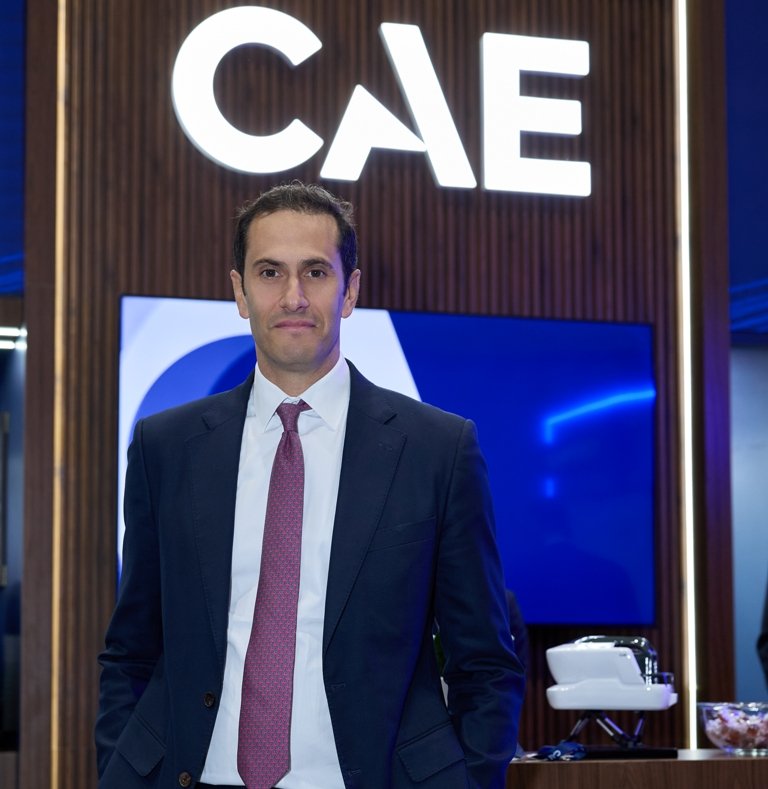
CAE’s Vision for APAC Aviation: Bridging the Talent Gap Through Modernized Pilot Training

As the Asia-Pacific region faces an unprecedented surge in air travel and fleet expansion, the demand for highly skilled pilots and robust operational readiness has never been higher. At the Asia Pacific Aviation Training Summit (APATS) in Bangkok, Vishal Kashyap, Managing Editor of Aviation World caught up with Simon Azar, Vice President Civil Aviation, Asia Pacific at CAE, to discuss how the global leader in flight simulation and pilot training is addressing these challenges. In this exclusive interview, Azar shares insights on scaling training capacity across Asia-Pacific, leveraging next-generation simulation technologies, and ensuring safety standards remain uncompromised amidst the region’s rapid growth. Excerpts… AW: With rapid fleet expansions across India and Southeast Asia driving demand for local support, how is CAE strategically evolving its regional footprint to balance global expertise with localised training capacity? A: India is a very important market for us, as we have been operating in India since 2013 through our training network in partnership with InterGlobe. Recently, we inaugurated our fourth training center in Mumbai, where the first A320 simulator is already operational with the second one is coming into operation as we speak. CAE is nearly an 80-year-old training company and our expertise lies in simulation &training, including the development and delivery of advanced pilot training programs. We are bringing all of this to India, both in terms of our footprint, which we continue to expand to keep up with our customers’ growth, and in terms of training expertise as-we work with different stakeholders to put in place the best training programs for both, airlines and new pilots entering the industry. AW:As civil aviation authorities across the region accelerate their adoption of Competency-Based Training and Assessment (CBTA), how is this measurable shift redefining pilot proficiency compared to the hour-building models? A: The Competency-Based Training as the name says, is really a framework that’s built around pilot’s  behavioural competencies rather than assessing tasks and performance. We believe t it it’s a program that is better suited to delivering well-rounded pilots. This is significant in market like India where there are so many new pilots coming into the ecosystem. When a pilot enters training, the quality of the program is very important and Competency-Based Training and Assessment is what we believe to be a significant step forward for Indian aviation and for the industry globally. Program. This is an approach that we have adopted across the region with that we have adopted across the region with several customers, and we continue to see strong interest in its ability to better prepare pilots for real-world operational environments. AW:With pilot talent remaining a bottleneck for expanding Asian carriers, how is CAE helping airlines scale up without compromising training and safety standards? A: We are working closely with a range of flight schools and airline partners to help develop the next generation of pilots and support their transition onto aircraft platforms such as the Airbus A320 and Boeing 737. It’s very important for us to have these advanced training programs and curricul to make sure that we’re delivering the best possible workforce to our airline partners. We have a large network of instructors, both in the region and in India, which is essential for training more aviation professionals while maintaining the quality needed to uphold safety standards. At CAE, that’s what we do. We are here to prepare people for the moments that matter. Whether its pilots, or cabin crew, or technicians, that’s essentially our reason and purpose and we’re doing that very actively in India to help the ecosystem scale up. Of course, we know airlines are preparing to take delivery of a large number of new aircraft. At the same time, India is continuing to invest in aviation infrastructure. The industry needs people to keep up with that growth, and that’s where we come in. AW:How is CAE engaging with the Indian DGCA and local carriers to scale MPL adoption? Also, is there any scope where India is finally ready to embrace MPL to fast-track its pilot pipeline? A: MPL is a program that we have been delivering for a long time. It’s an approach we believe is highly effective for delivering the right competencies for cadets coming into the workplace. In India, where there is a large number of new pilots required to come into the industry, we believe that MPL is a program that’s more adaptive and more effective to prepare the workforce of tomorrow, using training that is closely aligned with an airline’s operating environment and procedures. That is why we firmly believe in it. We have a framework that’s adaptable to MPL and instructors who are well-trained for it. Our curriculum is well-designed and we have a lot of data from past programs, so we’re able to continuously adapt it to make it even more effective. That’s what we want to bring to India to help scale the talent of its aviation ecosystem, which needs to grow to at an accelerated rate sustain everything that’s happening with the aircraft deliveries and so on. AW:Have you discussed this program with the existing clients like IndiGo or Air India? Are there any positive sign-off responses or are they still in the thinking process? A: No, I think there’s a very positive response from the airlines. It would need to be approved by the DGCA and there many constructive conversations taking place between all of the different stakeholders. CAE brings a lot of experience in MPL as we’ve been delivering this program in Europe and Asia for many years and at scale. A: Currently, we bring this experience and perspective to the table which we share with our airline partners and authorities, and together, a decision will be made on its place in Indian aviation. AW:Any timeline that you expect? A: No, it’s difficult to say in terms of timelines. I think the conversations are active and constructive, but difficult to say what the timeline would be. AW:As low-cost and regional carriers in Asia-Pacific modernize with

Interview

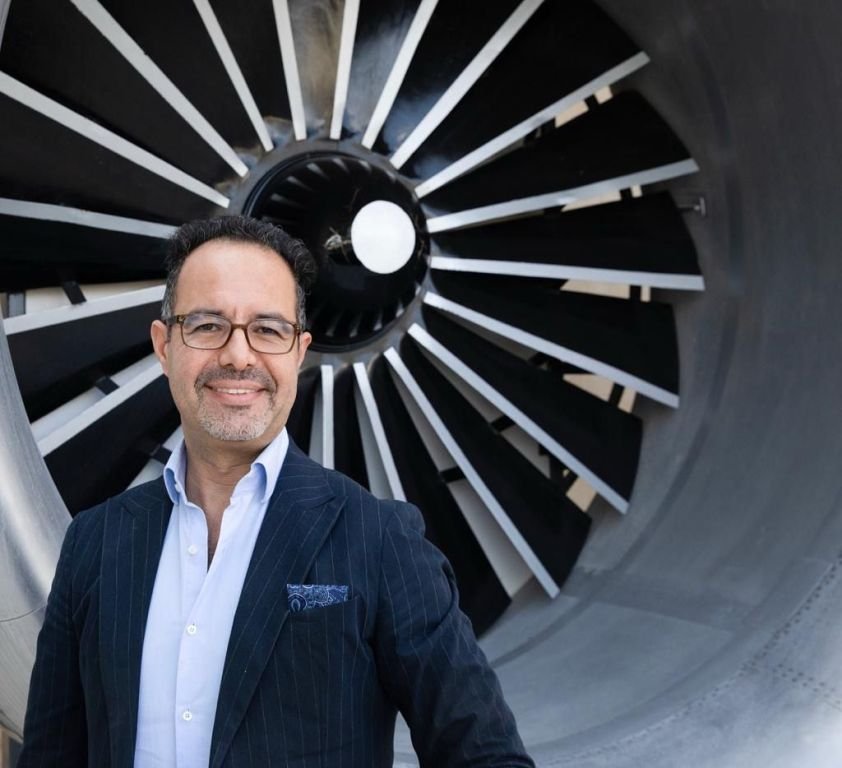
In Conversation with Dr. Satya Chakravarthy & Divya Manchanda of The ePlane Company

At the Farnborough International Airshow, Indian Advanced Air Mobility (AAM) pioneer The ePlane Company (Ubifly Technologies) highlighted its technology vision and announced key global and domestic strategic partnerships. These strategic agreements spanning advanced avionics, aerospace-grade fasteners, composite materials, electrical wiring, modular cabin interiors, and emergency healthcare operations are designed to solidify the e200X ecosystem as it advances through airworthiness certification and industrial production.   During the event, Vishal Kashyap, Managing Editor of Aviation World, sat down with Dr. Satya Chakravarthy(Founder & CEO) and Divya Manchanda (EVP of Business Partnerships & AAM Strategy) to discuss how ePlane is positioning itself to lead the urban air mobility revolution in India and across emerging markets. Excerpts from the conversation: Dr. Satya Chakravarthy, Founder & CEO Q: Could you elaborate on the MOUs signed at the Farnborough International Airshow? At the Farnborough International Airshow, we announced a major strategic partnership with Apollo Hospitals to create an integrated emergency response model combining both our e200X electric air ambulances for critical patient transport and medical delivery drones (via our subsidiary, Amber Wings) for rapid movement of blood products, organs, vaccines, and diagnostic samples. We also announced formalized agreements with several strategic supply chain partners: Azista Composites for composite materials supply. Hensoldt for advanced avionics systems. Ankit Fasteners for aviation-grade fasteners. SASMOS for wiring harnesses, including high-voltage design, application, and on-aircraft installation. AMS Heli for modular interiors and seating, which will support our initial air ambulance variant and allow seamless conversion to future air taxi and cargo configurations. Q: Regarding technology, what system configuration and technical architecture does ePlane employ?    Our aircraft uses a lift-plus-cruise configuration, which means it has separate propulsion systems for vertical take-off and landing, and for forward flight. For vertical flight, the aircraft uses dedicated lift rotors that operate similarly to a helicopter but are controlled using distributed electric propulsion, much like a drone. Once airborne, the aircraft transitions to forward flight using dedicated cruise propellers, allowing it to fly like a conventional fixed-wing aircraft. This architecture eliminates the need for complex tilting mechanisms found in tilt-rotor designs, resulting in a simpler, lighter, and more reliable system. From a safety perspective, the aircraft features a hex-rotor configuration for vertical lift. This provides redundancy, enabling the aircraft to continue safe flight even if one lift rotor or its associated motor or battery were to fail. Similarly, the aircraft is equipped with four forward propellers, allowing it to safely handle a one-engine-inoperative scenario during cruise flight. Another key differentiator is our proprietary Synergistic Lift technology. We have developed an in-house method of utilizing the vertical lift rotors during forward flight to improve the aerodynamic performance of the wings. This enables us to achieve a highly compact aircraft without compromising efficiency or performance. The result is an aircraft that can fly both slowly for safe urban operations and efficiently at higher speeds, maximizing the number of short trips that can be completed on a single battery charge. This innovation is protected by patents granted in approximately 15 jurisdictions worldwide, including the United States, underscoring the uniqueness and strength of our technology. Q: When can we expect the ePlane prototype to be operational?   Our full-scale PT-01 prototype is built and currently undergoing ground testing. We expect to initiate flight testing shortly before transitioning to our second prototype, PT-02. PT-01 serves as an unmanned experimental scale technology demonstrator. PT-02 will be our conforming aircraft, built specifically for the air ambulance configuration and to demonstrate compliance to certification requirements. We plan to build PT-03 as an identical sister ship to PT-02, allowing both aircraft to jointly accumulate certification flight hours through 2027. Toward the end of that period, we will introduce the air taxi variant, pursuing additional certification above the air ambulance baseline. Our target timeline is to obtain Type Certification by mid-2028. Q: What services will be offered during the first phase of operations?    Our initial go-to-market focus is the air ambulance variant. Urgent medical transport addresses a critical societal need in India, where traffic congestion frequently delays emergency responses, trauma care, cardiac treatment, and organ transit. By partnering with hospital networks like Apollo Hospitals integrating both electric air ambulances for patient transfer and delivery drones for urgent supplies, we aim to drastically lower operational costs and bring medical logistics down from hours to minutes, making air transport eligible for health insurance coverage. The second one is the air taxi variant which could cater to a lot of other use cases like for example not just doing the air taxi within urban areas but also airport shuttles which is again a time critical need, remote area access like hilly terrain and so on plus tourist attractions, pilgrim centers.  Q: This sector is still at a very nascent stage and requires lots of planning and infrastructure. How do you  assess such situations? One of the key differentiators of our aircraft is its exceptionally compact design, which sets it apart from many other eVTOLs being developed globally. Our proprietary Synergistic Lift technology enables the vertical lift rotors to work in conjunction with the wings during forward flight. This allows us to achieve a much smaller wingspan and overall footprint without compromising performance or efficiency. The compact form factor offers a significant operational advantage. It enables our aircraft to use many existing helipads, allowing us to leverage current infrastructure during the initial phase of deployment rather than waiting for an entirely new network of vertiports to be built. As the ecosystem evolves, we will develop dedicated vertiports optimized for our aircraft. Because of the aircraft’s compact footprint, these vertiports can be even smaller than conventional helipads, making them easier and more cost-effective to deploy in dense urban environments. By combining compatibility with existing helipad infrastructure and the ability to build smaller, purpose-designed vertiports in the future, we believe we can accelerate the adoption of Advanced Air Mobility Q: Is there any global affiliation required as well for operations?   There are two aspects to this. First, the

Interview

Building India’s Next Generation Aviation Workforce: Capt. Vaibhav Goutham Suresh

Aviation World exclusive Interview with Capt. Vaibhav Goutham Suresh, Director,  School of Aviation, Logistics and Tourism Management (SALTM), Galgotias University AW: Aviation, logistics and tourism are different sectors, yet Galgotias University chose to bring them together under one school. What was the core philosophy behind uniting these three fields in a single school? VAIBHAV:  Because in the real world, they were never truly separate. A passenger’s journey, a cargo consignment and a traveller’s experience all move through the same connected system- an aircraft, a supply chain and a destination that succeed or fail together. When a flight is disrupted, logistics and hospitality feel it within the hour. We built SALTM around that reality. Housing aviation, logistics and tourism under one roof means our students learn to see the whole movement economy rather than a single silo. An airline manager who understands supply chains, or a tourism professional fluent in aviation operations, is far more valuable than a narrow specialist. We are not teaching three unrelated subjects; we are teaching one interconnected ecosystem through three doors. AW: There is often a gap between academic curriculum and real industry requirements. How is SALTM breaking away from the traditional learning model to ensure students are genuinely ‘plug-and-play’ when they enter the workforce? VAIBHAV: The gap between higher education and the aviation sector exists because the two operate on fundamentally different timelines. Consequently, by the time a syllabus catches up, the challenges it was designed to solve have already shifted, leaving graduates fluent only in yesterday’s aviation. Closing this gap requires more than superficial adjustments or formal agreements; it demands a fundamental shift in educational design. We have inverted the traditional model, which prioritises years of isolated theory and hopes relevance follows by engineering our curriculum backwards from actual employer requirements. We adapt simulations, live projects, case work and real operational problems from the very first year.  The centrepiece is a full semester-long industry internship: our students do not visit the industry for a week; they work inside it for months, so they graduate with genuine operational experience, not just a transcript. By the time they enter the workforce, they have already done the job. That is what ‘plug-and-play’ means to us- a graduate who is productive on day one, not after six months of hand-holding. AW: You describe running the school on the principles of a ‘High-Reliability Organisation HRO).’ What does that mean inside a university? VAIBHAV: Aviation is the textbook High-Reliability Organisation. An industry that works in genuinely hazardous conditions yet achieves an extraordinary safety record, because of a particular culture rather than luck. I believe an institution that educates for that industry ought to run itself the same way. In practice, that means a few things. A preoccupation with failure: we treat a disengaged student, or a graduate who was not quite ready, as a near-miss to be studied openly, not an embarrassment to be buried. A reluctance to oversimplify: we resist reducing a young person to a single grade or a single metric, because the real story is always more textured. A sensitivity to operations: leadership stays close to the classroom, because that is where the truth of an institution actually lives, not in the boardroom. And a deference to expertise over rank: in a well-run cockpit, the most junior officer can speak up and be heard, and the same must be true of a junior colleague, or a student, who sees something the rest of us have missed. Reliability, in the end, is not a rulebook. It is a culture of honesty and attention, and if we intend to send that culture out into the industry, we have to live it ourselves first. AW: Travel has changed enormously in recent years. How have you rewired the curriculum to prepare students for this ‘new normal’? VAIBHAV: Travel today is digital, experiential and personalised in a way it never was before. Today’s traveller researches, books and shares almost entirely online, expects authentic and sustainable experiences, and behaves very differently from a decade ago. We have rewired our tourism curriculum around that reality- digital travel technology and online distribution, experience and destination design, sustainable and responsible tourism, and the data skills to actually understand the modern traveller. We have also moved the classroom closer to the field, with hands-on exposure to how destinations, hospitality and travel technology really operate. The goal is a tourism professional fluent in this new, technology-driven, experience-led economy, not the travel industry of twenty years ago. AW: The logistics sector is increasingly driven by AI, automation and data analytics. How are you embedding these next-generation tools directly into the academics? VAIBHAV: You can no longer teach logistics as trucks and warehouses; it has become a data-and-technology discipline, and we have embedded that directly into the academics. Our supply-chain students work with data analytics, automation concepts and the digital tools that run modern logistics, from analytics-driven decision-making to the AI and automation reshaping warehousing, freight and last-mile delivery. Just as importantly, we teach students to think with data, not merely about it. A modern logistics manager must be as comfortable with a dashboard as with a loading dock, and that is exactly the professional we are building. AW: Aviation has long trained people on the job. Why does it need a dedicated university education at all? VAIBHAV:  Because aviation is not a set of tasks, but a system, and a safety-critical one. You can train a task on the job; you cannot train judgement, systems-thinking and professional temperament on the job alone. Education’s role in a field like ours is to form the whole professional: someone who understands not only their own function but how the entire machine fits together, who can make a sound decision when the manual runs out, and who carries the discipline this industry quietly depends on. As aviation grows more complex, with more technology, more regulation, and more interconnection between everyone in the value chain, the case for deliberate, structured education only strengthens.

Interview

Aviation World exclusive interview with Karim Makhlouf, CCO,Royal Jordanian Airlines

In an exclusive interview with Vishal Kashyap, Managing Editor of Aviation World, Karim Makhlouf, Chief Commercial Officer(CCO), Royal Jordanian Airlines, outlines the carrier’s forward-looking commercial strategy. From aggressive fleet expansion and modernization to steering the airline back into profitability despite complex geopolitical headwinds, Karim Makhlouf breaks down the definitive factors driving Jordan’s national carrier into a new era. Excerpts: AW:  For Aviation sector Q2 2026 is highly challenging. What strategies did you adapted to keep your airlines flying and maintain operational performance intact in line with the previous quarter? KM : Throughout the recent geopolitical challenges, Royal Jordanian remained one of the very few airlines in the region to operate consistently. Through close coordination with the Jordanian Government and the Armed Forces, we secured dedicated flight corridors that enabled us to maintain safe and reliable operations while prioritising the safety of our passengers and crew. Our ability to maintain uninterrupted services during this period strengthened passenger confidence in the airline and reinforced our reputation as a reliable carrier. Despite the challenging operating environment, our commercial performance remained in line with our budget expectations, reflecting the resilience of our business and the dedication of our teams. AW:  How do you assess the regional uncertainty and confusion impacting the airlines operational efficiency in future? KM :We believe the most challenging period is now behind us, and the outlook for the months ahead is encouraging. Booking trends for the summer season and beyond continue to show positive momentum, with stable demand across our network. While we remain mindful of the evolving regional environment, we are optimistic about the future. Supported by resilient demand, a flexible operating model, and our continued focus on delivering a reliable travel experience, we are confident in our ability to sustain recovery and drive long-term growth. AW:   What are the new routes that Royal Jordanian has launched in the recent times? What are the plans for year ahead? KM :Over the past four years, Royal Jordanian has significantly expanded its network by launching 28 new destinations, including Vienna, Dallas, Tashkent, Alexandria and Trabzon, further strengthening connectivity across Europe, North America, Central Asia and the Middle East. Looking ahead, we will continue to pursue a disciplined and selective network expansion strategy, focusing on markets that offer strong commercial potential and support inbound tourism to Jordan. At the same time, we remain committed to strengthening our position as the leading carrier in the Levant by enhancing connectivity through our Amman hub and creating greater travel opportunities for both leisure and business travellers. AW:   Royal Jordanian achieved JOD 21.5 million net profit in 2025. What are the factors that led to such rewarding results? KM :Our strong financial performance in 2025 reflects the successful execution of a long-term transformation strategy focused on building a more agile, efficient and customer-centric airline. Key drivers of this turnaround included restructuring the business, improving aircraft utilisation and increasing seat load factors across our network. At the same time, we placed tourism at the heart of our commercial strategy while reinforcing Royal Jordanian’s position as the leading network carrier in the Levant. By combining operational efficiency. ( The interview is also published at Aviation World July-August 2026 print edition) 

Interview

The Grandmaster Returns: Mentor of Mentors “Param Ajahan Guruji Shrii Arnav”

NINE PLANETS | TWELVE HOUSES | ONE SKY In the winter of the pandemic, when the world’s fleets stood grounded and the industry’s forecasts read like obituaries, one voice in these very pages called the turnaround — exactly to the month. As Farnborough 2026 gathers under the banner of Sustainability and AI, Aviation World returns to the Grandmaster. 1: THE PREDICTION THAT LANDED Every publication keeps a private ledger of the things it printed that came true. Ours has an entry that still draws a quiet smile in the newsroom. At the height of the COVID crisis — when aircraft were parked nose-to-tail in desert boneyards and the most sophisticated forecasting models of the industry could not agree on a recovery year, let alone a quarter — Aviation World sat down with an unusual interviewee: Guruji Shrii Arnav, the Forbes-recognized “Mentor of Mentors,” Father of Astro Gemology, and mentor of Gemstoneuniverse, the world’s leading authority on planetary Gemology. Asked for his observations on the sector, he did not hedge. The turnaround, he told our readers, would begin in December 2022 or January 2023 — and the resurgence would be led by Asia. That is precisely what happened. Asia-Pacific reopened, traffic surged, and the recovery unfolded on the timeline he named — a timeline he gave without a terminal of data, without a consultancy behind him, in an era when optimism itself seemed irresponsible. He also welcomed, in the same conversation, the Maharaja’s return home — the Air India story that would go on to anchor the largest aircraft orders in the history of Indian aviation. Readers of this magazine have seen the association deepen since. Our July–August 2023 edition — the cover carrying the Honourable Prime Minister Shri Narendra Modi’s meeting with Boeing’s chief executive in Washington, above “The Big Aviation Deal of India” — carried the Gemstoneuniverse marque on that same front page. The Grandmaster’s world and the world of aviation have been travelling companions in these pages for years. II: FROM CERN TO LE BOURGET TO FARNBOROUGH The road to this Farnborough feature runs through some unexpected coordinates. In 2025, at a live AMA with research fellowship scientists at CERN — beneath the shadow of the Nataraja that stands on that campus — a young physicist asked him directly: “Guruji, do you need Artificial Intelligence?” His answer has since travelled far: “No. But the world needs Real Intelligence.” He followed it with a definition that he offered, characteristically, as a humble suggestion to the dictionaries: Intelligence is knowledge acquisition and its application, keeping in view its implications, while understanding the true ramification. From CERN he carried that definition to the AI Conference at the 55th Paris Air Show at Le Bourget, where leaders of aviation, aerospace, and defence converged — and where he framed the AI revolution in a single image the industry has not forgotten: a cosmic tandava — creation and destruction in one dance — “and we must dance wisely.” He has not merely philosophized. In August 2025, at dawn in Bangkok, he consecrated and activated the Gemstone Universe GPT on the OpenAI platform — among the first spiritual knowledge systems in the world to be formally embodied in AI, trained exclusively on his verified works, and launched, in his words, because “technology without dharma is like a gemstone without light — lifeless.” The innovation earned him recognition including the prestigious Nelson Mandela Award for AI innovation in Astro Gemology. The arc is worth stating plainly, because no one else in the world owns it: in 2023 he published the industry’s most unfashionable caution against AI herd-mentality; in 2025 he stood at CERN and Le Bourget defining what intelligence must mean; by that August he had built on the very platforms he had warned about — on his terms, with dharma as the operating system. Sceptic, definer, builder. Three acts, all on the public record. And as this edition goes to print, July 2026 finds him engaged in rare private dialogue at the very frontier of technology — of which the world will hear in due time. III. THE MAN Author of The Secrets of Jyotish Gems — the magnum opus of Astro Gemology, published in six languages and released by His Excellency the President of India, Shri Pranab Mukherjee — Guruji Shrii Arnav has been the astrology columnist of Deccan Herald since 2007, a span approaching two decades of unbroken weekly counsel to one of India’s great newspapers. He is accredited by the Gemological Institute of America, associated with the Planetary Gemologists Association of Thailand, and is the architect of Jyotish Gemstones Therapy (JGT™), the proprietary 69-step protocol that standardized a field once ruled by guesswork. His counsel travels in circles that rarely intersect: statesmen and admirals, founders and flag officers, engineers and mystics, across more than fifty countries and three decades of practice. In 2023, the Inspiring India volume placed him among thirty-one personalities defining the nation’s spirit; in 2025, his essay on leadership and destiny appeared in the Businessworld group’s wellbeing edition. And through all of it runs his signature proprietary framework — ️9:12 The Guruji Shrii Arnav Way: Speed. Timing. Efficiency. — where nine is wisdom and twelve is applied cosmic motion. Later this year he extends that framework into publishing once more, with a new digital work distilling three decades of counsel into the nine mistakes that quietly decide human destinies — a book already awaited by a global readership. THE QUESTION Farnborough 2026 convenes under a theme the Grandmaster seems to have been walking toward for years: Sustainability and AI in Aviation. The industry that carries humanity across the sky is asking what kind of intelligence should sit beside the pilot, and what kind of conscience should sit beside the engineer. Those who have followed the Grandmaster’s writings know he rarely explains how he arrives where he arrives. When pressed, he offers only what he calls an old jungle saying: “When you reach a dead end, do not despair —

Interview

The Minds Behind Smarter Aviation Asset Management!

A Conversation with the Leadership Behind AirFleet Managers & Aviatrics Global As the global aviation industry navigates accelerated fleet transitions, lease restructurings, evolving regulatory requirements, and the rapid adoption of digital technologies, aircraft owners, lessors, airlines, and investors are placing greater emphasis on technical expertise, operational transparency, and efficient asset management. In this dynamic environment, the ability to combine engineering excellence with digital innovation has become a key differentiator. In this exclusive conversation with Aviation World Magazine, Pallavi Joshi and Vimal Priya share their insights on the industry’s evolving landscape and discuss how AirFleet Managers and Aviatrics Global are helping shape the future of aviation asset management. From aircraft deliveries and lease transitions to technical consulting, digital asset management, and proprietary software platforms, they explain how their organisations are enabling clients worldwide to protect asset value, improve operational efficiency, and navigate the complexities of modern aviation with confidence.  Strategic Vision & Digital Innovation Interview with Pallavi Joshi, CEO & Co-Founder Aviation World: What has been the guiding philosophy behind your growth, and what core values shape your reputation? Pallavi Joshi: From the beginning, our philosophy has been simple – build trust through technical excellence, integrity, and consistency. Every aircraft transition or technical inspection has significant financial implications, so our role is to provide independent, reliable solutions that clients can confidently rely on. We focus on long-term partnerships rather than just growth, approaching every assignment with strict attention to detail. Aviation World: Preserving asset value is a constant pressure for lessors. Where do they need the strongest support in today’s market? Pallavi Joshi: Lessors need complete technical visibility across the entire lease lifecycle – from delivery and in-service operations to redelivery and onward placement. One of the biggest challenges is maintaining accurate, complete, and audit-ready technical records. Missing documentation or unresolved compliance issues drastically impact an aircraft’s marketability and residual value. Identifying these issues early allows lessors to avoid costly surprises during compressed transition schedules. Aviation World: You have invested heavily in combining engineering with proprietary technology. How does this digital suite change the workflow for your clients? Pallavi Joshi: Aviation is increasingly data-driven, and clients want information that is accessible, organized, secure, and actionable. Technology doesn’t replace engineering experience; it strengthens it.  AFM Vault & WingsVault provide secure digital records management.  AFM DARTS simplifies collaborative discrepancy tracking during deliveries. AFM Track offers real-time visibility into airworthiness and transitions. SmartAviaHub unifies critical operational intelligence into a single dashboard to drive faster, better-informed decision-making. Aviation World: Looking ahead over the next few years, what is your ultimate ambition for the global reach of the company? Pallavi Joshi: Our ambition is straightforward – we want to be the partner clients think of first when they need dependable aviation asset management globally. We are actively expanding internationally, investing in digital capabilities, and strengthening our technical teams to stay ahead of rapid industry shifts. Our core goal remains to build partnerships that last for years, or even decades, by consistently delivering with absolute integrity. Engineering Precision & Commercial Execution Interview with Vimal Priya, Co-Founder & Technical Director Aviation World: From an engineering standpoint, what differentiates your technical team’s approach from other service providers? Vimal Priya: Experience certainly matters, but consistency matters even more. Every aircraft, operator, and lease agreement has its own specific requirements. Our engineers understand that technical management isn’t just about blindly following a checklist – it’s about understanding the commercial impact behind every technical decision. Our vast operational history helps us anticipate bottlenecks long before they turn into expensive problems for our clients. Aviation World: Your team has achieved several major technical milestones. Which accomplishments best represent your capabilities? Vimal Priya: We have successfully supported over 260 aircraft deliveries and redeliveries while executing complex lease transitions across multiple regions. Furthermore, AirFleet Managers became one of the first independent organizations in India to receive DGCA CAR-145 approval for borescope inspections. We have also become one of the region’s leading specialists in technical records digitization, helping operators transform legacy paper archives into secure, searchable digital assets with over 17 billion records digitized. Aviation World: Aviatrics Global has grown rapidly in less than two years. How does its commercial and logistical focus complement the technical depth of AirFleet Managers? Vimal Priya: We realized clients were constantly juggling multiple vendors for aircraft trading, component sourcing, logistics, and fleet remarketing. We created Aviatrics Global to deliver those commercial capabilities under a single umbrella. The synergy has been highly successful: in less than three years, we have facilitated the movement of over 12,000 aircraft components globally, managed the transportation of over 60 engine and APU stands, and supported the import/export of over 35 engines and 25 aircraft. Aviation World: What final takeaway message would you like to leave with aircraft owners, lessors, and financiers? Vimal Priya: Aircraft are long-term investments, and safeguarding them requires a partner who deeply understands both engineering precision and commercial realities. Whether we are managing a complex lease transition, conducting maintenance audits, or sourcing assets globally, our objective is always to maximize performance while reducing operational risk. Trust isn’t built through slick presentations; it is built by being transparent, highly responsive, and consistently delivering quality when it matters most. About AirFleet Managers AirFleet Managers is a global aviation technical consultancy delivering end-to-end solutions across the aircraft asset lifecycle. Its expertise spans aircraft asset management, lease transitions, aircraft deliveries and redeliveries, technical due diligence, CAMO support, maintenance audits, engine and APU management, aircraft records management and digitisation, ferry services, and aircraft sale and purchase support. Complementing its engineering capabilities is a comprehensive suite of proprietary aviation software platforms designed to digitalise technical asset management and improve operational efficiency. AFM DARTS streamlines aircraft records management and technical documentation, enabling faster reviews, improved compliance, and audit readiness. AFM Vault and WingsVault provide secure, cloud-based repositories for aircraft records and asset documentation, ensuring accessibility, traceability, and data integrity throughout the asset lifecycle. AFM Track offers real-time visibility into aircraft deliveries, lease transitions, maintenance events, and technical projects,

Interview

Shaping the Skies: Acron Aviation’s Bold Bet on Indian Avionics and Defense

Acron Aviation is making massive strides in India’s aerospace sector, backing its ambition with significant investments in next-generation avionics and advanced surveillance infrastructure. Already a dominant player in the region—most notably through its widespread deployment of ADS-B Aircraft Surveillance & Tracking Systems—the company is firmly positioning itself as a cornerstone of India’s modernized airspace. In an exclusive conversation with Vishal Kashyap, Managing Editor, Aviation World, Robin Glover Faure, Chief Customer Officer, Acron Aviation, dives deep into the company’s strategic alignment with the ‘Make in India’ initiative, its expanding footprint within the Indian defense sector, and the technology defining the future of Indian skies. Excerpts from the interview… AW: Verticals: What verticals is Acron currently working in within India? ROBIN: India is one of the most dynamic aviation markets in the world right now, and Acron is engaged on two fronts. The first is avionics and surveillance: through ACSS, our joint venture with Thales, we supply ADS-B, TCAS and flight recorder product lines across India’s commercial, regional and general aviation fleets. The second is flight data intelligence: our Flight Data Connect platform brings FDM/FOQA services to Indian operators, backed by our role as an analysis partner in IATA’s Flight Data eXchange. One thread runs through both — helping India’s operators fly safely and efficiently through one of the fastest fleet expansions in aviation history. AW: What is Acron’s current market presence with ADS-B Aircraft Surveillance & Tracking Systems in India? How can it work as an alternative to secondary surveillance radar at remote regional airports? ROBIN: Consider what India is attempting. The UDAN regional connectivity scheme has already brought scheduled service to 95 airports, heliports and water aerodromes across more than 660 routes, and the newly approved Modified UDAN programme commits ₹28,840 crore to develop a further 100 airports over the coming decade. Many of these sit in the Himalayas, the Northeast and on islands — exactly the places where building and maintaining secondary surveillance radar is slow, difficult and expensive. ADS-B turns that problem on its head. Instead of a ground radar interrogating the aircraft, the aircraft determines its own position via GPS and broadcasts it continuously to air traffic control and to other aircraft — no rotating antenna needed on a mountaintop. DGCA’s own ADS-B Out guidance makes the point: satellite-based surveillance fills the gaps in remote and high-terrain areas where radar coverage is difficult or uneconomical, complementing the existing radar network rather than simply replacing it. That ground-infrastructure-light model is precisely what a fast-expanding regional network needs. And Acron is ready for that build-out today. Our surveillance portfolio — the NXT 600, the Lynx ADS-B In/Out transponder and display system, our Mode S transponder line and SafeRoute+ — is built on ACSS heritage, certified by the FAA and EASA, and designed for exactly this kind of regional and mixed-fleet deployment. Nor are we arriving from a standing start: ACSS-manufactured TCAS 3000SP and T3CAS systems and Mode S transponders already fly with Air India, Air India Express and IndiGo, and selected ACSS surveillance solutions are installed on aircraft platforms manufactured by Hindustan Aeronautics Limited. From the country’s largest airlines to its indigenous aerospace programmes, we are already on board. On the heels of our highly successful ADS-B Evaluation program with the FAA and American Airlines, Acron is exploring the opportunity for a similar pilot program in India. In partnership with Indian air carriers, the DGCA and the Airports Authority of India, this program would serve to validate the operational and safety benefits available to the airlines while also demonstrating the value ADS-B technology brings to the modernization of the Indian airspace management infrastructure. AW: As DGCA progressively aligns with global ADS-B Out mandates, how do Acron’s transponders maintain dual compliance with Indian CAR and international standards for cross-border operations? ROBIN: Our answer is simple: we build to the standard the world builds to. DGCA’s ADS-B Out requirement has been in force since June 2023 for aircraft operating at or above FL285 on specified ATS routes in Indian continental controlled airspace, and it was deliberately designed to align with the global shift toward satellite-based surveillance under ICAO’s Aviation System Block Upgrade framework. Acron’s transponder and surveillance systems — including the Lynx ADS-B In/Out transponder and our Mode S product lines — are certified to the international technical baseline that underpins all of these mandates: RTCA DO-260B for ADS-B message formats, ICAO Annex 10 Volume IV for surveillance systems and DO-160G environmental qualification, carrying FAA TSO authorisations and EASA STC approvals. Because DGCA’s regulatory framework is built to be interoperable with ICAO standards and with FAA and EASA precedent, the same transponder that carries an Indian operator across international boundaries also satisfies domestic carriage requirements. No India-only hardware variant, no fork in the fleet, no compliance surprises as the route map grows. AW: How do you pitch the ROI of upgrading to ADS-B In (like SafeRoute+) to a cost-sensitive LCC in the region? ROBIN: I would start by reframing the question: SafeRoute+ is a retrofit, not a re-equip. It’s a software upgrade to existing T3CAS or TCAS 3000SP computers plus addition of a low-cost ADS-B Guidance Display. The system integrates with the aircraft’s existing displays and control units. As a result, both the capital outlay and the aircraft-on-ground time are a fraction of a traditional avionics upgrade. Then look at what it returns. SafeRoute+ gives pilots a 180-nautical-mile forward-field view of surrounding traffic, and the results from American Airlines’ FAA-evaluated trials at Dallas–Fort Worth and in Albuquerque Center airspace are hard numbers, not projections: roughly 490,000 pounds of fuel and 700 metric tonnes of CO₂ saved at DFW in the first year alone, the potential for four to five additional landings per runway per hour, and tighter in-trail spacing with fewer go-arounds. American has since extended the capability across nearly 300 of its A321s. For an LCC flying dense short-haul rotations through congested, capacity-constrained hubs, every minute of holding, every avoided go-around and every kilogram of fuel drops straight to the

FOREWORD

Dear Readers,

The Asia-Pacific aviation sector is expanding rapidly, driving growth far beyond aircraft numbers into crucial verticals like MRO, training, logistics, and aerospace supply chains. In this edition of Aviation World, we bring you exclusive interviews and features from across these sectors, offering direct industry insights from top global leadership.

Our cover story highlights Shveta Gupta, CEO of Divyanshi Aviation. Under her dynamic leadership, the company has established itself as one of India’s premier aerospace supply chain providers, partnering with leading global manufacturers. Our corporate feature delves into Divyanshi Aviation’s core operations, paired with an exclusive interview where Ms. Gupta candidly shares her professional journey and vision for the company’s future.

This issue also features exclusive conversations with prominent industry leaders, including:

  • Ron Nye, President of Avionics, Acron Aviation
  • Bob Gibbs, Vice President, Defense & Special Missions Sales, Textron Aviation
  • Sudhir S. Rajeshirke, President – Aerospace, Jubilant Enpro
  • Emmanuel Simon, Program Manager and Aerospace Leader, PHINIA
  • Arved von zur Muehlen, Chief Commercial Officer, Saudia Group
  • Simon Azar, Vice President, Civil Aviation, Asia Pacific, CAE

Each leader offers key perspectives on their organization’s strategic initiatives and their growing contributions to the Indian aviation and aerospace ecosystem. Additionally, you will find expert-authored analytical features offering deep dives into current sector trends.

Aviation World continues to expand its global footprint as an official media partner for major domestic and international aviation events. Our editorial team will be participating in several upcoming global forums, and we look forward to connecting with industry peers and exploring new collaborations.

We extend our sincere gratitude to our advertisers and partners whose continued support fuels our endeavor.

Happy Reading!

The Editorial Team

Aviation World

NEWSLETTER

Aviation World Magazine is India’s premier aviation magazine and has been actively supporting the development of the Indian and global civil aviation sector. We started our journey in year 2015 and its been 12 years now and the response and acceptance is really encouraging. Thanks to all our associates and writers who remained with us in our progressive journey.

We have started 2026 on a very positive note and we look forward to increase our footprints to more locations and induct many more new companies in our campaign.. Do write to us at : editor@aviationworld.in

Disclaimer

The contents published in this website are news covering Aviation, Aerospace and Defence sector. The objective is to provide news in informative form to keep our readers updated of the latest development. We also publish content featured in our print publication Aviation World.We try our best to avoid any factual errors or image displayed here but we ensure immediate corrections to any such thing brought to our notice that might have been published inadvertently. All images and contents are sourced from the relevant organisations media team.

Copyright ©2014 – 2026. AVIATION WORLD. All rights reserved.

Scroll to Top