Drones

Drones

Eve Air Mobility and FDOT Partner to Advance Advanced Air Mobility in Florida

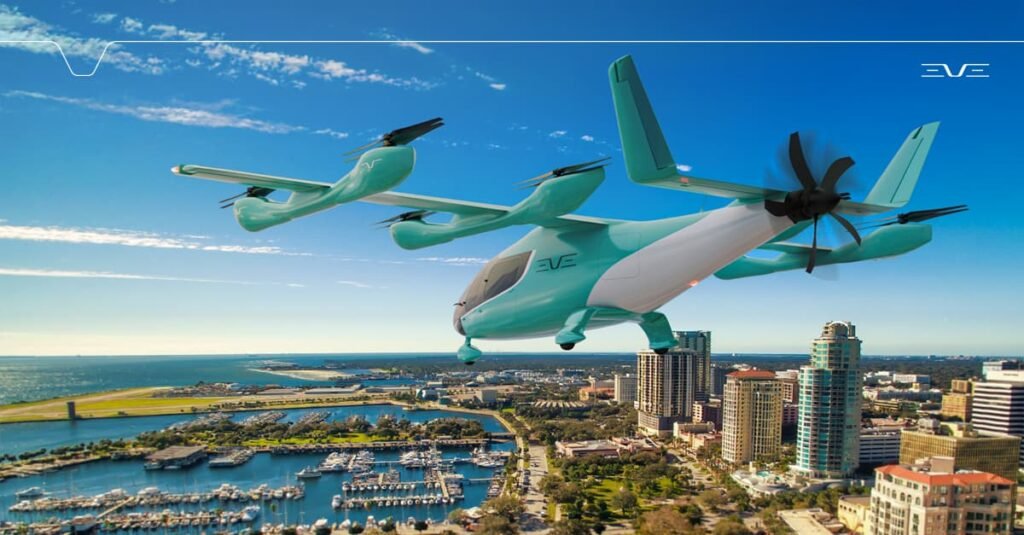
Farnborough International Airshow, England, July 22, 2026 Eve Air Mobility, a global leader in eVTOL aircraft and integrated services, is announcing a partnership with the Florida Department of Transportation for a focused Advanced Air Mobility initiative at SunTrax Air. The FDOT-led initiative will bring together Eve’s expertise in eVTOL aircraft, operations, and services with SunTrax Air’s research, testing, and validation capabilities. The effort will focus on delivering insights into the infrastructure, operational procedures, and airspace navigation procedures needed to enable the safe and efficient integration of Advanced Air Mobility into Florida’s transportation network. “Florida recognizes its strategic role in the future of Advanced Air Mobility and is proactively building the ecosystem needed to support it,” said Johann Bordais, chief executive officer of Eve Air Mobility. “Chief Will Watts and the FDOT team understand that successfully introducing a new mode of transportation requires alignment across aircraft, infrastructure, operations, and communities. Building on Embraer’s longstanding relationship with the state, Eve is proud to bring its expertise to help advance Florida’s vision and readiness for eVTOL operations.” Owned and operated by FDOT, SunTrax Air serves as Florida’s dedicated Advanced Air Mobility research and development hub, providing a collaborative environment to evaluate technologies, operational concepts, and supporting infrastructure for next-generation aviation. “This partnership is another step of forward-progress being made in Florida toward achieving the implementation of Advanced Air Mobility,” said Jared W. Perdue, P.E., FDOT Secretary. “The unique resources and infrastructure found only at SunTrax will play a key role in Eve’s research and testing needed to ensure the safe integration of Advanced Air Mobility into our transportation system.” The partnership builds on the growing relationship between Eve and FDOT. Through ongoing collaboration, the organizations will work to position Florida as a national leader in AAM. Using SunTrax Air’s purpose-built research and testing environment, they will evaluate operational concepts, infrastructure readiness, passenger experience, and future ecosystem requirements, creating a foundation that supports Florida’s long-term transportation strategy while helping accelerate the commercialization of Advanced Air Mobility.

Drones

Introducing Halo: Archer’s Commercial Variant of Dual-Use Autonomous VTOL Aircraft Platform Developed With Anduril

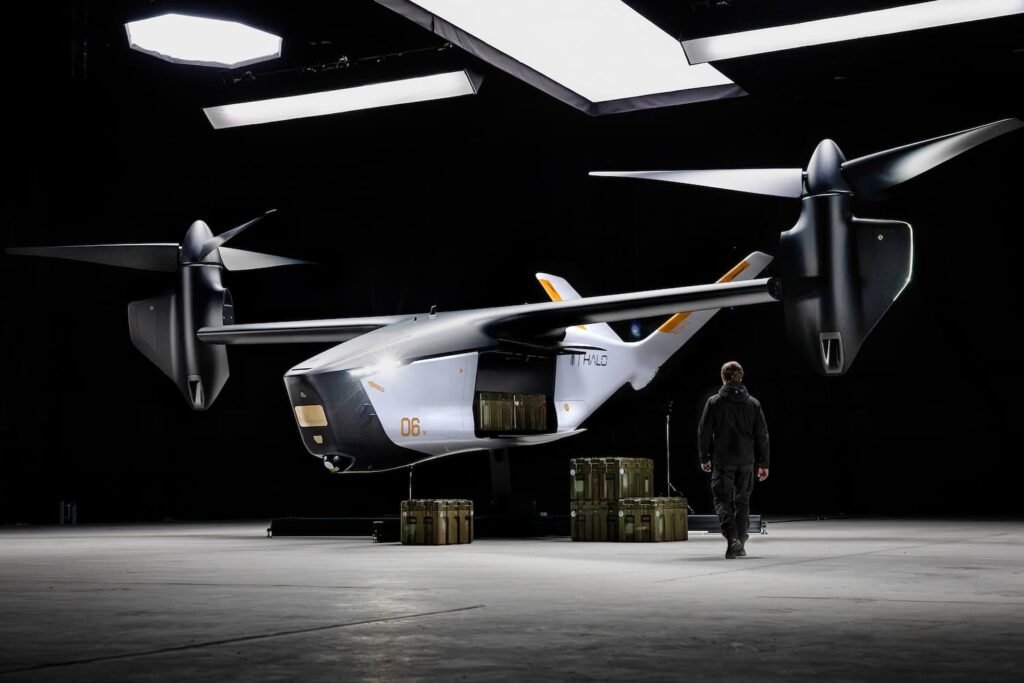
Farnborough International Airshow, UK, July 22, 2026 Archer Aviation today announced Halo, the commercial variant of a jointly-developed dual-use platform built to serve both defense and commercial applications. Anduril unveiled Thunder, the defense variant of the platform, on Monday at the Farnborough International Airshow. The two variants share the same airframe, hybrid powertrain and core systems, with configurable payload depending on mission requirements. Archer Technology Stack This new dual-use autonomous VTOL aircraft platform, highlighted by its Halo and Thunder variants, builds on eight years of eVTOL development and flight testing by Archer. It features a clean-sheet design, bringing the commercial VTOL sector’s rapid innovation in electric propulsion and rotor design directly into a performance-optimized configuration. At the core of the platform is innovation in hybrid-electric powertrain and optimum-speed tiltrotors: Hybrid-Electric Powertrain: A series hybrid-electric powertrain enables Halo to achieve significant range and endurance, while closely optimizing power through the full range of flight conditions. Dual Tiltrotors: Dual tiltrotors vary rotor RPM to maintain efficiency across flight regimes, reducing power demand and fuel burn in cruise and minimizing noise for operations in suburban and noise-sensitive environments. The tiltrotor configuration, series hybrid-electric powertrain, and rotor technology provides this platform with the range necessary to support global self-deployment. Alternatively, the aircraft can be packed into a standard shipping container for transport by air, road, rail, or sea, offering the multi-modal transport logistics required to reach where it needs to be. Designed for low-cost, high-volume production using commercial supply chains, the platform behind Halo and Thunder is built to support broad deployment, rapid production and the scale commercial and defense markets require. “Over the past eight years we’ve engineered, tested and scaled the technology this platform is built on. The powertrain, the batteries, the motors, the manufacturing. We partnered with Anduril to take all of that knowledge and build something new: a clean-sheet aircraft in a completely different class of range, speed and payload. I believe this is the most sophisticated vertical lift aircraft platform ever developed—it’s exactly what our customers need,” said Adam Goldstein, Founder and CEO of Archer. Platform Capabilities Halo brings together capabilities no existing unmanned aircraft combines: Long range, high speed: Enough range to reach remote and offshore sites, with the speed available when necessary. Heavy payload: Carries what the job demands in a modular payload bay configurable per use case. Series hybrid-electric propulsion: Delivers energy efficient, low-noise flight while lowering operating cost per mission for commercial operators. Autonomous: No pilot means lower cost, no human exposure on hazardous missions and higher utilization for more missions per day per airframe VTOL: Takes off and lands vertically for access to locations without a runway. Commercial Opportunity Halo arrives amid a growing need for commercial logistics to move heavy payloads long distances, fast, into places with no runway, at a fraction of the cost of legacy platforms. Offshore Energy: Regular resupply and cargo runs to oil, gas and wind platforms on schedule, without crew exposure over water, and at low cost. Freight: Heavy, time-sensitive freight flown between hubs, ports and distribution points to locations fixed-wing aircraft can’t reach. Humanitarian and Medical Cargo: Emergency supply into disaster zones, wildfire logistics and time-sensitive therapies flown direct from freight hubs to hospitals in a single flight. Maritime: Long-range autonomous operations in support of maritime missions. Highlighting this demand, Archer announced Marubeni Aerospace Corporation as a strategic launch partner for Halo. Marubeni Aerospace is engaged in business development in the aviation and space fields. It is a subsidiary of the aerospace and mobility arm of Marubeni Corporation, one of Japan’s largest general trading companies. It has long-standing experience as a specialized trading company in the aviation sector, representing major international aircraft and helicopter manufacturers. The partnership will focus on joint market research, use case identification and future introduction of Halo. “Currently, even in cargo transport operations that do not require onboard crew, flights are conducted with human pilots, absorbing the cost, scheduling constraints and human exposure that come with it,” said Satoru Nakagawa, President and CEO, Marubeni Aerospace Corporation. “Halo’s unmanned, autonomous flight capabilities can address these challenges, and combined with its excellent range, payload capacity and VTOL capability, make it a highly suitable solution that we are pleased to introduce and support for our customers as a first strategic partner.”


Drones

Eve Advances Global Certification Path for Eve 100

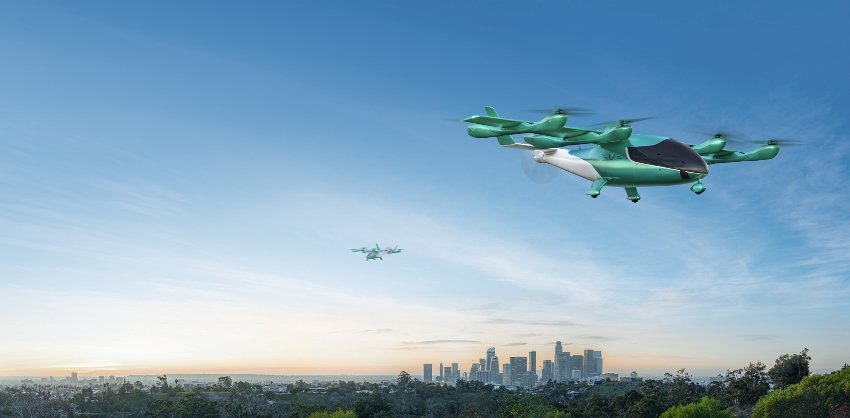
FARNBOROUGH, UK – July 20, 2026 Eve Air Mobility (“Eve” or “the Company”) (NYSE: EVEX, EVEXW; B3: EVEB31) today announced two important milestones in the certification process for the Eve 100, the Company’s electric vertical take-off and landing (eVTOL) aircraft: Brazil’s National Civil Aviation Agency (ANAC) has opened a sectoral consultation process on updated airworthiness criteria for the aircraft, and Eve has applied to the European Union Aviation Safety Agency (EASA) to initiate its Type Certificate validation process. Together, these developments underscore the momentum behind Eve’s broader certification strategy and reinforce the Company’s disciplined approach to working with leading aviation authorities across Brazil, the United States and Europe to support future international operations. ANAC’s publication of the updated criteria marks another important step in the Eve 100 Type Certification process and contributes to the development of a robust regulatory framework for eVTOLs. Comments can be submitted until August 18. The updated criteria follow ANAC’s publication of the first airworthiness criteria for Eve’s eVTOL in November 2024 and include revisions aimed at further harmonization with international certification approaches, including the FAA’s guidance for powered-lift aircraft. Eve has been working closely with ANAC to support the development of criteria appropriate for the Eve 100’s configuration and for the emerging AAM sector. “ANAC’s consultation with industry stakeholders on the updated airworthiness criteria and our application for EASA Type Certificate validation are important demonstrations of the steady advancement of the Eve 100 certification process,” said Johann Bordais, CEO of Eve. “We value the close technical collaboration with ANAC and the engagement with leading aviation authorities as we advance a comprehensive certification approach for new aircraft technologies. These steps further strengthen our path toward type certification and support our work to bring the Eve 100 to key global markets.” Eve formalized the eVTOL Type Certificate application process with ANAC in February 2022, marking the start of the aircraft’s certification journey with the Brazilian civil aviation authority. In 2023, Eve engaged the FAA to pursue a concurrent Type Certificate validation process, supporting alignment among certification authorities for the Eve 100 certification basis and means of compliance. The EASA validation application marks another important milestone in this coordinated certification effort, bringing an additional key aviation authority into the program alongside the FAA, where certification activities are already underway. Tiago Faierstein, ANAC’s Director-President, said: “For ANAC, Advanced Air Mobility is a strategic priority, and Brazil can play an important role, in partnership with leading civil aviation authorities worldwide, in supporting safe and harmonized certification processes. At the same time, we are advancing workstreams to develop standards and regulations to ensure the necessary infrastructure and airspace are in place for this aerial innovation, which will soon be integrated into the civil aviation ecosystem. ANAC recognizes that eVTOLs are here to stay and will remain strongly committed to supporting the development of this sector.” Following the consultation period, which will remain open until August 18, ANAC will review the comments received and assess potential refinements to the criteria. Eve will continue working with ANAC on the Eve 100 certification process, while also supporting alignment with other aviation authorities, including the FAA and EASA, as part of its broader international certification strategy. Next steps with EASA include initial product familiarization activities and further technical discussions.

Drones

Evolito submits type certificate application for E800 electric engine on Electra’s EL9 aircraft

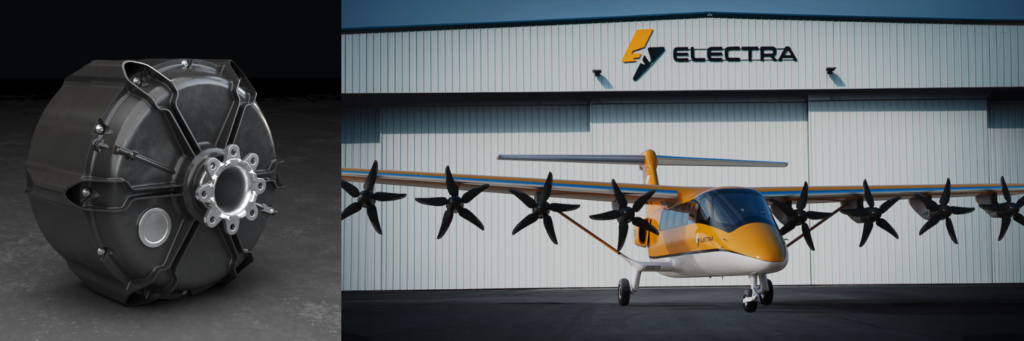
BICESTER, UK – July 2026:  Evolito has announced the submission of its Type Certificate application for the E800 electric engine, initially intended for integration on Electra’s EL9 Ultra Short hybrid-electric aircraft. The application represents a significant milestone in the company’s journey from technology development to certified aerospace products and demonstrates the maturity of both the E800 programme and Evolito’s broader industrial and certification capabilities. The Type Certificate application is for the E800 Series Electric Engine, with the first certified configuration designated the E800-A1 for the EL9 aircraft. This is the first type certification application in a family of products based around Evolito’s proprietary axial flux motor technology. The submission formally initiates the certification programme with the UK Civil Aviation Authority and marks the transition from experimental engine development to the formal regulatory process required for commercial deployment. The E800 programme is being developed in accordance with the certification framework established for electric propulsion systems, building on Evolito’s Design Organisation Approval and extensive investment in engineering, compliance and industrialisation capabilities. Evolito’s certification programme proposes a certification basis under SC-E19, the special condition governing electric and hybrid propulsion systems. “This is a defining moment for Evolito,” said Dr Chris Harris, Chief Executive Officer of Evolito.” “Submitting our Type Certificate application is far more than a regulatory milestone. It is evidence of the maturity of our products, our processes and our organisation. Over the last several years we have built the engineering foundations, certification capability and industrial infrastructure required to bring certified electric propulsion to market. This week’s submission is the next step in the journey to making electrification of the aerospace market a reality.” Industry Minister Chris McDonald said: “This milestone from Evolito shows how the UK is turning world-class innovation into the technologies that will power the next generation of flight. It’s exactly the kind of ambition that will strengthen our industrial base and keep Britain at the cutting edge of advanced aerospace.” “Through our Modern Industrial Strategy, we are backing the aerospace sector to grow, invest and create high-skilled jobs across the UK, helping ensure Britain remains at the forefront of the next generation of aerospace technologies.” The E800 is a fully integrated electric engine designed specifically for aerospace propulsion applications and optimised for propeller-driven aircraft. The engine combines Evolito’s proprietary axial-flux motor technology with integrated controls, cooling and propeller-load-bearing architecture in a compact package, engineered for certification and volume production. Evolito’s E800 platform is designed for civil certification and incorporates DAL-A control system architecture, reflecting the stringent safety approach taken by the company in its engine design. The programme’s first application is Electra’s EL9 Ultra Short, a nine-passenger hybrid-electric aircraft that uses distributed electric propulsion to deliver take-off and landing capabilities in as little as 150 feet. The fixed-wing aircraft is designed to unlock new regional connectivity opportunities while significantly reducing noise, emissions and infrastructure requirements compared with conventional aircraft. Electra recently received their G-1 Issue Paper from the FAA on its path towards EL9 certification under FAA Part 23, while the E800 engine will follow an SC-E19 certification pathway with concurrent FAA validation. The certification submission follows extensive development work across the E800 platform, including the development of a digital twin for advanced multi-modal simulation, safety assessments, software planning, hardware development, system architecture definition and compliance planning as well as early “virtual builds” to ensure manufacturing feasibility is maintained. These activities have established the foundation required to demonstrate compliance with the rigorous safety, reliability and performance requirements expected of commercial aerospace propulsion systems. Importantly, the milestone demonstrates growing momentum across the electric aviation sector. While much of the industry’s early focus centred on proving electric propulsion technology, the emphasis is increasingly shifting towards certification, production readiness and entry into service. Evolito’s submission reflects this transition and highlights the progress being made toward bringing certified electric propulsion solutions into commercial operation. “Certification is where aerospace innovation becomes aerospace reality,” said Dr Richard Shepherd, Head of Airworthiness and former Rolls-Royce Airworthiness lead. “This application demonstrates that electric propulsion is moving beyond concept studies and flight demonstrations. It is becoming a certifiable, scalable and commercially deployable technology. We are proud to be helping lead that transition, not just with the airframers but also with the certifying authorities.” The E800 certification programme is intended to establish a certified propulsion platform that can support multiple future aircraft applications, creating a foundation for broader adoption of electric propulsion across regional, business and advanced aviation markets. Evolito describes the E800 as the first member of an E800 Series electric engine family, with future aircraft applications expected to leverage the certification framework established through the EL9 programme. With the application now submitted, Evolito will continue working closely with regulators, Electra and its supply chain partners as the programme progresses through the certification process.

Drones

Eve Air Mobility will display at Farnborough Airshow

Melbourne, July 14, 2026: Eve Air Mobility, a well-known company in advanced air mobility solutions, will be at the 2026 Farnborough International Airshow at a defining moment. Its electric Vertical Take-Off and Landing (eVTOL) program has moved decisively beyond concept and into active flight testing, evaluation, and continuous refinement, advancing on a clear and disciplined path toward certification. Since its first flight in December 2025, Eve’s engineering prototype has completed dozens of successful test flights, generating critical performance and systems data. The program is preparing to enter transition flight evaluation this quarter, while production of six conforming prototypes is set to begin later this year. Eve’s presence at Farnborough underscores a program executing with discipline, supported by Embraer’s 56 years of aerospace expertise and focused on enabling scalable urban air mobility. “Farnborough is where the future of aviation takes shape, and Eve is coming with real progress in flight and a clear path to certification,” said Johann Bordais, chief executive officer of Eve Air Mobility. “We are not just talking about possibilities. We are acting, moving forward with our flight tests, enhancing the platform to meet our customers’ needs. This market will be shaped by those who deliver, and that is exactly what Eve is focused on.” Eve will showcase its full-scale eVTOL mock-up at the Eve Air Mobility Pavilion (D-030) adjacent to the Farnborough flight line. The exhibit demonstrates the aircraft’s maturity and provides stakeholders with a tangible view of its design and configuration. Eve will further showcase a flight simulator, which will offer an immersive experience, allowing visitors to experience expected pilot interaction and operational performance. Together, these elements highlight Eve’s progress toward certification and commercial readiness. On Sunday, 19 July at 11:00 a.m. BST, Eve will host a press briefing at the pavilion, where CEO Johann Bordais will present updates on the company’s execution roadmap and growth strategy. The session will highlight how Eve’s integrated solutions reduce operational barriers and accelerate adoption, with a focus on key milestones, strategic partnerships, and efficient scaling. Eve’s 2026 flight test program continues to advance on schedule following its successful first flight in December 2025, with hover and low-speed testing already completed. The program is now progressing toward wingborne cruise evaluation, beginning with partial transition flights this summer and full transitions later in the year. These milestones are key to validating lift, cruise efficiency, and system performance while reducing certification risk. This steady execution also enables operators to refine their commercialization plans with greater confidence. Eve’s value proposition extends beyond the aircraft. Its portfolio of solutions is designed to simplify operations and accelerate market entry: Eve TechCare® offers predictable maintenance and lifecycle support through a comprehensive portfolio of solutions focused on fleet availability. Eve Vector® enables safe and efficient integration of eVTOL operations into complex urban airspace. Together, these capabilities reduce adoption barriers, enhance operational reliability, and support scalable deployment. Eve continues to build the industry’s largest pipeline, with approximately 2,700 eVTOL pre-orders. Recent binding agreements with pre-delivery payments demonstrate commercial momentum. The binding orders are from established helicopter operators pursuing a disciplined transition to electric flight: Revo (Brazil): Up to 50 aircraft, supported by TechCare and Vector, advancing the electrification of high-frequency urban operations. AirX (Japan): Up to 50 aircraft, targeting initial deployment in sightseeing and last-mile mobility beginning in 2029.

Drones

Aura Aero acquires VOLTAERO,accelerates decarbonization of Aviation

Toulouse, France, 23 June 2026: AURA AERO, French aerospace manufacturer dedicated to the development and industrialization of low-carbon aircraft for civil and military use has acquired VOLTAERO, a French company based in  Rochefort and a pioneer in electric and hybrid-electric propulsion systems. This transaction brings together two complementary areas of French expertise around a common goal: to accelerate the decarbonization of aviation with concrete, certifiable, and industrially viable solutions developed in France. This acquisition provides AURA AERO with rare experience in hybrid-electric architectures and experimental aeronautical development: design, system integration, testing, flight operations, and data analysis. This expertise, accumulated by VOLTAERO over several years of work, finds its most concrete expression in the Cassio S, a hybrid-electric flying demonstrator. Since the start of its flight testing in 2019, it has completed more than 270 flights and covered approximately 15,500 miles under a variety of operating conditions. It thus serves as tangible proof of technological maturity and a direct catalyst for AURA AERO’s electric and hybrid-electric developments. The transaction also includes key technological and industrial assets: patents, engineering expertise, prototyping capabilities, infrastructure in Rochefort, and part of VOLTAERO’s team. It gives AURA AERO additional leverage to accelerate its electric and hybrid developments, particularly in connection with its INTEGRAL and ERA programs, the 19-seat hybrid-electric regional aircraft, and its ENBATA drone project. The VOLTAERO site in Rochefort strengthens this execution capability. With over 25,000 sq. ft dedicated to assembly, engineering, testing, and industrial operations, and direct access to the runway, it provides AURA AERO with a complementary operational base for prototyping, integrating, testing, and refining new architectures. This acquisition marks an important milestone for AURA AERO. It brings a proven demonstrator, flight data, patented technologies, industrial resources, and rare expertise to a manufacturer already engaged in the design, certification, and production of low-carbon aircraft. It strengthens the company’s ability to turn innovation into products and to consolidate a French industry capable of making its mark in low-carbon aviation. “Acquiring VOLTAERO’s assets, and in particular the Cassio S, means integrating years of testing, data, and experience in hybrid-electric propulsion. This transaction serves as a catalyst for industrial, technological, and human growth. It strengthens our teams, expands our capabilities, and reaffirms our ambition: to build in France one of the world leaders in the aviation of tomorrow,” said Jérémy Caussade, President and co-founder of AURA AERO.

Drones

AutoFlight selected for Hong Kong’s inaugural “Regulatory Sandbox X” flight trials

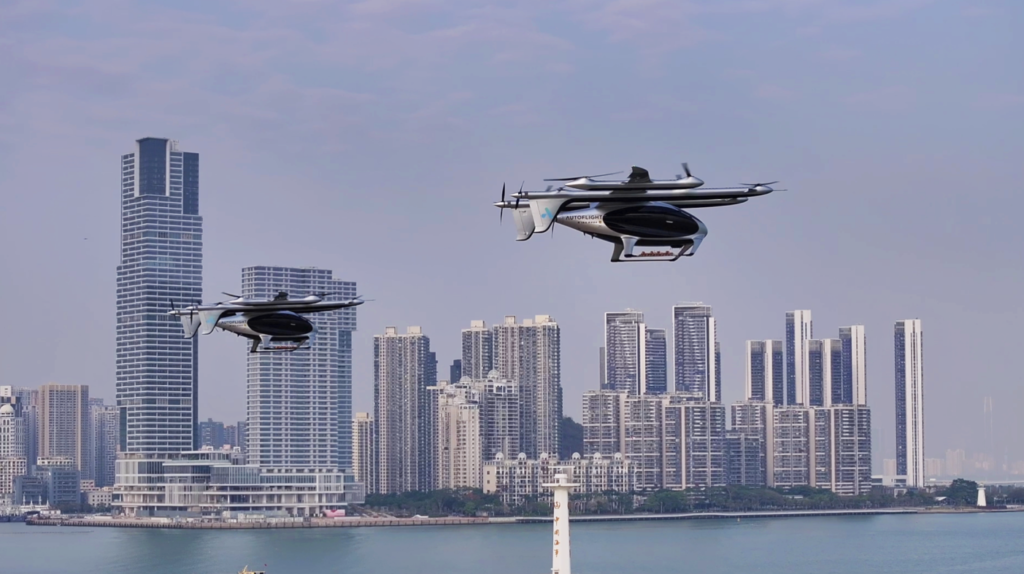
“Regulatory Sandbox X” is Hong Kong’s flagship low-altitude economy initiative, led by the Transport and Logistics Bureau Two of the four projects will use AutoFlight’s heavy-lift eVTOL for demonstration flights AutoFlight will work with local partners to develop low-altitude routes and operations across the Guangdong–Hong Kong–Macao Greater Bay Area Kunshan,22 June 2026 : AutoFlight, electric vertical take‑off and landing (eVTOL) aircraft, has been selected for the inaugural round of Hong Kong’s “Regulatory Sandbox X” – a flagship initiative to advance the city’s low-altitude economy and explore innovative applications. Launched by the Transport and Logistics Bureau and supported by Hong Kong’s Civil Aviation Department, “Regulatory Sandbox X” takes an open, forward-looking approach to compliant test flights, scenario validation, and iterative technology upgrades for innovative unmanned aircraft. The aim is to pave the way for low‑carbon, high‑efficiency air mobility. Two of the four approved projects will be carried out using AutoFlight’s heavy-lift eVTOL, underscoring the company’s R&D strength, extensive flight‑test experience, and commercial readiness. AutoFlight will work with partners including China Travel Service (Hong Kong) Automobile Services Limited and AECOM Limited on route planning, flight-parameter calibration, and end-to-end flight validation. Together, these efforts will steadily widen the scope of low-altitude commercial applications across the region. Xie Jia, senior vice president of AutoFlight, noted that AutoFlight will use this opportunity to deepen its investment in core eVTOL technology and commercial deployment, supporting Hong Kong’s emerging low-altitude transport network. Working closely with the Civil Aviation Department and industry partners, the company aims to help scale up the Greater Bay Area’s low-altitude economy safely and at commercial scale. ( The banner image is of February 2024 when AutoFlight’s 2 ton eVTOL completed a landmark cross-sea flight between Shenzhen and Zhuhai.)

Drones

Renault Group and Thales to develop a sovereign drone industry in France

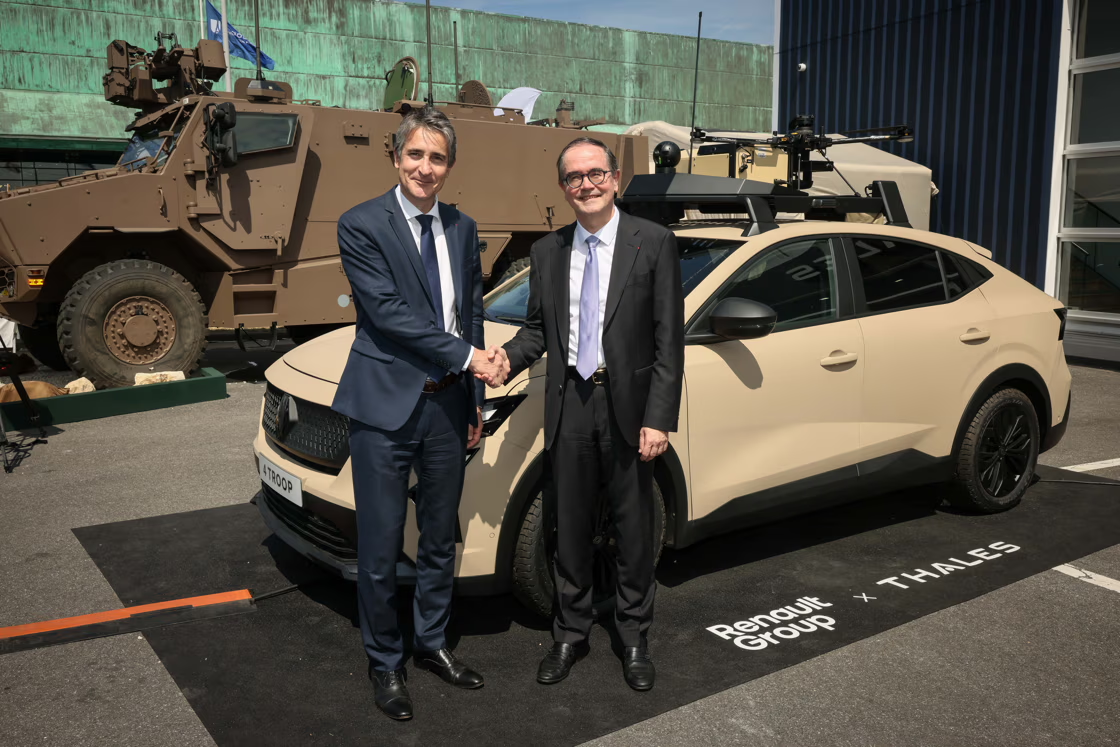
Paris, 16th June 2026: Thales and Renault Group (RG) announce the signing of a partnership agreement to jointly develop and industrialise the large-scale production of Thales’ TOUTATIS loitering munition. This announcement follows the unveiling of the innovative 4 TROOP tactical vehicle, presented by the two Groups yesterday. This strategic partnership combines Thales’ cutting-edge defence expertise with Renault Group’s industrial engineering and manufacturing capabilities to establish a sovereign, agile and competitive drone industry in France, fully aligned with the requirements of the wartime economy. Through this collaboration, production of loitering munition could begin as early as 2027, with a manufacturing capacity of 1,000 units per month from the first year, marking a significant ramp-up in France’s industrial capacities in this strategic field. This partnership will help secure a resilient and sovereign supply of munitions for France, while addressing the evolving operational and strategic requirements of the armed forces and strengthening the competitiveness of the national defence industry. Designed for high-intensity conflicts, the TOUTATIS short-range loitering munition provides armed forces with a new operational advantage. Highly versatile, it can be deployed by dismounted soldiers and launched from a variety of platforms (combat vehicles, aircraft and naval platforms). Resistant to electromagnetic jamming and equipped with a mission-configurable warhead, TOUTATIS is capable of neutralising targets such as combat vehicles while ensuring human operators remain in the decision-making loop. Able to operate as part of a drone swarm, TOUTATIS is a scalable system designed to adapt to evolving operational requirements.   “This new strategic partnership between Thales and Renault Group unites the strengths of two French champions in support of France’s sovereign drone industry. Renault Group brings its industrial expertise to the TOUTATIS project, along with the highest standards of automotive manufacturing, to design, industrialise and produce at scale, within shortened timelines and at optimised costs. I am proud of the work accomplished by our teams. It makes a tangible contribution to the initiatives undertaken with the French Ministry of the Armed Forces and strengthens both French and European defence capabilities.” François PROVOST, Chief Executive Officer of Renault Group. “This partnership with Renault Group marks an important milestone in strengthening sovereign, large-scale, world-class capabilities in the field of drones. By combining Thales’ excellence in advanced technologies with Renault Group’s industrial strength, this partnership addresses the needs of the armed forces while meeting the requirements of the wartime economy.” ​ Patrice CAINE, Chairman and Chief Executive Officer of Thales. At Eurosatory, Renault Group and Thales also unveiled 4 TROOP, an innovative tactical vehicle designed to meet the evolving operational requirements of land forces. ​ By integrating drones, sensors, hybrid secure communications and artificial intelligence-enhanced decision-support tools, 4 TROOP provides armed forces with a vehicle offering significantly enhanced operational capabilities.

Drones

Eve Air Mobility conducts its 50th successful test flight

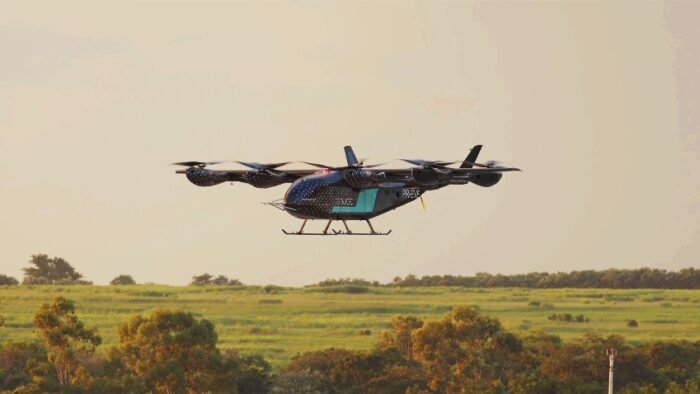
GAVIÃO PEIXOTO, BRAZIL, 9th April, 2026: Eve Air Mobility has reached its 50th successful test flight with its full-scale engineering prototype, accumulating over two hours of flight time. Since the aircraft’s first flight on Dec. 19, 2025, these flights have generated high fidelity data and knowledge gains that are strengthening Eve’s understanding of performance and systems behavior as the company advances toward the future certification pathway of its eVTOL. “Reaching 50 successful test flights with our engineering prototype is more than a technical milestone. It is clear evidence of the maturity of our program and the strength of the solutions we are building,” said Johann Bordais, chief executive officer at Eve. “Eve is uniquely positioned to deliver not only a high performance eVTOL aircraft but also aftermarket services, operational and airspace solutions that customers and cities will require to deploy urban air mobility at scale.” The fast pace of testing continues to validate the performance and operational capability of Eve’s eVTOL. This achievement spotlights the company’s product development process, based on the proven Embraer methodology. This consists of an integrated approach that combines aircraft development with solutions to help operators, cities, vertiports and air navigation providers prepare for the introduction of urban aviation. The results and knowledge gained from flights with the full-scale engineering prototype are central to the development of Eve’s conforming prototypes and the commercial aircraft. The company expects to begin producing its conforming prototypes this year, progressing toward a total of six that will be used in the certification flight test campaign with Brazil’s civil aviation authority, ANAC. With 50 test flights completed, Eve is now expanding flight envelope evaluations, gradually increasing forward speed, evaluating energy management, controllability and stability, noise and vibration, among others, leading to full transition flights later this year.

Drones

The ePlane Company opens integrated eVTOL prototyping and testing facility at IIT Madras

Chennai,February 26, 2026: The ePlane Company has opened its state-of-the-art prototyping and testing facility at the IIT Madras Discovery Campus in Thaiyur. Spanning 60,000 sq. ft., the site is the nation’s first integrated plant dedicated to the serial production of electric aircraft, signaling a pivotal shift in India’s Urban Air Mobility (UAM) sector from initial design concepts & subscale prototypes to flight-ready hardware and certification-grade fullscale prototyping. The facility was officially inaugurated by Professor V. Kamakoti, Padma Shri recipient and Director of IIT Madras. His vision for the 163-acre Discovery Campus has been instrumental in providing the high-tech infrastructure necessary for deep-tech ventures to scale. A Strategic Hub for Industrial-Scale Aerospace The facility will support key development milestones, including tethered hover testing, as the company progresses toward Type Certification. It houses design, prototyping, integration, and subsystem testing teams in a single location and serves as the engineering hub for the passenger, relief, and cargo eVTOLs. The site includes composite fabrication, electric powertrain assembly, avionics testing, and a dedicated Ground Test Vehicle (GTV) facility to support subsystem validation and full-scale development. Engineering for the Indian Context, Ready for the World The e200X is uniquely engineered for the world’s most congested cities. While global competitors require massive landing pads, the e200X’s 8m x 10m footprint, the most compact in the world, enables seamless rooftop-to-rooftop operations. “This facility is the engine of our commercial future,” said Prof. Satya Chakravarthy, Founder and Technical Lead of The ePlane Company. “With the support of IIT Madras, we have built a space where we can fulfill our vision of making flying as common and affordable as taking a taxi. This isn’t just about moving people; it’s about adding another layer of transport to the future of human mobility.” Significance to the Global Deep-Tech Ecosystem This prototyping facility is a critical step forward for India’s deep-tech hardware ecosystem. Moving beyond design approvals, it enables the physical integration and validation of complex aerospace systems. By setting testing benchmarks with the DGCA, ePlane is actively shaping the regulatory blueprint for electric aviation in India. This prototyping facility is the physical foundation for indigenous aerospace innovation; a dedicated space to build energy-efficient, zero-emission mobility solutions designed specifically for the world’s densest cities. The IIT Madras Factor: A Blueprint for Innovation The success of The ePlane Company is a direct result of the IIT Madras Incubation Cell. The institute provides a rare “full-stack” support system: ● Infrastructure: Access to the Discovery Campus, allowing startups to scale beyond the constraints of traditional urban labs. ● Human Capital: A pipeline of specialized engineering talent focused on electric propulsion and composite materials. ● Validation: Academic rigor that ensures safety and physics are validated long before an aircraft leaves the ground.

FOREWORD

Dear Readers,


Welcome to the latest edition of Aviation World. This is an incredibly significant issue for us, perfectly timed to align with several prominent aviation events unfolding across the globe.


Chief among them is the Farnborough International Airshow, taking place from July 20th to 24th, 2026, in Hampshire, United Kingdom. Ranked as one of the world’s premier events for aviation, aerospace, and defense, this year’s airshow arrives at a crucial moment. Against a backdrop of geopolitical turbulence, Farnborough provides an invaluable platform to engage with global leaders and gain firsthand perspectives on the future of the industry. Inside, you will find our comprehensive curtain-raiser report focusing on the show’s core themes, as well as the highly anticipated static and aerobatic aircraft displays.


On our front cover, we are proud to feature Capt. Vaibhav Goutham Suresh, Director of the School of Aviation, Logistics and Tourism Management (SALTM) at Galgotias University. In an exclusive interview, Capt. Suresh highlights how SALTM bridges the gap between academia and the runway, delivering a comprehensive curriculum that ensures graduates are industry-ready from day one. Complementing this, our special feature on SALTM dives deeper into how the institution maintains world-class academic standards and a cutting-edge learning environment.


We are also privileged to bring you exclusive insights from a stellar lineup of industry trailblazers in this edition, including:

  • Robin Glover-Faure, Chief Customer Officer of Acron Aviation
  • Karim Makhlouf, CCO of Royal Jordanian Airlines
  • Pallavi Joshi & Vimal Priya, the leadership powerhouse behind AirFleet Managers &Aviatrics Global
  • Wg. Cdr. Prem Kumar Garg (Retd.), CEO of IndiaOne Air

Each shares a detailed perspective on driving innovation, navigating current market dynamics, and establishing progressive frontiers within their respective sectors.


Beyond these highlights, this issue is packed with curated features and analytical pieces designed to keep you informed and inspired.


Finally, we extend our heartfelt gratitude to our esteemed advertisers and partners. Your unwavering support empowers us in our ongoing endeavor to make Aviation World a truly world-class publication with global reach and recognition.


Happy Reading!


The Editorial Team


Aviation World

NEWSLETTER

Aviation World Magazine is India’s premier aviation magazine and has been actively supporting the development of the Indian and global civil aviation sector. We started our journey in year 2015 and its been 12 years now and the response and acceptance is really encouraging. Thanks to all our associates and writers who remained with us in our progressive journey.

We have started 2026 on a very positive note and we look forward to increase our footprints to more locations and induct many more new companies in our campaign.. Do write to us at : editor@aviationworld.in

Disclaimer

The contents published in this website are news covering Aviation, Aerospace and Defence sector. The objective is to provide news in informative form to keep our readers updated of the latest development. We also publish content featured in our print publication Aviation World.We try our best to avoid any factual errors or image displayed here but we ensure immediate corrections to any such thing brought to our notice that might have been published inadvertently. All images and contents are sourced from the relevant organisations media team.

Copyright ©2014 – 2026. AVIATION WORLD. All rights reserved.

Scroll to Top