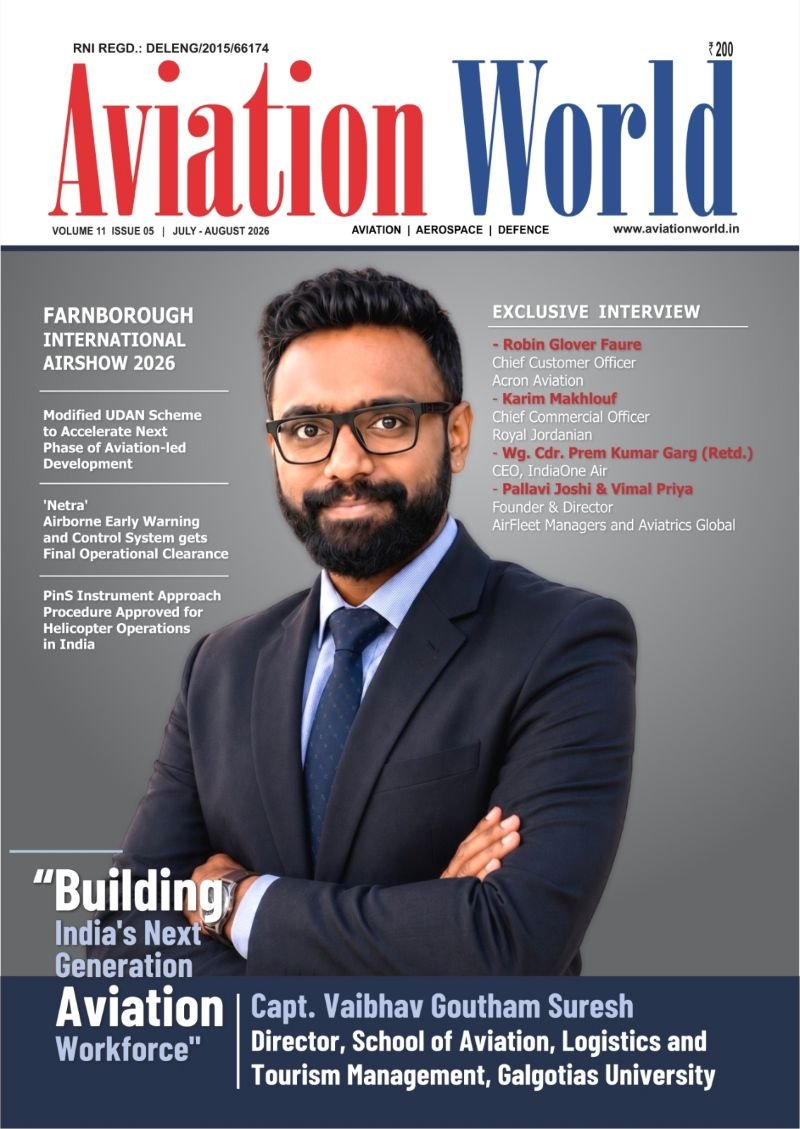
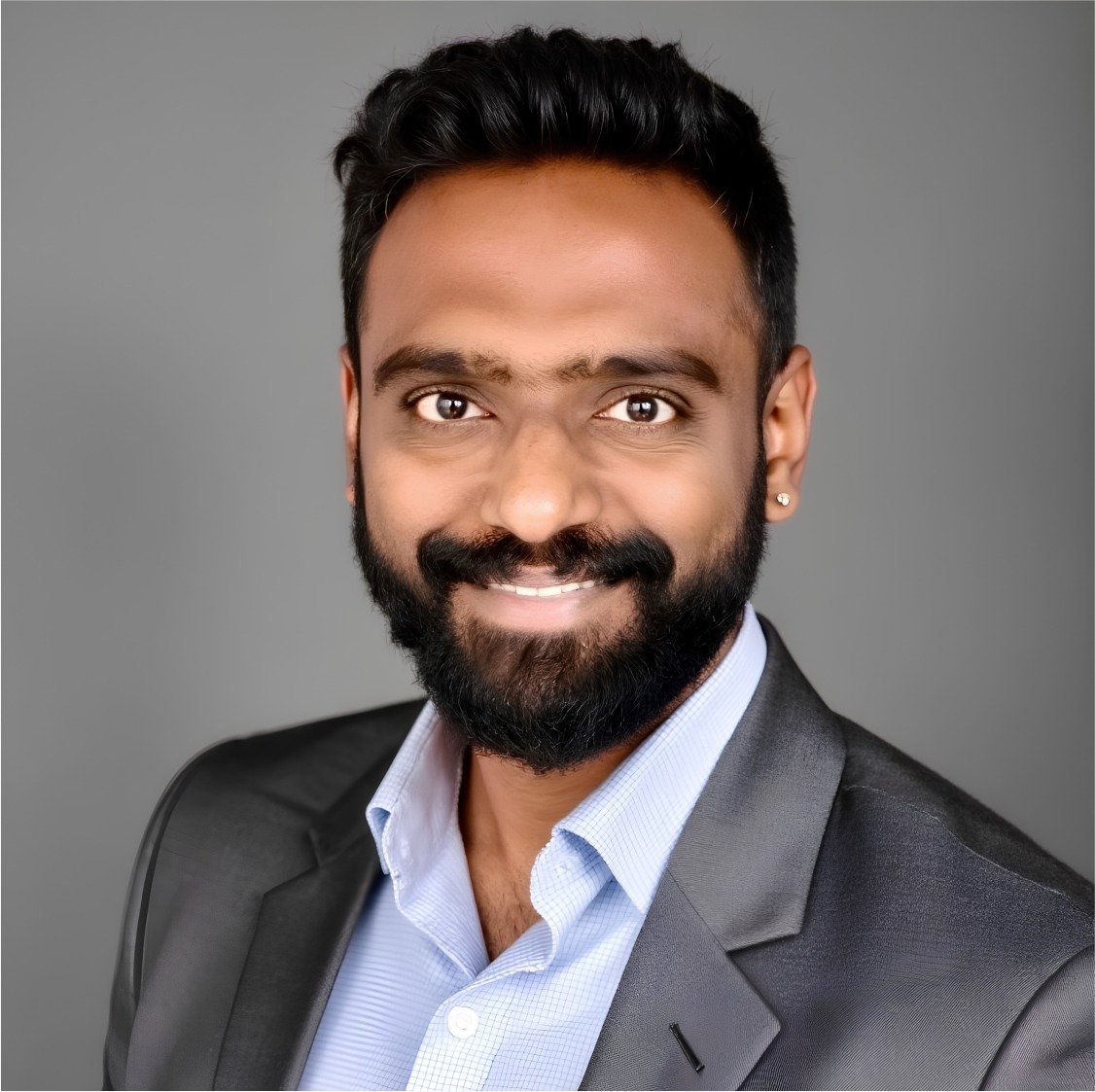
Aviation World exclusive Interview with Capt. Vaibhav Goutham Suresh, Director, School of Aviation, Logistics and Tourism Management (SALTM), Galgotias University
AW: Aviation, logistics and tourism are different sectors, yet Galgotias University chose to bring them together under one school. What was the core philosophy behind uniting these three fields in a single school?
VAIBHAV: Because in the real world, they were never truly separate. A passenger’s journey, a cargo consignment and a traveller’s experience all move through the same connected system- an aircraft, a supply chain and a destination that succeed or fail together. When a flight is disrupted, logistics and hospitality feel it within the hour. We built SALTM around that reality. Housing aviation, logistics and tourism under one roof means our students learn to see the whole movement economy rather than a single silo. An airline manager who understands supply chains, or a tourism professional fluent in aviation operations, is far more valuable than a narrow specialist. We are not teaching three unrelated subjects; we are teaching one interconnected ecosystem through three doors.
AW: There is often a gap between academic curriculum and real industry requirements. How is SALTM breaking away from the traditional learning model to ensure students are genuinely ‘plug-and-play’ when they enter the workforce?
VAIBHAV: The gap between higher education and the aviation sector exists because the two operate on fundamentally different timelines. Consequently, by the time a syllabus catches up, the challenges it was designed to solve have already shifted, leaving graduates fluent only in yesterday’s aviation. Closing this gap requires more than superficial adjustments or formal agreements; it demands a fundamental shift in educational design. We have inverted the traditional model, which prioritises years of isolated theory and hopes relevance follows by engineering our curriculum backwards from actual employer requirements. We adapt simulations, live projects, case work and real operational problems from the very first year. The centrepiece is a full semester-long industry internship: our students do not visit the industry for a week; they work inside it for months, so they graduate with genuine operational experience, not just a transcript. By the time they enter the workforce, they have already done the job. That is what ‘plug-and-play’ means to us- a graduate who is productive on day one, not after six months of hand-holding.
AW: You describe running the school on the principles of a ‘High-Reliability Organisation HRO).’ What does that mean inside a university?
VAIBHAV: Aviation is the textbook High-Reliability Organisation. An industry that works in genuinely hazardous conditions yet achieves an extraordinary safety record, because of a particular culture rather than luck. I believe an institution that educates for that industry ought to run itself the same way. In practice, that means a few things. A preoccupation with failure: we treat a disengaged student, or a graduate who was not quite ready, as a near-miss to be studied openly, not an embarrassment to be buried.
A reluctance to oversimplify: we resist reducing a young person to a single grade or a single metric, because the real story is always more textured. A sensitivity to operations: leadership stays close to the classroom, because that is where the truth of an institution actually lives, not in the boardroom. And a deference to expertise over rank: in a well-run cockpit, the most junior officer can speak up and be heard, and the same must be true of a junior colleague, or a student, who sees something the rest of us have missed. Reliability, in the end, is not a rulebook. It is a culture of honesty and attention, and if we intend to send that culture out into the industry, we have to live it ourselves first.
AW: Travel has changed enormously in recent years. How have you rewired the curriculum to prepare students for this ‘new normal’?
VAIBHAV: Travel today is digital, experiential and personalised in a way it never was before. Today’s traveller researches, books and shares almost entirely online, expects authentic and sustainable experiences, and behaves very differently from a decade ago. We have rewired our tourism curriculum around that reality- digital travel technology and online distribution, experience and destination design, sustainable and responsible tourism, and the data skills to actually understand the modern traveller. We have also moved the classroom closer to the field, with hands-on exposure to how destinations, hospitality and travel technology really operate. The goal is a tourism professional fluent in this new, technology-driven, experience-led economy, not the travel industry of twenty years ago.
AW: The logistics sector is increasingly driven by AI, automation and data analytics. How are you embedding these next-generation tools directly into the academics?
VAIBHAV: You can no longer teach logistics as trucks and warehouses; it has become a data-and-technology discipline, and we have embedded that directly into the academics. Our supply-chain students work with data analytics, automation concepts and the digital tools that run modern logistics, from analytics-driven decision-making to the AI and automation reshaping warehousing, freight and last-mile delivery. Just as importantly, we teach students to think with data, not merely about it. A modern logistics manager must be as comfortable with a dashboard as with a loading dock, and that is exactly the professional we are building.
AW: Aviation has long trained people on the job. Why does it need a dedicated university education at all?
VAIBHAV: Because aviation is not a set of tasks, but a system, and a safety-critical one. You can train a task on the job; you cannot train judgement, systems-thinking and professional temperament on the job alone. Education’s role in a field like ours is to form the whole professional: someone who understands not only their own function but how the entire machine fits together, who can make a sound decision when the manual runs out, and who carries the discipline this industry quietly depends on. As aviation grows more complex, with more technology, more regulation, and more interconnection between everyone in the value chain, the case for deliberate, structured education only strengthens. The industry doesn’t just need people who can do the job. It needs people who understand why the job is done the way it is.
AW: Capt. Vaibhav, how does your own journey influence the mindset and discipline you are instilling in the faculty and students at SALTM?
VAIBHAV: I spent years in the cockpit and in operations before I came to education, and aviation leaves a particular discipline in you. It teaches that preparation is everything, that honest checklists and debriefs save you, and that the most junior voice in the room may be the one that spots the problem. I try to instil exactly that culture at SALTM- a high-reliability mindset in which we prepare deliberately, hold ourselves to real standards, and stay humble enough to keep learning. For our students, that shows up as professionalism and composure; for our faculty, as a commitment to getting better at our craft every single term. I do not want our graduates merely to know their subject; I want them to carry themselves like professionals the industry can trust from the first day.
AW: What advice would you give a young aspirant looking to build a career in aviation, logistics or tourism?
VAIBHAV: Three things. First, fall in love with the whole industry, not only its glamorous parts. The opportunities of the coming decade are enormous, and they reach far beyond the cockpit or the front desk. Second, never stop being a student; the finest people in this business stay curious for their entire careers. And third, get your hands dirty early with real experience that will teach you what no classroom can. Bring curiosity, discipline and a willingness to keep improving, and this industry will give you a career only a few others can match.
AW: You came to education after years in the cockpit and in operations. What drew you from flying to teaching?
VAIBHAV: The multiplier is people. As a captain, you are responsible for a single flight; as an educator, the influence compounds across entire careers and the people those careers go on to shape. Somewhere between the cockpit, the operations and management, I realised that the work I found most meaningful was making other people better at what they do.
I did not really leave aviation; I moved to the part of it that builds the next generation. Everything I learned operating in this industry, I now try to pass on before the next professional ever sets foot in it.
( Capt. Vaibhav Goutham Suresh, Director, School of Aviation, Logistics and Tourism Management (SALTM), Galgotias University is featured in Aviation World Front Cover of July-August 2026 edition. His exclusive interview is also featured in the inside pages)