
“Takeoffs are optional, landings are mandatory”. In Aviation, everyone involved with an operation of an aircraft adheres to this commitment and that’s why Aviation is globally ranked as the safest mode of transport.
One such personality popular as the “Iron Lady” among the colleagues in the Business Aviation is Anshu Sharma. She is the Head In-flight Service and Training, DGCA Approved SEP Instructor with Air Charter Service(ACS), whose motto is, “Train to Save, Train to Survive”.
Anshu Sharma Joined Business Aviation in the year 2008 and has been ranked as renowned DGCA Approved Cabin Crew Trainer as she played a very instrumental role in getting Civil Aviation Rule (CAR) drafted and implemented by DGCA for training for cabin crew specific to the aircraft below 10 seats and 10-20 seats.
She has been certified to train cabin crew and pilots for all prominent business jets category including: Falcon, Beechcraft, Global, Embraer 135, Hawker, Challenger, Gulfstream. She also trains doctors and AMT team who are part of Medvec flights.
Anshu Sharma started her Aviation journey in year 1994 with Air Sahara as Cabin Crew and graduated to becoming Chief Flight Attendant and Base Manager, Delhi with Jet Lite and later also as a Specialised Boeing Trainer. She is currently employed with ACS since 2020.

In conversation with Vishal Kashyap, Managing Editor, Aviation World, Anshu Sharma explains the importance of training in Aviation & her contribution towards skilling the manpower for the holistic growth of the sector. Excerpts…
Q: You are also famous as the “Iron Lady” in the Business Aviation Sector. So, how this tag is attached to you and what’s about your journey in aviation?
A: Yes, keeping modesty aside, colleagues in Business Aviation call me the “Iron Lady”as the culture of keeping trained cabin crew in this country was created and encouraged by me along with the support of the regulator. I have over three decades of experience now in the aviation industry and I have tasted pastures on both sides commercial and corporate and so hope with my experience, I am able to contribute to the segment to create more safety standards as corporate aviation grows.
Q: What are the courses that you provide to the flight attendants & pilots?
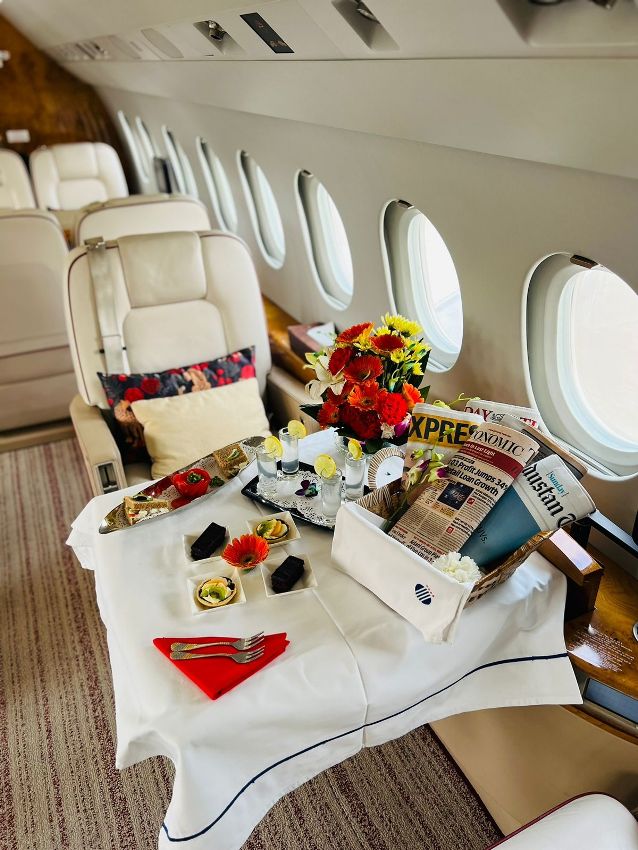
A: The courses that I teach the flight attendants and pilots are around the safety and emergency procedures in the aircraft. They are exclusively designed for the crew members operating on business aviation aircrafts. I also do soft skill and service trainings for these aircrafts like presentation of food and some etiquette for managing the clients travelling on board.
Q: What are the career growth & prospects of cabin crew in the business aviation sector?
A: Business aviation encourages people who are service oriented and have an understanding of travel and food. There is a lot of scope as even though some of them joined as crew members but today are working as EA to office of the Chairman, PR representative etc. So, Business Aviation is a very open platform and does not restrict the crew member profile only to the cabin.
Q: How regulatory body is keen towards supporting the Business Aviation in India?
A: First of all, I want to say that we are very happy that the regulatory body has been very supportive for a lot of things. They are very open-minded today. Back in days, they were pretty punitive in their approach, but today they are very corrective and they give you flexibility in the approach which is good.
Q: How can training be made inclusive part of business aviation growth in India?
A: The biggest thing in recent times what I learnt when I got to meet the Civil Aviation Minister is that he is very open to FDIs. He is open to larger companies to come into India and synergize. So, the people who have huge NSOP groups having more than 5 or 6 aircrafts with them, they should definitely synergize from the training perspective also, not just because they want to bring in more aircrafts in this country, they want to create a standard for the aircrafts operating even in our country.
Similarly, companies who have more than 7 to 8 aircrafts, they should tie up with international training organizations. For ex., Gulf Air Aviation or Royal Jordanian people have visited our country but they never got people who could hold their hand. So, today we should do that.
Q: What steps need to be mandated for standardized procedures in Business Aircraft?
A: How can you buy a million dollar airplane and not spend some money on the training of a pilot or training of a flight attendant who’s basically there to take the safety. So, taking safety into concern, you need to build standard procedures for aircrafts.
Q: So, what are the burning challenges that need to address as top priority?
A: The people who are post holders should respect what that post is all about. They should have applicable knowledge about that post also because then only they will be able to do justice to the organization and the organization will be able to do justice to its employees. Only that way, there will be a sync between what the DGCA is saying and what the operator is saying.
With the way the volumes are increasing in our country, if we do not create these standardized procedures, believe me, it will be an open playground where everybody will be doing what they were doing and this time it is going to become far more dirtier because already we are doing so much of undercutting.
Q: As an expert trainer, what message you would like to give to the youngsters?
A: The first thing that I want to tell them today for all the students that times have changed. It is not as glamorous as it was earlier. So, people who want to join this industry because they feel that they are going to get and join hands only with glamour, then that is not the point. There were times that the sector operated by the airlines were just three or four in a day. And we used to look all very beautiful and very nice in those nice sarees and everything.
But, today the times have changed and we want people who are service oriented and dedicated as well as healthy. Because, there has to be a big balance between your lifestyle and your work as this is a very demanding profession and you are going to work at odd hours.
So, develop your skills on patience and staying calm. If you are ready for this, then this is the place for you.