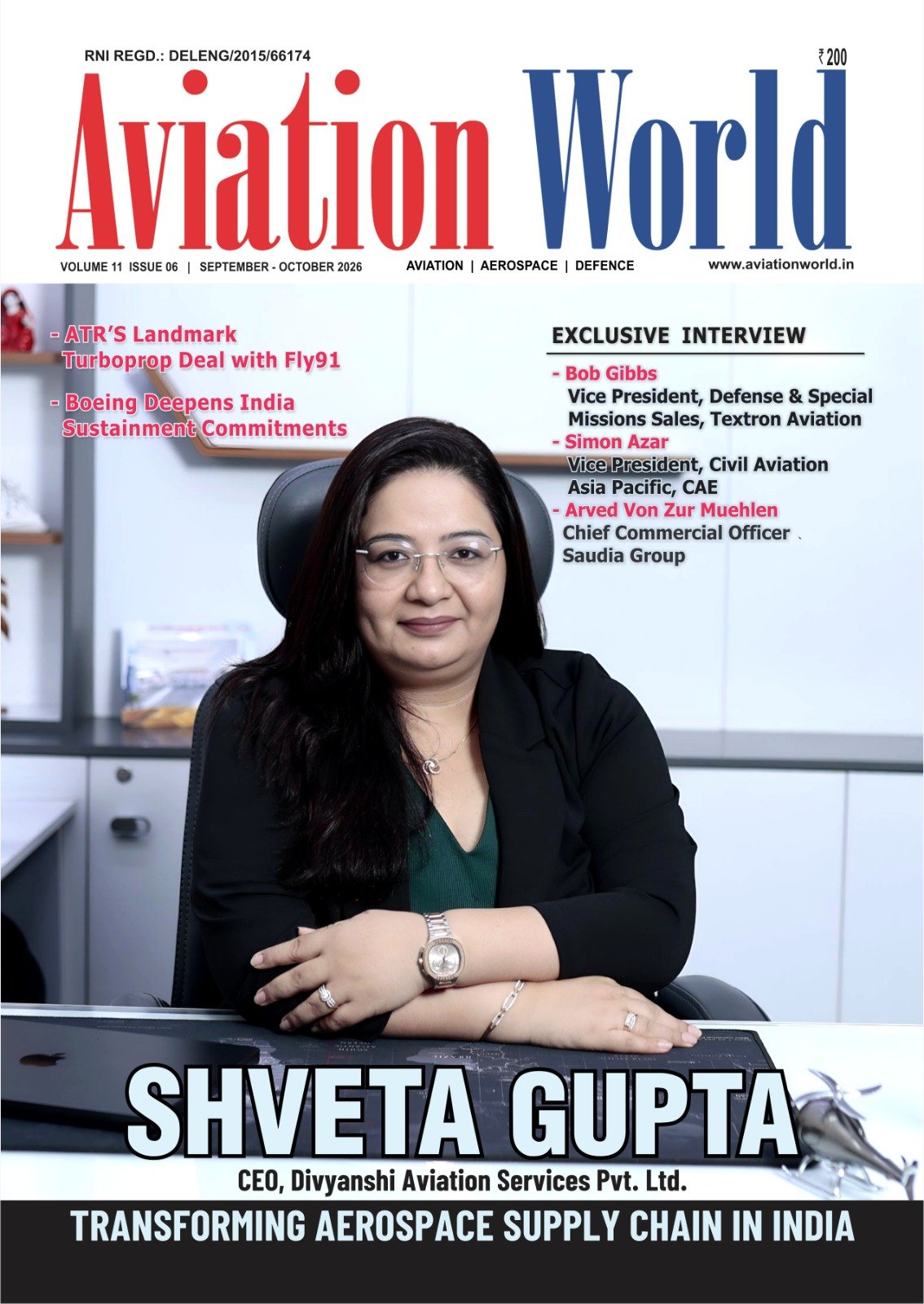


As the Asia-Pacific region faces an unprecedented surge in air travel and fleet expansion, the demand for highly skilled pilots and robust operational readiness has never been higher. At the Asia Pacific Aviation Training Summit (APATS) in Bangkok, Vishal Kashyap, Managing Editor of Aviation World caught up with Simon Azar, Vice President Civil Aviation, Asia Pacific at CAE, to discuss how the global leader in flight simulation and pilot training is addressing these challenges. In this exclusive interview, Azar shares insights on scaling training capacity across Asia-Pacific, leveraging next-generation simulation technologies, and ensuring safety standards remain uncompromised amidst the region’s rapid growth. Excerpts…
AW: With rapid fleet expansions across India and Southeast Asia driving demand for local support, how is CAE strategically evolving its regional footprint to balance global expertise with localised training capacity?
A: India is a very important market for us, as we have been operating in India since 2013 through our training network in partnership with InterGlobe. Recently, we inaugurated our fourth training center in Mumbai, where the first A320 simulator is already operational with the second one is coming into operation as we speak.
CAE is nearly an 80-year-old training company and our expertise lies in simulation &training, including the development and delivery of advanced pilot training programs. We are bringing all of this to India, both in terms of our footprint, which we continue to expand to keep up with our customers’ growth, and in terms of training expertise as-we work with different stakeholders to put in place the best training programs for both, airlines and new pilots entering the industry.
AW:As civil aviation authorities across the region accelerate their adoption of Competency-Based Training and Assessment (CBTA), how is this measurable shift redefining pilot proficiency compared to the hour-building models?
A: The Competency-Based Training as the name says, is really a framework that’s built around pilot’s behavioural competencies rather than assessing tasks and performance. We believe t it it’s a program that is better suited to delivering well-rounded pilots. This is significant in market like India where there are so many new pilots coming into the ecosystem. When a pilot enters training, the quality of the program is very important and Competency-Based Training and Assessment is what we believe to be a significant step forward for Indian aviation and for the industry globally.
Program. This is an approach that we have adopted across the region with that we have adopted across the region with several customers, and we continue to see strong interest in its ability to better prepare pilots for real-world operational environments.
AW:With pilot talent remaining a bottleneck for expanding Asian carriers, how is CAE helping airlines scale up without compromising training and safety standards?
A: We are working closely with a range of flight schools and airline partners to help develop the next generation of pilots and support their transition onto aircraft platforms such as the Airbus A320 and Boeing 737.
It’s very important for us to have these advanced training programs and curricul to make sure that we’re delivering the best possible workforce to our airline partners. We have a large network of instructors, both in the region and in India, which is essential for training more aviation professionals while maintaining the quality needed to uphold safety standards. At CAE, that’s what we do.
We are here to prepare people for the moments that matter. Whether its pilots, or cabin crew, or technicians, that’s essentially our reason and purpose and we’re doing that very actively in India to help the ecosystem scale up.
Of course, we know airlines are preparing to take delivery of a large number of new aircraft. At the same time, India is continuing to invest in aviation infrastructure. The industry needs people to keep up with that growth, and that’s where we come in.
AW:How is CAE engaging with the Indian DGCA and local carriers to scale MPL adoption? Also, is there any scope where India is finally ready to embrace MPL to fast-track its pilot pipeline?
A: MPL is a program that we have been delivering for a long time. It’s an approach we believe is highly effective for delivering the right competencies for cadets coming into the workplace.
In India, where there is a large number of new pilots required to come into the industry, we believe that MPL is a program that’s more adaptive and more effective to prepare the workforce of tomorrow, using training that is closely aligned with an airline’s operating environment and procedures. That is why we firmly believe in it.
We have a framework that’s adaptable to MPL and instructors who are well-trained for it. Our curriculum is well-designed and we have a lot of data from past programs, so we’re able to continuously adapt it to make it even more effective. That’s what we want to bring to India to help scale the talent of its aviation ecosystem, which needs to grow to at an accelerated rate sustain everything that’s happening with the aircraft deliveries and so on.
AW:Have you discussed this program with the existing clients like IndiGo or Air India? Are there any positive sign-off responses or are they still in the thinking process?
A: No, I think there’s a very positive response from the airlines. It would need to be approved by the DGCA and there many constructive conversations taking place between all of the different stakeholders. CAE brings a lot of experience in MPL as we’ve been delivering this program in Europe and Asia for many years and at scale.
A: Currently, we bring this experience and perspective to the table which we share with our airline partners and authorities, and together, a decision will be made on its place in Indian aviation.
AW:Any timeline that you expect?
A: No, it’s difficult to say in terms of timelines. I think the conversations are active and constructive, but difficult to say what the timeline would be.
AW:As low-cost and regional carriers in Asia-Pacific modernize with new-generation fleets, how are your training frameworks accelerating time-to-service for new aircraft types?
A: We often like to say that we are the training partner of choice for airlines. What that means is when we’re working together with an airline partner, we have continuous conversations around their training needs. When an airline introduces a new fleet, or a refleeting, or a fleet growth, it naturally generates training needs as well as human resource and talent needs. We have these conversations with the airline and we partner with them to support the infrastructure that will be required for them to bring in a new aircraft type.
If an airline is introducing the A350, for example, it generally requires a long lead time. In the meantime, we’re able to have the discussions to introduce an A350 simulator, an A350 course and spool up A350 instructors. We do that across pretty much all aircraft types and all OEMs. That’s one of our strengths and this has allowed us to really support the airline partners so that they don’t have to worry about that challenge.
Ideally for us, leave it with us, focus on your airline strategy, your airline growth, your competitive landscape and so on. We will help you from a training perspective to, remove that burden and help you become a team player as you scale your operations.
AW:In terms of training number of pilots, can you provide some numbers in terms of how many pilots are being trained in India and Asia Pacific?
A: We update our aviation talent forecast regularly, and our view is that from now to 2034, we’re expecting a need for 20,000 to 22,000new pilots in India alone.
That is a very tall task and that’s why it’s very important for us, the airlines, and the regulators to be very proactive in putting in place the training infrastructure and the right programs to scale aviation up safely. That’s what CAE is all about. We focus on aviation safety & training and we want to bring this to the table as part of this ecosystem in India.
AW:What’s current training infrastructure does CAE have in India?
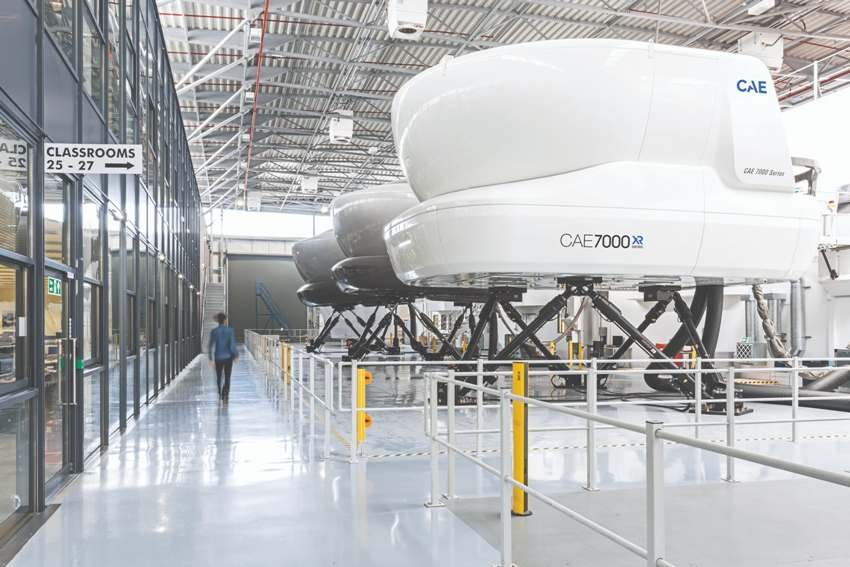
A: We’ve just opened our fourth training center in Mumbai, where the first A320 simulator is already operational and has capacity for up to six simulator bays. We have room to continue expanding within our existing infrastructure in Bengaluru, Greater Noida, Gurugram, and Mumbai. If demand continues to grow, we remain committed to supporting our airline partners and the broader Indian aviation ecosystem through additional training capacity.
AW:Any upcoming initiatives that you want to share with our readers?
A: For us, there’s a big focus on MPL and on CBTA training as these are key initiatives for CAE. Both are very applicable in India as MPL has been a topic of discussion amongst airlines, regulators, and the broader training ecosystem.
At APATS, we announced a five-year extension of our MPL program with AirAsia, a long-standing MPL partner of ours. It’s a program that we believe in, that the airline partners believe in, and one that would have a real impact in supporting the continued growth of aviation in India.
As the industry continues to grow, we remain committed to helping airlines develop the skilled workforce needed for the future and supporting the highest standards of aviation safety.
(This exclusive interview is also published at Aviation World Sept-Oct 2026 Print Edition)