

Civil Aviation

Civil Aviation

AIRPORT PRIVATISATION INEVITABLE! LET US MAKE MOST OF IT…

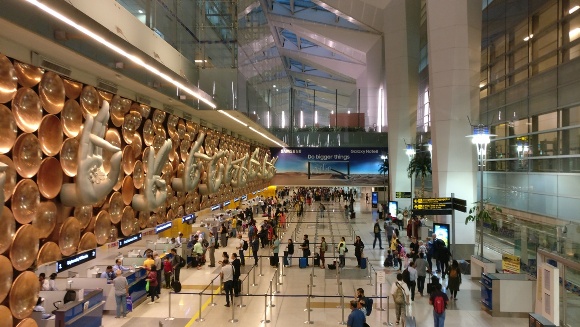
Aviation World Feature Airport infrastructure is the essential skeletal framework of aviation but generally tends to be taken for granted, possibly because addition of new airports and transformation of old ones happen at a slow pace and away from public glare. Nonetheless, airports play a vital role in sustaining aviation, supporting the transport network, promoting trade and tourism, and contributing to economic development of the nation. Covid-19 has been exceptionally unkind to civil aviation with airports possibly being the worst affected sector. By Gp.Capt. AK Sachdev (Retd.)In India, airports, being capital and real estate intensive, were in public sector domain during our initial years but that has changed in the last two decades with change of policies and the government’s fiscal compulsions to disinvest in them. There are close to 500 airports strewn over the extent of the country with 139 of them being under the public domain and owned by Airports Authority of India (AAI) according to AAI’s official site (https://www.aai.aero/en/business-opportunities/indian-airports accessed on 08 February 2021). According to AAI, the total number of functional airports in India is 153 of which 29 are international, 114 are domestic and 10 customs airports (at which unloading of imported goods and the loading of export goods is permitted). To put this figure into perspective, US, which has a billion less people than India, has over 5000 functional airports. This article critically appraises the push for privatising airport infrastructure.BUDGETARY IMPETUS The central government budget presented in 2018 had introduced NextGen Airports for BHarat (NABH)Nirman initiative. It proposed to increase the existing capacity of airports by more than five times through construction of 100 new airports in the next 10 years. An impressive sounding figure for investment in that direction was also mentioned but the onslaught of Covid-19 rendered all that planning superfluous. Indeed, aviation went into survival mode globally and it is only now that optimism is beginning to manifest itself in actions and thoughts of aviation stake holders, including the government. The budget presented last month reflected some of that buoyancy; the Finance Minister’s budget presentation speech mentioned the word ‘infrastructure’ more than 40 times and included a proposal to set up a Development Finance Institution (DFI) with a capital of Rs 20,000 crore and an ability to lend up to Rs 5 lakh crore. The issuance of Zero Coupon Bonds for infrastructure funding also has the possibility of providing an avenue for aviation financing.Disappointingly but unsurprisingly, the long standing demand of civil aviation to be given infrastructure status remained unaddressed. The total budgetary allocation for aviation was Rs 3,224 crores, a figure representing 22% reduction as compared to the ongoing fiscal year. Of this, airports have been allocated Rs 600 crores mainly for the revival of 50 airports that fall under the Regional Connectivity Scheme (RCS). Airports Economic Regulatory Authority of India(AERA) has been allocated Rs 10 crores. Besides, the Airports Authority of India (AAI) saw a provision of Rs 5,139 crores marked under Internal and Extra budgetary resources; the implication is that AAI will have to put up collateral to raise funds. The aviation portion of the budget has endeavoured to convey that the financial problems of airports are being addressed. However, the actual availability of funding is a bit nebulous, given the fiscal pressure this budget will be consummated under. There is thus a momentum building up for finding other means of funding airport infrastructure. In December 2019, the National Infrastructure Pipeline (NIP) had been launched; it now has a pipeline of 7,400 projects, which require major funding expansion from both government and private sector. The government’s plan is to realise this goal through three concrete measures: creating the necessary institutional structure, monetising assets, and expanding capital investment through budgets. Monetising functioning public infrastructure is a way to generate more funds by drawing in private sector participation and that is the route airport infrastructure development is embarked upon. PRIVATISATION In her budget speech the Finance Minister said the government would be monetising assets of the AAI-operated airports in Tier-2 and Tier-3 cities to raise money for building new infrastructure; this is a significant departure from the past where the government has maintained that big airports were being privatised so that the cash thus generated could be invested in airports in smaller cities. In a semantic quirk, the disinvestment in AAI’s airports has been always referred to, rather euphemistically, as privatisation — a term that encompasses the whole spectrum of private participation from a wholly private ownership to a Public Private Participation (PPP) model with multiple participants. As can be expected, each model has a unique texture withdiverse partners getting into bed but with disparate dreams. The result is that all the PPP ventures have not had the same degree of success. Perhaps the only thing common to airports moving away from the AAI fold has been the incremental addition to the air passengers’ burden. The first Indian airport to be privatised in India was Cochin as far back as 1999, followed by Hyderabad in 2002 and Bengaluru in 2004; Delhi and Mumbai — the two largest airports in the country — were privatised in 2006. At that time there was no airport regulator (the Airport Economic Regulatory Authority (AERA) came up only in 2008 as a result of a Parliamentary act. It is not clear whether this fact contributed to the additional burden of privatisation on airlines (which in turn passed it on to the passengers). Privatisation was resisted stoutly by airlines but the government was unrelenting. Meanwhile, the project costs of airports overshot the original estimates (Delhi by 3.8 times and Mumbai by 1.7 times) with the incremental costs being passed on to the passengers through development fees to the tune of Rs 3400 crores. These figures are mentioned here to show the passenger pain related to airport privatisation. After 2006, there was a lull in the interest from potential investors in airports until 2015 when disparate entities again started looking at airports as lucrative ventures. In

Civil Aviation, Recent News

GUIDELINES ISSUED FOR FAST AND EFFICIENT VACCINATION OF CIVIL AVIATION COMMUNITY

New Delhi, 6th May 2021: Ministry of Civil Aviation (MoCA) has issued enabling guidelines to facilitate the vaccination program in a fast and efficient manner to ensure timely vaccination of the aviation community. During the COVID-19 surge, the aviation community has worked tirelessly to ensure unhindered services for the movement of people in need and essential cargo including critical medical cargo like vaccines, medicines, Oxygen Concentrators, etc. Secretary, Civil Aviation sent a letter earlier to all the State Governments with a request to consider the personnel involved in aviation and related services as a priority group under the vaccination program. As per the guidelines, all players in Civil Aviation Sector would be advised to cover their personnel under the ongoing vaccination program. Guidelines further state that the organizations which have already made arrangements with Government/Private service providers for the vaccination to their employees may continue to do so. Further, a dedicated vaccination facility is advised to be established by the Airport Operators in their respective airports to facilitate expeditious vaccination for the personnel involved in aviation or related services (including the contractual, casual, etc.). It is stated that the Airport Operator should immediately contact State Governments/Private Service Providers (Hospitals), who are willing to set up Covid Vaccination Centres at Airports. The guidelines state that required facilities like setting up of vaccination counters, segregated waiting area (pre as well as post-vaccination) are to be established by the Airport Operators. Basic facilities for the personnel visiting (help desk, drinking water, ventilation fans, washrooms, etc.) to be arranged following COVID safety protocols.The cost per vaccination dose can be decided by the Airport Operator with the service provider. These facilities would be available for all aviation sector stakeholders at the same cost.It further states that all agencies working in the airports eco-system need to sponsor their personnel to avail the facilities as operators/service providers would not be dealing with individual cases.Further, online Payment mechanism to the service provider for vaccine doses administered for their respective personnel has been advised to be devised. It is stated that for the smaller airports (where the numbers to get vaccinated are less and private players do not find it viable), the Airport Operators can approach the District/local Administration for extending the vaccination program. The facilities created by Airport Operator would be available for all the Civil Aviation Personnel in first phase and can be extended to the family members subsequently. The guidelines suggest that priority should be made to cover the ATC, crew of airlines (both cockpit and cabin), mission critical and passenger facing staff on priority. All Airport Operators have been advised to designate a nodal officer (an alternative nodal officer may also be kept in readiness) for coordinating the efforts. The guidelines said that Chairman, AAI will hold regular meetings to review the progress and coordinate with the Ministry and DGCA to address issues and challenges.If there is an issue of vaccine availability Ministry would take up at appropriate level for smooth supply. The order further mentions that considering any impending local situation, suggested guidelines may be contextualized and improved but all safety protocols and instructions issued by MoHFW, State Government Concerned or MoCA, related to COVID 19 must be followed. ( Online News recived by PIB. Aviation World has publsihed in unedited)

Civil Aviation

Qatar Airways Cargo Convoy Carrying Medical Aid and Equipment to Support COVID-19 Relief Efforts in India

‎300 tonnes of aid from around the world departed in a three-aircraft cargo convoy from Doha to India, as part of the freight carrier’s WeQare initiative Delhi, India, 3rd May 2021 – Three Qatar Airways Cargo Boeing 777 freighters departed to India today, carrying approximately 300 tonnes of medical supplies from around the world to support COVID-19 relief efforts. The three flights departed one after the other bound for Bengaluru, Mumbai and New Delhi as part of Qatar Airways Cargo’s WeQare initiative. Qatar Airways Group Chief Executive, His Excellency Mr. Akbar Al Baker, said: “Having seen with great sorrow the impact this further wave of COVID-19 infections has had on people in India, we knew we had to be part of the global effort to support the valiant health care workers in the country. “As the leading air cargo carrier in the world, we are in a unique position to offer immediate humanitarian support through the provision of aircraft to transport much needed medical supplies, as well as coordinating logistical arrangements. We hope today’s shipment and further shipments in the weeks to come will help ease the burden on local medical workers and provide relief to the impacted communities in India.” Ambassador of India to Qatar, His Excellency Ambassador Dr. Deepak Mittal, said: “We deeply appreciate the gesture of Qatar Airways to carry free of charge essential medical supplies to India and supporting the fight against COVID-19.” Today’s cargo shipment included PPE equipment, oxygen canisters and other essential medical items, and consists of donations by individuals and companies around the world in addition to existing cargo orders. (Aviation World Online News)

Civil Aviation, Top Stories

AirAsia India offers free cancellation and rescheduling on all flights to and from New Delhi

20th April 2021: Bringing relief for their guests, AirAsia India announced free cancellation and rescheduling for all flights to and from New Delhi between 19th and 26th April 2021, both days inclusive. AirAsia introduced this additional flexibility for guests in light of the lockdown and curfew on the movement of individuals announced by the Government of Delhi from 22.00 hrs on 19th April till 05.00 hrs on 26th April 2021, even though people going from and to airports are exempt on production of a valid itinerary. All AirAsia guests flying to and from Delhi can now opt to cancel or reschedule to another flight without any change fees or cancellation charges.AirAsia also launched its #FlexIt campaign, offering free rescheduling on all flights across India for bookings made till 15th May 2021. In addition, the airlines also revamped its popular ‘Premium Flex’ fares, which in addition to unlimited changes, also offers a choice of seats, pre-booked hot meals for all flights above 2 hours, and among lowest charges of only ₹500 for cancellations made beyond 72 hours before the scheduled flight departure. ( Aviation World Online News Desk)

Civil Aviation, Recent News

ETIHAD AIRWAYS STARTS IATA PASS TRIAL ON FLIGHTS FROM ABU DHABI TO NORTH AMERICA

20 April 2021,Abu Dhabi Guests travelling with Etihad Airways, the national carrier of the United Arab Emirates, from now until 31 May from Abu Dhabi to Chicago, New York, Washington and Toronto, will be the first to trial the IATA Travel Pass app to easily manage their travel health credentials. Mohammad Al Bulooki, Chief Operating Officer, Etihad Aviation Group, said: “With the dynamically changing health requirements for travel, Etihad believes that a digital health passport solution will provide additional clarity and ease for travellers. Etihad has partnered with IATA so that together, a globally unified approach to a travel pass can be simplified to make travel easier once governments decide what regulations are required to cross borders in either direction.” To participate in the trial, guests simply download the IATA Travel Pass app from the Apple App Store and book an appointment with Life Diagnostics at Sultan Bin Zayed the First Street or BioGenix Labs at Masdar City. At the clinic, guests inform reception they are participating in the IATA Travel Pass trial and should be ready to show their passport and mobile device with the IATA Travel Pass app downloaded. Once the test result is ready, travellers will be able to view it on both the IATA Travel Pass app and through the testing clinic’s own digital platform. ( News published unedited on the basis of Press Release)

Civil Aviation, Top Stories

SriLankan Airlines strengthens presence in North America and Europe through Qatar Airways codeshare

20th April, 2021, Colombo SriLankan Airlines is strengthening its presence in the North American and European markets through the expansion of its existing codeshare agreement with Qatar Airways, with additional connections to serve various cities in these regions. This codeshare would expand across 10 cities in 06 countries covering Canada, Hungary, Azerbaijan, Scotland, Ukraine, and Turkey. Vipula Gunatilleka, Chief Executive Officer of SriLankan Airlines said: “The expansion of our partnership with Qatar Airways is an important element in SriLankan’s ongoing initiatives to provide seamless connectivity for our valued passengers across a wide range of destinations, apart from increasing the number of cities that we fly to.” Accordingly, SriLankan Airlines will codeshare on Qatar Airways operated flights between Doha and Turkey’s Istanbul Atatürk Airport, Ankara Esenboğa Airport in the city of Ankara, Izmir Adnan Menderes Airport in Izmir, Antalya International Airport in Antalya and Sabiha Gokcen International Airport in Sabiha, Budapest Ferenc Liszt International Airport in Budapest, Baku Heydar Aliyev International Airport in Azerbaijan, Edinburgh Airport in Scotland, Kyiv Boryspil International Airport in Ukraine serving the European region. Reaching the North American territory through Montréal-Pierre Elliott Trudeau International Airport situated in Montreal, the largest city in Canada’s Québec province. Both airlines offer easy connectivity between Qatar Airways’ hub in Doha’s Hamad International Airport and Colombo’s Bandaranaike International Airport several times a day. Qatar Airways Group Chief Executive, His Excellency Mr. Akbar Al Baker, said: “The expansion of codeshare cooperation between Qatar Airways and SriLankan Airlines is a natural next step in the strengthening of our close partnership. We look forward to working closely with SriLankan Airlines to offer passengers more flexible travel options via the Best Airport in the Middle East, Hamad International Airport.” This is the third phase of the recent expansion of the codeshare agreement between the two airlines, which are both members of the oneworld global airline alliance that connects passengers to over a thousand cities in more than 170 countries and territories through 14 member airlines. Codeshare operations with Qatar Airways began in 2016. Phase 1 was completed in the last quarter of 2019, while phase 2 was implemented in February 2020 by adding a large number of destinations to the networks of both airlines. The total number of destinations shared between the two airlines is 48. Expanding the SriLankan Airlines route network across 111 cities in 55 countries with the addition of these codeshare destinations. SriLankan Airlines passengers will now have the option of seamless long-distance travel via Doha through one travel booking with enhanced travel options to Europe and North America. SriLankan Airlines has a number of codeshare agreements with other airlines. ( News published unedited on the basis of Press Release)

Civil Aviation, Recent News

SAVVYGO AEROTECH LLP organizes a webinar on “Role of Aviation Technical Consultants in Aviation Leasing Industry”

The webinar highlighted the core competence of an aviation consultant and how their service benefits in terms of decision making, cost-saving ranging up to final execution of the particular project in place. New Delhi, 18th February, 2021 A consultant plays a key role in any sector due to their expertise in the particular domain and ability to give a solution to the small as well as pertinent issues of the organization. If we specifically look into the aviation sector than it would be ideal to mention that consultants act as a bridge to establish connections between all the verticals due to their visionary ideas in a very cost-competitive method of working. Looking into the ongoing industry trend, India based SAVVYGO AEROTECH LLP organized a webinar on “Role of Aviation Consultants in Aviation Leasing Industry” which was participated by a large number of aviation industry professionals. The webinar was moderated by Mr. U.S.Harsha, CEO of SAVVYGO AEROTECH LLP and mentored by Mr. Ashwani Acharya, Business Head, CAE Simulation Training Pvt. Ltd. Mr. Acharya highlighted the core component of becoming the consultant in the aviation sector and mentioned the parameter required to become the same. He said, “a consultant is driven by the quality of the objective. They must be a problem solver, creative thinker, lean and take larger pictures, have sharp analytical skills, take decision making of the organization, narrow down key areas faster using its own resources and have defined domain knowledge.” As the Indian aviation was significantly growing before COVID Lockdown and even now after gradual opening up of the sector, things are tremendously improving. At present more than 650 aircraft are operational in Indian sky and its projected that in the next 5-10 years the number will double up or even get more. This will be challenging for airlines to maintain their assets. So this brings the opportunity for consultant or professionals to share their knowledge and extend their services wherever required. Even in the case of such operators having less than 10 aircraft in their fleet, one can have less number of employees and more number of consultants to manage their assets and fulfill all regulatory works on as and when required basis. The technical consultants can undertake a lot of innovative measure for the organization. That comes at premium quality, cost-effective solutions and value additions in the whole chain, serviceability, bridges gap to the owner at a reasonable cost. Highlighting why airlines look for experts, Mr. Acharya mentioned, “in order to improve certain key functions consultants can bring focus and efficiency ,identify and isolate challenges to resolve, forecast milestones, technologically support, out of box thinking and preventive measures.” He added, “apart from all good work, the challenge of getting work is always there. In terms of delivery which is a gradual process sometime consultant are available at a higher cost due to their name and expertise in the sector.” The webinar was attended by key industry leaders as Marcial Casiano, CEO M3 Aviation Group LLC, Niraj Panchal from Aerofield Services LLC, Manish Sharma, Manager Maintenance, IndiGo Airlines, Surendra Nath, Shift Incharge, Airworks India Engg. Ltd, Abinav, Aircraft Maintenance Engineer, Flybig Airlines, Shyam Sunder from Deloitte, Ravinder Sharma, Aviation Technical Consultant and others. ABOUT SAVVYGO AEROTECH SAVVYGO AEROTECH is a fastest growing young company with in-hand of rich practical experience in the field of Aircraft maintenance technical services and asset management as well arena born to render rich intricate technical services throughout the globe. A team of young but passionate consultants, as a company they are new but hold 20+ years of industry experience in aircraft consultation. Vision to provide 100% transparent and premium service to their client makes them reliable in the industry. A team backed by huge experience and mentorship, help them evolve day-by-day. They started small and growing at a rapid speed. Among the leading aviation asset management and consulting company, specializing in the purchase, sale, and management of commercial and corporate aircraft. Their association with leading aircraft and engine leasing companies from around the world has simplified the requirement of the clients. SAVVYGO AEROTECH LLP specializes in services like: 1. Technical Services & Asset Management 2. Aircraft Pre buy inspection 3. Aircraft Annual Audit 4. Aircraft Technical Record Digitalization 5. Aircraft Deliveries / Re-deliveries From valuations, fleet selection and portfolio development to redelivery and remarketing at lease end, they accompany clients through every risk assessment and asset management activity during the life of the lease. So, if you are looking for an aircraft consultant, Savvygo Aerotech can help with your requirement by providing top-notch service. (The webinar was organised on 13th Feb, 2021 at 18.30 Hrs IST)

Civil Aviation, Top Stories

MOCA ISSUES NEW GUIDELINES FOR INTERNATIONAL ARRIVALS

New Delhi, 17th February 2021 In the context of spread of mutant variant of SARS-CoV-2 in many countries, Ministry of Civil Aviation in consultation with Ministry of Health and Family Welfare has issued new guidelines for international arrivals. These guidelines will supersede all guidelines issued on the subject since 2nd August 2020. This Standard Operating Procedure shall be valid w.e.f. 22nd February 2021 (23.59 Hrs IST) till further orders. The updated guidelines are available at Ministry of Civil Aviation and Ministry of Health and Family Welfare websites. https://www.mohfw.gov.in/pdf/Guidelinesforinternationalarrivals17022021.pdf https://www.mohfw.gov.in/pdf/Algorithmforinternationalarrivals.pdf Guidelines: Part A – For all international travellers except travellers comingthrough flights originating from United Kingdom,Europe and Middle East A.1. Planning for Travel i. All travellers should (i) submit self-declaration form on the online Air Suvidha portal (www.newdelhiairport.in) before the scheduled travel (ii) upload a negative COVID-19 RT-PCR report. This test should have been conducted within 72 hrs prior to undertaking the journey. Each passenger shall also submit a declaration with respect to authenticity of the report and will be liable for criminal prosecution, if found otherwise. ii. They should also give an undertaking on the portal or otherwise to Ministry of Civil Aviation, Govt. of India, through concerned airlines before they are allowed to undertake the journey that they would abide by the decision of the appropriate government authority to undergo home quarantine/ self-monitoring of their health for 14 days, or as warranted. iii. Arrival in India without negative report shall be allowed only for those traveling to India in the exigency of death in the family. iv. If they wish to seek such exemption under para (iii) above, they shall apply to the online portal (www.newdelhiairport.in) at least 72 hours before boarding. The decision taken by the government as communicated on the online portal will be final. A.2. Before Boarding v. Do’s and Don’ts shall be provided along with ticket to the travellers by the airlines/agencies concerned. vi. Airlines to allow boarding only those passengers who have filled in the Self Declaration Form on the Air Suvidha portal and uploaded the negative RT-PCR test report. vii. At the time of boarding the flight, only asymptomatic travellers will be allowed to board after thermal screening. viii. All passengers shall be advised to download AarogyaSetu app on their mobile devices. ix. Suitable precautionary measures such as environmental sanitation and disinfection shall be ensured at the airports. x. During boarding all possible measures to ensure physical distancing are to be ensured. A.3. During Travel xi. Suitable announcement about COVID-19 including precautionary measures to be followed shall be made at airports and in flights and during transit. xii. While on board the flight, required precautions such as wearing of masks, environmental hygiene, respiratory hygiene, hand hygiene etc. are to be observed by airline staff, crew and all passengers. A.4. On arrival xiii. Deboarding should be done ensuring physical distancing. xiv. Thermal screening would be carried out in respect of all the passengers by the health officials present at the airport. The self-declaration form filled online shall be shown to the airport health staff. xv. The passengers found to be symptomatic during screening shall be immediately isolated and taken to medical facility as per health protocol. xvi. The passengers who have been exempted for pre-arrival RT-PCR testing [para (iii) and (iv) of A.1 above] (as approved and indicated on the online portal in advance) will show the same to the respective State counters. They will be prioritized for sample collection in the designated area, samples collected and permitted to exit the airport.They shall monitor their health for 14 days (subject to negative test report of the sample taken at the Airport that would be conveyed to such travellers by the concerned State authorities/airport operators). xvii. All other passengers who have uploaded RT-PCR negative certificates on Air Suvidha portal shall be allowed to leave the airport/ take transit flights and will be required to undertake self-monitoring of their health for 14 days. xviii. All such passengers will also be provided the list of the National and State level surveillance officers and the respective call centre numbers, so as to inform State/National Call Centres in case they develop symptoms at any time during the quarantine or self-monitoring of their health. International travellers arriving at seaports/landports xix. International travellers arriving through seaports/land ports will also have to undergo the same protocol as above, except that facility for online registration is not available for such passengers currently. xx. Such travellers shall submit the self-declaration form to the concerned authorities of Government of India at seaports/land ports on arrival. Part B – For all international travellers coming/transiting throughflights originating from United Kingdom,Europe and Middle East All the clauses as above (part A) shall be applicable to such travellers coming/transiting from flights originating in United Kingdom,Europe and Middle East except for clauses on testing, quarantine and isolation as specified below: All international travellers coming/transiting from flights originating from United Kingdom, Europe and Middle Eastas described in the scope above should submit Self-Declaration Form (SDF) for COVID on the online Air Suvidha portal (www.newdelhiairport.in) before the scheduled travel and will be required to declare their travel history (of past 14 days). i. While filling SDF, apart from providing all other information required in the SDF, passengers need to select: a. Whether they plan to disembark at the arrival airport or take further flights to reach their final destination in India. b. Based on this selection, the receipt of SDF (dispatched online to the transiting travellers) will display “T” (Transit) in easily readable and bigger font than other text. c. The passengers will need to display this receipt to State authority / Government officials at the airport for segregation. ii. Keeping in mind the testing requirements for passengers from UK, Brazil and South Africa, who have to take connecting flights, airlines should keep the passengers informed about the need for transit time of a minimum 6-8 hours at the entry airport (in India) while booking the tickets for connecting flights. iii.

Civil Aviation, Recent News

DRONE USE PERMISSION TO KOCHI METRO RAIL

Drones to be Used for Integrated Urban Regeneration & Water Transport System (IURWTS) Project 17 Feb 2021, New Delhi Ministry of Civil Aviation (MoCA) and Directorate General of Civil Aviation (DGCA) have granted conditional exemption for Remotely Piloted Aircraft System (RPAS) usage to Kochi Metro Rail Limited, Kerala for Integrated Urban Regeneration & Water Transport System Project (IURWTS). This conditional exemption is valid till 31st December 2021 from the date of issue of the letter or until the full operationalization of Digital Sky Platform (Phase-1), whichever is earlier. This exemption shall be valid only if all conditions and limitations as stated below are strictly adhered to. In case of violation of any condition, this exemption shall become null and void. Conditions and limitations to Kochi Metro Rail Limited to use Remotely Piloted Aircraft Systems (RPAS) for Integrated Urban Regeneration & Water Transport System (IURWTS) Project: • This exemption to KMRL from the paragraphs 5.2 (b), 5.3, 6, 7, 8.4,.9.2, 11.1 [d), 11.2 [a], 12.4, 12.5 and15.3 of CAR Sect on 3, Series X, Part I, is subject to exemption from Rule 15A of the Aircraft Rules, 1937 by Ministry of Civil Aviation. • The KMRL shall obtain necessary clearances from (a) Local Administration (b) Ministry of Defence (c) Ministry of Home Affairs (d) Air Defence Clearance from Indian Air Force and (e) Airport Authority of India (AAI) [as applicable] prior to operation of Remotely Piloted Aircraft System (RPAS). • M/s Senselmage Technologies engaged by KMRL (through Techno Vision Survey & Mappings ltd.) shall only operate the RPAS models specified in the approved Standard Operating procedures (SOP)V.1.0.2020. 1 Revision No. dated 11″‘ January, 2021. The operations of the RPAS having valid Drone Acknowledgement Number (DAN) [specified in the SOP] shall be operated as per the above mentioned SOP in the area specified therein. Any change in the approved SOP for e.g. Change in procedures or RPAS or use case or personnel or area specified in the approved SOP shall be included in the SOP and submitted to DGCA for approval. • KMRL shall ensure that only trained I experienced bona fide personnel operates the RPAS as per the approved SOP. Subsequently, the RPAS operator shall ensure that remote flight crew is trained through approved FTOs/ RPTOs. • The RPAS Operator shall ensure that the RPAS is in working condition and maintained as mentioned in the approved SOP and shall be responsible for any eventual ties due to malfunction I disorientation of equipment. • The RPAS operator shall maintain the records of each RPA flight and make such records available to the DGCA on demand. • KMRL shall take necessary permission regarding Aerial Photography from Directorate of Regulations & Information. DGCA or Ministry of Defence (as applicable). The photograph s/video-graphs, taken through RPAS shall be used by KMRL only. KMRL shall be responsible for safety and secu1rity of RPAS and data collected through RPAS. • The RPAS operator shall ensure that the RPAS are made NPNT compliant [certified by QCI] as soon as the digital sky platform is made operational. • KMRL shall ensure that each RPAS operated by M/s Senselmage Technologies for the subject purpose has fire resistant identification plate inscribed legibly with OAN, DAN and Model No. of the RPAS. • The operation of RPAS shall be restricted to day operations (from sunrise to Sunset), within Visual Line of Sight (VLOS) in uncontrolled airspace only and at a height of 200fl maximum from AGL. • RPAS shall not be operated in the vicinity of airport as per the provisions of the CAR. If required to operate near the airport, approval from Airports Authority of India (AAI) and/or concerned airport/airfield operator shall be taken in advance regarding time and area of operations of RPAS. • KMRL shall ensure their no items are discharged or dropped during flight of the RPAS. The KMRL shall also ensure that hazardous material or variable payloads are not carried in I using the RPA under any circumstances. • KMRL shall ensure that uninvolved persons are not allowed within the operation area (including ground station) during the RPAS operations and ensure safety conditions specified in the SOP/RPAS flight manual and in this letter are adhered to. • KMRL shall ensure safety, security and privacy of public, property, operator etc. Further, in case of any eventually, DGCA shall not be held responsible. • The operator shall ensure the RPAS is not flown in a manner to cause danger to any person or property. In case of any injury to any person due to physical contact with the equipment, the operator and KMRL shall be responsible for medico-legal issues. The KMRL shall ensure the insurance policy remains valid and of adequate level to cover any damage to third party resulting from accident I incident occurred during the operation of RPAS. • The operator shall not operate the RPAS in no-fly zones specified in Para 13.1 of the CAR Section 3, Series X,Part I without the approval of concerned Ministries/ authorities. • The KMRL and M/s Senselmage Technologies shall indemnify DGCA from any legal cases or any other issues arising due to these operations. • This letter shall not override other restrictions I SOP on Remotely Piloted Aircraft System framed by other Government Agencies or any bye-laws. • In case of incident/accident during at any phase of the operations, the operator shall generate a report with full details to Air Safety Directorate of DGCA within 48 hours of such event. • The Operator shall intimate the schedule of operation (location and date of operation) to DGCA (as and when available) well in advance for conducting safety oversight. In this regard, KMRL shall ensure access to DGCA is provided to perform this function. (News Source: PIB,Delhi)

Aviation World Magazine
Civil Aviation

BUDGET 2021 FOR AVIATION- STILL HOLDING AT 36000 FEET

BY ROHIT SINGH TOMAR The much anticipated Budget 2021 was recently announced by the Finance Minister of India Nirmala Sitharaman. Pre-budget months had seen a significant push from the Prime Minister for the Aatma Nirbhar Bharat Abhiyaan. It is expected that under this prerogative, manufacturing and in-country capabilities to perform aircraft maintenance would see a significant boost in the arm. With these expectations among the many aviation players, it was disappointing that the aviation sector did not find a mention in the budget. The incentives and policy to support India’s aircraft leasing industry were the silver lining in the budget speech. The aviation leasing market controls more than 65 per cent of the global fleet as of today. More than 35 per cent of the international deliveries in the next ten (10) years will be absorbed in Asia. While Singapore and Hong Kong continue their push in the aviation leasing sector, it seems an apt time to move into the aircraft leasing business. Recently, IFSCA (International Financial Services Centres Authority) published the draft regulations for aircraft leasing and opened it for public comments. Further, the Union Budget of 2021 explains Indian government’s interest in this sector. However, we still have a long mile to walk in meeting the global standards required to make aircraft leasing attractive in India. Among the many things, an independent aircraft registry managed under Gift City with records of aircraft asset owners and parties with a financial interest in the asset is an important starting point. The Gift city’s ability to succeed in setting up its own securities and trading company will be critical for the aircraft leasing company’s access. Lessors deploy a significant amount of debt and for India to be seen attractive, will have to offer competitive cost of debt. For comparative numbers, Air lease raised debt in November 2020 via an issue of 10 years bond with a coupon of 3.13 per cent which is 200 basis points lower than the Indian Government G-Sec bonds with a yield of above 5 percent. Strong Competition Among Lessors An aircraft like A320 Neo with a typical purchase price of about 54 Million USD is leased at a monthly lease rental factor (LRF) of 0.65 per cent ~ 0.7 per cent. Even at these LRFs, there is strong competition among lessors. At such low LRF’s, the average return per year on the value of an asset is estimated to be about 8 per cent. This return is inclusive of the various risks, including country risk, operators risk, and other risk adjustments. Of this 8 per cent, the Lessors have to provide for the expenses of running the leasing organization plus returns to the equity holders (which is typically upwards of 20 per cent). The net available return to apportion towards cost of debt has a small margin of 0.5 to 1 per cent. For banks and investment firms in India, a 10-year G-sec bond issued by the Government of India provide yields above 5 per cent, compared to the Hong Kong government’s 10-year bond yield of 0.8 per cent. At this juncture, we have not even factored in the currency fluctuation risks between the freely tradable currency as proposed (in USD or EUR) Vs INR. While the policy’s objective and the incentives are to bring foreign lessors to India, the government must learn from the past mistakes in aviation and realize that such movement will only be possible if and only if domestic banks are incentivized to lend capital at lower preferred rates. Incentivisation on lending is crucial for domestic capital being deployed and made available to leasing companies at par with international standards. Moving away from leasing, the budget fell short of implementing much-needed reforms and policy changes for developing the MRO infrastructure in India. With more than 90 per cent of the aircraft component MRO business being outsourced to companies outside India, it is high time that developing in-house capabilities becomes a strategic objective of the Aatma Nirbhar Abhiyaan. Large scale policy and reforms are needed in the MRO capability development in India. The UDAAN scheme, under which India was successfully able to upscale and make operational many regional airports across India, also provided the strategic objective for the government to develop far-flung regional airport alternatives to existing defence airports, which adds the flexibility of movement of defence forces at the shortest time across these airports. Value Incentivisation Approach Global OEMs have realised that success in this space is because of the strategy of playing one OEM against the other. Pursuant to which, China-a country with the perennial perchance to emerge as a leader, has aggressively entered into the aircraft manufacturing sector, aiming to share the market space with Boeing & Airbus. To ward off such future challenges, OEMs across the aviation value chain have started acquiring & consolidating the competition. Such consolidated entity wins a monopolist position placing it at a strategically stronger position to negotiate with both the customers and the governments alike. China with its competitive wage rates will be the only new entrant in this space in the forthcoming years leaving India behind with significant opportunity to encapsulate in this space. The government needs to get its think tank together on how and what policies need to be implemented to create a value incentivisation approach for these OEMs and build a strong, robust, resilient and self-reliant MRO ecosystem in India. While the government has reduced GST on MRO Services to make them competitive, it misses building long-term objectives. As time passes by for India, the only lever it has are the endusers of these OEM’s, that is, the airlines. The need of the hour that a comprehensive policy is developed which works on incentivizing the airlines for the work they carry out in India. For airlines, the opportunity for cost reduction should not only be limited to the labor cost arbitrage but also towards developing and supporting the transfer of work from their supplier to Indian players. For the

FOREWORD

Dear Readers,

The Asia-Pacific aviation sector is expanding rapidly, driving growth far beyond aircraft numbers into crucial verticals like MRO, training, logistics, and aerospace supply chains. In this edition of Aviation World, we bring you exclusive interviews and features from across these sectors, offering direct industry insights from top global leadership.

Our cover story highlights Shveta Gupta, CEO of Divyanshi Aviation. Under her dynamic leadership, the company has established itself as one of India’s premier aerospace supply chain providers, partnering with leading global manufacturers. Our corporate feature delves into Divyanshi Aviation’s core operations, paired with an exclusive interview where Ms. Gupta candidly shares her professional journey and vision for the company’s future.

This issue also features exclusive conversations with prominent industry leaders, including:

  • Ron Nye, President of Avionics, Acron Aviation
  • Bob Gibbs, Vice President, Defense & Special Missions Sales, Textron Aviation
  • Sudhir S. Rajeshirke, President – Aerospace, Jubilant Enpro
  • Emmanuel Simon, Program Manager and Aerospace Leader, PHINIA
  • Arved von zur Muehlen, Chief Commercial Officer, Saudia Group
  • Simon Azar, Vice President, Civil Aviation, Asia Pacific, CAE

Each leader offers key perspectives on their organization’s strategic initiatives and their growing contributions to the Indian aviation and aerospace ecosystem. Additionally, you will find expert-authored analytical features offering deep dives into current sector trends.

Aviation World continues to expand its global footprint as an official media partner for major domestic and international aviation events. Our editorial team will be participating in several upcoming global forums, and we look forward to connecting with industry peers and exploring new collaborations.

We extend our sincere gratitude to our advertisers and partners whose continued support fuels our endeavor.

Happy Reading!

The Editorial Team

Aviation World

NEWSLETTER

Aviation World Magazine is India’s premier aviation magazine and has been actively supporting the development of the Indian and global civil aviation sector. We started our journey in year 2015 and its been 12 years now and the response and acceptance is really encouraging. Thanks to all our associates and writers who remained with us in our progressive journey.

We have started 2026 on a very positive note and we look forward to increase our footprints to more locations and induct many more new companies in our campaign.. Do write to us at : editor@aviationworld.in

Disclaimer

The contents published in this website are news covering Aviation, Aerospace and Defence sector. The objective is to provide news in informative form to keep our readers updated of the latest development. We also publish content featured in our print publication Aviation World.We try our best to avoid any factual errors or image displayed here but we ensure immediate corrections to any such thing brought to our notice that might have been published inadvertently. All images and contents are sourced from the relevant organisations media team.

Copyright ©2014 – 2026. AVIATION WORLD. All rights reserved.

Scroll to Top