
Civil Aviation

Civil Aviation

Air India group unveils its plans for Navi Mumbai International Airport

Delhi, 23rd Sept. 2025: The Air India group has announced its plans to commence commercial flights from Navi Mumbai International Airport(NMIA) starting from the airport’s first phase of operations.This airport is operated by Adani Airport Holdings Ltd. In the initial phase,Air India Express, will operate 20 daily departures or 40 Air Traffic Movements (ATMs) from and to NMIA, connecting 15 Indian cities. The Air India group intends to scale up to 55 daily departures (110 ATMs) by mid-2026, including up to 5 daily international flights from NMIA. By Winter 2026, Air India group aims to further expand its operations to 60 daily departures (120 ATMs) from NMI, seamlessly connecting passengers to key domestic and international destinations. Campbell Wilson, Chief Executive Officer & Managing Director, Air India, said: “We look forward to commencing operations at Navi Mumbai International Airport, as Mumbai joins the league of world cities with more than one airport. We are happy to work with Adani Airports to build NMIA not only as a point that connects to the rest of India, but also as one of the country’s key global transit hubs for both – passengers and cargo – given its strategic geographical location. At the Air India group, we are proud to lead the charge in connecting the West to the East and beyond via India, and our expansion at NMIA will support India’s growth as a global aviation hub.” Arun Bansal, Chief Executive Officer, Adani Airport Holdings Ltd., said: “We are delighted to welcome Air India Group to Navi Mumbai International Airport as one of our valued airline partners. Their ambitious expansion plans and global vision are perfectly aligned with our aim of making NMIA a benchmark in global aviation. This partnership will redefine Mumbai’s connectivity landscape and strengthen India’s twin-airport strategy, NMIA’s adoption of technology for enhancing efficiency and best in class experience for passengers will play a pivotal role in delivering seamless and superior passenger journeys for decades to come.” Air India Express’ planned operations at NMIA will significantly boost connectivity to and from the Mumbai Metropolitan Region (MMR) to destinations across and outside India, while fostering seamless international transits through NMIA. Navi Mumbai International Airport is being built in five phases, with the launch phase expected to accommodate 20 million passengers per annum (MPPA) and handle 0.5 million metric tons (MMT) of cargo. Upon full completion, NMIA will have the capacity to serve 90 MPPA and handle 3.2 MMT of cargo annually.

Civil Aviation

Air India Express gets IATA Membership

Delhi, 17th September 2025: Air India Express has announced its membership with International Air Transport Association (IATA).IATA represents some 350 airlines from more than 120 countries, accounting for over 80% of global air traffic. A condition for IATA membership is the IATA Operational Safety Audit (IOSA), which is the global industry standard for airline operational safety auditing. Airlines have to comply with over 900 standards in order toachieve their IOSA registration. ”We welcome Air India Express into the IATA family. Air India Express has been on the IOSA registry since 2017, and we are glad that they have taken the next step to become an IATA member. Having Air India Express as a member broadens the perspectives that we can bring to the global issues affecting our industry,” said SheldonHee, IATA’s Regional Vice President for Asia Pacific. Commenting on the membership, Aloke Singh, Managing Director, Air India Express, said: “Becoming a part of the IATA family is a proud moment for us. It highlights our commitment to enhance our global standing, assuring our guests of world-class standards, and facilitates access to global partnerships. As we continue to grow our footprint, IATA membership is an additional step taken by Air India Express to ensure that every journey is supported by the highest standards of reliability, safety, and convenience.”

Civil Aviation

FLY91 waives convenience fee for all bookings made in September

Panaji, 15th September 2025: Goa based Indian regional airline, FLY91 has announced the waiver of convenience fees on all bookings made through its official website during the month of September. The offer comes with no restrictions on travel dates, giving customers complete flexibility to plan their journeys while saving on additional charges. The initiative, valid until September 30, 2025, is part of FLY91’s effort to make air travel more accessible and affordable for customers across its growing network of tier two and tier three destinations as we move into the festive season. By removing the convenience fee, the airline is extending direct savings to its passengers, reaffirming its commitment to customer-friendly and transparent pricing. “By doing away with the convenience fee this month we are offering our customers genuine savings and a more transparent booking experience,” said Manoj Chacko, managing director and CEO of FLY91.

Civil Aviation

Air Astana and Air India enters Codeshare Partnership

Gurugram, 10th September 2025: Air India and Air Astana, the flag carrier of Kazakhstan, have signed a new codeshare agreement to offer more flight options to travellers.The codeshare partnership enables cooperation between the two carriers on trunk routes between Kazakhstan and India, covering Air Astana routes operated between Almaty and Delhi, and Almaty and Mumbai. With this, Air India will place its ‘AI’ designator code on Air Astana’s flights to and from India, providing its customers convenient access to Almaty, a rapidly growing tourism and business hub in Central Asia. Air India customers travelling to Almaty from points beyond Delhi and Mumbai will be able to conveniently travel on a single ticket and check-in their baggage through to Almaty at the point of origin. Campbell Wilson, Chief Executive Officer & Managing Director, Air India, said: “Our new codeshare partnership with Air Astana creates stronger air links to Kazakhstan, a fast-growing market with immense potential for tourism. Beyond serving leisure travel demand, our partnership will also support trade and cultural exchanges between our two countries, while bringing a new destination in Central Asia closer to our customers.” Peter Foster, the Air Astana Group’s Chief Executive Officer, commented on the codeshare with Air India: “We are delighted to have concluded a comprehensive code share agreement with Asia’s oldest airline. Air India is an exceptionally well-managed business, which operates a comprehensive network of flights to, from and across India, the world’s most populous country and one of the fastest growing travel markets. India is of key strategic importance to the Air Astana Group as we increase flights from Kazakhstan to Delhi, Mumbai and Goa. The code share will accelerate the increasingly strong business, tourist and student traffic flows between our two countries”. The new arrangement builds on an existing interline partnership between Air India and Air Astana that came into effect earlier in 2025. Under the interline agreement, Air India customers already have convenient connections via Almaty to multiple destinations across Central Asia and China including Astana (Kazakhstan), Bishkek (Kyrgyzstan), Tashkent (Uzbekistan), Dushanbe (Tajikistan) and Urumqi (China). Air Astana enjoys access to 18 destinations across Air India’s domestic network and 9 international destinations via Delhi and Mumbai. With this step-up to a codeshare agreement, travel between India and Kazakhstan becomes more convenient for customers while also opening a wider network of destinations through a single booking and check-in process.

Civil Aviation

North East Region Ministers’ Conference on Civil Aviation 2025

Itanagar, 5th Sept 2025: Union Civil Aviation Minister Rammohan Naidu emphasised, “Growth of Civil Aviation infrastructure and enhanced connectivity are giving wings to the aspirations of North East India.” North East Region Ministers’ Conference on Civil Aviation 2025 & 3rd North East Aviation Summit, organised by Ministry of Civil Aviation, Government of India, was held today in Itanagar, Arunachal Pradesh. The conference was graced by the presence of Shri Pema Khandu, Chief Minister of Arunachal Pradesh, as the Chief Guest and Shri Ram Mohan Naidu, Minister for Civil Aviation, as the guest of honour. Shri Tesam Pongte, Speaker, Arunachal Pradesh Legislative Assembly remained present at the inaugural function. Shri Lalduhoma, Chief Minister of Mizoram; Shri Tsering Thendup Bhutia, Minister of Civil Aviation, Govt of Sikkim and Shri Jogen Mohan, Minister of Hill, Development and Cooperation, Govt of Assam graced the Conference and led the respective State Govt delegations for the interaction with the Ministry and the Aviation Industry. Shri Balo Raja, Minister of Civil Aviation, Arunachal Pradesh presented the State’s perspective.   In the inaugural, Chief Guest Shri Pema Khandu, Chief Minister, Arunachal Pradesh emphasised that transportation connectivity is the most critical sector for development of the NER. In the last 10 years, aviation infrastructure and connectivity status of NER has seen unprecedented growth. Having airports in Arunachal Pradesh was a long cherished dream of the people which got realised because of the active support of the Ministry of Civil Aviation under the visionary leadership of the hon’ble PM. Progress in creation of aviation infrastructure and path breaking schemes like UDAN have been instrumental in transforming the socio economic aspirations of the NE region. Shri Rammohan Naidu Kinjarapu, emphasized the need for deepening Centre-State-Industry collaboration for the accelerated growth of the Civil Aviation sector in the North East Region. He emphasized that enhanced air connectivity is vital for improving accessibility to remote and border areas, promoting tourism, facilitating cargo and logistics, and driving industrial as well as socio-economic growth in Arunachal Pradesh and the North East Region. To realise its strong tourism potential, North East Region should solve its connectivity challenges in fast pace. Also there is need for accelerating skilling initiatives for fast tracking employment generation among the youths of the region. An industry driven aviation ecosystem would be able to cater to both these needs. The Minister expressed pride in informing that the number of operational airports in the region has grown from nine in 2014 to 16 at present. Aircraft movements have nearly doubled, while domestic passenger traffic has increased more than threefold since 2014. Encouraging the states to harness on the region’s tourism potential, the Minister stated: “You have not seen India until you have seen North East India. The natural beauty, vibrant culture, warm hospitality and the strong essence of Indianness found here are unmatched.” He urged the states to focus on developing tourism infrastructure and hospitality services to complement expanding aviation connectivity.   Highlighting future support for infrastructure creation, the Minister shared that For the North Eastern group of states, we have decided to offer four pre-feasibility studies for Greenfield Airport development every financial year, free of consultancy or other charges. This will encourage states to plan and build new airports and take full advantage of the growth momentum. He assured continued support from the Central Government and emphasized that aviation is no longer a luxury—but a critical enabler of Viksit Bharat @2047. Highlighting India’s transformation into the third-largest domestic aviation market, he pointed to initiatives like UDAN, expansion of airports, growth of regional carriers, focus on Aviation skilling and efforts to incentivise MRO sector as key pillars of progress. As part of Session on Opportunities for states, officials from Ministry of Civil Aviation and AAI presented various airport development models and opportunities like HEMS and skilling of youth to the states. It was followed by One on One interaction with the state delegations. Parallel interactions of the states with Industry partners were also organised. During the interaction with the Ministry, Shri Lalduhoma, Chief Minister, Mizoram, highlighted that the development and betterment of aviation in the North East is not only a matter of improving air travel but a vital step toward unlocking the region’s true potential. Enhanced aviation connectivity will bridge geographical barriers, link remote areas with the rest of India, and foster stronger integration with national and international markets.   He emphasized that better air infrastructure—such as new airports, heliports, and regional connectivity through smaller aircraft and helicopters—will directly benefit tourism, trade, healthcare access, and emergency services. Improved aviation services will also empower local communities by creating new avenues for employment, boosting entrepreneurship, and attracting private investment into the region. Shri Balo Raja, Hon’ble Minister of Land Management, Civil Aviation during his speech on States’s perspective emphasized that strengthening regional connectivity is pivotal to unlocking the immense economic potential of North East India. The Minister highlighted that aviation development in the North Eastern region will play a transformative role in establishing robust air links between remote towns and metropolitan cities will reduce travel time, improve mobility, and integrate the region more closely with the rest of the country, Improved air cargo facilities will provide new avenues for the export of horticultural produce, handicrafts, and other local products, thereby boosting regional trade and commerce. Shri Tshering Bhutia, Minister of Tourism, Civil Aviation & Industries, Govt of Sikkim emphasized the importance of policy-driven initiatives that will create a more conducive environment for investment, ease of doing business, and expansion of air services in the North Eastern region. He advocated for the full scale operationalisation of Pakyong Airport by expediting resolution of challenges. He reaffirmed the State’s commitment to work in close partnership with the Centre to build a robust aviation ecosystem in Sikkim. Shri Jogen Mohan, Minister of Hill, Development and Cooperation, Govt of Assam, appreciated the Ministry’s effort to reach out to States and take them as partners for driving policy reforms and implementation frameworks. He detailed the aspirations of the State

Civil Aviation

Centram Air to launch direct flights between Delhi-Tashkent from 3rd Oct 2025 onwards

Delhi, 3rd September 2025: Uzbekistan’s biggest private airline, Centrum Air announces the launch of direct scheduled flights between Delhi and Tashkent, beginning on October 3, 2025. The service will initially operate twice weekly, on Tuesdays and Fridays, strengthening air connectivity between India and Uzbekistan. Indian travellers can look forward to affordable fares, convenient schedules, and a comfortable travel experience. All flights will be operated using Centrum Air’s modern fleet, which includes Airbus A320neo, A321neo, and the widebody A330-300 aircrafts. Flight schedule (local time) Tuesday and Friday ● Delhi 12:10 – Tashkent 14:50 ● Tashkent 06:55 – Delhi 10:55 Executive statements Abdulaziz Abdurakhmanov, Founder and CEO of Centrum Air, stated: “We are proud to open a direct link between Delhi and Tashkent. This route will not only provide convenience for travellers, but will also support Uzbekistan’s role as a regional hub, connecting India with Central Asia, Europe, and the Middle East”. Abhishek Goyal, Executive director & CEO of Aeroprime Group, added: “We are proud to be the Exclusive GSA in India for Centrum Air and to support the launch of Centrum Air’s direct Delhi–Tashkent flights, which will provide Indian travellers with affordable and convenient access to Uzbekistan and beyond. This new route opens immense opportunities for tourism, trade, and business travel.”

Civil Aviation

Emirates celebrates 25 years of connecting Chennai with the world

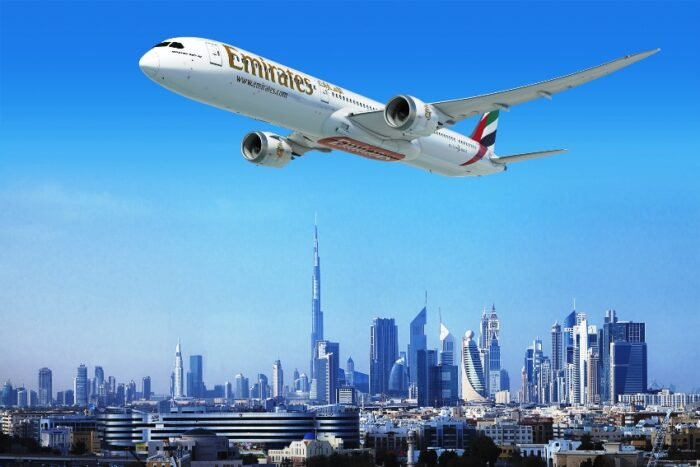
Chennai, 02 September 2025: Emirates, the world’s largest international airline, marks a major milestone as it celebrates 25 years of serving Chennai – one of India’s leading metropolitan hubs and a vital gateway in the airline’s South India network. Since launching its inaugural flight on 1 September 2000, Emirates has carried more than 10.7 million passengers on more than 38,000 flights between Dubai and Chennai, reinforcing its long standing commitment to the city’s growing travel and trade aspirations. Chief Minister of Tamil Nadu, M.K. Stalin, joined Emirates’ celebration to commemorate the milestone. Chennai International Airport also marked the anniversary with a celebratory water cannon salute today, upon the arrival of EK544. On the occasion, Mohammad Sarhan, Emirates’ VP – India and Nepal said: “We are delighted to celebrate 25 years of service to Chennai and connecting its people to our global network. We would like to thank M.K Stalin, Chief Minister of Tamil Nadu for joining us in our celebration, marking an important partnership that has grown from strength to strength over the years. The unwavering support of the authorities and all local stakeholders has been invaluable to the success of our operations and we extend our sincere gratitude on the occasion.”

Civil Aviation

Thai SmartLynx receives its first Airbus A320-200 aircraft delivery

Bangkok, August 26th 2925: Thai SmartLynx, an ACMI specialist airline, has reached a major milestone with the arrival of its first Airbus A320-200 at Don Mueang International Airport on Friday, 22 August 2025. The aircraft delivery represents the final step in the airline’s application process for an Air Operator Certificate (AOC) from the Civil Aviation Authority of Thailand (CAAT). Thai SmartLynx will provide flexible fleet management solutions through its ACMI (Aircraft, Crew, Maintenance, and Insurance) business model, designed to support Thailand’s seasonal aircraft capacity needs. According to the International Air Transport Association (IATA), aviation-driven tourism contributes USD22.2 billion to Thailand’s GDP and employs 3.2 million people. The introduction of ACMI solutions in Thailand comes at a timely moment, aligningwith the Tourism Authority of Thailand’s strategy to diversify tourism offerings and encourage foreign tourists to explore destinations beyond Thailand’s major tourist cities. “Today’s aircraft delivery represents more than just a proud moment for the company, it is a powerful symbol of our commitment to supporting Thailand’s aviation and tourism sector,” said Martynas Grigas, Chairman of Thai SmartLynx. “ACMI provides a turnkey solution by delivering not only the aircraft but also crew, maintenance, and insurance. This allows our client airlines to scale operations during peak demand or cover grounded aircraft without the need for significant investment or long-term commitments.” The aircraft arrival coincides with the opening of Thai SmartLynx’s new operations office at Don Mueang International Airport (DMK), reinforcing the airline’s commitment to establishing a strong base in Thailand. Stationing its operations office at DMK allows the company to respond quickly to customer requirements, improve operational efficiency, and foster closer collaboration with airline partners.

Civil Aviation

CAE and InterGlobe to expand with a new pilot training centre in Mumbai

Montreal, Canada, August 26, 2025: CAE Simulation Training Private Limited (CSTPL), a joint venture between InterGlobe Enterprises and CAE, announced the opening of a new state-of-the-art pilot training centre in Mumbai, India. The new 44,000 square-foot centre will have a capacity for up to six full-flight simulators (FFS) and will begin operations in the first quarter of calendar 2026 with two Airbus A320 FFS. “The new Mumbai centre expands CSTPL’s ability to meet the rapidly growing demand for professional pilots in India – as many as 20,000 over the next 10 years,” said Michel Azar-Hmouda, CAE’s Division President, Commercial Aviation. “The addition to the new six-bay centre in Mumbai reflects our commitment to bringing world-class training closer to India’s aviation hubs and enhancing training excellence and operational efficiency for our airline partners.” Aditya Pande, CEO, InterGlobe Enterprises, said, “We are delighted to expand CSTPL into Mumbai, in addition to our commercial aviation training centres in Greater Noida, Gurugram and Bengaluru. InterGlobe Enterprises and CAE are committed to building an ecosystem in aviation which will cater to the growing current and future demand for training pilots in India.” CAE’s 2025 Aviation Talent Forecast predicts a demand for 98,000 new pilots in the Asia Pacific region by 2034. In one of the fastest-growing aviation markets globally, CSTPL’s Mumbai centre will play a critical role in supporting airlines and the broader aviation ecosystem with high-quality, DGCA approved training. In addition to the new centre in Mumbai, CSTPL currently operates three commercial aviation training centres in Greater Noida, Gurugram and Bengaluru with a capacity to operate up to 23 FFS. The new CSTPL centre in Mumbai will also offer comprehensive pilot training programs on Airbus, ATR and Boeing aircraft, including type rating, recurrent training, and proficiency checks. ( The master pix used above is for representation only and sourced from CAE Media Gallery)

Civil Aviation

Narrow-body aircraft leading the way toward greater energy efficiency in the air cargo industry

Dubai, 22nd August 2025: The role of narrow-body freighter in the air cargo industry has progressed quickly in recent years, largely due to the introduction of new-generation freighters tailored to meet current logistics demands. Certain aircraft, like the Boeing 737-800 and Airbus A321-200, have been introduced with more fuel-efficient engines and optimized cargo configurations, making them ideal for short- to medium-haul operations while at the same time reducing significant, environmental impact. Due to the worldwide demand for greater efficiency and sustainability in industrial operations, these planes offer reduced fuel usage alongside quicker turnaround times, rendering it feasible to move small quantities across short distances. Creating a more energy-efficient global operations Aside from the fact that narrow-bodies are generally considered more sustainable and cost-effective due to their passenger-to-cargo aircraft conversion flexibility, their environmental benefits are another important factor. Operating a smaller aircraft on short and medium-haul routes reduces fuel consumption per trip and easily caters to a wide range of industries such as e-commerce and perishables that require a quick turnaround at a lesser space capacity. New-generation narrow-body aircraft, such as the Boeing 737-800 and Airbus A321-200, take this efficiency to the next level. These new models are designed with advanced, fuel-efficient engines, improved aerodynamics, and lighter composite materials, resulting in significantly lower fuel consumption compared to older aircraft models. These improvements reduce greenhouse gas emissions, lower operational costs, and help operators meet stricter environmental regulations. With the introduction of new aircraft models, this makes narrow-bodies a more sustainable and competitive choice for certain markets with regional proximities and for organizations with a strong commitment to greener operations. Narrow-bodies do not create a competition against the wide-bodies, it complements them It’s generally known that both wide-bodies and narrow-bodies were designed to serve different purposes and serve different target markets. While wide-body freighters connect major global hubs and handle high-volume, long-haul shipments, narrow-bodies allow access to secondary airports and smaller markets with speed and efficiency. These narrow-body aircraft serve as a regional feeder service, allowing operators to efficiently move cargo from smaller airports to major international hubs. For areas where there are limited flexibilities, this service allows the movements of shipments. This balance between wide-body and narrow-body creates a more connected, flexible, and efficient system that meets diverse needs of the market while maximising reach, speed, and reliability. Regional trends with new generation aircraft In Europe and the Middle East, narrow-body freighters have become an increasingly important part of the cargo industry. New-generation freighter like the Boeing 737-800 and Airbus A321-200 are making an important role in regional operations as they are design to be more fuel-efficient, has lower emissions, and offers the flexibility to run flights between busy trade hubs within the region where infrastructures are highly-developed and the demand is consistently high. Meanwhile in Africa, narrow-body presence has been consistently growing in the previous years but,still remains more limited due to some geographical dynamics and limited airport infrastructure. However, narrow-bodies are slowly carving out their place as new freighter models are being introduced to the market allowing more cargo volume and longer range compared to existing freighters in service. Magma leverages decades of regional market expertise, creating more lucrative opportunities As global demand for regional and long-haul cargo continues to grow across several industries, Magma Aviation understands how to integrate narrow-body aircraft into a global network in a way that complements wide-body operations. With the strategic combination of both, Magma offers customers better connectivity with faster, tailored, flexible, and more sustainable transport solutions. Honed by almost two decades of extensive global experience, Magma’s global team continues to offer tailored global freight solutions, helping businesses across the globe transport their goods effectively and efficiently.

FOREWORD

Dear Reader’s,


The current edition of Aviation World has covered many areas of Aerospace & Defence based on the latest development in the sector. The front cover highlights three different images, first for the Union Civil Aviation Minister ….. who is leading from the front to steer Indian Civil Aviation sector to witness one of the most interesting phases. He is also facing most tumultuous timing due to the ongoing financial stress in the Aviation sector due to ATF rising cost and long airspace restrictions resulting in mounting losses for Indian carriers. Despite of all the ground level challenges,the minister is addressing new things on regular basis which keeps the sector motivated. We have featured many such developmental works in this edition done under his guidance which will be interesting to read.

Our lead story on “ The West War” is another important feature which covers the ground level reality of the challenges faced by the Aviation sector. Its though time ahead and we believe it will pass soon .

There are features on Regional connectivity and MoCA revised rules on the UDAN 2.0 and how its going to transform the flying experience within India.

In this edition, we have covered topics on MRO,Various Policy changes,Sea Plane Operations by SkyHop Aviation, TATA-Airbus joint project on C295 military aircraft under Make In India which is expected to roll out soon and many other interesting contents which will be good to read.

We are covering Farnborough International Airshow 2026 from 20-24July 2026 in London and our next edition will be based on the same event.For features, you may contact our team on priority basis.


Happy Reading!

NEWSLETTER

Aviation World Magazine is India’s premier aviation magazine and has been actively supporting the development of the Indian and global civil aviation sector. We started our journey in year 2015 and its been 12 years now and the response and acceptance is really encouraging. Thanks to all our associates and writers who remained with us in our progressive journey.

We have started 2026 on a very positive note and we look forward to increase our footprints to more locations and induct many more new companies in our campaign.. Do write to us at : editor@aviationworld.in

Disclaimer

The contents published in this website are news covering Aviation, Aerospace and Defence sector. The objective is to provide news in informative form to keep our readers updated of the latest development. We also publish content featured in our print publication Aviation World.We try our best to avoid any factual errors or image displayed here but we ensure immediate corrections to any such thing brought to our notice that might have been published inadvertently. All images and contents are sourced from the relevant organisations media team.

Copyright ©2014 – 2026. AVIATION WORLD. All rights reserved.

Scroll to Top