Defence

Defence

DRDO celebrates 68th Foundation Day

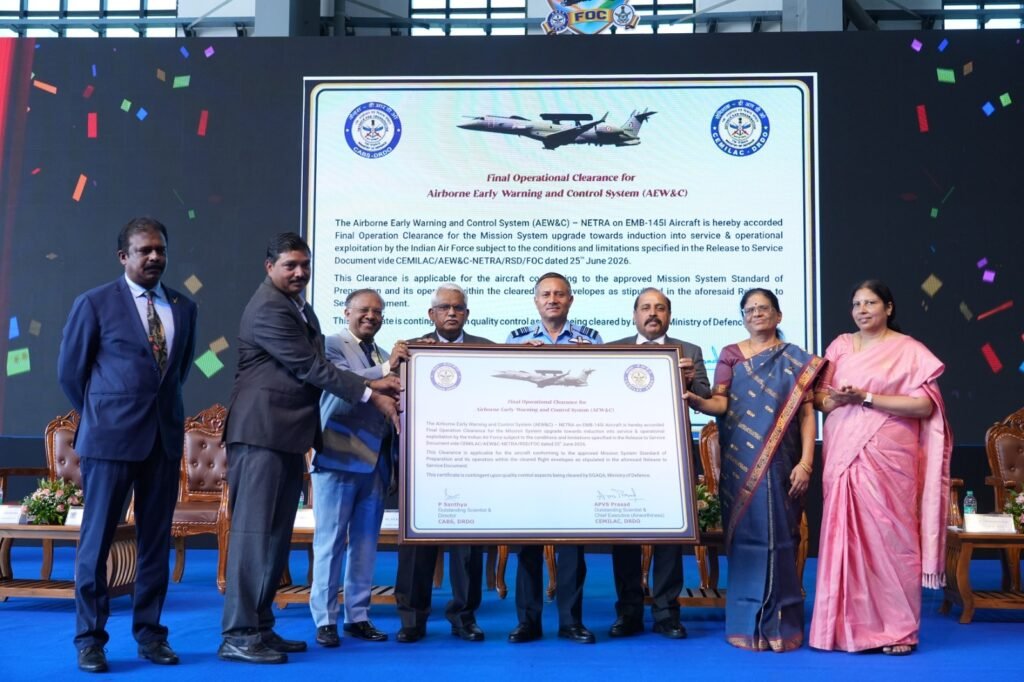
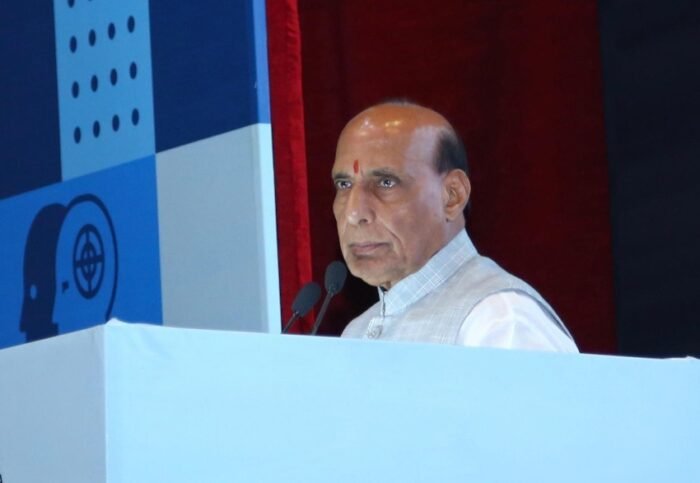
Delhi, 2nd January 2026: Defence Research and Development Organisation (DRDO) celebrated its 68th Foundation Day on January 01, 2026. Raksha Mantri Shri Rajnath Singh and Raksha Rajya Mantri Shri Sanjay Seth visited the DRDO Headquarters and reviewed the achievements of DRDO in 2025 and targets for 2026. Later, Secretary, Department of Defence R&D and Chairman DRDO Dr Samir V Kamat addressed the DRDO fraternity at DRDO Bhawan, which was streamed live across all the laboratories of DRDO. Extending warm wishes to DRDO employees and their families, Dr Kamat stated that the efforts of DRDO have given a quantum jump to India’s pursuit of self-reliance in defence as part of the ‘Aatmanirbhar Bharat’ vision. He called upon DRDO scientists to focus on next generation needs including cyber security, space and artificial intelligence. The immense potential available generated through DRDO R&D has been a catalyst for the development of industries in the defence manufacturing sector, he said. Highlighting the achievements of DRDO in 2025, the Chairman DRDO said that several systems developed were delivered, inducted or handed over to the users. He stressed that DRDO should focus to work together with all stakeholders in the defence ecosphere to meet the country’s futuristic challenges and fulfill the Prime Minister vision of Aatmanirbhar Bharat. He expressed satisfaction that the 22 Acceptance of Necessity (AoN) been accorded by Defence Acquisition Council (DAC) and the Services Procurement Board (SPB) for induction of several DRDO developed systems worth approx. Rs 1.30 lakh crores to be manufactured by Indian Industries which is the highest in any single year in history. Some of the notable systems for which AoN has been accorded include Integrated Air Defence Weapon System (IADWS), Conventional Ballistic Missile System, Quick Reaction Surface to Air Missile System ‘Anant Shastra’, Long Range Air to Surface Supersonic Cruise Missile (LRASSCM), Integrated Drone Detection and Interdiction System (IDDIS) MK II, Beyond Visual Range Air-to-Air Missile (BVRAAM) Astra Mk-II, Anti-Tank NAG Missile System (Tracked) Mk-2, Advanced Light Weight Torpedo, Processor-based Moored Mine – Next Generation (PBMM NG), Air-borne Early Warning & Control (AEW&C) Mk-1A, Mountain Radars, Full Mission Simulator for Light Combat Aircraft (LCA) Mk-1A. Dr Kamat informed that 11 contracts for acquisitions valued at Rs 26,000 crore have been signed with DRDO production partners for Nag Missile System, Ashwini Low Level Transportable Radar, Air Defence Fire Control Radar (ADFCR), Electronic Warfare Suite for Mi-17 V5 Helicopter, Area Denial Munition (ADM) Type-1 and High Explosive Pre-Fragmented (HEPF) Mk-I (Enhanced) for the Pinaka Multiple Launch Rocket System, Infantry Foot Bridge Floating, Wargaming System, and Automatic Chemical Agent Detector & Alarm (ACADA) and Advanced Towed Artillery Gun System (ATAGS). He added that a significant number of products developed by DRDO were inducted into the services of Central Armed Police Forces (CAPFs), Police & National Disaster Response Force in 2025. The DRDO Chairman also highlighted that the User Evaluation Trials for several systems have either been completed in 2025 or are in the final stages. These include Surface to Surface Missile ‘Pralay’, Surface to Air Missile Akash NG, Guided Extended Range Rocket ‘Pinaka’, Advanced Light Weight Torpedo, Integrated Combat Suits for Submarines, Extended Range Anti-Submarine Rocket (ER-ASR), Man Portable Anti-tank Guided Missile (MPATGM), Electronic Warfare Systems for Plains & Deserts, Border Surveillance System (BOSS), Software Defined Radio for Indian Army, CBRN Water Purification System. He further said that several other systems have either completed or are in the various stages of Development trials, which includeIndian Light Tank, Very Short-Range Air Defence System (VSHORADS), Vertical Launch Short Range Surface to Air Missile, Short range Naval Anti-Ship Missile (NASM-SR), Long Range Land Attack Cruise Missile, Air-to-Surface Missile Rudram-2, UAV Launched Precision Guided Missile (ULPGM)-V3, Cannon Launched Anti-Tank Guided Missile for MBT Arjun, Long Range Glide Bomb ‘Gaurav’, Long Range Radar, VHF Surveillance Radar, High Power Microwave System, Medium Range Microwave Obscurant Chaff Rockets, On Board Oxygen Generating System (OBOGS)-centric Integrated Life Support System (ILSS) on LCA and Automatic Fire Protection System in DORNIER-228 Aircraft. Dr Kamat expressed confidence that the laboratories will strive to ensure that most of the systems which are under User trials and under final stages of developmental trials get accepted by the user in 2026 so that they are ready for induction. He also stated that DRDO has been partnering with industry for realisation of its systems, sub systems and components, and, so far, 2,201 Licensing Agreements for Transfer of Technologies (LAToT) have been handed over to the Indian Industries out of which 245 LAToTs were signed in 2025. 13 new DcPP/PAs were chosen last year for Mission Mode projects. Total number of DcPP awarded till now is 145. DRDO has also opened its test facilities to industries and more than 4,000 tests have been carried out for private industries/ DPSUs in 2025. He further said that 15 DRDO Industry Academia Centres of Excellence are steering translational research activities in identified research verticals are performing very well. In 2025, 66 projects were sanctioned with total cost of Rs 228 crore in which 214 researchers have been engaged. This makes it to total of 341 sanctioned project at cost of Rs 1,218 crore engaging 1,255 researchers and 65 academia institutes. He concluded his speech with highlighting the reforms undertaken in 2025. Courtesy: MoD/PIB

Defence

Year of Reforms 2025: MoD records significant progress in implementing wide-ranging reforms

New Delhi, 1st January 2026: As the curtains came down on ‘Year of Reforms 2025’, Ministry of Defence, under the leadership of Raksha Mantri Rajnath Singh, has recorded significant progress in implementing wide-ranging reforms aimed at strengthening jointness, enhancing defence preparedness, promoting self-reliance and improving welfare delivery mechanisms. These reforms, undertaken across the Ministry, reflect a whole-of-government approach towards building a modern, integrated and future-ready defence ecosystem. Acquisition Approvals: Defence Acquisition Council approved capital acquisition proposals worth a total of cost of over Rs 3.84 lakh crore since January 2025 to enhance the country’s defence readiness, with focus on modernisation through indigenisation. Contracts Signed: In the Financial Year 2025-26 till the end of December 2025, Ministry of Defence has signed capital contracts amounting to Rs 1.82 lakh crore for the modernisation of the Armed Forces. Expenditure: Ministry of Defence has achieved 80% (Approx. Rs 1.2 lakh crore) expenditure under Capital Acquisition Budget by the end of December 2025. The allocation under this is spent on modernisation of the Armed Forces. The overall capital expenditure of MoD has also reached upto 76% which includes expenditure on Infrastructure, land, R&D etc in addition to capital acquisition. Defence Industry & Innovation Enablement: To promote greater indigenisation in defence and secure supply chains, private sector participation has been increased. This includes streamlining defence manufacturing licenses, mapping the competencies of MSMEs, and preparing Market Intelligence Reports to enhance demand-supply analysis in defence procurement. Additionally, testing and trial infrastructure lab facilities are being shared with the private sector. 25% of defence research grants are also being allocated to them along with academic institutions and MSMEs to encourage innovation & strengthen collaboration in the defence sector. Acquisition & Procurement Reforms: Procurement processes have been streamlined to reduce timelines, including Simplification of the iDEX manual, Rationalisation of defence export permissions, Revamping of the Defence EXIM Portal, Simplification of Technology Transfer policy and Decentralisation through revised Delegation of Financial Powers and Procurement Manuals (Defence Procurement Manual 2025, implemented w.e.f. November 01, 2025). Defence Policy & International Engagement: Review and revision of Defence Acquisition Procedure 2020, Encouragement of Foreign Direct Investment in defence, Enhanced engagement with friendly countries, Defence Lines of Credit including Bharat Maitri Shakti, and Rationalisation of restricted distance norms near defence establishments are under progress. Defence Production & Quality Enhancement: Formation of an Export Promotion Body, Implementation of Quality Assurance 4.0 & Industry 4.0 in DPSUs and Establishment of a National Integrated Test Laboratory for defence platforms are being advanced. Jointness & Future Preparedness: Establishment of Joint Operations Control Centre, promulgation of Vision 2047 for the Armed Forces, Creation of a Future Operations Analysis Group, Promotion of joint training programmes and Finalisation of the Integrated Capability Development Plan are under various stages of implementation. Steps taken in this direction bore fruit during the planning and execution of Operation Sindoor. Operational Integration & Capability Enablement: Deployment of Tri-Service Geographical Information System, Review and Harmonisation of policies, SOPs and Tactics, Techniques & Procedures for Tri-service uniformity, Expansion of women’s roles in combat and leadership positions, Promotion of military tourism and Preparation of a long-term roadmap for operational infrastructure and accommodation have been completed. Veterans’ Welfare Reforms: To improve delivery of medical cover for veterans and their dependents under ECHS, pan-India doorstep delivery of medicines to 70 year plus Ex-servicemen (ESM) with infirmity introduced, authorised local chemist limits doubled, eSeHAT tele-medicine consultation introduced, pan-India rollout underway; AYUSH treatment at ECHS introduced, Stress management facilities created, Common drug list enhanced, Upgradation of some ECHS polyclinics, Creation of some new polyclinics underway. Enhancement of welfare grants to ESM and their dependents including Penury, Education & Marriage grants implemented. SPARSH Pension Portal: 31.69 lakh defence pensioners have been onboarded on SPARSH, India’s largest digital pension platform. Out of 6.43 lakh discrepant cases migrated from previous systems, 6.07 lakh have been normalised without affecting pensioners’ entitlements. The sustained reform momentum during the ‘Year of Reforms 2025’ has strengthened India’s defence preparedness and institutional efficiency. These reforms are not isolated initiatives, but part of a continuous process to build a modern, integrated and self-reliant defence ecosystem capable of safeguarding the nation’s security interests in the decades ahead. ( News is published unedited. Courtesy: PIB/MoD)

Defence

IOL and SAFRAN to manufacture two high-precision, combat-proven systems

New Delhi, 23 December 2025: In a major step towards Make-in-India program, India Optel Limited (IOL), a Mini Navratna Defence Public Sector Undertaking, has signed a collaboration agreement with Safran Electronics & Defense for Transfer of Production of two high-precision, combat-proven systems, paving the way for their local manufacturing. The systems are: SIGMA 30N Digital Ring Laser Gyro Inertial Navigation System, used in artillery guns, air defence systems, missiles and radars; and CM3-MR Direct Firing Sight, designed for artillery guns and anti-drone systems. The agreement was signed by CMD, IOL Tushar Tripathi and Head of the Defence Global Business Unit for Safran Electronics & Defense Alexandre Ziegler in the presence of Secretary (Defence Production) Sanjeev Kumar in New Delhi on December 22, 2025. Building on the MoU signed in January 2024, this new agreement confirms the commitment of both the partners to manufacture and support these advanced systems in India. Under the partnership, IOL will be responsible for manufacturing, final assembly, testing, quality control and full life-cycle support, ensuring the systems meet the operational needs of the Indian Army. By combining IOL’s industrial capabilities in India with Safran Electronics & Defense’s recognised expertise in high-end inertial navigation and fire-control technologies, the partnership contributes to strengthening India’s defence manufacturing ecosystem while enhancing the readiness and performance of its land forces.

Defence

22nd India-Russia Inter-Governmental Commission meeting held in Delhi

New Delhi, 4th December 2025: Raksha Mantri Rajnath Singh and the Defence Minister of Russia Andrei Belousov co-chaired the 22nd session of India-Russia Inter-Governmental Commission on Military & Military Technical Cooperation (IRIGC-M&MTC) at Manekshaw Centre, New Delhi on December 04, 2025. Both sides reiterated that the India-Russia relationship is based on a deep sense of trust, common principles and mutual respect. This meeting precedes the 23rd India-Russia Annual Summit between Prime Minister Narendra Modi and President of Russia Vladimir Putin. Rajnath Singh voiced the Government of India’s determination for capacity building of its indigenous defence industry for both local production and exports, under the vision of ‘Aatmanirbhar Bharat’. He also stressed on new opportunities for enhancing collaboration between both counties across niche technologies. The Russian Defence Minister emphasised on deepening relationship between both the countries which is based on mutual trust. He highlighted that both countries are united by many years of friendship and strategic cooperation. He stated that the Russian Defence Industry is ready to support India towards becoming self-reliant in the field of defence production. Minister Belousov also invited Shri Rajnath Singh to visit Russia to co-chair the 23rd session of IRIC-M&MTC in 2026. At the end, the two Ministers signed the protocol of the 22nd IRIGC-M&MTC meeting highlighting the ongoing and prospective areas of cooperation. Prior to the meeting, Raksha Mantri and the Russian Defence Minister laid the wreath at the National War Memorial, New Delhi and paid respect to the Indian bravery who made the supreme sacrifice in the service of the nation. The visiting dignitary also inspected the Ceremonial Tri-service Guard of Honour. ( Source: PIB/MoD. Only the headline is changed)

Defence

BEL and Safran Electronics & Defence ink Joint Venture Cooperation Agreement

New Delhi,25 Nov 2025: In a major impetus to Make-in-India and Aatmanirbhar Bharat, Bharat Electronics Limited (BEL) and Safran Electronics and Defence (SED), France have signed a Joint Venture Cooperation Agreement (JVCA) for the production of Highly Agile Modular Munition Extended Range (HAMMER) Smart Precision Guided Air-to-Ground Weapon in India. The JVCA was inked by CMD, BEL Manoj Jain and Executive Vice President, SED Alexandre Ziegler in the presence of Secretary (Defence Production) Sanjeev Kumar & CEO Safran Olivier Andries in New Delhi on November 24, 2025. The agreement formalises the intent expressed in the MoU signed between BEL and SED on February 11, 2025 during Aero India, reaffirming the willingness of both sides to incorporate a potential Joint Venture Company (JVC) in India. The JVC shall be formed as a private limited company with 50:50 shareholding. It will localise the manufacturing, supply and maintenance of HAMMER to meet the operational needs of the Indian Air Force and the Indian Navy. The indigenisation level will progressively increase upto 60 percent with key sub-assemblies, electronics and mechanical parts being manufactured locally. The transfer of production will happen in a phased manner with BEL leading final assembly, testing and quality assurance. HAMMER is a combat-proven, precision-guided weapon system known for its high accuracy and modular design, making it adaptable for multiple platforms, including the Rafale and Light Combat Aircraft Tejas. This JVCA underscores BEL’s commitment to strengthening India’s defence industrial base and aims at leveraging SED’s extensive experience in manufacturing of smart precision guided air-to-ground weapon.

Defence

HAL and UAC Sign MoU in Moscow for Production of SJ-100

Bengaluru/Moscow, October 29, 2025: Hindustan Aeronautics Limited (HAL) and Public Joint Stock Company United Aircraft Corporation (PJSC-UAC) Russia signed an MoU for production of civil commuter aircraft SJ-100 in Moscow, Russia on October 27, 2025. Prabhat Ranjan, HAL and Oleg Bogomolov, PJSC UAC, Russia, signed the MoU in the presence of Dr. D. K. Sunil, CMD, HAL and Vadim Badekha, Director General, PJSC UAC. SJ-100 is a twin-engine, narrow-body aircraft. As on date, more than 200 aircraft have been produced and are being operated by more than 16 commercial airline operators. For India, HAL believes that SJ-100 will be the game changer for short-haul connectivity under the UDAN Scheme. Under this arrangement, HAL will have the rights to manufacture SJ-100 aircraft for domestic customers. This will also be the first instance wherein a complete passenger aircraft will be produced in India. The last such project was HAL’s production of AVRO HS-748, which started in 1961 and ended in 1988. It is estimated that over the next ten years, the Indian aviation sector will require over 200 jets in this category for regional connectivity and an additional 350 aircraft for the Indian Ocean region to serve nearby international tourist destinations. The manufacturing of the SJ-100 aircraft marks the beginning of a new chapter in the history of the Indian aviation industry. It’s a step towards fulfilling the dream of ‘Aatmanirbhar Bharat’ in the civil aviation sector. Manufacturing will also strengthen the private sector and create direct and indirect jobs in the aviation industry. Courtesy: HAL

Defence

Embraer and Mahindra forge SCA to introduce C-390 Millennium to India

New Delhi, October 21, 2025: In a step towards India’s Atmanirbhar Bharat vision, Embraer Defense & Security and Mahindra Group, have signed a strategic cooperation agreement (SCA) to advance the C-390 Millennium solution for the Indian Air Force’s Medium Transport Aircraft (MTA) programme. This agreement was inked alongside the inauguration of Embraer’s national office in Aerocity, New Delhi. The agreement builds upon the Memorandum of Understanding signed in February 2024 at the Embassy of Brazil in New Delhi, deepening the scope of cooperation to include joint marketing, industrialisation and developing India as a hub for the C-390 Millennium. Since the signing, the C-390 Millennium aircraft has further increased its operator base globally. Embraer and Mahindra Group will work closely with stakeholders in the country and engage with India’s military and aerospace ecosystem to identify opportunities for local manufacturing, assembly facilities, supply chain and MRO activities. The long-term ambition is to position India as a manufacturing and support hub for the C-390 Millennium aircraft, serving both domestic and regional requirements. This partnership unites Brazil’s world-class aerospace innovation with India’s manufacturing prowess and contributes to the strengthening of ties between the two nations while positioning India as a potential hub for the C-390 Millennium aircraft in the region. Speaking at the signing ceremony, Bosco da Costa Junior, President & CEO of Embraer Defense & Security said, “The agreement is a significant milestone in our relationship with Mahindra Group. India’s aerospace industry is dynamic and world-class, and together we aim to deliver the most advanced and reliable military transport solution to the Indian Air Force. This partnership is more than an aerospace deal – it reflects our commitment to ‘Atmanirbhar Bharat’ and the growing friendship between Brazil and India.” Vinod Sahay, Member of Group Executive Board, Mahindra Group said: “The C-390 Millennium is unmatched in capability, efficiency, and versatility. By deepening our collaboration with Embraer, together we will ensure that the C-390 Millenium for the IAF’s MTA campaign will not only contribute to India’s security and aspirations but also supports the ‘Make in India’ philosophy and further self-reliance.” About C-390 Aircraft The C-390 Millennium is the most modern military transport aircraft in its class and can carry more payload (26 tons) compared to other medium-sized military transport aircraft and flies faster (470 knots) and farther. It can perform a wide range of missions including cargo and troop transport, airdrops, medical evacuation, search and rescue], firefighting, and humanitarian operations. It can operate from temporary or unpaved runways. The aircraft can also be configured for air-to-air refuelling, both as a tanker and as a receiver. The current fleet, in operation, has demonstrated a mission completion rate of more than 99%, highlighting exceptional productivity in its category.

Defence

LCA Mk1A & HTT-40 gets new production line at HAL Nashik

Nashik, 17th Oct 2025: Raksha Mantri Rajnath Singh inaugurated the third Production Line of Light Combat Aircraft (LCA) Tejas Mk1A and the second Production Line of Hindustan Turbo Trainer-40 (HTT-40) at the Nashik facility of Hindustan Aeronautics Limited (HAL) on October 17, 2025. He also flagged-off the first LCA Mk1A produced at the facility. In his address, Raksha Mantri described the flight of the state-of-the-art aircraft as a shining symbol of India’s growing Aatmanirbharta in defence. Highlighting the transformation of the defence sector in the last decade under the leadership of Prime Minister Shri Narendra Modi, he asserted that the country, which once imported 65-70% of critical military hardware, is now manufacturing 65% of the equipment on its own soil. He voiced the Government’s resolve of increasing domestic manufacturing to 100% in the times to come. “When we came to power in 2014, we realised that without self-reliance, we can never be truly secure. In the beginning, we faced numerous challenges, the biggest being ‘limited defence preparedness’ and ‘import dependency’. Everything was limited to Government enterprises, and the private sector had no significant participation in the production ecosystem. In addition, there was not enough focus on defence planning, advanced technology, and innovation. This forced us to depend on other countries for critical equipment and cutting-edge systems, which increased costs & created strategic vulnerabilities. This challenge encouraged us to move forward in the direction of new thinking and reforms. The results are visible today. We not only reduced import dependency, but also strengthened our commitment to indigenisation. Whatever we used to buy from abroad, we are now manufacturing it domestically, be it fighter aircraft, missiles, engines and electronic warfare systems,” said Shri Rajnath Singh. Listing out other feats achieved due to the Government’s consistent efforts, Raksha Mantri stated that annual defence production, which was worth Rs 46,429 crore in 2014-15, has surged to a record figure of over Rs 1.50 lakh crore in 2024-25, with exports touching an all-time high of Rs 25,000 crore from less than Rs 1,000 crore a decade ago. “We have now set a target of increasing defence manufacturing to Rs 3 lakh crore and exports to Rs 50,000 crore by 2029,” he added. On the constantly-evolving nature of modern-day warfare, Shri Rajnath Singh underscored the importance of staying ahead of the curve as Artificial Intelligence, cyber warfare, drone systems & next-generation aircraft are shaping the future, and wars are being fought across multiple frontiers. “India must always stay ahead in this new race, and not lag behind,” he said, exhorting HAL to make its mark in the fields of next-generation aircraft, unmanned systems & civil aviation, and not limit itself to LCA Tejas or HTT-40. As Raksha Mantri voiced the Government’s commitment towards inducting state-of-the-art, indigenous technologies, he appreciated the role of HAL in carrying forward the vision, terming the Defence Public Sector Undertaking as the backbone of India’s defence sector. While he praised HAL for providing operational support to the recently-decommissioned MiG-21, he also shed light on its valuable contribution during Operation Sindoor. “In our security history, there have been only a few instances when the entire system has truly been tested simultaneously. Operation Sindoor was one such mission. Our forces not only demonstrated valor and commitment, but also displayed their confidence in indigenous platforms. HAL provided support at various operational sites 24 hours a day during the operation. It ensured the Indian Air Force’s operational readiness by carrying out prompt maintenance on fighter jets and helicopters. The Nashik team performed the crucial task of installing the BrahMos missile on the Su-30, which destroyed terrorist hideouts during the operation. This proved that when it comes to national security, we can make our own equipment and protect ourselves with it,” said Shri Rajnath Singh. Raksha Mantri lauded HAL Nashik for playing a pivotal role in taking India’s defence manufacturing capabilities to newer heights for over six decades – from manufacturing and overhauling fighter jets such as MiG-21 & MiG-27 to becoming the production house of Su-30, terming the campus as a glowing symbol of self-reliance. Shri Rajnath Singh pointed out that the ongoing construction of the LCA Tejas and HTT-40 aircraft is also the result of collaboration between various industry partners of the country. “This collaboration is proof that if the government, industries, and academia work together, no challenge is too big,” he said, acknowledging the trust placed by the Indian Air Force in aircraft such as Tejas and HTT-40. On the joint Maintenance, Repair, and Overhaul facility for both civil and military aviation established in the Nashik division, Raksha Mantri exuded confidence that the initiative will create new employment opportunities in Nashik and surrounding areas. He also took note of the fact that the entire HAL complex is now paperless, digital, and completely sustainable. He called it a true symbol of New India’s technological leap. Speaking on the occasion, Secretary (Defence Production) Shri Sanjeev Kumar described the inauguration of two production lines as a symbol of India’s growing technological confidence, industrial strength, and strategic foresight. “The event marks a new chapter in HAL’s journey, one that enhances our nation’s production capacity and strengthens the foundation of a robust, self-sustaining aerospace ecosystem. The Secretary (DP) termed LCA Tejas Mk1 as not merely a fighter aircraft; but a statement of India’s design and manufacturing excellence – conceived, developed and produced indigenously through the collaboration of HAL, Aeronautical Development Agency, DRDO and the Indian Air Force. He added that the HTT-40, fully designed and developed by HAL, stands as a shining example of the company’s ability to conceptualise, design and deliver critical defence platforms completely indigenously. CMD, HAL Dr DK Sunil termed the successful operationalisation of the LCA Mk1A and HTT-40 production from Nashik as a testament to HAL’s capacity for expansion. “HAL’s Nashik Division’s capacity to produce indigenous advanced fighters in addition to Su-30MKI has added momentum to our production efforts to meet delivery timelines. It has also resulted in the creation of around 1,000 jobs

Defence

Defence Minister Rajnath Singh addresses the maiden India-Australia Defence Industry Business Round Table in Sydney

Sydney, 10th Oct. 2025: The Minister of Defence Rajnath Singh addressed the maiden India-Australia Defence Industry Business Round Table in Sydney, reaffirming the growing synergy between the two nations across strategic, industrial, and technological domains. “Under the banner of our Comprehensive Strategic Partnership, established in 2020, we stand at a pivotal juncture to re-position our defence relations, not merely as partners, but as co-creators of a secure and prosperous Indo-Pacific,” stated Raksha Mantri. He also added that the Round Table is not merely a dialogue, it is a declaration of intent to make India and Australia natural allies in business, industry and innovation. Rajnath Singh recalled the series of high-level engagements that have strengthened bilateral relations including the India-Australia Summit in November 2024, the 2+2 Ministerial Dialogue in October 2024, the visit of the Deputy Prime Minister and Defence Minister of Australia to India in June 2025 and his ongoing visit to Australia. He underlined that the foundation of the bilateral relationship lies in shared democratic values and institutional similarities. “Both India and Australia are part of the Commonwealth of Nations. Our shared history is built on democracy, diversity, liberty, and similar governance structures,” he added. The MoD highlighted that strong bilateral ties rest on three essential pillars: a forward-looking government-to-government collaboration, people-to-people connect and convergence of business interests. “Our governmental frameworks are robust and getting further strengthened. On the people’s front, we have a large Indian diaspora in Australia, complemented by an increasing Australian presence in India. However, our defence industrial partnership, based on joint R&D, innovation, co-creation and co-production, still has untapped potential,” he stated. Rajnath Singh highlighted the details of India’s recent economic and industrial achievements, stating that India is on a transformative journey of structural reforms, particularly in manufacturing. “Today, India is globally the fourth-largest economy and the fastest-growing large economy in the world. Our defence production touched Rs 1.51 lakh crore (approximately USD 18 billion) last financial year, the highest ever with an 18% increase from the previous year. Our defence exports reached Rs 23,622 crore (USD 2.76 billion), with Indian companies now exporting to nearly 100 countries,” he added. Calling for closer industrial collaboration, Rajnath Singh stated, “I see this forum as an important instrument to make India and Australia natural allies in business and industry too. This alliance has compelling economic reasons to be successful and mutually beneficial.” MoD underscored that Australia excels in niche technologies such as quantum systems, autonomous underwater vehicles and advanced maritime surveillance, while India offers vast manufacturing scale, software capabilities, and indigenous strength in shipbuilding, missile technology and space. “This Round Table can be a great catalyst to tap the unrealised potential in our defence industry collaboration,” he added. MoD underlined that initiatives such as Make in India, Production Linked Incentive schemes and digital transformation have created an enabling environment for innovation and investment. He stated that government has liberalised the FDI policy up to 74% under the automatic route and beyond that with government approval, especially when modern technology is introduced. Shri Rajnath Singh added that the defence production ecosystem is being continuously liberalised through policy interventions and simplification of compliance mechanisms. “To accelerate defence R&D in the private sector, we have opened avenues for free-of-cost technology transfer through DRDO. There are attractive schemes for development of cutting-edge technologies and they are giving excellent results,” highlighted Rajnath Singh while underscoring the steps taken to promote research and innovation. He added that the DRDO and Australia’s Defence Science & Technology Group are already collaborating on towed array sensors, and discussions are advancing in quantum technology, AI, cyber security, information warfare, and advanced science and technology. The MoD brought light to the fact that India welcomes Australian companies to co-develop and co-produce high-end systems, including propulsion technologies, autonomous underwater vehicles, flight simulators, and advanced materials. He underlined that the ventures can help build interoperable platforms aligned with the strategic objectives of both nations. Highlighting specific areas for partnership, Rajnath Singh stated that India with its robust shipbuilding capabilities, diverse manufacturing base and a growing ecosystem of private sector innovators & start-ups, stands ready to be a trusted partner. “Our shipyards have a proven track record in building and maintaining a wide range of naval platforms. Indian yards can offer refit, mid-life upgrades, and maintenance services to the Royal Australian Navy and vessels under Australia’s Pacific Maritime Security Program,” he added. MoD cited examples of active industrial partnerships such as Indo-MIM Pvt. Ltd. with Thales Australia, Tata Advanced Systems with W&E Platt Pty Ltd, and Munitions India Ltd. with Aqusport. “These examples show how our industrial ecosystems complement each other and how businesses can become the driving force behind our governments’ strategic intent.” He exuded confidence that this list can grow much bigger in the near future, allowing both sides to fully benefit from the existing potential. Rajnath Singh also welcomed Australia’s proposal for a reciprocal provision of defence articles and services MoU. “We welcome this initiative. Importantly, Australia has identified India as a Top Tier Partner, removing certain regulatory barriers to enable easier technology sharing. This is a testament to the trust and confidence that bind us,” he added. Rajnath Singh underlined the vast opportunities that lie ahead for the two nations. “There are huge opportunities for co-production of naval vessels and sub-systems, ship repair, refits and MRO support in India for Australian and partner nation vessels, joint R&D in autonomous systems and green shipbuilding technologies,” he highlighted. Rajnath Singh stated that by diversifying supply chains, building joint capacities and investing in innovation, the two nations can contribute to a resilient, secure, and self-reliant Indo-Pacific. “I invite the Australian business community to invest, collaborate, and innovate with India. Together, we can develop cutting-edge technologies, build advanced platforms, and ensure that our industries are not just suppliers, but strategic enablers of peace and security in the region,” underscored Rajnath Singh. He urged them to seize this moment to build a partnership that is not only economically beneficial but also

Defence

India and UK MoD( State) meets in Mumbai

Mumbai, 10th Oct 2025: Minister of Defence( State) Sanjay Seth held a bilateral meeting with the United Kingdom’s Minister of State for Defence (Minister for the House of Lords), Vernon Coaker, in Mumbai on October 10, 2025. The meeting was held on the sidelines of the visit of the UK Carrier Strike Group (CSG) to India. During the meeting, both sides reviewed the ongoing defence engagements and discussed ways to further deepen cooperation between India and the United Kingdom. Raksha Rajya Mantri noted with satisfaction that the UK CSG, led by Prince of Wales, successfully completed the sea phase of the bilateral maritime exercise Konkan-25 with the Indian Navy off the western coast of India. The CSG is currently engaged in the harbour phase activities at Mumbai and Goa. Shri Sanjay Seth emphasized that such operational interactions enhance mutual understanding of operational philosophies and significantly contribute to interoperability between the two navies. During the meeting, both ministers reviewed the various facets of bilateral defence cooperation and discussed about India’s growing capabilities in manufacturing equipment and development of indigenous systems bolstering Aatmanirbharta. They reaffirmed their commitment to strengthen the ties in all spheres including collaboration and opportunities in Global Defence Supply Chains. They also reiterated their commitment to strengthen maritime cooperation in the Indo-Pacific and Indian Ocean Region in support of a free, open and rules-based world order to ensure freedom of navigation. Both sides reaffirmed their commitment to a robust, multifaceted and mutually beneficial defence partnership, guided by the India-UK Comprehensive Strategic Partnership and the ‘India-UK Vision 2035’, adopted during the visit of Prime Minister Shri Narendra Modi in July 2025 to the United Kingdom. (Courtesy: PIB)

FOREWORD

Dear Reader’s,


The current edition of Aviation World has covered many areas of Aerospace & Defence based on the latest development in the sector. The front cover highlights three different images, first for the Union Civil Aviation Minister ….. who is leading from the front to steer Indian Civil Aviation sector to witness one of the most interesting phases. He is also facing most tumultuous timing due to the ongoing financial stress in the Aviation sector due to ATF rising cost and long airspace restrictions resulting in mounting losses for Indian carriers. Despite of all the ground level challenges,the minister is addressing new things on regular basis which keeps the sector motivated. We have featured many such developmental works in this edition done under his guidance which will be interesting to read.

Our lead story on “ The West War” is another important feature which covers the ground level reality of the challenges faced by the Aviation sector. Its though time ahead and we believe it will pass soon .

There are features on Regional connectivity and MoCA revised rules on the UDAN 2.0 and how its going to transform the flying experience within India.

In this edition, we have covered topics on MRO,Various Policy changes,Sea Plane Operations by SkyHop Aviation, TATA-Airbus joint project on C295 military aircraft under Make In India which is expected to roll out soon and many other interesting contents which will be good to read.

We are covering Farnborough International Airshow 2026 from 20-24July 2026 in London and our next edition will be based on the same event.For features, you may contact our team on priority basis.


Happy Reading!

NEWSLETTER

Aviation World Magazine is India’s premier aviation magazine and has been actively supporting the development of the Indian and global civil aviation sector. We started our journey in year 2015 and its been 12 years now and the response and acceptance is really encouraging. Thanks to all our associates and writers who remained with us in our progressive journey.

We have started 2026 on a very positive note and we look forward to increase our footprints to more locations and induct many more new companies in our campaign.. Do write to us at : editor@aviationworld.in

Disclaimer

The contents published in this website are news covering Aviation, Aerospace and Defence sector. The objective is to provide news in informative form to keep our readers updated of the latest development. We also publish content featured in our print publication Aviation World.We try our best to avoid any factual errors or image displayed here but we ensure immediate corrections to any such thing brought to our notice that might have been published inadvertently. All images and contents are sourced from the relevant organisations media team.

Copyright ©2014 – 2026. AVIATION WORLD. All rights reserved.

Scroll to Top