Technology

MRO, Technology

Air Works Teams Up With Objectify Technologies to Offer 3D Printing Services For Aerospace & Defense

Delhi, 26th May 2021: Air Works India, the MRO and aviation services major has joined hands with additive manufacturing-engineering services (AM-ESP) provider, Objectify Technologies, to serve the global aviation, aerospace, and defense industry by leveraging 3D technologies. This alliance marks a strategic shift in Air Works’ business focus to not only expand its portfolio beyond aviation to aerospace & defense but also mark its transition as an aviation services provider to an aviation solutions provider. As part of the collaboration, both Air Works and Objectify Technologies will identify and pursue business opportunities in the Aerospace and Defense industry, including the requirements of commercial, private jet owners, or operators, globally. Given their unique advantages, 3D technologies, especially 3D printing, has been witnessing increasing global adoption in recent years, especially in the aviation, aerospace, and defense industries. 3D printing uses a variety of complex, new generation compounds and polymers (3D materials) with special characteristics to offer extensive customization in product design including printing and production of parts/ sub-parts and even entire assemblies, which are either difficult, prohibitively expensive or cannot be manufactured by traditional manufacturing processes. Compared to the traditional methods, which are both time-consuming and voluminous, 3D printing saves time, and money and suits the on-demand manufacturing. Commenting on the strategic collaboration, Mr. D Anand Bhaskar, MD & CEO of Air Works said, “We are excited to join hands with Objectify Technologies. 3D printing technologies are fast coming of age and seeing extensive adoption across the manufacturing industry. Increasingly, even global aviation, aerospace and defense industries are inching towards reaping complete benefits of this emerging technology. I am confident that this collaboration will benefit the entire spectrum of our customers across business and executive aviation, commercial airlines and the defense sector.” As per the current arrangement, while Air Works will manage regulatory compliances for Civil and Defense segments, Objectify Technologies will contribute with design and manufacturing capabilities. The arrangement also provides for both parties to also team up for exploring opportunities in other base materials, manufacturing technologies, and industry segments in the future. “3D printing technology and materials are increasingly gaining relevance across industries given their good strength-to-weight ratio, excellent dimensional accuracy, strength and stiffness, lightness, wear resistance, good thermal performance, and Non-corrosiveness. Our alliance with Air Works will put us in an enviable position to address the challenges of not just aviation but also those of the fast-growing aerospace and defense sectors using our collective synergies.” said Ankit Sahu, Director of Objectify Technologies Private Ltd. (Published Image is for representation only)

Technology

Analytics is being dubbed as the “altimeter” of the aviation industry. How can technology help with this?

BY SARAVANAN RAJARAJAN S (SARAN) The aviation industry is well known for being capital-intensive. The acquisition of aircraft itself is cost-intensive, the fleet requires heavy maintenance, and everything about the airline operations – from fuel to airport parking facilities to passengers to staff – all incur heavy expenditure. Clearly, any minute lost while an aircraft is out for maintenance stops it from being a revenue-generating asset. Aviation players face immense pressure arising from aircraft maintenance related to maintaining dispatch reliability, lowering maintenance costs, and enhancing the safety of the craft. MRO alone accounted for 9% of total operational costs for airline operators globally in 2018 . Since airlines are constantly plagued with rising costs, bringing down the cost involved in MROs becomes critical. Adding to this, the issues associated with legacy systems used to operate aircraft systems that do not provide a holistic picture into the health of an aircraft, where data is not updated real-time, and where functions are performed in silos – all this makes for a very challenging scenario even for the most seasoned aviation players. This is why experts are referring to analytics as the “altimeter” of the aviation industry that can help businesses measure the heights they have soared. Using analytics they can know exactly what is happening, why isit happening, and what possible impact any event can have on their business. MRO realities demand a move from descriptive to prescriptive analytics According to a survey by Oliver Wyman, the global fleet of commercial aircraft could generate 98 million terabytes of data per year by 2026 . In-flight recorders, operation systems, and staff all generate vast amount of data. However such data is no good if users cannot access it in a timely manner or are unable to use it to derive meaningful insights. Apart from the data from the Flight Data Recorder, Engine Health Management data or Airplane Health Management data, maintenance related data of the components/ aircraft recorded in their MRO platforms provides another data stream for predictive maintenance – for instance, non-routines, removals, no fault found and minimum equipment list occurrences, operator maintenance program and part reliability. Analysing both the operational data from the sensors and the MRO data with the right statistical tools will be the key to a high accuracy prediction. Three types of analytics can help MROs deal with the problem of unpredictability in the area of maintenance and repair of their fleet – 1.Descriptive and diagnostic analytics: Descriptive and diagnostic analytics helps users analyze information based on past events. They answer questions like “What happened?” Alerts, notifications, and standard reports are some key features of descriptive analytics. 2.Predictive analytics: Predictive analytics is more sophisticated and lets users know why something happened and what is likely to happen next. Using predictive analytics and modelling, users can study emerging trends to predict where they are headed. Effectiveness of predictive maintenance is in its ability to leverage the historical data alongside the live operational data to make predictions. This is purely aided by the latest developments on processing of high volume of dynamic data feeds and analysing with sophisticated statistical tools. 3.Prescriptive analytics: Prescriptive analytics lets users know what will happen in the future as well as the possible impact it could have on the business. It also prescribes the best next actions to take in order to minimize adverse impacts. Applications of analytics in the aviation space: Parts and Components: Analytics come in handy in predicting possible failures, accelerating the process of uncovering root causes to problems, and speeding up incident response time. All this can help MROs pre-emptively replace components. Of particular interest are parameters like MTBF (mean time between failures) and MTTR (mean time to recovery) when it comes to dealing with aircraft parts. Technologies cannot be seen in isolation;for instance, while predicting anitem’s removal through predictive maintenance, it is also expected that the software will also suggest the possible replacement options available to keep the aircraft uptime, as well as the other parts which may also be required during replacement. The confluence of predictive maintenance, AI and big data drives the holistic business benefits to the organization. Operations: Parameters of interest on an operational level include fleet availability, resource utilization, lead times, and so on, which can be used for managing the supply chains efficiently, improving inventory management, optimizing staff schedules, and assigning resources optimally. Aircraft: On the aircraft level, insights into maintenance costs and turnaround time are important in order to increase aircraft uptime and ensure safer flight operations. Six benefits of adopting an analytics-driven operational strategy: 1. Analytics can help aviation players save significantly on costs by allowing them to address failure mechanisms proactively. 2. With the right information, MROs can minimize the risks associated with overstocking or stock outs by planning their inventory wisely. 3. With reduced AOG (aircraft on ground) events, the airworthiness of the aircraft increases. 4. Analytics makes it possible to enhance fleet reliability,ultimately trickling down into reduced delays and cancellations for passengers. 5. It ensures higher safety for passengers by reducing the risk of safety incidents. 6. Analytics helps businesses achieve true collaboration by bringing together different stakeholders onto a single platform allowing them to “talk” to each other in real-time. Analytics is instrumental in ensuring greater airworthiness Historically, MRO hasn’t seen much in the way of IT investments. Dependence on paper or excel sheets is the norm, more often than not and this severely limits the way in which MROs operate, despite having massive amount of data at their disposal. Of the top three areas for savings for airlines, two fall under the ambit of MROs – one, predictive maintenance driven by improved dispatch reliability, and two, delay reduction through an improved turnaround process. Advances in technology like AI, digital twins, and advanced analytics can together help aviation players gauge the levels of the heights they are soaring – and enable them to achieve still greater heights. This involves bringing together ERP systems, workforce management systems, analytics, and

Technology

Aluminium Alloys in the Aerospace Industry: Past, Present and Future

By Deepak Mathur Aviation World; March-April 21 Being lighter, yet stronger and offering high resistance to corrosion are the properties that make aluminium – metal of the past, present and future. In a world that is changing rapidly and turning many a leaf by using technology and working for a cleaner world of tomorrow. As far as relationships go, aluminium and its usage in the aerospace industry is a bond that has aged. It dates back in time to the 19th century and is well-documented that the first use of aluminium in aerospace was in making frames by the famed Count Ferdinand Zeppelin in his ‘airships.’ An Old Historic Relationship The historic relationship between aluminium and aerospace also finds a place in the Wright Brothers story. The cylinder block and some other parts of the Wright Flyer in 1903 are known to have been made with aluminium making it lighter yet stronger to achieve a successful take-off. Aluminium against a wooden frame that was in vogue during that time ensured that the aircraft design despite of the low wind-speed availability and limited aerodynamics lifted off with the intended weight. And it did. Meeting the Demand For another decade, the absorption of aluminium in aerospace was slow. It gathered pace between the two World Wars. Aluminium alloys became an ideal option as racing aircraft became a rage in Europe and America in 1920’s. In the absence of maintenance and care, they wouldn’t rot and cause splinters like wood. And just like that wood lost its charm and aluminium alloy began its journey by meeting the demand. Replacing wood was easy. There was a significant and healthy weight loss in an aircraft on account of using aluminium alloys. Being one-third lighter metal than steel gave manufacturers the capability to carry more weight or improve fuel efficiency. Given aluminium’s strength, the reliability and manufacturing costs involved in an aircraft also increased. New materials: Aluminium Alloys The Boeing 737, popular narrow-body aircraft in use across the globe and in India, comprises of 80 per cent aluminium alloys in its making. It’s lighter, but strong and has high corrosion resistance. This remains the foundation of aluminium’s popularity despite the sophistication in modern-day aviation. There are new materials of aluminium alloys that have contributed to changing the landscape over time. Aluminium alloys are being used in making the aircraft fuselage or body, wingspans, doors, flooring, and even the seats that we as passengers are seated on. Having also made it to space through various exploration programmes, there is no doubt that the confidence in aluminium alloys will continue into the next generation of aircraft since performance characteristics have been established, costs of fabrication have been set along with modern production facilities capable of meeting the demand. Aluminium alloys v/s Composite material Today, aluminium’s usage in aerospace comes with its combination of various alloy elements. For instance, when the need calls for a high strength to weight ratio and the alloy has to be tough and yet offer workability it is combined with copper or zinc, which is the most common alloy used in aerospace today. These alloys are generally found in the wingspans and fuselage given the tension that these parts have to withstand. Aluminium alloys form part of traditional while composite materials are a fairly new entrant so to speak. Both have their strengths but aluminium being the big brother is much more established in its advantages. The aluminium alloys offer a cheaper deal given the established manufacturing and pricing process, while composite material is prone to degradation from ultraviolet rays, unlike aluminium alloys which are not. Aerospace: The future & use of aluminium alloys Innovation holds the key to the future and the development of new generation aluminium alloys are not lagging. If zinc is the present for aluminium alloys, the future is also in the making using aluminium-lithium alloy. Some research reports indicate that aluminium-lithium alloy or Al-Li alloys offer a 10 per cent weight reduction in comparison to using composites in aircraft. With the industry continuing to gain from using aluminium alloys in providing for a safer, reliable flight and keeping aircraft manufacturing low, the future and use of this versatile metal are poised for a long flight into the future. (The author is Sr. Vice President – Sales and Marketing at Jindal Aluminium Limited. Views expressed are personal.)

SITA, Aviation World
Technology

SITA injects smart low-touch solutions into Bahrain International Airport amidst COVID-19 recovery

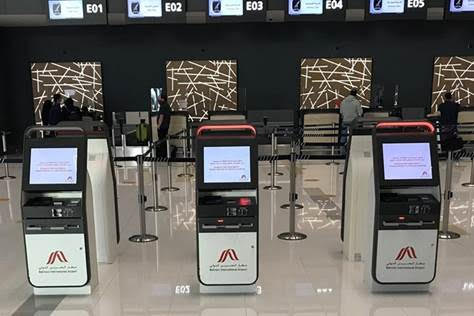
Backed by SITA’s technology, Bahrain International Airport’s (BIA) newly opened Passenger Terminal is better prepared to respond to the changing demands of travel during the COVID-19 pandemic. The ultra-modern facility positions BIA as the most advanced boutique airport in the Gulf, increasing its capacity to 14 million passengers per year. A key focus for Bahrain Airport Company (BAC), the airport’s operator and managing body, was to optimize the passenger experience and operations to quickly recover from the pandemic through 2021 and beyond.Using SITA’s Operations at Airports portfolio, the airport benefits from real-time insights, improved stakeholder collaboration, and increased agility to optimize operations. The solution includes SITA’s Flight Info Displays Systems (FIDS), providing a dynamic platform for communicating important information and managing the passenger flow. SITA is also providing Flex, its advanced cloud-based passenger processing solution. Flex allows airlines and the airport to develop new cloud-native applications for passengers and airport workers that transform the passenger experience and create new revenue opportunities. Flex will be delivered with SITA Smart Path kiosks enabling a low-touch mobile and biometric-enabled check-in experience that combats COVID-19 by reducing the passengers’ and staff’s risk of contracting the virus. The SITA solution also includes a baggage reconciliation system to help manage the delivery of passengers’ bags end to end. Roger Nakouzi, Vice President Sales, SITA, said: “We’re excited to reach this important milestone with Bahrain International Airport, despite the challenges of COVID-19. Thanks to new SITA technology, Bahrain International Airport can leap forward and make operations resilient, agile, and safer for all passengers. The implementation allows for deeper integration of Smart Path throughout the airport and further installation of automated systems, future-proofing the airport for decades to come.” The Airport Modernization Program (AMP) is the largest investment in Bahrain’s aviation sector for more than 20 years and will usher in a new era for air transport in the Kingdom. BAC Chief Executive Officer Mohamed Yousif Al Binfalah said: “In addition to the new Passenger Terminal, the AMP includes several infrastructure development projects that will contribute to the realization of Bahrain’s Economic Vision 2030, laying the foundation for a more sustainable and diversified economy. With SITA’s support, we have enhanced operational efficiency and are in a stronger position to meet the new standards and measures required during COVID-19. We are excited to become one of the most advanced airports in the region and look forward to delivering a smarter, safer, and more comfortable travel experience.” The ICT contract was undertaken collaboratively between SITA-Thales signed with the Ministry of Transport on behalf of Bahrain International Airport. For many countries, including Bahrain, economic recovery from the pandemic relies heavily on travel and tourism, sectors that are suffering due to COVID-19. SITA has been working closely with governments, airlines, and airports to support the implementation of strong border controls that have helped minimize and manage the pandemic’s impact globally.

Technology

Schneider Electric taps into Airport Segment in India with its Integrated Digital Solutions

Dec 17th, 2020 New Delhi In line with the Government of India’s vision to create world-class airports in the country, Schneider Electric has unveiled its end-to-end digital solutions for building ‘Future Ready’, energy efficient airports through their IoT enabled platform EcoStruxure for Airports. It is an enterprise level integration system enabling a holistic view, quicker decision-making, better controls, improved operating efficiency and the opportunity to offer travellers an enhanced experience. Aimed at creating sustainable airports by reducing carbon footprint, it allows airports to dramatically reduce costs by improving energy quality and achieving environmental targets.EcoStruxure for Airport platform provides a collaborative environment for secure, efficient, reliable and sustainable airport service. Digitising the entire value chain of airport infrastructure management, ithelps them to operate effectively, safely and in a cost-efficient manner.Cost optimisation can be achieved with better management of BMS systems with advanced analytics working on top of it. Lighting management systems with intelligent sensors add to additional savings. Needless to say that with increased automation there’s less need for human intervention. With integrated command and control system, land side intervention can be bought in with new revenue streams. The enterprise-level integration framework, which is a “System of System” solution. This integrated structure offers the unified version of truth that enables airports to view all aspects holistically, make faster decisions, improve controls, improve operational effectiveness and provide passengers with a seamless experience. Airports focused on sustainability and reducing their carbon footprint benefit from significant cost savings from improved energy usage, besides achieving environmental goals.With a strong focus on sustainability and carbon footprint reduction, Schneider Electric airport solutions enable airports to substantially reduce costs by improving energy efficiency and achieving environmental objectives.A collaborative environment for safe effective, reliable and sustainable airport service is created by the EcoStruxure for the Airport platform. Airports are now an intelligent city where nearly all operations are digitised.The presence on the land side is therefore becoming increasingly necessary for airport operators who call for Smart City Vision. The government envisions to create a self-reliant aviation sector in India. As 100 airports and 1000 routes have been proposed by 2024, the government has called for more investment by the private sector under the PPP model. Optimistic of the opportunities in the Indian aviation sector, Schneider Electric has enhanced its capabilities in the airports segment. The company has recently acquired RIB Software SE, an innovator in building and construction industry that creates, develops and offers cutting-edge digital technologies for construction enterprises and projects across various industries worldwide.Through RIB’s superior tools, the company plans to facilitate the interdisciplinary and increasingly seamless collaboration for airport construction. iTWO 4.0, RIB’s flagship cloud-based platform, provides the world’s first enterprise cloud technology based on 5D BIM with AI integration for construction companies, industrial companies, developers and project owners, etc. By leveraging digital twin technology, the airports can become future ready thereby helping engineers predict the good and bad outcomes of the entire infrastructure. This is where RIB software comes into the picture. RIB can enable companies automate their entire construction process right from the conceptualization and design phase. This helps to build an architecture using analytics, which can enable airports to visualize the entire process, thereby saving time and cost and increase energy efficiency of the infrastructure. ( Aviation World Online News Desk)

Recent News, Technology

Schneider Electric taps into Airport Segment in India with its Integrated Digital Solutions

Dec 17th, 2020 New Delhi In line with the Government of India’s vision to create world-class airports in the country, Schneider Electric has unveiled its end-to-end digital solutions for building ‘Future Ready’, energy efficient airports through their IoT enabled platform EcoStruxure for Airports. It is an enterprise level integration system enabling a holistic view, quicker decision-making, better controls, improved operating efficiency and the opportunity to offer travellers an enhanced experience. Aimed at creating sustainable airports by reducing carbon footprint, it allows airports to dramatically reduce costs by improving energy quality and achieving environmental targets.EcoStruxure for Airport platform provides a collaborative environment for secure, efficient, reliable and sustainable airport service. Digitising the entire value chain of airport infrastructure management, ithelps them to operate effectively, safely and in a cost-efficient manner.Cost optimisation can be achieved with better management of BMS systems with advanced analytics working on top of it. Lighting management systems with intelligent sensors add to additional savings. Needless to say that with increased automation there’s less need for human intervention. With integrated command and control system, land side intervention can be bought in with new revenue streams. The enterprise-level integration framework, which is a “System of System” solution. This integrated structure offers the unified version of truth that enables airports to view all aspects holistically, make faster decisions, improve controls, improve operational effectiveness and provide passengers with a seamless experience. Airports focused on sustainability and reducing their carbon footprint benefit from significant cost savings from improved energy usage, besides achieving environmental goals.With a strong focus on sustainability and carbon footprint reduction, Schneider Electric airport solutions enable airports to substantially reduce costs by improving energy efficiency and achieving environmental objectives.A collaborative environment for safe effective, reliable and sustainable airport service is created by the EcoStruxure for the Airport platform. Airports are now an intelligent city where nearly all operations are digitised.The presence on the land side is therefore becoming increasingly necessary for airport operators who call for Smart City Vision. The government envisions to create a self-reliant aviation sector in India. As 100 airports and 1000 routes have been proposed by 2024, the government has called for more investment by the private sector under the PPP model. Optimistic of the opportunities in the Indian aviation sector, Schneider Electric has enhanced its capabilities in the airports segment. The company has recently acquired RIB Software SE, an innovator in building and construction industry that creates, develops and offers cutting-edge digital technologies for construction enterprises and projects across various industries worldwide.Through RIB’s superior tools, the company plans to facilitate the interdisciplinary and increasingly seamless collaboration for airport construction. iTWO 4.0, RIB’s flagship cloud-based platform, provides the world’s first enterprise cloud technology based on 5D BIM with AI integration for construction companies, industrial companies, developers and project owners, etc. By leveraging digital twin technology, the airports can become future ready thereby helping engineers predict the good and bad outcomes of the entire infrastructure. This is where RIB software comes into the picture. RIB can enable companies automate their entire construction process right from the conceptualization and design phase. This helps to build an architecture using analytics, which can enable airports to visualize the entire process, thereby saving time and cost and increase energy efficiency of the infrastructure. ( Aviation World Online News Desk)

Technology

SITA and Orange Business Services stretch the bounds of edge connectivity and lead the way with shared SDN at airports

SITA and Orange Business Services have implemented a multi-tenant edge SD-WAN platform globally through SITA’s shared connectivity platform AirportHub. The Male International Airport, Maldives, the Bandaranaike International Airport, Sri Lanka, and 66 other airports worldwide already have active and running SITA Connect SDN technology. Leveraging Orange Business Services’ Flexible SD-WAN portfolio, SITA Connect SDN allows multiple airlines, ground handlers, and other tenants to access the same virtualized infrastructure in the cloud, delivering more scalable and agile connectivity. This drives greater cost efficiencies and supports the airline industry’s drive to migrate applications to the cloud. Unique in its conception, SITA Connect SDN leverages the existing AirportHub, SITA’s pre-connected connectivity platform already deployed in almost 600 airports worldwide and available to airlines globally.  Sydney International Airport, Taiwan Taoyuan International Airport, and Zurich Airport are among the 60 airports that have already been upgraded to the ultra-fast SD-WAN network that is currently being rolled out to cover the vast majority of all airline destinations. This solution’s agility and scalability also address unpredictable passenger and aircraft traffic volumes amidst the COVID-19 pandemic in a cost-effective, more flexible way. Through SITA Connect SDN, SITA can provide on-demand bandwidth while optimizing costs by utilizing multiple transport technologies in an application-driven network, with real-time visibility and control over the network. SITA Connect SDN further reduces the cost of running a global network environment by making dedicated hardware platforms redundant while leveraging internet connectivity. Capital expenditure is reduced by cutting down on expensive network hardware upgrades with technological advances largely confined to software upgrades. David Lavorel, CEO SITA AT AIRPORTS & BORDERS, said: “SITA Connect SDN is a technological innovation, leveraging state-of-the-art, future proof technology to serve our industry needs. In addition to the cost-optimization and scalability that are so important to airlines in the current market, we expect with this new technology, airport and airline applications will move to the cloud en masse while increasing automation.” Anne-Marie Thiollet, Vice President, Connectivity Solutions, Orange Business Services, said: “Through our long-standing partnership with SITA, we have delivered technologies and innovation to the air transport industry since 2001. When we started this project at the end of 2019, we could not imagine just how critical flexibility and connectivity would become in the industry. We are confident that this evolution – leveraging the full potential of SDN technologies – has come at the right time.”

Technology

TECHNOLOGY

IT’S TIME FOR INDIA TO TAKE BACK THE SKIES BY MANEESH JAIKRISHNA The COVID-19 pandemic has not just affected human lives but has taken a heavy toll on economies across the world. With a complete nationwide lockdown for about two months, businesses have also suffered huge losses. The aviation industry continues to be one of the most adversely impacted. It is only now that airlines in India have taken to the skies again providing some minimal relief to the industry. However, the damage to this sector will be long and complex and recovery will change the way we travel. At this point, no one can predict what the future may bring. But we are beginning to develop scenarios about what shape the ‘new normal’ might take. In order to mitigate the effects, the aviation industry must transform the passenger experience to increase traveler safety, re-establish trust while balancing economic pressures from reduced customer demand. To successfully walk this tightrope and navigate a return to the skies for viable volumes of passengers, our airports and airlines need to assimilate new information from the government and health officials, adapt operations immediately and automate processes permanently. One of the most striking revelations that has emerged from the crisis is the role and importance of technology. Industry leaders believe that technology will be fundamental in helping airlines and airports become compliant with new and fast-changing regulations and to restore the passenger’s confidence in flying. New preventive measures aimed at limiting risk at airports and onboard will require new approaches to passenger management. Indian airports that were reticent to adopting certain technologies are now transitioning towards it. Digital technologies and automation will be critical in ensuring a smooth, efficient and safe flow of passengers while keeping in mind social distancing-friendly passenger experience. Now more than ever, the industry needs to work towards the vision of an entirely mobile-enabled journey. This will keep passengers informed and moving, making the journey increasingly ‘touchless’ with self-service technologies at every step right up to the biometric boarding system at the gate. Contactless, self-service technologies at every step will facilitate passenger flow, cutting queues while ensuring a social distancing-friendly passenger experience. New kinds of digital identity will facilitate this smooth, touchless journey. This will allow passengers to breeze through the airport using digital IDs stored on their phone verified with facial recognition. Passengers will expect this to be both simple and safe. There are predominantly three key areas that are expected to require maximum technological intervention in order to compliment the short-term hygiene measures such as the use of masks and gloves and ensure a smooth and safe experience for passengers. SOCIAL DISTANCING The use of real-time monitoring technologies along with predictive analytics can ensure proactive planning, appropriate distancing between passengers at key points across the airport. Through technology, the journey will become increasingly ‘touchless’. Automation will be of paramount importance. Contactless, self-service technologies at every step will facilitate passenger flow, cutting queues while ensuring a social distancing-friendly passenger experience. Even the option of extending airport boundaries can also be considered where key steps such as check-in and bag drop are managed using the passenger’s mobile phone before they arrive at the terminal. HYGIENE AND SANITATION It is imperative to reduce the risk of infection by avoiding contact at key touch points. With a combination of biometric and mobile solutions, passengers will no longer have to touch a kiosk or surface and be able to manage their journeys from their phones. With biometric technology and next generation touch points throughout the journey, agents can use their airline’s applications on a mobile device anywhere, freeing them from a fixed location or station used by multiple parties that may be in close proximity. Similarly, passengers can operate process points such as kiosks, using their own mobile devices, without the need to touch screens on the airport’s physical infrastructure. This will provide greater efficiency and improved passenger satisfaction with the welcome benefit of enhanced safety for passengers and employees alike. HEALTH OR THERMAL CHECKS As countries around the globe begin to ease restrictions on air travel and movement in general, authorities will be mindful of preventing a resurgence of cases. Integrating health or thermal checks at key touch points such as check-in kiosks will be important to identify or assist high-risk symptomatic passengers. As a result, the government would require an information-driven approach based on real-time data and responsiveness to handle rapidly changing situations. Passengers, in turn, will increasingly demand easy-to-use solutions that provide the right information, for them to plan their travel. In order to meet the challenges of this ‘new normal’, the air transport industry will need to radically change the way it operates. The government can work with technology experts to adopt these technologies swiftly in order to mitigate the risk of resurgence. We witness an array of opportunities to collaborate with technology and innovation to turn the situation around and use it to our advantage. This will not only make our airlines and airports more adaptable to change in the future but also instill confidence in passengers and make travel more safe, streamlined, and sustainable. (The author is Vice President, Indian Subcontinent, Dubai, Eastern & Southern Africa, SITA).  

FOREWORD

Dear Reader’s,


The current edition of Aviation World has covered many areas of Aerospace & Defence based on the latest development in the sector. The front cover highlights three different images, first for the Union Civil Aviation Minister ….. who is leading from the front to steer Indian Civil Aviation sector to witness one of the most interesting phases. He is also facing most tumultuous timing due to the ongoing financial stress in the Aviation sector due to ATF rising cost and long airspace restrictions resulting in mounting losses for Indian carriers. Despite of all the ground level challenges,the minister is addressing new things on regular basis which keeps the sector motivated. We have featured many such developmental works in this edition done under his guidance which will be interesting to read.

Our lead story on “ The West War” is another important feature which covers the ground level reality of the challenges faced by the Aviation sector. Its though time ahead and we believe it will pass soon .

There are features on Regional connectivity and MoCA revised rules on the UDAN 2.0 and how its going to transform the flying experience within India.

In this edition, we have covered topics on MRO,Various Policy changes,Sea Plane Operations by SkyHop Aviation, TATA-Airbus joint project on C295 military aircraft under Make In India which is expected to roll out soon and many other interesting contents which will be good to read.

We are covering Farnborough International Airshow 2026 from 20-24July 2026 in London and our next edition will be based on the same event.For features, you may contact our team on priority basis.


Happy Reading!

NEWSLETTER

Aviation World Magazine is India’s premier aviation magazine and has been actively supporting the development of the Indian and global civil aviation sector. We started our journey in year 2015 and its been 12 years now and the response and acceptance is really encouraging. Thanks to all our associates and writers who remained with us in our progressive journey.

We have started 2026 on a very positive note and we look forward to increase our footprints to more locations and induct many more new companies in our campaign.. Do write to us at : editor@aviationworld.in

Disclaimer

The contents published in this website are news covering Aviation, Aerospace and Defence sector. The objective is to provide news in informative form to keep our readers updated of the latest development. We also publish content featured in our print publication Aviation World.We try our best to avoid any factual errors or image displayed here but we ensure immediate corrections to any such thing brought to our notice that might have been published inadvertently. All images and contents are sourced from the relevant organisations media team.

Copyright ©2014 – 2026. AVIATION WORLD. All rights reserved.

Scroll to Top