
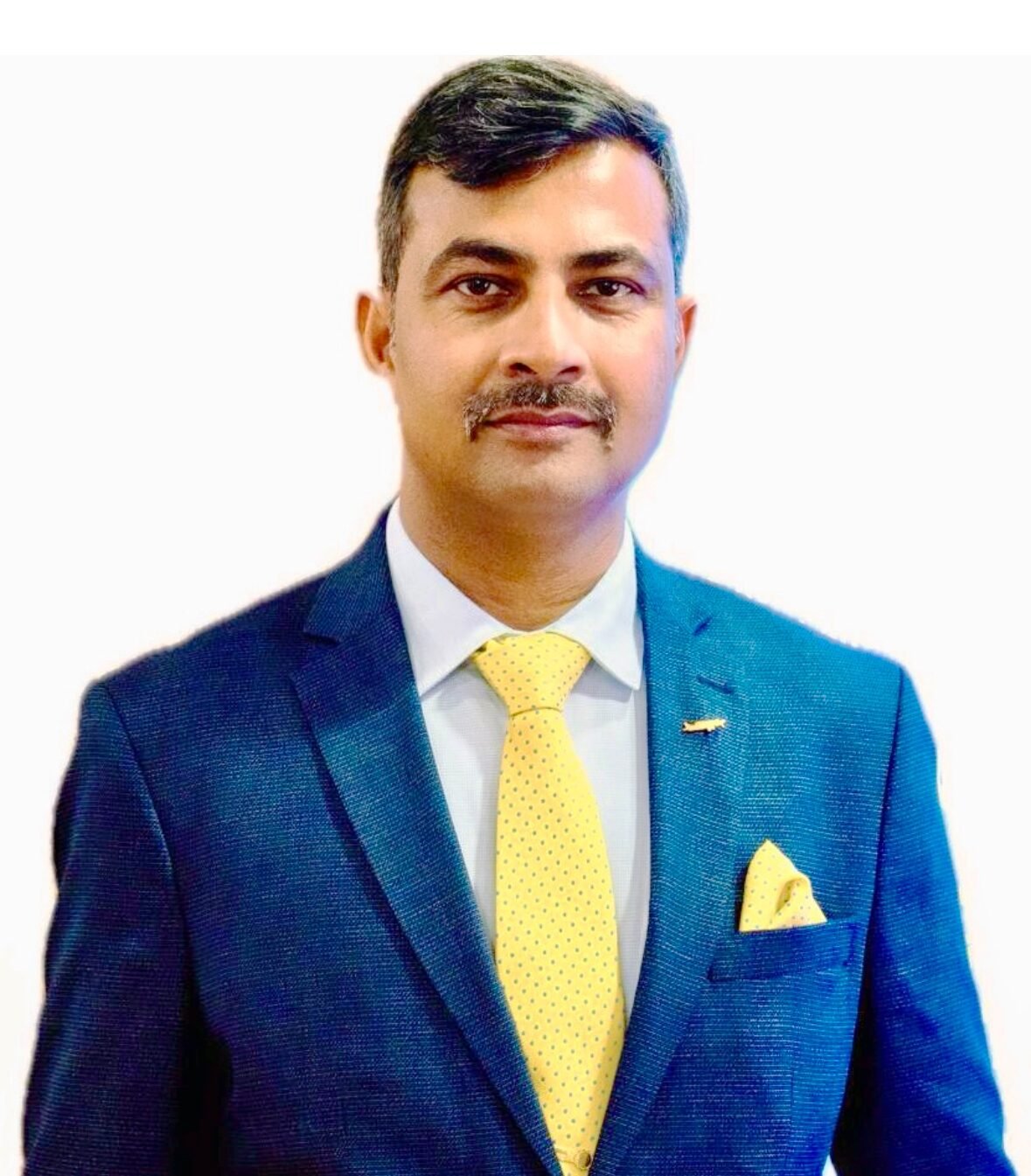
– Wg. Cdr. Prem Kumar Garg (Retd.), CEO, IndiaOne Air
Prime Minister Narendra Modi has launched the Modified UDAN scheme with a ₹29,000 crore outlay over the next 10 years, marking a major step toward strengthening regional air connectivity and advancing the vision of Viksit Bharat 2047. But what will it take for this ambitious next phase to achieve lasting success?
In conversation with Vishal Kashyap, Managing Editor, Aviation World, Wg. Cdr. Prem Kumar Garg (Retd.), CEO & Accountable Manager of IndiaOne Air, shares his expert perspectives, operational insights, and recommendations with Vishal Kashyap, Managing Editor, on the opportunities, challenges, and the roadmap for making the revamped UDAN scheme a transformative success. Excerpts…
Q: You call IndiaOne “The Baby Airline”. How do you foresee the baby growing into a more mature airline?
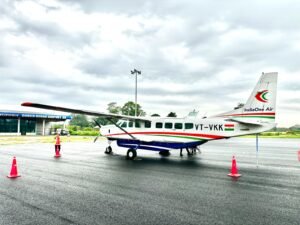
A: When I call IndiaOne Air “The Baby Airline,” it reflects our stage of evolution rather than our ambition. Every successful airline starts small, learns continuously and builds resilience over time. We are proud that despite operating one of the smallest scheduled fleets and the smallest aircraft in India, we have connected underserved regions, completed over 15,000 commercial flights and served about a lakh passengers including lot of first time travellers. Our vision is not to become the biggest airline but to become India’s most trusted regional connectivity airline. The next phase will focus on strengthening operational reliability, inducting larger regional aircraft, expanding into new underserved markets and building a sustainable regional aviation ecosystem. Like every child, growth requires patience, support and the right environment.
Q: How do you analyze the outcome of the modified UDAN scheme in supporting sustainable and viable flight operations?
A: The UDAN Scheme has been one of the most transformative aviation initiatives undertaken anywhere in the world. It has democratized air travel and brought aviation to regions that had never experienced scheduled flights. However, the next phase must focus on sustainability rather than only route creation. The modified UDAN scheme is moving in the right direction by encouraging states to take greater ownership of regional connectivity. Long-term success will depend upon stable policy support, infrastructure readiness and innovative financing models for regional small aircraft.
Regional connectivity cannot be evaluated solely on airline profitability. Its economic and social multiplier effect including tourism, healthcare, education and business development is many times larger than the aviation investment itself.
Q: Due to non-continuation of VGF, you had to suspend a few key sectors. How do you manage such situations in terms of business loss and passenger trust?
A: Suspending routes is never an easy decision because regional airlines build relationships, not just networks. Whenever support mechanisms change, we evaluate every route based on commercial sustainability while ensuring safety is never compromised. We communicate transparently with passengers and continue engaging with state governments and stakeholders to restore services when viable. Passenger trust is built through honesty. Most of our customers understand that regional aviation operates under unique economic challenges. Our objective is always to return stronger rather than continue unsustainable operations.
Q: Is this also part of the strategy due to mounting ATF prices, which could not make operations viable on smaller aircraft?
A: ATF certainly remains one of the largest cost components for every airline, but for small aircraft operators the impact is significantly higher because fuel costs are spread over fewer seats. However, some portions of it is catered due to VGF indexation calculations based on for RCS flights.
Moreover, sustainability is influenced by multiple factors like fuel prices, airport charges, maintenance costs, taxation, infrastructure and route economics. IndiaOne Air continues to focus on cost optimization, operational efficiency and partnerships rather than relying solely on fare increases. In being under Regional aviation serves a national purpose. Therefore, its economics must also be viewed differently from large trunk-route operations.
Q: What is the future plan of action? Are you looking at leasing a mid-size aircraft to strengthen your operations?
A: Yes. Our long term fleet strategy involves gradual induction of larger regional aircraft while maintaining our expertise in last-mile connectivity.
We believe there is a significant gap between 9-seat commuter aircraft and larger regional jets. Aircraft in the 19-40 seat category are ideally suited for India’s regional markets and can substantially improve route economics. However, choice of aircraft is well planned and mostly based on airport we are targeting to connect.
Our expansion strategy will always remain measured and financially disciplined. Sustainable growth is more important than rapid growth.
Q: What is the status of the LoI that you signed for 10 Twin Otter Series 300-G aircraft?
A: The Letter of Intent reflects our long-term confidence in the future of regional aviation in India. The Twin Otter Series 300-G offers unique capabilities, particularly for short runways, remote destinations, island operations and difficult terrain. We continue to engage with the manufacturer and various stakeholders while evaluating financing options, market conditions and policy developments.
Fleet induction decisions will always be aligned with commercial sustainability rather than timelines alone.
Q: Despite Government initiatives, smaller aircraft operators are still struggling to achieve long-term sustainability. What, according to you, is holding them back?
A: The challenge is not demand. India has enormous untapped regional aviation potential.
The issue lies in economics. Small aircraft operators face disproportionately higher operating costs and per seat costs while serving socially important routes with lower traffic density.
Three structural issues remain:
- a) Limited availability of suitable regional aircraft and affordable leasing.
- b) High fixed operating costs despite smaller capacity.
- c) Short-term support mechanisms instead of long-term ecosystem development. Regional airlines should be viewed as public infrastructure partners rather than simply commercial transport providers.
Q: Very precisely, what are the three key policy measures still required to make RCS routes viable for smaller operators?
A: If I had to prioritise only three, they would be:
- Sustainable Aircraft Financing
Establish dedicated leasing and financing mechanisms for regional aircraft, including support through GIFT City and state-backed ownership models.
- Long-Term Operational Support
Transition from short-duration VGF to predictable, performance-linked support that provides operators with business certainty while encouraging efficiency. Support under CSR and PPP models should also be explored.
- Differential Regulatory and Cost Structure
Develop a separate regulatory and airport charging framework for small commuter aircraft operating under Part-135 like regional operations, recognising their vastly different economics compared with large airlines. These three reforms would significantly improve the sustainability of regional aviation while enabling connectivity to hundreds of underserved towns across India.
India’s regional aviation story is only beginning. Large airlines connect metros, regional airlines connect people, communities and opportunities.
At IndiaOne Air, we remain committed to the vision of making air travel accessible to every Indian “From Hawai Chappal to Hawai Jahaaz.” With supportive policies, collaborative partnerships and continued innovation, I am confident that regional aviation will become one of the strongest pillars of India’s aviation growth story.
( Aviation World Exclusive Interview )