

As Saudi Arabia accelerates its push to become a premier global aviation hub under Vision 2030, the strategic steering of its commercial engine is crucial. In this exclusive interview with Vishal Kashyap, Managing Editor, Aviation World, Arved von zur Muehlen, Chief Commercial Officer of Saudia Group reflects on the operational and strategic shifts redefining the region. From scaling international connections and boosting religious and leisure tourism to managing capacity in an evolving competitive landscape, he provides an insider’s view on driving long-term commercial transformation. Excerpts:
AW: With Saudi Arabia’s National Aviation Strategy targeting 330 million annual passengers by 2030, how is Saudia scaling its fleet, network, and bilateral partnerships, particularly in high-growth sectors like India?
A: Saudia’s growth plans are closely aligned with the ambitions of the Saudi Aviation Strategy and the wider objectives of Vision 2030. Our focus is on expanding capacity in a disciplined way, strengthening international connectivity, and building partnerships that extend the reach of our network.
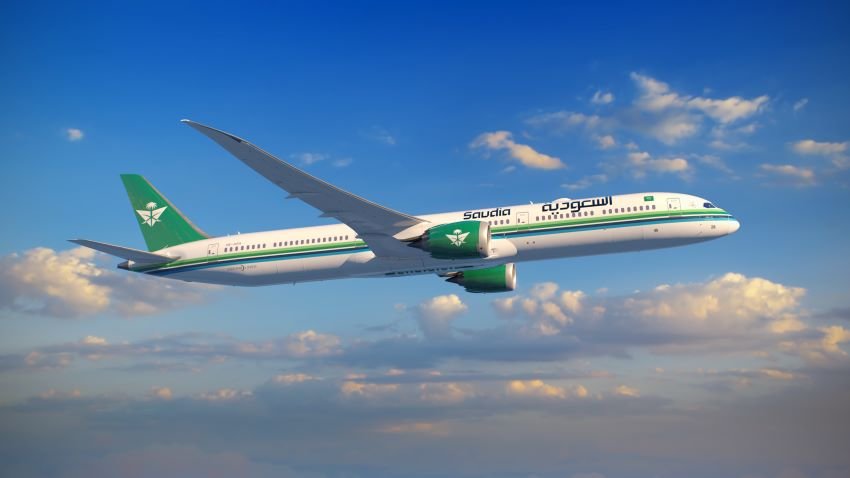
Today, Saudia operates 153 aircraft across more than 100 destinations on four continents, and we expect the fleet to reach 216 aircraft and the network to grow to 145 destinations by 2030. This expansion gives us greater flexibility to increase frequencies in high-demand markets and pursue new international opportunities.
India is an important part of that strategy. It is already one of Saudia’s largest and most diverse international markets, with demand spanning Hajj and Umrah, business, leisure, employment and family travel. As economic and tourism ties between the two countries continue to grow, we see considerable opportunity to strengthen direct connectivity while also connecting Indian guests through Saudi Arabia to our wider international network.
AW:Following Saudia Group and Air India’s strategic MoU on code sharing and loyalty integration, how will this partnership reshape aviation dynamics and passenger experience between Saudi Arabia and India?
A: The codeshare significantly expands connectivity between Saudi Arabia and India by combining the strengths of both networks. Saudia guests can connect through Delhi and Mumbai to key destinations across India, while Air India guests arriving in Jeddah or Riyadh gain access to Saudia’s domestic network, including cities such as Dammam, Madinah, Abha and Taif.
For our guests, this provides greater choice and a simpler journey, with flights booked under a single itinerary and baggage checked through to the final destination. lt also strengthens our ability to serve the growing movement between the two countries across religious travel, business, tourism and family travel. Looking ahead, the wider cooperation creates opportunities to expand codeshare connectivity further and explore additional benefits through the airlines’ loyalty programs.
AW:Beyond core religious travel, how is Saudia scaling it to capture the surging demand from Indian leisure, MICE, and business travellers?
A: India is one of Saudia’s key international markets, with strong Hajj and Umrah demand complemented by growing leisure, business and MICE travel.Saudi Arabia’s expanding tourism and events offering is broadening the reasons for Indian travellers to visit the Kingdom, from leisure destinations such as AlUla and Abha to business and major events in Riyadh and Jeddah.
We are responding to this broader demand by strengthening our engagement with the Indian travel trade, corporate partners and digital platforms, ensuring our offering continues to reflect the different needs of the market.
AW: How does the Saudia Group plan to leverage its dual-brand model—deploying both full-service Saudia and low-cost carrier flyadeal—to expand its network into India’s rapidly growing tier-2 & 3 cities?
A: Saudia Group’s dual-brand model gives us greater flexibility in how we approach a large and diverse market like India, with Saudia and flyadeal serving different travel needs through distinct operating models.
As international demand develops beyond India’s major gateways, we see potential in emerging regional markets. Having two airline models gives the Group more options to respond to these opportunities over time, based on the characteristics and demand of each market. This gives us greater flexibility to grow in a measured way, while preserving the distinct role and proposition of each airline.
AW: As flyadeal expands into India, how are you positioning Saudia as the premium flag carrier alongside a LCC to capture the price-sensitive travellers as well as the luxury tourists?
A: Saudia and flyadeal allow us to serve different traveller preferences without defining the market purely by price. flyadeal provides a streamlined low-cost proposition, while Saudia offers a full-service experience across Guest, Business and First Class.
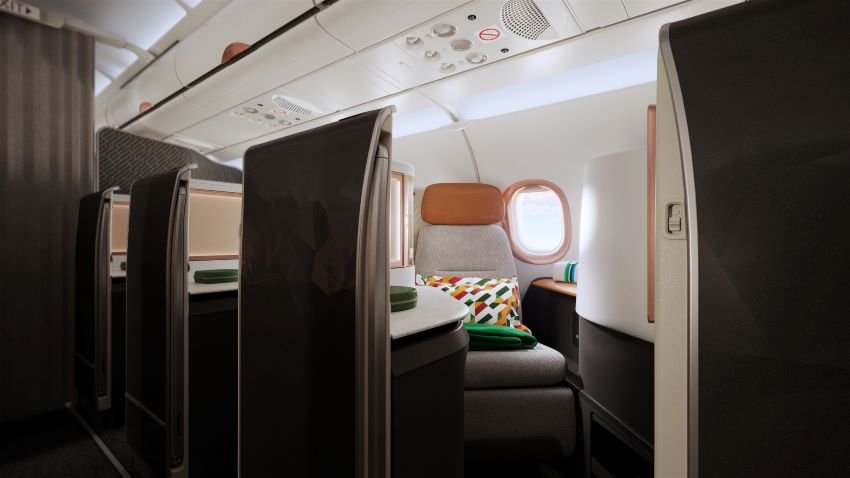
For Saudia, we continue to invest across the full guest experience, from new and upgraded cabins, free high-speed inflight connectivity, enhanced entertainment and digital services, to premium products and the award-winning service of our cabin crew, recognized by Skytrax as Best Airline Staff Service in the Middle East, reflecting the authentic Saudi hospitality at the heart of the Saudia experience.
Together, this gives travellers in India greater choice in how they travel, while allowing both airlines to maintain clear and complementary propositions.
AW: With King Abdulaziz International Airport in Jeddah developing as a primary transcontinental hub, how is Saudia optimising its connection infrastructure and transit experiences to capture high-volume traffic moving onward to Europe, Africa, and the US?
A: Jeddah is central to Saudia’s future network strategy. We are progressively concentrating more aircraft and connecting capacity at King Abdulaziz International Airport to strengthen its role as our primary international hub. This includes aligning schedules into coordinated arrival and departure waves, improving the efficiency of connections between flights and increasing the number of aircraft based in Jeddah. Saudia plans to grow its Jeddah-based fleet from approximately 102 aircraft in 2026 to around 186 by 2030.
The ambition is also reflected in connecting traffic. International transit volumes through Jeddah are expected to increase from more than 2 million guests in 2026 to more than 5.5 million by 2030, supported by stronger connectivity between Asia, Europe, Africa and other international markets. Operational reliability is central to supporting that growth, with Saudia ranked the world’s No. 1 airline for on-time performance by Cirium for three consecutive months, from May to July 2026.
Alongside efficient connections, we are improving the wider transit proposition, including the Stopover Visa, which allows eligible guests to spend up to 96 hours in Saudi Arabia before continuing their journey.
AW: As Saudia Group integrates both narrow body and wide body deliveries into its networks, how is the allocation formula being weighted between domestic growth, European expansion, and high-frequency Indian corridors?
A:Our approach is to match the right aircraft and capacity to each market rather than apply a fixed allocation by region. Fleet deployment is guided by demand, range, capacity requirements and the commercial and operational role of each route.
The growing mix of narrow-body and wide-body aircraft gives us greater flexibility to do that. Narrow-body aircraft support frequency across domestic, regional and selected international markets, while wide-body aircraft remain important for higher-demand long-haul routes and markets with greater cargo requirements. The A321XLR adds another option for longer international routes where a more balanced capacity is appropriate.
As new aircraft enter the fleet, this flexibility will allow us to increase capacity and frequencies where demand supports it, including across key international markets such as India, while continuing to develop our domestic and wider international network.
AW: With Saudia aggressively scaling its digital ecosystem— including the Al- powered Travel Companion— how are these technological innovations reshaping the end-to-end journey for its customers?
A: Technology is increasingly embedded across both the guest experience and our operations. Our priority is to use it where it can make travel easier, provide guests with greater control and support for more efficient decision-making across the airline.
Across the travel experience, Saudia is expanding digital and Al-enabled services to support more personalized interactions, easier access to information and smoother self-service. Behind the scenes, data and predictive technologies support areas including demand forecasting, capacity planning, operational decision-making and aircraft maintenance.
That digital experience continues onboard. Saudia is progressively introducing free high-speed inflight connectivity, supporting browsing, streaming, virtual meetings and multiple devices, with full fleet coverage targeted by the end of 2027.
The Al-powered Travel Companion is part of this wider direction, providing guests with more relevant information and assistance throughout their travel experience.
( This exclusive interview is published at Aviation World Sept-Oct 2026 Print edition)