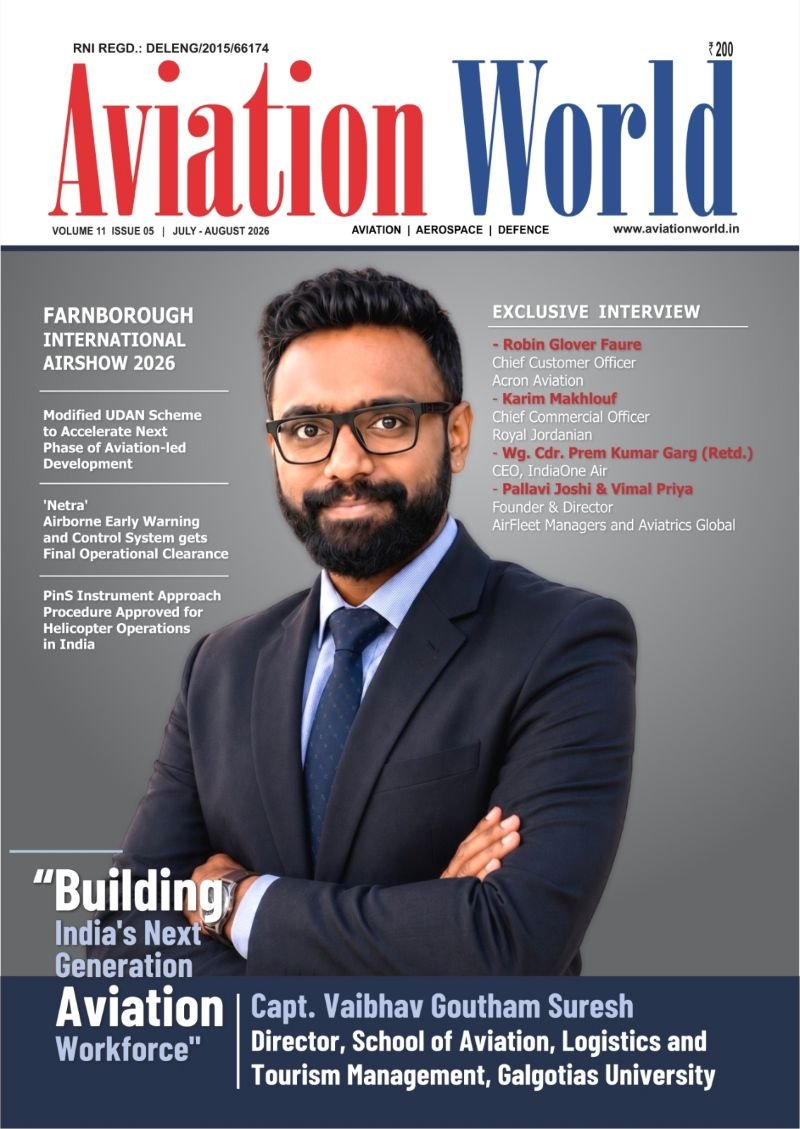

Aviation World Cover Feature, July-August 2026 :
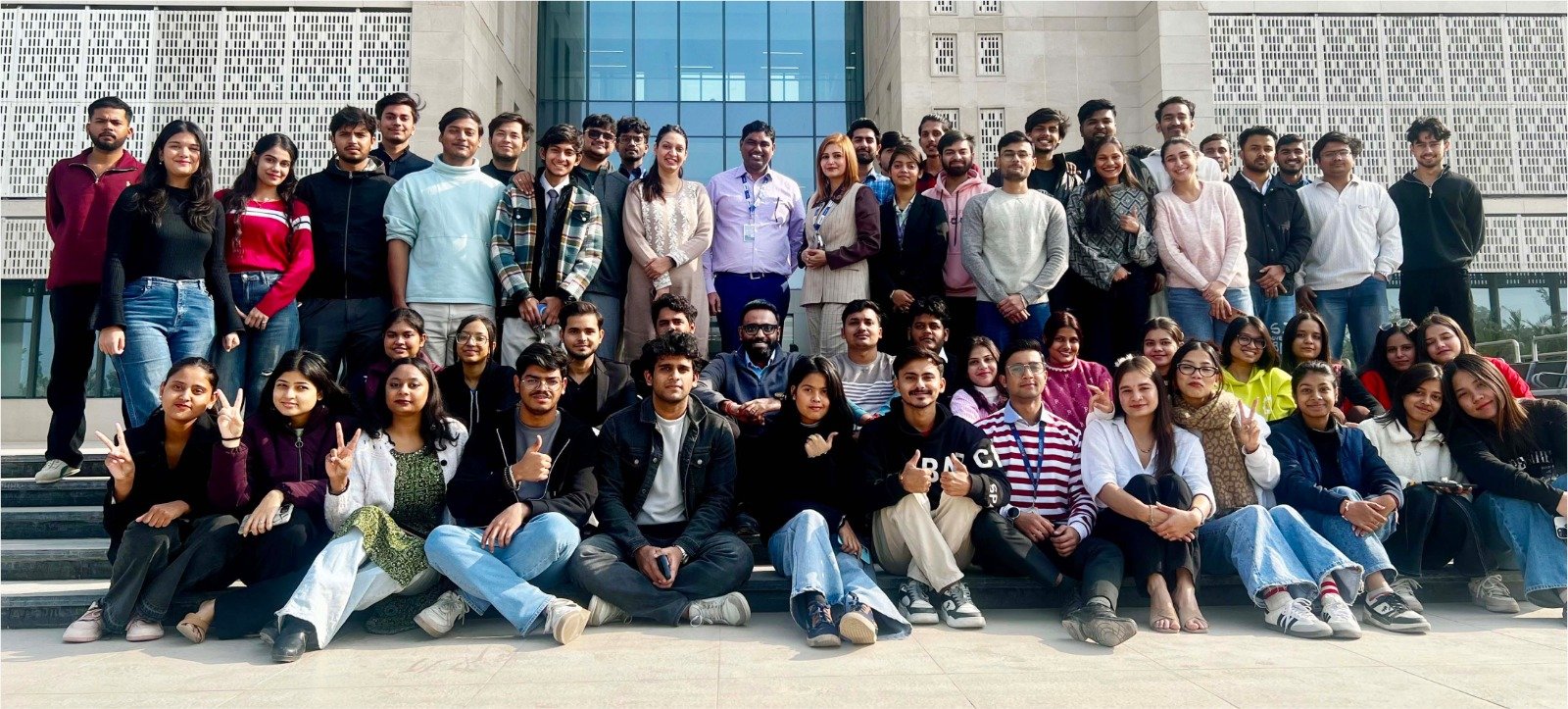
As global aviation races to fill a talent gap measured in the millions, India has become the industry’s most important talent frontier. The world has fixated on one aviation shortage: pilots, cabin crew and engineers. But the industry needs just as urgently the professionals who run the business of flight: the managers and operational leaders behind every airline, airport, OEM and service provider. At Galgotias University, the School of Aviation, Logistics and Tourism Management is building something the sector needs even more than numbers: graduates the industry can put to work on day one.
A BOOM THAT RUNS ON PEOPLE
Global aviation is entering the largest hiring cycle in its history. Industry forecasts point to close to 1.5 million new professionals needed worldwide over the coming decade, with the Asia-Pacific region driving the surge. No market sits closer to the centre of that story than India, where the in-service fleet is expected to roughly triple within ten years, carriers hold one of the world’s largest aircraft order books, and domestic traffic is projected to reach some 300 million passengers a year by 2030. The challenge is no longer whether the demand exists. It is whether the people can be found to meet it.
THE SHORTAGE BEHIND THE SHORTAGE
Ask what aviation’s talent crisis looks like and most people picture a cockpit. The headline forecasts reinforce it: the industry is widely quoted as needing some 300,000 new pilots, 400,000 maintenance engineers and nearly 700,000 cabin crew over the coming decade. Almost the entire training ecosystem-flying schools, cabin-crew training institutes, aircraft maintenance academies are built around these visible, licensed roles.
But those roles are only the tip of the workforce. Worldwide, air transport directly employs some 11.6 million people, and pilots and cabin crew are only a fraction of that number. The overwhelming majority keep the industry running from the ground and the office: the operations controllers who recover a disrupted schedule, the network and revenue teams who decide where aircraft fly and how routes turn a profit, the airport terminal and ground-handling managers, the OEM programme and supply-chain leaders, the cargo and MRO operations heads. In the Asia-Pacific region alone, direct aviation employment is set to climb from 4.3 million today to 6.1 million by 2043 and most of those new roles will never see a cockpit (source: ATAG). Nowhere is this clearer than in India. The country’s airport map has been transformed from 74 airports in 2014 to around 150 today, with a national target of some 230 by 2030, and every new terminal, route and greenfield airport needs people to run it. Industry trackers now report that ground-operations and management hiring is rising even faster than pilot hiring, and recent, well-publicised disruptions in the Indian market exposed a specific, unglamorous gap: not enough operational depth, such as the planners, controllers and managers who keep a fast-scaling network stable. When a single carrier’s operations control centre is stretched, thousands of flights are affected. The industry has learned, painfully, that it cannot fly on pilots alone.
THIS IS THE SHORTAGE ALMOST NO ONE IS TRAINING FOR, AND IT IS PRECISELY THE ONE SALTM WAS BUILT TO FILL.
The school does not train pilots or cabin crew. It builds the managers and operational leaders who sit behind them- the professionals airlines, airports, OEMs, and service providers need to plan, run and grow the enterprise. In an ecosystem crowded with institutions teaching people to fly and fix aircraft, SALTM has deliberately claimed the larger, quieter half of the industry: the people who make the whole system work.
A UNIVERSITY BUILT FOR THE WORLD
That ambition rests on a strong institutional foundation. Founded in 2011, Galgotias University has emerged in little more than a decade as one of India’s fastest-rising multidisciplinary universities, home to more than 50,000 students across 27 schools and over 200 programmes on a modern campus in Greater Noida, minutes from the newly opened Noida International Airport.
Global recognition has followed. The QS World University Rankings 2027 placed Galgotias in the 1201–1400 band worldwide, among India’s top 17 private universities, 46th among all Indian universities, and third among private universities in Uttar Pradesh. The Times Higher Education World University Rankings 2026 placed it in the 1201–1500 band, 27th among private universities and 65th overall in India. The University also holds a NAAC A+ accreditation, one of India’s highest institutional quality ratings.
Yet rankings tell only part of the story. Galgotias has built its academic model around the idea that education should mirror the realities of the workplace. Industry partnerships, active learning, centres of excellence, global collaborations and experiential education are core design principles, not add-ons. The objective is graduates ready to contribute from day one. The results show. For the Class of 2026, more than 1,250 organisations engaged with the University, extending over 5,500 offers across technology, consulting, banking, manufacturing and professional services.
SALTM is the aviation expression of that philosophy, applying the same industry-led approach to prepare professionals for airlines, airports, logistics networks and global travel enterprises.

According to Dr Dhruv Galgotia, the visionary CEO of Galgotias University, “The future belongs to universities that can bridge the gap between classrooms and careers. At Galgotias University, we believe education must evolve alongside industry, ensuring students graduate not only with knowledge, but with the ability to apply it in real-world environments. Through SALTM, we are bringing that philosophy to aviation, logistics and tourism by preparing professionals who are ready to contribute, adapt and lead in some of the world’s most dynamic industries.”
ACTIVE LEARNING, BUILT WITH THE WORLD’S BEST
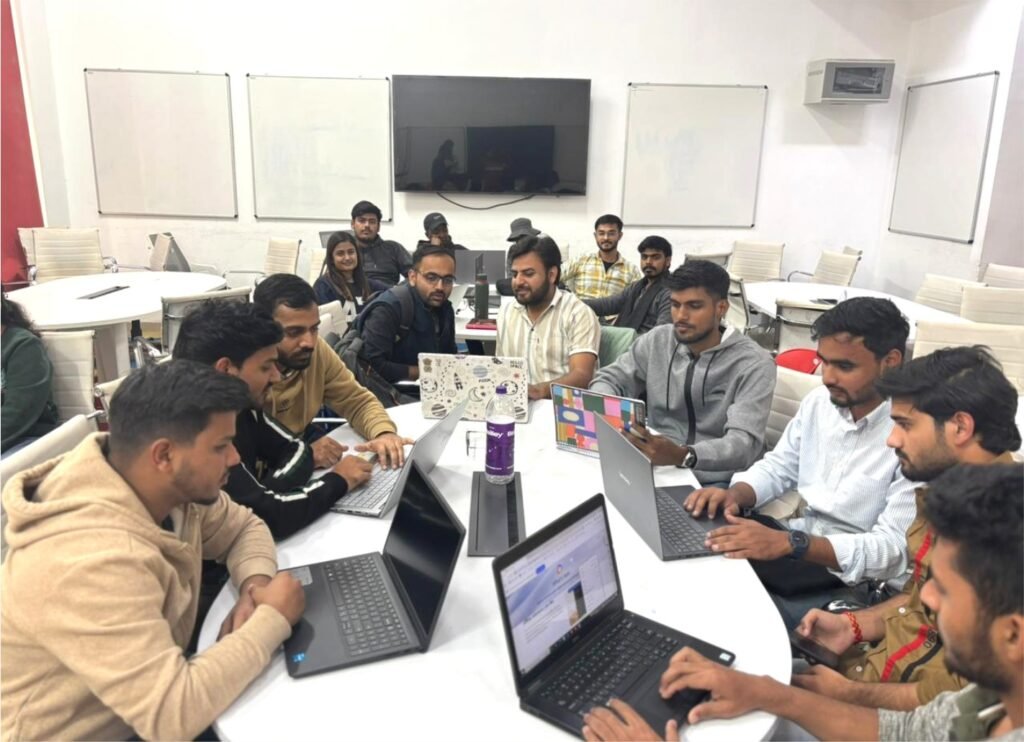
What truly sets the University apart is its pedagogy. Galgotias is the first university in India to adopt active learning across every programme, through its flagship G-SCALE ecosystem, the Galgotias Student-Centred Active Learning Ecosystem. Developed with strategic consultancy and faculty training from the InsPIRE institute at Nanyang Technological University (NTU), Singapore- one of the world’s leading universities, G-SCALE replaces the passive lecture with structured, evidence-based active learning and in 2024, gave rise to India’s first purpose-built Active Learning Space. For a management school like SALTM, the effect is decisive: students learn the way the industry actually works- through simulation, live operational projects and collaborative problem-solving, not rote recall. That global outlook runs deeper than a single tie-up, with University collaborations spanning NTU Singapore, Pennsylvania State University’s Dickinson Law and SRH in Germany, among more than a hundred international partners.
EDUCATED FOR THE ROLES THAT RUN THE INDUSTRY
Within that ecosystem, SALTM begins from a deliberately different premise: every programme is engineered backwards from the operational and management competencies the industry actually hires for, under an outcome-based education framework aligned to India’s National Education Policy 2020. Curricula are benchmarked against leading global peers including Coventry, Cranfield, Surrey and EHL Lausanne, and anchored to national skill standards through recognition from the Aerospace and Aviation Sector Skill Council (AASSC). Delivered through G-SCALE, the result is a graduate who arrives already fluent in the language, standards and decisions of the workplace.
THE PROOF IS IN THE PLACEMENTS
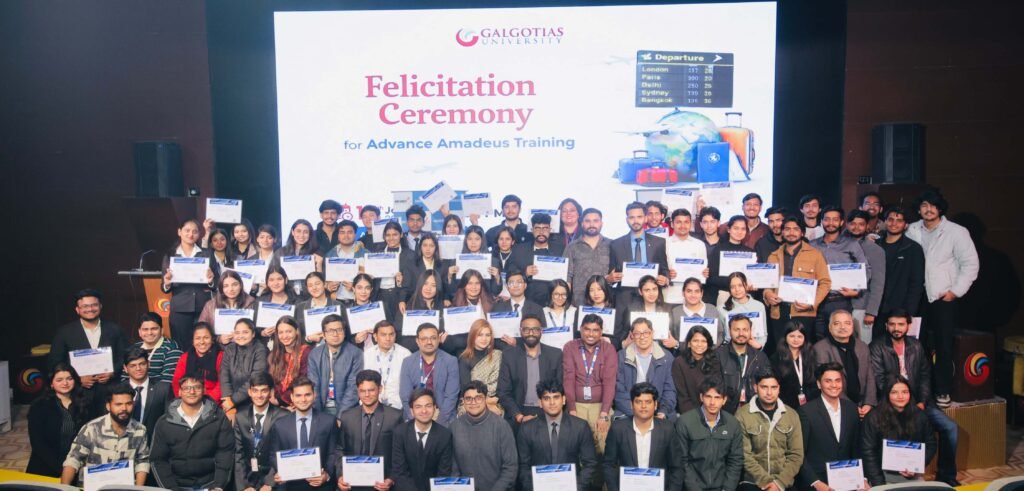
The truest measure of a professional school is where its graduates go, and on that measure SALTM’s trajectory has been decisive. Between its 2025 and 2026 graduating cohorts, the school recorded a 4.2-fold rise in student selections and a 16-fold expansion in the number of recruiters engaging with its campus. In the same window, Qatar Airways joined the roster as SALTM’s first international carrier- a clear signal that its graduates meet the standards of global employers, not only domestic ones.
THREE INDUSTRIES, ONE TALENT ENGINE
SALTM’s portfolio maps onto the three connected pillars of the modern travel-and-trade economy: aviation, logistics and tourism. Across them, the school offers six programmes- BBA and MBA degrees in Aviation Management, Logistics & Supply Chain Management, and Tourism & Travel Management, feeding precisely the roles the industry is short of: airline and airport operations, network and revenue management, ground and cargo handling, aviation supply chain, and the commercial and service functions that turn a fleet into a business.
A SCHOOL THE INDUSTRY HELPS TO BUILD
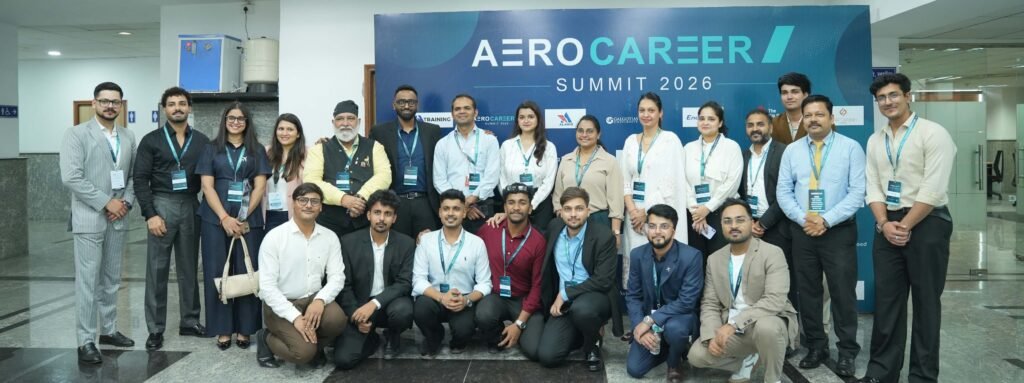
SALTM does not wait for the industry to come to it. In July 2026, Galgotias University served as Title Sponsor and co-organiser of the AeroCareer Summit in New Delhi, convening airlines, OEMs, MROs and training leaders around this very workforce question. Its partnership with Aviation Indeed, formalised through a memorandum of understanding, brings live mentorship and structured placement pathways onto campus, and a national Defence-Aviation Conclave is planned for later in the year.
THE HORIZON
India’s opportunity is generational, and Greater Noida sits close to its centre, with a new international airport minutes from campus. Whether that opportunity is seized will depend less on aircraft delivered or airports built than on the people ready to run them.
Backed by a globally ranked university and a world-class learning model built with NTU Singapore, SALTM’s ambition is to be the place where that workforce is formed- rigorous in standard, global in outlook, and ready for the line. This is, quite simply, where the next workforce takes flight.