

October 4, 2026

Interview

Acron Avionics division priorities in the SAARC region: Ron Nye

As civil aviation across the SAARC region—led by India’s massive fleet expansions— airspace modernisation, safety infrastructure, and fleet compliance have taken center stage. In this exclusive interview, Vishal Kashyap, Managing Editor of Aviation World, speaks with Ron Nye, President of Avionics at Acron Aviation, about the company’s strategic push into the South Asian market, modernising safety compliance with advanced flight recording systems, rollout of NextGen ADS-B surveillance, and localised sustainment partnerships. Excerpts… AW: What are your key priorities for Acron Aviation’s avionics division in the SAARC region? A: Our top priority across the SAARC region is bringing Acron Aviation closer to the customers who rely on our systems every day. That starts with our avionics MRO center in Bangalore, which is already reducing turnaround times and logistics costs for operators across South Asia, and began with flight recorder repair and will expand over the next three years to cover TCAS and display systems. Beyond the physical footprint, we’re focused on three things: building deep local technical talent, aligning our safety systems with each country’s evolving regulatory requirements, and making sure our supply chain can keep pace with the region’s growth. India in particular is one of the fastest-growing aviation markets in the world, and we intend to grow with it, not just sell into it. AW:How is Acron Aviation navigating current global supply chain dynamics and rising demand for its products and services in India? A: Like most of our industry, we’ve had to build more resilience into our supply chain over the past few years, qualifying additional sources for critical components, carrying strategic inventory closer to our customers, and investing in regional repair capability rather than routing everything back through our home facilities. India is a good example of that shift: rising fleet growth and traffic there have driven real demand for our recorders, displays, and surveillance products, and our Bangalore facility is a direct response. It shortens the loop between when a customer needs a repair and when they get their aircraft back in the air. We’re planning our capacity in India around where the market is going over the next five to ten years, not just where it is today. AW: India’s defense sector is strongly prioritizing “Make in India” and defense offset obligations. Is Acron Aviation looking into joint ventures or local manufacturing partnerships for avionics assembly in India? A: We take “Make in India” and the country’s offset framework seriously, because they reflect where a lot of our customers’ fleets and defense programs are headed. We’re actively evaluating what local manufacturing and assembly could look like for parts of our avionics platform, and conversations with potential Indian partners are ongoing. I don’t have a joint venture to announce today, but our approach with ACSS, our long-running venture with Thales on surveillance and collision-avoidance systems, shows how we like to build these relationships: deep technical integration, not just a label on a factory door. Any move we make in India will be built the same way: substantive, long-term, and aligned with what the Indian government and our customers actually need. AW:How do your latest flight data recorders and surveillance systems address specific regulatory frameworks across India and neighboring countries? A: Regulatory frameworks across India and its neighbors aren’t identical, and our systems have to work within each one. Our flight and cockpit voice recorders are already designed to meet the toughest applicable standards, including ED-112 crash-survivability requirements, and our Bangalore facility is pursuing DGCA CAR 145 certification now, with FAA, EASA, and CAAC approvals planned so we can support operators flying across multiple regulatory regimes on the same day. On the surveillance side, our SafeRoute+ and Lynx systems are built to the ICAO standards and regional mandates driving ADS-B adoption. Our job is to stay ahead of where each civil aviation authority in the region is heading, not just where the rules stand today. AW:To meet the airspace challenges, how are Acron Aviation’s TCAS and ADS-B solutions helping its customers improve flight path efficiency and airspace safety? A: South Asian airspace is getting busier every year, and that puts a premium on precise, predictable separation. Our Lynx ADS-B In/Out systems and SafeRoute+ surveillance platform give operators and air navigation service providers much more accurate real-time position data than legacy radar-based separation allows, which supports tighter, more fuel-efficient routing and reduces the padding controllers have to build into flight paths. On the collision-avoidance side, our TCAS systems, developed through our ACSS partnership with Thales, remain a core layer of protection as traffic density increases. Together, those systems let our customers fly more direct routes and closer schedules without compromising the safety margins that matter most in crowded airspace. AW:What initiatives are being taken toward expanding Acron Aviation’s MRO and customer support network? A: Bangalore is the clearest example of where we’re headed: a full-service avionics MRO center that started with recorder repair and is expanding over three years to cover TCAS and display systems too. But it’s part of a broader pattern for us. We want repair and support capability closer to where our customers actually operate, not concentrated in a handful of legacy locations. That means continued investment in field support, engineering resources, and spares availability across the Asia-Pacific region, built on the same quality standards across our global network. Customers should get the same turnaround and the same quality whether their aircraft is being serviced in Bangalore, London, or the United States. AW: What role do strategic partnerships play in Acron Aviation’s product roadmap moving forward? A: Partnerships are central to how we develop products, not an afterthought. Our joint venture with Thales through ACSS has shaped our surveillance and collision-avoidance roadmap for years, and our agreement with Deutsche Aircraft to supply flight recorder and standby systems for the D328eco program shows how we like to work with airframers early, as programs are being defined, rather than bidding after the fact. Going forward, I expect partnerships — with OEMs, with airlines, with regulators, and potentially with
Top Stories

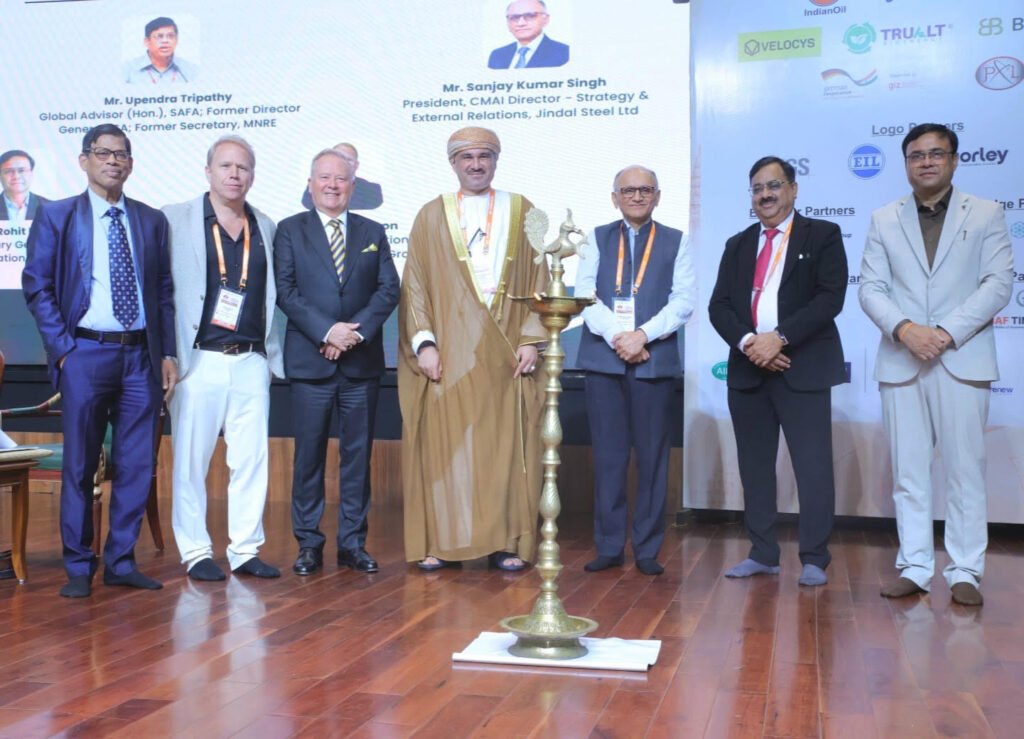
India SAF Conclave 2026 puts farmers, finance, technology and global partnerships at the heart of aviation’s cleaner future

India’s SAF industry could create new agricultural markets, attract global investment and develop up to 40 million tonnes of annual production potential by 2050 NEW DELHI, 29th September  2026:  India’s sustainable aviation fuel (SAF) ambitions are creating a new intersection between aviation, agriculture, energy, technology and global investment, as the country seeks to build a globally competitive SAF production ecosystem. More than 500 delegates from 25+ countries, representing 200 companies and 100 industry leaders, gathered at Bharat Mandapam on September 28–29 for the second India SAF Conclave & Awards, organised by the SAF Association (SAFA). The two-day international platform brought together airlines, refiners, investors, technology companies, feedstock producers, policymakers and sustainability organisations to examine how India can move from SAF policy and targets to investment, production and commercial-scale deployment. India’s indicative SAF blending pathway for international aviation calls for 1% in 2027, 2% in 2028 and 5% by 2030, creating growing demand for production capacity, feedstock, infrastructure, certification and long-term offtake. From Indian farms to global aviation The SAF opportunity extends beyond aviation. Agricultural residues, ethanol, used cooking oil and other feedstocks could create new markets across India’s rural economy. Estimates presented at the conclave indicate that SAF feedstock opportunities could potentially add around US$160–300 (₹15,000–₹29,000) per hectare to farmer income, depending on feedstock, yields, collection systems and market economics. Various studies estimate that India could develop the potential to produce around 40 million tonnes of SAF annually by 2050, representing approximately 8–10% of estimated global SAF potential. “SAFA is committed to bringing the entire SAF value chain together through industry-led collaboration and global partnerships,” said Rohit Kumar, Secretary General, SAF Association & CMAI. “Our focus is to power the SAF transition together by connecting policymakers, investors, technology providers, feedstock players and buyers to create practical opportunities and turn collaboration into projects, investment and commercial-scale SAF production.” Investment, technology and global partnerships The conclave featured discussions across HEFA, Alcohol-to-Jet, Power-to-Liquid, Gas-to-SAF, carbon capture, project finance and long-term offtake agreements. Through its SAFA Matchmaking programme, the association connected project developers with investors, technology providers, feedstock companies and prospective buyers, creating opportunities for commercial partnerships and investment. International cooperation was also a major theme H.E. Issa Saleh Abdullah Saleh Al Shibani, Ambassador of Oman to India, said: “India’s SAF transition presents significant opportunities for collaboration across energy, technology and investment. Strong India-Oman partnerships can help develop sustainable aviation solutions and strengthen the clean-energy ecosystem. International cooperation will be critical to accelerating SAF adoption and building a sustainable aviation future.” H.E. Benedikt Höskuldsson, Ambassador of Iceland to India, said: “Green technologies and Power-to-X pathways can play an important role in shaping the next generation of sustainable aviation. Innovation must be connected with investment, technology deployment and practical implementation.” Making SAF’s climate benefit measurable SAF can deliver up to 80–90% lifecycle CO₂ emissions savings, depending on the feedstock and production pathway. Demonstrating those reductions through robust measurement, reporting, verification and certification will be essential for building confidence among airlines, investors and international markets. The conclave also examined sustainability certification, traceability and Book and Claim systems as the global SAF market develops. “Scaling SAF will require reliable feedstocks, technology readiness, financing, certification, infrastructure and long-term offtake commitments,” said Dr. Alok Sharma, Vice President, SAF Association and former Director, R&D, IOCL. The 2030 test India’s indicative pathway could increase SAF demand from approximately 46,000 tonnes in 2027 to around 250,000 tonnes by 2030. Meeting that ambition will require new production capacity, including planned HEFA and Alcohol-to-Jet projects, alongside stronger feedstock collection and supply chains. The India SAF Awards recognised organisations contributing to SAF policy, technology, feedstocks, investment, research and adoption. The event also marked the launch of SAFTimes.com, a dedicated knowledge and news platform focused on sustainable aviation fuel. India’s global SAF platform The India SAF Conclave & Awards, organised by SAFA, is emerging as an international platform connecting policy, investment, technology, feedstocks and aviation around the development of India’s SAF industry. The next edition will take place on September 16–17, 2027, in New Delhi, under the theme: “From Transition to Take-off: Scaling India’s SAF Ecosystem.”

Events, Top Stories

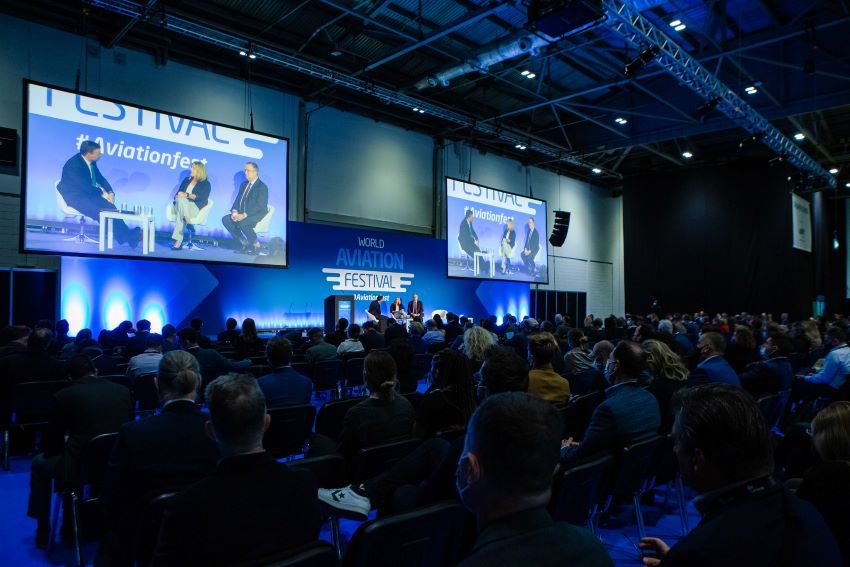
Airport-airline partnerships take centre stage at World Aviation Festival 2026

LISBON, Portugal, 2 October 2026 :  The World Aviation Festival (WAF) is introducing a dedicated Airport & Airline Collaboration Track at its 2026 event, taking place between 13-15 October in Lisbon. The programme will look at how airports and airlines can build joint operational resilience and enable seamless travel for passengers. It will also bring in perspectives from border management, ground handlers, and technology providers. Daniel Boyle, General Manager of Transport at WAF organiser Terrapinn, said: “Airlines and airports are facing many of the same pressures, but too often they are still trying to solve them in isolation. Meaningful collaboration between the two has never been more important.   “That’s why we’re creating an honest forum where leaders can cut through the usual talking points, confront the legacy systems and entrenched ways of working that continue to hold the industry back, and identify practical ways to move forward together. This isn’t collaboration for collaboration’s sake; it’s about delivering better operations, stronger commercial outcomes and, ultimately, a better passenger experience.” A panel on digital identity infrastructure will consider the role of standards including IATA One ID and ICAO Digital Travel Credentials, and whether passengers can expect to be able to travel end-to-end without a traditional passport by 2030. Panellists include Maurice Jenkins from Miami International Airport, Amin Lalani from Delta Air Lines, Vladimir Stojkovski from CLEAR, and Lisette Looren de Jong from the Dutch Ministry of Justice and Security. Another session will explore how airports, airlines and ground handlers can move beyond parallel responses and build joint operational resilience. Attendees can hear from Istvan Szabo of Berlin Brandenburg Airport, Ryan Abram of dnata, Adam Schipper of Ericsson, Chamith Seneviratne of Air Canada, and Marc-Philippe Lumpé of Air Transat. Girish Nair, COO at Bangalore International Airport, will take part in a fireside chat on how airports and airlines can better align their operations and commercial outcomes.

Defence

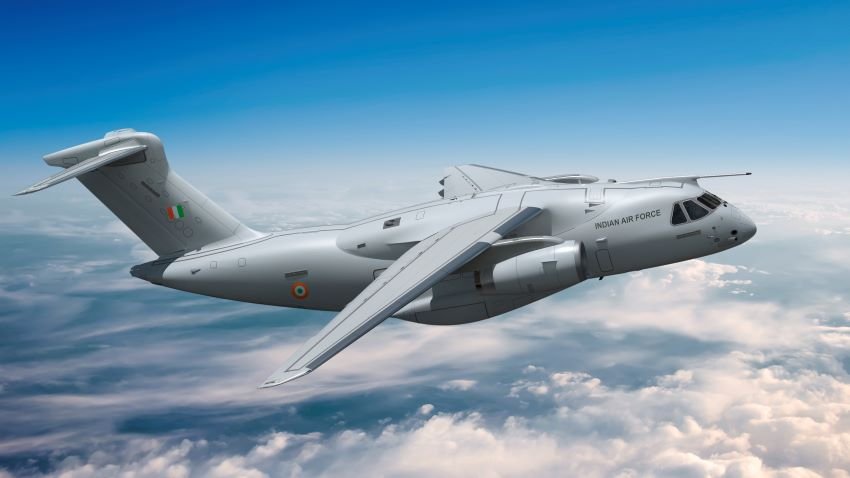
Embraer and Mahindra Group Advance Plans for C-390 Millennium Industrialization in India

Mumbai, October 4, 2026 : Embraer and Mahindra Group are continuing preparatory discussions and planning activities regarding an industrial and support ecosystem for the C-390 Millennium in India, as the companies jointly pursue the Indian Air Force (IAF) Medium Transport Aircraft (MTA) programme. As part of their ongoing preparations, Mahindra and Embraer are working with the Government of Maharashtra and have identified Nagpur for a potential Final Assembly Line for Embraer C-390 Millennium aircraft production in India. The proposed facility would support the local assembly and industrialisation of the aircraft in India, subject to the Embraer C-390 Millennium being selected by the Government of India and an order being placed under the IAF’s MTA programme. The companies are working closely with the Maharashtra Government on completion of the associated processes, with the objective of ensuring that the required industrial infrastructure can be progressed expeditiously if the programme is awarded to the partnership. Bosco da Costa Junior, President & CEO Embraer Defense & Security, “Embraer is pleased to deepen its partnership with Mahindra as we advance our preparations to bring the C-390 Millennium’s industrial capabilities to India. Identifying Nagpur as a potential location for an assembly facility is an important step in building a robust, long-term aerospace ecosystem in the country. We value the support of the Government of Maharashtra and look forward to working closely with our partners to strengthen India’s indigenous aerospace and defence capabilities, subject to the C-390 Millennium being selected for the Indian Air Force programme.” Vinod Sahay, Member of the Group Executive Board, Mahindra Group, “Mahindra is committed to building a globally competitive aerospace ecosystem in India and to creating meaningful manufacturing and technology capabilities that contribute to the country’s Atmanirbhar Bharat ambitions. As we work with Embraer on the C-390 Millennium, we are preparing the industrial ecosystem required to support the programme at scale. Nagpur offers a compelling opportunity for such a capability, and we are very grateful to the Government of Maharashtra on expeditiously allotting the land in Nagpur and helping with the related requirements. These preparations are, of course, subject to the selection of the C-390 Millennium by the Government of India and the placement of the IAF order.” The proposed Nagpur facility would be a state-of-the-art facility in India bringing knowhow on aircraft assembly, system integration, manufacturing engineering, local supply chain development and others into the country. Subject to the programme award, the partnership intends to progressively integrate Indian aerospace companies into the C-390 Millennium ecosystem, to deliver manufacturing, aftermarket services, training and lifecycle support, in line with the Government of India’s Make in India and Atmanirbhar Bharat objectives. Embraer and Mahindra entered into a Strategic Cooperation Agreement in October 2025 to jointly advance the C-390 Millennium for the IAF’s MTA programme, building on their earlier MoU signed in February 2024. The agreement envisages collaboration on industrialisation, local manufacturing, assembly, supply chain development and MRO activities in India. In February 2026, the companies also announced plans to work towards establishing a C-390 Millennium MRO capability in India, subject to the aircraft’s selection under the MTA programme. The C-390 Millennium is a multi-mission military transport aircraft designed to perform a range of missions including troop and cargo transport, airdrop operations, medical evacuation, search and rescue, firefighting and humanitarian missions. The aircraft has a payload capacity of up to 26 tonnes and is designed to operate from temporary or unpaved runways. The proposed industrialisation programme would leverage Embraer’s aerospace engineering and aircraft manufacturing expertise with Mahindra’s established manufacturing capabilities and extensive Indian industrial ecosystem. The companies will continue to engage with the Government of India, the Indian aerospace ecosystem and the Government of Maharashtra as they progress preparations for the programme. *This release contains forward-looking statements regarding potential industrial activities, manufacturing capabilities, facilities, collaborations and business opportunities. Such statements are based on current expectations and assumptions and are subject to numerous risks and uncertainties, including the outcome of the Indian Air Force Medium Transport Aircraft procurement process, governmental approvals, the execution of definitive agreements and other factors beyond the parties’ control. Actual results may differ materially from those expressed or implied by these forward-looking statements.

FOREWORD

Dear Readers,

The Asia-Pacific aviation sector is expanding rapidly, driving growth far beyond aircraft numbers into crucial verticals like MRO, training, logistics, and aerospace supply chains. In this edition of Aviation World, we bring you exclusive interviews and features from across these sectors, offering direct industry insights from top global leadership.

Our cover story highlights Shveta Gupta, CEO of Divyanshi Aviation. Under her dynamic leadership, the company has established itself as one of India’s premier aerospace supply chain providers, partnering with leading global manufacturers. Our corporate feature delves into Divyanshi Aviation’s core operations, paired with an exclusive interview where Ms. Gupta candidly shares her professional journey and vision for the company’s future.

This issue also features exclusive conversations with prominent industry leaders, including:

  • Ron Nye, President of Avionics, Acron Aviation
  • Bob Gibbs, Vice President, Defense & Special Missions Sales, Textron Aviation
  • Sudhir S. Rajeshirke, President – Aerospace, Jubilant Enpro
  • Emmanuel Simon, Program Manager and Aerospace Leader, PHINIA
  • Arved von zur Muehlen, Chief Commercial Officer, Saudia Group
  • Simon Azar, Vice President, Civil Aviation, Asia Pacific, CAE

Each leader offers key perspectives on their organization’s strategic initiatives and their growing contributions to the Indian aviation and aerospace ecosystem. Additionally, you will find expert-authored analytical features offering deep dives into current sector trends.

Aviation World continues to expand its global footprint as an official media partner for major domestic and international aviation events. Our editorial team will be participating in several upcoming global forums, and we look forward to connecting with industry peers and exploring new collaborations.

We extend our sincere gratitude to our advertisers and partners whose continued support fuels our endeavor.

Happy Reading!

The Editorial Team

Aviation World

NEWSLETTER

Aviation World Magazine is India’s premier aviation magazine and has been actively supporting the development of the Indian and global civil aviation sector. We started our journey in year 2015 and its been 12 years now and the response and acceptance is really encouraging. Thanks to all our associates and writers who remained with us in our progressive journey.

We have started 2026 on a very positive note and we look forward to increase our footprints to more locations and induct many more new companies in our campaign.. Do write to us at : editor@aviationworld.in

Disclaimer

The contents published in this website are news covering Aviation, Aerospace and Defence sector. The objective is to provide news in informative form to keep our readers updated of the latest development. We also publish content featured in our print publication Aviation World.We try our best to avoid any factual errors or image displayed here but we ensure immediate corrections to any such thing brought to our notice that might have been published inadvertently. All images and contents are sourced from the relevant organisations media team.

Copyright ©2014 – 2026. AVIATION WORLD. All rights reserved.

Scroll to Top