
Why regulatory clarity, pricing transparency, and institutional reform can no longer be deferred
Written By G.S.Bawa:
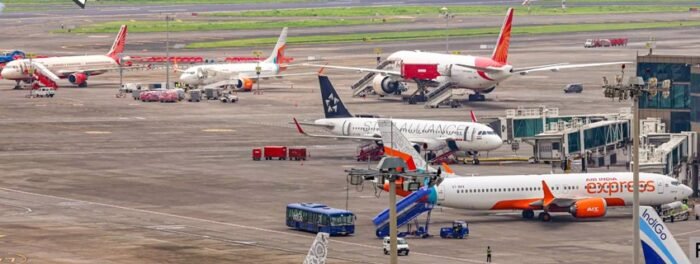
India’s aviation sector stands at a defining moment. Over the past decade, the transformation has been remarkable—air travel has expanded beyond metropolitan elites to become an essential mobility backbone for millions. With initiatives such as the UDAN Scheme, the skies have quite literally opened up to the “common citizen.”
But with democratisation comes responsibility
As more first-time flyers enter the system, their expectations are not shaped by legacy industry norms—they are shaped by fairness, predictability, and value. It is precisely here that recent developments—particularly the proposed “60% free seating” directive and its abrupt rollback—have exposed a deeper institutional weakness: the absence of a stable, transparent, and passenger-first grievance redressal architecture.This is not a short-term policy lapse. It is a long-term structural gap.
When Policy Oscillates, Passenger Trust Declines
Aviation systems thrive on predictability. Every operational and commercial decision—from scheduling to pricing—is built on stable assumptions. When a regulatory directive is issued and then quickly withdrawn without public clarification, it sends a signal of uncertainty.For passengers, this is more than confusion—it is erosion of trust.
The lack of clarity surrounding the “free seating” proposal illustrates this problem vividly. Was the intention to eliminate seat selection fees? To introduce a randomised allocation system? Or to mandate partial standardisation across airlines?
Without a clearly articulated rationale from the Directorate General of Civil Aviation or the Ministry of Civil Aviation, passengers are left interpreting policy through speculation. In a sector where consumers already struggle with complex pricing structures, such ambiguity compounds dissatisfaction.
Aviation policy cannot afford to be reactive—it must be deliberate, consultative, and transparent.
Decoding the “Triple Burden” on the Modern Traveller
To understand passenger grievances, one must examine the evolving fare structure.Today’s traveller is not merely paying a ticket price—they are navigating a layered cost architecture:
• A dynamically fluctuating base fare
• A fuel surcharge that varies with limited transparency
• A growing list of ancillary charges (seat selection, baggage, priority services)
Individually, each component may be justified. Collectively, however, they create a perception of unpredictability and, at times, inequity.
This is particularly relevant in the context of fuel surcharges. With fare caps removed to allow market-driven pricing, and policy measures indirectly supporting airline cost structures, the continued imposition of surcharges raises a legitimate question- Where is the mechanism that ensures cost benefits are shared with passengers?In the absence of such a mechanism, pricing becomes asymmetrical—cost increases are passed on quickly, but cost reductions are not always reflected with the same immediacy.Over time, this asymmetry erodes consumer confidence and invites regulatory scrutiny.
Transparency: The Missing Link in Consumer Protection
At the heart of the issue lies a structural deficiency: the absence of standardised fare transparency.Unlike other sectors where pricing components are clearly itemised and regulated; airline ticketing often presents a bundled cost that obscures the underlying breakdown. For a passenger, distinguishing between base fare, surcharge, and service fee becomes an exercise in guesswork.This lack of clarity has two consequences:
1. It weakens the passenger’s ability to make informed choices
2. It reduces accountability within the pricing ecosystem
Further, transparency is not merely a consumer convenience—it is a regulatory necessity. Without it, even well-intended deregulation risks being perceived as opacity.
Balancing Airline Viability with Passenger Fairness
It is important to recognise that airlines are operating in a challenging environment. Aviation Turbine Fuel (ATF) prices remain volatile, global supply chains are under stress, and geopolitical developments—including tensions linked to regions such as Iran—continue to impact operational economics.However, acknowledging these realities does not negate the need for accountability.Aviation policy must reject the notion that passenger protection and airline sustainability are competing priorities. In fact, they are interdependent. A market that loses passenger trust ultimately undermines its own demand base.
The objective, therefore, is not to constrain airlines, but to ensure that:
• Pricing remains rational
• Justifications are transparent
• Adjustments are symmetrical
And, this is the essence of a fair market.

Why Grievance Redressal Must Evolve from Reactive to Systemic
India’s current passenger grievance mechanisms, while functional, are largely reactive. Complaints are addressed individually, often after delays, and rarely feed into systemic reform.This approach is no longer sufficient for a sector of this scale.
A modern aviation ecosystem requires a proactive grievance redressal model that:
• Identifies patterns rather than isolated complaints
• Enables real-time intervention
• Integrates data into policy making
Thus, without such a system, grievances accumulate silently until they manifest as widespread dissatisfaction or public backlash.
The Case for a Permanent Passenger Protection Framework
The issues currently being debated—free seating, fuel surcharges, ancillary pricing—are not isolated anomalies. They are indicators of a deeper need for institutional reform.A long-term solution must include:A Legally Enforceable Passenger Bill of Rights
This would define, in clear terms, what a passenger is entitled to—across pricing, service quality, and compensation. Importantly, it would shift the conversation from discretionary practices to enforceable standards.
1: Real-Time Regulatory Oversight
Technology can enable regulators to monitor fare trends, detect anomalies, and intervene when necessary. This is particularly critical during peak seasons or emergencies, where price surges can disproportionately affect travellers.
2: Standardised Pricing Disclosure
Airlines should be required to present fares in a uniform, transparent format. This not only empowers passengers but also fosters fair competition.
3: Rationalised Surcharge Mechanisms
Fuel surcharges, if necessary, must be linked to a publicly verifiable index, with automatic adjustments—both upward and downward. This ensures that pricing reflects reality, not discretion.
4: Regulation of Ancillary Revenues
Ancillary services should remain optional—but not exploitative. Caps or guidelines may be necessary to prevent disproportionate monetization.
Institutionalising Stakeholder Consultation
One of the most significant gaps in recent policy making has been the limited visibility of stakeholder engagement.Aviation policy impacts multiple constituencies:
• Passengers
• Airlines
• Airports
• Regulators
Yet, passenger representation remains the least formalized.
The creation of a structured consultative body—bringing together all stakeholders—would ensure that policies are:
• Better informed
• More practical
• Less prone to reversal
Inclusion is not just democratic—it is efficient.
Stability as a Policy Imperative in Uncertain Times
External shocks—whether geopolitical, economic, or environmental—are inevitable in aviation. What determines resilience is not the absence of disruption, but the presence of stability in response.Policy must act as an anchor.
Frequent changes, unclear directives, and inconsistent implementation introduce volatility into an already sensitive system. For passengers, this translates into uncertainty; for airlines, into operational complexity.Stability, therefore, is not a luxury—it is a necessity.
Conclusion: Reclaiming the Passenger-Centric Vision
India’s aviation story is one of growth, ambition, and transformation. But growth without governance creates imbalance.At its core, the sector must remain anchored in a simple principle:
aviation exists to serve people, not just markets.Regulators such as the Directorate General of Civil Aviation and the Ministry of Civil Aviation now have an opportunity—and a responsibility—to recalibrate this balance.Passengers are not demanding concessions. They are asking for:
• Transparency in pricing
• Fairness in policy
• Accountability in implementation
If policy support strengthens airlines, its benefits must also reach the traveller. Because in the long run, the strength of aviation will not be measured by fleet size or route networks—but by the trust it commands among those it serves.An, in aviation that trust begins—and endures—with the passenger.
( The author is former-GM-PR, AAI and currently senior adviser to various Aviation projects)