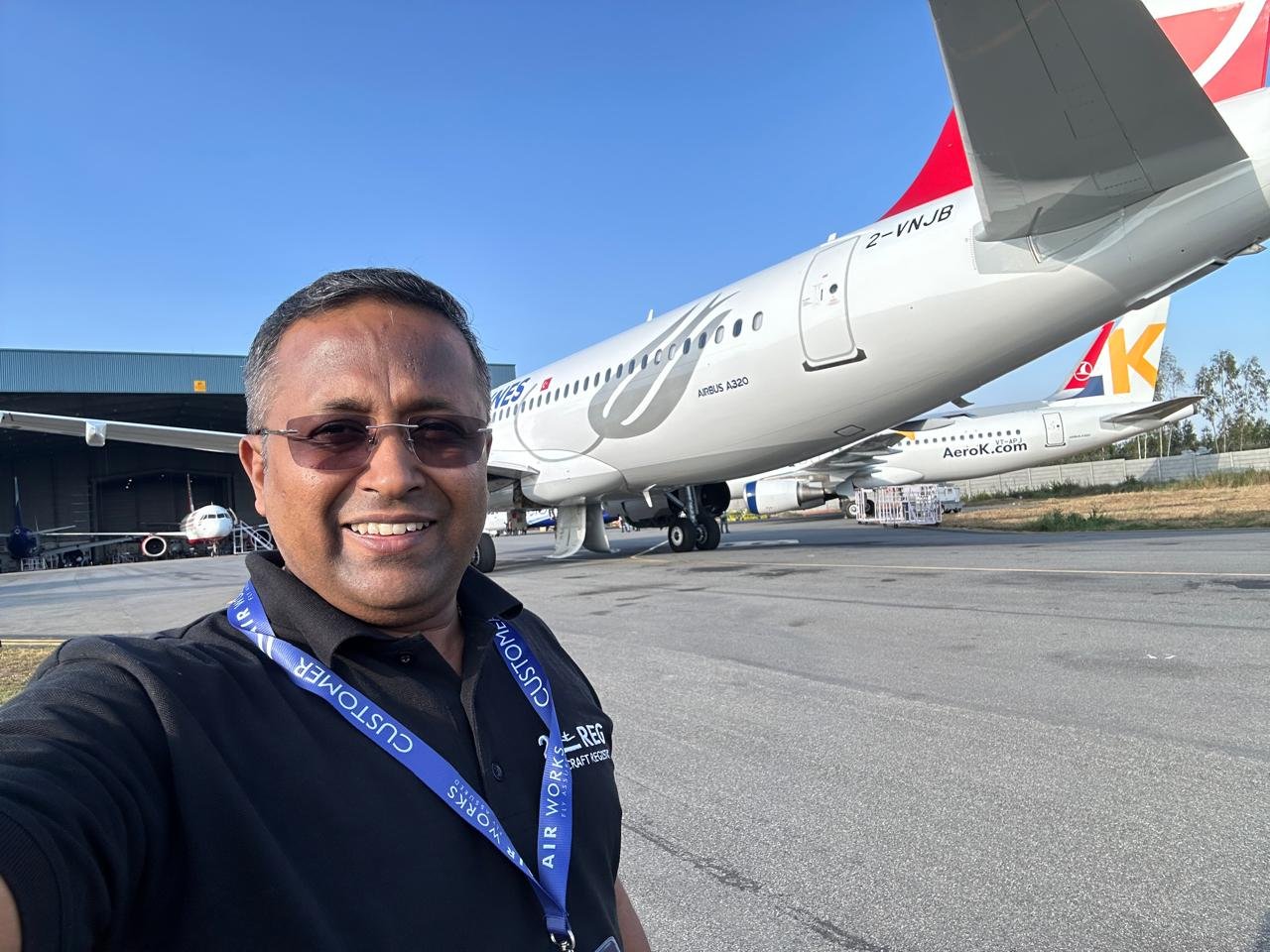
In an exclusive interview with Aviation World, Harish Venkateswaran, Designated Airworthiness Inspector and Vice President, Technical and Head of CAMO, AirFleet Managers discusses his multifaceted role in aviation maintenance and engineering. Excerpts…
Q: You’ve just completed 25 years in aviation. Take us back to where it all started?
A: I started my career in Line Maintenance with Jet Airways at Mumbai airport, working directly on aircraft in a live operational environment.
It was a hands-on, high-pressure setting that built my foundation in aviation—discipline, precision, and real-time decision-making.
Q: How did your career evolve from those early days in Line Maintenance?
A: After starting in Line Maintenance, I moved into the Powerplant Group, which gave me deeper technical exposure, particularly around engine performance and reliability.
From there, I transitioned into the Maintenance Control Centre, where the perspective shifted from individual aircraft to fleet-level operations and real-time decision-making.
The next major shift was into Aircraft Lease and Asset Management, where I moved into the commercial and contractual side of aviation—working on lease negotiations, maintenance reserves, inductions, and redeliveries.
Each move built on the previous one—expanding my scope from hands-on maintenance to technical, operational, and ultimately commercial and strategic responsibilities.
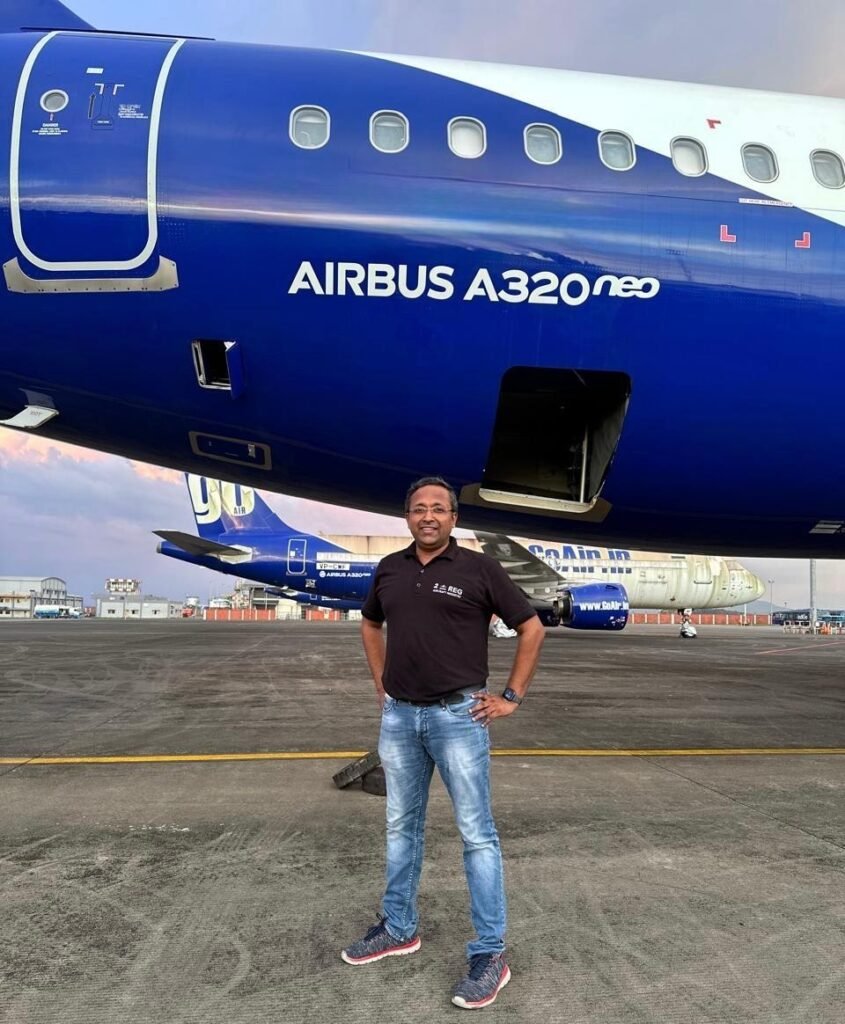
Q: You’re known for having worked across multiple functions—Line Maintenance, Powerplant, Maintenance Control, Aircraft Leasing, and CAMO. How rare is that combination?
A: It’s relatively uncommon, because most aviation careers tend to stay within a defined track—either Maintenance, CAMO, or a specific technical specialization.
In my case, each role added a different layer of understanding. Line Maintenance built operational discipline and the ability to work under real-time pressure. Powerplant work added technical depth and a stronger grasp of engine performance and reliability. The Maintenance Control Centre introduced fleet-level operational thinking and decision-making.
The move into Aircraft Lease and Asset Management was a defining phase. It brought in the commercial dimension—lease negotiations, maintenance reserves, inductions, and redeliveries—where technical decisions directly influence financial outcomes.
Now, leading CAMO and Asset Management functions brings all of that together—long-term airworthiness planning, regulatory compliance, and asset value preservation.
That combination provides a complete view of the aircraft lifecycle—from line operations to asset strategy.
Q: You are the first resident Indian to serve as a Foreign Regulatory Airworthiness Inspector. What does that role involve?
A: Yes—and being the first Indian in this role makes it particularly significant.
As a Designated Airworthiness Inspector with the 2-REG Aircraft Registry, I am responsible for independently reviewing aircraft and technical records and recommending issuance of Certificates of Airworthiness, Export Certificates, Permits to Fly, and AMP approvals.
It’s a role that requires complete objectivity. You are not representing an operator or a lessor—you are upholding the standards of the registry and ensuring that every aircraft meets the required airworthiness criteria.
Having worked on the operator and asset management side, I understand the practical challenges. But in this role, the perspective is different—it’s about consistency, compliance, and maintaining regulatory integrity.
Very few roles allow you to see the same aircraft through operational, commercial, and compliance lenses—that’s where the real insight comes from.
Q: You also lead CAMO and Technical Asset Management functions at AirFleet Managers. How do you balance operational, commercial, and compliance priorities?
A: That balance is central to what I do today.
On the CAMO side, the focus is on continued airworthiness—AMP development, AD and SB compliance, regulatory coordination, and ensuring the aircraft remains fully compliant throughout its lifecycle.
On the Asset Management side, the focus shifts to value—pre-purchase inspections, technical records evaluation, engine shop visit management, mid-term inspections, and redelivery planning.
Because I’ve worked across both areas, I can anticipate issues early—whether it’s a compliance gap, documentation risk, or potential cost exposure during lease transitions.
It’s about aligning technical decisions with both regulatory expectations and commercial outcomes.
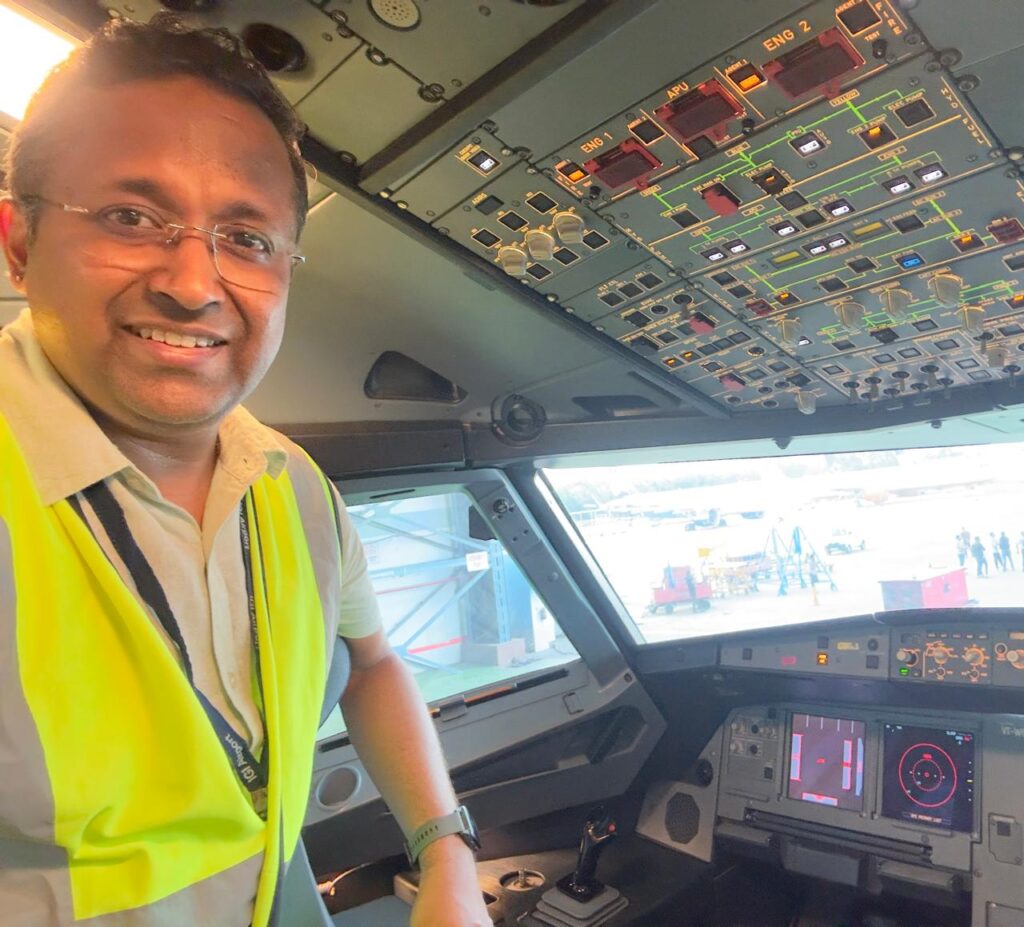
Q: You’ve had deep involvement in lease negotiations and maintenance reserves. How important is that expertise for technical professionals?
A: It’s extremely important, and often underestimated.
Lease agreements are not just legal documents—they are highly technical. Maintenance reserves, return conditions, and escalation clauses all have a direct financial impact.
During my work on aircraft inductions and redeliveries, I was closely involved in evaluating and negotiating lease terms. Through effective planning and execution, we achieved significant cost efficiencies, including savings of up to USD 7 million in one phase.
Technical professionals should actively seek exposure to this side of the business—it fundamentally changes how decisions are made.
Q:Having worked with operators, lessors, and regulators, what are the biggest gaps you see in the industry today?
A: The biggest gap is alignment.
Operators focus on efficiency and operations. Lessors focus on asset protection. Regulators focus on compliance and safety.
All three priorities are valid—but challenges arise when expectations are not aligned early. Many issues during audits or redeliveries are not due to lack of capability, but due to gaps in communication and interpretation of requirements.
Bridging that gap early makes a significant difference.
Q: You’ve led aircraft inductions, redeliveries, and international projects. Any standout experiences?
A: Several. Working on aircraft inductions across international locations and coordinating with multiple stakeholders was particularly valuable. Managing redelivery projects with zero compensation outcomes was especially satisfying—it reflects strong planning and execution.
These projects bring everything together—technical expertise, coordination, negotiation, and the ability to manage timelines under pressure.
Q: Outside aviation, you’ve pursued long-distance running and classical vocal music at a professional level. How do these fit into your life?
A: They provide balance. Long-distance running builds discipline and mental endurance. I’ve completed multiple half marathons, and it helps maintain focus and consistency.
Classical music is a very different space—it requires patience, depth, and expression. Performing at festivals in Australia, France, and across India has been a deeply enriching experience.
In many ways, both pursuits require the same qualities—discipline, consistency, and the ability to perform under pressure.
Q: After 25 years, what continues to motivate you?
A: The constant learning. Aviation is dynamic—technology evolves, regulations evolve, and business models evolve. No two situations are the same.
Whether it’s an audit, a lease negotiation, or a technical challenge, there is always something new to understand and resolve. That’s what keeps the work engaging.
Q: What advice would you give to young professionals entering aviation today?
A: Build your foundation first. Get exposure across functions if possible—Line Maintenance, Planning, Operations. The broader your understanding, the more effective you become.
Also, don’t view aviation purely as a technical field. It sits at the intersection of engineering, operations, and business. Understanding that early provides a significant advantage.
( The exclusive interview is also published in Aviation World May-June 2026 Print Edition).