
Feature
In aviation, a Controlled Flight Into Terrain (CFIT) is an accident in which an airworthy aircraft, fully under pilot’s control, is unintentionally flown into the ground, a mountain, a body of water or an obstacle. In a typical CFIT scenario, the crew is unaware of the impending disaster until it is too late.
According to the Federal Aviation Administration (FAA), 17% of all General Aviation fatalities are as a result of CFIT accidents. As per FAA in 2015, 384 people died in 238 general aviation accidents and CFIT was the second leading cause. The key cause of CFIT accidents is loss of situational awareness.
CFIT: Facts Check
a) CFIT accidents are not limited to inexperienced pilots. Well experienced pilots are just as likely to be involved in CFIT accidents.
b) CFIT accidents are not more frequently at night. Nearly 75% of CFIT accidents occur during day time hours.
c) CFIT accidents occur more frequently during single pilot operations but can also occur during crewed flight.
d) More than half of CFIT accidents occur during IMC.
e) More than two third of all CFIT accidents are the result of altitude error or Vertical Situational Awareness.
f) With a properly trained crew in Crew Resource Management (CRM), the second pilot may make the difference between a Safe flight and a CFIT accident.
Leading Causes
a) Faulty Judgement / Poor Decision Making:- Most CFIT accidents involve faulty judgement and decision making. For example, making the decision to continue flight when weather or other conditions have deteriorated to minimum VFR visibilities or below.
b) Low Altitude:- Flight in unfamiliar terrain at low altitudes expose the aircraft to hazards such as power cables and towers. Power lines are difficult to see until they are too close to avoid. Therefore, pre-flight review of maps, charts for indication of towers, power lines and other terrain elevations is essential.
c) Procedural Errors During IFR Flight Operations:- Misreading Minimum Descent Altitude (MDA) or beginning approach descent without confirmed glide scope interception.
d) Training:- Training of crew and familiarisation with aircraft and the area of operations forms an integral part of avoiding CFIT accidents.
e) In Flight Decision Making:- Avoid the attitudes like ‘this is just a local weather phenomenon, will clear in just a few miles or I am instruments rated or I have flown many many times earlier.’
f) Lack of Pre-Flight Planning:- Failing to review aeronautical charts for Minimum Safe Altitude (MSA), obstacles and terrain elevations can result in operating at unsafe low altitudes. In helicopter operations local area maps of half a million scale, study of map contours, ridge lines and weather patterns play a crucial role.
How to Avoid CFIT?
a) Pilot Attributes:- Two most important pilot attributes are pre-flight preparations and exercising sound judgement (on the cautious side). Even flying in familiar terrain, work out safe get always. For IFR flight, be sure to note the Minimum En route Altitudes for all segments.
b) Know your Aircraft:- Knowledge of aircraft performance like realistic maximum rate of climb or making a 180° turn under instrument conditions etc etc. Do not accept ATC procedures or instructions that would put the aircraft and the passengers in a potentially dangerous situation.

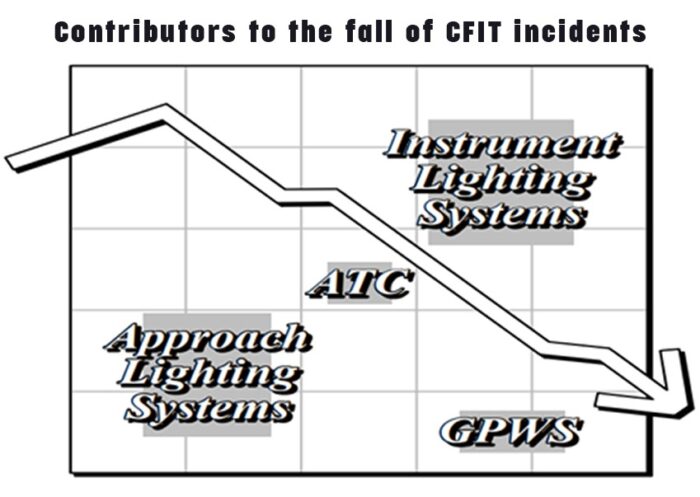
c) Terrain Awareness and Warning System (TAWS):- TAWS is an onboard system intended to prevent CFIT. It provides the pilot with early aural and visual warning of impending terrain. With proper pre-flight planning, pilot will know where he is in relation to terrain. When the TAWS issues a low altitude alert, the pilot will immediately begin a climb or turn to avoid higher terrain. Some aircraft also use Ground Proximity Warning System (GPWS) and (EGPWS). The basic TAWS include a Forward-Looking Terrain Avoidance (FLTA) function that looks ahead of the aircraft along and below the aircraft’s lateral and vertical flight path and provide suitable alerts.
Pre-flight / In flight Planning Tool
Pre-flight / Inflight planning and assessment tools, if applied consistently will reduce the chances of a CFIT. Some tools are illustrated below: –
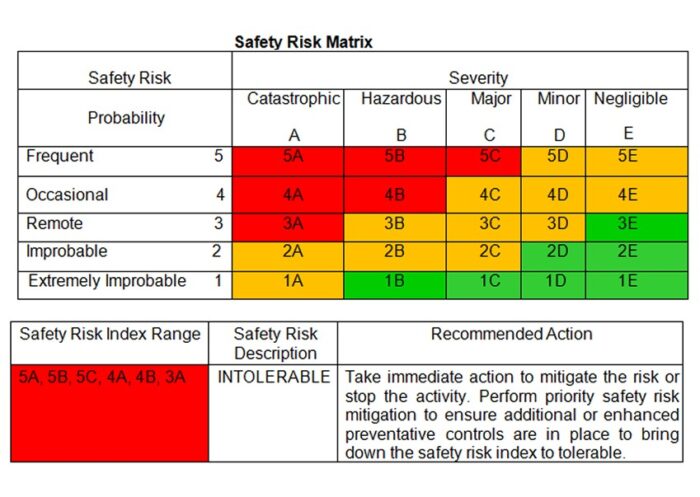
a) Safety Risk Assessment (SRA): – Use of Safety Risk Matrix to assess likely areas of potential dangers.
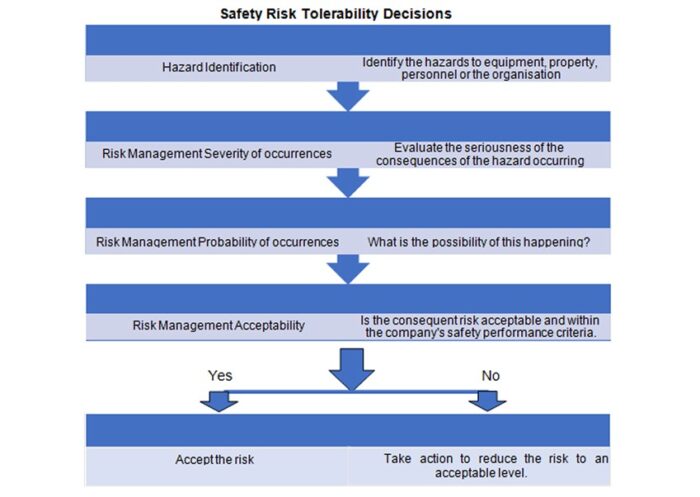
b) Safety Risk Management (SRM):- It is vital to know what a pilot is going into and what capabilities and resources are available to ensure flight is completed safely.
c) Aeronautical Decision Making:- Use of PAVE check list for personalised risk assessment before a flight. In this, the pilot divides the risk of flight into four categories:-
* P- Pilot in Command:- Pilot must ask ‘Am I ready for the flight in terms of experience, recency, currency, physical and emotional conditions. Pilot should use IMSAFE acronym to asses health condition. IMSAFE stands for Illness, Medication, Stress, Alcohol, Fatigue and Emotion.
* A- Aircraft:- What limitations the aircraft will impose upon the trip.
*V- environment:- Weather is a major environmental consideration. Cloud ceiling, winds and visibility keeping terrain in mind must be adequately addressed.
* E- External Pressures:- These are influences external to the flight that create a sense of pressure to complete a flight; often at the expense of safety. For example: the general goal completion orientation or desire to impress someone. Probably the two most dangerous words in aviation are ‘watch this’. The use of personal Standard Operating Procedures (SOPs) is one way to manage external pressures.
Conclusion
Too frequently, in flight conditions may not be as forecast, requiring the pilots to make on the spot decisions about continuing, diverting, climbing, descending or return to base to fly another day. Be ready and willing to adjust your plan and do not allow ‘get- there – it – is’ to cloud better judgement. Flying in less-than-ideal conditions promote fatigue and fatigue can affect decision making. Identify alternates for landing and wait out bad weather rather than making a bad decision. Keep skills sharp by flying Simulator to include realistic graphics in unfamiliar environment. IF not flying often or need to brush up skills, schedule a scenario based CFIT avoidance training flight with a flight instructor.
The organisation has responsibility to build a Safety-First Approach. Oversight of pilots conduct on and off the job, flight scheduling maintaining crew gradient, keeping a data bank of known hazards, unseasonal weather patterns, unusual aircraft behaviors and snag profiling are few recommended measures. Adherence to operational roles and SOPs as approved by regulators will make aviation skies blue for air travels.
About the Author:
Col Nawal Kapoor has been an accomplished Helicopter Pilot with 10000 hours of military and civil flying both On/Off shore. An army veteran, he commanded an Artillery unit in J & K in anti-insurgency grid. He is presently serving as Chief of Flight Safety in Kainos Aviation Pvt Ltd. He takes keen interest in matters aviation and advocates safe flying.