Author name: admin

Airports, Recent News

Cabinet approves major expansion of Civil Enclave at Srinagar Int.Airport

Delhi, 26th February 2026: The Cabinet Committee on Economic Affairs, chaired by the Prime Minister has approved the development of the Civil Enclave at Srinagar International Airport proposed at an estimated cost of Rs.1,677 crore. It will mark a major milestone in strengthening aviation infrastructure and connectivity in the Kashmir Valley. The project scope also includes the construction of barracks for security personnel. Operated by the Airports Authority of India within the Budgam Airbase of the Indian Air Force (IAF), the airport designated as an international airport in 2005, is located approximately 12 km from Srinagar city. The new Civil Enclave project, spread over 73.18 acres, will feature a state-of-the-art terminal building spanning 71,500 square meters (including 20,659 square meters of existing structure), designed to serve 2,900 passengers during peak hours and an annual capacity of 10 million passengers per annum (MPPA). The expanded apron will accommodate 15 aircraft parking bays including 1 widebody (Code E) (9 existing and 6 proposed), while the 3,658m x 45m runway continues to be operated by the IAF. The project will also include the construction of multi-level car parking facility for 1,000 cars. Architecturally, the new terminal will reflect a harmonious blend of modern design and the rich cultural heritage of Kashmir, incorporating traditional elements such as intricate woodwork and locally inspired craftsmanship while maintaining operational efficiency through streamlined passenger processing areas, spacious lounges, and advanced security and check-in facilities. Sustainability remains a cornerstone of the development, with features such as advanced water harvesting systems, maximized natural lighting to reduce energy consumption, and the use of locally sourced eco-friendly materials to minimize the carbon footprint. This project is targeted to achieve a prestigious 5-star GRIHA rating. Beyond infrastructure enhancement, the project is expected to significantly boost tourism and economic growth by improving connectivity to iconic attractions including Dal Lake, Shankaracharya Temple, and the Mughal Gardens, thereby generating employment opportunities, stimulating investment, and reinforcing Srinagar’s position as a premier tourist and economic destination. The development of the Civil Enclave thus represents a transformative step toward delivering world-class infrastructure, offering better facilities for passengers and enhanced connectivity, while showcasing the cultural and natural splendour of Kashmir to the world.

Drones

The ePlane Company opens integrated eVTOL prototyping and testing facility at IIT Madras

Chennai,February 26, 2026: The ePlane Company has opened its state-of-the-art prototyping and testing facility at the IIT Madras Discovery Campus in Thaiyur. Spanning 60,000 sq. ft., the site is the nation’s first integrated plant dedicated to the serial production of electric aircraft, signaling a pivotal shift in India’s Urban Air Mobility (UAM) sector from initial design concepts & subscale prototypes to flight-ready hardware and certification-grade fullscale prototyping. The facility was officially inaugurated by Professor V. Kamakoti, Padma Shri recipient and Director of IIT Madras. His vision for the 163-acre Discovery Campus has been instrumental in providing the high-tech infrastructure necessary for deep-tech ventures to scale. A Strategic Hub for Industrial-Scale Aerospace The facility will support key development milestones, including tethered hover testing, as the company progresses toward Type Certification. It houses design, prototyping, integration, and subsystem testing teams in a single location and serves as the engineering hub for the passenger, relief, and cargo eVTOLs. The site includes composite fabrication, electric powertrain assembly, avionics testing, and a dedicated Ground Test Vehicle (GTV) facility to support subsystem validation and full-scale development. Engineering for the Indian Context, Ready for the World The e200X is uniquely engineered for the world’s most congested cities. While global competitors require massive landing pads, the e200X’s 8m x 10m footprint, the most compact in the world, enables seamless rooftop-to-rooftop operations. “This facility is the engine of our commercial future,” said Prof. Satya Chakravarthy, Founder and Technical Lead of The ePlane Company. “With the support of IIT Madras, we have built a space where we can fulfill our vision of making flying as common and affordable as taking a taxi. This isn’t just about moving people; it’s about adding another layer of transport to the future of human mobility.” Significance to the Global Deep-Tech Ecosystem This prototyping facility is a critical step forward for India’s deep-tech hardware ecosystem. Moving beyond design approvals, it enables the physical integration and validation of complex aerospace systems. By setting testing benchmarks with the DGCA, ePlane is actively shaping the regulatory blueprint for electric aviation in India. This prototyping facility is the physical foundation for indigenous aerospace innovation; a dedicated space to build energy-efficient, zero-emission mobility solutions designed specifically for the world’s densest cities. The IIT Madras Factor: A Blueprint for Innovation The success of The ePlane Company is a direct result of the IIT Madras Incubation Cell. The institute provides a rare “full-stack” support system: ● Infrastructure: Access to the Discovery Campus, allowing startups to scale beyond the constraints of traditional urban labs. ● Human Capital: A pipeline of specialized engineering talent focused on electric propulsion and composite materials. ● Validation: Academic rigor that ensures safety and physics are validated long before an aircraft leaves the ground.

Cargo

Emirates SkyCargo deploys two additional freighters to India

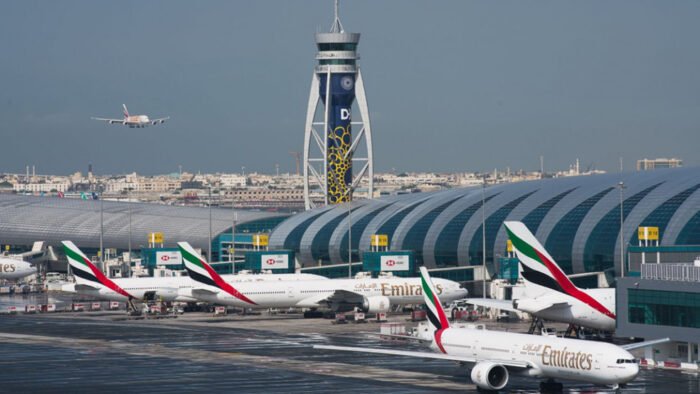
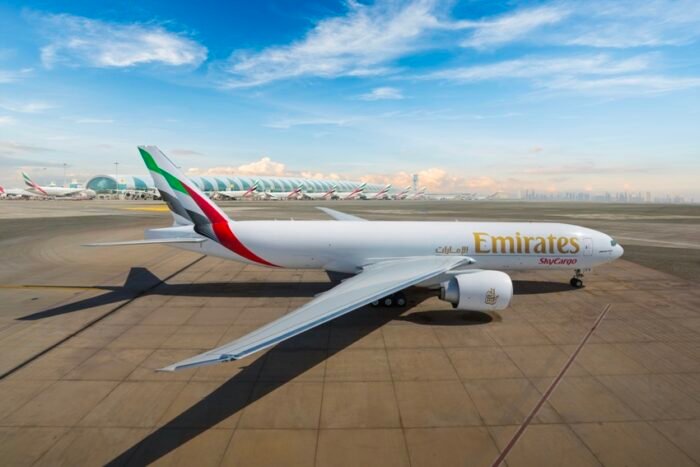
Mumbai,26th February, 2026: Emirates SkyCargo eyes further growth in India, with the deployment of two additional weekly freighters, one to Mumbai and one to Ahmedabad. The cargo arm of the world’s largest international airline continues to strengthen trade lanes and connect businesses in India with their partners, suppliers and customers all over the world, with an average uplift of 3,000 tonnes weekly. Emirates currently serves India with three weekly freighters – one to Mumbai and two to Ahmedabad – as well as bellyhold capacity in 167 passenger services to nine gateways. The new freighter service to Mumbai will launch on 4 March 2026, and connect Dubai, Singapore and India, while the Ahmedabad service will be a direct and dedicated freighter, and also launch in March. The airline expects to carry key commodities such as pharmaceuticals, fresh fruits, vegetables and other perishables as well as personal electronic devices on both freighters. In addition to the freighters to India, Emirates SkyCargo will also deploy a dedicated weekly freighter to Dhaka, Bangladesh, from April 2026. This further expands the airline’s freighter network, reaffirming the burgeoning demand and Emirates SkyCargo’s longstanding commitment to the region. “Our new freighter frequencies to India reflects both the strength of India’s trade corridors, and our long-term commitment to supporting them,” said Badr Abbas, Divisional Senior Vice President, Emirates SkyCargo. “India is a powerhouse of manufacturing, pharmaceuticals, perishables and eCommerce and the demand for reliable and stable capacity continues to grow. These additional freighters bolster our existing operations, by offering more connectivity and capacity to ensure we continue to serve our customers in India and across the globe.” As the third anniversary of the UAE-India Comprehensive Economic Partnership Agreement (CEPA) nears, bilateral trade is booming, with India’s exports to the UAE growing faster than its overall export growth.

MRO

Capital A released its financial results for the Q4 2025 and the FY2025

Kuala Lumpur, 26th February 2026: Capital A Berhad reported its unaudited financial results for the fourth quarter ended 31 December 2025 (“4Q2025”) as well as the full financial year 2025 (“FY2025”).Following the disposal of the aviation business to AirAsia X Berhad, the Group now comprises five core businesses—ADE, Teleport, AirAsia MOVE, Santan and AirAsia Next. Accordingly, this quarter’s results reflect aviation performance only up to 3 December 2025—the divestment completion date—covering approximately two months for 4Q2025 and 11 months for FY2025. On a pre-elimination basis, the Capital A Companies generated RM1.06 billion in revenue in 4Q2025, surging 16% Year-on-Year (“YoY”). Margins proved resilient, with EBITDA rising in tandem with revenue by 7% YoY to RM111 million and Net Operating Profit (“NOP”) declined 12% YoY to RM45 million, due to lower interest income. However, interest expense was almost halved from a year ago. Profit After Tax (“PAT”) came in at RM9.82 billion, due to the large one-off gain relating to the disposal of aviation assets. For FY2025, revenue was RM3.39 billion, for an EBITDA of RM443 million and NOP of RM171 million. Highlights of the AirAsia Aviation Group With the disposal of the aviation business now completed, the Group will no longer present highlights for AirAsia Aviation Group from this quarter onwards. Highlights of Capital A Companies ADE Revenue for the quarter was RM247 million, up 31% YoY and 11% Quarter-on-Quarter (“QoQ”)—ADE’s best quarterly growth yet. This was driven by 51% YoY higher revenue from base maintenance, while line maintenance revenue rose 18% YoY on a greater number of flights handled. Growth was supported by expanding work for third-party airlines such as Air France, secured in the preceding quarter, reflecting growing recognition of ADE’s technical capabilities. EBITDA surged 79% YoY to RM55 million, with margins holding steady at 23%. Higher consumables tracked hangar capacity and activity expansion, offset by lower staff costs from operational optimisation initiatives. NOP and PAT margins came in at 11% and 14% respectively, supported by strong topline growth, favourable forex during the period and lower interest expenses following principal repayments. For FY2025, revenue reached a new high of nearly RM895 million, with EBITDA of RM205 million and RM93 million NOP, reflecting scale benefits and improved financial efficiency. CEO of ADE Mahesh Kumar on the business outlook: “ADE is entering its next phase of growth from a position of strength. We are finalising a USD100 million debt facility to strengthen our capital base and accelerate expansion beyond Malaysia into Thailand, the Philippines and Bahrain—anchored to AirAsia’s Middle East hub and opening access to Europe. In addition to scale, we are also building depth. As part of our workshop expansion, we are progressively enhancing component and engine-related expertise to capture higher-value work in the maintenance cycle. And with our training centre set to commence operations soon, we are also building the talent pipeline needed to sustain growth and position ADE as a leading regional MRO platform.” AirAsia MOVE Driven by the launch of the B2B business—which contributed approximately 55% of revenue—as well as continued personalisation initiatives, revenue in 4Q2025 tripled QoQ and nearly doubled YoY to RM300 million. Margins remained resilient, supported by minimal marketing spend under AirAsia MOVE’s unique social-led acquisition model, delivering an EBITDA of RM45 million and NOP of RM40 million. NOP margin also saw a significant 6ppts QoQ uptick due to lower interest expense. Excluding B2B, Flights transactions climbed 12% QoQ, while Gross Booking Value (“GBV”) rose 28% QoQ on higher average spend. Performance was underpinned by a market-leading ancillary strategy with attach rates 23% higher than peer OTAs. Flights also secured two major partnerships with VietJet and IndiGo to further diversify its portfolio. Stays continued to gain traction, with conversion improving to 2.3% from 1.9% a year ago, pushing transactions up 2% and growing GBV 18% YoY. Duty Free outperformed, with GBV increasing 157% YoY following the commencement of operations in the Philippines and Indonesia. For FY2025, revenue exceeded RM641 million, with an EBITDA of RM84 million and RM65 million in NOP, resulting in PAT of over RM54 million and reinforcing AirAsia MOVE’s return to sustained profitability. CEO of AirAsia MOVE Nadia Zahir Omer on the business outlook: “This year, we will double down on content to drive user acquisition and conversion. By leveraging user-generated content and deeper community engagement, we aim to attract higher-intent users while optimising marketing spend. This will be enabled by continued investment in technology, including the development of our virtual concierge, to enhance the booking experience, thereby improving retention and lifting NPS. At the same time, we will pursue greater Stays growth by leveraging our flight-anchored flywheel, deepening hotel partnerships and launching more personalised bundles to increase attach rates and customer lifetime value.” Teleport Teleport closed 2025 strong with record operational performance in 4Q2025. The company moved its highest volume of 102,688 tonnes (+19% YoY) and 63 million parcels (+165% YoY) with a new daily peak record of 974,000 parcels. This drove revenue growth to RM367 mil in Q4 2025 +10% YoY despite a 4% decline in Asia-Pacific market yield. Profitability momentum continued in 4Q2025, with Teleport recording a NOP of RM5.2 million (+RM7.5 mil YoY). For FY2025, Teleport achieved its highest-ever total volume of 347,885 tonnes (+18% YoY) and 167 million total parcels moved (+99% YoY), driving total revenue to RM1.2 billion (+11% YoY). This growth validates Teleport’s unique asset-light model of combining passenger and freighter capacity of third-party airlines, AirAsia belly space and Teleport freighters to meet growing market demands for eCommerce. Furthermore, this strong finish contributed to a full-year NOP of RM18.6 million, a RM40 million turnaround from a RM21 million net loss in FY2024. Teleport’s return to profitability at all levels was driven by strict cost and margin discipline, as well as a reduction in finance costs following the successful refinancing of the Deutsche Bank loan in 3Q2025. CEO of Teleport Pete Chareonwongsak on the business outlook: “Returning to profitability in 2025 is a testament to our team’s discipline, the trust our partners place


Airports

BLR Airport and Frankfurt Airport signs MoU to strengthen India–Europe air cargo connectivity

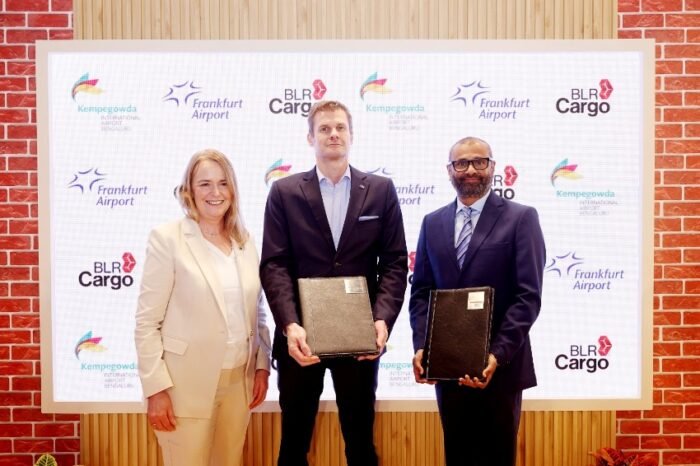
Bengaluru, February 25, 2026: Kempegowda International Airport Bengaluru (BLR Airport), operated by Bangalore International Airport Limited (BIAL), has signed a Memorandum of Understanding (MoU) with Frankfurt Airport (FRA) during Air Cargo India to enhance cargo connectivity between South India and Europe. The collaboration brings together two key cargo gateways, BLR Airport, serving one of India’s fastest-growing manufacturing and export regions, and Frankfurt Airport, one of Europe’s most connected cargo hubs. Under the MoU, both airports aim to establish a structured framework focused on joint trade lane analytics, digital corridor development, pharma integrity standards and knowledge exchange to improve visibility, reduce dwell times and deliver more predictable service levels for cargo stakeholders. Girish Nair, Chief Operating Officer, Bangalore International Airport Limited, added, “This partnership reflects a strategic shift toward building more integrated and data-led cargo corridors between India and Europe. As BLR Airport continues to invest in cargo infrastructure, technology and capability development, collaborations like this help translate those investments into efficient, scalable trade lanes that support the movement of high-value and time-sensitive cargo. Our focus remains on building a resilient and future-ready ecosystem that can adapt to evolving trade dynamics, and regulatory expectations to create long-term value for airlines, freight forwarders and trade partners.” Alexander Laukenmann, Fraport Senior Executive Vice President Aviation says: “The partnership with BLR Airport represents the creation of a robust bridge between two key cargo and economic hubs that will unlock new opportunities for businesses and serve as a major driver for the future of international goods traffic. In line with the motto ‘Creating the Future of Cargo. Together.’, we’re focusing on partnership-driven innovation. We want to create optimal conditions for our customers and the entire cargo community. Our partnership is a key pillar of our Frankfurt CargoHub Masterplan and underlines our ambition to actively shape international air cargo traffic.” The partnership comes at a time when the recently concluded EU–India Free Trade Agreement (FTA) is expected to unlock new momentum for bilateral trade and air cargo flows. As trade volumes between India and Europe scale, efficient and reliable cargo corridors will play a critical role in enabling faster market access and strengthening supply chain resilience.

RCS

FLY91 acquires two brand new ATR 72-600 from Dubai Aerospace Enterprise

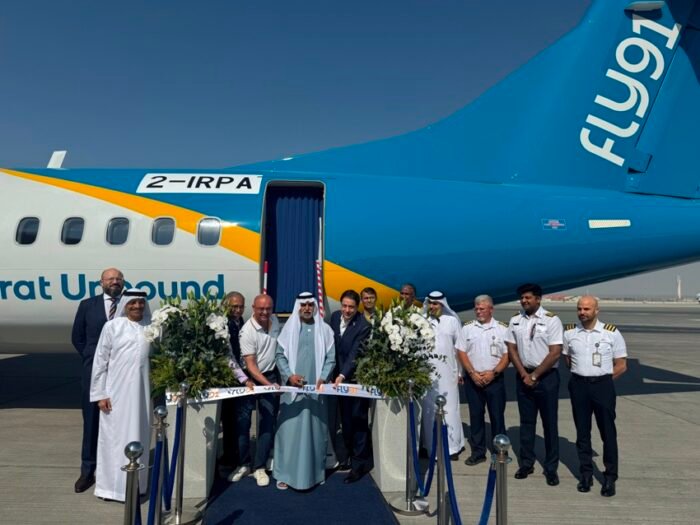
Dubai,February 25th 2026: FLY91 has inducted two brand new ATR 72-600 aircraft into its fleet from Dubai Aerospace Enterprise.With this induction, FLY91’s fleet now stands at six aircraft since commencing operations in March 2024, and the aircraft acquired from Dubai Aerospace Enterprise (DAE), will be deployed across underserved, emerging regional destinations in India. Manoj Chacko, Founder, Managing Director and CEO of FLY91, said the twin induction marks another measured step in the airline’s expansion strategy. “We are honoured to welcome two new aircraft into our fleet in Dubai, a city that represents global best practice in aviation infrastructure, services, and partnerships. This milestone reinforces our commitment to building India’s most dependable regional airline while deepening collaboration with leading institutions in the UAE. As we expand, our focus remains on disciplined and sustainable growth — ensuring that every aircraft enhances connectivity, reliability, and long-term value for the communities we serve,” he said. H.E. Sheikh Nahyan bin Mubarak Al Nahyan, Minister of Tolerance and Coexistence, said: “The ATR 72-600 is globally recognised for its efficiency, reliability, and performance. It is ideally suited to operate in the communities FLY91 seeks to serve.” He further observed that Dubai Aerospace Enterprise has grown into one of the world’s leading aviation services providers, built on the conviction that its success strengthens communities, improves quality of life and contributes to social and economic development regionally and globally. According to Harsha Raghavan, Chairman of FLY91 and Managing Partner at Convergent Finance, the induction reflects the airline’s structured approach to scaling operations. “FLY91 was built on the belief that regional connectivity in India requires long-term commitment, financial discipline and strong institutional partnerships,” he said. “This addition reinforces that approach as we continue to expand in a calibrated manner.” Firoz Tarapore, Chief Executive Officer of Dubai Aerospace Enterprise (DAE), said the lessor is pleased to support FLY91’s continued expansion as it strengthens regional connectivity across India. “Aircraft such as the ATR 72-600 are well suited to developing regional markets efficiently and sustainably. This official induction underscores DAE’s commitment to working with airlines that are building durable and forward-looking aviation platforms,” he said. Nathalie Tarnaud Laude, CEO of ATR, said India is entering a strong phase of aviation growth, with regional connectivity playing a vital role. “This partnership also highlights the strength of Indo-French cooperation in aviation, with Dubai continuing to serve as an important global hub for collaboration and industry development.” FLY91 currently operates to nine destinations across India connecting emerging regional centres. Before the end of March 2026, the airline will expand to six additional destinations namely, Rajahmundry and Vijayawada in Andhra Pradesh, Hubballi in Karnataka, Nanded in Maharashtra, Dabolim in South Goa and Indore in Madhya Pradesh, continuing its structured and sustained regional growth strategy.

Civil Aviation

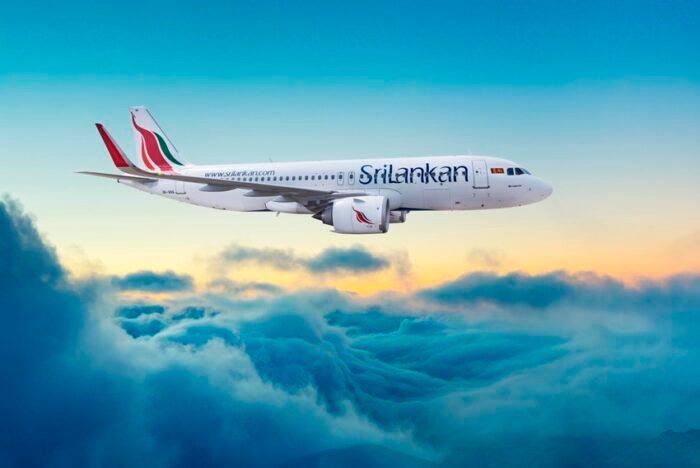
SriLankan Airlines to start flights from Ahmedebad, its 10th destination in India

New Delhi, February 25th, 2026: SriLankan Airlines has announced its plan to start direct flights between Colombo and Ahmedabad within two months post regulatory approvals. This will be tenth Indian destination in its list as the airlines move aimed at strengthening air connectivity and boosting religious tourism between the two countries. At a media meet in Delhi,Dimuthu Tennakoon, Head of Commercial, SriLankan Airlines shared the plans and highlighted the importance of connecting Ahmedabad as the momentum in India-Sri Lanka relations, especially with Gujarat emerging as an important hub for spiritual and heritage travel. As 2026 unfolds,SriLankan Airlines plans to increase its weekly India services, currently covering Chennai, Mumbai, Delhi, Hyderabad, Bengaluru, Kochi, Trivandrum, Madurai and Tiruchirappalli. The airline has consistently focused on serving both major metropolitan centres and emerging markets across India, extending its reach to underserved cities. SriLankan Airlines operates close to 90 weekly flights between the two countries, and more to come, the airline has never been more energised about setting the pace for India’s expanding global footprint. For SriLankan, India is its largest market, accounting for nearly 30 per cent of the airline’s total passenger traffic and 23 per cent of overall visitor arrivals to the island.Building on this momentum, the airline is poised to enhance its India operations this year through targeted strategic initiatives that will strengthen connectivity and reinforce the time-honoured bond between the two nations. With the addition of Ahmedabad, SriLankan Airlines will serve six of India’s eight major metropolitan hubs, further diversifying its India portfolio and boosting route economics by capitalising on year-round demand and strong cultural ties between the two countries. These initiatives are projected to increase Indian passenger traffic across the airline’s network by up to 12 per cent in 2026. SriLankan Airlines works closely with the Sri Lanka Tourism Promotion Bureau, Sri Lanka Tourism Development Authority and other trade partners in supporting national tourism ambitions. The airline’s promotional efforts are firmly rooted in positioning Sri Lanka as a vibrant and versatile destination with immense appeal to Indian travellers, offering festivals, cuisine, wellness, beaches,wildlife, history and spirituality. Most recently, SriLankan launched its award-winning epic Ramayana Trail campaign, an emotive storytelling journey inspiring Indian travellers to explore iconic sites along the epic’s legendary path in Sri Lanka. SriLankan is well positioned to serve Indians jet-setting for any number of reasons, from leisure, business and trade to visiting friends and relatives, or attending destination events, including weddings. Whether travelling to Sri Lanka or beyond, with around 30% of Indian passengers transiting via Colombo,the airline provides seamless connections between the cities it serves in Indiaand the Middle East, the Maldives, the Far East, Europe and Australia through its own and codeshare services.

Recent News

The Cathay group releases traffic figures for January 2026

New Delhi, 25th February 2026: The Cathay Group released its traffic figures for January 2026.At this moment, Cathay Chief Customer and Commercial Officer Lavinia Lau said, “As a Group, we have made a solid start to 2026 with momentum from the robust year-end travel peak sustaining into early January. Our passenger airlines Cathay Pacific and HK Express carried a combined total of more than 3.3 million passengers in January 2026, an 11% increase compared with January 2025. Meanwhile, Cathay Cargo carried over 130,000 tonnes of cargo during the month, marking a 5% increase year on year. “Our solid start to the year has continued in February. On 14 February 2026, both Cathay Pacific and the Cathay Group achieved new single-day passenger records. Cathay Pacific surpassed the 100,000 mark for the first time in its history, carrying 100,747 passengers onboard. Together with HK Express, we carried a combined total of around 128,000 passengers.” Cathay Pacific Cathay Pacific carried 11% more passengers in January 2026 compared with January 2025, while Available Seat Kilometres (ASKs) increased by 14%. Lavinia said,“We saw robust demand in early January, driven by outbound student traffic and travellers returning from the year-end holiday season. This was followed by a strong rebound in business travel, with load factor for our premium cabins performing better than in January 2025. We also experienced a significant increase in transit traffic as we continued to add frequencies across our network, further strengthening the connectivity of the Hong Kong international aviation hub. “The Lunar New Year holidays in February have just passed and we saw robust leisure traffic as customers across Asia took advantage of the extended holiday period. Looking ahead to Easter, travel demand remains robust. We anticipate bookings to accelerate as more customers book closer to their departure dates.” Cathay Cargo Cathay Cargo carried 5% more cargo in January 2026 than in January 2025, while Available Freight Tonne Kilometres (AFTKs) increased by 3%. Lavinia said: “Following the year-end cargo peak, our cargo business got off to a slower start in 2026 while still maintaining year-on-year growth. Meanwhile, our specialist solutions continued to perform well. Cherries and seafood from Oceania to Hong Kong and other major Asian cities contributed significantly to the demand for Cathay Fresh, while increased pharmaceutical movements from Europe and Central America supported the continued growth of our Cathay Pharma solution. In addition, we were proud to fly around 60 elite showjumping horses from Europe to Hong Kong for the Longines Hong Kong International Horse Show 2026, demonstrating our expertise in transporting live animals as the event’s founding partner. “Looking ahead, we expect demand to pick up again in the rest of the first quarter after a softer period over the extended Lunar New Year holidays.”

Interviews

“Asia is emerging as the engine of global Aviation growth,”Mabel Kwan, MD, Alton Aviation, Singapore

According to a new whitepaper released by Alton Aviation Consultancy ahead of Singapore Airshow 2026, “ Asia is emerging as the engine of global Aviation growth, with India, China and Southeast Asia forecast to account for eight of the world’s ten fastest growing air travel markets between 2024 and 2044.” In an exclusive interview, Mabel Kwan, Managing Director at Alton Aviation, Singapore highlights more detail on this report with Vishal Kashyap, Managing Editor of Aviation World where she presents how India is one of the world’s fastest growing Aviation markets, underpinned by robust economic fundamentals and a rapidly expanding middle class. Excerpts… Q: What are the key takeaways from the latest whitepaper of Alton Aviation Consultancy? A: There are few key messages that we wanted to bring out to the public through this whitepaper. Asia continues to be a driver of growth but more specifically, the growth is not just driven by China. We see a rather broad-based growth story across South Asia which will bring a lot more sustainability and the credibility of Asia as an aviation region in the future. The reason why I say that is based on the analysis that the growth for Asia is definitely higher than the whole world in terms of RPK (Revenue Passenger Kilometers). But more interestingly, going forward, eight out of the ten fastest-growing routes will come from the Asia region. That is sort of like the growth story that Asia will bring to aviation. And obviously, different sub-segments have different nuances around this growth story. Q: So, which region will anchor the future global air travel demand among India, China and Southeast Asia? A: I think China and India for sure. But as a region, Southeast Asia region will begin to be positioned up there from the China and India perspective as well. Q: What are the factors taken into consideration before compiling such an extensive Whitepaper? A: We wanted to understand in terms of what are some of the macroeconomic factors that the Aviation stakeholders will be concerned about. So, things like tariffs, geopolitical circumstances and in general, affecting supply chains. How are the stakeholders reacting to it because we’ve done a lot of work from both across the Aviation value chain. We refine some of these forecasts from these results and with what we see on the ground, some of the strategies around MRO, airlines that place to maybe certain regions looking at different trajectories, studying higher and lower trajectories ground from an aviation stakeholder strategy’s perspective. The companies are learning how to deal with the supply chain issues or the tariffs in the MRO. There is a resilience in the Aviation industry after COVID and they are looking at contracting, what needs to change to make sure that escalation in costs can be absorbed or covered. They are looking at changes in terms of pool of suppliers from a diversification perspective, also from a geopolitical perspective that there is a need to diversify your supply sources. And thirdly, also in terms of technology and digitalisation, because manpower issues, talent issues, are quite pertinent right now and a solution that is obviously everyone is embarking on. “The whitepaper highlights India as one of the world’s fastest-growing aviation markets, underpinned by robust economic fundamentals and a rapidly expanding middle class. While China continues to play a dominant role, Alton notes that Southeast Asia is an emerging growth region, led by markets such as Indonesia, Vietnam, and the Philippines.” Q: In terms of the aircraft orders and the OEMs delivery capabilities, how do you evaluate it from the advisory point of view? A: Unfortunately, the truth is that there is a backlog. From the large OEMs perspective, the wide body backlog is of around 6 years and for narrow bodies, the timeline is much longer maybe 8 years or 10 years. If you order new aircraft now, you’re really not going to get it to boost your capacity in the short to medium term. A lot of the airlines are looking at alternatives and they are retaining and retrofitting some of the existing fleet to make sure that they are brought up and services stay relevant and inhabited without having actually new aircraft. On the MRO side, there’s also a larger demand for maintenance of the aircraft and a bit of the retrofitting work that goes with which the airlines are dealing with it. At some point in time, we also touched on the topic of consolidation in the industry. If you draw an analogy to how LCCs came about in previous years, especially in Europe, there was also a wave of consolidation and similarly for Asia there will be some form and we see that as a reaction to how do you strengthen your balance sheet. How do you strengthen your positioning in the market? Some of these consolidations will of course position for the future but at the same time perhaps rationalise some of the rules as well for aircraft capacity and demand. “Alton’s report outlines that international traffic in Asia-Pacific grew by 8.0% in 2025, outpacing global RPK growth of 6.8%. Carriers across the region have launched more than 600 new routes since 2015, significantly improving access to underserved destinations and enhancing intra-regional connectivity.” Q: After the IndiGo crisis which made the entire Indian Aviation into surrender mode, there are few startup airlines wanted to make an entry. But they are facing challenges into getting an aircraft. How do you analyse such issues? A: This could be due to the reason that already OEMs are busy with giving delivery to their pre-existing customers. So, isn’t it viable for them to try and get a pre-owned aircraft rather than looking forward to a new aircraft? The natural tendency is to go for a leased aircraft and pre-owned of course because from a Capex perspective to kind of put in money at the front to acquire new aircraft is a very big undertaking. Unfortunately, the leasing market is

Training

Saudia Group graduates over 1,000 aviation professionals

Jeddah,20 February 2026: Saudia Group has graduated and integrated over 1,000 trainees into its aviation workforce, marking one of the largest cohorts completed and absorbed in a single year in the Group’s history. The milestone strengthens the Kingdom’s aviation talent pipeline in support of the National Aviation Strategy. The graduates completed eight specialized programs delivered by Saudia Group and its subsidiaries, including Saudia, Saudia Academy, Saudia Technic, Saudi Ground Services (SGS), SAL Saudi Logistics Services, flyadeal and CATRION. Upon completion, the graduates joined Saudia Group entities in operational roles across flight operations, ground services, engineering, logistics and customer-facing functions, directly supporting the Group’s expanding aviation ecosystem. The graduation was held under the patronage of His Excellency Engr. Saleh Al-Jasser, Minister of Transport and Logistics Services, in the presence of His Excellency Engr. Ibrahim Al-Omar, Director General of Saudia Group, alongside senior officials and representatives from the aviation sector. His Excellency Engr. Saleh Al-Jasser said: “Developing national talent is fundamental to achieving the ambitions of the National Aviation Strategy. Graduating more than 1,000 aviation professionals in a single year reflects the scale and pace of transformation underway across the Kingdom’s transport and logistics sector. Human capital remains our most important investment as we build a globally competitive aviation ecosystem.” His Excellency Engr. Ibrahim Al-Omar added: “Saudia Group has made significant progress in localizing critical aviation roles, surpassing targeted performance indicators by margins ranging from 43% to 230%. We have also embedded knowledge transfer requirements into our agreements with global manufacturers to ensure the development of Saudi capabilities within the Kingdom. The next phase of our transformation, particularly as we elevate the guest experience and strengthen global competitiveness, depends on continued investment in specialized national talent.” Saudia Group continues to invest in national capabilities as the foundation of its long-term growth strategy. Through ongoing expansion across fleet, infrastructure, and training, the Group plays a central role in connecting the Kingdom to global markets and supporting national objectives across tourism, logistics, and the service of pilgrims.

FOREWORD

Dear Reader’s,


The current edition of Aviation World has covered many areas of Aerospace & Defence based on the latest development in the sector. The front cover highlights three different images, first for the Union Civil Aviation Minister ….. who is leading from the front to steer Indian Civil Aviation sector to witness one of the most interesting phases. He is also facing most tumultuous timing due to the ongoing financial stress in the Aviation sector due to ATF rising cost and long airspace restrictions resulting in mounting losses for Indian carriers. Despite of all the ground level challenges,the minister is addressing new things on regular basis which keeps the sector motivated. We have featured many such developmental works in this edition done under his guidance which will be interesting to read.

Our lead story on “ The West War” is another important feature which covers the ground level reality of the challenges faced by the Aviation sector. Its though time ahead and we believe it will pass soon .

There are features on Regional connectivity and MoCA revised rules on the UDAN 2.0 and how its going to transform the flying experience within India.

In this edition, we have covered topics on MRO,Various Policy changes,Sea Plane Operations by SkyHop Aviation, TATA-Airbus joint project on C295 military aircraft under Make In India which is expected to roll out soon and many other interesting contents which will be good to read.

We are covering Farnborough International Airshow 2026 from 20-24July 2026 in London and our next edition will be based on the same event.For features, you may contact our team on priority basis.


Happy Reading!

NEWSLETTER

Aviation World Magazine is India’s premier aviation magazine and has been actively supporting the development of the Indian and global civil aviation sector. We started our journey in year 2015 and its been 12 years now and the response and acceptance is really encouraging. Thanks to all our associates and writers who remained with us in our progressive journey.

We have started 2026 on a very positive note and we look forward to increase our footprints to more locations and induct many more new companies in our campaign.. Do write to us at : editor@aviationworld.in

Disclaimer

The contents published in this website are news covering Aviation, Aerospace and Defence sector. The objective is to provide news in informative form to keep our readers updated of the latest development. We also publish content featured in our print publication Aviation World.We try our best to avoid any factual errors or image displayed here but we ensure immediate corrections to any such thing brought to our notice that might have been published inadvertently. All images and contents are sourced from the relevant organisations media team.

Copyright ©2014 – 2026. AVIATION WORLD. All rights reserved.

Scroll to Top