Author name: admin

Recent News

SFO’s Onsite Rapid COVID Testing Center Gets a New Home on March 15th

San Francisco, March 16, 2021 The San Francisco International Airport (SFO) announced plans to relocate its onsite rapid COVID testing center, the first such facility at any U.S. airport. The testing center will remain in the International Terminal, but effective March 15, 2021, the site will move from Level 1, Courtyard A to Level 3, at the Aisle 6 ticket counter in the Edwin M. Lee International Departures Hall.This new location will provide travelers with easier access to other airport facilities for their travel, including ticket counters, security checkpoints, and shopping and dining.SFO opened the first onsite rapid testing in the nation in July 2020, initially for airport workers only. In October 2020, the site expanded to offer testing to United Airlines passengers to Hawaii, and other airlines have since been added. The testing site is operated by Dignity Health-GoHealth Urgent Care and administers an Abbott ID Now Nucleic Acid Amplification Test. COVID-19 rapid testing for travelers at SFO is by appointment only. To book a testing appointment, please visit gohealthuc.com/sfo. Testing for arriving and connecting passengers and the general public is not available.

Recent News

The New Normal in the Aviation Industry is Safe Contactless mode of Traveling

New Delhi,12th March 21 Day 1 Report:PHD Global Aviation & Air Cargo Summit themed Aviation -Air Cargo Industry’s New Growth Blueprint & Business Resurgence Parameters Complete movement of essential medicines and goods has been felicitated via civil aviation and cargo, making cargo an integral part of the aviation system. Aviation has emerged as a resilient sector that can survive through this pandemic, mentioned Mr. Pradeep Singh Kharola, IAS, Hon’ble Secretary, Ministry of Civil Aviation in the 7th edition of PHD Global Aviation & Air Cargo Summit themed Aviation -Air Cargo Industry’s New Growth Blueprint & Business Resurgence Parameters organized by PHD Chamber of Commerce and Industry. Mr. Pradeep Singh Kharola mentioned that the Indian aviation sector has faced a lot of challenges caused by the pandemic but survived due to the air freight and cargo, implicating the extensive potential of air cargo across borders. An aviation system can function when all the parts of the system function efficiently and in sync with each other. Mr. Kharola opined that the new normal in the aviation industry is the safe contactless mode of travel. Air travel has immerged as one of the safest modes of travel during these tough times. In the current situation, people’s confidence in aviation has improved due to which new areas of travel and new customers are immerging. Mr. Pradeep Singh Kharola emphasized that aviation is an international activity, we should understand and appreciate that it’s an activity between nations, it’s economically important for all the nations. We have to work together, open new airports, bring in efficiency, reduce cost, and build equitable and strong partnerships between the nations and airlines. Ms. Vandana Aggarwal, Sr. Economic Advisor, Ministry of Civil Aviation mentioned that there is an increase in the performance efficiency of air cargo and it’s time for India to aspire for a more equitable role in air cargo. Discussing the initiatives taken by the government, Ms. Aggarwal mentioned that the initiatives have been to multi modalities; India’s engagement in trans-shipments; development of fate corridors which will provide the opportunity for growth of cargo for the countries. With drones becoming the new normal, the traditional cargo movements have to adapt themselves with last-mile connectivity using drones. She discussed that we are working on a unified interface platform and national logistics portal which will integrate and provide advanced information to the regulators so that the dewily time is lower and all performance metrics and costs are regulated and reduced. She shared that India is one of the few countries that has added air trade capacity on measurable terms besides the B2C conversions; we have added many freighters during the lockdown periods. We will be inducting some more freighters in some time. As the freighter capacity has increased, the ability to service the industry cost-effectively by the airlines will improve as well. She emphasized that air cargo has provided valuable revenues to the airlines to sustain themselves during the pandemic. Air cargo has been the humanitarian belly of this pandemic by transporting kits, essential goods, and vaccines to various parts of the world. H.E. Dr. Ahmed A.R. Albanna, Hon’ble Ambassador, United Arab Emirates to India while sharing the strategic relationship shared between India and UAE mentioned that the aviation sector is a key player in building overall bilateral relationship, governed by the air service agreement. He mentioned about the close working with India to further strengthen aviation linkages and early reception of scheduled flights under the UAE-India Air service agreement. He emphasized that the aviation sector is a connective bridge and we will play an important role in letting the road to recovery during COVID-19 and we need to look at different and innovative ways to build our aviation industry recover. H.E. Extraordinary and Plenipotentiary Mr. Asein Isaev, Kyrgyz Republic to India appreciated India’s pivotal role in supporting the nation during the times of pandemic; it was one of the supplier for pharmacy. He mentioned that we have done some amendments in the airports and we are keen it will wider the possibilities to air connection. He discussed about that the connection between India and Kyrgyz Republic is in terms of cultural, diplomatic, trade, and people-to-people connection. Mr. Glyn Hughes, Director General, The International Air Cargo Association mentioned that due to the pandemic, we have learned that collaboration and communication are the keys to the seamless running of the industry. We have also learned flexible working, leverage digital platforms, and innovation in increasing the cargo capacity. The future blueprint will focus on sustainability. Mr. Sanjay Aggarwal, President, PHD Chamber of Commerce and Industry in his presidential address deliberated about the importance of the aviation and cargo sector which played a pivotal role in being the engine of connectivity and enabler for growth worldwide for international trade. Mr. Aggarwal deliberated about the challenges faced in the resuming of operations and the need to look at new growth parameters to revive itself, he discussed the new technologies that have seeped into airports that are dynamically changing the passenger travel experience. The pace of innovation adoption sets the scene for rapid industry transformation and will force the aviation industry to reset, rebuild, reinvent and become resilient. The air cargo sector has been instrumental in the transportation of essential supplies worldwide. This industry is playing a crucial role in the transportation of the COVID-19 vaccine and there is a need to adapt infrastructure, processes, and resources to respond to huge global logistical challenges, said Mr. Aggarwal. Mr. Sanjay Aggarwal emphasized that the civil aviation market is expected to see some surge with the availability of vaccines, people’s willingness to travel, and recovery in the macroeconomic growth of domestic air traffic. The government’s emphasis on infrastructure under the Aatmanirbhar- Make in India initiative in the aviation industry and giving a push to the aircraft leasing market will help this industry to bounce back seamlessly. Mr. Saket Dalmia, Vice President, PHD Chamber of Commerce and Industry while proposing the formal vote of thanks to all

Technology

Aluminium Alloys in the Aerospace Industry: Past, Present and Future

By Deepak Mathur Aviation World; March-April 21 Being lighter, yet stronger and offering high resistance to corrosion are the properties that make aluminium – metal of the past, present and future. In a world that is changing rapidly and turning many a leaf by using technology and working for a cleaner world of tomorrow. As far as relationships go, aluminium and its usage in the aerospace industry is a bond that has aged. It dates back in time to the 19th century and is well-documented that the first use of aluminium in aerospace was in making frames by the famed Count Ferdinand Zeppelin in his ‘airships.’ An Old Historic Relationship The historic relationship between aluminium and aerospace also finds a place in the Wright Brothers story. The cylinder block and some other parts of the Wright Flyer in 1903 are known to have been made with aluminium making it lighter yet stronger to achieve a successful take-off. Aluminium against a wooden frame that was in vogue during that time ensured that the aircraft design despite of the low wind-speed availability and limited aerodynamics lifted off with the intended weight. And it did. Meeting the Demand For another decade, the absorption of aluminium in aerospace was slow. It gathered pace between the two World Wars. Aluminium alloys became an ideal option as racing aircraft became a rage in Europe and America in 1920’s. In the absence of maintenance and care, they wouldn’t rot and cause splinters like wood. And just like that wood lost its charm and aluminium alloy began its journey by meeting the demand. Replacing wood was easy. There was a significant and healthy weight loss in an aircraft on account of using aluminium alloys. Being one-third lighter metal than steel gave manufacturers the capability to carry more weight or improve fuel efficiency. Given aluminium’s strength, the reliability and manufacturing costs involved in an aircraft also increased. New materials: Aluminium Alloys The Boeing 737, popular narrow-body aircraft in use across the globe and in India, comprises of 80 per cent aluminium alloys in its making. It’s lighter, but strong and has high corrosion resistance. This remains the foundation of aluminium’s popularity despite the sophistication in modern-day aviation. There are new materials of aluminium alloys that have contributed to changing the landscape over time. Aluminium alloys are being used in making the aircraft fuselage or body, wingspans, doors, flooring, and even the seats that we as passengers are seated on. Having also made it to space through various exploration programmes, there is no doubt that the confidence in aluminium alloys will continue into the next generation of aircraft since performance characteristics have been established, costs of fabrication have been set along with modern production facilities capable of meeting the demand. Aluminium alloys v/s Composite material Today, aluminium’s usage in aerospace comes with its combination of various alloy elements. For instance, when the need calls for a high strength to weight ratio and the alloy has to be tough and yet offer workability it is combined with copper or zinc, which is the most common alloy used in aerospace today. These alloys are generally found in the wingspans and fuselage given the tension that these parts have to withstand. Aluminium alloys form part of traditional while composite materials are a fairly new entrant so to speak. Both have their strengths but aluminium being the big brother is much more established in its advantages. The aluminium alloys offer a cheaper deal given the established manufacturing and pricing process, while composite material is prone to degradation from ultraviolet rays, unlike aluminium alloys which are not. Aerospace: The future & use of aluminium alloys Innovation holds the key to the future and the development of new generation aluminium alloys are not lagging. If zinc is the present for aluminium alloys, the future is also in the making using aluminium-lithium alloy. Some research reports indicate that aluminium-lithium alloy or Al-Li alloys offer a 10 per cent weight reduction in comparison to using composites in aircraft. With the industry continuing to gain from using aluminium alloys in providing for a safer, reliable flight and keeping aircraft manufacturing low, the future and use of this versatile metal are poised for a long flight into the future. (The author is Sr. Vice President – Sales and Marketing at Jindal Aluminium Limited. Views expressed are personal.)

Air Starts Flight
RCS

Alliance Air Starts Flight Service Beween Delhi and Bareilly

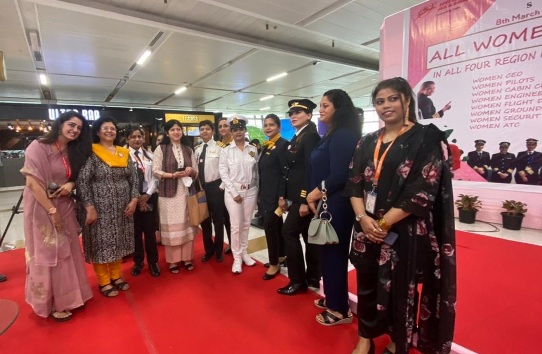
Inaugural Flight by All Women Crew on International Women’s Day New Delhi, 08th March 2021: Shri Hardeep Singh Puri, MoS, I/C, Civil Aviation today flagged off the first flight from Delhi to the newly upgraded Trishul Military Airbase, Bareilly Airport, Uttar Pradesh. Shri Santosh Gangwar, MoS, I/C, Labour & Employment and Member of Parliament, Bareilly graced the event at the Delhi Airport by flagging off the All Women Crew operated Delhi – Bareilly Inaugural Flight on the International Women’s Day. Shri Pradeep Singh Kharola, Secretary, MoCA and Shri Rajiv Bansal, CMD, Air India joined virtually. Smt. Usha Padhee, Joint Secretary, Ministry of Civil Aviation (MoCA) was present at the event. Other senior officials of the Ministry of Civil Aviation (MoCA) & Airport Authority of India (AAI) also attended the event virtually. The Bareilly airport has been upgraded for commercial flight operations under the Regional Connectivity Scheme – UdeDesh Ka AamNagrik (RCS-UDAN) of the Government of India. The flagging off marks the commencement of the 56th airport under the UDAN scheme and marks the successful operationalization of the 8th airport of Uttar Pradesh after Lucknow, Varanasi, Gorakhpur, Kanpur, Hindon, Agra and Prayagraj. Now people can fly at ease by opting for a flight of 60 mins from Delhi to Bareilly while earlier they were forced to opt for a road travel of more than 6 hours or a train journey of more than 4 hours. Trishul Military Airbase, Bareilly belongs to the Indian Air Force and the land was handed over to the Airport Authority of India for construction of the interim civil aviation operations. The Government of India sanctioned Rs. 88 crores under the UDAN scheme for the development of the interim civil aviation operations. The upgradation was undertaken by the AAI with a cost of Rs. 65 crores. Alliance Air was awarded the Delhi – Bareilly route under the UDAN-4 bidding process last year. The airline will be deploying its ATR 72 600 aircraft having a seating capacity of 70 seats on this route. To date, 325 routes and 56 airports including 5 heliports and 2 Water Aerodromes have been operationalized under the UDAN scheme. To keep the fares accessible for the common man, financial incentives in the form of Viability Gap Funding (VGF) is being provided under the UDAN scheme from the Centre, State governments and airport operators to selected airlines to encourage operations from unserved and underserved airports under the scheme. This aerial connectivity will fulfill the aspirations of the lakhs of people who visit Bareilly for the NathNagri (known for the four Shiva temples located in four corners of the region – DhopeshwarNath, MadniNath, AlakhaNath and TrivatiNath), Ala Hazrat, Shah SharafatMiyan and KhankaheNiyazia, Zari nagari and historically important sites like as Sanjashya (where the Buddha descended from Tushita to earth). The city is also a center for furniture manufacturing and cotton, cereal and sugar trading. This air connectivity will fulfil the aspirations of people of Bareilly and the entire Uttar Pradesh state. Apart from enhancing the aerial the aerial connectivity of the region, the flight operations will provide additional benefits to the trade, tourism, and local economy. (Aviation World Online News published unedited only with headline changes based on as receievd from PIB Delhi)

Civil Aviation, Recent News

SAVVYGO AEROTECH LLP organizes a webinar on “Role of Aviation Technical Consultants in Aviation Leasing Industry”

The webinar highlighted the core competence of an aviation consultant and how their service benefits in terms of decision making, cost-saving ranging up to final execution of the particular project in place. New Delhi, 18th February, 2021 A consultant plays a key role in any sector due to their expertise in the particular domain and ability to give a solution to the small as well as pertinent issues of the organization. If we specifically look into the aviation sector than it would be ideal to mention that consultants act as a bridge to establish connections between all the verticals due to their visionary ideas in a very cost-competitive method of working. Looking into the ongoing industry trend, India based SAVVYGO AEROTECH LLP organized a webinar on “Role of Aviation Consultants in Aviation Leasing Industry” which was participated by a large number of aviation industry professionals. The webinar was moderated by Mr. U.S.Harsha, CEO of SAVVYGO AEROTECH LLP and mentored by Mr. Ashwani Acharya, Business Head, CAE Simulation Training Pvt. Ltd. Mr. Acharya highlighted the core component of becoming the consultant in the aviation sector and mentioned the parameter required to become the same. He said, “a consultant is driven by the quality of the objective. They must be a problem solver, creative thinker, lean and take larger pictures, have sharp analytical skills, take decision making of the organization, narrow down key areas faster using its own resources and have defined domain knowledge.” As the Indian aviation was significantly growing before COVID Lockdown and even now after gradual opening up of the sector, things are tremendously improving. At present more than 650 aircraft are operational in Indian sky and its projected that in the next 5-10 years the number will double up or even get more. This will be challenging for airlines to maintain their assets. So this brings the opportunity for consultant or professionals to share their knowledge and extend their services wherever required. Even in the case of such operators having less than 10 aircraft in their fleet, one can have less number of employees and more number of consultants to manage their assets and fulfill all regulatory works on as and when required basis. The technical consultants can undertake a lot of innovative measure for the organization. That comes at premium quality, cost-effective solutions and value additions in the whole chain, serviceability, bridges gap to the owner at a reasonable cost. Highlighting why airlines look for experts, Mr. Acharya mentioned, “in order to improve certain key functions consultants can bring focus and efficiency ,identify and isolate challenges to resolve, forecast milestones, technologically support, out of box thinking and preventive measures.” He added, “apart from all good work, the challenge of getting work is always there. In terms of delivery which is a gradual process sometime consultant are available at a higher cost due to their name and expertise in the sector.” The webinar was attended by key industry leaders as Marcial Casiano, CEO M3 Aviation Group LLC, Niraj Panchal from Aerofield Services LLC, Manish Sharma, Manager Maintenance, IndiGo Airlines, Surendra Nath, Shift Incharge, Airworks India Engg. Ltd, Abinav, Aircraft Maintenance Engineer, Flybig Airlines, Shyam Sunder from Deloitte, Ravinder Sharma, Aviation Technical Consultant and others. ABOUT SAVVYGO AEROTECH SAVVYGO AEROTECH is a fastest growing young company with in-hand of rich practical experience in the field of Aircraft maintenance technical services and asset management as well arena born to render rich intricate technical services throughout the globe. A team of young but passionate consultants, as a company they are new but hold 20+ years of industry experience in aircraft consultation. Vision to provide 100% transparent and premium service to their client makes them reliable in the industry. A team backed by huge experience and mentorship, help them evolve day-by-day. They started small and growing at a rapid speed. Among the leading aviation asset management and consulting company, specializing in the purchase, sale, and management of commercial and corporate aircraft. Their association with leading aircraft and engine leasing companies from around the world has simplified the requirement of the clients. SAVVYGO AEROTECH LLP specializes in services like: 1. Technical Services & Asset Management 2. Aircraft Pre buy inspection 3. Aircraft Annual Audit 4. Aircraft Technical Record Digitalization 5. Aircraft Deliveries / Re-deliveries From valuations, fleet selection and portfolio development to redelivery and remarketing at lease end, they accompany clients through every risk assessment and asset management activity during the life of the lease. So, if you are looking for an aircraft consultant, Savvygo Aerotech can help with your requirement by providing top-notch service. (The webinar was organised on 13th Feb, 2021 at 18.30 Hrs IST)


Recent News, Tourism

INSPIRE, ENGAGE, EDUCATE: SAUDI TOURISM AUTHORITY LAUNCHES ‘JOURNEYS IN ARABIA’

An exclusively curated webinar bringing together travel trade partners for the first time to explore and discover Saudi’s exciting new tourism offering 17 February 2021, India The global travel industry is undergoing its most profound transformation. As the landscape evolves, it is more important than ever to continue to inspire, engage and educate travel trade for when the world safely re-opens and travel resumes. Saudi Arabia is a relatively new destination on the global stage. As the authentic home of Arabia, Saudi offers unique, diverse and unparalleled experiences, a land of natural assets, rich culture and heritage and adventure. To bring to light the Saudi offering, the Saudi Tourism Authority (STA) has launched ‘Journeys in Arabia’, an exclusive online event curated especially for Travel Trade Partners around the globe.The virtual engagement series, taking place across six markets around the world, is a first-of-its-kind initiative for STA, a source of inspiration and excitement, designed to inform partners about the diverse products and experiences that Arabia offers. The India ‘Journeys in Arabia’ webinar brought together local travel trade partners, for an opportunity to hear from thought leaders and experts in the tourism industry. The line up of speakers was: • Welcome address by Fahd Hamidaddin, CEO, Saudi Tourism Authority • Keynote conversation ‘Journeys Make People’ between Abdullah Al Dakhil, International Communication Manager, Saudi Tourism Authority and celebrated Indian Journalist Vir Sanghvi • Expert panel discussion with:  Haitham Mattar, CCO, Saudi Tourism Authority  Benazir Nazar, CEO, Akbar Travels  Deep Kalra, Founder & Group Executive Chairman, Make My Trip  Madhavan Menon, Chairman & Managing Director, Thomas Cook Group  Rakshit Desai, Managing Director – India, FCM  Sheema Vohra, Managing Director, Sartha Global Marketing The session provided insights into the current state of travel and the opportunities and challenges in addressing the growing demand and interest in Saudi as a new destination. Some of the key highlights and market insights of the discussion were: – India has been identified as one of the key source markets and STA’s tourism strategy focuses on promoting experiences related to culture, heritage, nature and adventure in Saudi. – Indians, especially the online consumers and millennials, are late planners and constantly seek new destinations, within close proximity to India for last-minute holiday planning. Shorter-duration packages, direct flights and ease in visa (preferably e-visas) procurement will be game-changers for a new destination like Saudi. – Saudi offers exceptional experiences for diving, adventure sports, and sustainable tourism. The country will also host the Saudi Arabian Grand Prix in 2021.These developments reflect the new travel motivations that Indian leisure travellers actively seek today. – Two key considerations among the Corporate/Leisure market are awareness and attractiveness. While the former can be achieved through communication and information dissemination, via visual and video content on Saudi; attractiveness will come from exquisite on-ground experiences that visitors have while at the destination. – The high-end Umrah market from India is a major captive audience, combining pilgrimage with leisure through post-Umrah leisure packages. – Promoting unique destinations like AlUla for wedding tourism will be a huge draw for Saudi. – Lastly, consumer behavior has seen a drastic shift in a post-Covid world with both MICE and Leisure travel experiencing a heightened ecological sensitivity. Travelers are seeking clear information and assurance related to hygiene and safety. Following up on the success of the ‘Journeys in Arabia’ webinar, STA will also be hosting an immersive virtual road show for India on March 2-3, 2021, partnering with the most relevant destination, experience and hospitality brands in Saudi to showcase the best of what the Kingdom has to offer. As part of the ‘Journeys in Arabia’ webinar series, the next webinar takes place for Germany, followed by UK and Russia. (First published in Aviation World web edition)

Civil Aviation, Top Stories

MOCA ISSUES NEW GUIDELINES FOR INTERNATIONAL ARRIVALS

New Delhi, 17th February 2021 In the context of spread of mutant variant of SARS-CoV-2 in many countries, Ministry of Civil Aviation in consultation with Ministry of Health and Family Welfare has issued new guidelines for international arrivals. These guidelines will supersede all guidelines issued on the subject since 2nd August 2020. This Standard Operating Procedure shall be valid w.e.f. 22nd February 2021 (23.59 Hrs IST) till further orders. The updated guidelines are available at Ministry of Civil Aviation and Ministry of Health and Family Welfare websites. https://www.mohfw.gov.in/pdf/Guidelinesforinternationalarrivals17022021.pdf https://www.mohfw.gov.in/pdf/Algorithmforinternationalarrivals.pdf Guidelines: Part A – For all international travellers except travellers comingthrough flights originating from United Kingdom,Europe and Middle East A.1. Planning for Travel i. All travellers should (i) submit self-declaration form on the online Air Suvidha portal (www.newdelhiairport.in) before the scheduled travel (ii) upload a negative COVID-19 RT-PCR report. This test should have been conducted within 72 hrs prior to undertaking the journey. Each passenger shall also submit a declaration with respect to authenticity of the report and will be liable for criminal prosecution, if found otherwise. ii. They should also give an undertaking on the portal or otherwise to Ministry of Civil Aviation, Govt. of India, through concerned airlines before they are allowed to undertake the journey that they would abide by the decision of the appropriate government authority to undergo home quarantine/ self-monitoring of their health for 14 days, or as warranted. iii. Arrival in India without negative report shall be allowed only for those traveling to India in the exigency of death in the family. iv. If they wish to seek such exemption under para (iii) above, they shall apply to the online portal (www.newdelhiairport.in) at least 72 hours before boarding. The decision taken by the government as communicated on the online portal will be final. A.2. Before Boarding v. Do’s and Don’ts shall be provided along with ticket to the travellers by the airlines/agencies concerned. vi. Airlines to allow boarding only those passengers who have filled in the Self Declaration Form on the Air Suvidha portal and uploaded the negative RT-PCR test report. vii. At the time of boarding the flight, only asymptomatic travellers will be allowed to board after thermal screening. viii. All passengers shall be advised to download AarogyaSetu app on their mobile devices. ix. Suitable precautionary measures such as environmental sanitation and disinfection shall be ensured at the airports. x. During boarding all possible measures to ensure physical distancing are to be ensured. A.3. During Travel xi. Suitable announcement about COVID-19 including precautionary measures to be followed shall be made at airports and in flights and during transit. xii. While on board the flight, required precautions such as wearing of masks, environmental hygiene, respiratory hygiene, hand hygiene etc. are to be observed by airline staff, crew and all passengers. A.4. On arrival xiii. Deboarding should be done ensuring physical distancing. xiv. Thermal screening would be carried out in respect of all the passengers by the health officials present at the airport. The self-declaration form filled online shall be shown to the airport health staff. xv. The passengers found to be symptomatic during screening shall be immediately isolated and taken to medical facility as per health protocol. xvi. The passengers who have been exempted for pre-arrival RT-PCR testing [para (iii) and (iv) of A.1 above] (as approved and indicated on the online portal in advance) will show the same to the respective State counters. They will be prioritized for sample collection in the designated area, samples collected and permitted to exit the airport.They shall monitor their health for 14 days (subject to negative test report of the sample taken at the Airport that would be conveyed to such travellers by the concerned State authorities/airport operators). xvii. All other passengers who have uploaded RT-PCR negative certificates on Air Suvidha portal shall be allowed to leave the airport/ take transit flights and will be required to undertake self-monitoring of their health for 14 days. xviii. All such passengers will also be provided the list of the National and State level surveillance officers and the respective call centre numbers, so as to inform State/National Call Centres in case they develop symptoms at any time during the quarantine or self-monitoring of their health. International travellers arriving at seaports/landports xix. International travellers arriving through seaports/land ports will also have to undergo the same protocol as above, except that facility for online registration is not available for such passengers currently. xx. Such travellers shall submit the self-declaration form to the concerned authorities of Government of India at seaports/land ports on arrival. Part B – For all international travellers coming/transiting throughflights originating from United Kingdom,Europe and Middle East All the clauses as above (part A) shall be applicable to such travellers coming/transiting from flights originating in United Kingdom,Europe and Middle East except for clauses on testing, quarantine and isolation as specified below: All international travellers coming/transiting from flights originating from United Kingdom, Europe and Middle Eastas described in the scope above should submit Self-Declaration Form (SDF) for COVID on the online Air Suvidha portal (www.newdelhiairport.in) before the scheduled travel and will be required to declare their travel history (of past 14 days). i. While filling SDF, apart from providing all other information required in the SDF, passengers need to select: a. Whether they plan to disembark at the arrival airport or take further flights to reach their final destination in India. b. Based on this selection, the receipt of SDF (dispatched online to the transiting travellers) will display “T” (Transit) in easily readable and bigger font than other text. c. The passengers will need to display this receipt to State authority / Government officials at the airport for segregation. ii. Keeping in mind the testing requirements for passengers from UK, Brazil and South Africa, who have to take connecting flights, airlines should keep the passengers informed about the need for transit time of a minimum 6-8 hours at the entry airport (in India) while booking the tickets for connecting flights. iii.

Civil Aviation, Recent News

DRONE USE PERMISSION TO KOCHI METRO RAIL

Drones to be Used for Integrated Urban Regeneration & Water Transport System (IURWTS) Project 17 Feb 2021, New Delhi Ministry of Civil Aviation (MoCA) and Directorate General of Civil Aviation (DGCA) have granted conditional exemption for Remotely Piloted Aircraft System (RPAS) usage to Kochi Metro Rail Limited, Kerala for Integrated Urban Regeneration & Water Transport System Project (IURWTS). This conditional exemption is valid till 31st December 2021 from the date of issue of the letter or until the full operationalization of Digital Sky Platform (Phase-1), whichever is earlier. This exemption shall be valid only if all conditions and limitations as stated below are strictly adhered to. In case of violation of any condition, this exemption shall become null and void. Conditions and limitations to Kochi Metro Rail Limited to use Remotely Piloted Aircraft Systems (RPAS) for Integrated Urban Regeneration & Water Transport System (IURWTS) Project: • This exemption to KMRL from the paragraphs 5.2 (b), 5.3, 6, 7, 8.4,.9.2, 11.1 [d), 11.2 [a], 12.4, 12.5 and15.3 of CAR Sect on 3, Series X, Part I, is subject to exemption from Rule 15A of the Aircraft Rules, 1937 by Ministry of Civil Aviation. • The KMRL shall obtain necessary clearances from (a) Local Administration (b) Ministry of Defence (c) Ministry of Home Affairs (d) Air Defence Clearance from Indian Air Force and (e) Airport Authority of India (AAI) [as applicable] prior to operation of Remotely Piloted Aircraft System (RPAS). • M/s Senselmage Technologies engaged by KMRL (through Techno Vision Survey & Mappings ltd.) shall only operate the RPAS models specified in the approved Standard Operating procedures (SOP)V.1.0.2020. 1 Revision No. dated 11″‘ January, 2021. The operations of the RPAS having valid Drone Acknowledgement Number (DAN) [specified in the SOP] shall be operated as per the above mentioned SOP in the area specified therein. Any change in the approved SOP for e.g. Change in procedures or RPAS or use case or personnel or area specified in the approved SOP shall be included in the SOP and submitted to DGCA for approval. • KMRL shall ensure that only trained I experienced bona fide personnel operates the RPAS as per the approved SOP. Subsequently, the RPAS operator shall ensure that remote flight crew is trained through approved FTOs/ RPTOs. • The RPAS Operator shall ensure that the RPAS is in working condition and maintained as mentioned in the approved SOP and shall be responsible for any eventual ties due to malfunction I disorientation of equipment. • The RPAS operator shall maintain the records of each RPA flight and make such records available to the DGCA on demand. • KMRL shall take necessary permission regarding Aerial Photography from Directorate of Regulations & Information. DGCA or Ministry of Defence (as applicable). The photograph s/video-graphs, taken through RPAS shall be used by KMRL only. KMRL shall be responsible for safety and secu1rity of RPAS and data collected through RPAS. • The RPAS operator shall ensure that the RPAS are made NPNT compliant [certified by QCI] as soon as the digital sky platform is made operational. • KMRL shall ensure that each RPAS operated by M/s Senselmage Technologies for the subject purpose has fire resistant identification plate inscribed legibly with OAN, DAN and Model No. of the RPAS. • The operation of RPAS shall be restricted to day operations (from sunrise to Sunset), within Visual Line of Sight (VLOS) in uncontrolled airspace only and at a height of 200fl maximum from AGL. • RPAS shall not be operated in the vicinity of airport as per the provisions of the CAR. If required to operate near the airport, approval from Airports Authority of India (AAI) and/or concerned airport/airfield operator shall be taken in advance regarding time and area of operations of RPAS. • KMRL shall ensure their no items are discharged or dropped during flight of the RPAS. The KMRL shall also ensure that hazardous material or variable payloads are not carried in I using the RPA under any circumstances. • KMRL shall ensure that uninvolved persons are not allowed within the operation area (including ground station) during the RPAS operations and ensure safety conditions specified in the SOP/RPAS flight manual and in this letter are adhered to. • KMRL shall ensure safety, security and privacy of public, property, operator etc. Further, in case of any eventually, DGCA shall not be held responsible. • The operator shall ensure the RPAS is not flown in a manner to cause danger to any person or property. In case of any injury to any person due to physical contact with the equipment, the operator and KMRL shall be responsible for medico-legal issues. The KMRL shall ensure the insurance policy remains valid and of adequate level to cover any damage to third party resulting from accident I incident occurred during the operation of RPAS. • The operator shall not operate the RPAS in no-fly zones specified in Para 13.1 of the CAR Section 3, Series X,Part I without the approval of concerned Ministries/ authorities. • The KMRL and M/s Senselmage Technologies shall indemnify DGCA from any legal cases or any other issues arising due to these operations. • This letter shall not override other restrictions I SOP on Remotely Piloted Aircraft System framed by other Government Agencies or any bye-laws. • In case of incident/accident during at any phase of the operations, the operator shall generate a report with full details to Air Safety Directorate of DGCA within 48 hours of such event. • The Operator shall intimate the schedule of operation (location and date of operation) to DGCA (as and when available) well in advance for conducting safety oversight. In this regard, KMRL shall ensure access to DGCA is provided to perform this function. (News Source: PIB,Delhi)

Dr. Haseeb A Drabu, Aviation World
MRO

DR. HASEEB A. DRABU RECEIVES CLEARANCE FOR AIR WORKS BOARD

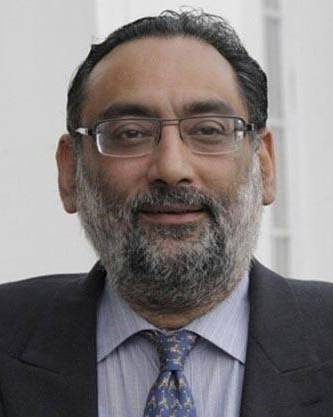
Gurugram, 16th Feb 2021 Noted economist and policy maker, Dr. Haseeb A. Drabu has formally joined Air Works India as an Independent Director after the receipt of all requisite approvals including security clearance. This was announced by Air Woks India through a press release. He was appointed to the Board of Directors of the MRO major in August 2020, subject to receipt of requisite approvals. On the development Dr. Drabu said, “Notwithstanding the adverse impact of Covid on Indian aviation and MROs, it is an exciting time to step into the sector given its long-term potential, fast paced growth, and fundamental role in economic development. I look forward to collaborating with members of the Air Works Board and the management team to realize the brand’s ambitions for the MRO sector in the world’s third largest domestic market, given the growing focus towards self-reliance (or Atmanirbhar) as well as the imperative need for India to become an MRO hub.” Prior to receipt of Dr. Drabu’s clearance, Air Works had received the necessary clearances for the appointment of Lt. Gen K J Singh (Retd.) as an Independent Director in September 2020. With this, the current Board of the Company comprises five members including, the two independent directors. Welcoming the development, Mr. D Anand Bhaskar, MD & CEO Air Works said, “Dr. Drabu’s deep understanding and experience across several areas has an invaluable bearing on Air Works’ overall business strategy given that proven business models and strategies have become obsolete in COVID times. We are increasingly thinking and operating out-of-the-box given the dynamism and accelerating developments in the MRO sector. With a refreshed Board, we are increasingly becoming a stronger enterprise that is also embracing the best in corporate governance.”

Top Stories

MONEY MATTERS

AIRLINES NEED MERCY OF INSURERS Cockpit of the aviation industry is out of control. Certainly the year 2020 has become a miserable year for airlines and epidemic dilemmas, travel constraints, border blockages, quarantines or isolations brought an unforeseen termination to a decade of happiness. The International Air Transport Association has already sketched the grim picture and according to its report worldwide air companies expected to lose approximately 85 billion dollars in this year for a net loss margin of around 20 percent. In addition, the report of the association predicts revenues to fall from 838 billion dollars to 419 billion dollars, passenger revenues will be about a third of 2019 level, passengers numbers will be nearly halve to 2.25 billion which would equate to an average net loss of 38 dollar per passenger. Thus financially 2020 will go down as the nastiest year in the history of aviation industry.  By Shivanand Pandit To rub salt in the wound, sequence of plane crashes brought bad times and jerking moments for both the airline entities and its insurers. In January 2020, Iranian Islamic Revolutionary Guards shot down Ukraine’s Boeing 737-800 after its take off from Tehran Imam Khomeini International Airport. In February 2020, Pegasus Airlines’ Boeing 737-800 skidded of the airstrip while landing at Turkey’s Istanbul-SabihaGökçen International Airport. In May 2020, Pakistan’s Airbus A320 crashed in a thickly in habited residential area of Karachi. Many people were killed and aircrafts were destroyed in all these ill-fated incidents. Regrettably, in August 2020 the Air India Express Boeing 737-800 became the victim of unlucky event. The aircraft skidded off the table-top airstrip and went down thirty five meters slop. Many people were killed and aircraft was gravely wrecked. Consequently, along with the public sector insurance conglomerate headed by New India Insurance which reinsured the risk overseas, global reinsurers will have to reimburse more than 90 per cent of the insured value of the star-crossed plane that was destroyed in the catastrophe.Many insurance partakers sense that premiums may get elevated in the next fiscal year due to increase in the calamities. This is a grave concern for half-dead airline industry. Overview of Aviation Insurance Sophisticated technical operations of an airplane and resulting risks have exposed the aviation industry to a chain of shakedowns. This has cemented the way to aviation insurance. Aviation insurance is a dedicated insurance which has been framed to offer coverage to the precise operations of an aircraft and other conceivable jeopardies in aviation. Although aviation insurance was first introduced in the early years of the 20th century, the concept of aviation insurance has gained thrush only of late. Numerous aircraft tragedies have not only encouraged more and more people to buy aviation insurance, but it has also amplified the number of claims by a gigantic margin.The clauses, terms, limits in aviation insurance are exceptionally inimitable.The nature of coverage and the amount of premium hinge on the type of aircraft that is being covered by the policy. Aircraft insurance provides protection against wide range of perils and shelters repairs to spoiled airplanes or other flying machines. Across-the-board coverage may also include impairment caused to airports, hangars, and other relevant land-based property. Though the claim process for aviation insurance is quick and hassle free, number of documents such as aircraft details document, flight details document, details of the crew members, documented proof of the accident, information on aircraft’s maintenance and engineering and documents of operational manual passenger have to be submitted for the settlement.In the present scene, there are many aviation policies that are making their presence felt with attractive features, viable cover plans, and a lot more. Airline Industry Not on Cloud Nine According to a survey in London, as a result of the deadly coronavirus pandemic the aviation segment holds the hugest risk of corporate default. Moreover, due to major portion of the operating costs namely aircraft leasing, maintenance and fuel overheads are paid in US dollar, Indian airlines are twisting and turning at a time when rupee has devalued by approximately 6 per cent since January 2020. To make the scene more horror, the burden of insurance premium is mounted. Insurance industry badly affected by the winds of change blow at the end of 2017. They suffered huge insured loss of 130 billion dollars because of severe hurricanes, wildfires and other natural adversities. They thought that aviation books are not burnt by these unlucky events and decided to tighten the rules for them. Insurance premiums were increased when contracts came up for renewal and renegotiation.It is very difficult for the aviation insurance consumer to admit these sky-high rates with more strict underwriting guidelines. It is significant, however, for aircraft owners and operators to keep in mind that the long-term health of the aviation-insurance industry is at stake. According to the report of insurance industry officials as a result of weak cash flows many airlines have necessitated policy renewals and new policy purchases postponed by three months to twelve months. They have also demanded waiver on renewal of insurance policies and 30 to 40 percent lower premiums.They are also looking to better our terms and conditions with their insurers as well. On the other hand during financial year 2019-20, the premium from sales of new pure aviation policies stood at approximately Rs.687 crore, which was roughly 24 per cent higher than about Rs.556 crore collected by the insurers in the previous financial year. These higher insurance costs unfortunately came at a time when loss ratios were increasing, leading to a lack of profits.Many insurers have stiffened underwriting strategies and are now refusing risks they would have quoted in the past. Large number of aircraft owners will find that there is less elasticity on recurrent-training necessities, more unwillingness to over-insure hull values and offer high liability edges, and less attention from underwriters when there is any loss history on an account. Five years ago, in 2015, the Directorate General of Civil Aviation made it compulsory for pilots to undertake psychiatric

FOREWORD

Dear Reader’s,


The current edition of Aviation World has covered many areas of Aerospace & Defence based on the latest development in the sector. The front cover highlights three different images, first for the Union Civil Aviation Minister ….. who is leading from the front to steer Indian Civil Aviation sector to witness one of the most interesting phases. He is also facing most tumultuous timing due to the ongoing financial stress in the Aviation sector due to ATF rising cost and long airspace restrictions resulting in mounting losses for Indian carriers. Despite of all the ground level challenges,the minister is addressing new things on regular basis which keeps the sector motivated. We have featured many such developmental works in this edition done under his guidance which will be interesting to read.

Our lead story on “ The West War” is another important feature which covers the ground level reality of the challenges faced by the Aviation sector. Its though time ahead and we believe it will pass soon .

There are features on Regional connectivity and MoCA revised rules on the UDAN 2.0 and how its going to transform the flying experience within India.

In this edition, we have covered topics on MRO,Various Policy changes,Sea Plane Operations by SkyHop Aviation, TATA-Airbus joint project on C295 military aircraft under Make In India which is expected to roll out soon and many other interesting contents which will be good to read.

We are covering Farnborough International Airshow 2026 from 20-24July 2026 in London and our next edition will be based on the same event.For features, you may contact our team on priority basis.


Happy Reading!

NEWSLETTER

Aviation World Magazine is India’s premier aviation magazine and has been actively supporting the development of the Indian and global civil aviation sector. We started our journey in year 2015 and its been 12 years now and the response and acceptance is really encouraging. Thanks to all our associates and writers who remained with us in our progressive journey.

We have started 2026 on a very positive note and we look forward to increase our footprints to more locations and induct many more new companies in our campaign.. Do write to us at : editor@aviationworld.in

Disclaimer

The contents published in this website are news covering Aviation, Aerospace and Defence sector. The objective is to provide news in informative form to keep our readers updated of the latest development. We also publish content featured in our print publication Aviation World.We try our best to avoid any factual errors or image displayed here but we ensure immediate corrections to any such thing brought to our notice that might have been published inadvertently. All images and contents are sourced from the relevant organisations media team.

Copyright ©2014 – 2026. AVIATION WORLD. All rights reserved.

Scroll to Top