

Author name: admin

SITA, Aviation World
Technology

SITA injects smart low-touch solutions into Bahrain International Airport amidst COVID-19 recovery

Backed by SITA’s technology, Bahrain International Airport’s (BIA) newly opened Passenger Terminal is better prepared to respond to the changing demands of travel during the COVID-19 pandemic. The ultra-modern facility positions BIA as the most advanced boutique airport in the Gulf, increasing its capacity to 14 million passengers per year. A key focus for Bahrain Airport Company (BAC), the airport’s operator and managing body, was to optimize the passenger experience and operations to quickly recover from the pandemic through 2021 and beyond.Using SITA’s Operations at Airports portfolio, the airport benefits from real-time insights, improved stakeholder collaboration, and increased agility to optimize operations. The solution includes SITA’s Flight Info Displays Systems (FIDS), providing a dynamic platform for communicating important information and managing the passenger flow. SITA is also providing Flex, its advanced cloud-based passenger processing solution. Flex allows airlines and the airport to develop new cloud-native applications for passengers and airport workers that transform the passenger experience and create new revenue opportunities. Flex will be delivered with SITA Smart Path kiosks enabling a low-touch mobile and biometric-enabled check-in experience that combats COVID-19 by reducing the passengers’ and staff’s risk of contracting the virus. The SITA solution also includes a baggage reconciliation system to help manage the delivery of passengers’ bags end to end. Roger Nakouzi, Vice President Sales, SITA, said: “We’re excited to reach this important milestone with Bahrain International Airport, despite the challenges of COVID-19. Thanks to new SITA technology, Bahrain International Airport can leap forward and make operations resilient, agile, and safer for all passengers. The implementation allows for deeper integration of Smart Path throughout the airport and further installation of automated systems, future-proofing the airport for decades to come.” The Airport Modernization Program (AMP) is the largest investment in Bahrain’s aviation sector for more than 20 years and will usher in a new era for air transport in the Kingdom. BAC Chief Executive Officer Mohamed Yousif Al Binfalah said: “In addition to the new Passenger Terminal, the AMP includes several infrastructure development projects that will contribute to the realization of Bahrain’s Economic Vision 2030, laying the foundation for a more sustainable and diversified economy. With SITA’s support, we have enhanced operational efficiency and are in a stronger position to meet the new standards and measures required during COVID-19. We are excited to become one of the most advanced airports in the region and look forward to delivering a smarter, safer, and more comfortable travel experience.” The ICT contract was undertaken collaboratively between SITA-Thales signed with the Ministry of Transport on behalf of Bahrain International Airport. For many countries, including Bahrain, economic recovery from the pandemic relies heavily on travel and tourism, sectors that are suffering due to COVID-19. SITA has been working closely with governments, airlines, and airports to support the implementation of strong border controls that have helped minimize and manage the pandemic’s impact globally.

Flybig, Aviation World
RCS, Top Stories

FLYBIG ADOPTS ARMS SOFTWARE SUITE FOR DIGITALIZED FLIGHT OPERATIONS

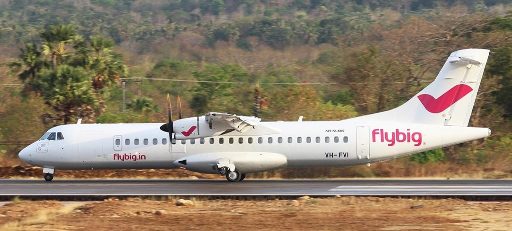
New Delhi, February 11, 2021 Flybig, India’s newest regional airline has selected LAMINAAR Aviation Infotech’s ARMS application software for their flight operations. The ATR operator chose the ARMS V2.5 unified platform for network planning, crew management, flight operations, flight dispatch, maintenance and engineering (M&E) and safety management. In addition, Flybig has also opted for the ARMS mobility suite to enable digitalization and promote paperless operations. Capt. Srinivas Rao, FRAeS, CEO of Flybig, says, “We chose ARMS after their convincing demonstration of a new-age solution that we were looking for, and hoping it will keep our hands free from IT operations. Added to that, were the testimonials we received from their existing clients, and the fact that they have such a strong presence in India.” Vivek Sheorey, CEO of LAMINAAR Aviation Infotech, says, “Being chosen by a significant new start-up airline is testimony to our products being agile and future ready. Airlines require real-time visibility and integration of data between flight operations. Our aim is to be FlyBig’s trusted partner for setting up systems and processes with speed and agility to enable faster decision making. We congratulate Flybig for its successful launch and look forward to a long-term engagement.” The ARMS V2.5 offers flexibility and seamless interoperability between its subsystems – flight ops, M&E, crew, safety, quality and analytics – that plays a critical role in any airline’s integrated operations initiative. The tech stack is easy to deploy, maintain, add components and features that bring non-disruptive incremental changes benefitting especially the large airlines.

Top Stories

4TH AIRPORT MODERNISATION SUMMIT

Event Date: 28th & 29th April, 2021 Venue: Bengaluru, India Hosted By: TraiCon Events Media Partner: Aviation WorldThis edition of Airport Modernisation Summit has key objective to connect government sector, stakeholders, influencers, experts and solution providers on one platform to meet, network of local and international case study presentations, product presentations, product launches, panel discussions and networking sessions. This Summit is a Two – Day educational and business exchange platform designed to connect regional and international project stakeholders. For more information contact : Mr. Alfin:- Tel: +91 9036981048 ;Email: alfin@traiconevents.com

Aviation World Magazine
Civil Aviation

BUDGET 2021 FOR AVIATION- STILL HOLDING AT 36000 FEET

BY ROHIT SINGH TOMAR The much anticipated Budget 2021 was recently announced by the Finance Minister of India Nirmala Sitharaman. Pre-budget months had seen a significant push from the Prime Minister for the Aatma Nirbhar Bharat Abhiyaan. It is expected that under this prerogative, manufacturing and in-country capabilities to perform aircraft maintenance would see a significant boost in the arm. With these expectations among the many aviation players, it was disappointing that the aviation sector did not find a mention in the budget. The incentives and policy to support India’s aircraft leasing industry were the silver lining in the budget speech. The aviation leasing market controls more than 65 per cent of the global fleet as of today. More than 35 per cent of the international deliveries in the next ten (10) years will be absorbed in Asia. While Singapore and Hong Kong continue their push in the aviation leasing sector, it seems an apt time to move into the aircraft leasing business. Recently, IFSCA (International Financial Services Centres Authority) published the draft regulations for aircraft leasing and opened it for public comments. Further, the Union Budget of 2021 explains Indian government’s interest in this sector. However, we still have a long mile to walk in meeting the global standards required to make aircraft leasing attractive in India. Among the many things, an independent aircraft registry managed under Gift City with records of aircraft asset owners and parties with a financial interest in the asset is an important starting point. The Gift city’s ability to succeed in setting up its own securities and trading company will be critical for the aircraft leasing company’s access. Lessors deploy a significant amount of debt and for India to be seen attractive, will have to offer competitive cost of debt. For comparative numbers, Air lease raised debt in November 2020 via an issue of 10 years bond with a coupon of 3.13 per cent which is 200 basis points lower than the Indian Government G-Sec bonds with a yield of above 5 percent. Strong Competition Among Lessors An aircraft like A320 Neo with a typical purchase price of about 54 Million USD is leased at a monthly lease rental factor (LRF) of 0.65 per cent ~ 0.7 per cent. Even at these LRFs, there is strong competition among lessors. At such low LRF’s, the average return per year on the value of an asset is estimated to be about 8 per cent. This return is inclusive of the various risks, including country risk, operators risk, and other risk adjustments. Of this 8 per cent, the Lessors have to provide for the expenses of running the leasing organization plus returns to the equity holders (which is typically upwards of 20 per cent). The net available return to apportion towards cost of debt has a small margin of 0.5 to 1 per cent. For banks and investment firms in India, a 10-year G-sec bond issued by the Government of India provide yields above 5 per cent, compared to the Hong Kong government’s 10-year bond yield of 0.8 per cent. At this juncture, we have not even factored in the currency fluctuation risks between the freely tradable currency as proposed (in USD or EUR) Vs INR. While the policy’s objective and the incentives are to bring foreign lessors to India, the government must learn from the past mistakes in aviation and realize that such movement will only be possible if and only if domestic banks are incentivized to lend capital at lower preferred rates. Incentivisation on lending is crucial for domestic capital being deployed and made available to leasing companies at par with international standards. Moving away from leasing, the budget fell short of implementing much-needed reforms and policy changes for developing the MRO infrastructure in India. With more than 90 per cent of the aircraft component MRO business being outsourced to companies outside India, it is high time that developing in-house capabilities becomes a strategic objective of the Aatma Nirbhar Abhiyaan. Large scale policy and reforms are needed in the MRO capability development in India. The UDAAN scheme, under which India was successfully able to upscale and make operational many regional airports across India, also provided the strategic objective for the government to develop far-flung regional airport alternatives to existing defence airports, which adds the flexibility of movement of defence forces at the shortest time across these airports. Value Incentivisation Approach Global OEMs have realised that success in this space is because of the strategy of playing one OEM against the other. Pursuant to which, China-a country with the perennial perchance to emerge as a leader, has aggressively entered into the aircraft manufacturing sector, aiming to share the market space with Boeing & Airbus. To ward off such future challenges, OEMs across the aviation value chain have started acquiring & consolidating the competition. Such consolidated entity wins a monopolist position placing it at a strategically stronger position to negotiate with both the customers and the governments alike. China with its competitive wage rates will be the only new entrant in this space in the forthcoming years leaving India behind with significant opportunity to encapsulate in this space. The government needs to get its think tank together on how and what policies need to be implemented to create a value incentivisation approach for these OEMs and build a strong, robust, resilient and self-reliant MRO ecosystem in India. While the government has reduced GST on MRO Services to make them competitive, it misses building long-term objectives. As time passes by for India, the only lever it has are the endusers of these OEM’s, that is, the airlines. The need of the hour that a comprehensive policy is developed which works on incentivizing the airlines for the work they carry out in India. For airlines, the opportunity for cost reduction should not only be limited to the labor cost arbitrage but also towards developing and supporting the transfer of work from their supplier to Indian players. For the

Top Stories

MOCA PERMITS BCCI TO USE DRONES FOR LIVE AERIAL CINEMATOGRAPHY OF THE INDIAN CRICKET 2021 SEASON

8th Feb 2021, New Delhi Ministry of Civil Aviation (MoCA) and Directorate General of Civil Aviation (DGCA) have granted conditional exemption to the Board of Control for Cricket in India (BCCI) for the deployment of drones for live aerial cinematography of the India Cricket Season in 2021. MoCA had received requests from BCCI & M/s Quidich pertaining to granting of request and other correspondences regarding permission to use Remotely Piloted Aircraft Systems (RPAS) for live aerial filming. Amber Dubey, Joint Secretary, Ministry of Civil Aviation said, “The drone ecosystem is evolving rapidly in our country. Its utilization is expanding from agriculture, mining, healthcare and disaster management to sports and entertainment. The granting of this permission is in line with the objectives of the Government of India to promote the commercial use of drones in the country.” “The Drone Rules 2021 are in the final stages of discussion with the law ministry. We are hoping to receive the approvals by March 2021″, he added. The conditional exemption is valid till 31st December 2021 from the date of issue of the letter or until the full operationalization of Digital Sky Platform (Phase-1), whichever is earlier. This exemption shall be valid only if all conditions and limitations as stated below are strictly adhered to. In case of violation of any condition, this exemption shall become null and void. Conditions and limitations to the BCCI and M/s Qujdich for using Remotely Piloted Aircraft System (RPAS) for live Aerial Filming during cricket season 2021: 1. This exemption to the BCCI from the paragraphs 5.2(b), 5.3, 6, 7, 8.4, 9.2, 11 (d), 11.2 (a), 12.3(a), 12.4 and 12.5 of CAR Section 3, Series X, Part I is subject to exemption from Rule 15A of the Aircraft Rules, 1937 by Ministry of Civil Aviation. 2. The BCCI shall obtain necessary clearances from (a) Local Administration (b) Ministry of Defence (c) Ministry of Home Affairs (d) Air Defence Clearance from Indian Air Force and (e) Airport Authority of India (AAI) [as applicable] prior to operation of Remotely Piloted Aircraft System (RPAS). 3. M/s Quidich engaged by BCCI as RPAS operator shall only operate the RPAS models specified in the approved Standard Operating procedures (SOP) Doc No QIUSOP/2021/01 Rev 0 dated 8th January 2021. The operations of the RPAS having valid Drone Acknowledgement Number (DAN) [specified in the SOP] shall be operated as per the above-mentioned SOP in the area specified therein. Any change in the approved SOP for e.g. Change in procedures or RPAS or use case or personnel or area specified in the approved SOP shall be included in the SOP and submitted to DGCA for approval. 4. BCCI shall ensure that only trained I experienced bona fide personnel operates the RPAS as per the approved SOP. Subsequently, the RPAS operator shall ensure that remote flight crew are trained through approved FTOs/ RPTOs. 5. The RPAS Operator shall ensure that the RPAS is in working condition and maintained as mentioned in the approved SOP and shall be responsible for any eventualities due to malfunction I disorientation of equipment. 6. The RPAS Operator shall maintain the records of each RPA flight and make such records available to the DGCA on demand. 7. BCCI shall take necessary permission regarding Aerial Photography from Directorate of Regulations & Information, DGCA or Ministry of Defence (as applicable). The photographs/video graphs, taken through RPAS shall be used by BCCI only. BCCI shall be responsible for safety and security of RPAS and data collected through RPAS. 8. The Operator shall ensure that the RPAS are made NPNT compliant [certified by QCI) as soon as the digital sky platform is made operational. 9. BCCI shall ensure that each RPAS operated by Quidich has fire resistant identification plate inscribed legibly with OAN, DAN and Model No. of the RPAS. 10. The operation of RPAS shall be restricted to daylight or well-lit conditions (above 2000 lux), within Visual Line of Sight (VLOS) in uncontrolled airspace only and upto height of 200 ft (AGL) max only. 11. RPAS shall not be operated in the vicinity of airport as per the provisions of the CAR. If required to operate near the airport/ in controlled airspace, approval from Airports Authority of India (AAI) shall be taken in advance regarding time and area of operations of RPAS. 12. BCCI shall ensure that no items are discharged or dropped during flight of the RPAS. The BCCI shall also ensure that hazardous material or variable payload are not carried in I using the RPA under any circumstances. 13. BCCI shall ensure that uninvolved persons are not allowed within the operation area [including Ground Control Station] and ensure safety conditions specified in the approved SOP and in this letter are adhered to. 14. BCCI shall ensure safety, security, and privacy of public, property, operator etc. Further, in case of any eventuality, DGCA shall not be held responsible. 15. The operator shall ensure the RPAS is not flown in a manner to cause danger to any person or property. In case of any injury to any person due to physical contact with the equipment, The Operator and BCCI shall be responsible for medico-legal issues. The BCCI shall ensure the insurance policy remains valid and of adequate level to cover any damage to third party resulting from accident I incident occurred during the operation of RPAS. 16. The operator shall not operate the RPAS in no-fly zones specified in Para 13.1 of the CAR Section 3, Series X, Part I without the approval of concerned Ministries/ authorities. 17. The BCCI and Quidich shall indemnify DGCA from any legal cases or any other issues arising due to these operations. 18. This letter shall not override other restrictions I SOP on Remotely Piloted Aircraft System framed by other Government Agencies or any byelaws. 19. In case of incident/accident during at any phase of the operations, the operator shall generate a report with full details to Air Safety Directorate of DGCA within 24 hours of such event. 20.

Defence

AERO INDIA 2021 CONCLUDES WITH SIGNING OF 201 MOUS, PRODUCT LAUNCHES AND TECHNOLOGY TRANSFERS

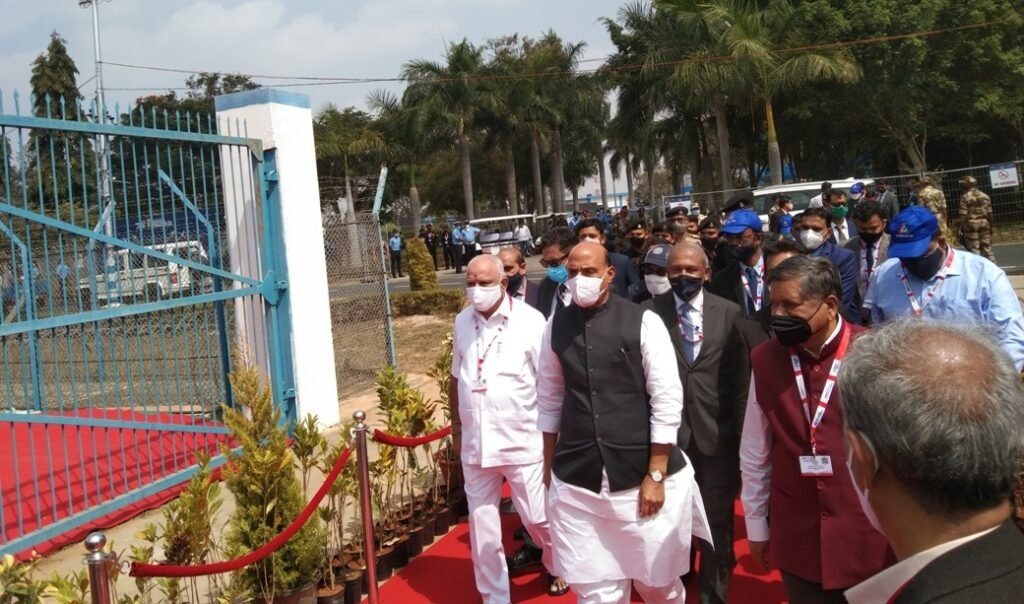
5th Feb, 2021, Bengaluru The Aero India 2021 concluded on a very positive note with a total of 201 MoUs, product launches and technology transfers were made at the Bandhan ceremony held on the last day of the mega defence show at Yehalanka, Bengaluru on February 05, 2021. These included the formal handing over of the Advanced Light Helicopters MK-III to the Indian Navy and Indian Coast Guard (ICG), commencement of Performance based logistics of ICG fleet, initial operational clearance of Army version of Light Utility Helicopter etc. In his address, Raksha Mantri Shri Rajnath said Bandhan exemplifies the spirit of public-private partnership in defence and aerospace sectors and have forged strategic ties that are poised to transform defence and aerospace manufacturing. He said 128 MoUs, 19 ToTs, 4 Handing Overs, 18 Product Launches and 32 major announcements were made at Aero India this year. He said Prime Minister Shri Narendra Modi’s clarion call for Atmanirbhar Bharat ignited the country’s spirit of innovation and collaboration. Raksha Mantri said the foundation of India’s vision rests on three pillars – Research and Development, Public and Private Defence Production and Defence Exports. Referring to the field of research and development, he said there was an attempt to broaden the research base of the nation by supporting and encouraging the private sector. In this context, he mentioned that some patents of DRDO have been shared with the private sector to assist in defence production ventures. Shri Rajnath Singh mentioned initiatives to encourage and facilitate private sector R&D initiatives such as iDEX and Defence India Start-up Challenge (DISC). He recalled innovations such as the combat drone display, a part of the swarm technology initiative, exhibited during the Army Day function on 15 January 2021 at New Delhi. Raksha Mantri reiterated India’s intention to bring down defence imports by at least $2 billion by 2022 to encourage local defence manufacturing. He informed that 138 proposals worth over $37 billion for domestic manufacturing were approved between 2016 and 2019. Highlighting the importance of the requisite eco-system for the growth of the defence industry, Shri Rajnath Singh said Rs 6,800 crore investments were pledged by both public and private industries in the defence corridors of Uttar Pradesh and Tamil Nadu. Rajnath Singh also spoke of the need for a robust domestic manufacturing base for defence export potential of the country. He reiterated the target of increasing the country’s defence base from $11 billion to $25 billion by 2025 including an export component of $5 billion. Defence exports grew from Rs 2000 crores to Rs 9000 crores from 2015-2020 with a vast majority spearheaded by the private sector. With reference to the Indian aerospace industry he said that the aero components sector is set to grow from Rs. 30,000 crores today to Rs. 60,000 crores by 2024. He enumerated the cost competitiveness of India’s manpower resources, availability of abundant, specialist capabilities and geographical advantages as reasons for its emergence as a global and regional Maintenance and Repair Operations hub. Hailing the agreements concluded at Aero India 2021 Raksha Mantri said they would give impetus to ‘Make In India’ and ‘Atmanirbhar Bharat’ and assured the gathering his Ministry would do everything possible to ensure the agreements are implemented. Secretary (Defence Production) Shri Raj Kumar delivered the welcome address. Chief of Defence Staff General Bipin Rawat, Chief of Naval Staff Admiral Karambir Singh, Chief of Army Staff General MM Naravane, Secretary, Department of Defence R&D and Chairman DRDO Dr Satheesh Reddy, DG Coast Guard Shri K Natarajan and Air Officer (Maintenance) Air Marshal Vibhas Pandey were also present at the event. Karnataka Chief Secretary Shri P Ravi Kumar delivered the vote of thanks. (News based on Press Release shared by PIB. Basic editing is done in the news as per the publication requirement.)

Aero India 2021
Civil Aviation

ALLIANCE AIR SIGNS MOU WITH HAL TO FLY DORNIER 228 AIRCRAFT FOR PASSENGER FLIGHTS

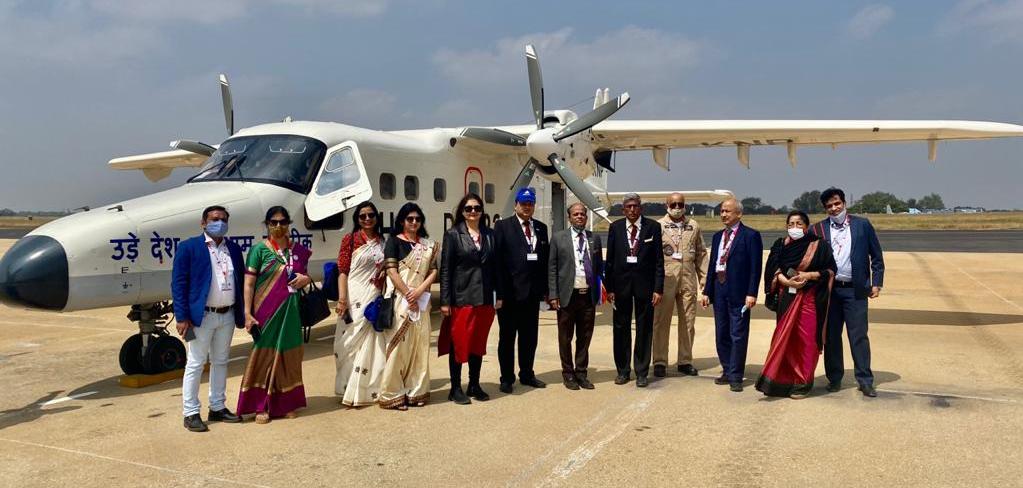
5th Feb, 2021, Bengaluru At Aero India 2021, Alliance Air has signed an MOU with HAL for operating civil Dornier – 228 for passenger flights. The MOU was signed in the presence of Rakhsa Mantri Rajnath Singh along with the top brass of the defence forces & defence organisations. Alliance Air has inducted two Dornier 228 turboprops manufactured by Hindustan Aeronautics Ltd to its fleet. Harpreet A De Singh, CEO, Alliance Air said “I am excited to say that in line with our Hon’ble Prime Minister’s vision of Atmanirbhar Bharat, Alliance Air will be the first airline in the country to fly HAL’s Made in India aircraft , Dornier 228. I look forward to leading Alliance Air with the vision of our PM and MOCA and serve the nation, make it Atmanirbhar, and operate Made in India aircraft. The alignment of goals of business and corporate social responsibility through a true ALLIANCE of hearts and divine energy with team work and faith in GOD will definitely bring success. Alliance Air has been a forerunner in UDAN ( Ude Desh ka Aam nagrik), Regional Connectivity Scheme of Government of India. This step would bring convergence with the scheme and will ensure the much needed air connectivity to the hinterland areas like North Eastern region of the country. MOCA is steering the entire efforts to complete the required activities as per the timeline. Present at the occasion Usha Padhee, Joint Secretary, MOCA complimented the efforts and initiative of Alliance Air for taking a major step towards Atmanirbhar Bharat and enhancing connectivity to remote areas of the country. The 19 seater non-pressurised Dornier 228 has a lavatory with an air-conditioned cabin capable of day & night operations. The light transport aircraft will facilitate regional connectivity and cater to solve the challenges of connecting hinterland areas of the country. The commercial passenger operations are expected to commence in Arunachal Pradesh by March 2021. Up till now Alliance Air has a fleet of 18 ATR 72 600, the Dornier aircrafts will expand the fleet and help in achieving Alliance Air’s vision of becoming the number one regional carrier in the country. (News published on the basis of press release shared by Alliance Air)

AASSC Relaunched its Operators Training Mmanual for Multi-Rotor Drones at Aero India-2021
Defence

AASSC RELAUNCHED ITS OPERATORS’ TRAINING MANUAL FOR MULTI-ROTOR DRONES AT AERO INDIA 2021

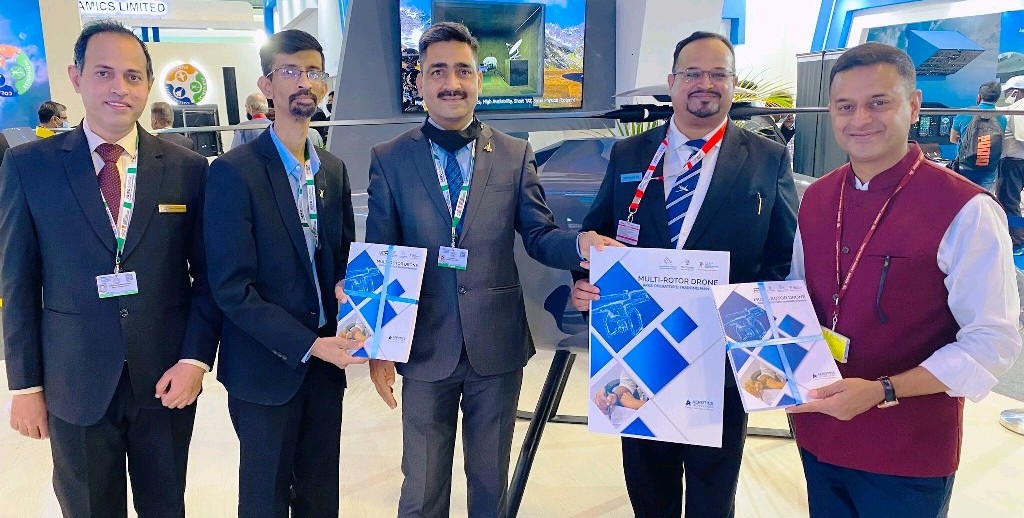
Aviation World , 04th Feb, 2021, Bengaluru At Aero India 2021, Aerospace & Aviation Sector Skill Council (AASSC), a JV of HAL relaunched its Operators’ Training Manual for Multi-Rotor Drones. This is the first-ever such training manual published in India as per the minimum requirements of DGCA and complying with International Technical Publication Standards for Aviation ATA-100. At the event, Shri R Madhavan, CMD-HAL & Chairman, AASSC and Shri Amber Dubey – Joint Secretary – Ministry of Civil Aviation (MoCA) appreciated this important & timely initiative & collaboration of AASSC, Aerotics Technologies (a start-up based at Bengaluru), and Capt Raejus Job, a DGCA qualified Master Trainer on Drones to work tirelessly and come out with such a compilation for the benefit of booming Drone industry of India. AASSC first lauched the Operators’ Training Manual for Multi-Rotor Drones in December 2020.

Aero India 2021, Rajnath Singh
Defence

AERO INDIA 21 GETS OFF TO A FLYING START

Aero India 2021 special update 03rd Feb 2021,Bengaluru The Inaugural ceremony for Aero India 2021, Asia’s largest Aerospace and Defence Exhibition is being held at Air Force Station, Yelahanka, Bengaluru between February 03-05, 2021. This year Aero India 2021 has been organised in hybrid mode with a concurrent virtual exhibition to encourage maximum participation. Opening the proceedings Secretary (Defence Production) Shri Raj Kumar addressed the gathering and said that India has taken a leap in organising a completely COVID compliant Aero and Defence exhibition. He expressed his gratitude to ambassadors and delegates from more than 55 nations who were in attendance. Shri Raj Kumar said that the large attendance at Aero India 2021 reflects positive temperament of people across the world and renewed global interest in the capabilities of India. He said that Aero India 2021 would provide a platform for exchange of ideas and forge partnerships in the aerospace and Defence sectors. He also provided a brief about the events to be organized during Aero India 2021, including the Chief of Air Staffs Conclave, the Bandhan ceremony and the India Pavilion. Later contract documents to produce Light Combat Aircraft Tejas were handed over by the Ministry of Defence to Hindustan Aeronautics Limited (HAL). Chairman and Managing Director, HAL Shri R Madhavan presented a model of the Light Combat Aircraft (LCA) Tejas to Raksha Mantri Shri Rajnath Singh. This was followed by the screening of a short film on the journey of the aircraft. Addressing the gathering Raksha Mantri Shri Rajnath Singh expressed his happiness at the attendance of delegates from around the world at Aero India 2021. He said that the existing supply chains developed over the years by aerospace and engineering firms and an investor friendly government with simplified procedures and single window clearance mechanism makes Karnataka an attractive destination for industry. He expressed his gratitude to Chief Minister of Karnataka Shri B S Yediyurappa for extending full support in organising Aero India 2021. Speaking on Aero India 2021 Shri Rajnath Singh said the exhibition would display the vast potential and the multifarious opportunities that our country offers in the field of defence and aerospace sector. He added that it promises to be the world’s first ever hybrid aero & defence exhibition with a concurrent virtual exhibition making it a truly digital and global event. Raksha Mantri appreciated the growing optimism of the global community, reflected in the participation of over 540 exhibitors including 80 foreign companies and defence ministers, delegates, service chiefs and officials from more than 55 nations. He highlighted that the unique opportunity in defence and aerospace manufacturing that India offers through a “Sangam” of rising demand, greater innovation, conducive policies and maturing ecosystem in the sector. Shri Rajnath Singh also announced that the government plans to spend 130 billion dollars on military modernisation over the next seven years. He said that steps had been taken to strengthen the nation’s security apparatus with domestic manufacturing and complex Defence platforms becoming the focus of the Aatmanirbhar Policy. He said that the government had enhanced Foreign Direct Investment in the Defence Sector up to 74 per cent through the automatic route and 100 per cent through the government route. Hailing the reforms brought in by the government since 2014 he said that they would create a conducive system for exports, foreign direct investment and offset discharge. The Newly introduced (Buy Global-Manufacture in India) category of capital procurement in Defence Acquisition Policy 2020 allows outright purchase of equipment from foreign vendors and indigenous manufacture through an Indian subsidiary, a joint venture or an Indian agency. He said a large number of indigenous Defence equipment had been developed by Defence Research and Development Organisation to cater to the needs of the nation’s defence forces. Raksha Mantri informed that reforms aimed at bringing ease in doing business, have shown good results. India has jumped from 77th rank in 2019 to the 63rd rank in the World Bank’s Ease of Doing Business Rankings. He added that industrial licensing requirements have been eliminated for a number of items in the defence sector. More than 500 companies have now taken defence licences, doubling the number in the last 6 years. Shri Rajnath Singh invited business leaders from across the globe to take advantage of the various initiatives of the government of India and set up manufacturing units. Shri Rajnath Singh said that the India pavilion at Aero India 2021 would showcase India’s design and manufacturing supply chain associated with various facets of the rotary wing system. Raksha Mantri expressed great happiness that HAL got the orders for 83 new indigenous LCA – Tejas MK1A for Indian Air Force valued at more than Rs 48,000 crore, the biggest “Make in India” defence contract till date. He said with a strong and diversified Micro, Small, Medium Enterprise sector composed of more than active 5000 units, India has the potential to become a reliable supplier of defence equipment to many of its friendly nations. Raksha Mantri shared the vision of making India one of the biggest countries of the world in defence sector, from design to production, with active participation of public and private sector. He said that to achieve the twin goals of self-reliance and exports, we have set a target to achieve Rs 1,75,000 crore turnover, including export of Rs 35,000 crore in aerospace and defence goods and services by 2024. Shri Rajnath Singh recognised India’s interests beyond its shores and said that it was India’s duty to remain capable and willing to assist them in times of natural calamities and security challenges. He expressed happiness at the organisation of the first Indian Ocean Region’s Defence Ministers’ Conclave with the theme “Enhanced peace, Security and cooperation in the Indian Ocean Region” in this edition of Aero India. He said that this was an implementation of the concept of the Indian Ocean built around Security and Growth for All (SAGAR), visualised during Prime Minister Narendra Modi’s visit to Indian Ocean Island states in 2015.

Defence

HENSOLDT UK LAUNCHES SPEXER 600 GROUND BASED SURVEILLANCE RADAR

Enfield, UK HENSOLDT UK has announced the launch of SPEXER 600 multi-mission, X-Band ground based surveillance radar utilising world beating SharpEye solid state transceiver technology. Building upon the excellent pedigree of well-established HENSOLDT products and technologies, SPEXER 600 complements the SPEXER family of Active Electronically Scanned Array or AESA radars, offering a cost effective and truly crew portable field deployable solution. Designed to meet user requirements to detect multiple threats in the modern battlefield or security environment, it offers a number of modes allowing multiple functions to be carried out by a single radar sensor. The built in tracker reduces the need for additional electronic units, making it a lightweight, crew portable unit that can be set up in a few minutes. In fixed installations, the low weight allows it to be installed without any specialist masts or structures. Controlled either locally or remotely from a command centre, SPEXER 600 can be easily networked with other sensors. “SPEXER 600 from HENSOLDT UK is the solution for today’s complex operational needs on the battlefield, or in securing the nations critical infrastructure against multiple threats”, stated Adrian Pilbeam, Head of Sales – Ground and Maritime Surveillance Radar. (Published unedited on the basis of Press Release shared on 21st Jan 2021)

FOREWORD

Dear Reader’s,


The current edition of Aviation World has covered many areas of Aerospace & Defence based on the latest development in the sector. The front cover highlights three different images, first for the Union Civil Aviation Minister ….. who is leading from the front to steer Indian Civil Aviation sector to witness one of the most interesting phases. He is also facing most tumultuous timing due to the ongoing financial stress in the Aviation sector due to ATF rising cost and long airspace restrictions resulting in mounting losses for Indian carriers. Despite of all the ground level challenges,the minister is addressing new things on regular basis which keeps the sector motivated. We have featured many such developmental works in this edition done under his guidance which will be interesting to read.

Our lead story on “ The West War” is another important feature which covers the ground level reality of the challenges faced by the Aviation sector. Its though time ahead and we believe it will pass soon .

There are features on Regional connectivity and MoCA revised rules on the UDAN 2.0 and how its going to transform the flying experience within India.

In this edition, we have covered topics on MRO,Various Policy changes,Sea Plane Operations by SkyHop Aviation, TATA-Airbus joint project on C295 military aircraft under Make In India which is expected to roll out soon and many other interesting contents which will be good to read.

We are covering Farnborough International Airshow 2026 from 20-24July 2026 in London and our next edition will be based on the same event.For features, you may contact our team on priority basis.


Happy Reading!

NEWSLETTER

Aviation World Magazine is India’s premier aviation magazine and has been actively supporting the development of the Indian and global civil aviation sector. We started our journey in year 2015 and its been 12 years now and the response and acceptance is really encouraging. Thanks to all our associates and writers who remained with us in our progressive journey.

We have started 2026 on a very positive note and we look forward to increase our footprints to more locations and induct many more new companies in our campaign.. Do write to us at : editor@aviationworld.in

Disclaimer

The contents published in this website are news covering Aviation, Aerospace and Defence sector. The objective is to provide news in informative form to keep our readers updated of the latest development. We also publish content featured in our print publication Aviation World.We try our best to avoid any factual errors or image displayed here but we ensure immediate corrections to any such thing brought to our notice that might have been published inadvertently. All images and contents are sourced from the relevant organisations media team.

Copyright ©2014 – 2026. AVIATION WORLD. All rights reserved.

Scroll to Top