
Drones

Drones

Telangana Government granted exemption to conduct Beyond Visual Line of Sight (BVLOS) experimental flights of drones

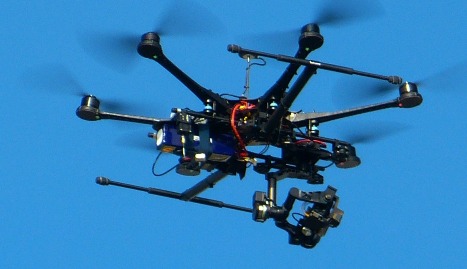
New Delhi The Ministry of Civil Aviation (MoCA) & Directorate General of Civil Aviation (DGCA)have granted conditional exemption to the Government of Telangana for conducting experimental Beyond Visual Line of Sight (BVLOS) drone flights for delivery of vaccines. Exemption from Unmanned Aircraft System {UAS) Rules, 2021 has been granted as part of government’s constant endeavour to enhance the scope of drone usage in the country and assist the nation to fight the COVID-19 pandemic.Last month, the Government of Telangana was granted conditional exemption for conducting experimental delivery of Covid-19 vaccines within Visual Line of Sight (VLOS) Range using drones. To accelerate the drone deployment process to formulate application-based models, the grant has been extended to Beyond Visual Line of Sight (BVLOS). The trials may commence by end of May 2021. This exemption shall be subject to complete adherence to the conditions as stated in Annexure 1 and the directions/ exemptions issued (or to be issued in future) by the Ministry of Civil Aviation (MoCA). This exemption shall be valid for a period of one year from the date of approval of the SOP or until further orders, whichever is earlier. Earlier this month, 20 consortia were also granted permission to conduct Beyond Visual Line of Sight (BVLOS) experimental flights of drones. BVLOS trials will help create the regulatory framework for drone deliveries and other major applications. Annexure 1 Conditions for conducting experimental BVLOS drone flights for delivery of vaccines by Government of Telangana. 1. Before the commencement of BVLOS trial flights, each Consortium shall develop and submit the following documents to DGCA for approval: a) Standard Operating Procedures (SOP) for BVLOS operations b) SOP for coordinating with Air Traffic Control(ATC) and Indian Air Force (IAF) in normal situations and contingencies such as Command and Control (C2) lost-link. 2. Security clearance of the entities involved (other than Government entities), personnel involved and the proposed airspaces, shall be obtained from the Ministry of Home Affairs (MHA). 3. The maximum permitted height for drone operations is 400 feet Above Ground Level (AGL). Energy reserve of 15% of flight time should be provisioned for. 4. Before the commencement of BVLOS trial flights, each Consortium should conduct a hazard identification and risk management (HIRM) workshop involving all stakeholders. BVLOS trials should be attempted only after all risks are mitigated to an acceptable levelof safety. 5. Drone pilots shall hold a valid certificate of training and have sufficient experience in drone operations. A safe VLOS record of the drone operator and the remote pilot are mandatory requirements. 6. Before commencement of the trials, clearance from IAF and local administration shall be obtained. 7. The Government of Telangana shall post a Single Point Coordinator (SPC) at Shamshabad ATC for the entire duration of the trial flights to ensure smooth coordination with ATC. 8. A Flight Plan should be filed for each trial BVLOS flight with Shamshabad ATC;and Flight Information Centre (FIC) number and Air Defence Clearance (ADC) number shall be obtained. 9. The Government of Telangana shall initiate a Notice to Airmen (NOTAM) in coordination with General Manager (ATM), AAI, Shamshabad. 10. Drone operations shall be limited between local sunrise and local sunset. Visual Meteorological Conditions (VMC) should prevail at take-off and landing sites. Weather limitations stipulated by the drone manufacturer shall be complied with. 11. The drones used for BVLOS trial flights should satisfy the following requirements: a)Type – Micro or Small category rotary wing drone b)Valid Drone Acknowledgement Number (DAN). c)Sufficient endurance for long-range operations d)Capability to withstand adverse weather e)Capability to transmit identity and live trajectory information f) Carriage of a barometric sensor on-board g)Capability to carry out geo-fencing, Return to Home (RTH) and Automatic Flight Termination.¬¬ h)Capability to conduct autonomous operations i)Conspicuous with bright colours and flashing strobe lights j)360-degrees Collision avoidance system to avoid terrain and obstacles k)Detect and Avoid System (DAA) to detect and avoid manned and unmanned aircraft I)Display of drone pilot to provide live trajectory, manned aircraft information, DAA information and FirstPerson View (FPV), with visual/ audio alerts 12.Payload should be restricted to the proposed use-case. During the trials, drone shall not drop or discharge substances and shall not transport any hazardous material. 13.Each Consortium engaged in BVLOS trial operations should establish basic UAS Traffic Management (UTM) infrastructure for real-time management of the flights and provide situational awareness data to ATC and IAF units, as required. 14.Each Consortium shall ensure that the UAS operations are insured against any accidents leading to injury/ death of uninvolved persons or damage to property. 15.Government of India and its entities shall not be held liable for any loss or damage to any entity whatsoever, during the conduct of such trials. 16.Each Consortium shall indemnify Government of India and its entities from any loss on account of any claim by third party (including but not limited to cost of litigation) which may arise due to any act of the Consortium during the conduct of such trials. 17.This permission for BVLOS trial flights shall not be used for any commercial purpose. 18.Upon completion of the trials, the Government of Telangana shall submit a detailed Proof of Concept to MoCA and DGCA. It is expected that the level of documentation and supporting justification would be proportionate to the level of complexity of the proposed BVLOS drone operation. News Source: PIB( Pix used for representation only)

Drones

Wg.Cdr. S Vijay (Veteran) takes over the reins of Skye Air Mobility

New Delhi, 16th April 2021: Skye Air Mobility, a drone delivery tech company based out of New Delhi & Bangalore, has appointed Wing Commander S Vijay (Veteran) as its Chief Operating officer (COO). Skye Air has received the permission to start BVLOS Drone flights as a pilot project and the company is geared up to start the trials soon. The appointment of Air Veteran will help the company to accelerate its ambitious plans of starting drone deliveries in India and his rich experience in the field of Drone technology will provide strategic leadership to Skye Air Mobility as the company eyes overseas growth opportunities in the drone sector. Capitalizing on its core competency in drone-based delivery, Skye Air Mobility has been at the forefront of various BVLOS trials. It is also developing customized drones for healthcare and delivery use cases. The company is working to integrate drone-based deliveries into Healthcare logistics, Relief logistics, Food & E-commerce logistics, Urban and Defence logistics. The Skye Air team is well-experienced in the field of aviation operations, design & development of drones and its commercial applications. The combined experience of the team is over 100 man-years. The company also endeavors to bring transformational change in rural and remote healthcare system by helping easy and faster access to vital medical supplies. Vijay, who will head the Skye Air Mobility, is also a Certified Trainer in Instructional Design, Learning and Development and a Guest Faculty at Indian Institute of Drones. During the course of his career with the Indian Air Force, S Vijay was specialized in UAV operations and maintenance along with other responsibilities that involved complete life cycle management of UAV fleet. Post his retirement from the IAF and in the last 4 years, Vijay has been guiding and Mentoring Drone & GIS Start-ups, and was consulting TQ Cert Services Private Limited (A wholly owned subsidiary of TATA Projects Ltd) on ‘Drone Certification’. “The growth achieved by Skye Air Mobility in a short span of it coming into existence is highly impressive. Drones are the need of the hour. The potential of drones is immense, and its uses will only grow with the time. I am excited to be part of this energetic, talented and committed team” said Wg Cdr S Vijay (Retd). On the appointment, Mr. Ankit Kumar, Board Member & Director of Skye Air Mobility said, “Vijay’s appointment is linked to a key phase for our company. After our initial successes, the company must structure itself to grow internationally and bolster its leadership. Vijay’s experience will surely be a real asset to Skye Air Mobility as our ambition is to transform, build and operate futuristic transportation solutions helping mankind achieve a better life”.

Drones

Indian Drone Ecosystem:Long Road Ahead for Policy Implementation

  Ministry of Civil Aviation, GoI has been taking numerous steps towards regulating as well as making the drone business one of the promising sector. Aviation World Magazine in its endeavor to highlight pertinent issues of the drone sector publishes content written be industry experts so that readers’ can be updated with all new guidelines. BY ARUN SASIDHARAN Drones have proven to be among the most promising technologies from the fourth industrial revolution.Worldwide, commercial drones are finding widespread application in law enforcement, disaster management, photography, film making, agriculture, last mile logistics, healthcare, visual inspections, and mapping. Evolution of drone regulations in India. The commercial use of drones in India has been limited by policy paralysis for years. In October 2014, Directorate General of Civil Aviation (DGCA), decided to put a near-blanket ban on drones operations due to lack of regulatory framework and infrastructure for safe operation. Since then, DGCA has been endeavouring to put in place appropriate procedures and policies to ensure regulated use of drones in country. As a result, in December 2018 DGCA issuedthe Civil Aviation Requirements (CAR) for operating unmanned aircraft in India. Since managing low-level airspace and drone traffic operations manually was a daunting task for government, the drone regulations envisaged automated software based management of drone operation through a Digital Sky Platform. The Digital Sky Platform is the first-of-its-kind national unmanned traffic management (UTM) platform that implements “no permission, no take-off” (NPNT). NPNT system aims to prevent unauthorized flights and to ensure public safety, any drone without a digital permit to fly will not be able to take-off. Implementation Woes in Digital Sky For operating unmanned aircraft, DGCA requires that the operators, pilots, trainers, manufacturers and unmanned traffic management service providers shouldconfirm with stringent set of approvals and compliances. Digital Sky is the only one mean of obtaining all permits, licenses, and authorisations for drone operations, manufacturing, training and traffic management. The first stage of Digital Sky is yet to be fully implemented and delay in its implementation is becoming a bottleneck for drone industry. As shown in figure below, Digital Sky has a complex technology architecture having multiple stake holder across industry and interconnected processes. Airports Authority of India (AAI) is the nodal authority responsible for the development, maintenance and technical operation of the DigitalSky Platform on behalf of DGCA. To illustrate the concept of interconnected procedures, take an example ofan operator who wishto obtain UAS Operator Permit (UAOP) to fly a small category drone. The operator will need pilotswith DGCA license, while the drone training infrastructure in the countryitself is still evolving. To address non-availability drone training facilities, MoCA designated around 13existing flying schools as Flying Training Organisations (FTO) for unmanned aircraft in mid-2020. The drone pilot trained by these FTOs, needs to apply through Digital Sky for a license, based on which the DGCA willconduct exam and grant RPA License. Currently these functionality is reportedly not available inthe Digital Sky. DGCA approved drone pilot license, is a mandatory requirement to obtain UAS Operator Permit (UAOP) through Digital Sky.Since the whole processes is not yet established, not a single UAOP has been allotted to any operator. Every drone of Micro category (>250 gm) and above needs to have Unique Identification Number (UIN) akin to the number plate of car. However, as per Digital Sky portal data in December 2020, only 41 drones in India has been issued UIN. This obviously means that nearly all micro drones and above operating in India are not complaint with DGCA requirements. Challenges in NPNT Initiative and Opportunities for Indian OEMs All drone having take-off weight of greater than 250 gram are required to be NPNT complaint. NPNT ensures that a UAS does not take-off without a signed and encrypted digital permission known as the Permission Artefact (PA). In July 2020, the first Digital Sky enabled NPNT (No Permission No Takeoff) drone flight in India was successfully put to test using Asteria’s A200 micro drone. Though the NPNT functionality is claimed to be validated, there is still a long way to go before itcan be practicallyutilized by the end users. To illustrate, NPNT requires end-to-end traceability and this can be achieved only by undisputable identification of a drone through its registered flight module (RFM). The RFM is required to be implemented at the Flight Controller Level of the drone. A NPNT compliant RFM should allow for secure storage to store the digital identifiers for a drone. A Permission Artifact is an electronic document generated by the Digital Sky platform which specifies the permitted parameters for a flight. An RFM should be able to accept a Permission Artifact (PA) and the RFM should allow the drone to be armed only when the PA is validated. From the explanation above, it is clear that drone manufacturers will have to make firmware and hardware level changes in the flight controller, for compliance with NPNT. Also, the communication between drone and the digital sky will be happening through intermediaries like Ground Control Software, Registered Flight Module Provider and unmanned traffic service providers. This will necessitate a standardized communication interface for the external applications to interact with RFM’s permission artefact. NPNT initiative to safeguard the skies is considered a bold step. However, it is clear that NPNT bring extremely high level of technological complexities for all stakeholders and seamless integration will be a challenge. NPNT can also result in increased cost of compliance for end user. Prominent drone manufacturer DJI told that they don’t intend to make their drones NPNT complaint for India.Requirement to tweak drone hardware for compliance was reported to be one of the reason. Presently, DJI has a massive presence in India despite its drones not complying with India’s current drone regulations. Many leading industry figures are proposing Remote ID system of drone monitoring as an alternative to NPNT. Remote IDsystem only require firmware level changes and can also be used by drone pilotto submit flightplan for approval. In case the operator do not adhere to approved flight plan,

Drones

Dassault Systèmes India organises Virtual “Drone-a-thon: Propelling Sustainability

Team Terneagle from Punjab Engineering College emerged as the winner of Dassault Systèmes’ first-ever virtual hackathon in India on drones and UAVs- Drone-a-thon: Propelling Sustainability. Team Terneagle will recieve a cash prize, access to Dassault Systèmes’ 3DEXPERIENCE platform and brand applications, and mentorship from the 3DEXPERIENCE Lab.   The winner was chosen from the top five identified teams based on their idea pitch presentations on themes like agriculture, city, healthcare and defense to the honorable jury. These teams are Terneagle, Kisan Mitra, Agro-Raptor, Las-Innovation & Pegasus. The jury panel was comprised of Piyush Srivastav- Chief, Natural Resource Divison, Tata Steel ; Steven Woolley, CTO, EXICOM ; Abhishek Burman, CEO, General Aeronautics ; A.K. Ghosh, Professor, IIT Kanpur ; S. Sridhar, Addl. General Manager HAL India ; and Frederic Vacher, Director, 3DEXPERIENCE Lab, Dassault Systèmes. Along with Team Terneagle the other top teams AgroRaptor and Pegasus also got an opportunity to present at the 3DEXPERIENCE Conference 2020 India.   Team Terneagle addressed the challenge of delivering parcels by e-commerce companies from the delivery center to customers using drones to reduce delivery time and safety aspects of delivery. The drones designed by Team Terneagle can be used in consumer goods delivery, postal deliveries, food deliveries, healthcare-medical deliveries and even in disaster management. The major aspect of their design is the ability to transform between quadcopter mode and glider mode. Quadcopter mode will take the drone to the desired height while the glider mode will help the drone to travel at high altitudes at high speed. The drone features vertical take-off and landing (VTOL) capabilities, large cargo space, GPS return to home, anti-collison light ID plate, LED plates, RFID and SIM/No Permission No Takeoff (NPNT) safety features. With capabilities to function in full autonomous mode, VTOL capabilities, quick flight speed and large range, it can be easily used for multiple applications when it meets regulatory standards. This design and Team Terneagle will be mentored by the 3DEXPERIENCE Lab network worldwide. The nationwide ‘Drone-a-thon: Propelling Sustainability’ hackathon received over 440 entries; of which the 21 best ideas were selected for screening. Further to the screening, the top 10 teams got a chance to design, model and simulate their drones and UAVs concepts in real time with access to the 3DEXPERIENCE platform along with training and guidance from 3DEXPERIENCE Edu and 3DEXPERIENCE Lab mentors. Further, the designs were validated on parameters like sizing, aerodynamic, aeroelastic, structual form, propulsion, stability, control, electronics and fabrication analysis. The juries considered criteria like innovation in design and working model of the drones, practicality, digital designs, systems engineering, aesthetics and futuristic design and manufacturability in the Indian context with available local raw materials and components. Drone-a-thon: Propelling Sustainability provided a platform to inspire young minds to ideate, create futuristic drones and UAVs in India that can be manufactured locally to help farming and agriculture, city planning and surveillance, provide healthcare facilities and medical supplies in remote areas and help defence establishments in the country.

Drones

SKILL DEVELOPMENT

AASSC TO TRAIN & DEVELOP OCCUPATIONAL STANDARDS OF DRONE OPERATOR Aviation is proof that given, the will, we have the capacity to achieve the impossible. -Edward Vernon Rickenbacker Drones or Unmanned Aerial Vehicles (UAVs) are basically machines that can fly without having any human pilot present inside the vehicle. These are mainly controlled by computers, or in case of toy drones, by simple remote controls. The world is moving in to The Fourth industrial Revolution, the digital revolution, and for India it brings tremendous opportunities to leapfrog many stages of development. DRONES- INDIA PERSPECTIVE: Indian UAV market to grow at a CAGR of 18% during 2017–23 in terms of revenue. In a recent report, FICCI and EY projected that the value of the Indian UAV industry and market would be around US$ 885.7 million. Global market size will touch US$ 21.47 billion by 2021. With 22.5% of the world’s UAV imports, India tops the list of drone-importing countries – Opportunity for AtmaNirbhar Bharat. CONSISTENT GROWTH AND REGULATIONS FOR DRONES: Drones are an inevitable part of the future landscape scenery.One thing which is very clear is that the drone industry is only just beginning to pick pace in the country and bound to grow in the next decade or so. The range of drones available for various applications is increasing while the manufacturing cost is decreasing. The demand for drone operators for the varied applications and for other job roles in the drone industry is increasing as well. In December 2018, Ministry of Civil Aviation through Civil Aviation Regulation (CAR) 1.0 established basic framework of rules and launched DigitalSky Platform. In January 2019, Drone Ecosystem Policy Roadmap was released which outlined key principles guiding the draft of CAR 2.0. The new CAR 2.0 is likely to further enable commercial use of Drones/Unmanned Aerial Systems (UAS) and allow its operation Beyond Visual Line of Sight (BVLOS). The policy seeks to provide a way for foreign players to invest in India, which will allow the development of India’s UAV sector. Investments by the Indian government and citizens, combined with future foreign direct investment, can become the reason for the further evolution of the drone sector in India. The Ministry of Civil Aviation – DGCA has notified the draft rules, known as Unmanned Aircraft System Rules, 2020, on June 2 for importing, manufacturing and owning drones as well as for drone ports, or airports for drones. It had invited comments from stakeholders within 30 days, following which the rules will be finalised APPLICATIONS OF DRONES: CLASSIFICATION OF DRONES: (a) When it comes down to the classification of these drones, there is no set standard. According to the usage, drones are constructed in various shapes and sizes. Normally, drones are classified according to their size. They are Hobby Drones Commercial Drones Industrial Drones Military Drones             (b)Classification on the basis of Usage: “Drones” can be classified on a different basis – say based on ‘usage‘ like Drones for Photography, Drones for aerial Mapping, Drones for Surveillance etc. However, the best classification of ‘Drones’ can be made on the basis of aerial platforms. (c)Based on the type of aerial platform used, there are 4 major types of drones: 1. Multi Rotor Drones 2. Fixed Wing Drones 3. Single Rotor Helicopter 4. Fixed Wing Hybrid VTOL (d)Classification of Drones as per AUW: Civil Drones is categorized as per DGCA (Directorate General Civil Aviation –  Regulatory body – India)  in accordance with Maximum All-Up-Weight (including payload) as indicated below:   SOME RECENT PROJECTS USING DRONES IN INDIA: Anti – Locust operations in Rajasthan & U.P in Jun 20 Drones used in surveillance operations in COVID-19 hit cities like Mumbai & Bangalore In November 2019, Coal India used drones to check illegal mining and pilferage Indian Railways is using UAS for inspection & 3D mapping to bring to life, a dedicated freight corridor with a network of 3,360 km. Upcoming projects: Indian Oil will use drones for aerial surveillance of their Delhi-Panipat pipeline. Survey of India will do high definition aerial mapping of villages in India using drones. Under the SVAMITVA scheme of Ministry of Panchayati Raj which stands for ‘Survey of villages and mapping with improvised technology in village areas’. The target is to map India’s over 6.6 lakh villages by Dec 2024. The objective of the scheme is to create accurate land records for property rights, direct benefit transfers and panchayat level planning. Maha-Transco will use drones for powerline inspections in remote areas of Maharashtra Enhance its quality of inspection Lesser cost   FURTHER OPPORTUNITIES: Continued reforms in regulations by Govt for use of drones in various applications Govt will provide fast track approvals for mass benefit use cases especially in Infrastructure, Agriculture, Healthcare, Defence &National security Push for ‘AtmaNirbhar Bharat – Make in India : Make for the world‘ Govt working towards Make India : Drone Capital of the world   DEMAND FORECAST FOR SKILLED MANPOWER Skills and knowledge are one of the key drivers of economic growth and social development for any country. As India positions itself to achieve strong economic growth, availability of a highly skilled workforce that can help organizations across sectors and more importantly globally withtheir competitive capabilities will be key. The drone industry will need operators, technicians, engineers with the right technical skills combined with the applicable soft skills that are invaluable for the industry. The engineering talent needs to be trained on the relevant skills that will improve their prospects for global employability. India presently has over 50,000 active unlicensed drone pilots who will be required to undergo formal training in the next 12-18 months. To facilitate this India will need a large number of RPTOs spread across the country to meet the growing demand of the drone industry. It is expected that besides FTOs and RPTOs, technical institutions will also have Drone Operation and Maintenance as part of Curriculum. Drones and other ancillaryindustries will need new skill set and are likely to create new job opportunities that did not exist before. ROLE OF AASSC “Make in India” cannot succeed

FOREWORD

Dear Reader’s,


The current edition of Aviation World has covered many areas of Aerospace & Defence based on the latest development in the sector. The front cover highlights three different images, first for the Union Civil Aviation Minister ….. who is leading from the front to steer Indian Civil Aviation sector to witness one of the most interesting phases. He is also facing most tumultuous timing due to the ongoing financial stress in the Aviation sector due to ATF rising cost and long airspace restrictions resulting in mounting losses for Indian carriers. Despite of all the ground level challenges,the minister is addressing new things on regular basis which keeps the sector motivated. We have featured many such developmental works in this edition done under his guidance which will be interesting to read.

Our lead story on “ The West War” is another important feature which covers the ground level reality of the challenges faced by the Aviation sector. Its though time ahead and we believe it will pass soon .

There are features on Regional connectivity and MoCA revised rules on the UDAN 2.0 and how its going to transform the flying experience within India.

In this edition, we have covered topics on MRO,Various Policy changes,Sea Plane Operations by SkyHop Aviation, TATA-Airbus joint project on C295 military aircraft under Make In India which is expected to roll out soon and many other interesting contents which will be good to read.

We are covering Farnborough International Airshow 2026 from 20-24July 2026 in London and our next edition will be based on the same event.For features, you may contact our team on priority basis.


Happy Reading!

NEWSLETTER

Aviation World Magazine is India’s premier aviation magazine and has been actively supporting the development of the Indian and global civil aviation sector. We started our journey in year 2015 and its been 12 years now and the response and acceptance is really encouraging. Thanks to all our associates and writers who remained with us in our progressive journey.

We have started 2026 on a very positive note and we look forward to increase our footprints to more locations and induct many more new companies in our campaign.. Do write to us at : editor@aviationworld.in

Disclaimer

The contents published in this website are news covering Aviation, Aerospace and Defence sector. The objective is to provide news in informative form to keep our readers updated of the latest development. We also publish content featured in our print publication Aviation World.We try our best to avoid any factual errors or image displayed here but we ensure immediate corrections to any such thing brought to our notice that might have been published inadvertently. All images and contents are sourced from the relevant organisations media team.

Copyright ©2014 – 2026. AVIATION WORLD. All rights reserved.

Scroll to Top