
Top Stories

Top Stories

Air India adds 100 Airbus aircraft to its firm orders

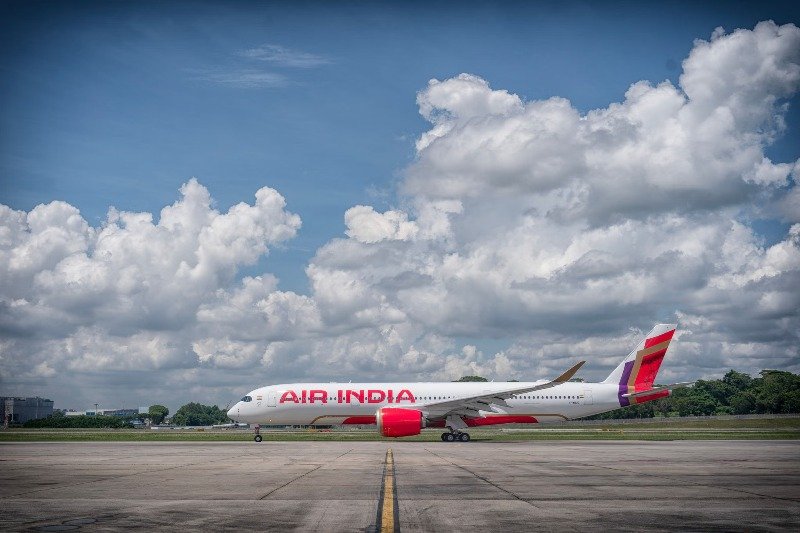
GURUGRAM, 09 December 2024: Air India has placed an order to purchase 100 more Airbus aircraft, comprising 10 widebody A350 and 90 narrowbody A320 Family aircraft, including A321neo. These 100 new aircraft are in addition to the firm orders of 470 aircraft that Air India had placed with Airbus and Boeing last year. The latest order takes the total number of aircraft that Air India ordered with Airbus in 2023 from 250 aircraft, comprising 40 A350 and 210 A320 Family aircraft, to 350. Air India also announced it has selected Airbus’ Flight Hour Services-Component (FHS-C) to support the maintenance requirements of its growing A350 fleet. The new materials & maintenance contract will help Air India to optimise the reliability and performance of its A350 fleet, with comprehensive engineering services and integrated component services including on-site stock at Delhi provided by Airbus. Natarajan Chandrasekaran, Chairman, Tata Sons and Air India, said, “With India’s passenger growth outpacing the rest of the world, its significantly improving infrastructure and an aspirational young population increasingly going global, we see a clear case for Air India to expand its future fleet beyond the firm orders of the 470 aircraft placed last year. These additional 100 Airbus aircraft will help to position Air India on the path to greater growth and contribute to our mission of building Air India into a world-class airline that connects India to every corner of the world.” Guillaume Faury, Airbus CEO, said, “Having personally witnessed the formidable growth of the Indian aviation sector in recent months, I am glad to see Air India renew its trust in Airbus with this additional order for both our A320 Family and A350 aircraft. Through this continued partnership, we are committed to supporting the success of Air India’s “Vihaan.AI” transformation plan under Tata’s vision and leadership.” With the order for 100 additional aircraft, Air India currently has a total of 344 new aircraft incoming from Airbus, having received six A350s so far. Air India in 2023 had also placed orders for 220 widebody and narrowbody aircraft with Boeing, of which 185 aircraft remain to be delivered. Air India is the first Indian airline to operate the Airbus A350, powered by Rolls-Royce Trent XWB engines. Delivering exceptional fuel-efficiency, passenger comfort, and long-range capabilities, the A350s now offer an all-new Air India flying experience to travellers flying non-stop from Delhi to London and New York. The A320 Family fleet, powered by CFM LEAP 1-A engines, is a backbone of Air India’s domestic and short-haul operations, delivering world-class flying experiences to millions of the airline’s customers as well as remarkable operational efficiency and flight economics.

Top Stories

India to have 700 Charter & Business Aircraft by 2029: Martin Consulting Exclusive Report

India’s Business Jet and Helicopter fleet set to soar with addition of over 150 Aircraft by 2029, indicates Martin Consulting® Analysis. In this exclusive November 2024 updated analysis developed for Aviation World Magazine, Martin Consulting maps and presents a comprehensive overview of India’s growing charter and Non-Scheduled Operator Fleet (NSOP) in India.                                                                   Mark D Martin MRAeS, CEO, Martin Consulting                    Post COVID, pre-owned and new aircraft and helicopter charter (limited to NSOP operations) fleet grew its strongest in India with a year on year growth of over ten percent, the highest growth return with Business and Charter aviation ever recorded for India. From a depleting fleet size of 446 aircraft in 2019, India’s combined charter fleet (excluding private category ownership aircraft) grew to over 490 (state government fleet and Private Category Aircraft are excluded) aircraft by 2024 October, an addition of nearly 50 aircraft and helicopters in 5 years, or 10 aircraft and helicopters year on year, the highest recorded for South Asia, according to analysis done by Martin Consulting exclusively for Aviation World Magazine. What’s interesting to note is that that the emergence of new charter companies, both market retail charter companies as well as large corporate owned and operated captive service operators rose from 108 to 115 between 2019 to 2024 and this signals continued commitment with offering newer fleet and improved capacity offering. The factors that helped grow India’s aircraft fleet has been centered with the increased demand of corporate flying, a dramatic rise in charters and private travel amidst the COVID pandemic and a more fundamentally stable Indian economy with the rise of India’s new digital economy and the emergence of the industrial revolution 4.0 trend in FMCG and services in India. Traditional air logistic requirements grew India’s helicopter fleet from 2019 to 2024 with the addition of first time twin engine helicopters. Sikorsky S76D’s and the H145-D3 OG fleet grew in India amidst the background of an aging Eurocopter AS365N2/N3 and Bell 412EP fleet operated by Pawan Hans and Global Vectra HeliCorp. Growth in mid-size and super mid-size Jets has been the strongest in India with the sharp rise of pre-owned aircraft into India’s NSOP register. The notable drivers of this trend was the addition of the Hawker 800XP and 900XP Fleet, the Hawker 4000, Citation CJ2+ and the first time induction of the Pilatus PC24 aircraft fleet with Adani – Karnavati Aviation. India’s Dassault Falcon fleet grew in the backdrop of traditional corporate NSOP’s and first time operator Wonder Cements/RK Marble Group, in addition to high utilization of the Falcon 900 by Reliance Industries Limited. During the last five years, India saw the re-emergence of long range jets with the acquisition of the Boeing BBJ-MAX by marquee corporates Adani and Reliance, the Gulfstream G550 and G650 and the Bombardier Global Express. PRE-OWNED VS NEW AIRCRAFT Growth of India’s jet fleet grew with the addition of pre-owned aircraft driven by the emergence of new charter companies. Effective fleet in numbers were driven by the Hawker 750, 800 and 900 aircraft in addition to induction of the India tested and proven Beechcraft B200, 250 and 350. Light Jets emerged as a key trend in India with the CJ2+ being inducted into India. The ratio of pre-owned to new aircraft induction till 2024 stands at a 70:30 ratio with pre-owned aircraft leading the trend. India’s collective fleet continues to be deployed mostly in North India driven by increased use by corporates and with election and political party charters. Mumbai and Gujarat follows Delhi as effective aircraft basing as a result of the sudden emergence of corporation aviation. INDIA FLEET BREAK UP | 2024 MARTIN CONSULTING ANALYSIS Turboprops, driven by the Beechcraft B200/250, 300/350 and Pilatus PC12; Jets led by the Hawker, Dassault Falcon and Cessna Citation Fleet and Large Jets drive India’s fixed wing aircraft fleet in India. While collective numbers of the Bombardier Global Express and the Legacy 600 and 650 have risen, the demand of light, mid-side and super mid-size jets is attributable to the market attainable charter rates which are on offer. India’s charter market historically and traditionally has been price sensitive with rates structured more under adhoc and less ACMI based longer contracts. Although recent trends with Political Party and Election charters have been suggestive with determining a partial emergence with ACMI long term charters, India’s market is yet to fully mature in this segment. HELICOPTER FLEET GROWTH IN INDIA India’s Helicopter fleet overshadows the business jet and turboprop fleet by nearly twice its size owing to increased demand and utilization by offshore oil exploration companies, offshore and onshore oil and gas helicopter companies, high altitude pilgrimage heli-taxi operators flying to India’s pilgrimage sites at Kedarnath, Badrinath, Gangotri and Yamunotri and Amarnath. State Government dependence on helicopter operations continues to be strong in view of increased deployment of flights in districts and regions which are at the moment limited to a helipad and very rudimentary airfield and landing strip access. The demand for high performance and agile light single engine helicopters such as the Airbus/Eurocopter H125/AS350B3e helicopter has been on account of the helicopter’s proven capability of operating in India’s Himalayan mountains and with aerial work. Charter operators Heritage Aviation, Himalayan Helicopters, Global Vectra, HeliGo and Pawan Hans continue to drive India’s fleet in effective numbers. India’s offshore oil and gas region has played a pivotal role with driving India’s twin engine helicopter fleet with the AW139, AW169, Bell 412 and now most recently, the H145-D3 OG in production flying. Although the S76D has been one of the most stable and reliable helicopters in offshore oil and has in South East Asia, India has had a hit and miss moment with S76 deployed with Pawan Hans. Airbus/Eurocopter continues to be market lead in Indian market with over 84 helicopter in active revenue service totaling to a combined market share of 41% followed by Bell Helicopters at 53 helicopters with a market share of 26% and Agusta/Westland/Leonardo with a share of 20% and

Top Stories

Asia Pacific Airlines Outpace Global Growth Amidst Challenges

Brunei, Darussalam,14th Nov 2024: Leaders of the Association of Asia Pacific Airlines (AAPA), gathered for the 68th Assembly of Presidents in Brunei Darussalam, to discuss the future of aviation under the theme “Jetting into 2050: Future Proofing Asian Aviation”. Airline leaders were optimistic, as regional air travel and cargo growth continues to surpass the global industry’s growth, while load factors remain steadfastly strong. Reflecting the collective priorities and shared resolve of Asian airline leaders, the Assembly of Presidents passed a series of resolutions covering sustainability, aviation safety and the streamlining of regulations. Airlines are firmly committed to reducing their carbon footprint. With extreme weather events on the rise, airline leaders are only too aware of the risks to aviation safety from climate change. With Sustainable Aviation Fuel (SAF) in short supply, AAPA believes that a multi-prong strategy in line with the ICAO net zero emissions reduction roadmap, is critical to meeting the industry’s net zero emissions target. The Assembly passed a resolution calling on Governments, suppliers, air navigation service providers and airlines to deploy all aspects of the ICAO roadmap, namely SAF, breakthrough technology, CORSIA offsets and operational efficiency, in pursuing the net zero emissions by 2050 goal. In particular, SAF produced by co-processing sustainable feedstock together with crude fossil fuel in conventional aviation fuel refineries, is a cost-effective way to stimulate SAF supply. Airlines and fuel suppliers could give impetus to the transition to SAF with co-processed SAF being made available at airports immediately. “Every new generation of aircraft and engine delivers 15-20% more fuel efficiency. The acceleration of plans for carbon-friendly aircraft and propulsion systems is an effective pathway to the common goal of net zero carbon emissions by 2050, starting with short-haul aircraft that currently account for some 28% of industry emissions. With delays in the delivery of new generation aircraft, airlines are extending the use of older equipment. A strategy that prioritises technology alongside SAF, is a surer route to carbon neutrality, than one over-reliant on SAF,” said Mr. Subhas Menon, AAPA Director General. Aviation safety remains the number one priority of all airlines. The Assembly adopted a resolution calling for civil aviation authorities, aviation safety agencies and airlines to work closely together to share best practices through data analysis, to mitigate risks such as the loss of control in-flight. The resolution also called on all stakeholders to support the adoption of safety measures that address the most critical risk categories identified in the Asia Pacific region. “The Assembly welcomed the results and recommendations of the safety culture survey conducted by the Flight Safety Foundation, as aviation safety is about promoting a proactive safety culture, leveraging data and sharing best practices to improve performance,” said Mr. Menon. The Assembly of Presidents acknowledged that supply chain disruptions and air space closures, are leading to more flight diversions, delays, and cancellations, while also inhibiting future growth. Such issues, including component failures and labour shortages were impinging on schedule reliability. Conflicts such as the Russia-Ukraine war and in the Middle East have resulted in airspace closures, exacerbating the situation. Knee-jerk reactions by some governments target only the symptoms of failure, while burdening airlines with more cost and complexity. A third resolution was passed calling on governments to refrain from introducing unilateral measures that would disproportionately inconvenience the travelling public and increase the cost burden on the airline industry, while achieving limited benefits. There needed to be greater recognition of the value of aviation to the global economy, and closer collaboration amongst governments, industry, and service providers, to streamline protocols for international travel. Mr. Menon concluded, “The outlook for the region’s airlines is broadly positive, given the sustained demand for air travel and strong rebound in trade activity. It is a remarkable recovery on key metrics, considering that air transport ground to an almost complete standstill for two years during the COVID-19 pandemic in 2020. This is also a timely testament to the industry’s endurance and longevity as we commemorate the 80thAnniversary of the ICAO Chicago Convention in 2024. By keeping the travelling public and the economies we serve at the core of our strategy, the industry is well positioned to tackle upcoming challenges and pursue sustainable growth in the years ahead.”

Top Stories

Singapore Airlines group orders sustainable aviation fuel from Neste

Singapore,6th May 2024: The Singapore Airlines (SIA) Group has signed an agreement with Neste to purchase 1,000 tonnes of neat Neste MY Sustainable Aviation FuelTM. This will make SIA and Scoot, the two airlines in the Group, the first carriers to receive Sustainable Aviation Fuel (SAF), produced at Neste’s refinery in the country, at Singapore Changi Airport. Neste will blend the SAF with conventional jet fuel according to the required safety specifications[1], and deliver the blended jet fuel to Changi Airport’s fuel hydrant system in two batches – once in the second quarter of 2024 and once in the fourth quarter of this year. This milestone will also mark the first direct supply of Neste’s SAF to airlines at Changi Airport, reinforcing their end-to-end SAF supply chain capabilities in Singapore. This follows the completion of the expansion of Neste’s Singapore refinery in May 2023. The refinery has the capacity to produce a million tonnes of SAF each year, making it the world’s largest SAF production facility. Neste’s SAF, which is made from 100% renewable waste and residue raw materials, reduces greenhouse gas emissions by up to 80%[2] over the fuel’s life cycle. Blended with conventional jet fuel, it seamlessly integrates with existing aircraft engines and fuelling infrastructure. Mr Alexander Kueper, Vice President Renewable Aviation, Neste, said: “We are proud that Singapore Airlines and Scoot are our first customers benefiting from our integrated supply capabilities into Changi Airport. This supply of locally produced SAF to Changi Airport is a milestone in our journey of supporting the aviation industry and governments in the region to achieve their emissions reduction goals. Singapore is a leading aviation hub in the Asia-Pacific region and this delivery of SAF, as well as the recently announced national SAF target, will hopefully encourage the wider adoption of SAF across the broader Asia-Pacific region. We are looking forward to expanding our cooperation with Singapore Airlines as well as supplying visiting carriers at Changi Airport.” Ms Lee Wen Fen, Chief Sustainability Officer, Singapore Airlines, said: “This agreement with Neste is an important milestone in the SIA Group’s journey to have a minimum of 5% sustainable aviation fuel in our total fuel uplift by 2030. Close collaboration with our partners and stakeholders, both in Singapore and globally, plays a critical role in our long-term decarbonisation goals. A more sustainable aviation industry will ensure that future generations continue to benefit from the global connectivity, economic prosperity, and people links that air travel fosters.” Starting from May 2024, SIA will offer 1,000 SAF Book & Claim Units (BCUs) for purchase by its corporate travellers, shippers, and freight forwarders. Each BCU represents one tonne of neat SAF with its associated carbon dioxide reduction benefit. Purchasing SAF BCUs allows corporate travellers, shippers, and freight forwarders to claim the associated environmental benefits for flights related to their business travel and operations, validating the demand for SAF BCUs and supporting the development of the nascent SAF industry. The Roundtable on Sustainable Biomaterials (RSB) Book & Claim system[3], a trusted industry standard, ensures the traceability and credibility of these transactions.

Top Stories

Lessors can take Go First aircraft, orders Delhi High Court

Delhi,26th April 2024: In one of the major setback,Delhi High Court has directed the Directorate General of Civil Aviation (DGCA) to move on with the process of deregistering aircraft leased by Go First within the next five working days. This order means that the lessors can now reclaim their aircraft following Go First declaration of bankruptcy almost a year ago. It may be noted that the court has issued an order for the deregistration of all 54 planes involved in the case. Additionally, it has restricted Go First from operating these aircraft, added the report. Foreign lessors have been locked in a legal tussle to repossess their planes after Go First was granted bankruptcy protection in May 2023, with the recovery of 54 Airbus planes blocked under a law in place at the time. The matter was registered in the Delhi High Court by Dubai Aerospace Enterprise (DAE) Capital, ACG Aircraft Leasing,Pembroke Aviation, Accipiter Investments Aircraft 2, EOS Aviation and SMBC Aviation. They had approached the Delhi High Court in May 2023 to ask for permission to reclaim their planes as they were allowed only occasional inspections of their grounded planes.

Top Stories

Exclusive Interview

At the Singapore Airshow 2024, Textron Aviation displayed four of its popular aircraft variants at display. To understand more about these aircraft and discuss on various aspects, Aviation World Team met two senior management of Textron Aviation, Jimmy Beeson, Director, Technical Marketing & Tony Jones, Vice-President Sales – APAC. They shared their insight with Vishal Kashyap, Managing Editor of the publication.Excerpts… Q: We would like to know more about the current market status of Textron Aviation and also if you would like to focus upon any particular aircraft that is being quite famous in the APAC region? Jimmy Beeson: From a company standpoint, I’ll say we were always among the leaders in the market in terms of innovation and producing products to meet the needs of various customers throughout the world. And I think that’s a great lead into the second part of your question of what products appeal to this market. I think four of them we have on static at SAS 2024 to show, but certainly it doesn’t stop there. King Air Family Look at the King Air platform, which we’re now celebrating 60 years of the King Air and how durable and reliable that platform is. But also, you know, I think it’s a great opportunity to be able to see that how configurable it is for a multitude of missions. So, when I look at configuring not only from an interior standpoint to meet the customer specifications and needs in terms of how many customers I can take, what sort of baggage and payload capacity I need to have on the airplane, but also a platform that is versatile in how you operate it in terms of being able to operate on and off runway. So, that makes it very popular in areas of the world. Where, either you’re trying to operate in and out of short runways, high altitude runways, or potentially dirt, grass, and gravel runways as well. So, that makes it appealing to customers all over the world. Then you take the 360, for instance, and its high payload capability. It’s got a very high full fuel payload of over 1,500 pounds, meaning I can fill the tanks and still put either 1,500 pounds of payload or roughly seven or eight passengers onboard and still maintain that great range that the King Air 360 can do. And then I look at the King Air 260,that still maintains the great durability and reliability, but also has the ability to either take large amounts of payload, or passengers, or loiter and stay in the air for a great amount of time. Those are all great characteristics of the King Air platform that’s made it so successful over the last 60 years. The 360 and 260 platforms were also bringing about change to the King Air. The product line, which I’m sure you’re probably very familiar with at this point, the auto throttles, the digital pressurization, electric ground cooling, and the beautiful new interior. So, you’re starting to see a lot of that step change that you see on even some of the citations with the new interior making its way into the King Air platforms as well. Citation Jet Series The two CJ series have done very well in the market. The M2 is the smaller of the two. It’s our light entry jet. It’s got great performance and great operating economics, so it’s very efficient to operate both from a fuel burn standpoint and cost of operation standpoint. What I feel makes it attractive in markets such as this is its performance capability. So, it has great range, great payload range, meaning it can maintain a large percentage of its range when you’re adding payload, albeit passengers or payload, to the platform. But it’s got great short field performance. So, both on standard days and high and odd performance, so high elevation, warm temperatures, it maintains great short field performance, which makes it available and capable of performing in and out of a lot of airports that some other jets just simply can’t. CJ-4, much of the same, great operating economics, even better payload to range capability. You’re talking about an airplane that with four passengers on board can go over 1,900 nautical miles. Even with eight passengers on board, it can go almost 17. So, you don’t have that steep drop off in operating range when adding payload. And then you maintain a lot of those light jet capabilities, the great field performance, the great operating economics. Those are all things that you don’t lose by stepping up into the larger CJ. You just maintain all that great operational characteristics. Citation Latitude Lastly, the Latitude, which is an aircraft we have done a great job of positioning as both a commercial option but also a great charter or corporate flight department option. It’s very comfortable. Its cabin amenities are well-appointed, but it maintains great operating economics, short field performance. It’s got the latest in Garmin G5000 technology, which makes it very pilot-friendly and very intuitive and easy to operate. It allows our pilots to just aviate and operate the airplane rather than worry about knobs and switches. And control. So, really building on a legacy of the Citation brand and the Citation family, culminating in the newer aircraft such as Latitude and Longitude. Longitude being our flagship aircraft, it’s got an almost 3,500 nautical mile range and great payload and great cabin technology, great cockpit technology. It also has the G5000 suite in it with an optional HUD EVS now, enhanced vision system. It’s got a heads-up display integrated. Q: Your focus is on enhancement of technology and onboard facility for all the category of business Jets. Is this one of the key areas that you have improvised? Jimmy Beeson: Well, I guess more so, I think the message now is rather than a sole focus on improvements to legacy or clean sheet designs, we found a proper mix where we continue

Events, Top Stories

Airbus A350-1000 flies with SAF at Singapore Airshow

Singapore, 18 February 2024: At Singapore Airshow, Airbus has flown in its latest generation A350-1000 widebody aircraft. This aircraft will participate in the flying display from 20 – 22 February. The A350 is being powered for the flying displays with a 35% blend of sustainable aviation fuel (SAF), supplied by Shell Aviation and certified via the International Sustainability & Carbon Certification (ISCC) EU requirements. The SAF component was produced via the HEFA-SPK pathway from feedstock of used cooking oil and tallow. The SAF refuelling was performed at the Changi Airport, in association with ST-Airport Services, Changi Airport Group and SATS. As a major lever in the journey towards the decarbonisation of the aerospace industry, SAF brings an average 80% reduction in carbon emissions over the life cycle compared with fossil fuels, from production to end use. All Airbus aircraft are already able to operate with up to 50% SAF. Airbus aims for all its aircraft to be capable of operating with up to 100% SAF by 2030. Powered by the latest generation engines from Rolls-Royce, the newest generation A350 brings a 25% reduction in fuel consumption and carbon emissions when compared with previous-generation aircraft of a similar size. This makes an immediate contribution to industry goals to reduce the impact of aviation on the environment with every aircraft replacement. Flying up to 9,700 nautical miles (18,000 km) non-stop the A350 is now firmly established as the world’s long range leader and is already in service with 40 airlines worldwide. These include 17 airlines from the Asia-Pacific region, which operate the type primarily on intercontinental routes. The A350 is operated by Singapore Airlines on the world’s longest commercial route today between Singapore and New York. It is set to fly even further in the future, having been ordered by Australia’s Qantas to overcome some of the last frontiers for non-stop air travel, including from Sydney to London. Airbus will be one of the largest exhibitors at Singapore Airshow 2024, with a stand showcasing its full range of products and services covering the commercial aircraft, helicopter, defence, and space markets. Highlights also include a comprehensive static display of an A330neo widebody aircraft, an A400M military airlifter, an H145M full-scale mock-up, and an exclusive ACH130 Aston Martin helicopter. In addition, visitors will be able to get up close with the Republic of Singapore Air Force’s H225M medium lift helicopter and the A330 Multi Role Tanker Transport (MRTT).

Top Stories

India: Certification Scheme for Unmanned Aircraft Systems

India is witnessing an exponential growth in UAVs, Govt. of India has liberalized the regulations and implemented PLI scheme for manufacturers, at the same time it’s equally important to establish adequate checks and balances to assure quality of drones being manufactured in the country .This feature written on behalf of Quality Council of India (QCI), dwells upon the procedure and requirements under Certification Scheme for Unmanned Aircraft Systems (CSUAS). A drone, also known as an unmanned aircraft system (UAS) operates without human onboard and can be piloted remotely from the ground. While initially associated with military applications, these unmanned aerial vehicles have gained popularity across civilian and commercial domains. Their uses span a wide spectrum from surveying, wildlife management, agriculture sector, disaster management and photography with applications expanding rapidly. The Government of India is actively encouraging drone usage by liberalizing regulations and introducing performance-linked incentives (PLI) for manufacturers. The PLI Scheme for drones and their components is strategically designed to support the industry in its strategic, tactical, and operational implementations of this transformative technology. Drones have become integral to various government schemes and projects, catalyzing a surge in demand for drone technology and services.The emerging concept of “Drone as a Service” is gaining significant traction across sectors. This concept is set to streamline India’s diverse drone industry, fostering collaboration between manufacturers and service providers. By promoting this service-oriented approach, the aim is to bring cohesion to the fragmented drone landscape, encouraging synergy and innovation in the industry. The Ministry of Civil Aviation, Government of India, introduced “The Drones Rules 2021” on August 25, 2021, wherein the mandate for a type certificate for drones was established. This significant step facilitated the creation of a global accredited certification framework for drones, aiming to responsibly expand the commercial applications of diverse drone technologies while ensuring necessary safeguards. The introduction of the type certification process underscores the government’s commitment to fostering a robust ecosystem for drones. Certified drones are now authorized to operate for various commercial purposes within the specified regulatory framework. The Director General of Civil Aviation (DGCA), a nodal agency under the Ministry of Civil Aviation, formalized this initiative by signing a Memorandum of Understanding with the Quality Council of India (QCI), an autonomous body established by the Government of India. The collaboration was dedicated to develop and operate the Certification Scheme for Unmanned Aircraft Systems (CSUAS), aligning with the evolving rules, regulations, and procedures. This structured process guarantees that Unmanned Aircraft Systems (UAS) adhere to relevant regulatory requirements, ensuring both domestic compliance and international equivalence. Through this collaboration, the government aims to facilitate the responsible growth of the drone industry while maintaining a high standard of safety and regulatory adherence. The Certification Scheme for Unmanned Aircraft Systems (CSUAS) plays a pivotal role in elevating the competitiveness of the Indian drone industry. It emphasizes the importance of a conformity assessment framework that prioritizes parameters such as quality, reliability, and safety of drones. This framework was officially gazette notified by the Ministry of Civil Aviation on January 26, 2022, aligning with the provisions set forth in the Drone Rules of 2021. CSUAS is structured in accordance with the ISO/IEC 17065 product certification requirements. In the current landscape, India boasts a diverse array of drone-based startups, primarily engaged in either providing drone-based services or manufacturing drones. The industry is experiencing significant growth, accompanied by a surge in demand. The type certification process emerges as a valuable mechanism for Indian drone manufacturers, empowering them to develop world-class products that meet stringent quality and safety standards. This strategic approach positions Indian drone manufacturers to not only meet domestic requirements but also compete on a global scale and promote Make in India. Drones have expanded their role beyond surveying and photography, making significant strides into agricultural practices. They are now actively involved in farming activities like spraying insecticides or pesticides and conducting crop health assessments. In India, this technology has been embraced enthusiastically by farmers due to its ability to significantly reduce spraying time and minimize human exposure to hazardous pesticides or insecticides. The Certification Scheme for Unmanned Aircraft systems (CSUAS)defines the ten clauses or criteria for certification along with drone category and classification as per The Drones Rules 2021.  10 specific technical criteria defined in CSUAS for Certification The depicted picture illustrates the ten clauses essential for the certification of drones. Technical criteria encompass a thorough examination of parameters such as performance, battery, structure, data link testing and other specified factors outlined in the certification scheme. This comprehensive evaluation is crucial to ensure that drones meet the required standards. The evaluation process is conducted in two stages by Certification Bodies (CBs) or Authorized Testing Entities (ATEs). In the first stage, the focus is on document verification including design documents and all other relevant paperwork. During the second stage, a meticulous examination of physical parameters is done, aligning with the submitted documents and encompassing the overall physical condition of the drone. This stage also involves a flight test to validate the drone’s performance and adherence to certification requirements. After completion of both stages, Statement of Conformity (SoC) is being submitted to DGCA by respective CB.   Flow Chart for Type Certification Process of UAS The certification process is depicted in the above flowchart, illustrating how manufacturers can initiate the Type Certification by submitting Form D1 through the Digital Sky Platform. Managed by DGCA, the Digital Sky Platform serves as a comprehensive solution for all drone-related activities in India. The entire certification procedure has been streamlined into a digital format, allowing real-time monitoring of Form D1 progress on the Digital Sky Platform. Quality plays a pivotal role in shaping a product’s development and determining its lifecycle. The Certification Scheme for Unmanned Aircraft Systems (CSUAS) stands as a crucial stride toward realizing India’s ambition to become a Global Drone Hub by 2030, contributing to the vision of an Atmanirbhar Bharat. (Jointly written by CS Sharma, Joint Director( PAD Division), Quality Council of India & Roanak Kumar, Associate Manager

Top Stories

Air India’s first Airbus A350 starts flights between Mumbai and Chennai

Mumbai, 22nd January 2024: Air India today launched its maiden scheduled commercial flights with India’s first Airbus A350-900 – also the first aircraft in the new bold Air India livery – heralding a new era for Indian aviation. Initially, while the aircraft is deployed on domestic routes for crew familiarization and regulatory compliance purposes, passengers from Bengaluru, Chennai, Delhi, Hyderabad, and Mumbai will have the opportunity to experience the unparalleled comfort and state-of-the-art technology of the A350 – part of the 470 new aircraft order that Air India placed less than a year ago. The aircraft will be later deployed for long-haul flights to destinations across continents, strengthening Air India’s growing fleet of wide-body fleet, comprising its own and recently leased aircraft. Flight AI 589 took off from Mumbai’s Chhatrapati Shivaji Maharaj International Airport today for Chennai, with a full-capacity load of passengers who were eagerly anticipating the opportunity to experience the new Air India. The aircraft was on static display at the recent Wings India Global Aviation Summit in Hyderabad, where the public got a first glimpse of the IFE and distinct inflight amenities that will form part of the experience once the aircraft begins its international operations. Air India’s A350-900 aircraft will have a three-class cabin configuration with 316 seats: 28 private Business suites with full-flat beds, 24 Premium Economy seats with extra legroom and other amenities, and 264 spacious Economy seats. All seats on the aircraft feature the latest-generation Panasonic eX3 in-flight entertainment system and HD screens to provide superior flying experience which will be offering an all-new content for our guests on board. Fitted with the Rolls Royce Trent XWB engines, these aircraft are 20 per cent more fuel efficient than other similar aircraft, reducing fuel emissions and ensuring sustainable operations.

FOREWORD

Dear Reader’s,


The current edition of Aviation World has covered many areas of Aerospace & Defence based on the latest development in the sector. The front cover highlights three different images, first for the Union Civil Aviation Minister ….. who is leading from the front to steer Indian Civil Aviation sector to witness one of the most interesting phases. He is also facing most tumultuous timing due to the ongoing financial stress in the Aviation sector due to ATF rising cost and long airspace restrictions resulting in mounting losses for Indian carriers. Despite of all the ground level challenges,the minister is addressing new things on regular basis which keeps the sector motivated. We have featured many such developmental works in this edition done under his guidance which will be interesting to read.

Our lead story on “ The West War” is another important feature which covers the ground level reality of the challenges faced by the Aviation sector. Its though time ahead and we believe it will pass soon .

There are features on Regional connectivity and MoCA revised rules on the UDAN 2.0 and how its going to transform the flying experience within India.

In this edition, we have covered topics on MRO,Various Policy changes,Sea Plane Operations by SkyHop Aviation, TATA-Airbus joint project on C295 military aircraft under Make In India which is expected to roll out soon and many other interesting contents which will be good to read.

We are covering Farnborough International Airshow 2026 from 20-24July 2026 in London and our next edition will be based on the same event.For features, you may contact our team on priority basis.


Happy Reading!

NEWSLETTER

Aviation World Magazine is India’s premier aviation magazine and has been actively supporting the development of the Indian and global civil aviation sector. We started our journey in year 2015 and its been 12 years now and the response and acceptance is really encouraging. Thanks to all our associates and writers who remained with us in our progressive journey.

We have started 2026 on a very positive note and we look forward to increase our footprints to more locations and induct many more new companies in our campaign.. Do write to us at : editor@aviationworld.in

Disclaimer

The contents published in this website are news covering Aviation, Aerospace and Defence sector. The objective is to provide news in informative form to keep our readers updated of the latest development. We also publish content featured in our print publication Aviation World.We try our best to avoid any factual errors or image displayed here but we ensure immediate corrections to any such thing brought to our notice that might have been published inadvertently. All images and contents are sourced from the relevant organisations media team.

Copyright ©2014 – 2026. AVIATION WORLD. All rights reserved.

Scroll to Top