
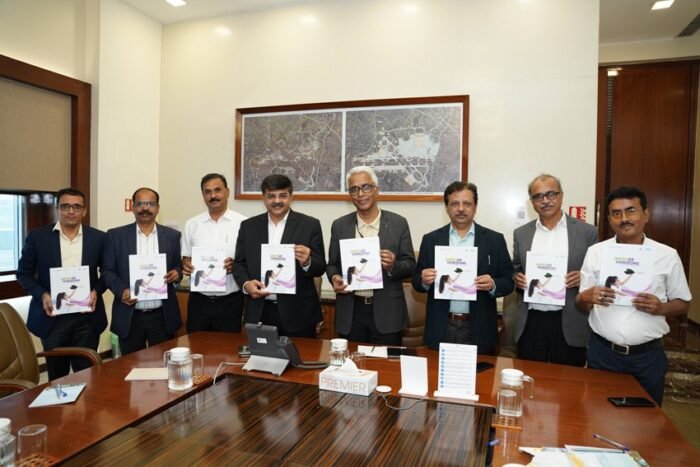
Mumbai, 12 November 2025:
Mumbai International Airport Limited (MIAL) has released its Sustainability Report for FY 2024–25, highlighting significant strides in green energy adoption, circular waste management, community upliftment and digital transformation.
Key Highlights from the Report:
Sustainable Operations and Climate Leadership
• CSMIA managed 55.12 million passengers in FY 2024-25, recording a single day high of 170,516 passengers, and expanded its network to 126 destinations.
• The airport achieved an 8.1 percent year-on-year increase in overall cargo tonnage, underlining its role in supporting Mumbai’s economic growth.
• CSMIA became the first airport in India and only the third worldwide to achieve Level 5 Accreditation for Airport Customer Experience from Airports Council International (ACI).
• The airport sustained its ACA Level 4+ ‘Transition’ status for climate action and secured multiple global recognitions for emission reduction and sustainability leadership since 2022.
• Since August 2022, CSMIA has operated entirely on 100 percent green energy, a transition extended to all concessionaires and achieved carbon neutrality for Scope 1 and 2 emissions.
• The airport diverted 98.7 percent of waste from landfill, reduced energy intensity by 5.5 percent.
• Received renewal of Indian Green Building Council (IGBC) Platinum certification for Terminal 2, reaffirming its green infrastructure leadership.
Biodiversity and Water Stewardship
• In FY 2024-25, MIAL planted 2,000 native trees using the Miyawaki method, promoting urban greening. The airport’s biodiversity management plan includes risk assessments and continuous monitoring.
• Water sustainability initiatives include comprehensive audits, rainwater harvesting, and advanced sewage treatment, focusing on reduce–recycle–recharge principles.
Innovation and Passenger-Centric Transformation:
• CSMIA now leads India in smart travel facilitation, with 147 e-gates deployed – the highest across Indian airports – and 30 percent Digi Yatra adoption, streamlining the travel experience.
• The revamped Airport Operations Control Centre (AOCC) enhances real-time operational efficiency, ensuring resilience and responsiveness.
• Accessibility initiatives include sign language training for staff, dedicated wheelchair assistance, tactile flooring for the visually impaired and sanitary pad dispensers in all ladies’ washrooms.
MIAL’s Sustainability Report FY 2024–25 highlights its long-term commitment to integrating sustainability into every aspect of the airport management – from passenger experience and operational efficiency to environmental responsibility and community impact.