
February 20, 2026

Defence

Embraer and Mahindra to establish C-390 Millennium MRO capability in India

ew Delhi, 20th February, 2026: Embraer and the Mahindra Group has announced plans to work towards establishing Maintenance, Repair and Overhaul (MRO) capability in India for the C-390 Millennium upon selection in the Indian Air Force’s Medium Transport Aircraft (MTA) program. The two companies signed a strategic cooperation agreement (SCA) in October 2025 to produce the C-390 Millennium multi-mission military transport aircraft in India. This collaboration aims to support the Indian Air Force’s Medium Transport Aircraft (MTA) program, with plans to establish local manufacturing strengthening the ‘Make in India’ initiative. The C 390 Millennium is the most modern military transport aircraft in its class, offering a payload capacity of up to 26 tons and higher speed and range compared to other medium sized military transport aircraft. It is capable of performing a wide range of missions, including cargo and troop transport, airdrop operations, medical evacuation, search and rescue, firefighting, and humanitarian missions. The aircraft can operate from temporary or unpaved runways and may be configured for air to air refuelling, both as a tanker and as a receiver. The in service fleet has demonstrated a mission completion rate above 99 percent, highlighting its productivity and reliability. The proposed MRO facility will provide comprehensive in country maintenance and sustainment for the C 390 fleet, supporting high levels of operational readiness and availability. The initiative reinforces the companies’ joint commitment to positioning the C 390 Millennium as a strong solution for India’s future medium transport aircraft requirements. “Embraer is committed to delivering not only a world class aircraft, but also a robust, long term support ecosystem tailored to India’s operational and industrial requirements,” said Bosco da Costa Junior, President and CEO of Embraer Defense & Security. “A state of the art C 390 Millennium MRO capability in India would ensure high aircraft availability, enhanced operational autonomy and a comprehensive local sustainment solution for the Indian Air Force throughout the aircraft’s lifecycle,” said Vinod Sahay, Member of the Group Executive Board, Mahindra Group. The proposed MRO capability is expected to deliver a full spectrum of services, including base and heavy maintenance, structural inspections and testing, component repair and overhaul, avionics support, and training. “Embraer and Mahindra, intends to expand collaboration with Indian Aerospace companies to drive higher localisation of C-390 Millenium and also to support MRO activities, reinforcing our commitment to the Government of India’s ‘Make in India’ initiative and the vision of “Atmanirbhar Bharat”, said Carlos Naufel, President and CEO of Embraer Services & Support of Embraer. “In addition to fleet support, this new facility could create high skill employment and further contribute to the integration of Indian companies into Embraer’s global supply chain.” While the primary objective of the MRO is to support the Indian Air Force fleet, Embraer is also evaluating the potential for India to serve as a regional MRO hub, providing sustainment services for other C-390 Millennium operators in the future.

Civil Aviation

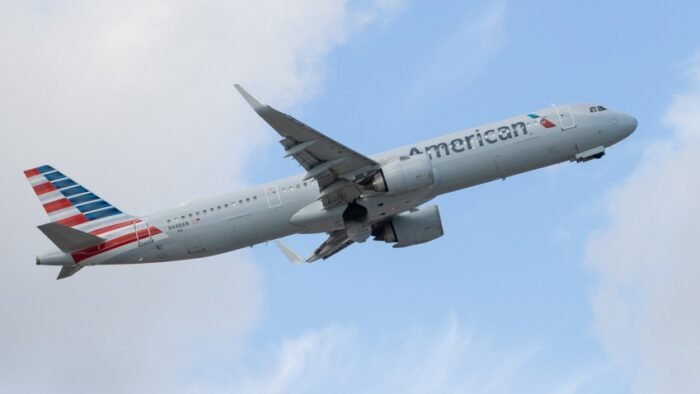
American Airlines next phase of Airbus A321neos to be powered by CFM LEAP engines

FORT WORTH, USA, 20th February 2026: American Airlines and CFM International, a 50/50 joint company between GE Aerospace and Safran Aircraft Engines, had announced that American’s future deliveries of Airbus A321neo aircraft will continue to be powered by the CFM LEAP-1A engine. These engines will be installed on Airbus A321neo aircraft that American ordered two years ago. As part of the expanded partnership, CFM International will continue to provide long-term maintenance for American’s CFM LEAP-1A engines for years to come. The agreement was announced by American Airlines CEO Robert Isom and GE Aerospace Chairman and CEO H. Lawrence Culp, Jr. “American is proud to operate more CFM/GE Aerospace powered mainline and regional aircraft than any other airline in the world, and American’s aircraft have flown with GE Aerospace technology for almost a century,” said American’s CEO Robert Isom. “We are excited that CFM LEAP engines will power our next phase of A321neo deliveries, maximizing the power of our fleet investments to deliver the best network to our customers utilizing the best-performing engine in the business.” American currently operates 84 A321neo and 5 A321XLR aircraft, with 120 A321neo and 35 A321XLR aircraft on order through 2032, all to be powered by CFM LEAP-1A engines. The airline also has options to purchase 116 additional A320neo family aircraft from Airbus which, if exercised, will also be outfitted with CFM LEAP-1A engines. “We are proud to be under wing powering American’s modernized fleet and appreciate their continued trust,” said H. Lawrence Culp, Jr., chairman and chief executive officer at GE Aerospace. “We are committed to delivering best-in-class LEAP engines to support the growth of American’s network as they serve more destinations for their customers.” The airline recently debuted the A321XLR, elevating transcontinental travel. As the only U.S.-based airline to operate the aircraft, American offers customers luxurious Flagship Suite® seats, relaxing Premium Economy seats and a reimagined Main Cabin, all featuring high-speed Wi-Fi and complimentary seatback entertainment with Bluetooth connectivity throughout the journey. “It is highly gratifying when an airline of this stature considers CFM and its products such an integral part of its long-term fleet strategy,” said Gaël Méheust, president and chief executive officer of CFM International. “While American has seen first-hand the benefits the LEAP engine provides, our total focus is on continuing to deliver the level of quality and support American has come to expect from us.”  

Recent News

SriLankan Cargo secures IATA CEIV live animals certification

New Delhi,20th February 2026: SriLankan Cargo, the air freight arm of SriLankan Airlines, has become the first airline in South Asia to be awarded the Center of Excellence for Independent Validators (CEIV) for Live Animals Logistics Certification from the International Air Transport Association (IATA). Regarded as the premium global standard for the air transport of live animals, the certification serves as a powerful pledge to pet parents, livestock owners, conservationists and all shippers that SriLankan Cargo will transport animals in humane, safe and stress-free conditions across its worldwide network. Chaminda Perera, Head of Cargo at SriLankan Airlines, commented on the achievement, stating, “Earning the IATA CEIV Live Animals Certification underscores our dedication to animal welfare and operational excellence, ensuring safer handling, trained teams and peace of mind for our customers.” Sheldon Hee, Regional Vice President, Asia-Pacific, said, “The CEIV Live Animals certification is not only about compliance, but ensures the safety and welfare of live animals transported by air. This is particularly relevant as this is a market that continues to grow with more than 200,000 live animal shipments globally in 2025. We are pleased to see SriLankan Airlines achieve this important certification and ensure the implementation of the highest standards across the supply chain.” The certification stands out for placing animal safety and welfare at the forefront, supported by best-in-class infrastructure and operational excellence. Achieving it requires a rigorous, multi-step process of training, assessment, validation, certification and recertification, ensuring that only organisations fully compliant with the IATA Live Animals Regulations and the Convention on International Trade in Endangered Species gain membership in this highly exclusive circle of airlines, which currently numbers 12 worldwide.

Upcoming Events

International Summit for Aviation Training(ISAT) 2026

Event Date: 14-15 December 2026 Venue: Dubai World Trade Centre, Dubai Media Partner: Aviation World ISAT 2026 – International Summit for Aviation Training is the premier B2B exhibition and conference dedicated to the future of aviation training and workforce development. Being the inaugural edition, this global event platform will bring together airlines, ATOs, regulators, OEMs, and training solution providers to address one of the aviation industry’s most urgent challenges: Training, Recruiting, and Retaining the next generation of Aviation Professionals. Focusing on the Middle East, Africa, and India, ISAT supports aviation training growth and talent development across the world’s fastest-growing aviation markets. For more info, login to: https://www.isat.aero/

People

Rajiv Srivastava: Chronicling India’s Aviation Renaissance Through the Lens

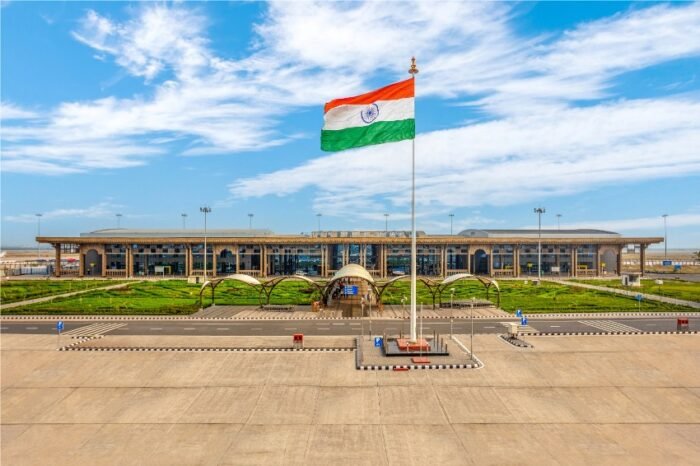
Since 2014, Indian aviation has undergone a decisive transformation. Connectivity has expanded rapidly, infrastructure has scaled up beyond metropolitan hubs, and airports have evolved into world-class, experience-driven spaces. And in this defining moment, Rajiv Srivastava stands alone in documenting India’s aviation renaissance with unmatched depth, patience, and sensitivity. Working at the intersection of aviation, architecture, landscape, and visual storytelling, Rajiv’s photography captures more than aircraft and terminals. His images reveal how aviation infrastructure mirrors a nation in motion, its aspirations, cultural identity, and relationship with landscape. Rajiv’s journey into photography did not begin in a conventional classroom. He started his professional life as a cricketer before discovering his calling behind the camera. Over the last two decades, his work has spanned street photography, fashion, sports, landscapes, and documentary film-making. Early in his career, he assisted renowned fashion photographer Tarun Vishwa, where he developed technical discipline and a refined understanding of light and composition. Yet, even during his years in fashion, his instinct leaned toward expansive spaces and environments that tell larger stories. That instinct found its strongest expression in aviation photography. The roots of this passion trace back to Rajiv’s childhood in Arunachal Pradesh, where aviation was not an abstraction but a lifeline. Surrounded by mountains, rivers, dense forests, and remote airstrips, he grew up witnessing how air connectivity shaped everyday life. A formative helicopter ride with father during his school years proved pivotal. Seeing runways, valleys, and waterfalls from the air left an enduring imprint, one that would later define his professional path. Encouraged by his mother to observe the world closely, Rajiv developed a way of seeing that remains central to his work. What distinguishes Rajiv’s aviation photography is his perspective. He does not merely document aircraft or terminal façades; he studies airports as living spaces. For him, an airport is the first narrative of a region, a gateway into its culture, geography, and ambition. His photographs highlight architectural rhythm, natural and artificial light, spatial flow, public art, and human movement. Bamboo-inspired columns, soaring glass façades, regional motifs, and quiet transitional moments find equal place in his frames. Photographing airports, however, is rarely straightforward. Security protocols, complex lighting conditions, and uninterrupted operations leave little room for error. Often, Rajiv has just a single day to capture an entire terminal. Years of experience allow him to anticipate light, angles, and fleeting moments, resulting in images that feel both precise and alive. His background in landscape photography plays a critical role here. Rajiv is particularly drawn to airports set within dramatic natural contexts, whether in the Himalayas, along coastlines, or across open plains. By situating terminals within their surrounding terrain, he creates a visual dialogue between infrastructure and nature. This sensibility has also led to over 20 solo and group landscape photography exhibitions across India, where he has shared platforms with eminent photographers such as Raghu Rai and Samar Jodha, firmly establishing his reputation beyond aviation circles. Rajiv’s work has received national recognition. His photographs feature in landmark coffee table books such as 100 Airports for New India, released by the Honourable Prime Minister in 2018, and Kala Sankalan, released by the Honourable Minister of Civil Aviation. These publications celebrate India’s aviation growth through design, culture, and visual narrative rather than numbers alone. One defining moment came at Pakyong Airport in Sikkim. Battling dense fog, rain, and visibility windows as short as 10–20 minutes, Rajiv persisted. His images, dramatically framing the airport against the Himalayan landscape, went viral internationally even before inauguration, appearing in CNN, BBC, Vogue, and Condé Nast Traveller. The moment became historic when the Honourable Prime Minister referenced those very images during the airport’s inauguration. Today, with over nine years dedicated specifically to aviation photography and filmmaking, Rajiv continues to document India’s evolving skies. From UDAN-activated regional airstrips to architecturally ambitious terminals like the new Guwahati Airport, inspired by Assam’s natural and cultural heritage, his work captures a sector redefining itself. Beyond aviation, Rajiv is currently working on a coffee table book on Varanasi, his hometown, exploring its ghats, rituals, architecture, and everyday life. Whether photographing an ancient city or a modern terminal, his lens remains committed to preserving stories of place, progress, and identity. Through Rajiv Srivastava’s photography, India’s airports are no longer just transit points. They are narratives of ambition, culture, and connection etched in light, steel, landscape, and sky. ( Pix Courtesy: Rajiv Srivastava) 

Training

CPaT gets onboard with regional carrier Z Air for training

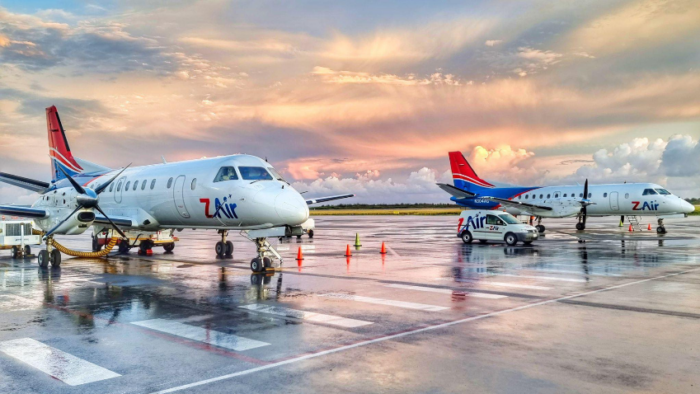
Houston, 20th February 2026: CPaT Global, the provider of distance learning for the airline and aviation industry has announced they have been awarded a new contract with Z Air. CPaT will be providing Z Air with a range of training products, including Embraer 145 Aircraft Systems and General Subjects for pilots, as well as Cabin Crew Safety Subjects for cabin crew members. In addition, Z Air will be equipped with CPaT Invent, enabling the airline to create and modify content as needed to support its operations. “Providing operators with the ability to manage and update training content is an important part of maintaining effective training programs,” said Capt. Greg Darrow, Vice President of Sales. “We’re pleased to support Z Air with training tools that align with their operational needs.” “This partnership with CPaT strengthens how we train and support our pilots and cabin crew,” said René Winkel, CEO of Z Air. “With modern, standardized digital training, we can keep our teams aligned, compliant, and ready as we continue to grow.”

Interviews

“The Indian Aviation has a huge potential,” Subhas Menon, DG, AAPA

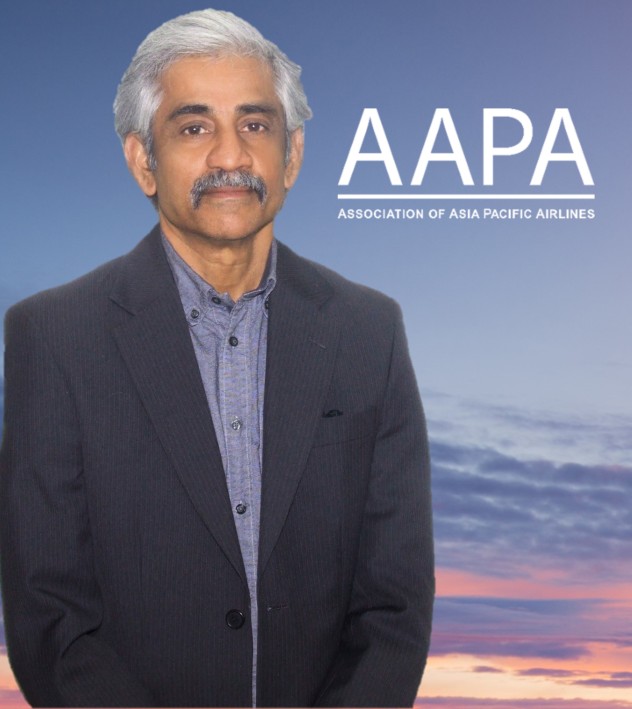
At the Singapore Airshow, in a candid interview with Vishal Kashyap, Managing Editor, Aviation World, Director General of Association of Asia Pacific Airlines(AAPA), Mr. Subhas Menon shares insight on various key aspects of the growing Aviation sector in Southeast Asian region with special views on India. Excerpts… Q: How you see the evolving Indian Aviation ecosystem? A: The situation of India and the Indian authorities is huge. India wants to build an aviation ecosystem that meets the ambitions of Indians. They should be able to go to anywhere in the world and for their families who are overseas to come to India from anywhere in the world seamlessly and comfortably. At the moment, anywhere the Indians want to go to, they have to go through other hubs. The ambition of the Indian authorities is to have all the hubs in India itself. The domestic Indian traffic has been building up over the years and growing naturally. The international Indian traffic is still very low as it’s the third largest aviation market in the world after the US and China. The Indian carriers have made huge aircraft orders and when these orders were placed, the supply chain crisis has already happened because it occurred during the pandemic. They may not be able to get all the aircraft that they have ordered in time as there will be disruptions. On safety side, it’s not only specific to India as we have seen aircraft incidents becoming very common. The regulators need to make the system more stringent so that such incidents should be discouraged or minimised. Still, air transport continues to be the safest mode of transport. Q: What’s your opinion on the future airspace movements in India? A: Airspace will be packed but India is starting from a low base. I think, there is still a lot of room to grow in terms of airspace as it will take 5 to 10 years to get all the aircrafts that both IndiGo and Air India have ordered which is slightly over 1000 aircrafts. If the manufacturers are business savvy, they will try to supply the aircraft as quickly as possible to the Indian operators. It needs to be speed up as nobody else is really ordering that many aircrafts. India is really growing very fast and has the potential to grow further by leaps and bounds. Q: Could you specify on the countries which have significant growth in this region? A: If you look at the potential, it is basically India and Southeast Asia. They all have young population and a growing middle class. In the Asia-Pacific region, we are not contiguous or compact as people need to travel by air and it share some of same demographies. China now is actually going into an ageing population. Though their middle class can still grow, but they are facing some economic constraints at the moment. So, they might not be a growth market and we are trying to get to see whether it will go back to the levels of travel generation that they had before the pandemic. Outbound travel in China was driving growth for many years but post pandemic they have certain level of economic problems. Q: How you see Vietnam and Indonesia growing an aviation hub in the region? A: The Vietnamese government managed to get one of the lowest tariffs in the US. There was a parallel economy to China developing in Vietnam for manufacturing goods in the last five years and its continuing. Vietnam also has a very young population, so workforce-wise, a lot of centralisation is taking place within the country. The potential for Vietnam is huge, both inbound and outbound as it’s a very beautiful country. They have a tourism plan which encourages and attracts people to visit Vietnam from a historical, cultural, as well as leisure perspective. Vietnam Airlines is going as an international hub carrier and they also have a low-cost carrier there. For Indonesia, it’s always been huge and they have a strong national carrier. They also have budget carriers, both who are members of AAPA (Association of Asia Pacific Airlines). There is inbound as well as outbound potential but at the moment, Indonesia is struggling a little bit because they had a change of government further adding to change of policies and regulations. It’s a matter of time before they stabilise and go back to growth as the Indonesian government is very keen to bring a lot of tourists to Indonesia. Q: The Indian Govt. had recently issued NOC to three new airlines to break the existing duopoly. But in ground they are facing challenges to procure an aircraft. How you see such situations? A: Generally, we support competition as its good to have the same. But it is not good if airlines start and then they don’t fulfil their mission and they go bust and not able to survive. The best advice to the potential startups’ airlines would be to ensure enough funds to last long. It should be minimum for five years before one can really stabilise their operations. If they don’t have that, it’s a big risk to start an airline. In the last few years, there have been a few startups in the region and most of them didn’t make it. Q: What are the key factors that OEMs basically see before giving an aircraft to a startup airline? A: It’s the financial capability to sustain for a long term is one thing that OEMs look at. If they once survive the startup stage, then at least you have a future. Number two, they are in the process of trying to fulfil outstanding orders, so, why would they give new aircraft to new startups when they haven’t fulfilled their outstanding orders. That doesn’t make any sense as they have a relationship with existing operators who are still waiting for their orders to be fulfilled.I think it’s a reasonable thing to do to make sure that existing clients get

FOREWORD

Dear Reader’s,


The current edition of Aviation World has covered many areas of Aerospace & Defence based on the latest development in the sector. The front cover highlights three different images, first for the Union Civil Aviation Minister ….. who is leading from the front to steer Indian Civil Aviation sector to witness one of the most interesting phases. He is also facing most tumultuous timing due to the ongoing financial stress in the Aviation sector due to ATF rising cost and long airspace restrictions resulting in mounting losses for Indian carriers. Despite of all the ground level challenges,the minister is addressing new things on regular basis which keeps the sector motivated. We have featured many such developmental works in this edition done under his guidance which will be interesting to read.

Our lead story on “ The West War” is another important feature which covers the ground level reality of the challenges faced by the Aviation sector. Its though time ahead and we believe it will pass soon .

There are features on Regional connectivity and MoCA revised rules on the UDAN 2.0 and how its going to transform the flying experience within India.

In this edition, we have covered topics on MRO,Various Policy changes,Sea Plane Operations by SkyHop Aviation, TATA-Airbus joint project on C295 military aircraft under Make In India which is expected to roll out soon and many other interesting contents which will be good to read.

We are covering Farnborough International Airshow 2026 from 20-24July 2026 in London and our next edition will be based on the same event.For features, you may contact our team on priority basis.


Happy Reading!

NEWSLETTER

Aviation World Magazine is India’s premier aviation magazine and has been actively supporting the development of the Indian and global civil aviation sector. We started our journey in year 2015 and its been 12 years now and the response and acceptance is really encouraging. Thanks to all our associates and writers who remained with us in our progressive journey.

We have started 2026 on a very positive note and we look forward to increase our footprints to more locations and induct many more new companies in our campaign.. Do write to us at : editor@aviationworld.in

Disclaimer

The contents published in this website are news covering Aviation, Aerospace and Defence sector. The objective is to provide news in informative form to keep our readers updated of the latest development. We also publish content featured in our print publication Aviation World.We try our best to avoid any factual errors or image displayed here but we ensure immediate corrections to any such thing brought to our notice that might have been published inadvertently. All images and contents are sourced from the relevant organisations media team.

Copyright ©2014 – 2026. AVIATION WORLD. All rights reserved.

Scroll to Top