Author name: admin

Defence

BAE SYSTEMS NAMES RAVI NIRGUDKAR MANAGING DIRECTOR FOR INDIA

NEW DELHI, 23rd Jan 2021 BAE Systems has announced the appointment of Ravi Nirgudkar as Managing Director for India, effective immediately. Mr Nirgudkar will spearhead BAE Systems’ operations in the market and build on the Company’s proud track-record of partnering with the Indian defence industry. He succeeds Nik Khanna who concludes his tenure in India and takes up a new role with BAE Systems’ Air Sector in the United Kingdom. Mr Nirgudkar joins BAE Systems from Raytheon where, as Country President he led business development, marketing and strategy for India, Sri Lanka and Bangladesh. He has more than 25 years of experience in international business development and programme management, including 21 years with Raytheon’s Intelligence, Information and Services and Space and Airborne Systems businesses. Dave Armstrong, Group Business Development Director, BAE Systems Plc said: “India is a key strategic market for BAE Systems and we are delighted that Ravi will lead the Company in the market. Ravi’s wealth of experience, strong business acumen and in-country relationships will be instrumental for us to grow BAE Systems’ business in India and support the expansion of the country’s indigenous defence capability.” He further added, “I would like to thank Nik Khanna for his tremendous efforts in strengthening the local footprint of BAE Systems which is anchored in the Company’s focus on Make in India.” Ravi Nirgudkar said: “I am thrilled to join BAE Systems which has been at the heart of India’s defence industry for more than 65 years and been a founding partner of defence manufacturing. I look forward to working with my colleagues in India, and around the world, and leading BAE Systems’ endeavours to develop further a world class defence and security capability in India.”

Airports

AAI signs concession agreements with Adani for Guwahati, Jaipur and Thiruvananthapuram Airport

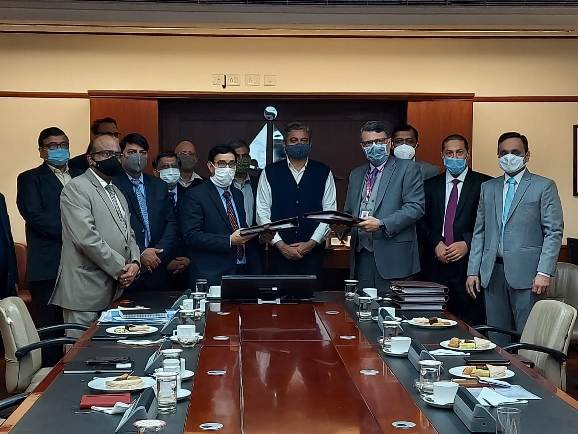
New Delhi, 19thJanuary, 2021 Airports Authority of India today signed three Concession Agreements for Operations, Management and Development of Guwahati, Jaipur and Thiruvananthapuram airports through PPP mode with the Concessionaires i.e. Adani Guwahati International Airport Ltd, Adani Jaipur International Airport Ltd and Adani Thiruvananthapuram International Airport Ltd respectively. The agreements were signed by Mr.N.V. Subbarayudu, Executive Director, Strategic Initiative Unit on behalf of AAI and Mr. BehnadZandi, Chief Executive Officer, Adani Airports Limited at Corporate Headquarters of AAI in the presence of Shri Arvind Singh, Chairman, AAI; Board Members and other senior officials of AAI and Adani Enterprises Limited. The concessionaires are required to take up the Guwahati, Jaipur and Thiruvananthapuramairports fulfilling certain conditions precedents within 180 days from 19th January, 2021and will operate, manage and develop the airports for next 50 years, in accordance with the terms and conditions specified in the Concession Agreements An International competitive bidding process for PPP transaction for six airports (viz.Ahmedabad, Lucknow, Mangaluru Guwahati, Jaipur and Thiruvananthapuram,) was initiated by AAI during December 2018 and Adani Enterprises Limited (AEL) emerged highest bidder for these three airports along with Mangaluru, Lucknow and Ahmedabad airports. Mangaluru, Lucknow and Ahmedabad airports were handed over to the Concessionaires on 31st October, 2020 02nd November, 2020 and 07th November, 2020 respectively. Subsequent to approval received from Government during August 2020, Letters of Awards were issued to AEL for Guwahati, Jaipur and Thiruvananthapuram airports and after getting security clearance by AEL, Concession Agreements were signed. The concessionaire of Guwahati airport shall pay AAI a per passenger fee of Rs.160.00 for domestic passenger and Rs.320 for international passenger. Similarly, the concessionaires for Jaipur and Thiruvananthapuram airports will pay AAI per passenger fee of Rs.174 and Rs.168 respectively for domestic passenger and Rs.348 and Rs.336 respectively for international passenger. Per passenger domestic fee will be revised annually taking into account of the variation in the CPI (IW). Shri Arvind Singh, Chairman, AAI said on the occasion, “It is a significant occasion today when we complete this round of signing of concession agreements for three airports, under the PPP mode. Looking forward to healthy participation from the private sector in the growth story of Indian civil aviation.” The concession fee that would be received by AAI after leasing out six airports will be used for the maintenance and development of other brownfield airports and also for further development of RCS and Greenfield airports throughout the country. ( Published unedited on the basis of press release shared by AAI)

Top Stories

Three Adani Airports – Ahmedabad, Mangaluru & Lucknow awarded ACI Airport Health Accreditation for safe travel

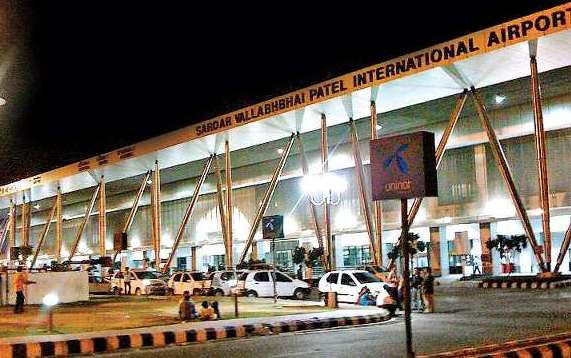
Ahmedabad Three Adani airports – Ahmedabad,Mangaluru and Lucknow were accredited in the Airports Council International (ACI) Airport Health Accreditation programme. The global recognition demonstrates extraordinary proactive measures put in place by these airports to ensure passenger safety. The evaluation process by ACI under the AHA programme is conducted after reviewing evidences presented based on 118 checks points. The airports have demonstrated a safe travel experience for all travelers which is in line with the recommended health measures established in the ACI Aviation Business Restart and Recovery guidelines and ICAO Council Aviation Recovery Task Force Recommendations, along with industry best practices. Speaking on this development Mr. Behnad Zandi, CEO – Adani Airports said, “This accreditation is a significant step in the pursuit of reinvigorating air traffic in the wake of COVID-19 and the ensuing vaccination drive. It instills trust in health and safety standards practiced at Lucknow, Ahmedabad and Mangaluru airports amidst the spread and control of the global pandemic. We remain committed to reinforce our preparedness with global best practices and thus ensure a safe pre and post flight experience for flyers at the three locations.” The ACI assessment covered the health and safety measures undertaken by the airports for passengers and staff in all the terminal areas including departures, arrivals and transfers, transportation services, food and beverage services, escalators and elevators, lounges, facilities and baggage claim area among others. The accreditation is valid for the next 12 months. The programme is designed to help reassure the travelling public that airport facilities remain safe and that precautions are being taken to reduce health risks. “Congratulations to the Adani Group airports in Ahmedabad, Lucknow and Mangaluru for securing the Airport Health Accreditation. With vaccine distribution underway, gaining the public’s confidence in air travel will be crucial as our industry prepares to restart and sustain continuing operations. The Adani Group airports are paving the way by providing passengers and employees globally-recognized standards on health and hygiene,” said Stefano Baronci, Director General, ACI Asia-Pacific. The ACI Airport Health Accreditation (AHA) programme enables airports to demonstrate to passengers, staff, regulators, and governments that they are prioritizing health and safety in a measurable, established manner. (Published online at Aviation World on 18/01/2021)

Airports

CELEBI to handle Covid -19 vaccine and its distribution from Delhi Airport

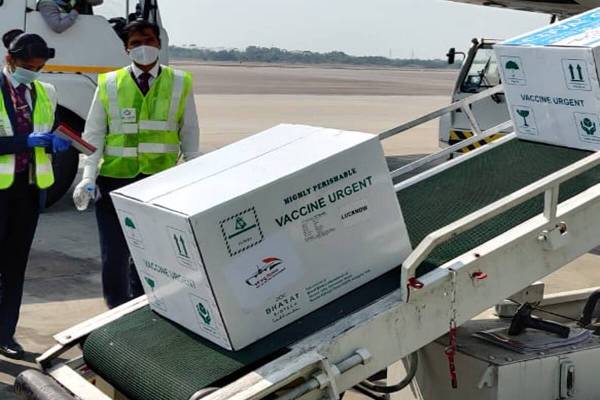
New Delhi, 15 January, 2021 In preperation for a domestic and global distribution of the COVID-19 vaccine, Çelebi Delhi Cargo Terminal Management, the joint venture between DIAL and Çelebi Ground Handling, is working on preparing proficient handling scenarios for the import and export of various types of vaccines in a safe and efficient way. The distribution will take place through its state-of-the-art Çelebi Pharma Logistics Center situated at Delhi Airport, which has the capacity of 72,000 MT annually. Vaccines, in general, must be handled in line with International regulatory requirements at controlled temperature and without delay to ensure the quality of product. For this, Çelebi has been investing heavily in infrastructure and services for pharmaceutical air cargo for the past few years. Çelebi Pharma Logistics Center is equipped with the facility of temperature-controlled chambers for storage of consignments ranging between minus 25 to plus 25 degrees centigrade with humidity control to prevent moisture damage. Çelebi was the first handler in India to deploy “Cool Dollies” to extend the cool chain (-20 to +25 Celsius) till the aircraft bays on the airside. These are refrigerated containers on wheels, which ferry one complete aircraft pallet / 2 baggage containers to/from aircrafts at a pre-defined temperature and adjustable to suit the requirements of the temperature sensitive products. Commenting on Celebi’s preparedness, Murali Ramachandran, CEO India, Çelebi Aviation said “We are proud that Çelebi is able to play a leading role in the distribution of COVID-19 vaccine in India and globally. We understand the need for a strong emphasis on pursuing the highest standards in pharmaceutical cargo handling. These vaccines require rigorous temperature control throughout the entire supply chain, therefore, Çelebi is operationally ready to handle the Covid -19 vaccines with a commitment to ensure Speed, Security, Reliability, and Transparency in our handlings. We have also set up a special 24×7 duty managers desk to oversee these movements. Our endeavor use our expertise and capabilities to support the ecosystem to help fight this pandemic “. Çelebi is working closely with existing airline operators and freight forwarders to understand their specific requirements and attracting large number of non-scheduled operators to bring in ad- hoc freighters with COVID-19 vaccine in the near future. The Company has the infrastructure and capabilities to handle as many charters as required, at its facility and ensure a quick ‘Turn Around Time’ of all aircrafts. Besides warehousing, Çelebi offers ground handling services to these freighter operators which gives them a cost benefit and single window interaction possibility. Key features and priorities for preparing Çelebi’s facility for vaccine handling include priority handling of trucks carrying vaccines, dedicated truck dock bays at Export Pharma Logistics Center, dedicated delivery gate for import vaccine and quick TAT of all trucks. Other facilities include cool dolly and “Tyvec” cover availability, along with dry ice, batteries, thermal blankets etc. at Pharma Mini Shop. There is also provision for unitizing in temperature-controlled zones and data tracking and monitoring. The Company has the required trained and qualified staff to carry out the same. Çelebi is also the only stocking station for “Envirotainers” in Delhi. “Envirotainers are active temperature controlled containers.

RCS

Hisar Airport Inaugurated Under RCS-UDAN

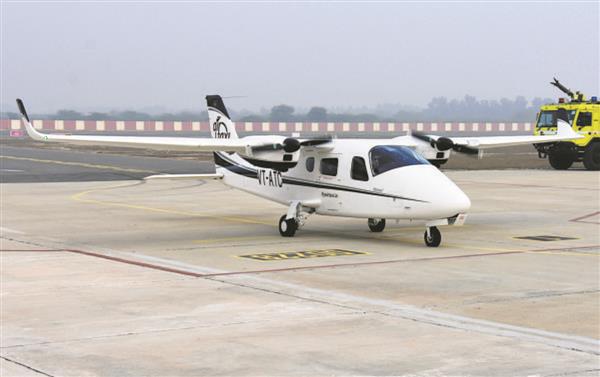
HIssar, Haryana, 14th January, 2021 First flight to the newly constructed Hisar airport in Haryana from Chandigarh was flagged off today under the Regional Connectivity Scheme – Ude Desh Ka Aam Nagrik (RCS-UDAN) of the Government of India. The flight was flagged off by Shri Manohar Lal Khattar, Chief Minister, Haryana. The inauguration was attended by the senior officials of the Ministry of Civil Aviation (MoCA) & Airport Authority of India (AAI). The flagging off marks the operationalization of 54th airport under the UDAN scheme. To date, 307 routes and 54 airports including 5 heliports and 2 Water Aerodromes have been operationalized under the UDAN scheme. Belonging to the Government of Haryana, Hisar airport is a public licensed airport that is suitable for 18 seat type aircraft. The development of the Hisar airport was undertaken by the MoCA as it aligns with the dual objectives of the UDAN scheme; “letting the common citizen of the country fly” & make air travel affordable and widespread in the country.” Subsequently, the Government of India had sanctioned INR 28.60 crores for the development of the interim civil aviation operations. The land was handed over to the AAI for the up-gradation and development of the Hisar airport. The upgrade included the construction of the new terminal building, hangars, strengthening of the runway, installation of night-flying equipment, ATC, security equipment, etc at the Hisar airport. The airline Aviation Connectivity & Infrastructure Developers Pvt. Ltd (Air Taxi) was awarded the Hisar – Chandigarh – Hisar route under the UDAN 4 bidding process. The airline has become the first startup airline of the country to assist the nation with Air Taxi services. These UDAN flights will reduce the journey time between Hisar to Chandigarh from 4.50 hours to a comfortable 45 minutes journey that too at an affordable fare since financial incentives in the form of Viability Gap Funding (VGF) is being provided from the Centre, State governments & airport operators to selected airlines to encourage operations from unserved and underserved airports under the scheme. This air connectivity will fulfill the aspirations of the people of Haryana and Chandigarh. Many people travel frequently between these two cities for personal as well as professional purposes. Hisar is the administrative headquarters of the Hisar district of Hisar division in the state of Haryana. The place is India’s largest galvanized iron manufacturing city. The commencement of the flight operations on the route will provide impetus to the local economy & enhance the aerial connectivity of the region. (News Shared by PIB, Published unedited by Aviation World Online)

MRO, Top Stories

MRO – THE MISSING PIECES

BY ROHIT SINGH TOMAR The union budget of 2019-20 was a promising start for the MRO industry. There are expectations that the current financial budget would also include beneficial structures for propagating India’s MRO industry, which is welcome news for the industry. However, it is pertinent that policies directed towards achieving this goal accept that the MRO industry, unlike the domestic consumption industry, is not location-driven. It is a high-cost industry, requires significant capital investment, technology transfer, and scale of operations. An MRO set up in Singapore is not built to service the aircraft in Singapore but is built on business volumes expected of the Asia Pacific fleet at the core of its business plan. Hence, it would be necessary to take the view that OEM’s investing significant capital in Singapore, most of which are publicly traded organizations across the globe, would not like to cannibalize their investment by setting up another facility close to their existing facilities. India missed the bus for a long time in this aspect. Over the last decade and more, Singapore, Malaysia, and even Indonesia placed themselves strategically to attract the OEM’s and large MRO Service providers across the globe to invest in their countries. Now, let’s compare the total operating fleet of Singapore airlines, Malaysian airlines, and Indian airlines. It is no surprise that these countries were able to attract investments when their fleet was almost half of what we have in India today, so this addresses one key question, MRO investments are not driven by domestic consumption capabilities (the only exception being China). These countries identified the critical investment driving factors and incentivized these to bootstrap the MRO sector. The first wave of investments was driven by co-building MRO facilities, using the existing government-owned carriers as the backbone. However, one of the key differences was that these national facilities were allowed to be privatized or semi privatized in Singapore and Malaysia at the opportune moment. Privatization of a large MRO unit created opportunities for OEM’s and MRO’s to scale operations fairly quickly and improve efficiency and technology transfer to build up capacity and compete in the market. The second round of incentivization was learning from the first wave, which aimed at significant tax credits by allowing more than 30%-50% of the CapEx investment to be eligible for tax rebates. These credits were coupled with tax removal on dividends and capital gains by the foreign OEM and MRO investors. At an operational level, these governments provided additional support to streamline the MRO supply chain based on the level of MRO technology in these MROs, including but not limited to zero royalty, access to airport infrastructure at discounted land rates (as compared to ready reckoner rates), and credits in terms of training workforce and credits on exports by these OEM’s. These actions enabled the second wave of investments in MRO setup and technology. It is essential to keep in mind here that these investments come from large publicly listed entities and significant hedge funds across the globe. Like any capital intensive business, MRO investment needs to have a clear exit strategy to provide returns to the investors. In the MRO industry, exit strategies have been the successful public listing of companies. The public listing of companies has delivered significant capital access for the MRO’s to expand their facilities. However, with this model’s success, it meant more MRO’s in closer regional clusters, which accelerated the consolidation among the OEMs to strengthen their market position, performance and control over the business. Hence, the independent high technology MRO facilities have shrunk in their numbers across the last 5-6 years. Countries like Singapore and Malaysia were quick to react to this. They created an investment policy, however, this time to create an environment to limit these OEMs from investing in other countries by providing CapEx-reinvestment tax credits. The credits effectively meant that an OEM, already generating revenues from Singapore or Malaysia, could re-invest as CapEx in these countries and enjoy another significant tax credits on the 50%-60% of these CapEx investments. This policy has been the primary inhibitor for OEM’s to invest in a close cluster of countries. For India to develop its MRO sector, it would require a more holistic policy approach than a piecemeal approach. India’s defence industry is a unique advantage to India compared to Singapore and Malaysia. It would always attract significant spending from the Indian government. Several Indian companies are entering the supply chain for Indian defence. The Indian defence also has multiple MRO’s built across the country to maintain the fleet of aircraft. The initial steps have been initiated to bring the defence and civil MRO together by MoCA, which is a welcome first step. While these synergies can bring significant negotiation power cohesively, this alone cannot guarantee the Indian MRO industry’s growth due to the licensing agreements and the ability to undertake high tech maintenance for commercial aviation assets. While OEM’s would be happy to work with the defence sector to build up the capability to service the high tech component and defence aircraft, these would be controlled by approval limitations. The civil MRO’s would not be able to undertake the same work without needing a separate licensing agreement with the OEM’s. Moreover, many would argue that states have set up SEZ where an MRO can carry out MRO activities with incentives, and we have seen such SEZ in Nagpur. However, except for Indamer MRO’s investment, which is again an airframe MRO, we have not seen any high technology MRO being set up by a private entity. The concept of SEZ’s for MRO’s is favourable for MRO’s, requiring a low level of investment like wheels and brakes shop, but not for MRO’s which need high-end technology setup significant upfront cost. The GoI to achieve its strategic mission to build up the MRO sector in India would hence require a comprehensive strategy, as recommended below. STRATEGIC 1. Create a matched defence and civil MRO pair, not at 36000 feet, but at ground


Drones

Indian Drone Ecosystem:Long Road Ahead for Policy Implementation

  Ministry of Civil Aviation, GoI has been taking numerous steps towards regulating as well as making the drone business one of the promising sector. Aviation World Magazine in its endeavor to highlight pertinent issues of the drone sector publishes content written be industry experts so that readers’ can be updated with all new guidelines. BY ARUN SASIDHARAN Drones have proven to be among the most promising technologies from the fourth industrial revolution.Worldwide, commercial drones are finding widespread application in law enforcement, disaster management, photography, film making, agriculture, last mile logistics, healthcare, visual inspections, and mapping. Evolution of drone regulations in India. The commercial use of drones in India has been limited by policy paralysis for years. In October 2014, Directorate General of Civil Aviation (DGCA), decided to put a near-blanket ban on drones operations due to lack of regulatory framework and infrastructure for safe operation. Since then, DGCA has been endeavouring to put in place appropriate procedures and policies to ensure regulated use of drones in country. As a result, in December 2018 DGCA issuedthe Civil Aviation Requirements (CAR) for operating unmanned aircraft in India. Since managing low-level airspace and drone traffic operations manually was a daunting task for government, the drone regulations envisaged automated software based management of drone operation through a Digital Sky Platform. The Digital Sky Platform is the first-of-its-kind national unmanned traffic management (UTM) platform that implements “no permission, no take-off” (NPNT). NPNT system aims to prevent unauthorized flights and to ensure public safety, any drone without a digital permit to fly will not be able to take-off. Implementation Woes in Digital Sky For operating unmanned aircraft, DGCA requires that the operators, pilots, trainers, manufacturers and unmanned traffic management service providers shouldconfirm with stringent set of approvals and compliances. Digital Sky is the only one mean of obtaining all permits, licenses, and authorisations for drone operations, manufacturing, training and traffic management. The first stage of Digital Sky is yet to be fully implemented and delay in its implementation is becoming a bottleneck for drone industry. As shown in figure below, Digital Sky has a complex technology architecture having multiple stake holder across industry and interconnected processes. Airports Authority of India (AAI) is the nodal authority responsible for the development, maintenance and technical operation of the DigitalSky Platform on behalf of DGCA. To illustrate the concept of interconnected procedures, take an example ofan operator who wishto obtain UAS Operator Permit (UAOP) to fly a small category drone. The operator will need pilotswith DGCA license, while the drone training infrastructure in the countryitself is still evolving. To address non-availability drone training facilities, MoCA designated around 13existing flying schools as Flying Training Organisations (FTO) for unmanned aircraft in mid-2020. The drone pilot trained by these FTOs, needs to apply through Digital Sky for a license, based on which the DGCA willconduct exam and grant RPA License. Currently these functionality is reportedly not available inthe Digital Sky. DGCA approved drone pilot license, is a mandatory requirement to obtain UAS Operator Permit (UAOP) through Digital Sky.Since the whole processes is not yet established, not a single UAOP has been allotted to any operator. Every drone of Micro category (>250 gm) and above needs to have Unique Identification Number (UIN) akin to the number plate of car. However, as per Digital Sky portal data in December 2020, only 41 drones in India has been issued UIN. This obviously means that nearly all micro drones and above operating in India are not complaint with DGCA requirements. Challenges in NPNT Initiative and Opportunities for Indian OEMs All drone having take-off weight of greater than 250 gram are required to be NPNT complaint. NPNT ensures that a UAS does not take-off without a signed and encrypted digital permission known as the Permission Artefact (PA). In July 2020, the first Digital Sky enabled NPNT (No Permission No Takeoff) drone flight in India was successfully put to test using Asteria’s A200 micro drone. Though the NPNT functionality is claimed to be validated, there is still a long way to go before itcan be practicallyutilized by the end users. To illustrate, NPNT requires end-to-end traceability and this can be achieved only by undisputable identification of a drone through its registered flight module (RFM). The RFM is required to be implemented at the Flight Controller Level of the drone. A NPNT compliant RFM should allow for secure storage to store the digital identifiers for a drone. A Permission Artifact is an electronic document generated by the Digital Sky platform which specifies the permitted parameters for a flight. An RFM should be able to accept a Permission Artifact (PA) and the RFM should allow the drone to be armed only when the PA is validated. From the explanation above, it is clear that drone manufacturers will have to make firmware and hardware level changes in the flight controller, for compliance with NPNT. Also, the communication between drone and the digital sky will be happening through intermediaries like Ground Control Software, Registered Flight Module Provider and unmanned traffic service providers. This will necessitate a standardized communication interface for the external applications to interact with RFM’s permission artefact. NPNT initiative to safeguard the skies is considered a bold step. However, it is clear that NPNT bring extremely high level of technological complexities for all stakeholders and seamless integration will be a challenge. NPNT can also result in increased cost of compliance for end user. Prominent drone manufacturer DJI told that they don’t intend to make their drones NPNT complaint for India.Requirement to tweak drone hardware for compliance was reported to be one of the reason. Presently, DJI has a massive presence in India despite its drones not complying with India’s current drone regulations. Many leading industry figures are proposing Remote ID system of drone monitoring as an alternative to NPNT. Remote IDsystem only require firmware level changes and can also be used by drone pilotto submit flightplan for approval. In case the operator do not adhere to approved flight plan,

Civil Aviation

LOOKING AHEAD TO RECOVERY

The aviation sector as a whole is undergoing a transformation and the need to adapt to an ever-changing environment like never before. Air travel was close to a standstill with airlines grounded and country borders closed, resulting in the subsequent downfall of travel demand. While the recovery of the passenger segment was expected to occur albeit, in a phased manner, fear, health concerns, varying quarantine requirements coupled with the economic impact and reduced disposable incomes might curtail the inclination to fly for some time to come. By Ramanathan Rajamani, CEO, AISATS As one of the hero industries, Aviation continued to remain functional and played a pivotal role in helping move people and cargo. This industry ensured that essential people, goods, and lifesaving interventions moved not only within our country but across the world.The Ground handling industry, one of the critical functions and backbone of air transportation has showcased remarkable adaptability and displayed higher levels of productivity and end-user connectivity despite working under restricted conditions.As an invisible value creator in the chain, during the lockdown and the ongoing pandemic, companies in this space with no financial support from the Government have had to reorganize its skilled resource and make structural changes to the organization to ensure the business remains sustainable. This experience has forced the industry to relook at their talent pool and embrace initiatives that have long-lasting value-added impact for our customers.In a nutshell, we are witnessing transformation across operational facets of the aviation industry that are unique and we expect the trend to continue to evolve as we go forward. The Unseen Story Converting the trust of nations and surviving at ground zero, the aviation industry’s Ground Handling Agents(GHA) emerged as a strong force to reckon with. Simply put, it was their sense of complete fearlessness, driven by the need to help and serve, and the sheer grit and determination to their work that perhaps was a major contributor in minimizing the devastating impact on customers and the business and has helped build a path to recovery. These brave front-line warriors who dared to step out when most of us had the privilege of settling in at safe places at home, deserve our highest recognition and gratitude. Our ground handling agents were the unsung heroes out there every step of the way to ensure all the repatriation and cargo flights flowing in and out of the country were attended to, managed professionally, and sanitized effectively. Their commitment and contribution helped nations globally carry on with the challenging task of keeping people and cargo mobilized even as the fight against the virus continues. Perhaps, I am one of the fortunate individuals who was close enough to have seen and felt the contributions made by these exceptional individuals. I was overwhelmed and thankful to see how our employees, our partners, and the industry came together to work relentlessly in making it a success. It is a contribution that I hope will not be forgotten. Embracing New Innovations to Drive Business Technology has and will continue to play a pivotal role in elevating different responsibilities of the airport and passenger management to minimise contact while supporting customers. A critical task to prevent the spread of COVID-19 is physical distancing and newer technologies are helping airports, and ground handling agencies to implement distancing solutions. Critical functions such as check-in, bag drop, security, and boarding check-in now demand modernizations like facial recognition and thermal scans as sustained routines to make the travel experience easier and faster for passengers. On-ground implementation of technological interventions such as passenger management solutions to keep passengers and operational staff safe using artificial intelligence that automates passenger counting and crowd concentration management as digital solutions should be given serious consideration. Similarly, the concept of “touchless” possibilities including touchless data-entry such as gesture control, touchless document scanning, and voice commands must be explored and implemented. This will help in supporting the collective mission of authorities and governments to keep travel patrons safe. Continuous operational upgrades in baggage handling and UVC cleaning for disinfection of aircraft and other related vehicles on the Apron are requirements that mandate enhanced digital solutions so as to increase safety and efficiency. With passengers already exposed to the need of increased self-service solutions such as the baggage drop, interactions between passengers and ground-handling staff can continue to be limited as a safety measure while efficiency and service stay top of mind. With a focus on the centralizing of key functions or services by Airport operators (where possible), a reduction in the duplication of resources and touch points will ultimately result in the reduction of manpower currently being deployed by Ground Hanldling Agencies and Airports/Airlines. This is an opportunity for all stakeholders to either re-deploy personnel to increasing customer service engagement and/or for GHA’s to ensure long-term sustainability of the business by scaling down on manpower requirements across key or cross-over roles and functions. Need For a Cross-Industry Partnership To overcome the new challenges ahead and to make things far more effective, cross-industry collaboration among the various stakeholders is the need of the hour. What could be called a blessing in disguise is that this pandemic has compelled the rethinking of priorities in Aviation and it is becoming increasingly clear that the need of the hour is for the Aviation industry at large to step forward and support each other as a society. The industry has thus far witnessed limited to minimal support by the relevant authorities and the opportunity for the Government to support innovative initiatives or investments in Aviation by stakeholders should be given serious consideration if this country’s Aviation story is to set new global standards in the years to come. Path to Recovery: Gearing Up For New Challenges Even though we continue to explore the new world together, there are still undiscovered factors, which may cause challenges in the future. We faced a number of these challenges under adverse conditions and became familiar with the evolving methods in how to tackle the many

Top Stories

SURAT AIRPORT GEARING UP FOR HOLISTIC DEVELOPMENT BUT PEOPLE WANT MORE…

AIRPORT INFRASTRUCTURE Looking into the growth trajectory of Surat Airport, Airports Authority of India is redeveloping infrastructure at an estimated cost of Rs 353 crores to enhance passenger capacity and flight movements in the near future. The project is a much welcome move but people of Surat want more impetus towards establishment of bilateral for adding new international flights to ease travel requirements of the citizens. By Vishal Kashyap On January 30th, 2019, the Prime minster of India Narendra Modi laid the foundation stone for the extension of terminal building of Surat Airport projecting it to give impetus to the growth of the region. On the approved guidelines, Airports Authority of India has started redeveloping the Surat Airport at an estimated cost of Rs 353 crores with the completion timeline of Dec 2021. Surat is the financial capital of Gujarat and also hub for diamond and textile business in India. As per the study conducted by Economic Times, Surat will be the world’s fastest growing city from year 2019 to 2035. The airport has witnessed tremendous passenger traffic growth in recent past that is around 600 per cent growth from 2016-17 to 2018-19. This level of growth demanded amendment to the present airport infrastructure at both aeronautical and non-aeronautical area including passenger terminal and its related facilitations as well the runways and tarmac area. As per the AAI press release, “The magnificent passenger growth at Surat Airport shows the potential and it has led Airports Authority of India to initiate extensive work towards the holistic development of the airport. The total project cost is of Rs 353 crores which includes the extension of existing terminal building from 8474 sqm to 25520 sqm, expansion of apron from five parking bays to 23 parking bays and construction of parallel taxi track (2905 mX30 m).” Dinesh Navadia, President – The Southern Gujarat Chamber of Commerce & Industry (SGCCI)- Surat for the year 2020-21 says, “In my opinion, Surat Airport is currently poised for a total makeover by Dec 2021 which will see it emerge as one of the busiest airports in India, both in terms of Passenger and Cargo traffic. The logical next step would be its declaration as a full-fledged international airport for which SGCCI has already made representations. Traffic for the region from Middle Eastern Hubs to Far Eastern Hubs already exists, and getting direct flights to these destinations will provide a huge fillip to both tourist and business traffic, both passenger and cargo as these hubs are international gateways. The future holds immense promise for a city which had always wanted a fully functional airport, and now that it has got one, there is no looking back.” The redevelopment project of Surat Airport will be completed by December 2021. The new state -of –the- art extended terminal building will be capable of handling 1200 domestic and 600 International passengers’ during peak hours making the annual passenger capacity 2.6 million. The terminal building will be equipped with all modern passenger amenities like 20 check-in counters, five aerobridges, In-Line baggage handling system, five conveyor belts for arriving passengers and car parking for 475 cars. The modernized terminal will be 4-Star GRIHA rated energy efficient building and the interiors will reflect the art and culture of Gujarat. Development of Surat Airport as one of the primary airports of India is one of the biggest mission of various likeminded associations of Surat. They keep on demanding the establishment of air connectivity at both domestic and international sectors, development of infrastructure to world-class level and also setting up of international cargo terminal for smooth movement of goods from Surat to all across the world. Senior member of one such group WWWAS (We work for working Airport Group at Surat) Linesh Shah, also Co-Chairman of Aviation/ Airport Committee, SGCCI says, “ It’s been notified that Surat Airport has more international pax in comparison to the domestic one. At present, passengers from Surat have to travel from Delhi or Mumbai to various international destinations due to lack of international carriers from this airport. International fliers from Mumbai consist of at least 25 per cent people from Surat and Southern Gujarat. Looking into the growth percentage of Surat Airport, MoCA must consider adding Surat in the bilateral so that foreign carriers can start direct flight from here, which will also relieve Mumbai Airport from the extra load factor.” He further adds, “WWWAS is trying its best to establish Surat Airport under the ASA (Air Service Agreement) with other countries and has met Pradeep Singh Kharola, Secretary, Civil Aviation in this regard.” WWWAS has also written a letter to Hardeep Singh Puri, Minister of Civil Aviation ( I/C) for considering Surat in the ASA and in his reply the minister mentioned, “Indian designate carriers are free to operate to the agreed foreign destinations at any point of India including India. However, operations by foreign carriers are governed by ASA and that Surat is not available at this point of call to the international carriers.” Another senior member of WWWAS, Sanjay Jain said, “The way Surat Airport growth is moving, the present airport as well its ongoing extension will not be able to cater the future requirements. It will be good if new world class Greenfield airport is being developed near Surat for international operations so that it can meet the forthcoming demand. The current runway and parking bay will has limited scope for expansion and it will not support the operation of bigger aircraft, so it can be kept operational for domestic sectors only. Surat is among the top 10 most developed city of the world and its future depend upon the world-class international airport which can only be archived by the new green fled airport.” AVIATION WORLD VIEWS The way Surat Airport has witnessed the growth potential both in terms of passenger and cargo movement, Ministry of Civil Aviation and Airports Authority of India must look forward to the long-lasting demand of the people of Surat. They

FOREWORD

Dear Reader’s,


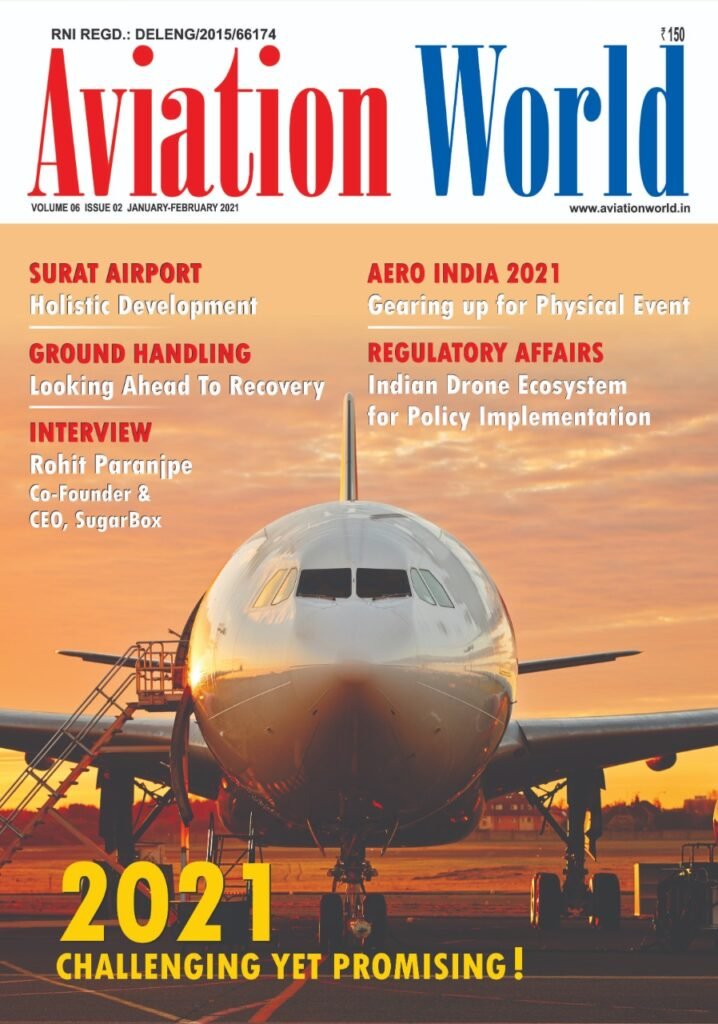
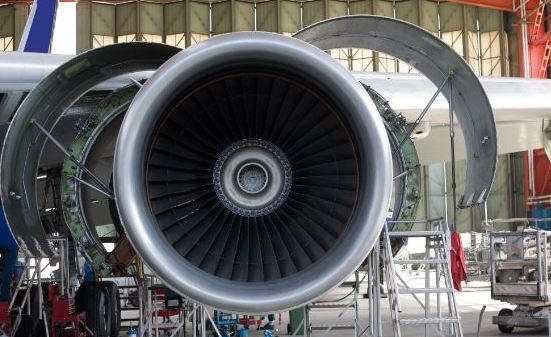
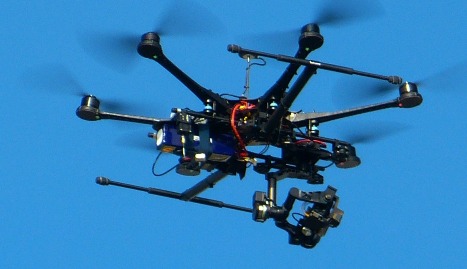
The current edition of Aviation World has covered many areas of Aerospace & Defence based on the latest development in the sector. The front cover highlights three different images, first for the Union Civil Aviation Minister ….. who is leading from the front to steer Indian Civil Aviation sector to witness one of the most interesting phases. He is also facing most tumultuous timing due to the ongoing financial stress in the Aviation sector due to ATF rising cost and long airspace restrictions resulting in mounting losses for Indian carriers. Despite of all the ground level challenges,the minister is addressing new things on regular basis which keeps the sector motivated. We have featured many such developmental works in this edition done under his guidance which will be interesting to read.

Our lead story on “ The West War” is another important feature which covers the ground level reality of the challenges faced by the Aviation sector. Its though time ahead and we believe it will pass soon .

There are features on Regional connectivity and MoCA revised rules on the UDAN 2.0 and how its going to transform the flying experience within India.

In this edition, we have covered topics on MRO,Various Policy changes,Sea Plane Operations by SkyHop Aviation, TATA-Airbus joint project on C295 military aircraft under Make In India which is expected to roll out soon and many other interesting contents which will be good to read.

We are covering Farnborough International Airshow 2026 from 20-24July 2026 in London and our next edition will be based on the same event.For features, you may contact our team on priority basis.


Happy Reading!

NEWSLETTER

Aviation World Magazine is India’s premier aviation magazine and has been actively supporting the development of the Indian and global civil aviation sector. We started our journey in year 2015 and its been 12 years now and the response and acceptance is really encouraging. Thanks to all our associates and writers who remained with us in our progressive journey.

We have started 2026 on a very positive note and we look forward to increase our footprints to more locations and induct many more new companies in our campaign.. Do write to us at : editor@aviationworld.in

Disclaimer

The contents published in this website are news covering Aviation, Aerospace and Defence sector. The objective is to provide news in informative form to keep our readers updated of the latest development. We also publish content featured in our print publication Aviation World.We try our best to avoid any factual errors or image displayed here but we ensure immediate corrections to any such thing brought to our notice that might have been published inadvertently. All images and contents are sourced from the relevant organisations media team.

Copyright ©2014 – 2026. AVIATION WORLD. All rights reserved.

Scroll to Top