Author name: admin

2026

Multi-agency disaster preparedness exercise conducted at NMIA

Raigad-Alibag,09 April 2026: To evaluate the operational readiness of the Navi Mumbai International Airport (NMIA) in tackling natural or technical calamities, a two-day ‘Multi-Agency Disaster Preparedness Exercise’ was recently concluded at the airport. Organized under the joint aegis of the National Disaster Management Authority (NDMA) and the District Disaster Management Authority (DDMA), the drill witnessed active participation from various Central and State Government agencies, showcasing a high level of emergency preparedness. The two-day program commenced with a comprehensive ‘Tabletop Exercise’ session, which involved detailed discussions on strategic planning and inter-departmental coordination during a crisis. This was followed by a demonstration of state-of-the-art rescue equipment and specialized vehicles essential for life-saving operations. The core of the exercise was a ‘Full-Scale Mock Drill’ designed to evaluate real-time responses, including the safe evacuation of people, search and rescue operations, hazard management, and the effective activation of Emergency Operation Centres (EOC). The simulation involved a highly complex ‘multi-hazard’ situation, encompassing challenges such as a cyclone, fire incidents, and the leakage of hazardous radioactive materials. Under these demanding conditions, the agencies underwent rigorous testing on various parameters, including hazard control, fire suppression, evacuation of citizens from multi-storey buildings, efficiency of communication systems, resource mobilization, and ensuring overall security at the site. The mock exercise was graced by the presence of Dr. Dinesh Kumar Aswal and Major General Ajay Verma from NDMA. It also saw active involvement from the National Disaster Response Force (NDRF), Airport Authority of India (AAI), Armed Forces, Central Reserve Police Force (CRPF), and the Department of Atomic Energy (DAE). Furthermore, local and technical bodies such as the Navi Mumbai Municipal Corporation (NMMC), Panvel Municipal Corporation (PMC), CIDCO, Central Industrial Security Force (CISF), Fire Brigade, Civil Defence, Aapda Mitras and the state health Department. To ensure immediate medical assistance during the drill, specialized teams from White Lotus Hospital (Kalamboli), Fortis Hospital (Vashi), and Apollo Hospital (CBD Belapur) were stationed on site.The exercise ensured effective inter-agency coordination and identified potential systemic gaps. The primary objective was to bolster the airport’s resilience in responding effectively to complex emergencies arising from extreme weather and sequential hazards.

2026

MoCA announces relief measures for domestic operations of Indian carriers

New Delhi, 9th April 2026: The unprecedented situation arising out of the ongoing West Asia crisis has posed significant challenges to global aviation operations, including Indian carriers. However, the Indian domestic aviation sector continues to remain resilient and robust, supported by timely and calibrated interventions by the Government. The Ministry of Civil Aviation, while closely monitoring the evolving situation, has undertaken a series of measures to provide relief to domestic carriers. Earlier, the Government had announced the passing of only a partial ATF price hike, capping the increase for domestic airlines at 25% only for domestic operations. Whereas, globally the sharp spike in crude prices has led to a disproportionate rise in Aviation Turbine Fuel (ATF) prices. This step was aimed at enabling carriers to manage operational costs while ensuring that the benefits of affordable air travel continue to reach passengers. Now, as part of a multi-layered response to these unprecedented challenges, the Ministry has taken another significant decision to reduce landing and parking charges for domestic carriers by 25% for a period of three months. Speaking about the announcement, Minister of Civil Aviation, Shri Ram Mohan Naidu, expressed, “Under the leadership of Prime Minister Shri Narendra Modi, the primary focus of the Government in the aviation sector has been to make flying a more affordable and convenient travel option for passengers. Even in the prevailing challenging situation, when global air operations are impacted, we have ensured that cancellations and rising fuel costs do not severely affect the operations of our domestic carriers. While ATF costs globally have risen by more than 100%, we have passed on only a moderated increase capped at 25%.” Talking further about the interventions, Minister said “Now, with the ultimate aim of supporting airlines and, in turn, passengers, airfare increases are being further contained by reducing landing and parking charges levied by airport operators. This step is part of the Ministry’s overall effort to keep the aviation sector stable during this volatile period and to ensure ease of flying for passengers. This is a significant intervention to provide relief to airlines grappling with increasing operational costs. We are in constant touch with all stakeholders, including airlines, airport operators, and the Airports Economic Regulatory Authority of India (AERA), in this regard.” The Ministry has issued directions to the AERA to reduce landing and parking charges by 25% from the prevailing tariff at all major airports under its purview. This reduction has been brought into immediate effect for all domestic flights and will remain applicable for a period of three months. The AERA has issued an order to this effect, stating that any under-recovery by individual airports shall be adjusted during tariff determination in the next control period of five years. Similarly, the Airports Authority of India (AAI) has also been directed to reduce landing and parking charges at all its non-major airports by 25% of the approved rate. This reduction for all domestic flights will also remain applicable for a period of three months. These measures are expected to reduce landing and parking charges payable by airlines at major airports during the three-month period by approximately ₹400 crore. The Ministry of Civil Aviation is keeping a close watch on the evolving situation, and further necessary measures will be taken to ensure the viability of air operations, as well as safe and affordable air travel for passengers. Courtesy: PIB/MoCA

Top Stories

Air India Group announces revisions to fuel surcharge

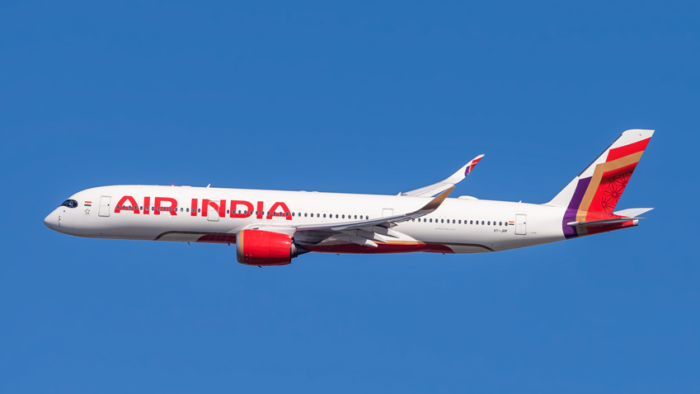
GURUGRAM, 07 April 2026: Air India group today announced further revisions to its fuel surcharge structure across domestic and international routes. A. Fuel Surcharge on Domestic India Routes Following the Ministry of Petroleum & Natural Gas’ and Ministry of Civil Aviation’s decision to cap domestic Aviation Turbine Fuel(ATF) price hike at 25%, Air India group is reflecting this calibrated approach, transitioning from a flat domestic surcharge to a distance‑based grid as follows, effective 08 April 2026 (including on Air India Express flights): A: FUEL SURCHARGE PER PASSENGER, PER SECTOR Distance Band (km)             Revised Fuel Surcharge                       Effective From 0–500                                         INR 299                                         0901 Hrs IST of 08 April 2026 501–1000                                   INR 399 1001–1500                                 INR 549 1501–2000                                INR 749 2000+                                         INR 899 B. Fuel Surcharge on International Routes At the same time, in the absence of any such mitigations on international ATF prices, the Air India group will be implementing more significant changes to fuel surcharges as below. According to the latest data published by the International Air Transport Association (IATA), the global average jet fuel price rose to USD 195.19 per barrel for the week ending 27 March 2026, up from USD 99.40 at the end of February, recording a surge of close to 100%. ATF, produced by refining crude oil, has seen simultaneous increases in both its crude oil component as well as the refinery margin, known as ‘crack spread’, with the latter having nearly tripled within three weeks. It increased from USD 27.83 per barrel for the week ending 27 February to USD 81.44 for the week ending 27 March. This steep rise compounds the impact of rising crude oil prices, creating one of the most challenging fuel cost environments that airlines globally have faced in recent years. The fuel surcharges on international routes do not compensate for the exponential increase in jet fuel prices for international flights. Air India continues to absorb a significant portion of this increased cost. FUEL SURCHARGE PER PASSENGER,PER SECTOR – BY REGION Region                                Revised Fuel Surcharge                      Effective From SAARC (excluding Bangladesh)             USD 24                                  0901 Hrs IST of 08 April 2026 West Asia/Middle East              USD 50 China and Southeast Asia (excluding Singapore)                 USD 100 Singapore                                      USD 60 Africa                                             USD 130 Europe (including the United Kingdom) USD 205                             0001 Hrs IST of 10 April 2026 North America                             USD 280 Australia                                        USD 280 Revisions to fuel surcharge on flights to and from Bangladesh and Far East destinations, namely Japan, Hong Kong, and South Korea, will be advised in due course subject to the requisite regulatory approvals. For the avoidance of doubt, tickets that have already been issued prior to the above times will not attract the new surcharge unless customers seek date or itinerary changes that require a recalculation of the fare. Air India will review its surcharges periodically and make appropriate adjustments as the situation requires.

Space

Korean Air and Exotrail partner to develop Orbital Transfer Vehicle (OTV) solutions

Seoul, April 7, 2026: Korean Air and French space company Exotrail signed a Memorandum of Understanding on April 2 in Seoul to develop Orbital Transfer Vehicle (OTV) solutions.Under the agreement, the two companies will collaborate on high-value space services, including: • Low Earth Orbit (LEO) satellite transport and payload hosting • Multi-orbit satellite deployment • Satellite life extension and in-orbit refueling The partners will establish a joint working group to coordinate launch schedules and optimize orbital transport cost structures. OTV: The last-mile delivery of space transport An Orbital Transfer Vehicle is a propulsion-based solution that transports small satellites from large launch vehicles to their final target orbits. Functioning as the last-mile delivery for space, OTVs provide critical in-orbit services after deployment, including orbital correction, refueling and life extension. As demand for small satellite constellations grows, OTV technology is essential for maximizing deployment efficiency. The capability to deploy multiple satellites into distinct orbits from a single launch vehicle is a key priority for the global “New Space” industry. Strategic cooperation and technical integration Korean Air will utilize its expertise in launch vehicle and satellite systems, including mission control and structural/control system design. Exotrail, a specialist in electric space propulsion and orbital solutions, will establish this partnership as a strategic bridgehead for its expansion into the Asian market. Through this collaboration, Korean Air aims to address growing demand for ultra-small satellite constellations in the defense and commercial sectors. “By combining Exotrail’s proven space heritage with Korean Air’s aerospace manufacturing capabilities, we aim to secure a competitive advantage in the New Space market,” said a Korean Air representative. The OTV partnership follows the launch of Korean Air’s 35-ton reusable methane engine development program with Hyundai Rotem in 2025. These combined initiatives expand the company’s aerospace operations to include both launch vehicle manufacturing and specialized orbital transport services.

Training

BCAS–RRU signs MoU to advance atmanirbharta in aviation security

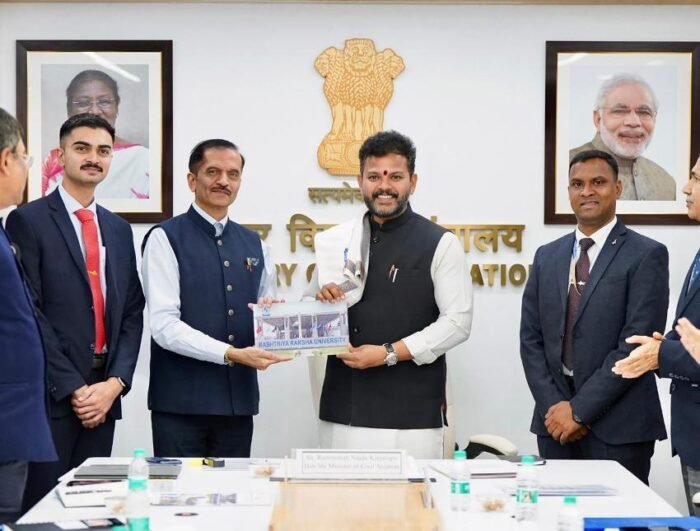
New Delhi, 7th April 2026: Bureau of Civil Aviation Security (BCAS) and Rashtriya Raksha University (RRU) has signed a Memorandum of Understanding (MoU) for the establishment and operation of a dedicated indigenous Testing Centre for conducting trials, performance evaluation and certification of Full Body Scanners (FBS) and other security screening equipment used at Indian airports. The MoU was signed in New Delhi, in the presence of Ram Mohan Naidu Kinjarapu, Union Minister of Civil Aviation; Samir Kumar Sinha, Secretary, Ministry of Civil Aviation; Rajesh Nirwan, DG, BCAS and Dr. Bimal Patel, Vice Chancellor, Rashtriya Raksha University. Speaking on the occasion, Ram Mohan Naidu said, “Today’s MoU between BCAS and Rashtriya Raksha University is a natural extension of the NDA Government’s twin focus on security research and capacity building. Under the visionary leadership of Prime Minister Narendra Modi, strengthening security through focused research, innovation and capacity building has remained a core priority. It is primarily about building an Atma-Nirbhar Bharat, Atma-Surakshit Bharat!” Highlighting the legacy and institutional strength of RRU, he added, “With a clear mandate of ‘Rastriya Surkasha Sarvopari’, the Rastriya Raksha University was established in 2010 by Prime Minister Narendra Modi back then serving as CM of Gujarat. And under the able guidance of Home Minister Amit Shah, it has emerged as one of the most prestigious institutions globally in its domain.” The partnership creates a formal institutional framework for cooperation between BCAS and RRU in the areas of testing, certification, research, training and standards development relating to aviation security equipment. It is aimed at strengthening India’s aviation security ecosystem through a credible, independent and scientifically rigorous mechanism for assessment and regulatory support. Under the MoU, RRU, in collaboration with BCAS, will establish and maintain a dedicated Testing Centre for conducting trials of Full Body Scanners and other aviation security equipment in accordance with directives issued by BCAS. The Centre will undertake independent evaluation, verification and certification of the specifications and performance of equipment supplied by Original Equipment Manufacturers (OEMs), and submit impartial and scientifically robust assessment reports for regulatory consideration. Underscoring the focus on Atmanirbharta in aviation security, the Minister stated, “I see the highlight of this association is definitely the focus on building Atmanirbharta in aviation security equipment. While aligning with foreign certification practices, we should now aim to emerge as a global hub for aviation security certification. Importantly, by providing testing support to Indian OEMs, we can facilitate the development of Bharat Standards.” Ram Mohan Naidu further added, “I strongly believe that by combining the regulatory authority of BCAS with the technical prowess of RRU, we will build an indigenous ecosystem for security equipment certification, which will resonate with international practices such as those overseen by the TSA in the United States and ECAC in Europe.” The MoU also provides for the establishment of state-of-the-art testing laboratories at RRU, aligned with global standards, to carry out rigorous performance, safety and interoperability assessments. This will support the development of an institutionalised accreditation framework to ensure that only equipment meeting prescribed technical and operational benchmarks is considered for deployment in critical aviation security environments. The MoU further envisages cooperation in academics, research, extension and training programmes for mutual benefit. It includes capacity-building initiatives through workshops, specialised training programmes and knowledge-sharing activities aimed at developing professional expertise in testing, accreditation and emerging aviation security technologies. The partnership will also promote research and innovation in the field of aviation security, enabling continuous refinement of testing methodologies, accreditation criteria and deployment protocols in response to evolving threat scenarios and technological developments. It will additionally facilitate national and international collaborations to align India’s testing and certification ecosystem with global best practices. Highlighting the rapid growth of the aviation sector, the Minister mentioned, “We all are witness to the revolutionary growth that is happening in the civil aviation sector. Airports in the country have more than doubled from 74 in 2014 to 165 today. Every hour, our airports are handling 250 to 300 aircraft movements and catering to a massive footfall of about 40-45,000 passengers every hour! And not only passengers, air cargo too has seen a staggering leap in volumes by almost 50% over the last 10-12 years. So, it is very important to adopt the highest standards of technology and highest standards of professional competence in the operations of BCAS. And this MoU between BCAS & RRU is a step forward in that direction towards building a future-ready and resilient aviation security ecosystem.” (Courtesy: PIB/MoCA)

Features

Rebalancing the Skies: Building a Permanent Passenger Protection and Grievance Redressal Framework in Indian Aviation

Why regulatory clarity, pricing transparency, and institutional reform can no longer be deferred  Written By G.S.Bawa:  India’s aviation sector stands at a defining moment. Over the past decade, the transformation has been remarkable—air travel has expanded beyond metropolitan elites to become an essential mobility backbone for millions. With initiatives such as the UDAN Scheme, the skies have quite literally opened up to the “common citizen.” But with democratisation comes responsibility As more first-time flyers enter the system, their expectations are not shaped by legacy industry norms—they are shaped by fairness, predictability, and value. It is precisely here that recent developments—particularly the proposed “60% free seating” directive and its abrupt rollback—have exposed a deeper institutional weakness: the absence of a stable, transparent, and passenger-first grievance redressal architecture.This is not a short-term policy lapse. It is a long-term structural gap. When Policy Oscillates, Passenger Trust Declines Aviation systems thrive on predictability. Every operational and commercial decision—from scheduling to pricing—is built on stable assumptions. When a regulatory directive is issued and then quickly withdrawn without public clarification, it sends a signal of uncertainty.For passengers, this is more than confusion—it is erosion of trust. The lack of clarity surrounding the “free seating” proposal illustrates this problem vividly. Was the intention to eliminate seat selection fees? To introduce a randomised allocation system? Or to mandate partial standardisation across airlines? Without a clearly articulated rationale from the Directorate General of Civil Aviation or the Ministry of Civil Aviation, passengers are left interpreting policy through speculation. In a sector where consumers already struggle with complex pricing structures, such ambiguity compounds dissatisfaction. Aviation policy cannot afford to be reactive—it must be deliberate, consultative, and transparent. Decoding the “Triple Burden” on the Modern Traveller To understand passenger grievances, one must examine the evolving fare structure.Today’s traveller is not merely paying a ticket price—they are navigating a layered cost architecture: • A dynamically fluctuating base fare • A fuel surcharge that varies with limited transparency • A growing list of ancillary charges (seat selection, baggage, priority services) Individually, each component may be justified. Collectively, however, they create a perception of unpredictability and, at times, inequity. This is particularly relevant in the context of fuel surcharges. With fare caps removed to allow market-driven pricing, and policy measures indirectly supporting airline cost structures, the continued imposition of surcharges raises a legitimate question- Where is the mechanism that ensures cost benefits are shared with passengers?In the absence of such a mechanism, pricing becomes asymmetrical—cost increases are passed on quickly, but cost reductions are not always reflected with the same immediacy.Over time, this asymmetry erodes consumer confidence and invites regulatory scrutiny. Transparency: The Missing Link in Consumer Protection At the heart of the issue lies a structural deficiency: the absence of standardised fare transparency.Unlike other sectors where pricing components are clearly itemised and regulated; airline ticketing often presents a bundled cost that obscures the underlying breakdown. For a passenger, distinguishing between base fare, surcharge, and service fee becomes an exercise in guesswork.This lack of clarity has two consequences: 1. It weakens the passenger’s ability to make informed choices 2. It reduces accountability within the pricing ecosystem Further, transparency is not merely a consumer convenience—it is a regulatory necessity. Without it, even well-intended deregulation risks being perceived as opacity. Balancing Airline Viability with Passenger Fairness It is important to recognise that airlines are operating in a challenging environment. Aviation Turbine Fuel (ATF) prices remain volatile, global supply chains are under stress, and geopolitical developments—including tensions linked to regions such as Iran—continue to impact operational economics.However, acknowledging these realities does not negate the need for accountability.Aviation policy must reject the notion that passenger protection and airline sustainability are competing priorities. In fact, they are interdependent. A market that loses passenger trust ultimately undermines its own demand base. The objective, therefore, is not to constrain airlines, but to ensure that: • Pricing remains rational • Justifications are transparent • Adjustments are symmetrical And, this is the essence of a fair market. Why Grievance Redressal Must Evolve from Reactive to Systemic India’s current passenger grievance mechanisms, while functional, are largely reactive. Complaints are addressed individually, often after delays, and rarely feed into systemic reform.This approach is no longer sufficient for a sector of this scale. A modern aviation ecosystem requires a proactive grievance redressal model that: • Identifies patterns rather than isolated complaints • Enables real-time intervention • Integrates data into policy making Thus, without such a system, grievances accumulate silently until they manifest as widespread dissatisfaction or public backlash. The Case for a Permanent Passenger Protection Framework The issues currently being debated—free seating, fuel surcharges, ancillary pricing—are not isolated anomalies. They are indicators of a deeper need for institutional reform.A long-term solution must include:A Legally Enforceable Passenger Bill of Rights This would define, in clear terms, what a passenger is entitled to—across pricing, service quality, and compensation. Importantly, it would shift the conversation from discretionary practices to enforceable standards. 1: Real-Time Regulatory Oversight Technology can enable regulators to monitor fare trends, detect anomalies, and intervene when necessary. This is particularly critical during peak seasons or emergencies, where price surges can disproportionately affect travellers. 2: Standardised Pricing Disclosure Airlines should be required to present fares in a uniform, transparent format. This not only empowers passengers but also fosters fair competition. 3: Rationalised Surcharge Mechanisms Fuel surcharges, if necessary, must be linked to a publicly verifiable index, with automatic adjustments—both upward and downward. This ensures that pricing reflects reality, not discretion. 4: Regulation of Ancillary Revenues Ancillary services should remain optional—but not exploitative. Caps or guidelines may be necessary to prevent disproportionate monetization. Institutionalising Stakeholder Consultation One of the most significant gaps in recent policy making has been the limited visibility of stakeholder engagement.Aviation policy impacts multiple constituencies: • Passengers • Airlines • Airports • Regulators Yet, passenger representation remains the least formalized. The creation of a structured consultative body—bringing together all stakeholders—would ensure that policies are: • Better informed • More practical • Less prone to reversal


2026

Salam Air releases Q1-2026 on-time performance results

Muscat,6th April 2026: SalamAir, Oman’s Low-Cost Carrier, has announced its On-Time Performance (OTP) results for the first quarter of 2026, reinforcing its continued commitment to operational transparency, reliability, and customer trust. OTP is an internationally recognized measure of punctuality, calculated by the percentage of flights departing within 15 minutes of their scheduled departure time. During the first quarter of 2026, SalamAir operated 5520 flights and carried 778,410 passengers across its network, achieving an On-Time Performance of 65.6%. The quarter was impacted by several extraordinary challenges, including regional airspace restrictions, airport closures because of geopolitical developments and rerouting or diversion of aircraft. All these events led to schedule adjustments and disruptions across parts of the network which impacted OTP. SalamAir’s OTP for the fourth quarter of 2025 was 89% and the drop to 65% in Q1 2026 represents a 26% decrease in On Time Performance. Commenting on the results, Adrian Hamilton-Manns, Chief Executive Officer of SalamAir, said: “On-time performance is a core measure of our operational delivery and reliability. In the first quarter of 2026, we recorded an OTP of 65.6%. While we acknowledge it was a complex period with extraordinary factors impacting flight schedules and operational performance, we apologise to all our customers who did not reach their destination on time. We have previously been among the Top-5 airlines in the region for OTP so today’s results are below our target. We shall focus on strengthening operational resilience and improving schedule reliability to ensure we deliver a consistent and dependable experience for our passengers.” Since the third quarter of 2024, SalamAir has published its OTP results on a quarterly basis, reflecting the airline’s commitment to transparency and accountability. This approach enables passengers to make informed travel decisions while supporting best practices in operational reporting within the regional aviation sector.

Top Stories

Air Astana adds a new Airbus A321neo aircraft in its growing fleet

Astana, 6th April 2026: As part of its fleet expansion plan, Air Astana has received a new Airbus A321neo aircraft on 3rd April 2026, delivered directly from the manufacturer’s facility in Hamburg, Germany. The aircraft has become the 63rd in Air Astana Group’s fleet and will support further capacity growth and the development of the airline’s route network. Air Astana’s fleet predominantly consists of Airbus aircraft, ensuring a high level of fleet commonality, operational efficiency and reliability. The Airbus A321neo belongs to the latest generation of Airbus aircraft, offering high fuel efficiency, enhanced passenger comfort and reduced environmental impact. The new aircraft will be deployed on both domestic and international routes.

Tourism

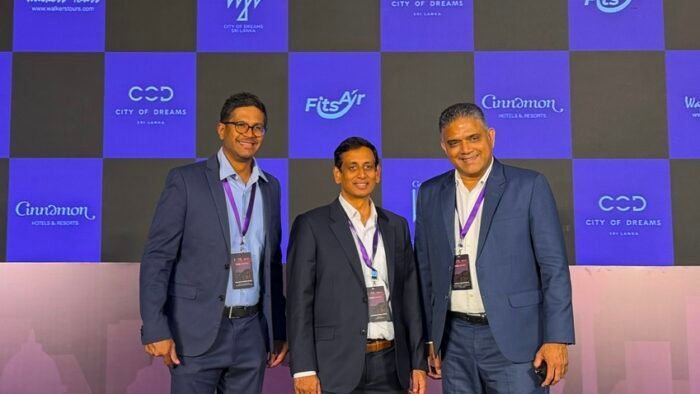
City of Dreams Sri Lanka and Cinnamon Hotels bring direct Ahmedabad–Colombo connectivity with Fitsair

Ahmedabad, April 2, 2026: In a strategic collaboration aimed at enhancing international travel from Gujarat, City of Dreams Sri Lanka, Cinnamon Hotels & Resorts, and Walkers Tours have partnered with FitsAir to introduce direct scheduled passenger flights between Ahmedabad and Colombo. This new service offers travellers from Ahmedabad seamless and convenient access to Sri Lanka, making it easier than ever to experience South Asia’s first fully integrated resort destination. Operated by FitsAir, Sri Lanka’s first private international airline, the direct Ahmedabad–Colombo service will run three times a week, catering to the growing demand for international leisure travel from Gujarat. With this enhanced connectivity, travellers can now effortlessly plan getaways to Colombo—exploring not only City of Dreams Sri Lanka but also a range of premium stays across Cinnamon Hotels & Resorts, including Cinnamon Life at City of Dreams, Cinnamon Grand, Cinnamon Lakeside, and Cinnamon Red. Starting from 15 May, 2026, flights will be operating three times a week between Ahmedabad and Colombo, with specially curated Cinnamon travel packages.

2026

Embraer reports 44 aircraft delivered in the first quarter, up 47% year-on-year

Sao Paulo, Brazil, 3rd April , 2026: Embraer informed that it has delivered 44 aircraft in 1Q26. This result represents an improvement of 47% year-on-year (yoy) versus 30 jets delivered in 1Q25, supported by progress in the company’s production leveling initiatives. Commercial Aviation delivered 10 new commercial jets — 3 of which were E195-E2 models, Embraer’s largest aircraft currently in production in the segment — during 1Q26. The business unit’s volume increased 43% in comparison with 1Q25, when it delivered 7 aircraft. Executive Aviation delivered 29 jets during the quarter, up 26% when compared to 1Q25, when 23 aircraft were delivered. Higher deliveries of both light and midsize jets propped the strong performance, and reflected continued solid demand across the segment. In Defense & Security, the company delivered 1 unit of its multi-mission military transport aircraft, the KC-390 Millennium, and 4 A-29 Super Tucano, for a total of 5 aircraft in the quarter, compared with no deliveries in the same period of the previous year. Embraer estimates aircraft deliveries between 80 and 85 in Commercial Aviation in 2026 (midpoint up 6% yoy), and between 160 to 170 in Executive Aviation (midpoint up 6% yoy).

FOREWORD

Dear Reader’s,


The current edition of Aviation World has covered many areas of Aerospace & Defence based on the latest development in the sector. The front cover highlights three different images, first for the Union Civil Aviation Minister ….. who is leading from the front to steer Indian Civil Aviation sector to witness one of the most interesting phases. He is also facing most tumultuous timing due to the ongoing financial stress in the Aviation sector due to ATF rising cost and long airspace restrictions resulting in mounting losses for Indian carriers. Despite of all the ground level challenges,the minister is addressing new things on regular basis which keeps the sector motivated. We have featured many such developmental works in this edition done under his guidance which will be interesting to read.

Our lead story on “ The West War” is another important feature which covers the ground level reality of the challenges faced by the Aviation sector. Its though time ahead and we believe it will pass soon .

There are features on Regional connectivity and MoCA revised rules on the UDAN 2.0 and how its going to transform the flying experience within India.

In this edition, we have covered topics on MRO,Various Policy changes,Sea Plane Operations by SkyHop Aviation, TATA-Airbus joint project on C295 military aircraft under Make In India which is expected to roll out soon and many other interesting contents which will be good to read.

We are covering Farnborough International Airshow 2026 from 20-24July 2026 in London and our next edition will be based on the same event.For features, you may contact our team on priority basis.


Happy Reading!

NEWSLETTER

Aviation World Magazine is India’s premier aviation magazine and has been actively supporting the development of the Indian and global civil aviation sector. We started our journey in year 2015 and its been 12 years now and the response and acceptance is really encouraging. Thanks to all our associates and writers who remained with us in our progressive journey.

We have started 2026 on a very positive note and we look forward to increase our footprints to more locations and induct many more new companies in our campaign.. Do write to us at : editor@aviationworld.in

Disclaimer

The contents published in this website are news covering Aviation, Aerospace and Defence sector. The objective is to provide news in informative form to keep our readers updated of the latest development. We also publish content featured in our print publication Aviation World.We try our best to avoid any factual errors or image displayed here but we ensure immediate corrections to any such thing brought to our notice that might have been published inadvertently. All images and contents are sourced from the relevant organisations media team.

Copyright ©2014 – 2026. AVIATION WORLD. All rights reserved.

Scroll to Top