Author name: admin

Cargo

Royal Air Maroc Cargo launches new Casablanca–Dakar freighter service

Casablanca, Morocco, January 5, 2026: Royal Air Maroc Cargo, the cargo division of Morocco’s national carrier, has launched a new dedicated freighter route between Casablanca and Dakar (CMN–DSS). Operated by a Boeing 767 freighter offering 45 tons of capacity, this weekly Friday service strengthens the airline’s role as a strategic connector between North and West Africa. The addition of Dakar expands the airline’s freighter network, which already includes Brussels (three flights per week), Istanbul (two), Bamako (two), and Ouagadougou (two). Together, these routes form a robust regional backbone that complements Royal Air Maroc Cargo’s wide passenger and belly hold network across Africa, Europe, the Americas, and Asia. Supported by its B767 all-cargo aircraft, the airline also offers daily cargo capacity on its Boeing 787 Dreamliners and Boeing 737 aircraft, ensuring flexible and efficient service across intra-African and intercontinental routes. At the heart of this network, the Casablanca hub, equipped with a 200,000-ton annual handling capacity and specialized facilities for perishables, pharmaceuticals, and high-value goods, enables swift onward connections to more than 30 African destinations. “This new freighter route marks another milestone in our long-term vision to reinforce Africa’s logistics ecosystem and bring markets closer together,” said Rita Chraibi, Vice President Cargo at Royal Air Maroc. “Senegal is one of West Africa’s most dynamic economies, and our dedicated Casablanca–Dakar service directly addresses customer demand for reliability, capacity, and speed while advancing our goal of building sustainable and efficient air bridges across the continent.” The launch of the Casablanca–Dakar service follows recent network expansions to Beijing, São Paulo, and Toronto, reaffirming Royal Air Maroc Cargo’s strategy to consolidate its leadership in Africa and enhance trade flows between the continent and the world.

Events

ADA conducts national seminar on ‘Aeronautics 2047’ in Bengaluru

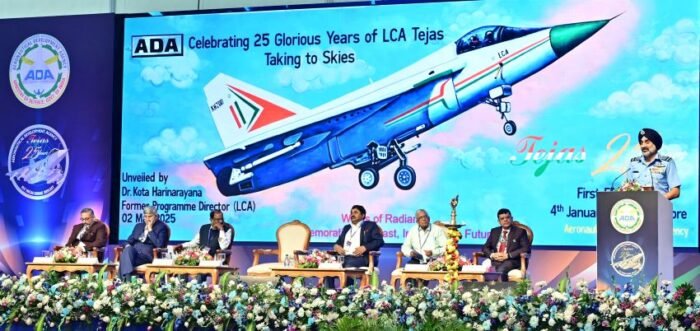
Bengaluru, 5th January 2026: A two-day national seminar ‘Aeronautics 2047’, organised by the Aeronautical Development Agency (ADA), commenced at Centre for Airborne Systems (CABS), Bengaluru on January 04, 2026. The seminar was inaugurated by the Chief of the Air Staff Air Chief Marshal AP Singh. In his address, the Chief of the Air Staff congratulated ADA for completing 25 years of Light Combat Aircraft (LCA) Tejas flight and emphasised on the need to adhere to the delivery timelines to keep the Indian Air Force (IAF) operationally ready in today’s constantly evolving times. Speaking on the occasion, Secretary, Department of Defence R&D and Chairman DRDO Dr Samir V Kamat underscored the importance of developing indigenous cutting-edge technology to minimise the dependence on imports, thereby realising the vision of Viksit Bharat @2047. The seminar has brought together domain experts, industrial partners, academia, aviation enthusiasts and speakers from across the aerospace community to share their insights on the evolution of aeronautics, design innovation, manufacturing, and future frontiers. The focus of Aeronautics-2047 is to explore various aspects of modern aerospace technologies, including manufacturing and assembly for next generation aircraft, digital manufacturing, aerodynamics for next generation combat aircraft, propulsion technologies, flight testing techniques, digital twin technology, certification challenges, flight control systems & avionics, maintainability challenges in fighter aircraft, AI in aircraft design, and precision manufacturing for actuators. The seminar will cover the future of Indian space technologies and the journey of LCA Tejas from sketch to squadron. ADA has designed and developed LCA Tejas, with more than 5,600 successful flight trials. More than 100 design work centres including Government laboratories, academic institutes and industries were associated with this programme. Several niche technologies like carbon composites, light-weight materials, fly-by-wire flight control, digital utility management system, Glass Cockpit, etc. were developed to make LCA a fourth-generation fighter. The LCA Mk1A is an advanced variant of the indigenously designed & manufactured fighter aircraft and will serve as a potent platform to meet the operational requirements of IAF. LCA MK II and LCA Navy are currently under development. During the seminar, a series of technical talks by distinguished and renowned speakers associated with Tejas program will be delivered. India benefited enormously with the development of LCA Tejas, as it has acquired now both capability and capacity to build fighter aircraft indigenously. The LCA program is one of the most successful indigenous defence programmes through which IAF was provided with an exceptional air superiority fighter. Till date, 38 aircraft (32 Fighters and 6 Trainers) have been inducted into two squadrons of the IAF. As part of the seminar, a large number of PSUs, DPSUs, Industries, MSMEs are displaying their products indigenously designed and developed for airborne applications.

RCS

FLY91 leases two ATR 72-600 Aircraft from Dubai Aerospace Enterprise

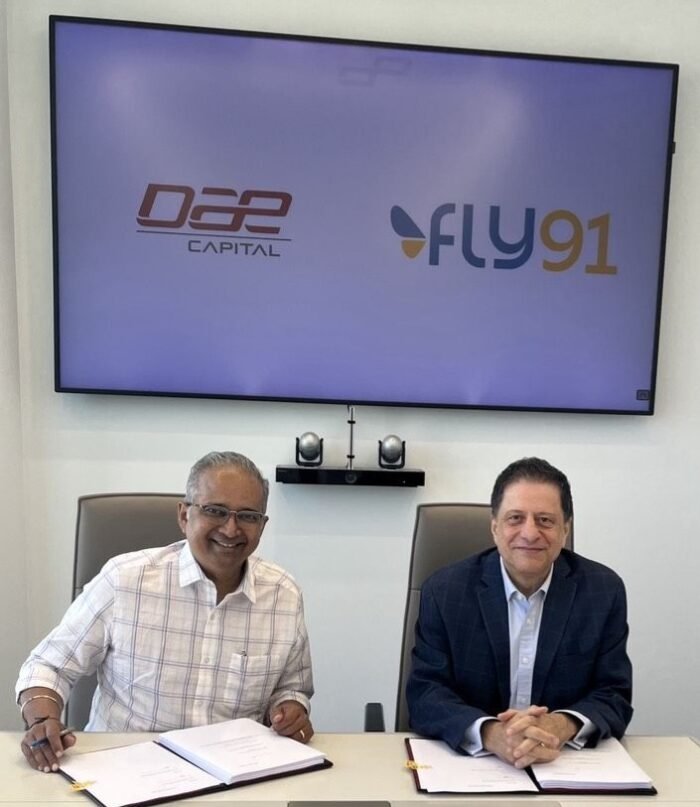
Panaji,5th January 2026: FLY91 has leased two ATR 72-600 turboprop aircraft from Dubai Aerospace Enterprise (DAE), a UAE-headquartered global aviation services provider. The two brand-new aircraft are scheduled for delivery later this month from ATR’s manufacturing facility in Toulouse, France. Following induction, FLY91 will enhance capacity, increase frequencies across its existing routes, and expand operations to Hubballi (Karnataka); Vijayawada and Rajahmundry (Andhra Pradesh); Nanded (Maharashtra); and Dabolim (Goa). With the addition of these aircraft, FLY91’s fleet strength will increase to six. The expansion aligns with the airline’s strategy to deepen connectivity across India’s tier-2 and tier-3 cities while strengthening regional air links. “This transaction reinforces our commitment to building a resilient and scalable regional airline through measured growth,” said Manoj Chacko, Chief Executive Officer and Managing Director, FLY91. “The ATR 72-600 is integral to our operational philosophy, offering an optimal balance of efficiency, reliability and performance for short-haul regional routes. Partnering once again with DAE enables us to expand our fleet while maintaining financial discipline and capital efficiency.” FLY91 had earlier inducted its first two aircraft through DAE.

Defence

DRDO celebrates 68th Foundation Day

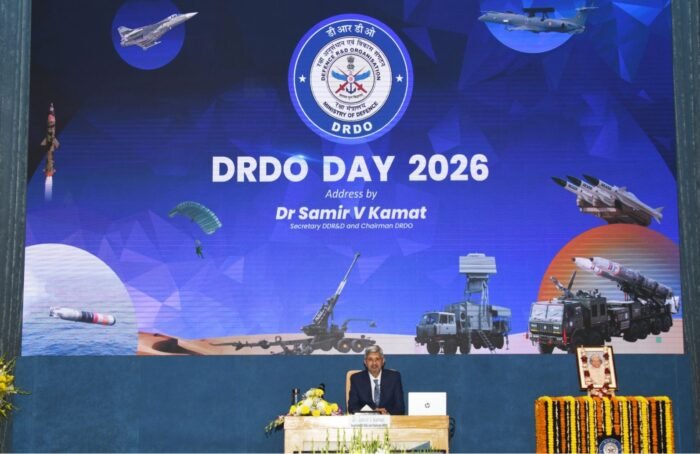
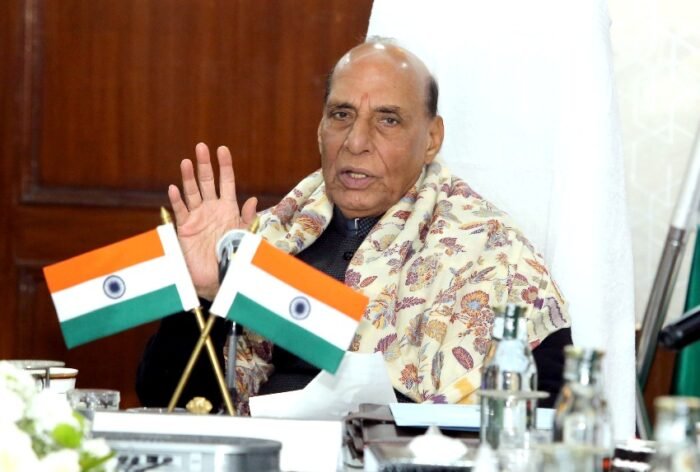
Delhi, 2nd January 2026: Defence Research and Development Organisation (DRDO) celebrated its 68th Foundation Day on January 01, 2026. Raksha Mantri Shri Rajnath Singh and Raksha Rajya Mantri Shri Sanjay Seth visited the DRDO Headquarters and reviewed the achievements of DRDO in 2025 and targets for 2026. Later, Secretary, Department of Defence R&D and Chairman DRDO Dr Samir V Kamat addressed the DRDO fraternity at DRDO Bhawan, which was streamed live across all the laboratories of DRDO. Extending warm wishes to DRDO employees and their families, Dr Kamat stated that the efforts of DRDO have given a quantum jump to India’s pursuit of self-reliance in defence as part of the ‘Aatmanirbhar Bharat’ vision. He called upon DRDO scientists to focus on next generation needs including cyber security, space and artificial intelligence. The immense potential available generated through DRDO R&D has been a catalyst for the development of industries in the defence manufacturing sector, he said. Highlighting the achievements of DRDO in 2025, the Chairman DRDO said that several systems developed were delivered, inducted or handed over to the users. He stressed that DRDO should focus to work together with all stakeholders in the defence ecosphere to meet the country’s futuristic challenges and fulfill the Prime Minister vision of Aatmanirbhar Bharat. He expressed satisfaction that the 22 Acceptance of Necessity (AoN) been accorded by Defence Acquisition Council (DAC) and the Services Procurement Board (SPB) for induction of several DRDO developed systems worth approx. Rs 1.30 lakh crores to be manufactured by Indian Industries which is the highest in any single year in history. Some of the notable systems for which AoN has been accorded include Integrated Air Defence Weapon System (IADWS), Conventional Ballistic Missile System, Quick Reaction Surface to Air Missile System ‘Anant Shastra’, Long Range Air to Surface Supersonic Cruise Missile (LRASSCM), Integrated Drone Detection and Interdiction System (IDDIS) MK II, Beyond Visual Range Air-to-Air Missile (BVRAAM) Astra Mk-II, Anti-Tank NAG Missile System (Tracked) Mk-2, Advanced Light Weight Torpedo, Processor-based Moored Mine – Next Generation (PBMM NG), Air-borne Early Warning & Control (AEW&C) Mk-1A, Mountain Radars, Full Mission Simulator for Light Combat Aircraft (LCA) Mk-1A. Dr Kamat informed that 11 contracts for acquisitions valued at Rs 26,000 crore have been signed with DRDO production partners for Nag Missile System, Ashwini Low Level Transportable Radar, Air Defence Fire Control Radar (ADFCR), Electronic Warfare Suite for Mi-17 V5 Helicopter, Area Denial Munition (ADM) Type-1 and High Explosive Pre-Fragmented (HEPF) Mk-I (Enhanced) for the Pinaka Multiple Launch Rocket System, Infantry Foot Bridge Floating, Wargaming System, and Automatic Chemical Agent Detector & Alarm (ACADA) and Advanced Towed Artillery Gun System (ATAGS). He added that a significant number of products developed by DRDO were inducted into the services of Central Armed Police Forces (CAPFs), Police & National Disaster Response Force in 2025. The DRDO Chairman also highlighted that the User Evaluation Trials for several systems have either been completed in 2025 or are in the final stages. These include Surface to Surface Missile ‘Pralay’, Surface to Air Missile Akash NG, Guided Extended Range Rocket ‘Pinaka’, Advanced Light Weight Torpedo, Integrated Combat Suits for Submarines, Extended Range Anti-Submarine Rocket (ER-ASR), Man Portable Anti-tank Guided Missile (MPATGM), Electronic Warfare Systems for Plains & Deserts, Border Surveillance System (BOSS), Software Defined Radio for Indian Army, CBRN Water Purification System. He further said that several other systems have either completed or are in the various stages of Development trials, which includeIndian Light Tank, Very Short-Range Air Defence System (VSHORADS), Vertical Launch Short Range Surface to Air Missile, Short range Naval Anti-Ship Missile (NASM-SR), Long Range Land Attack Cruise Missile, Air-to-Surface Missile Rudram-2, UAV Launched Precision Guided Missile (ULPGM)-V3, Cannon Launched Anti-Tank Guided Missile for MBT Arjun, Long Range Glide Bomb ‘Gaurav’, Long Range Radar, VHF Surveillance Radar, High Power Microwave System, Medium Range Microwave Obscurant Chaff Rockets, On Board Oxygen Generating System (OBOGS)-centric Integrated Life Support System (ILSS) on LCA and Automatic Fire Protection System in DORNIER-228 Aircraft. Dr Kamat expressed confidence that the laboratories will strive to ensure that most of the systems which are under User trials and under final stages of developmental trials get accepted by the user in 2026 so that they are ready for induction. He also stated that DRDO has been partnering with industry for realisation of its systems, sub systems and components, and, so far, 2,201 Licensing Agreements for Transfer of Technologies (LAToT) have been handed over to the Indian Industries out of which 245 LAToTs were signed in 2025. 13 new DcPP/PAs were chosen last year for Mission Mode projects. Total number of DcPP awarded till now is 145. DRDO has also opened its test facilities to industries and more than 4,000 tests have been carried out for private industries/ DPSUs in 2025. He further said that 15 DRDO Industry Academia Centres of Excellence are steering translational research activities in identified research verticals are performing very well. In 2025, 66 projects were sanctioned with total cost of Rs 228 crore in which 214 researchers have been engaged. This makes it to total of 341 sanctioned project at cost of Rs 1,218 crore engaging 1,255 researchers and 65 academia institutes. He concluded his speech with highlighting the reforms undertaken in 2025. Courtesy: MoD/PIB


Defence

Year of Reforms 2025: MoD records significant progress in implementing wide-ranging reforms

New Delhi, 1st January 2026: As the curtains came down on ‘Year of Reforms 2025’, Ministry of Defence, under the leadership of Raksha Mantri Rajnath Singh, has recorded significant progress in implementing wide-ranging reforms aimed at strengthening jointness, enhancing defence preparedness, promoting self-reliance and improving welfare delivery mechanisms. These reforms, undertaken across the Ministry, reflect a whole-of-government approach towards building a modern, integrated and future-ready defence ecosystem. Acquisition Approvals: Defence Acquisition Council approved capital acquisition proposals worth a total of cost of over Rs 3.84 lakh crore since January 2025 to enhance the country’s defence readiness, with focus on modernisation through indigenisation. Contracts Signed: In the Financial Year 2025-26 till the end of December 2025, Ministry of Defence has signed capital contracts amounting to Rs 1.82 lakh crore for the modernisation of the Armed Forces. Expenditure: Ministry of Defence has achieved 80% (Approx. Rs 1.2 lakh crore) expenditure under Capital Acquisition Budget by the end of December 2025. The allocation under this is spent on modernisation of the Armed Forces. The overall capital expenditure of MoD has also reached upto 76% which includes expenditure on Infrastructure, land, R&D etc in addition to capital acquisition. Defence Industry & Innovation Enablement: To promote greater indigenisation in defence and secure supply chains, private sector participation has been increased. This includes streamlining defence manufacturing licenses, mapping the competencies of MSMEs, and preparing Market Intelligence Reports to enhance demand-supply analysis in defence procurement. Additionally, testing and trial infrastructure lab facilities are being shared with the private sector. 25% of defence research grants are also being allocated to them along with academic institutions and MSMEs to encourage innovation & strengthen collaboration in the defence sector. Acquisition & Procurement Reforms: Procurement processes have been streamlined to reduce timelines, including Simplification of the iDEX manual, Rationalisation of defence export permissions, Revamping of the Defence EXIM Portal, Simplification of Technology Transfer policy and Decentralisation through revised Delegation of Financial Powers and Procurement Manuals (Defence Procurement Manual 2025, implemented w.e.f. November 01, 2025). Defence Policy & International Engagement: Review and revision of Defence Acquisition Procedure 2020, Encouragement of Foreign Direct Investment in defence, Enhanced engagement with friendly countries, Defence Lines of Credit including Bharat Maitri Shakti, and Rationalisation of restricted distance norms near defence establishments are under progress. Defence Production & Quality Enhancement: Formation of an Export Promotion Body, Implementation of Quality Assurance 4.0 & Industry 4.0 in DPSUs and Establishment of a National Integrated Test Laboratory for defence platforms are being advanced. Jointness & Future Preparedness: Establishment of Joint Operations Control Centre, promulgation of Vision 2047 for the Armed Forces, Creation of a Future Operations Analysis Group, Promotion of joint training programmes and Finalisation of the Integrated Capability Development Plan are under various stages of implementation. Steps taken in this direction bore fruit during the planning and execution of Operation Sindoor. Operational Integration & Capability Enablement: Deployment of Tri-Service Geographical Information System, Review and Harmonisation of policies, SOPs and Tactics, Techniques & Procedures for Tri-service uniformity, Expansion of women’s roles in combat and leadership positions, Promotion of military tourism and Preparation of a long-term roadmap for operational infrastructure and accommodation have been completed. Veterans’ Welfare Reforms: To improve delivery of medical cover for veterans and their dependents under ECHS, pan-India doorstep delivery of medicines to 70 year plus Ex-servicemen (ESM) with infirmity introduced, authorised local chemist limits doubled, eSeHAT tele-medicine consultation introduced, pan-India rollout underway; AYUSH treatment at ECHS introduced, Stress management facilities created, Common drug list enhanced, Upgradation of some ECHS polyclinics, Creation of some new polyclinics underway. Enhancement of welfare grants to ESM and their dependents including Penury, Education & Marriage grants implemented. SPARSH Pension Portal: 31.69 lakh defence pensioners have been onboarded on SPARSH, India’s largest digital pension platform. Out of 6.43 lakh discrepant cases migrated from previous systems, 6.07 lakh have been normalised without affecting pensioners’ entitlements. The sustained reform momentum during the ‘Year of Reforms 2025’ has strengthened India’s defence preparedness and institutional efficiency. These reforms are not isolated initiatives, but part of a continuous process to build a modern, integrated and self-reliant defence ecosystem capable of safeguarding the nation’s security interests in the decades ahead. ( News is published unedited. Courtesy: PIB/MoD)

Airports

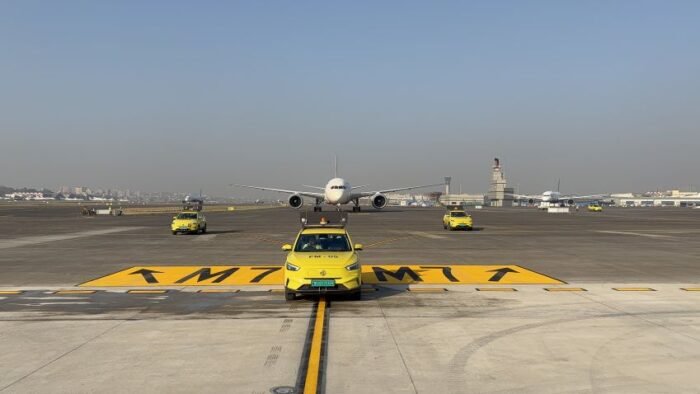
CSMIA commissions ‘Taxiway M’ to strengthen airside capacity and operational resilience

Mumbai, 30 December 2025: Chhatrapati Shivaji Maharaj International Airport (CSMIA), Mumbai has commissioned Taxiway M, a significant airside infrastructure upgrade designed to improve airside efficiency and operational resilience at one of the world’s busiest single-runway airports. CSMIA handles an average of 950+ aircraft traffic movements (ATMs) daily. This is primarily supported by the main runway 09/27 that handles high-intensity operations supported historically by a single Parallel Taxi Track (PTT) N–N1, which has remained in near-constant use due to the absence of an alternate full-length taxiway. Over time, sustained traffic levels and limited maintenance windows highlighted the need for an additional parallel taxiway to improve operational resilience and reduce dependency on a single taxi track. Taxiway M was conceived to address this critical requirement. However, the project involved substantial complexity, as the alignment was constrained by the presence of the Aerodrome Rescue and Fire Fighting (ARFF) building located along the taxiway corridor. To ensure full-length connectivity of the Taxiway, CSMIA relocated the ARFF facility and commissioned a temporary main fire station, ensuring uninterrupted CAT-10 emergency response capabilities, while concurrently commencing construction of the new permanent ARFF station. Executed during the Fourth Control Period (FCP), the project progressed in multiple phases. Phase 1 connected Runway 14–32, followed by Phase 2 where a continuous parallel taxiway network was established. Despite the challenges of working within a highly constrained airside environment—surrounded by active taxiways on three sides and a runway on the fourth—the project was delivered through meticulous planning, close coordination with stakeholders, and fast-track execution. Uncharted utilities encountered during execution were also addressed through swift design modifications, enabling the project to remain on schedule. Taxiway M was commissioned on 25 December 2025, aligned with the Aeronautical Information Regulation and Control (AIRAC) cycle, after approximately 240 days of construction, including the monsoon period. Despite the early monsoon onset and seasonal transitions, the timely delivery reflects the preparedness, foresight, and execution discipline of the CSMIA team, along with timely approvals from the Directorate General of Civil Aviation (DGCA). The new parallel Taxiway M delivers operational benefits by enabling more efficient departure sequencing, allowing aircrafts to move onto the runway and take-off promptly, and allow aircrafts to queue on the taxiway while awaiting take-off clearance. This significantly improves departure capacity during peak periods while offering greater flexibility to air traffic controllers in managing airside traffic flows. The parallel taxiway also provides an alternate routing option during planned maintenance or unforeseen disruptions, enhancing overall operational resilience. From an environmental standpoint, reduced taxi distances and shorter ground holding times contribute to lower fuel consumption and reduced carbon emissions, thus reinforcing CSMIA’s commitment to sustainable airport operations. With Taxiway M now operational, CSMIA is in a better positioned to manage current traffic volumes while creating headroom for future growth, ensuring smoother, safer and more reliable airport operations. (News published unedited on as shared basis )

Events

International Defence Conference 2026 to gather global leaders in Abu Dhabi

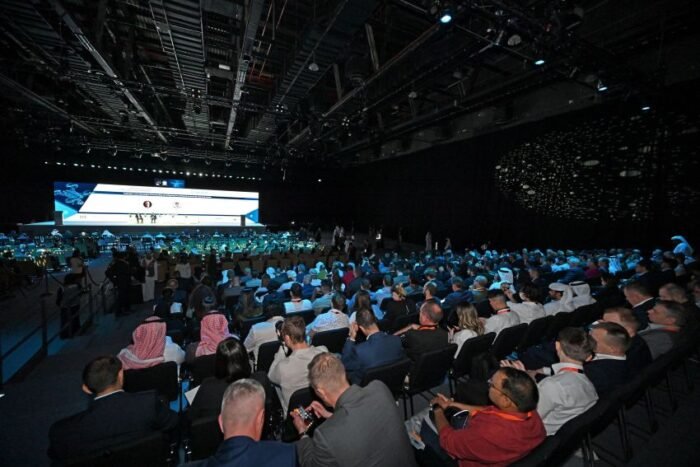
Abu Dhabi, 30 December 2025: The International Defence Conference (IDC) 2026 is set to take place on the eve of the seventh edition of the Unmanned Systems Exhibition and Conference (UMEX) and Simulation and Training Exhibition (SimTEX) 2026. Held under the patronage of His Highness Sheikh Hamdan bin Mohamed bin Zayed Al Nahyan, Deputy Chairman of the Presidential Court for Special Affairs, and Chairman of the Smart and Autonomous Systems Council, IDC will be held at the ADNEC Centre Abu Dhabi on January 19, 2026. Organised by ADNEC Group, in association with the Tawazun Council of Defence Enablement and the Ministry of Defence, this year’s IDC will take place under the theme of Smart Horizons: Redefining Defence Through Intelligent Autonomy. IDC 2026 is a leading global platform for defence and security leaders to meet and tackle the most pressing challenges shaping the future of defence. This year’s theme will explore how emerging technologies are reshaping societies, transforming defence ecosystems and influencing the global security landscape. Sessions will focus on the benefits and challenges that intelligent autonomous systems bring to modern battlefields, highlighting their potential as well as the complex issues they introduce, as participants engage in forward-thinking discussions on building resilient defence ecosystems and promoting international cooperation. H.E. Dr. Nasser Humaid Al Nuaimi, Secretary General of Tawazun Council for Defence Enablement, said: “The International Defence Conference 2026 comes at a critical moment, as the global defence sector undergoes rapid transformations driven by artificial intelligence and autonomous systems. This underscores the significance of the conference as a strategic platform for the exchange of insights and the development of high-value partnerships that contribute to strengthening defence readiness and technological self-reliance.” “We are committed to supporting the defence innovation ecosystem, empowering national industries, and enhancing integration between government entities and the industrial and technology sectors, in line with the UAE’s aspirations to build an advanced, sustainable defence sector, founded on knowledge and cutting-edge technologies,” he added. H.E. Humaid Matar Al Dhaheri, Group CEO of ADNEC Group, said: “The International Defence Conference, held alongside UMEX and SimTEX 2026, stands as a catalyst for global innovation in unmanned systems, simulation and autonomous systems. This influential gathering brings together defence leaders, industry pioneers, innovators and policymakers to address the most pressing challenges and opportunities shaping the future of defence. As technology continues to redefine the future of defence and security, this conference underscores our commitment to facilitating collaboration and advancing solutions that safeguard our societies and create lasting impact across the world.” The conference will feature three panels across the day, leading with Command Networks of the Future – The New Nerve System of Defence. This session investigates the role of AI-powered systems in reshaping command, control, and communications, and how human leaders, coalition partners and autonomous technologies can be combined into unified, flexible defence structures. The session will also consider the strategic and policy challenges involved in strengthening resilience and enhancing trust among digitally networked forces. The second panel is titled The Autonomous Force – Integrating AI into Joint and Tactical Operations. It will explore how the armed forces are integrating intelligent and unmanned systems into joint operations across land, air, sea, and cyber domains. Drawing on insights from recent conflicts, it will examine how organisations are adapting, and how the relationship between human judgement and autonomous decision-support is evolving at the tactical edge. IDC 2026 will end with the third panel of the day, Global Autonomy Standards – Building Trust, Safety and Readiness. This session will explore how governments, industry and global organisations can integrate validation, security, and moral standards to establish trust in independent military platforms, enhance international market preparation, and enable secure collaboration between allied nations. Taking place a day before UMEX and SimTEX 2026, IDC brings together experts to collectively chart the path toward a safer, more secure future. UMEX and SimTEX continue to serve as a pivotal event for manufacturers and specialists to advance the unmanned systems sector. (The headline is changed and the news is published unedited on as shared basis.)

Recent News

NMIA gets over 26,000 passengers in first five days

Navi Mumbai, 30 December 2025: Navi Mumbai International Airport (NMIA) after commencement of operations, recorded a total of 26,021 passengers within its first five days. This includes 12,431 arrivals and 13,590 departures, reflecting robust demand and consistent booking activity since launch. Passenger volumes peaked over the weekend, with 5,548 travellers on Saturday and 5,614 on Sunday. During this period, NMIA managed 162 scheduled air traffic movements, comprising 81 arrivals and 81 departures. Currently, NMIA connects to 13 major domestic destinations: Ahmedabad, Bengaluru, Chennai, Cochin, Coimbatore, Delhi, Goa (MOPA), Hyderabad, Jaipur, Lucknow, Mangalore, Nagpur, and Vadodara. The airport anticipates expanding its network in the coming month to serve additional cities.

Technology

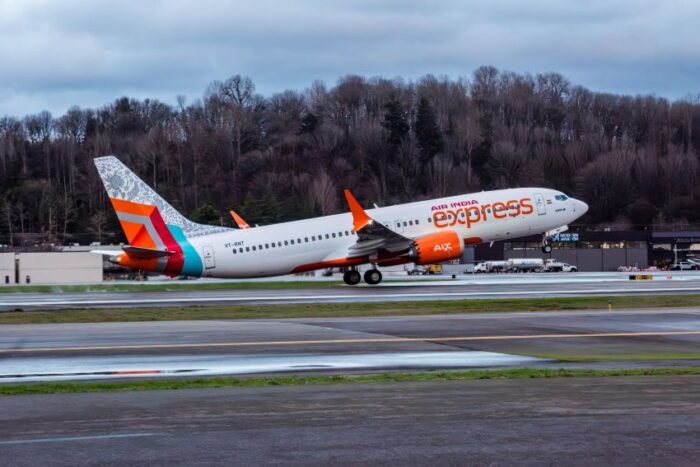
Air India Express receives first custom designed Boeing 737-8

The 51st Boeing 737-8 aircraft is the first of 140 custom configured Boeing aircraft to join Air India Express expanding fleet Delhi, 30 December-2025: Air India Express received its 51st B737-8, which is its first line-fit aircraft, at Delhi’s IGI Airport. Configured and designed to Air India Express specifications by Boeing, the aircraft features a cabin designed to enhance comfort, space and convenience. Flown directly from Boeing’s facility in Seattle, the aircraft marks an important milestone in the airline’s fleet modernisation programme and is scheduled to enter service in January. The line-fit aircraft incorporates a comprehensive set of enhancements consistent with the new branding. The cabin features ergonomically designed seats with comfortable cushioning, generous legroom, and fast-charging power outlet in each seat. It also has onboard ovens for hot ‘Gourmair’ meals, larger overhead bins for cabin baggage, a quieter cabin environment and Boeing’s Sky Interior with soothing mood lighting, creating a modern and welcoming cabin environment. This is the 51st Boeing 737-8 aircraft inducted by Air India Express since its transition to the Tata group, further strengthening its position as the country’s largest Boeing operator. The airline now operates a fleet of over 100 aircraft. In 2025, the airline has also inducted four A321neos, four A320neos and three A320ceos, underscoring the scale and pace of its expansion. Commenting on the induction of the airline’s first line-fit aircraft, Aloke Singh, Managing Director, Air India Express, said, “We are proud to welcome our 51st Boeing B737-8, the first of the fully customised line-fit aircraft, marking a significant step in Air India Express’ fleet modernisation journey. Two-thirds of the airline fleet is now comprising of modern B737-8s and A320/321Neo aircraft, offering better fuel-efficiency and superior on-board comfort. On the back of this rapid fleet growth, we have expanded our network to 60 destinations, adding 12 destinations in 2025 alone. As India’s aviation market continues to evolve, Air India Express is emerging as a strong connector of New India, enhancing connectivity to/from tier-2 and tier-3 cities with network footprint spanning India, the Middle East, South East Asia and South Asia.” The airline has also commenced a programme to retrofit new seats on its existing Boeing 737-8 aircraft already in service to offer consistency across the fleet. As part of this initiative, 50 Boeing 737-8 aircraft will be upgraded to a standardised 189-seat configuration, with two aircraft having already completed the retrofit. Alongside its fleet and product transformation, the airline has unveiled its new brand campaign, ‘Xplore More, Xpress More’, reflecting the transformative power of travel and the meaningful connections it enables.

Recent News

Air India enters into codeshare agreement with airBaltic

New Delhi, 30 December 2025: Air India has announced a new, unilateral codeshare partnership with airBaltic, the flag carrier of Latvia, thus making the Baltic region more conveniently accessible for Air India customers. This builds on the interline partnership between the two carriers established in June 2025. Under the codeshare, Air India has begun adding its ‘AI’ designator code on airBaltic-operated flights between the Latvian capital city of Riga and Air India’s European gateways at Amsterdam, Paris, Frankfurt, Copenhagen, Milan Malpensa, Vienna, Zurich, and London Gatwick. This enables Air India customers to travel between India and Riga via any of these European points with a single Air India ticket including flight connections to Riga bearing the ‘AI’ designator code. Air India’s interline partnership with airBaltic also enables travellers to fly to Tallinn in Estonia and Vilnius in Lithuania via select Air India gateways in Europe, thus covering the Baltic region. Nipun Aggarwal, Chief Commercial Officer, Air India, said: “This expanded partnership with airBaltic reflects Air India’s commitment to providing seamless global connectivity to our customers across the world. Latvia and the wider Baltic region are growing travel markets, but getting there for our customers was previously not as convenient as it now becomes with airBaltic on board with us.” Since its privatization in 2022, Air India has significantly expanded its global alliance network. Today, the airline maintains 24 codeshare partnerships and nearly 100 interline agreements with leading carriers worldwide, providing seamless access for Air India customers to over 800 destinations globally.The codeshare flights are available for bookings through the two airlines’ respective booking channels and travel agents worldwide.

FOREWORD

Dear Reader’s,


The current edition of Aviation World has covered many areas of Aerospace & Defence based on the latest development in the sector. The front cover highlights three different images, first for the Union Civil Aviation Minister ….. who is leading from the front to steer Indian Civil Aviation sector to witness one of the most interesting phases. He is also facing most tumultuous timing due to the ongoing financial stress in the Aviation sector due to ATF rising cost and long airspace restrictions resulting in mounting losses for Indian carriers. Despite of all the ground level challenges,the minister is addressing new things on regular basis which keeps the sector motivated. We have featured many such developmental works in this edition done under his guidance which will be interesting to read.

Our lead story on “ The West War” is another important feature which covers the ground level reality of the challenges faced by the Aviation sector. Its though time ahead and we believe it will pass soon .

There are features on Regional connectivity and MoCA revised rules on the UDAN 2.0 and how its going to transform the flying experience within India.

In this edition, we have covered topics on MRO,Various Policy changes,Sea Plane Operations by SkyHop Aviation, TATA-Airbus joint project on C295 military aircraft under Make In India which is expected to roll out soon and many other interesting contents which will be good to read.

We are covering Farnborough International Airshow 2026 from 20-24July 2026 in London and our next edition will be based on the same event.For features, you may contact our team on priority basis.


Happy Reading!

NEWSLETTER

Aviation World Magazine is India’s premier aviation magazine and has been actively supporting the development of the Indian and global civil aviation sector. We started our journey in year 2015 and its been 12 years now and the response and acceptance is really encouraging. Thanks to all our associates and writers who remained with us in our progressive journey.

We have started 2026 on a very positive note and we look forward to increase our footprints to more locations and induct many more new companies in our campaign.. Do write to us at : editor@aviationworld.in

Disclaimer

The contents published in this website are news covering Aviation, Aerospace and Defence sector. The objective is to provide news in informative form to keep our readers updated of the latest development. We also publish content featured in our print publication Aviation World.We try our best to avoid any factual errors or image displayed here but we ensure immediate corrections to any such thing brought to our notice that might have been published inadvertently. All images and contents are sourced from the relevant organisations media team.

Copyright ©2014 – 2026. AVIATION WORLD. All rights reserved.

Scroll to Top