Author name: admin

Civil Aviation

HAL’s Dhruv NG Helicopter takes to the skies

Bengaluru, 30th December 2025: Taking a significant leap in rotor wing sector, HAL while celebrating its 86 years of innovation and excellence has shaped the Indian aeronautical and defence industry with many first in both civil and military aviation. Today, the Union Civil Aviation Minister Ram Mohan Naidu inaugurated the Advanced Light Helicopter (ALH) DHRUV-NG, the next-generation civil helicopter, at Hindustan Aeronautics Limited (HAL) in Bengaluru. The indigenous helicopter was also showcased by HAL at the 2025 Aero India show in Bengaluru this year in February. The event witnessed presence of HAL Chairman and Managing Director Dr DK Sunil. Ram Mohan Naidu shared on his social media handle, “Honoured to flag off a defining lift-off for India’s civil aviation ecosystem. The inaugural test flight of HAL’s Advanced Light Civil Helicopter ‘Dhruv NG’ marks a major Atmanirbharta milestone. A Made-in-India rotary-wing for civil and commercial operations is a proud testament to our indigenous engineering capability. It reflects India’s strength to design, develop and manufacture world-class helicopters.” He further added, “ Under the visionary leadership of Hon’ble Prime Minister Shri @narendramodi Ji, India has moved decisively from ‘Import Dependency’ to ‘Indigenous Reliability’.Dhruv with the indigenous Shakti engine reinforces our rise as a reliable global aviation manufacturing hub.” DHRUV-NG Capabilities As per the details shared by HAL, the DHRUV-NG is a 5.5-tonne light, twin-engine, multi-role helicopter designed to meet the diverse and demanding conditions of Indian terrain. The platform has been upgraded to cater to the stringent requirements of the global civil aviation market. The helicopter has been engineered with a focus on enhanced safety, performance, and passenger comfort, marking a significant milestone in India’s indigenous rotary-wing capabilities. It is powered by twin Shakti 1H1C engines that deliver higher power ratings and allow internal maintenance within India. HAL stated that the DHRUV-NG features a civil-certified glass cockpit compliant with AS4 requirements and a modern avionics suite that provides superior situational awareness. Advanced vibration-control systems ensure a smooth ride, making it suitable for VIP transport and medical evacuation missions. With a maximum take-off weight of 5,500 kg and a top speed of 285 km/h, the helicopter can carry up to 14 passengers. The Dhruv Civil NG is positioned as a cost-effective, high-performance alternative to imported light twin-engine helicopters. HAL also offers a “One-Stop Solution” covering manufacturing, maintenance, and upgrades. Operational support is provided through integrated logistics models such as Power-By-Hour (PBH) and Performance-Based Logistics (PBL), aimed at ensuring high fleet serviceability.

MRO

MRO Trends from AI Readiness to Digital Traceability

By Saravanan Rajarajan S, AVP & Head of Consulting – Aviation, Aerospace & Defense, Ramco Systems The Aviation Maintenance, Repair, and Overhaul (MRO) industry witnessed significant transformation in 2025, driven by the need for greater efficiency and resilience. Organizations focused on strengthening data readiness for AI adoption, integrating intelligent planning tools, and accelerating digitization across engine maintenance workflows. These initiatives represented a strategic shift toward smarter operations and improved decision-making. As we look ahead to 2026, the pace of innovation is set to intensify. AI will move beyond isolated applications to become an integral part of the MRO ecosystem, enabling predictive insights, prescriptive maintenance actions, and real-time compliance validation. This article explores the major trends that shaped 2025 and provides a forward-looking perspective on what lies ahead in 2026. Major MRO Trends Witnessed in 2025 1.Data readiness for AI adoption had become a strategic priority To unlock AI’s potential, MROs are revisiting their data platforms and data quality. MROs are examining their underlining data capabilities and quality of the source systems. Existing infrastructures are reassessed for clear processes to collect the right data and governed by the right workflow controls. The MROs are holistically looking into different types of data, data formats, and relationships between structured and unstructured data sets; for example, task data available in AMM in digital formats correlated with MPD and customer work scope to derive meaningful and accurate information. 2.Maintenance Planning Leads Aviation’s AI adoption to Drive Efficiency Gains MROs are prioritizing AI integration in fleet maintenance planning to drive efficiency gains. Base maintenance MROs are focusing on the getting maximum productivity of their manpower by leveraging the process, data and technology. Repetitive tasks like night halts and A Checks are automated by considering multiple factors such as due dates, work centre capability, capacity, fleet routing, conflicting tasks, and staffing. By learning from historical data and operational constraints, AI systems continuously improve their scheduling capabilities, ensuring tasks are neither prematurely scheduled nor left overdue. MROs are moving beyond task-level planning to a more granular approach, breaking work down into subtasks and assigning them based on specific skill requirements. The operations are sequenced, timed and optimized to addresses both efficiency and capacity issues. 3.Engine MRO digitisation is deepening across the lifecycle Engine MRO saw a significant acceleration in digital adoption as they tackled rising shop visit volumes, labor shortages, and parts delays. Engine MROs and independents adopted cloud-native systems to manage their complex work scopes, parts forecasting, supply chain lags and ensured their systems to support seamless data exchange with customers and OEMs. MROs have leveraged AI solution to simulate shop visits, capacity, material forecasts and scrap rates to model their cost and margin predictions. This surge in digital tools is enabling engine MRO providers to deliver faster turnarounds, greater work scope accuracy, and improved margins. While 2025 was about laying the foundation through strengthening data platforms, automating planning processes, and digitizing engine MRO workflows, 2026 promises to build on these gains with transformative applications. The focus will shift from isolated digital initiatives to integrated ecosystems, where AI augments human expertise, predictive analytics becomes prescriptive, and compliance moves to real-time digital validation. In short, the industry is moving from digital adoption to digital orchestration. Key MRO Trends Expected in 2026 1.AI-Augmented Workforce and Increased Automation The MRO workforce in 2026 will work smarter, not just harder, thanks to AI and automation tools becoming standard practice. Rather than replacing human mechanics, AI will act as a co-pilot for technicians, providing decision support and information at their fingertips. We will see maintenance staff routinely using AI-driven decision support systems that analyse historical fault data to suggest troubleshooting steps or pinpoint likely problem areas. Mechanics might interact with these systems via natural language (or voice) to quickly pull up technical guidance, diagrams, or past repair solutions. This human-tech collaboration addresses both efficiency and the chronic labour shortage in the MRO field, by amplifying what each technician can do. 2.Predictive Maintenance Programs Will Evolve, Driving Greater Adoption and Maturity Predictive analytics will evolve into a holistic, connected ecosystem with the integration of Internet of Things (IoT) sensors and more sophisticated machine learning models. Predictive maintenance will transition from simply forecasting failures to providing prescriptive fixes, i.e. recommending specific corrective actions before a fault occurs. Another area of potential high adoption is inventory management – using predictive algorithms to auto-adjust spare parts stock and forecast demand, so the right part is on hand at the right time. 3.Smart Certificates to Replace Paper Trails with Real-Time Validation Parts traceability is expected to undergo a major transformation, moving from fragmented paper-based systems to digitally unified, tamper-proof ecosystems. Driven by growing concerns over counterfeit parts, authorities (like FAA and EASA) are expected to introduce stricter digital traceability mandates and audit standards by 2026, especially for engines and critical flight systems. Standardized digital documentation to replace traditional PDF or paper certificates will see increased adoption, with each part carrying a persistent, verified digital ID for instant airworthiness validation. Cloud-based traceability systems will increasingly support automated authenticity checks, document validation, and anomaly detection – especially critical in detecting unapproved parts entering the supply chain. The Road Forward for MRO The trends of 2025 and the outlook for 2026 highlight a clear message: the future of MRO is intelligent, connected, and proactive. Organizations that invested in data readiness and digital tools last year are now well-positioned to leverage AI-driven insights, predictive maintenance, and smart certification systems. As regulatory bodies tighten traceability standards and customers demand faster turnarounds, MROs that embrace these innovations will gain a decisive edge. The coming year will be about embedding technology into every facet of operations to create a resilient, agile, and future-ready MRO ecosystem. Those who act now will lead the next wave of transformation in aviation maintenance. (Views expressed are personal)


Civil Aviation

MoCA establishes PACR to accelerate passenger grievance redressal

* PACR operates round-the-clock, continuously monitoring aviation operations, says MoCA Secretary Samir Kumar Sinha * 13,000 grievances resolved through focused monitoring and expedited interventions since December 03, 2025 * PACR anchored in a clear vision to place passenger at centre of India’s civil aviation ecosystem New Delhi, 28 December 2025: India’s aviation sector has witnessed phenomenal growth over the past decade, particularly the last eleven years, leading to a sharp rise in passenger traffic and connectivity. While this expansion has brought significant success, it has also resulted in persistent challenges such as flight delays, refund-related grievances, baggage-related issues, congestion, long queues and inadequate passenger facilities at peak hours. These challenges underscored the need for a structured, coordinated and real-time response mechanism to address these passenger centric issues. Recognising these urgent needs, Ministry of Civil Aviation has decided to establish a permanent, 24×7 Passenger Assistance Control Room (PACR). The initiative is spearheaded by Secretary, MoCA, Samir Kumar Sinha, with the objective of institutionalising a unified, future-ready mechanism for passenger assistance and crisis response. The Secretary informed, the PACR functions as an integrated hub bringing together officials from the Ministry of Civil Aviation, Directorate General of Civil Aviation (DGCA), Airports Authority of India (AAI), airline operators and other key stakeholders under one roof at Udaan Bhawan, in New Delhi. “The PACR operates round-the-clock, continuously monitoring aviation operations, attending to passenger calls and coordinating real-time assistance and grievance resolution very efficiently and effectively,” he added. The AirSewa system has also been fully integrated into the PACR, enabling seamless handling of passenger grievances received through it. An omni-channel technology backbone converts passenger inputs into actionable cases, supported by data-driven dashboards that provide live visibility on grievance types, timelines and stakeholder actions. The physical presence of airline representatives within the Control Room allows immediate coordination and on-the-spot resolution of issues. The Secretary expressed satisfaction that as of now, more than 13,000 passenger grievances have been resolved through focused monitoring and expedited interventions at the PACR since December 03, 2025. In addition, over 500 call-based interventions have been undertaken to directly assist passengers during operational disruptions. Grievances related to flight delays, cancellations, refunds and baggage issues are prioritised and addressed in accordance with the provisions of the Passenger Charter. The PACR is anchored in a clear vision to place the passenger at the centre of India’s civil aviation ecosystem. It is guided by the principles of Passenger First, Collaborative Action, Stakeholder Convergence and a Future-Ready, technology-driven framework that enables real-time coordination, data-supported decision-making and scalable operations for sustained improvement in passenger assistance. Samir Kumar Sinha personally visits the PACR on a daily basis to review operations and ensure the speedy redressal of passenger grievances. The leadership and support of the Chairman, Airports Authority of India; Joint Director General, DGCA; Deputy Director General, MoCA and other senior officials of the Ministry have been instrumental in ensuring its effective functioning. The marked improvement in the speed, transparency and effectiveness of grievance redressal has received positive feedback from air passengers and stakeholders alike. The Secretary said, “The Ministry of Civil Aviation reaffirmed its commitment to further strengthen the PACR by providing dedicated manpower, enhanced technological support and improved logistical facilities, ensuring that the system continues to serve passengers with empathy, efficiency and accountability at all times.” (Courtesy: PIB/MoCA)

Recent News

Statement from Blr Airport on parking

Bengaluru, 26th December 2025: Building on our commitment to continuously enhancing the passenger experience, we have been consistently taking stock of passenger and stakeholder feedback to further improve the arrival and kerbside pick-up experience at BLR Airport. As part of this effort, we have extended the free parking duration at Terminal 1 arrival pick-up areas P3 and P4 from 10 minutes to 15 minutes. This enhancement is designed to provide greater ease and flexibility for passengers and their families, while supporting smoother traffic flow and a more seamless arrival experience. • Effective From:26 December 2025 To further ease passenger movement and enhance the arrival experience, passengers can choose between a fleet of shuttles (every 7 mins), 6 cars, and 10 buggies operating to and from the P3/P4 pick-up areas. This ensures convenient, frequent, and assisted movement for passengers.

Cargo

TCI adds 1.5 Lakh sq. ft. cold chain capacity at Taj Nagar, Gurugram

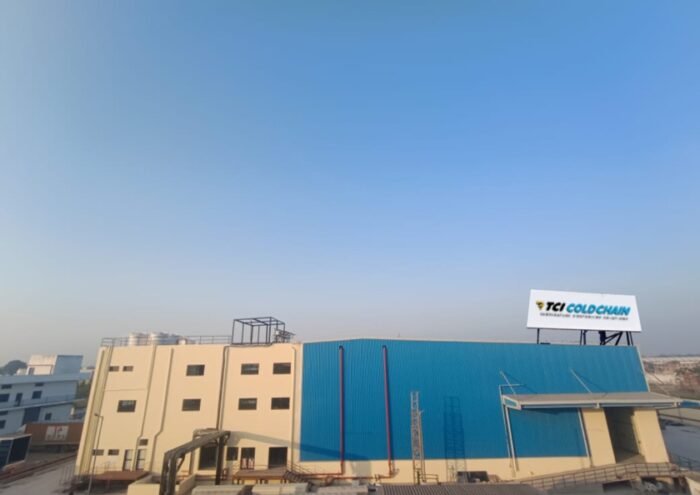
Gurugram, 26th December 2025: As demand for reliable, scalable temperature-controlled logistics continues to rise across the National Capital Region, Transport Corporation of India Ltd. (TCI) – one of India’s leading integrated supply chain and multimodal logistics solution providers – has expanded its cold chain warehousing presence in Gurugram with the addition of a 1.5 lakh sq. ft. facility at Taj Nagar. With over 16 million sq. ft. of warehousing space managed nationwide, TCI continues to reinforce its integrated logistics network to support high-growth industries and compliance-driven supply chain requirements. This facility will be operated by TCI Cold Chain Solutions Ltd., a JV Company Between TCI & Mitsui & Co., Japan. The Taj Nagar facility is designed to cater to high-throughput requirements across sectors such as quick Commerce, QSR, pharmaceuticals, food and beverages, dairy, meat and poultry, beauty and life sciences and specialty chemicals. Strategically located between the KMP Expressway and the Dwarka Expressway, the warehouse benefits from unrestricted 24×7 truck access, being outside heavy vehicle no-entry zones. This enables faster turnaround times and seamless distribution across Delhi NCR and adjoining markets. The facility offers multi-temperature storage across frozen, chilled, and air-conditioned zones, and operates on box-in/box-out, unit-in/unit-out, and pallet-in/pallet-out models with a pay-as-you-use commercial structure. This enables customers to flex capacity and throughput in line with evolving business requirements, particularly in time-sensitive and high-velocity supply chains. The Taj Nagar belt has emerged as a key logistics hub due to its proximity to NCR (Delhi, Gurugram, Noida, Faridabad, Ghaziabad as well as Jaipur) and the growing concentration of quick commerce operations, making it well-suited for efficient, last-mile- distribution. Commenting on the expansion, Mr. B. Sumit Kumar, CEO, TCI Cold Chain Solutions Ltd. said, “The expansion of our Gurugram cold chain facility reflects the growing need for dependable, scalable and compliant infrastructure in the region. With strong connectivity and a flexible operating model, this warehouse strengthens our ability to support fast-moving and regulated supply chains across NCR”. Built with a strong focus on safety, operational efficiency and sustainability, the facility includes a 500-kW rooftop solar power installation, energy-efficient refrigeration systems, SCADA-based monitoring, VESDA Panel for early smoke detection, and more than 600 CCTV cameras for real time monitoring. The fully gated, access-controlled campus also offers ample truck parking to support smooth inbound and outbound movement. (News is published unedited based on the Press release)

Airports

NMIA records impressive passenger load on first day

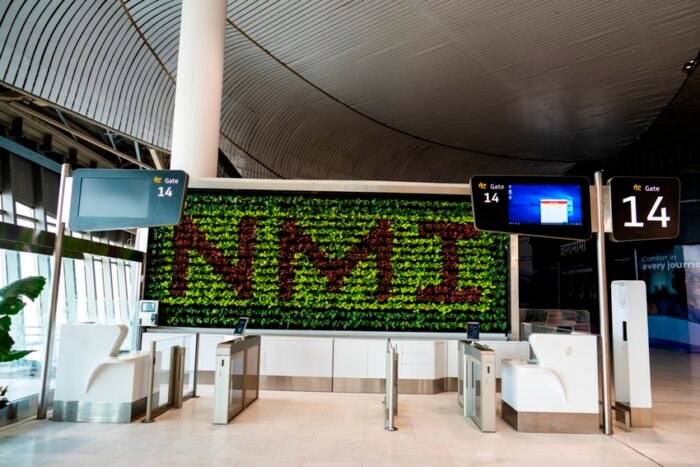
Navi Mumbai, 26 December,2025: Passenger load at Navi Mumbai International Airport (NMIA) recorded a marked rise on December 25, the first day of passenger operations, fuelled by heightened traveller interest and start commercial operations.The overnight spurt in passenger load points to a positive response from travellers. A day earlier, on December 24, passenger load levels stood at 71 percent for arrivals and 83 percent for departures. With the start of scheduled operations on December 25, arrival load increased to 85 percent, while departure load climbed to 98 percent, reflecting a strong jump in booking levels as operations commenced on 25th December. On the first day of operations on 25 December, the airport recorded a total passenger throughput of 4,922, with 2,278 arriving passengers and 2,644 departing passengers, indicating strong demand from the Mumbai Metropolitan Region. On 26 December, passenger traffic increased further, with the airport handling a total of 5,028 passengers.

Airports

NMIA set to open tomorrow, expanding Mumbai’s aviation capacity

Mumbai, 24 December, 2025: Navi Mumbai International Airport (NMIA) will begin commercial flight operations tomorrow, December 25, marking a key milestone for India’s civil aviation sector and expanding capacity for the Mumbai Metropolitan Region (MMR). The opening adds a critical new gateway for a region that has faced sustained congestion for over a decade. Planned as part of a distributed aviation framework, NMIA supports Mumbai’s transition to a multi-airport system aimed at improving capacity, operational resilience and long-term scalability. On Day One, domestic services will be operated by IndiGo, Air India Express, Akasa Air and Star Air, connecting NMIA to nine destinations across India. The airport will handle 15 scheduled departures on the first day. During the initial phase, NMIA will operate between 08:00 hrs and 20:00 hrs, with up to 24 scheduled daily departures to 13 destinations and the capability to manage up to 10 aircraft movements per hour. From February 2026, operations are planned to progressively scale up to round-the-clock services. NMIA was inaugurated by the Prime Minister Narendra Modi on October 8. Since 2021, Adani Airports Holdings Limited (AAHL), a subsidiary of Adani Enterprises Limited (AEL), has led the development, construction, and operational readiness of the greenfield airport, progressing it from accelerated construction to phased commercial operations within a compressed timeframe. Passenger services from day one will be supported by Digi Yatra–enabled contactless processing at designated touchpoints, along with trained terminal staff across kerbside, check-in, security and boarding areas. Retail and food and beverage offerings have been curated with a focus on affordability and local relevance. Inspired by the lotus, India’s national flower, the terminal architecture integrates cultural identity with contemporary design and sustainability features. In its initial phase, NMIA is designed to handle 20 million passengers per annum (MPPA), with future expansion planned to scale capacity up to 90 MPPA, supported by dedicated cargo terminals and multimodal connectivity. With operations set to begin tomorrow, NMIA is expected to strengthen Mumbai’s role as a global gateway and support long-term economic growth through expanded aviation capacity.

Recent News

Air India to resume non-stop flights to Rome from March 2026

Delhi, 24 December 2025: Air India has announced the resumption of its non-stop flights between Delhi and Rome (FCO), marking Air India’s return to the Italian capital after nearly six years and further expansion of its growing European network. Air India’s services to Rome had remained suspended since the COVID-19 pandemic. Beginning 25 March 2026, Air India will operate four times a week between Delhi and Rome (Leonardo da Vinci International Airport – Fiumicino), just in time for guests travelling from India to plan their springtime travels or summer holidays in Europe. Travellers from Italy will not only have more choice for direct access to the Indian capital, but also for seamless connections to Southeast Asia through Air India’s growing global gateway at Delhi. The service to/from Rome will operate on Mondays, Wednesdays, Fridays and Sundays on Air India’s Boeing 787-8 aircraft, featuring 18 flat beds in Business Class and 238 seats in Economy Class, combining comfort, convenience and the warmth of Indian hospitality. Nipun Aggarwal, Chief Commercial Officer, Air India, said: “Connecting India to more of the world remains one of our top priorities. India and Italy share deep-rooted commonalities in culture, business and trade, which makes Rome a natural addition to Air India’s expanding network. This non-stop service not only augments direct connectivity between the two capital cities but also offers travellers from Italy greater choice and seamless onward connections via our Delhi hub to vibrant destinations across the Indian Subcontinent and Southeast Asia.” Ivan Bassato, Chief Aviation Officer, Aeroporti di Roma, said: “The resumption of Air India’s services to Rome, with direct flights to Delhi, marks a strategically important development that reinforces expectations of continued growth in long-haul markets in 2026. This new service addresses growing demand across key traffic segments, further strengthening economic and cultural ties between Italy and India and broadening opportunities for exchange between the two countries”. Italy is one of India’s largest trading partners in Europe, and passenger traffic between the two countries continues to rise, supported by a large Indian community in Italy and growing interest among Indian travellers in Italian art, history, cuisine, and experiences. Air India’s flights to Rome are timed to offer convenient connections via Delhi to destinations such as Bangkok, Colombo, Ho Chi Minh City, Kathmandu, Kuala Lumpur, Manila, Phuket and Singapore.

Training

Gulf Aviation Academy partners with Embry-Riddle on aviation english program

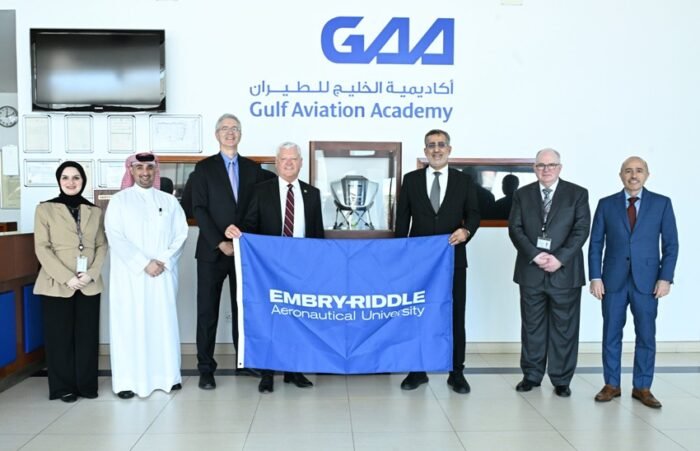
Muharraq, Bahrain, 24 December 2025: The senior delegation from Embry-Riddle Aeronautical University led by President P. Barry Butler, Ph.D., and Dr. John R. Watret, chancellor of the Worldwide Campus visited the Gulf Aviation Academy (GAA), the training arm of Gulf Air Group (GFG).The delegation explored the academy’s facilities and reviewed progress on joint initiatives,including the upcoming Aviation English Course for Commercial Pilots, a pioneering initiative that integrates Aviation English directly into the airline’s pilot standardization framework. The visit follows a commercial agreement signed between GAA and Embry-Riddle, the global leader in aviation and aerospace higher education, which established a framework for advancing aviation education, applied research, and professional development across Bahrain and the wider Middle East and North Africa (MENA) region. Gulf Air Chief Operations Officer and Accountable Manager of GAA, Captain Qassim AlBastaki, said,“Gulf Aviation Academy remains committed to developing world-class aviation professionals through advanced training and global collaborations. The partnership between GAA and Embry-Riddle reflects our investment in skill development and Aviation English language proficiency, aligned with aviation international standards.” He added, “The upcoming Aviation English Course for Commercial Pilots, developed with Embry-Riddle, sets a new benchmark in aviation communication training. We look forward to expanding this collaboration to offer additional learning pathways, including degree progression and professional certifications, that will support the growth and preparedness of aviation talent in Bahrain and the region.” President Butler described Aviation English proficiency as a critical component of airline operational safety. He said: “In collaboration with Gulf Aviation Academy and Gulf Air, Embry-Riddle Aeronautical University is integrating Aviation English into the airline’s pilot standardization framework. This partnership brings together the university’s academic and Aviation English training expertise with Gulf Air’s operational experience to create a comprehensive model that enhances safety, supports the International Civil Aviation Organization’s (ICAO) best-practice recommendations, and can serve as an example for airlines across the MENA region and beyond.” The collaboration between GAA and Embry-Riddle continues to play a key role in shaping a future-ready aviation workforce. Combining GAA’s advanced training capabilities with Embry-Riddle’s global academic strength, the partnership supports the development of aviation professionals equipped to meet evolving industry demands across Bahrain and the wider MENA region.

Defence

IOL and SAFRAN to manufacture two high-precision, combat-proven systems

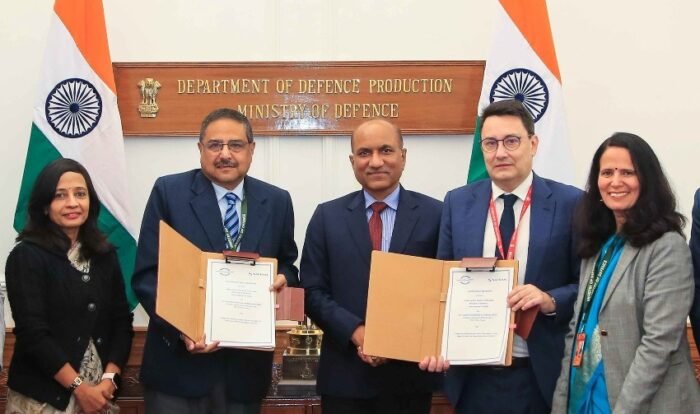
New Delhi, 23 December 2025: In a major step towards Make-in-India program, India Optel Limited (IOL), a Mini Navratna Defence Public Sector Undertaking, has signed a collaboration agreement with Safran Electronics & Defense for Transfer of Production of two high-precision, combat-proven systems, paving the way for their local manufacturing. The systems are: SIGMA 30N Digital Ring Laser Gyro Inertial Navigation System, used in artillery guns, air defence systems, missiles and radars; and CM3-MR Direct Firing Sight, designed for artillery guns and anti-drone systems. The agreement was signed by CMD, IOL Tushar Tripathi and Head of the Defence Global Business Unit for Safran Electronics & Defense Alexandre Ziegler in the presence of Secretary (Defence Production) Sanjeev Kumar in New Delhi on December 22, 2025. Building on the MoU signed in January 2024, this new agreement confirms the commitment of both the partners to manufacture and support these advanced systems in India. Under the partnership, IOL will be responsible for manufacturing, final assembly, testing, quality control and full life-cycle support, ensuring the systems meet the operational needs of the Indian Army. By combining IOL’s industrial capabilities in India with Safran Electronics & Defense’s recognised expertise in high-end inertial navigation and fire-control technologies, the partnership contributes to strengthening India’s defence manufacturing ecosystem while enhancing the readiness and performance of its land forces.

FOREWORD

Dear Reader’s,


The current edition of Aviation World has covered many areas of Aerospace & Defence based on the latest development in the sector. The front cover highlights three different images, first for the Union Civil Aviation Minister ….. who is leading from the front to steer Indian Civil Aviation sector to witness one of the most interesting phases. He is also facing most tumultuous timing due to the ongoing financial stress in the Aviation sector due to ATF rising cost and long airspace restrictions resulting in mounting losses for Indian carriers. Despite of all the ground level challenges,the minister is addressing new things on regular basis which keeps the sector motivated. We have featured many such developmental works in this edition done under his guidance which will be interesting to read.

Our lead story on “ The West War” is another important feature which covers the ground level reality of the challenges faced by the Aviation sector. Its though time ahead and we believe it will pass soon .

There are features on Regional connectivity and MoCA revised rules on the UDAN 2.0 and how its going to transform the flying experience within India.

In this edition, we have covered topics on MRO,Various Policy changes,Sea Plane Operations by SkyHop Aviation, TATA-Airbus joint project on C295 military aircraft under Make In India which is expected to roll out soon and many other interesting contents which will be good to read.

We are covering Farnborough International Airshow 2026 from 20-24July 2026 in London and our next edition will be based on the same event.For features, you may contact our team on priority basis.


Happy Reading!

NEWSLETTER

Aviation World Magazine is India’s premier aviation magazine and has been actively supporting the development of the Indian and global civil aviation sector. We started our journey in year 2015 and its been 12 years now and the response and acceptance is really encouraging. Thanks to all our associates and writers who remained with us in our progressive journey.

We have started 2026 on a very positive note and we look forward to increase our footprints to more locations and induct many more new companies in our campaign.. Do write to us at : editor@aviationworld.in

Disclaimer

The contents published in this website are news covering Aviation, Aerospace and Defence sector. The objective is to provide news in informative form to keep our readers updated of the latest development. We also publish content featured in our print publication Aviation World.We try our best to avoid any factual errors or image displayed here but we ensure immediate corrections to any such thing brought to our notice that might have been published inadvertently. All images and contents are sourced from the relevant organisations media team.

Copyright ©2014 – 2026. AVIATION WORLD. All rights reserved.

Scroll to Top