Author name: admin

Business Aviation

Edése Doret Industrial to design interiors for three RoyalJet Airbus ACJ 320neo Aircraft

Abu Dhabi, 22 December 2025: EdéseDoret Industrial Design has announced that it has been awarded the design contract by RoyalJet, the Abu Dhabi-based global private jet operator, for the interiors of three (3) Airbus Corporate Jet ACJ320neo aircraft.This marks the third project collaboration between EDID and RoyalJet, underscoring a trusted partnership built on innovation, craftsmanship, and a shared commitment to excellence in private aviation. “We are honoured to continue our relationship with RoyalJet, one of the world’s premier luxury operator,” said EdéseDoret, Founder and President of EdéseDoret Industrial Design, Inc. “Our vision for these new ACJ320neo aircraft is to deliver an unparalleled elevated passenger experience that reflects the essence of Emirati identity of timeless, elegant, sophisticated modernity which is perfectly tailored to RoyalJet’s elite clientele.” “Our partnership with EdéseDoret Industrial Design reflects our shared values and commitment to delivering the highest standards of luxury, cultural nuance, and operational excellence,” said Husham Osman, Vice President Technical Services at RoyalJet. “These new A320neo aircraft will offer a bespoke interior experience that complements our fleet’s reputation for sophistication and performance.” “The ACJ320neo will enable Royal Jet Group to expand their product offering, surpassing the already sophisticated and discerning service experienced by our customers during their private aviation journey,” said Paul de Salis, Chief Executive of RoyalJet. “Our partnership with EdéseDoret Industrial Design fits perfectly with our core brand values of elevated sophistication and timeless elegance that we reflect across our fleet.” Royal Jet, headquartered in Abu Dhabi, operates one of the world’s most prestigious fleet of premium configured aircraft. The addition of three new ACJ320neo aircraft will expand its offerings and reinforce its reputation for providing world-class private aviation experiences.

Civil Aviation

Gulf Air tie-ups with MedAire to enhance in-flight safety

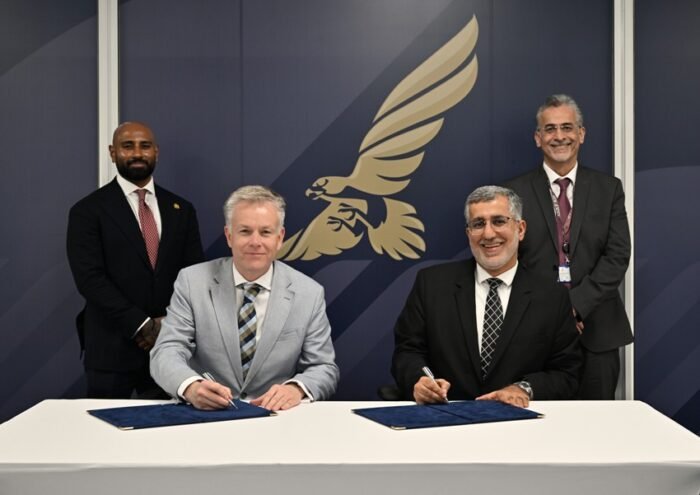
Bahrain, 22 December, 2025: Gulf Air is expanding its partnership with MedAire, an International SOS company to further strengthen passenger and crew safety and well-being. As part of this expansion, Gulf Air is integrating new medical support services within its existing aviation security platform to support its continued international growth, adding four MedAire medical solutions: MedLink for in-flight medical emergencies, Passenger Fit-to-Fly screening, the Inflight App for real-time medical data collection, and Crew Support for layover assistance—significantly enhancing the medical resources available to Gulf Air’s teams. Gulf Air Chief Operations Officer Captain Qassim AlBastaki said:“This expanded agreement is a strategic step in reinforcing Gulf Air’s safety and wellbeing framework, ensuring passengers and crew benefit from 24/7 expert medical and security support as we continue to grow our international network. As we add more long-haul routes, immediate access to medical guidance becomes essential for safeguarding the well-being of our passengers and staff. This integrated approach reflects our commitment to safety and wellbeing across the 50 destinations we serve.” MedAire Business Development Director, Middle East & Asia, Reely Rajan said,“Gulf Air’s decision to extend our collaboration underscores their commitment to the highest standards of health and safety as they expand globally. By integrating MedAire’s medical expertise with Gulf Air’s established aviation security services, the airline benefits from a unified platform of support, from pre-flight assessments and in-flight emergencies to crew wellbeing worldwide.” Gulf Air flies to more than 50 destinations across 28 countries in the Middle East, Asia, Africa, Europe, Indian Subcontinent and America from its hub at Bahrain International Airport. Gulf Air is also expanding its network with a return to America after nearly 30 years, supported by flights between Bahrain and New York JFK operating three times a week. This marks an important step in the airline’s wider international growth.

Recent News

SriLankan starts operations from T1, Velana Int. Airport, Male

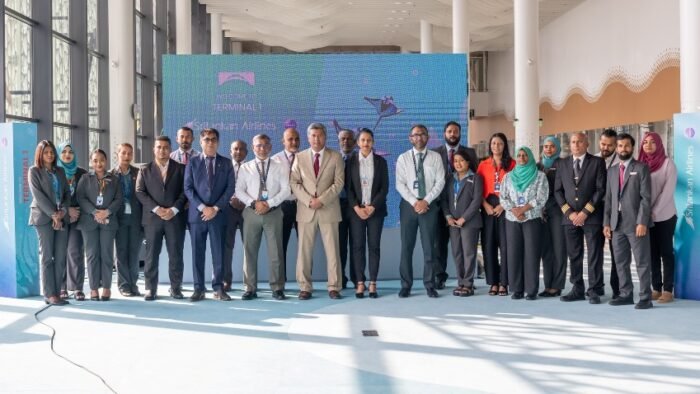
Delhi, 22 December 2025: SriLankan Airlines has officially transitioned its operations to Terminal 1 at Velana International Airport, Malé, effective 17 December 2025. To commemorate the move, Maldives Airports Company Ltd (MACL) hosted a ceremonial welcome for passengers arriving on UL101 at Terminal 1, as well as those departing from Terminal 1 on UL102. The event was attended by His Excellency Mohamed Rizvi Hassen, Sri Lanka High Commissioner to the Maldives, as Chief Guest, alongside senior officials from MACL and SriLankan Airlines. Operating three daily flights to Male via its Colombo hub, SriLankan Airlines connects passengers to a global network of 117 destinations across 59 countries. The state-of-the-art facilities at Terminal 1 are set to enhance passenger comfort, promote seamless travel, and further support the growth of tourism to the Maldives, strengthening tourism and connectivity between the countries.

Airports

Guwahati gets new airport terminal, inaugurated by the PM

Guwahati, 20 December 2025: The Prime Minister of India Narendra Modi inaugurated the new terminal at Lokapriya Gopinath Bordoloi International Airport (LGBIA) at Guwahati during the Advantage Assam 2.0 celebrations. The airport operations will commence by the end of February while a comprehensive Operational Readiness and Airport Transfer (ORAT) programme—supported by an expert visiting team from Munich, Germany—has ensured that systems, processes, personnel and passenger flows are aligned for a safe and seamless opening from day one. Envisioned as a modern gateway rooted in regional identity, the terminal—aptly named “The Bamboo Orchids”—draws inspiration from Assam’s iconic kopou phool (foxtail orchid) and indigenous bamboo varieties such as Bholuka bamboo from Assam and Apatani bamboo from Arunachal Pradesh. Blending natural materials, abundant daylight and contemporary design, the architecture reflects the Northeast’s ecological and cultural richness. Around 140 metric tonnes of locally sourced bamboo from the region have been used across the terminal, positioning it among India’s most prominent examples of nature-inspired airport architecture where traditional craftsmanship is reimagined through modern engineering. The project has been developed by Guwahati International Airport Limited, with operations led by Adani Airport Holdings Limited (AAHL). While inaugurating, the PM described it as part of a wider Vikas ka Utsav unfolding in Assam across the Northeast. He noted that Assam is emerging as India’s eastern gateway under the Act East policy, with the bamboo-rich terminal symbolising strength, sustainability and the state’s growing role in powering Viksit Bharat, as India advances toward becoming the world’s third-largest economy. Commenting on the occasion, Gautam Adani, Chairman, Adani Group, said, “The Guwahati terminal demonstrates how world-class airport infrastructure can be delivered swiftly while remaining deeply rooted in local identity. It will strengthen connectivity, support economic growth across the Northeast, and offer passengers a seamless, modern travel experience.” Equipped with DigiYatra-enabled processing, smart check-in systems and expansive passenger areas, the terminal is designed to handle 13.1 million passengers annually by 2032. In FY 2024–25, Guwahati Airport handled 6.50 million passengers, underscoring the region’s accelerating aviation demand. Currently, Guwahati ranks as the 10th busiest airport in India, serving as a critical hub for all eight Northeastern states. The overall airport development represents an investment of Rs 5,000 crore, including Rs 1,000 crore earmarked for Maintenance, Repair and Overhaul (MRO) facilities. Planned integrated domestic and international cargo infrastructure will further strengthen trade, logistics and employment generation across the region. The Guwahati milestone forms part of a wider national aviation expansion led by AAHL, with execution momentum continuing through the scheduled operational launch of the Navi Mumbai International Airport (NMIA) on December 25—one of India’s largest greenfield airport projects.

Interviews

“Our commitment to innovation fuels our continuous learning”, Sameer Khale,Director, Sheetala Infrastructure Consultancy

Sheetala Infrastructure Consultancy is one of only six manufacturers of Jet Blast Deflectors (JBDs) and Ground Run-up Enclosures (GREs) worldwide, and stands as the sole manufacturer in India. A Jet Blast Deflector is typically a slanted structure positioned strategically at airports, with specific locations tailored to the airport’s layout and runway configurations. The primary function of a JBD is to redirect the powerful jet blast generated by aircraft, thereby protecting nearby structures, vehicles, and personnel from potential damage. Aviation World features this interview with Sameer Khale and understand his views on the project and also share how Sheetala Infrastructure is shaping the future of aviation safety with innovation. Q: To begin with, could you provide an overview of the recent project at Navi Mumbai Airport that Sheetala Infrastructure completed? A: At Navi Mumbai Airport, we have successfully installed three Jet Blast Deflectors, which are critical for managing the jet blasts created during aircraft operations. This project is integral to ensuring both safety and operational efficiency at the airport, particularly during takeoff and landing phases. Additionally, we are proud to have designed and installed a Jet Blast Deflector for Adani Defence at their missile manufacturing unit in Hyderabad. This project underscores our versatility and commitment to safety across various sectors! Q: Could you elaborate on the significance of the high-power run-up Jet Blast Deflector that your team is currently developing? A: The high-power run-up Jet Blast Deflector is designed to accommodate the intense forces generated during full-power engine testing. Unlike standard installations, this deflector must endure significantly higher wind speeds. Its robust construction is essential not only for protecting safety personnel but also for maintaining the structural integrity of nearby facilities. Q: What are the specific challenges that are encountered during this project? A: One of the prominent challenges was accurately assessing the dynamics of jet blast at elevated speeds. This necessitated a comprehensive analysis of how these forces would affect various airport structures and environments. Additionally, coordinating with multiple stakeholders to meet stringent aviation safety regulations and ensure compliance added complexity. Nevertheless, our team’s expertise and dedication enabled us to navigate these challenges effectively. Q: Were there any innovative solutions or technologies implemented during this project that you can share? A: Certainly! We utilized advanced computational fluid dynamics (CFD) modeling to accurately simulate jet blast behavior, which allowed us to refine our design for optimal performance under real-world conditions. Furthermore, we incorporated high-durability materials that enhance resistance to both environmental factors and the mechanical stresses experienced during operation, contributing to the longevity of our installations. Also, all our structures are completely bolted which helps the environment by totally avoiding the welding process which generates a lot of heat and fumes. Q: Collaboration appears to play a crucial role in your operations. How did your team work with the client and other stakeholders during this project? A: Collaboration was indeed fundamental to our approach. We maintained consistent communication with the client to ensure alignment on project requirements and to incorporate their feedback throughout the project. Regular meetings and progress reports ensured that all stakeholders were informed and engaged at every step. This collaborative effort not only fostered mutual trust but also enabled us to address any potential concerns promptly, ensuring the project stayed on track and met all deadlines. It’s really inspiring to see how teamwork can lead to successful outcomes in such complex projects! Q: What future aspirations does Sheetala Infrastructure have in the aviation sector? A: We are incredibly optimistic about our future in the aviation sector! Our goal is to continue developing cutting-edge solutions that enhance safety and improve operational efficiency at airports globally. We aim to expand our presence in emerging markets and invest in innovative technologies that pave the way for greener and more sustainable aviation. The potential for growth and the positive impact we can make in the industry truly excites us! Q: That sounds promising! How does your team stay updated with the latest trends and advancements in technology? A: Our commitment to innovation fuels our continuous learning. We regularly participate in industry conferences, workshops, and seminars to stay abreast of the latest advancements. In addition, we foster a culture of knowledge sharing within our team, encouraging our engineers and designers to share insights and new ideas. This proactive approach ensures we remain at the forefront of technology in the aviation sector! Q: Are there any new products or initiatives that you’re currently developing? A: Absolutely! We are excited to share that we are actively developing two groundbreaking products that address the growing needs of the aviation industry in India. First, we are working on Ground Run-Up Enclosures (GRE), which are essential for engine test operations at airports. As the aviation sector in India rapidly expands, the demand for these enclosures is significantly increasing. GREs play a crucial role in containing aircraft engine noise and emissions, providing a controlled environment for engine testing while ensuring compliance with environmental regulations. We believe these enclosures will greatly enhance the operational efficiency of airports across the country. Additionally, we are collaborating with my friend Ross Riddle in the USA to develop advanced smoke and fire chambers that will revolutionize aviation safety training. These innovative simulators will provide realistic simulations of in-flight emergencies through controlled, eco-friendly systems. Our designs will feature full-size replicas of aircraft interiors, complete with galleys, lavatories, and seating, creating an authentically immersive training environment. Instead of relying on dangerous flammable liquids, we are using eco-friendly propane gas to generate controlled fires, with the intensity adjustable through computer-controlled burners. This not only enhances safety but also aligns with our commitment to sustainability. Realistic smoke machines will create vision-limiting conditions, allowing cabin crews to practice managing passengers in low-visibility settings effectively. Safety features like automated monitoring of gas levels and temperature will ensure immediate responses to any emergencies. Furthermore, the ability to adapt diverse scenarios in real-time will empower trainers to create anything from external fires to comprehensive incident simulations involving multiple emergency services. The

Interviews

We provide training for all elements in the Civil Aviation: Stefan Dudda

Worldwide, Airlines are scaling up their fleet size to cater to the ongoing demand and this has also resulted in enhancing the Aviation training facilities all across the region, Recently, Aviation World, Managing Editor, Vishal Kashyap had an opportunity to interview Stefan Dudda, Head of Training, Etihad Aviation Training in Singapore, where Mr. Dudda explained on the Etihad training capabilities and how they are geared up to cater to the upcoming demands in all the aviation verticals. Excerpts: Q: What are the specialized courses this is being provided at Etihad Aviation Academy? A: We provide training for all elements in the civil aviation which include the pilot training, ab- initio for MPL,ATPL, CPL, but now we train only MPL all the way through Airbus A320 and Boeing 737.At the moment our output for basic ab-initio training programmes is about 100 to 200 students per year, which we can increase. The other part is the type-rating and type conversion training for all Airbus aircraft including A320, A330, A340, A350 and A380 and the B787 and B777. All courses that the manufacturer would recommend, Operational Suitability Data (OSD) is our basic minimum standard for it. We also do initial cabin crew training, which is very successful with us. Some of the major global players like Cathay Pacific and Qantas avail the courses with us. It takes about four to six weeks, depending on the programme of which modules the customer wants. Etihad has state-of-the-art facilities in mock-ups, even movable cabin training devices, swimming pool and all other devices required for cabin crew training. Initial things like CRM Training, Aviation Security, Dangerous Goods Training(DGR), Aviation health and First Aid Courses even including all the vocational training for airport and ground staff is also conducted by us. Retraining the emergency response services for airport operation and how an airport works, so that they can do their job as fire people on the airport or security people on the airport. Q: CPL training is very price sensitive as students look for budgeted options. How is Etihad rated in terms of training costs? A: Etihad Training Academy caters to the lower middle class segment in comparison to other ATOs. There are very high, very pricey academies and there are very cheap academies, and we always thought that we are at the higher end of the scale towards the premium providers, but in fact we seem to be much cheaper than that. We are with our pricing at the lower middle class, if you take a cross section. So, it’s an average student with average financial, they can get training with us. Q: In terms of nationality, do you cater to students from all across the world? A: We have a lot of students from Far-East Asia, India, Middle East and European students. We have training contracts with airlines across these regions from around the world. We are now trying to attract some more students from Africa though we have quite a number from Africa already like from Uganda, Seychelles and from Ethiopia, but for us South East Asia is our main target which is India- centric. Q: What’s the Etihad association with IndiGo? A: We seem to have the perfect partnership in a way of the type of service that we can deliver. For IndiGo, we provide very highly customised services as our instructors are fully standardized. We see this as a service provider and we liaise directly with the DGCA India. We have an ATO approval because we want to have not just a seamless training, a transition for a student through our academy and then a graduate into IndiGo Airlines. We also want the licencing to go smooth, fully accredited and fully approved, and with no questions asked, is this legitimate training, is it really. Do you also have a cadet programme as well? We are running the MPL training programme, an operator’s owned training programme and we have a set of fleets like A320 and the Boeing 787 to provide the same. Q: What’s the capacity of pilots in numbers at Etihad on an annual basis? A: For pilot training, we’re looking at about 1,000 to 1,200 pilots per year that we train. Those are through type ratings, type conversions on all the types we do, including command upgrade training, cabin crew training, this will be in the region of 4,000 to 5,000 students per year. We work in shifts as we have a large academy, but we even work in three-day shifts to around the clock 24×7;also for the simulation devices, they run 24×7. Q: What’s the future plan of action in terms of expansion? A: Absolutely, we want to grow and for the same we are following a natural growth of our sponsoring airline for the Emirates of Abu Dhabi. What I’ve told you about the vision of the Etihad Aviation Training and Etihad Airways being part of the strategic planning for the Emirates of Abu Dhabi, this still stands is the case today. So, if the Emirates of Abu Dhabi gives the mandate for the airline to double in size, then all the associated businesses have to double in size as well. So, that’s what we do. We expect double in size for our training business over the next five to ten years. And it is also a fact that we always stay a step ahead of the expansion of the airlines. This means that we will never run the academy at the max capacity there for the airline. We will always have a margin that we will sell to the world whoever needs good training. We are always larger than what we have to be for the airline. Q: What’s the current fleet structure of Etihad? A: Etihad Airways operates Airbus 320,the new A320LR, A321LR.We have a medium-sized fleet of around 40 aircraft for the short haul. We have the long haul, the world’s largest Boeing 787 fleet as 787, 8, 9, 10, all of them. We have


Features

Islands of opportunity: Helicopter charters in Indonesia

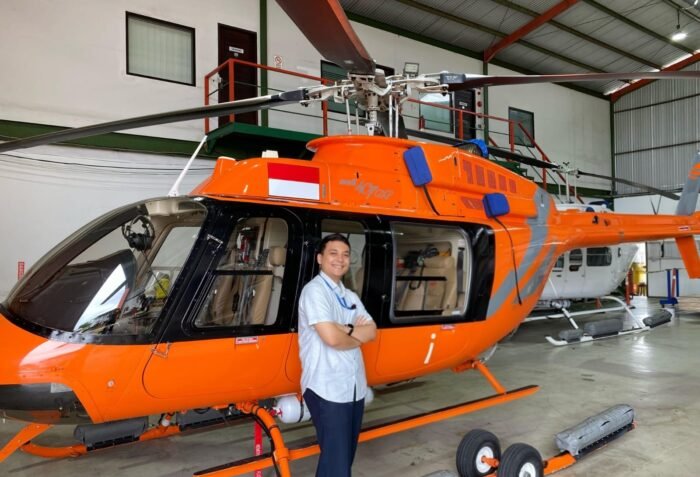
Civil helicopter chartering is growing across the APAC region, and Indonesia is no exception. Saladin Siregar, Key Account Management for Passenger Air Chartering, APAC at global charter experts Chapman Freeborn, provides in-depth insights on helicopter charters in Indonesia, explaining why they are a good fit for the country and which sectors are driving growth. A diverse and growing civil helicopter fleet Fleet growth in civil turbine helicopters in the Asia-Pacific (APAC) region has been consistent and steady for over a decade. Between 2014 and 2024, it expanded from 3,287 up to 4,131 with a CAGR of 2.3%, according to research by the Asian Sky Group.At 154, Indonesia’s civil helicopter fleet represents 3.7% of the region’s total and is the largest fleet in Southeast Asia. This should come as little surprise considering the country’s unique geography, Saladin Siregar explains. “Indonesia is vast, and its geography is complex and unique,” he comments. “It is a country of over 17,000 islands, and many locations are extremely remote and difficult to access due to challenging terrain.”Travel difficulties are exacerbated by challenging infrastructure in both urban and rural areas. “In the cities, congestion is a significant issue. And outside urban areas, there are many locations where road or sea connections are impractical. These factors combined create strong demand for point-to-point helicopter transport.” A range of civil helicopter mission types Roughly half of all helicopter flights in Indonesia last year were multi-mission, according to the Asian Sky Group’s Helicopter Fleet Report 2024. The remaining 50% of flights were made up a of combination of corporate or private hire, offshore flights, and charters, which accounted for over 15% of all missions. There were also a small number of Emergency Medical Services (EMS), Search and Rescue (SAR), law enforcement, and training flights. Sectors driving helicopter charter demand The expansion of helicopter charters in Indonesia is being driven by a combination of sectors and use cases.First of all, there has been an uptick in usage around major cities and tourist locations. “VIP and corporate transport via helicopter charter is growing, especially in Jakarta and Bali,” explains Saladin Siregar. “In congested cities, helicopters provide faster and more reliable travel, which makes passenger helicopter charters popular with both businesses and tourists. In terms of the business sector, executives and project teams are making use of Chapman Freeborn’s chartering services.” Another sector that makes extensive use of helicopter charters is heavy industry. “There were over 4,600 active mining permits in Indonesia in 2024. And there are thousands of energy facilities and power plants spread across the country, including many small diesel plants and multiple Oil & Gas facilities. Many industrial sectors are expanding. For example, there is an increase in nickel and copper smelters, and in refineries. As you would imagine, these facilities are often located in remote areas. Furthermore, the transportation of mission-critical crew and cargo to these sites is often time sensitive, making helicopter charters the most viable and convenient option,” says Saladin Siregar. “Whether it is tourism, corporate travel, or accessing remote industrial facilities, helicopters provide unmatched access and flexibility. They help executives avoid city congestion and enable teams to mobilize rapidly to remote industrial sites,” Saladin Siregard concludes. The future outlook The team at Chapman Freeborn APAC anticipates further development in Indonesia’s helicopter charter market in the near-term and will be on hand to support their customers over this period.“We expect industrial growth in the country to continue and infrastructure challenges to persist. Based on this scenario, we expect to see a further increase in passenger and cargo helicopter charter demand over the next 5 years,” comments Saladin Siregard. “We are also looking at opportunities to expand passenger air chartering services for the corporate and VIP vertical.” With Chapman Freeborn’s strong understanding of Indonesia’s unique aviation landscape and close partnerships with key operators and regulating bodies, the company is well-positioned to meet this growing demand. “We are ready to offer safe, reliable and convenient helicopter charters to serve these customers these segments as demand increases,” concludes Saladin Siregard. With more than 50 years of experience and extensive global coverage, Chapman Freeborn provides air cargo charter services for major corporations, governments, NGOs, relief agencies, and high net-worth individuals. The company is part of Avia Solutions Group, the world’s largest ACMI (Aircraft, Crew, Maintenance, and Insurance) provider, operating a fleet of 187 aircraft worldwide and the parent company of over 250 subsidiaries. The group offers a wide range of aviation solutions, including MRO (Maintenance, Repair, and Overhaul), pilot and crew training, ground handling, and other related aviation services. Supported by 14,000 highly skilled aviation professionals, the group operates across 6 continents. ( views expressed are personal)

Features

Using AI to transform aircraft maintenance and operations — a story of days to engine failure

At a modern airline operations control centre, predictive maintenance systems now aspire to flag early warnings based on real-time engine health data. When a forecast indicates that an engine is likely to exceed performance limits within a defined number of days, maintenance planners can proactively adjust flight schedules, arrange for spare parts, or schedule shop visits in advance. What once triggered emergency responses or unscheduled groundings is now managed through data-driven foresight. This transformation reflects how predictive AI modelling has turned potential disruptions into planned maintenance activities, improving operational reliability and reducing cost without compromising safety. By Sanjay Deshmukh,COO, Findability Sciences Before AI: maintenance by pattern, gut, and schedule Fifteen years ago, an engine showing subtle changes in exhaust gas temperature margins or vibration signatures would generate a paper trail: a technician’s note on a line maintenance card, a call into TechOps, and a conservative defensive response — ground the aircraft if in doubt, or ferry it to a maintenance base the next time it could be scheduled. Preventive maintenance relied heavily on flight-hour or cycle-based schedules, inspections driven by OEM service bulletins, and human judgment informed by experience. This approach protected safety but was inefficient: unnecessary shop visits, emergency AOG events, and expensive part shipments were common. The limitations were structural: data lived in silos, sensor streams were high-volume but noisy, and no operational system translated complex telemetry into a simple operational decision such as “this engine needs a shop visit within X days.” That translation — days to failure — is what airlines now prize, because calendar days map directly to planning windows for crews, aircraft rotations and spare logistics. The shift: combining data, twins and AI The first practical step was not a model but instrumentation and integration: richer telemetry (temperature, pressure, spectral vibration), consistent logging of flight context (thrust settings, profiles), and a link to maintenance history and environmental feeds. OEMs and MROs invested in digital twins — virtual replicas of engines that run physics-informed simulations alongside live telemetry — so that patterns in sensor drift could be interpreted against expected physical behavior rather than treated as raw anomalies. Rolls-Royce and others have championed digital-twin programs that let engineers explore “what if” scenarios without turning a wrench. Once the data plumbing was in place, airlines piloted models that forecast remaining useful life (RUL) and — crucially for operations — converted that into days to failure: calendarized RUL that factors in flight schedules and utilization. Early models were statistical or tree-based and offered explainability at the cost of flexibility. Today’s state-of-the-art prognostics blends physics constraints with deep sequence architectures — combinations of CNN-LSTM with attention or transformer-like encoders — that can capture long-range temporal patterns in noisy telemetry and fuse them with maintenance logs and environmental modes. Academic work in 2024–2025 has demonstrated improvements in RUL accuracy using CNN–LSTM–Attention hybrids and multiscale transfer learning tailored for aeroengines. A concrete example: Air France–KLM’s operational experiment Air France–KLM’s recent move to accelerate AI across its operations highlights how a large carrier approaches adoption. In late 2024 the group announced partnerships to deploy generative and predictive AI across its data estate — a strategic step that explicitly names predictive maintenance as a target area. For a carrier that operates hundreds of aircraft across global networks, moving from hours-long analyses to near-real-time probabilistic forecasting materially changes the cadence of maintenance decisions. In practice, the airline’s prototype architecture mirrored the emerging industry pattern: an edge tier on aircraft performs low-latency anomaly detection and compresses high-frequency data; a cloud tier runs ensemble prognostics and digital-twin simulations; and a frontline dashboard surfaces a clear days-to-failure forecast with confidence bands and top contributing factors (e.g., rising core temperature during climb cycles, elevated particle ingestion on specific sectors). The OCC used this information to make graded decisions — limit dispatch to short sectors, pre-order parts for the next planned shop visit, or approve a non-urgent ferry to a maintenance base — turning uncertain emergencies into scheduled, auditable actions. Best practices that made it work Successful deployments share practical patterns: • Align forecasts to decisions. Build the model output to answer operational questions: if the decision is “can this aircraft depart tomorrow?”, then present probability of failure within 24–72 hours, not a raw RUL number. • Quantify uncertainty. Probability distributions, prediction intervals, and cost-weighted decision thresholds prevent overreaction to a single point estimate. Operators need to know both the most likely days-to-failure and the worst-case window. • Human-in-the-loop workflows. Use the AI as an advisor. Maintenance planners validate and override forecasts early in rollout; their feedback then becomes training signals for model recalibration. • Hybrid models for explainability. Blend physics-informed constraints with deep ML so that failure drivers link to physically meaningful phenomena — vital for certification and trust. • Data governance and interoperability. Standardized data exchange (OEM, MRO, airline) and careful privacy controls make federated improvements possible without sharing raw operational data. Air France–KLM’s partnerships reflect this need to keep control of data while leveraging cloud AI capabilities. Challenges that persist Not all is solved. Data quality and left-censoring (engines observed only after installation) complicate life-history modeling; true failures are rare, so training sets are imbalanced; and operations evolve — flight profiles, new routings, or maintenance practices create covariate drift that must be detected and handled. Moreover, the certification and safety assurance of AI-infused prognostics remains a conservative, resource-intensive step: regulators and safety managers require rigorous demonstrations of conservatism under uncertainty and robust behavior in edge cases. Academic and industry studies stress the need for continuous validation pipelines and scenario stress tests to address these issues. Benefits realized — and measured When the system works, benefits cascade. Airlines report fewer aircraft on ground events, better shop utilization, and lower logistics costs from fewer urgent part shipments. Delta, Lufthansa and others have publicly discussed multi-year programs to digitize TechOps and apply ML for predictive maintenance; case studies point to measurable reductions in unscheduled removals and time-to-repair when analytics are tied to operations. For Air France–KLM, the

Features

MODAIR : LEADING INDIA’S AVIATION TRAINING ECOSYSTEM

ModAir Aviation IFSC Pvt Ltd is spearheading a major shift in India’s aviation training ecosystem by enabling access to leased training aircraft through GIFT City, Gujarat. This forward-looking initiative not only strengthens the national aviation framework but also reflects the vision of the Prime Minister’s Viksit Bharat mission, emphasizing self-reliance, skill development, and global competitiveness. Headquartered in India’s only operational International Financial Services Centre, ModAir Aviation has emerged as one of the earliest and most dynamic adopters of GIFT City’s specialized aircraft leasing platform. The company has successfully pioneered leasing arrangements for flight training academies across the country, creating a new standard in operational efficiency and accessibility for aviation education. Through this model, ModAir has already inducted multiple modern trainer aircraft, which are now supporting active pilot training operations across established Flight Training Organizations (FTOs) in Jalgaon, Khajuraho, and Karnataka. By offering flight schools the ability to lease rather than purchase aircraft, the company has effectively bridged a long-standing financial and logistical gap in India’s pilot training infrastructure. Flight academies benefit from improved cash flow, expanded training capacities, and access to technologically advanced fleets—all of which contribute to more cost-effective and efficient training processes. ModAir’s approach redefines the economics of pilot education in India by lowering entry barriers for flight schools and ensuring students train on the latest generation of equipment. This aligns closely with national initiatives such as UDAN and AtmaNirbhar Bharat, both designed to foster connectivity, job creation, and self-sufficiency across the aviation value chain. The company’s mission directly supports the government’s strategic focus on building a globally recognized hub for aviation skill development, where Indian pilots are trained to international standards. Atul Jain, Director and Promoter of ModAir Aviation IFSC Pvt Ltd, expressed pride in the company’s contribution to national development. “We aim to empower India’s youth to become world-class pilots and innovators,” he said. “Through access to leased aircraft and helicopters, ModAir is nurturing the next generation of aviation professionals while strengthening India’s standing as a leader in flight training and leasing across Asia. Our presence in GIFT City underscores our belief in India’s potential as a global aviation hub.” Building upon this strong foundation, ModAir has set an ambitious goal to induct 20 additional trainer aircraft by the end of 2026. This will substantially enhance the availability of modern aircraft for pilot training across India’s growing network of academies. Through GIFT City’s internationally competitive ecosystem—offering tax efficiencies, streamlined regulations, and global financial access—ModAir continues to demonstrate how innovative leasing models can accelerate the modernization of Indian aviation. By making aircraft leasing accessible, transparent, and sustainable, ModAir Aviation IFSC Pvt Ltd is helping India achieve its goal of producing thousands of highly skilled pilots while ensuring the growth of ancillary aviation sectors. The company’s efforts mark a pivotal step toward realizing the dream of a Viksit Bharat—one that takes flight through education, innovation, and enterprise. ( Advertorial)

Recent News

CSMIA sets record passenger milestones in November 2025

Mumbai, 18 December 2025: Mumbai’s Chhatrapati Shivaji Maharaj International Airport (CSMIA) recorded a robust passenger traffic performance in November 2025, handling over 48.88 lakh passengers during the month. The strong showing was driven by sustained festive and winter travel demand, supported by extensive domestic and international connectivity. CSMIA set its top three single-day passenger traffic records in November, surpassing previous highs on November 15, 22 and 29, 2025. The airport registered its highest-ever single-day passenger volume of 1.76 lakh passengers on November 29, reflecting continued growth across travel segments. During November 2025, CSMIA facilitated approximately 27,960 air traffic movements, carrying over 3.4 million domestic passengers, while international routes accounted for more than 1.4 million passengers. Among international destinations, Dubai emerged as the busiest route with 2,09,714 passengers, followed by London Heathrow (1,12,043) and Abu Dhabi (1,00,284). On the domestic front, Delhi remained the top sector with 6,09,646 passengers, followed by Bengaluru (4,36,301) and Chennai (2,07,692). On 29 November, of the total 1.76 lakh passengers, approximately 1.22 lakh were domestic travellers, while over 54,000 were international passengers. This milestone followed shortly after CSMIA recorded its highest-ever daily air traffic movements of 1,036 on 21 November 2025, highlighting strong operational preparedness during peak travel periods. International routes with the highest passenger volumes on November 29 included Dubai (7,200 passengers), London Heathrow (4,766), Abu Dhabi (3,213), Singapore (3,054) and Doha (2,369). On the domestic network, key destinations such as Delhi (22,703), Bengaluru (11,565), Chennai (7,578), Kolkata (6,667) and Hyderabad (6,507) recorded strong demand. As one of India’s busiest and best-connected airports, CSMIA continues to accommodate rising passenger volumes while ensuring seamless operations during high-traffic periods. The airport’s strong performance in November 2025 reaffirms Mumbai’s position as a preferred domestic and international gateway, well-equipped to meet growing travel demand in the months ahead.

FOREWORD

Dear Reader’s,


The current edition of Aviation World has covered many areas of Aerospace & Defence based on the latest development in the sector. The front cover highlights three different images, first for the Union Civil Aviation Minister ….. who is leading from the front to steer Indian Civil Aviation sector to witness one of the most interesting phases. He is also facing most tumultuous timing due to the ongoing financial stress in the Aviation sector due to ATF rising cost and long airspace restrictions resulting in mounting losses for Indian carriers. Despite of all the ground level challenges,the minister is addressing new things on regular basis which keeps the sector motivated. We have featured many such developmental works in this edition done under his guidance which will be interesting to read.

Our lead story on “ The West War” is another important feature which covers the ground level reality of the challenges faced by the Aviation sector. Its though time ahead and we believe it will pass soon .

There are features on Regional connectivity and MoCA revised rules on the UDAN 2.0 and how its going to transform the flying experience within India.

In this edition, we have covered topics on MRO,Various Policy changes,Sea Plane Operations by SkyHop Aviation, TATA-Airbus joint project on C295 military aircraft under Make In India which is expected to roll out soon and many other interesting contents which will be good to read.

We are covering Farnborough International Airshow 2026 from 20-24July 2026 in London and our next edition will be based on the same event.For features, you may contact our team on priority basis.


Happy Reading!

NEWSLETTER

Aviation World Magazine is India’s premier aviation magazine and has been actively supporting the development of the Indian and global civil aviation sector. We started our journey in year 2015 and its been 12 years now and the response and acceptance is really encouraging. Thanks to all our associates and writers who remained with us in our progressive journey.

We have started 2026 on a very positive note and we look forward to increase our footprints to more locations and induct many more new companies in our campaign.. Do write to us at : editor@aviationworld.in

Disclaimer

The contents published in this website are news covering Aviation, Aerospace and Defence sector. The objective is to provide news in informative form to keep our readers updated of the latest development. We also publish content featured in our print publication Aviation World.We try our best to avoid any factual errors or image displayed here but we ensure immediate corrections to any such thing brought to our notice that might have been published inadvertently. All images and contents are sourced from the relevant organisations media team.

Copyright ©2014 – 2026. AVIATION WORLD. All rights reserved.

Scroll to Top