

Author name: Aviation World

Interview

Shaping the Skies: Acron Aviation’s Bold Bet on Indian Avionics and Defense

Acron Aviation is making massive strides in India’s aerospace sector, backing its ambition with significant investments in next-generation avionics and advanced surveillance infrastructure. Already a dominant player in the region—most notably through its widespread deployment of ADS-B Aircraft Surveillance & Tracking Systems—the company is firmly positioning itself as a cornerstone of India’s modernized airspace. In an exclusive conversation with Vishal Kashyap, Managing Editor, Aviation World, Robin Glover Faure, Chief Customer Officer, Acron Aviation, dives deep into the company’s strategic alignment with the ‘Make in India’ initiative, its expanding footprint within the Indian defense sector, and the technology defining the future of Indian skies. Excerpts from the interview… AW: Verticals: What verticals is Acron currently working in within India? ROBIN: India is one of the most dynamic aviation markets in the world right now, and Acron is engaged on two fronts. The first is avionics and surveillance: through ACSS, our joint venture with Thales, we supply ADS-B, TCAS and flight recorder product lines across India’s commercial, regional and general aviation fleets. The second is flight data intelligence: our Flight Data Connect platform brings FDM/FOQA services to Indian operators, backed by our role as an analysis partner in IATA’s Flight Data eXchange. One thread runs through both — helping India’s operators fly safely and efficiently through one of the fastest fleet expansions in aviation history. AW: What is Acron’s current market presence with ADS-B Aircraft Surveillance & Tracking Systems in India? How can it work as an alternative to secondary surveillance radar at remote regional airports? ROBIN: Consider what India is attempting. The UDAN regional connectivity scheme has already brought scheduled service to 95 airports, heliports and water aerodromes across more than 660 routes, and the newly approved Modified UDAN programme commits ₹28,840 crore to develop a further 100 airports over the coming decade. Many of these sit in the Himalayas, the Northeast and on islands — exactly the places where building and maintaining secondary surveillance radar is slow, difficult and expensive. ADS-B turns that problem on its head. Instead of a ground radar interrogating the aircraft, the aircraft determines its own position via GPS and broadcasts it continuously to air traffic control and to other aircraft — no rotating antenna needed on a mountaintop. DGCA’s own ADS-B Out guidance makes the point: satellite-based surveillance fills the gaps in remote and high-terrain areas where radar coverage is difficult or uneconomical, complementing the existing radar network rather than simply replacing it. That ground-infrastructure-light model is precisely what a fast-expanding regional network needs. And Acron is ready for that build-out today. Our surveillance portfolio — the NXT 600, the Lynx ADS-B In/Out transponder and display system, our Mode S transponder line and SafeRoute+ — is built on ACSS heritage, certified by the FAA and EASA, and designed for exactly this kind of regional and mixed-fleet deployment. Nor are we arriving from a standing start: ACSS-manufactured TCAS 3000SP and T3CAS systems and Mode S transponders already fly with Air India, Air India Express and IndiGo, and selected ACSS surveillance solutions are installed on aircraft platforms manufactured by Hindustan Aeronautics Limited. From the country’s largest airlines to its indigenous aerospace programmes, we are already on board. On the heels of our highly successful ADS-B Evaluation program with the FAA and American Airlines, Acron is exploring the opportunity for a similar pilot program in India. In partnership with Indian air carriers, the DGCA and the Airports Authority of India, this program would serve to validate the operational and safety benefits available to the airlines while also demonstrating the value ADS-B technology brings to the modernization of the Indian airspace management infrastructure. AW: As DGCA progressively aligns with global ADS-B Out mandates, how do Acron’s transponders maintain dual compliance with Indian CAR and international standards for cross-border operations? ROBIN: Our answer is simple: we build to the standard the world builds to. DGCA’s ADS-B Out requirement has been in force since June 2023 for aircraft operating at or above FL285 on specified ATS routes in Indian continental controlled airspace, and it was deliberately designed to align with the global shift toward satellite-based surveillance under ICAO’s Aviation System Block Upgrade framework. Acron’s transponder and surveillance systems — including the Lynx ADS-B In/Out transponder and our Mode S product lines — are certified to the international technical baseline that underpins all of these mandates: RTCA DO-260B for ADS-B message formats, ICAO Annex 10 Volume IV for surveillance systems and DO-160G environmental qualification, carrying FAA TSO authorisations and EASA STC approvals. Because DGCA’s regulatory framework is built to be interoperable with ICAO standards and with FAA and EASA precedent, the same transponder that carries an Indian operator across international boundaries also satisfies domestic carriage requirements. No India-only hardware variant, no fork in the fleet, no compliance surprises as the route map grows. AW: How do you pitch the ROI of upgrading to ADS-B In (like SafeRoute+) to a cost-sensitive LCC in the region? ROBIN: I would start by reframing the question: SafeRoute+ is a retrofit, not a re-equip. It’s a software upgrade to existing T3CAS or TCAS 3000SP computers plus addition of a low-cost ADS-B Guidance Display. The system integrates with the aircraft’s existing displays and control units. As a result, both the capital outlay and the aircraft-on-ground time are a fraction of a traditional avionics upgrade. Then look at what it returns. SafeRoute+ gives pilots a 180-nautical-mile forward-field view of surrounding traffic, and the results from American Airlines’ FAA-evaluated trials at Dallas–Fort Worth and in Albuquerque Center airspace are hard numbers, not projections: roughly 490,000 pounds of fuel and 700 metric tonnes of CO₂ saved at DFW in the first year alone, the potential for four to five additional landings per runway per hour, and tighter in-trail spacing with fewer go-arounds. American has since extended the capability across nearly 300 of its A321s. For an LCC flying dense short-haul rotations through congested, capacity-constrained hubs, every minute of holding, every avoided go-around and every kilogram of fuel drops straight to the

Interview

The UDAN Scheme has been one of the most transformative aviation initiatives undertaken anywhere in the world.

– Wg. Cdr. Prem Kumar Garg (Retd.), CEO, IndiaOne Air Prime Minister Narendra Modi has launched the Modified UDAN scheme with a ₹29,000 crore outlay over the next 10 years, marking a major step toward strengthening regional air connectivity and advancing the vision of Viksit Bharat 2047. But what will it take for this ambitious next phase to achieve lasting success? In conversation with Vishal Kashyap, Managing Editor, Aviation World, Wg. Cdr. Prem Kumar Garg (Retd.), CEO & Accountable Manager of IndiaOne Air, shares his expert perspectives, operational insights, and recommendations with Vishal Kashyap, Managing Editor, on the opportunities, challenges, and the roadmap for making the revamped UDAN scheme a transformative success. Excerpts… Q: You call IndiaOne “The Baby Airline”. How do you foresee the baby growing into a more mature airline? A: When I call IndiaOne Air “The Baby Airline,” it reflects our stage of evolution rather than our ambition. Every successful airline starts small, learns continuously and builds resilience over time. We are proud that despite operating one of the smallest scheduled fleets and the smallest aircraft in India, we have connected underserved regions, completed over 15,000 commercial flights and served about a lakh passengers including lot of first time travellers. Our vision is not to become the biggest airline but to become India’s most trusted regional connectivity airline. The next phase will focus on strengthening operational reliability, inducting larger regional aircraft, expanding into new underserved markets and building a sustainable regional aviation ecosystem. Like every child, growth requires patience, support and the right environment. Q: How do you analyze the outcome of the modified UDAN scheme in supporting sustainable and viable flight operations? A: The UDAN Scheme has been one of the most transformative aviation initiatives undertaken anywhere in the world. It has democratized air travel and brought aviation to regions that had never experienced scheduled flights. However, the next phase must focus on sustainability rather than only route creation. The modified UDAN scheme is moving in the right direction by encouraging states to take greater ownership of regional connectivity. Long-term success will depend upon stable policy support, infrastructure readiness and innovative financing models for regional small aircraft. Regional connectivity cannot be evaluated solely on airline profitability. Its economic and social multiplier effect including tourism, healthcare, education and business development is many times larger than the aviation investment itself. Q: Due to non-continuation of VGF, you had to suspend a few key sectors. How do you manage such situations in terms of business loss and passenger trust? A: Suspending routes is never an easy decision because regional airlines build relationships, not just networks. Whenever support mechanisms change, we evaluate every route based on commercial sustainability while ensuring safety is never compromised. We communicate transparently with passengers and continue engaging with state governments and stakeholders to restore services when viable. Passenger trust is built through honesty. Most of our customers understand that regional aviation operates under unique economic challenges. Our objective is always to return stronger rather than continue unsustainable operations. Q: Is this also part of the strategy due to mounting ATF prices, which could not make operations viable on smaller aircraft? A: ATF certainly remains one of the largest cost components for every airline, but for small aircraft operators the impact is significantly higher because fuel costs are spread over fewer seats. However, some portions of it is catered due to VGF indexation calculations based on for RCS flights. Moreover, sustainability is influenced by multiple factors like fuel prices, airport charges, maintenance costs, taxation, infrastructure and route economics. IndiaOne Air continues to focus on cost optimization, operational efficiency and partnerships rather than relying solely on fare increases. In being under Regional aviation serves a national purpose. Therefore, its economics must also be viewed differently from large trunk-route operations. Q: What is the future plan of action? Are you looking at leasing a mid-size aircraft to strengthen your operations? A: Yes. Our long term fleet strategy involves gradual induction of larger regional aircraft while maintaining our expertise in last-mile connectivity. We believe there is a significant gap between 9-seat commuter aircraft and larger regional jets. Aircraft in the 19-40 seat category are ideally suited for India’s regional markets and can substantially improve route economics. However, choice of aircraft is well planned and mostly based on airport we are targeting to connect. Our expansion strategy will always remain measured and financially disciplined. Sustainable growth is more important than rapid growth. Q: What is the status of the LoI that you signed for 10 Twin Otter Series 300-G aircraft? A: The Letter of Intent reflects our long-term confidence in the future of regional aviation in India. The Twin Otter Series 300-G offers unique capabilities, particularly for short runways, remote destinations, island operations and difficult terrain. We continue to engage with the manufacturer and various stakeholders while evaluating financing options, market conditions and policy developments. Fleet induction decisions will always be aligned with commercial sustainability rather than timelines alone. Q: Despite Government initiatives, smaller aircraft operators are still struggling to achieve long-term sustainability. What, according to you, is holding them back? A: The challenge is not demand. India has enormous untapped regional aviation potential. The issue lies in economics. Small aircraft operators face disproportionately higher operating costs and per seat costs while serving socially important routes with lower traffic density. Three structural issues remain: a) Limited availability of suitable regional aircraft and affordable leasing. b) High fixed operating costs despite smaller capacity. c) Short-term support mechanisms instead of long-term ecosystem development. Regional airlines should be viewed as public infrastructure partners rather than simply commercial transport providers. Q:  Very precisely, what are the three key policy measures still required to make RCS routes viable for smaller operators? A: If I had to prioritise only three, they would be: Sustainable Aircraft Financing Establish dedicated leasing and financing mechanisms for regional aircraft, including support through GIFT City and state-backed ownership models. Long-Term Operational Support Transition from short-duration VGF to predictable, performance-linked support

2026

GA-ASI AND MBDA COMMIT TO WEAPONS COLLABORATION Companies Will Integrate SPEAR Onto MQ-9B and Gambit 6

FARNBOROUGH INTERNATIONAL AIRSHOW – 21 July 2026 General Atomics Aeronautical Systems, Inc. (GA-ASI) and MBDA have announced a commitment to integrate the European missile-maker’s SPEAR precision strike weapons onto new aircraft built by the American uncrewed aircraft manufacturer. GA-ASI President David R. Alexander and MBDA UK Managing Director Chris Allam signed a memorandum of understanding that outlined the agreement at the Farnborough International Airshow 2026. The companies will work together to ensure the MQ-9B remotely piloted aircraft and Gambit 6 collaborative combat aircraft (CCA) can carry and use the SPEAR weapons. “We’ve built an excellent business relationship with MBDA as part of the integration of the Brimstone missile onto the UK’s Protector,” said Mr. Alexander. “So, working with MBDA to enable SPEAR on our broader MQ-9B line, and our Gambit CCA, feels like a very natural extension of our partnership.” Protector RG Mk1 is the version of MQ-9B in operation for the UK Royal Air Force. “The consolidation of MBDA’s relationship with GA-ASI is a testament to the strength of our long history of cooperation, most recently with Brimstone and Protector,” said Mr. Allam. “Remotely piloted aircraft and autonomous/collaborative platforms, such as MQ-9B and Gambit, are revolutionizing modern air combat. Integrating the innovative capability of SPEAR multiplies the effect these platforms provide into decisive operational advantage.” SPEAR is MBDA’s miniature cruise missile, a next-generation air-launched surface attack weapon that provides a low collateral damage precision effect, with a high load out for persistence. SPEAR reaches beyond the horizon to ensure that the launch aircraft remains safely away from hostile air defenses, but with an engagement capability across a broad threat set. GA-ASI’s long range, high endurance MQ-9B platform is in operation or on order by close to a dozen nations, including the UK, Germany, Denmark, Belgium, and Poland. The Gambit CCA is an uncrewed combat aircraft optimized for attack roles such as electronic warfare, suppression of enemy air defenses (SEAD), Destruction of Enemy Air Defenses (DEAD) and stand-off precision strike, making it a versatile option for evolving security needs. GA-ASI and MBDA company leaders believe that the combination of these ready aircraft with the latest weapons will yield a highly relevant and quick-to-field new capability for global militaries.

Business Aviation

The Helicopter Company Signs LOI with Bombardier at Farnborough International Airshow 2026 for a Fleet of Up to 60 New State-of-the-Art Jets

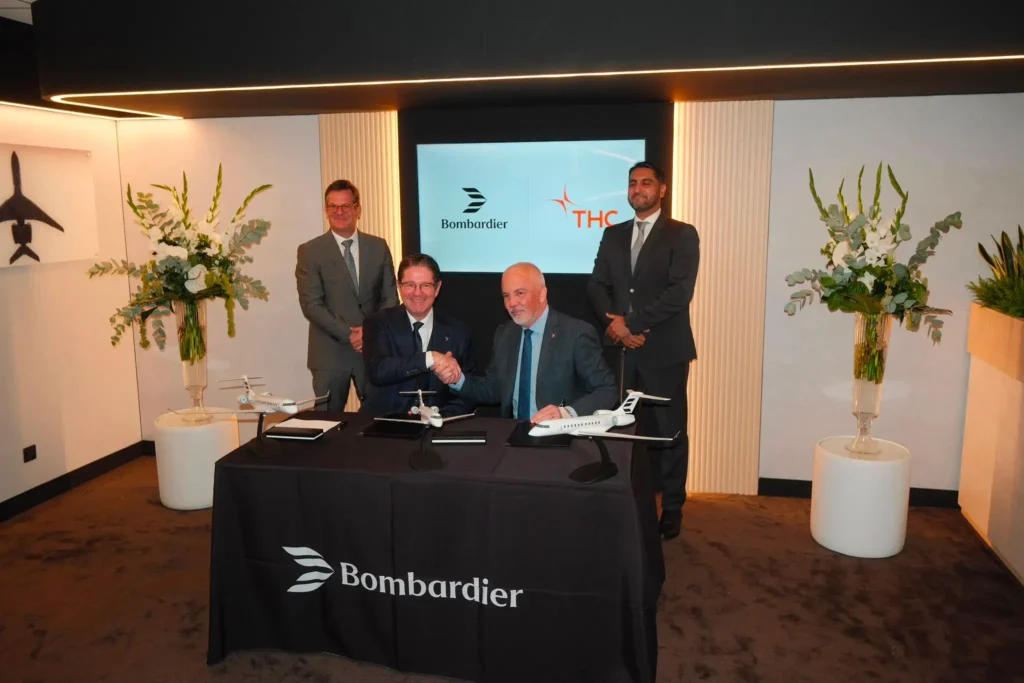
FARNBOROUGH, United Kingdom — 21 July 2026 The Helicopter Company (THC), Saudi Arabia’s leading commercial helicopter operator, today announced its strategic move into fixed wing business aviation for the charter and management of jets. THC and Bombardier signed a LOI towards finalizing a firm order for 12 aircraft, including 5 Challenger 3500, 5 Global 5500 and 2 Global 8000 aircraft, with purchase options for 48 more aircraft across these platforms. (1) The signing ceremony took place at the Farnborough International Airshow, currently taking place in the United Kingdom until 24 July. The ceremony was attended by CEO of THC, Captain Arnaud Martinez, and Head of Aviation & Security at the Public Investment Fund, Muhammad Ovais Yousuf, and leadership from Bombardier, including CEO Éric Martel and company Chairman Pierre Beaudoin. With the launch of this new segment of operations, THC, a Public Investment Fund (PIF) company, enters the business aviation sector as a natural extension of the journey it has been on since its founding in 2018. The new business stream is designed to meet growing demand for private and general aviation, driven by Saudi Arabia’s expanding tourism sector, business activity, and emerging destinations. “As a portfolio of companies, THC was always poised to expand beyond rotary-wing aviation into fixed-wing operations,” said Captain Arnaud Martinez, Chief Executive Officer of THC.” Our vision has always been to become the General Aviation Champion from Saudi Arabia to the world.” “Bombardier’s aircraft are uniquely positioned to meet the evolving needs of customers around the world, offering exceptional versatility, dispatch reliability and a world-class customer experience,” said Éric Martel, President and Chief Executive Officer, Bombardier. “We are honored that The Helicopter Company has selected Bombardier to support its future fleet ambitions. This is a powerful symbol of our companies’ shared customer-centric DNA and vision for economic growth in the region. This signing also represents a significant endorsement of our aircraft, our people and our long-term commitment to supporting growth in the Kingdom of Saudi Arabia.” The new business aviation segment addresses a growing demand in Saudi Arabia’s business aviation market. By combining a unique identity with a highly personalized, customer-centric experience, THC aims to become the region’s leading business aviation operator and the national carrier of choice in private charters and business aviation. To launch, the companyintends to operate up to 60 aircraft spanning Bombardier’s industry-leading Challenger and Global aircraft families, including the Challenger 3500, Global 5500 and Global 8000. As such, the fleet will combine efficiency, long-range capability and premium passenger comfort across the super-midsize, long-range and ultra-long-range segments,to establish a modern and highly capable aircraft fleet, built to match Saudi and regional demand. “Every investment we make is guided by the same philosophy – to build an integrated aviation ecosystem that supports Saudi Vision 2030 through innovation, operational excellence and long-term value creation.” Captain Arnaud further commented. “Fleet commonality, advanced aircraft technology and a commitment to more efficient and sustainable operations are fundamental to that approach, enabling us to deliver the highest standards of safety and service while positioning Saudi Arabia at the forefront of modern aviation.” “As demand continues to grow across the region for the super-midsize category, the Challenger 3500 is ideally positioned to meet customer expectations for performance, comfort and reliability. The Global 5500 continues to set the benchmark in its class with industry-leading range and outstanding versatility, while the flagship Global 8000 – the pinnacle of business aviation - ushers in a new era of business aviation performance and capability,” added Éric Martel. “Our team looks forward to working hand-in-hand with THC to support their ambitions and success throughout the lifecycle of their soon-to-be extensive, bespoke fleet. Through planned local investments dedicated to supporting THC’s operations and the strength of our global support network, we are committed to delivering the resources, expertise, and service wherever their operations take them.” This foundation now underpins THC’s expansion into fixed-wing business aviation, supporting the growth of Saudi Arabia’s general aviation sector while attracting investment and advancing localization to build a robust aviation ecosystem in the Kingdom.

2026

IndiGo and CFM sign MoU paving the way to a record agreement for 1,000+ LEAP-1A engines

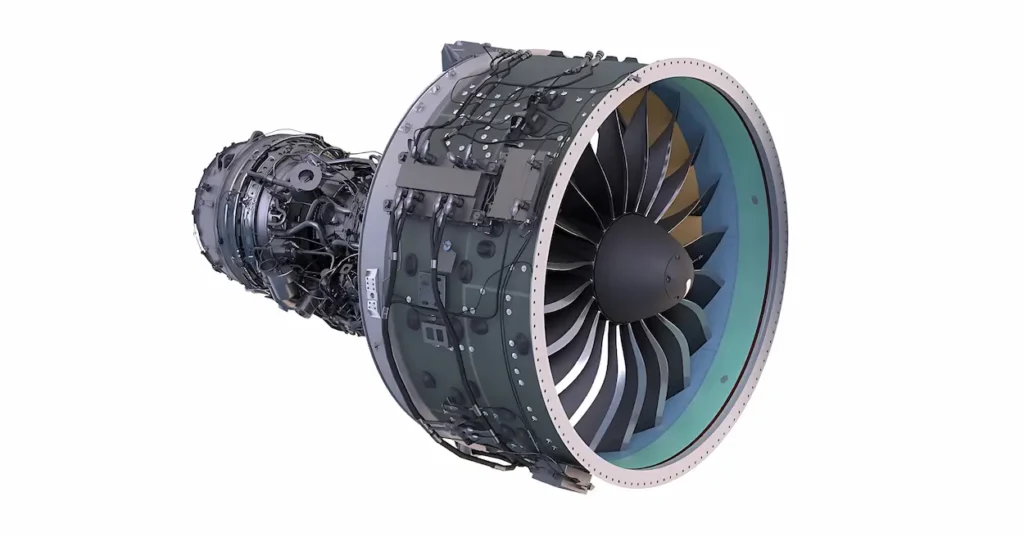
Published on 20th July 2026 Landmark deal includes creation of MRO capabilities for IndiGo’s growing fleet FARNBOROUGH – 20 July 2026 IndiGo, India’s largest airline and one of the world’s fastest-growing carriers, today announced it has signed an MoU (Memorandum of Understanding) with CFM International for an order of 1,000+ LEAP-1A engines to power 510 Airbus A320neo Family aircraft. This will be the largest single order ever placed for LEAP engines and a record for CFM International. The MoU also includes CFM’s extensive support in establishing IndiGo’s upcoming engine MRO facility (maintenance, repair and overhaul) and support IndiGo’s rapidly growing fleet through long term material services agreement, including supply of spare parts, ensuring high dispatch reliability, predictable costs, and world-class support as the airline further scales its operations. On this occasion, Willie Walsh, Chief Executive Officer Designate, IndiGo said, “As IndiGo embarks on its next phase of growth towards becoming a truly global airline, we are delighted to extend our long-standing partnership with CFM International for the engines powering future deliveries of our Airbus A320/321neo Family aircraft fleet. CFM has been a trusted partner in our growth journey since 2016, supporting a fleet that now exceeds 375 A320/321 Family aircraft. The LEAP engine’s industry-leading proven reliability makes it the ideal choice to support our scale, operational resilience and sustainability ambitions. This partnership reinforces our commitment to providing safe, reliable and efficient travel across an ever-expanding network in India and around the world.” IndiGo has been a valued CFM customer for 10 years. In 2016, the airline operated a sub-fleet of Airbus A320ceo Family aircraft powered by CFM56-5B engines. In 2019, IndiGo deepened its relationship with CFM, ordering LEAP-1A engines for their newest fleet of Airbus A320/321neo Family aircraft. “IndiGo has trusted CFM to support its performance for a decade now, and we’re honored to renew that trust with today’s agreement. LEAP engines are delivering up to twice the time on wing in hot and harsh operating environments than when they entered service, while continuing to provide fuel efficiency and reliability,” said H. Lawrence Culp, Jr., Chairman and Chief Executive Officer at GE Aerospace. “As we continue to strengthen the program to best serve our customers, GE Aerospace is also proud to build on more than 40 years of support for India’s aviation sector. With a strong installed base, manufacturing in Pune, a broad local supplier network, and advanced engineering in Bengaluru, we remain committed to supporting IndiGo’s growth and expanding our presence in India.” CFM has a long-standing footprint on the Indian subcontinent, as India is CFM’s third-largest market, with five Indian carriers operating more than 400 LEAP-powered aircraft and 2,000 engines on order. “This historic milestone reflects the long-standing partnership between IndiGo and CFM. It underscores the trust that airlines place in the performance and value delivered by the LEAP engine”, said Olivier Andriès, Chief Executive Officer of Safran. “As one of the world’s fastest-growing aviation markets, India is of strategic importance to Safran. Through our continued investments in the country, particularly in LEAP engine production and MRO capabilities, we are strengthening our long-term commitment to supporting IndiGo’s remarkable growth and to contributing to the development of Indian aerospace industry.” Last year, Safran inaugurated its largest MRO (maintenance, repair, overhaul) center for the LEAP engine. The 45,000-square-meter facility will ramp up to a capacity of 300 LEAP shop visits a year and boast a next-generation test bench. With more than 10,000 engines delivered to date, CFM LEAP engines have experienced the fastest ramp in commercial aviation history. CFM continues to upgrade the LEAP fleet with a high-pressure turbine (HPT) durability kit to extend time on wing and a reverse bleed system (RBS) to lower airline maintenance burden. The company is focused on delivering high engine availability through exceptional MRO performance and competitive cost of ownership, with the benefits of aftermarket competition through its open MRO ecosystem.

Drones

Eve Advances Global Certification Path for Eve 100

FARNBOROUGH, UK – July 20, 2026 Eve Air Mobility (“Eve” or “the Company”) (NYSE: EVEX, EVEXW; B3: EVEB31) today announced two important milestones in the certification process for the Eve 100, the Company’s electric vertical take-off and landing (eVTOL) aircraft: Brazil’s National Civil Aviation Agency (ANAC) has opened a sectoral consultation process on updated airworthiness criteria for the aircraft, and Eve has applied to the European Union Aviation Safety Agency (EASA) to initiate its Type Certificate validation process. Together, these developments underscore the momentum behind Eve’s broader certification strategy and reinforce the Company’s disciplined approach to working with leading aviation authorities across Brazil, the United States and Europe to support future international operations. ANAC’s publication of the updated criteria marks another important step in the Eve 100 Type Certification process and contributes to the development of a robust regulatory framework for eVTOLs. Comments can be submitted until August 18. The updated criteria follow ANAC’s publication of the first airworthiness criteria for Eve’s eVTOL in November 2024 and include revisions aimed at further harmonization with international certification approaches, including the FAA’s guidance for powered-lift aircraft. Eve has been working closely with ANAC to support the development of criteria appropriate for the Eve 100’s configuration and for the emerging AAM sector. “ANAC’s consultation with industry stakeholders on the updated airworthiness criteria and our application for EASA Type Certificate validation are important demonstrations of the steady advancement of the Eve 100 certification process,” said Johann Bordais, CEO of Eve. “We value the close technical collaboration with ANAC and the engagement with leading aviation authorities as we advance a comprehensive certification approach for new aircraft technologies. These steps further strengthen our path toward type certification and support our work to bring the Eve 100 to key global markets.” Eve formalized the eVTOL Type Certificate application process with ANAC in February 2022, marking the start of the aircraft’s certification journey with the Brazilian civil aviation authority. In 2023, Eve engaged the FAA to pursue a concurrent Type Certificate validation process, supporting alignment among certification authorities for the Eve 100 certification basis and means of compliance. The EASA validation application marks another important milestone in this coordinated certification effort, bringing an additional key aviation authority into the program alongside the FAA, where certification activities are already underway. Tiago Faierstein, ANAC’s Director-President, said: “For ANAC, Advanced Air Mobility is a strategic priority, and Brazil can play an important role, in partnership with leading civil aviation authorities worldwide, in supporting safe and harmonized certification processes. At the same time, we are advancing workstreams to develop standards and regulations to ensure the necessary infrastructure and airspace are in place for this aerial innovation, which will soon be integrated into the civil aviation ecosystem. ANAC recognizes that eVTOLs are here to stay and will remain strongly committed to supporting the development of this sector.” Following the consultation period, which will remain open until August 18, ANAC will review the comments received and assess potential refinements to the criteria. Eve will continue working with ANAC on the Eve 100 certification process, while also supporting alignment with other aviation authorities, including the FAA and EASA, as part of its broader international certification strategy. Next steps with EASA include initial product familiarization activities and further technical discussions.

2026

De Havilland Canada and Widerøe Sign Agreement for Dash 8-400 A-Check Escalation Program

Farnborough, United Kingdom (July 20, 2026) De Havilland Aircraft of Canada Limited (“De Havilland Canada”) today announced that Widerøe, Scandinavia’s largest regional airline, has signed an agreement to implement De Havilland Canada’s new Dash 8-400 A-Check Escalation Program across its fleet of 17 aircraft. Under the agreement, Widerøe will become the first Dash 8-400 operator to adopt the new maintenance program, which extends the interval between scheduled A-Checks from 800 to 1,200 flight hours. By reducing the number of routine maintenance inspections required, the program allows aircraft to spend more time in service while maintaining the highest standards of safety and airworthiness. Implementation of the program is now underway and is expected to be completed over the next 12 months. The longer maintenance interval will help Widerøe reduce aircraft downtime, increase fleet availability, and lower the labour and material costs associated with scheduled maintenance. “We’re continually looking for ways to help our customers improve fleet performance,” said Rob Mobilio, Chief Commercial Officer for De Havilland Canada. “This new program will reduce maintenance costs and allow operators to spend less time in the hangar and more time in the air, while maintaining the high safety and reliability standards the Dash 8 is known for. We’re pleased that Widerøe is leading the way as our launch customer.” De Havilland Canada’s confidence in the program builds on its longstanding relationship with Widerøe. In 2021, the two companies successfully introduced similar maintenance interval extensions for Widerøe’s Dash 8-100, -200 and -300 aircraft, increasing the time between both A-Checks and C-Checks while maintaining the same high standards of safety and reliability. “We’re pleased to continue working with De Havilland Canada to improve the efficiency of our Dash 8 fleet,” said Werner Skaue, Director of Aircraft Trading for Widerøe. “Extending the time between scheduled maintenance will help us keep more aircraft in service while continuing to deliver the safe, reliable operation our passengers expect.” The agreement reflects De Havilland Canada’s ongoing commitment to developing practical maintenance solutions that help operators improve fleet availability, reduce operating costs, and maximize the value of their Dash 8 aircraft.

2026

BOC Aviation announces order for up to 300 LEAP engines

FARNBOROUGH, England – July 20, 2026 CFM International and BOC Aviation Limited have finalized a firm order for up to 200 LEAP-1A and 100 LEAP-1B engines to power Airbus A320neo family and Boeing 737 MAX aircraft that BOC Aviation had previously ordered. CFM engines have powered part of BOC Aviation’s fleet since 1998. The Singapore-based leasing company placed its first order for LEAP-1A engines in 2013 and, today, these engines power more than 240 aircraft in BOC Aviation’s portfolio. “This is our largest ever engine transaction and it will propel our growth from this decade into the next,” said Steven Townend, Chief Executive Officer and Managing Director. “The significant emissions reductions and lower fuel-burn characteristics of the CFM LEAP engine family align with our commitment to building one of the most environmentally friendly fleets of any major lessor.” “We are honored to be such an integral part of BOC Aviation’s long-term strategy, both in terms of fleet growth as well as achieving its important sustainability goals,” said Gaël Méheust president and CEO of CFM International. “We value the deep relationship our two companies share and are committed to delivering the product attributes and support that BOC Aviation and its customers have come to rely on from CFM.” With more than 10,000 engines delivered to date, CFM LEAP engines have experienced the fastest ramp in commercial aviation history. CFM continues to upgrade the LEAP fleet with a high-pressure turbine (HPT) durability kit to extend time on wing and a reverse bleed system (RBS) to lower airline maintenance burden. The company is focused on delivering high engine availability through exceptional MRO performance and competitive cost of ownership, with the benefits of aftermarket competition through its open MRO ecosystem.

Business Aviation

Embraer E2 jets Receive EASA Certification for ROAAS Safety Technology

São José dos Campos, Brazil, July 17, 2026 Embraer (NYSE: EMBJ / B3: EMBJ3) today announced that the European Union Aviation Safety Agency (EASA) has certified the Runway Overrun Awareness and Alerting System (ROAAS) for the E-Jet E2 family of aircraft. The certification follows the recent approval granted by Brazil’s National Civil Aviation Agency (ANAC), representing another important milestone in the deployment of this innovative safety technology. ROAAS is a technology designed to help prevent runway overruns during landing operations. The energy-based system continuously monitors the aircraft’s condition and calculates landing performance in real time, both during approach and after touchdown. When a potential risk of exceeding runway limits is identified, the system provides alerts to the flight crew, enhancing situational awareness and supporting safer decision-making. This innovation utilizes Embraer-developed algorithms to calculate airplane landing performance and evaluate the aircraft’s ability to safely stop within the available runway length. “Safety is Embraer’s highest priority, and the certification of ROAAS by EASA represents an important achievement for our E2 program in compliance with European aviation authority mandate and on time,” said Luís Carlos Affonso, Chief Technology Officer. “This innovative technology reinforces our commitment to continually advancing aviation safety through practical, intelligent solutions that support pilots and help prevent runway excursions.” ROAAS was developed to provide crews with enhanced awareness and actionable information, enabling proactive decision-making whenever landing performance margins become reduced. Key benefits of ROAAS include: Enhanced crew situational awareness of landing performance margins; Reduced risk of runway overruns during landing operations; Real-time predictive alerting capability; Improved operational safety. The EASA certification expands the availability of ROAAS to E2 operators across Europe and other regions that recognize EASA approvals, further strengthening the E-Jet E2 family’s position as one of the most advanced and safest single-aisle aircraft available today.

Features

GKN Aerospace Strengthens Collaboration with Pratt & Whitney on PW1500G and PW1900G

Farnborough, 20 July 2026 GKN Aerospace has secured an agreement with Pratt & Whitney, an RTX business, to include low-pressure compressor (LPC) vanes for the Pratt & Whitney PW1500G and PW1900G GTF™ engines, powering the Airbus A220 and Embraer E-Jet E2 families, within the existing risk and revenue sharing program (RRSP). The contract includes a majority of the volumes for all the major vanes in the low pressure system. Under the agreement, GKN Aerospace will support the engines throughout their full lifecycle, expected to extend for many decades to come. Joakim Andersson, President Engines GKN Aerospace said: “Adding these products to our current RRSP is a significant milestone for GKN Aerospace and a strong endorsement of our capabilities in blades and vanes. Securing a majority share of LPC vane production on the PW1500G and PW1900G programs strengthens our collaboration with Pratt & Whitney and provides long-term stability for our Newington facility. It also positions us well for future growth on next-generation engine platforms.” GKN Aerospace’s production of these components began in 2018, initially at a lower volume share. Since then, the relationship has grown and the work has been further industrialised at GKN Aerospace’s Newington facility. LPC vanes are produced using a highly automated robotic milling process. The introduction of in-house super-polishing has reduced lead times and improved yield, strengthening overall manufacturing performance. This contract marks a further step in developing GKN Aerospace’s global capability in blades and vanes. The agreement provides a strong platform for future growth, reinforcing Newington’s position as a centre of excellence for metallic aero-engine components and supporting opportunities on next-generation engine platforms. The award reflects the strong collaboration between GKN Aerospace and the Pratt & Whitney team. The next phase will focus on ramp-up, with the aim of achieving full production by the third quarter of this year.

FOREWORD

Dear Readers,

The Asia-Pacific aviation sector is expanding rapidly, driving growth far beyond aircraft numbers into crucial verticals like MRO, training, logistics, and aerospace supply chains. In this edition of Aviation World, we bring you exclusive interviews and features from across these sectors, offering direct industry insights from top global leadership.

Our cover story highlights Shveta Gupta, CEO of Divyanshi Aviation. Under her dynamic leadership, the company has established itself as one of India’s premier aerospace supply chain providers, partnering with leading global manufacturers. Our corporate feature delves into Divyanshi Aviation’s core operations, paired with an exclusive interview where Ms. Gupta candidly shares her professional journey and vision for the company’s future.

This issue also features exclusive conversations with prominent industry leaders, including:

  • Ron Nye, President of Avionics, Acron Aviation
  • Bob Gibbs, Vice President, Defense & Special Missions Sales, Textron Aviation
  • Sudhir S. Rajeshirke, President – Aerospace, Jubilant Enpro
  • Emmanuel Simon, Program Manager and Aerospace Leader, PHINIA
  • Arved von zur Muehlen, Chief Commercial Officer, Saudia Group
  • Simon Azar, Vice President, Civil Aviation, Asia Pacific, CAE

Each leader offers key perspectives on their organization’s strategic initiatives and their growing contributions to the Indian aviation and aerospace ecosystem. Additionally, you will find expert-authored analytical features offering deep dives into current sector trends.

Aviation World continues to expand its global footprint as an official media partner for major domestic and international aviation events. Our editorial team will be participating in several upcoming global forums, and we look forward to connecting with industry peers and exploring new collaborations.

We extend our sincere gratitude to our advertisers and partners whose continued support fuels our endeavor.

Happy Reading!

The Editorial Team

Aviation World

NEWSLETTER

Aviation World Magazine is India’s premier aviation magazine and has been actively supporting the development of the Indian and global civil aviation sector. We started our journey in year 2015 and its been 12 years now and the response and acceptance is really encouraging. Thanks to all our associates and writers who remained with us in our progressive journey.

We have started 2026 on a very positive note and we look forward to increase our footprints to more locations and induct many more new companies in our campaign.. Do write to us at : editor@aviationworld.in

Disclaimer

The contents published in this website are news covering Aviation, Aerospace and Defence sector. The objective is to provide news in informative form to keep our readers updated of the latest development. We also publish content featured in our print publication Aviation World.We try our best to avoid any factual errors or image displayed here but we ensure immediate corrections to any such thing brought to our notice that might have been published inadvertently. All images and contents are sourced from the relevant organisations media team.

Copyright ©2014 – 2026. AVIATION WORLD. All rights reserved.

Scroll to Top