Author name: Aviation World

Top Stories

Deutsche Aircraft opens D328eco final assembly line in Leipzig

The D328eco regional aircraft enters its industrialisation and production phase. €100M investment establishes Leipzig as the production home of the D328eco, with an annual capacity of up to 48 aircraft. 60,500m² footprint includes assembly line, flight readiness hangar, logistics centre and administrative headquarters. Creation of approximately 250 new direct jobs with the production ramp-up, strengthening Saxony’s aviation ecosystem. Leipzig, Germany, 29th September 2026 : Deutsche Aircraft has officially inaugurated its Final Assembly Line (FAL) at Leipzig/Halle Airport, attended by Christian Hirte, Parliamentary State Secretary to the Federal Minister for Transport, and Dirk Panter, State Minister for Economic Affairs, Labour, Energy and Climate Protection of the Free State of Saxony. The inauguration marks the transition of the D328eco programme from development to serial production, establishing Leipzig as the production home of Germany’s next-generation regional aircraft. The opening also represents the return of aircraft manufacturing to Saxony for the first time in more than 60 years, reinforcing the region’s position as a centre for aerospace and innovation. This new facility embodies the programme’s vision: “Made in Germany. Built in Saxony. Delivered to the World” — bringing together German engineering excellence, Saxony’s industrial expertise and Leipzig’s international connectivity in a single production hub. Beyond supporting the D328eco programme, the FAL strengthens Germany’s ability to design, certify, test, manufacture and support complete aircraft. Deutsche Aircraft’s integrated operations across Oberpfaffenhofen and Leipzig create an end-to-end aerospace capability in the country, spanning engineering, certification, flight testing, industrialisation, final assembly and customer delivery. The site reinforces Germany’s industrial resilience and competitiveness while ensuring that critical aircraft manufacturing know-how remains anchored domestically for future generations. The opening ceremony welcomed representatives from the German Federal Government, the Free State of Saxony, industry partners, suppliers, customers and members of the aviation community to celebrate the landmark occasion. Michael Kretschmer, Prime Minister and Head of Government of the Free State of Saxony, addressed guests via video message. Representing an investment of more than €100 million, the facility has been designed for an annual production capacity of up to 48 aircraft. Spanning 60,500 square metres — equivalent to approximately eight football fields — the site includes the Final Assembly Line, Flight Readiness Hangar, logistics centre and administration building. Designed as a modern, digital and sustainability-focused production environment, the FAL incorporates advanced manufacturing technologies, automated logistics systems and paperless production processes to increase efficiency, quality and transparency throughout aircraft assembly. Energy-efficient infrastructure, including photovoltaic systems and heat pump technology, reflect Deutsche Aircraft’s commitment to sustainable industrial growth. The Free State of Saxony is supporting the project with approximately €3.2 million through the Federal-State GRW programme (“Joint Task for the Improvement of Regional Economic Structures”), underlining its significance for regional economic development. Expected to create approximately 250 new direct jobs as production ramps up over the coming years, the Leipzig Final Assembly Line will support skilled employment throughout the aerospace supply chain. Beyond direct employment, the programme will create opportunities for apprentices, technicians, engineers and manufacturing specialists, nurturing the next generation of aerospace talent in Saxony. As one of the most significant aerospace investments in Germany in recent years, the Final Assembly Line represents an important contribution to the economic transformation of Central Germany. Beyond the direct creation of highly skilled jobs, the programme will generate long-term industrial value across the aerospace supply chain and strengthen Saxony’s position within Germany’s aerospace sector. Leadership Perspectives Nico Neumann, Chief Executive Officer, Deutsche Aircraft:  “Today is about much more than opening a factory. It marks the return of aircraft manufacturing to Saxony and a major milestone for the D328eco programme. Together, our sites in Oberpfaffenhofen and Leipzig create an end-to-end capability for developing, certifying, industrialising, manufacturing and supporting complete aircraft in Germany. For the first time in more than 60 years, every phase of the aircraft lifecycle will be integrated under a German aircraft programme. Carrying forward Dornier’s pioneering legacy, the FAL strengthens Germany’s resilience, competitiveness and sovereign aerospace capabilities while advancing a new generation of sustainable regional aviation. Today we celebrate an important milestone. Tomorrow, we continue building the future of regional aviation.” Michael Kretschmer, Prime Minister and Head of Government of the Free State of Saxony (video message):  “The inauguration of this Final Assembly Line highlights Saxony’s position as a competitive industrial and aerospace location with a promising future. Investments such as those undertaken by Deutsche Aircraft strengthen our aerospace sector, create highly qualified jobs and further increase Saxony’s appeal for international industrial projects.” Christian Hirte, Parliamentary State Secretary to the Federal Minister of Transport:  “The opening of Deutsche Aircraft’s Final Assembly Line in Leipzig sends a strong signal for Germany as an industrial and aviation hub. The D328eco programme demonstrates that innovation, advanced manufacturing and sustainable regional aviation can be developed in Germany and produced for the world. By combining engineering expertise, industrial excellence and forward-looking production capabilities, Deutsche Aircraft is helping to preserve critical aerospace know-how, strengthen regional value creation, and further enhance Germany’s competitiveness in a strategically important industry.” Dirk Panter, State Minister for Economic Affairs, Labour, Energy and Climate Protection:  “The opening of this Final Assembly Line is a significant milestone for Saxony as a centre for innovation and advanced manufacturing. This investment strengthens our industrial base, creates highly skilled jobs and demonstrates how economic growth and climate-conscious technologies can go hand in hand. The D328eco programme reinforces Saxony’s position as a leading aerospace location and highlights the region’s attractiveness for future-focused industries.” Marie-Christine von Hahn, Principal Managing Director, German Aerospace Industries Association (BDLI):  “Germany can now develop and build a complete aircraft. Bavaria and Saxony have brought together their strengths to make this possible. With the opening of its Final Assembly Line in Leipzig, Deutsche Aircraft is sending a powerful message about the future of the German aerospace industry and Germany as a whole. The D328eco programme stands for technological innovation and long-term value creation that will benefit generations to come. This investment creates highly skilled jobs and strengthens Germany’s competitiveness on the global stage. It is a clear

2026

Air Astana opens booking between Almaty and Langkawi, Malaysia

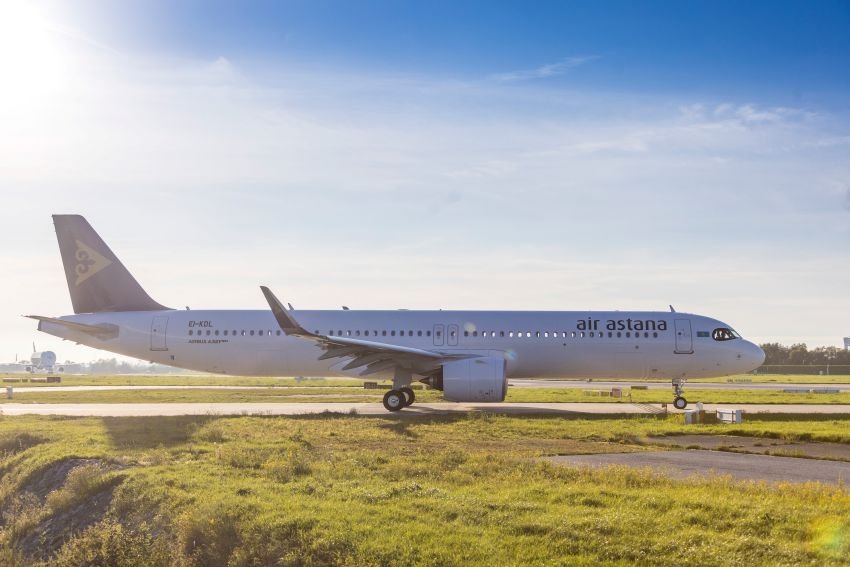
Astana, 29th Sept 2026: Air Astana has opened bookings for a new seasonal service between Almaty and Langkawi, Malaysia. The service will operate three times weekly on Tuesdays, Fridays and Sundays from 25 December 2026 to 27 March 2027, operating an Airbus A321LR. Flight schedule (local times): KC8167 Almaty 21:35 – Langkawi 08:10+1 | Flight time: 7h35m KC8168 Langkawi 09:40 – Almaty 14:40 | Flight time: 8hrs Return fares start at US$740 in Economy class and US$2,oo6 in Business class, including taxes and charges. Tickets can be booked at airastana.com, via the Air Astana mobile app and through accredited travel agents. Kazakh citizens can enter Malaysia visa-free for stays of up to 30 days. Langkawi is one of Malaysia’s most popular island destinations, located in the Andaman Sea and known for its white-sand beaches, ancient mangrove forests and mountainous landscape. The archipelago is recognised as a UNESCO Global Geopark. Its best-known attractions include Pantai Cenang beach, the Langkawi Cable Car and the Sky Bridge, which offers panoramic views over the island’s tropical rainforest.

Interview

“The Multi-Mission Powerhouse: Bob Gibbs on Why the Cessna SkyCourier is a Game-Changer for India”

As India’s regional connectivity needs continue to grow, Textron Aviation is positioning the Cessna SkyCourier as a flexible, lower-cost aircraft built for commercial, government and special mission operators. In an exclusive conversation with Aviation World Managing Editor Vishal Kashyap, Bob Gibbs, Vice President, Defense & Special Missions Sales, Textron Aviation, explains why the SkyCourier’s simple, durable design makes it well suited for India, Asia-Pacific and a wide range of mission needs. Excerpts: AW: Could you brief us the key capabilities of the Cessna SkyCourier, and share your strategy for expanding its footprint in regional markets? A:The Cessna SkyCourier is our newest clean-sheet aircraft, and it has been in production since 2022. We designed it to do a few things very well: keep operating costs low, deliver strong dispatch reliability and give operators an airplane that is simple to maintain and designed for quick loading, unloading and turnarounds. The flexibility is the key point. SkyCourier can operate as a dedicated freighter, a 19-seat passenger aircraft or a combi aircraft with passengers up front and cargo in the back. The seat tracks run the length of the cabin, so operators have a lot of freedom to configure the aircraft around the mission. Crew requirements depend on the country, configuration and operating rules. In markets where regulations allow single-pilot operations, SkyCourier can give operators additional flexibility, while the 19-passenger configuration requires two pilots. For multi-mission operations, that flexibility matters because a commercial operator, government agency or military customer can configure the aircraft around what it needs to accomplish that day. AW: Focusing on the technical side, what specific engines power the SkyCourier, and how robust are its and avionics in rugged operating environments? A:The SkyCourier is powered by two Pratt & Whitney Canada PT6A-65SC engines and McCauley aluminum propellers. That combination gives operators dependable performance, strong reliability and lower maintenance costs. The aircraft uses the Garmin G1000 NXi avionics suite. The cockpit was designed to feel familiar for pilots coming from aircraft such as the Cessna Caravan or King Air. That was intentional. We wanted the transition to be straightforward, especially for operators moving pilots into their first larger twin-engine turboprop. In markets where regulations allow single-pilot operations, operators can tailor passenger-and-cargo layouts to meet local requirements, keep utilization high and still match the aircraft to the route. That is why we offer that combi-configuration. If an operator faces a regulatory threshold at nine seats, it can reduce passenger count, add cargo and still complete the mission efficiently. AW:Is this flexibility the primary reason commercial operators in APAC are choosing this specific configuration for their fleets? A:Yes, flexibility is a major reason operators are interested in the aircraft. In Asia-Pacific, public operators include Air Marshall Islands and operators in the Philippines, with continued regional interest across Asia-Pacific. Those operators are looking for an aircraft that can move passengers, cargo or a mix of both without adding complexity. Some missions will use the combi setup. Others will be all passengers or all freight. The point is that the aircraft gives operators choices. They are not buying a single-purpose airplane; they are buying a platform they can put to work in several ways. AW: In terms of performance, what is the aircraft’s maximum range in nautical miles, and what is its service ceiling? The SkyCourier is not pressurized, so most operators typically fly it in the 10,000- to 12,000-foot range. The aircraft is certified up to 25,000 feet, which gives crews flexibility when terrain or weather requires it. For operations above 14,000 feet, passenger oxygen requirements apply, but most missions do not need to operate that high. The aircraft offers more than 900 nautical miles of range, depending on configuration. In day-to-day commercial service, the sweet spot is usually a one- to two-hour sector, or roughly 200 to 400 miles. It can go farther when needed, but the economics are especially strong on regional routes. AW: What kind of special missions or specialized roles can this aircraft be configured for? A:The short answer is almost anything. We continue to develop air ambulance configurations and related special-mission capabilities. We are also working on additional utility-mission options, including jump-door and related configurations, subject to program timing and customer requirements. For surveillance and security missions, we are looking at provisions for electro-optical/infrared cameras, radar pods, LiDAR and aerial survey equipment. Those kinds of missions are exactly where the aircraft’s cabin size, payload and endurance become valuable. So whether the need is maritime patrol, border surveillance, medical evacuation, mapping, cargo, personnel transport or disaster response, SkyCourier gives customers a practical platform they can adapt to the mission. AW: Regarding the emergency medical services configuration, how many stretchers can the aircraft accommodate at once, or is that layout customizable for the operator? A:Air medical configurations can be tailored around operator requirements, including one or two medical beds and standard life-support equipment such as oxygen, vacuum, defibrillators and stretchers. Operators can also adapt the layout for mission-specific medical equipment, depending on their requirements. We are also evaluating medical-evacuation layouts that could support disaster response or mass-casualty missions, depending on customer requirements and release approvals. That is different from a traditional air ambulance. It is more about moving several patients safely rather than providing full bedside care in flight. AW: Are you targeting this aircraft primarily at government and institutional clients rather than private or commercial buyers? A:No. Both markets are important. Commercial operators have been important early customers, and government interest continues to grow. Operators are using the aircraft for regional airline service, charter, air taxi and freight. Government interest is strong as well, but those programs tend to take longer. Military and government customers often need more time to validate the aircraft, define requirements and move through procurement. That is normal. The important point is that the same aircraft can support both commercial and government missions. AW: What is the current production and delivery status of the Cessna SkyCourier program? A:SkyCourier deliveries continue to grow, with aircraft operating across

Features, UAM/AAM

Pilot training for eVTOL, Electric aircraft, UAM and AAM aircraft

Pilot training for eVTOL aircraft should combine helicopter, airplane, and powered-lift competencies. By Amit Mittal   1: Regulatory qualification Training must begin with the applicable licensing framework: A commercial pilot qualification and instrument privileges will generally be important for passenger-carrying operations. FAA treats powered-lift as a distinct category and provides guidance for adding a powered-lift category rating and an aircraft-specific type rating under SFAR 120. EASA expects manned VTOL aircraft to require a type rating. Its guidance allows the syllabus to draw from airplane, helicopter, and powered-lift training, with a customized training-needs analysis for each aircraft type. Pilots should be trained and checked on the specific aircraft model, not merely on a generic “eVTOL” category, because flight-control logic, transition behavior, propulsion architecture, and emergency procedures vary widely. SAE standards (e.g., AS7062) support curriculum development for on-board and remote pilots, including simulation use. Training duration for type ratings is often around 4–6 weeks for experienced pilots (ground school + simulator + limited aircraft time). Aircraft systems knowledge The ground-school portion should cover: High-voltage electrical systems and electrical safety. Batteries or other energy-storage systems, including state of charge, state of function, degradation, thermal limits, and power availability. Distributed electric propulsion, lift/thrust units, inverters, motors, cooling systems, and associated monitoring. Flight-control computers, fly-by-wire logic, envelope protection, automation modes, and reversionary control. Navigation, communications, datalink, health-monitoring, and maintenance-alert systems. Weight, balance, center-of-gravity limits, and how passenger or battery loading changes performance. Energy management deserves special attention. Unlike conventional aircraft, eVTOL performance can depend strongly on battery aging, state of charge, cooling or heating, and the power demand profile during a flight. EASA specifically identifies these factors as relevant to performance assessment. Vertical flight and transition handling The central new skill is managing the aircraft across different flight regimes: Vertical takeoff and landing. Hover and low-speed maneuvering. Acceleration from hover into wing-borne or mixed flight. Deceleration and conversion back to vertical flight. Conventional airplane-like cruise, if the aircraft has that capability. Wind, turbulence, crosswind, and gust management during hover and transition. Recognition of unsafe or incomplete transitions. Use of aircraft-specific limits for tilt angle, airspeed, motor speed, power, and altitude. Pilots must understand not only the normal control technique but also how the aircraft behaves when the transition is delayed, interrupted, automated incorrectly, or affected by a failed propulsion unit. Automation and human factors Many eVTOLs will rely heavily on automation, so training should include: Automation mode awareness. Mode changes during takeoff, transition, approach, and landing. Manual flying with reduced automation. Detecting misleading or contradictory indications. Managing automation surprises and unexpected reversion. Workload management in a single-pilot cockpit. Crew resource management where two pilots, remote support, or ground personnel are involved. Passenger, vertiport, and air-traffic communications while monitoring complex systems. Decision-making when the aircraft’s software, energy reserves, weather, or landing-site availability changes. A pilot who can operate the automation but cannot safely take over manually is not adequately trained. Emergency and abnormal procedures This is likely to be one of the most important parts of the syllabus. Training should cover both immediate aircraft control and subsequent decision-making for: Loss of one or more lift/thrust units. Partial or total loss of electric power. Battery fire, thermal runaway warning, smoke, or overheating. Propulsion-control or inverter failures. Flight-control-computer failures. Sensor disagreement or unreliable airspeed/altitude data. Loss of communications or navigation. Landing-site unavailability. Low-energy or unexpected energy-consumption scenarios. Controlled emergency landing or autorotation-like procedures, where applicable. Forced landing in urban or congested environments. Windshear, turbulence, icing, heavy rain, and degraded visibility. Aborted takeoff, rejected landing, and go-around during transition. Training should include failures at the most safety-critical points: shortly after liftoff, during conversion, during final approach, and with minimum practical energy reserves. EASA’s VTOL compliance material highlights the need to consider critical failures for performance and the effects of wind, altitude, temperature, configuration, and energy-storage condition. 6: Simulator-based training High-fidelity simulation should be central rather than supplementary. It should reproduce: The cockpit displays and control laws. Vertical, transition, and cruise modes. Realistic battery and propulsion behavior. Wind, weather, traffic, and vertiport environments. Normal and abnormal automation behavior. Failures that are too dangerous or impractical to rehearse in the aircraft. Different passenger, payload, temperature, and state-of-charge conditions. Night and instrument operations, if authorized. A strong program should use scenario-based and competency-based training rather than relying only on memorized procedures. Pilots should demonstrate that they can maintain aircraft control, diagnose the problem, select a safe landing option, communicate effectively, and manage energy under pressure. Performance and operational planning Pilots need deeper performance-planning skills than a simple battery percentage check. Training should address: Takeoff and landing performance. Hover ceiling and out-of-ground-effect performance. Density altitude and temperature effects. Wind direction and strength. Weight and center-of-gravity effects. Energy required for each flight segment. Reserve policy and diversion planning. Battery degradation and uncertainty in predicted range. Vertiport limitations and alternate landing sites. Obstacle clearance and downwash considerations. Noise-sensitive areas and urban operating constraints. Performance planning should use approved aircraft data and operational limitations, not generalized range estimates. Instrument, weather, and airspace operations For commercial air-taxi or shuttle operations, training should include: Instrument procedures and approach profiles. Operations in controlled and uncontrolled airspace. Traffic avoidance and conflict management. Integration with helicopters, airplanes, drones, and conventional air-traffic systems. Vertiport arrival, departure, and surface procedures. Low-visibility and night operations. Weather avoidance and changing micro-weather around buildings. Contingency routing when a vertiport is closed or unavailable. Communication with air traffic control and operations-control centers. Urban operations require particular discipline because the pilot may have limited options for a conventional runway or open-area forced landing. Practical aircraft experience Simulator training cannot replace all aircraft experience. Practical training should progressively include: Aircraft familiarization and cockpit procedures. Instructor-led hover, takeoff, landing, and transition flights. Demonstration of normal and abnormal procedures. Supervised solo or line-oriented flight, where regulations permit. Operations with representative passenger loads and environmental conditions. Supervised operating experience with an appropriately qualified pilot. A formal skill test and aircraft-specific proficiency check. The balance between simulator and aircraft time should be

Top Stories

SkyPulse-HAL signs MoU,to establish domestic helicopter leasing ecosystem through GIFT City

New Delhi, 26th Sept 2026: GIFT City–based aircraft leasing platform SkyPulse Solutions IFSC has signed a Memorandum of Understanding with Hindustan Aeronautics Limited (HAL) to establish a domestic helicopter acquisition, leasing, and lifecycle-support ecosystem in India. Under the initial agreement, SkyPulse plans to procure up to 30 HAL-manufactured helicopters in phases. The fleet will comprise Next-Generation Dhruv (Dhruv-NG) twin-engine and single-engine platforms, designed for deployment across a wide range of commercial and government missions. Onshoring Aviation Finance via GIFT City A core element of the partnership is its financing structure, anchored in Gujarat International Finance Tec-City (GIFT City). By utilizing the International Financial Services Centre (IFSC) framework, SkyPulse aims to offer localized operating leases and asset management services tailored to domestic helicopter operators. Expanding Civil Aviation Capabilities The partnership aims to expand the footprint of domestically produced helicopters into high-demand civil and utility sectors, including: Helicopter Emergency Medical Services (HEMS) and air ambulance operations. Search and rescue (SAR) and rapid disaster response missions. Infrastructure support, tourism, and last-mile regional air connectivity. Statement from Mr. Gagan Jacobs Director, SkyPulse Solutions IFSC Private Limited: This MoU marks a defining milestone for SkyPulse and for the evolution of India’s civil helicopter ecosystem. Our vision is not simply to acquire and lease helicopters; it is to build an integrated, commercially sustainable helicopter ecosystem that brings together indigenous manufacturing, innovative aviation finance, leasing, asset management, lifecycle support and mission-ready operations. By combining HAL’s world-class indigenous aerospace capabilities with SkyPulse’s platform at GIFT City, we aim to create a scalable model through which Indian-manufactured helicopters can be deployed where they are needed most — from HEMS and air ambulance services to disaster response, search and rescue, regional connectivity, infrastructure and other critical missions. The proposed 30-helicopter programme is an important first step in this journey. Our ambition is to develop a long-term platform that supports the growth of India’s helicopter industry, strengthens domestic capabilities and creates new opportunities for financing, leasing, MRO, training and mission support. For SkyPulse, this is about more than aircraft. It is about building the financial and operational infrastructure around Indian helicopters and creating a model that can scale across India and, over time, international markets. We are proud to partner with HAL in this endeavour and look forward to translating this framework into tangible programmes that contribute to Atmanirbhar Bharat, Make in India and the expansion of India’s civil aviation ecosystem.

RCS

Air Ayodhya receives NOC from MoCA, set to operate under UDAN in Uttar Pradesh

Noida, 25th September 2026: Megamax Aviation Private Limited has received the No Objection Certificate (NOC) from the Ministry of Civil Aviation, Government of India, for Air Ayodhya, its regional airline to be operated under the Regional Connectivity Scheme – UDAN. The NOC is the first key regulatory milestone for the airline. Air Ayodhya will now begin the certification process  with the Directorate General of Civil Aviation (DGCA) for its Air Operator Certificate (AOC), after which commercial operations will commence. Air Ayodhya will focus on Uttar Pradesh. It aims to link tier-2 and tier-3 towns, pilgrimage centres and tourism destinations with each other and with major hubs. The airline will start operations with brand-new Cessna Grand Caravan EX aircraft, the first scheduled for delivery in December 2026. As routes mature and demand builds, it plans to induct 19-seater aircraft, followed by larger turboprops on high-demand sectors. Speaking on the development, Rajesh Kumar Singh, Chairman and Managing Director, Megamax Group, said: “Receiving the NOC is an important step in our journey to make air travel a practical choice for people in Uttar Pradesh’s smaller towns. Many of these places have airports or airstrips but no scheduled flights. Air Ayodhya is built to change that, in the true spirit of UDAN. We are grateful to the Ministry of Civil Aviation and the Government of Uttar Pradesh for their support, and we look forward to working closely with DGCA as we prepare for operations.”

2026, Cargo

AISATS Multi Modal Cargo Hub Capacity to Double in the Winter Schedule

Delhi, 25th September 2026: Air India SATS Airport Services (AISATS) will double its operational capacity at the Multi Modal Cargo Hub (MMCH) at Noida International Airport during the upcoming winter schedule. The facility commenced domestic cargo operations in June 2026 and is currently handling shipments including electronics, auto parts, agricultural produce, perishables and e-commerce cargo. AISATS participated in the 4th edition of the UP International Trade Fair to highlight the potential of the MMCH as an integrated cargo and logistics gateway for Uttar Pradesh, supporting the growth and economic potential of the state. According to the Federation of Indian Export Organisations (FIEO), Uttar Pradesh is the 5th largest exporter in India and the top exporter among landlocked states. Further, Gautam Buddha Nagar emerged as Uttar Pradesh’s leading exporting district in FY 2025-26, accounting for nearly half of the state’s total exports, with exports valued at approximately ₹97,703 crore. Spread across 87 acres, the AISATS MMCH comprises a 30-acre Integrated Cargo Terminal (ICT) and a 57-acre Integrated Warehousing and Logistics Zone (IWLZ). The facility brings cargo handling, warehousing, trucking and digital cargo management capabilities together within a single ecosystem, enabling more streamlined movement of goods. It is among India’s most ambitious and future-ready logistics infrastructure projects and will support the country’s rapidly growing logistics and supply chain needs while strengthening trade connectivity across the country and with global markets. According to this year’s UP state economy survey report, Uttar Pradesh’s economy has more than doubled in eight years, surpassing Rs 30.25 lakh crore. Per capita income has also doubled. The state’s contribution to the national economy has grown to 9.1 per cent in 2024-25 in which agriculture and allied services contributed 25.8 per cent . The growing international participation at the trade fair highlighted the potential for new trade corridors from Uttar Pradesh, with Japan, Vietnam, Russia, Singapore and Austria participating as partner countries this year. The state has established export markets across the US, UK, UAE, Germany, and South and Southeast Asia. As international cargo operations commence from Noida International Airport, the MMCH is positioned to support stronger connections between the state’s production centres and global markets. The facility is expected to set new benchmarks and standards for the air cargo industry in India, empowering businesses to thrive and strengthen their presence in global trade. The MMCH cargo facility in Noida will support Uttar Pradesh’s industrial and manufacturing clusters by creating new opportunities and enabling more efficient access to domestic and international markets.

Top Stories

Philippine Airlines to start direct flights to Delhi & Mumbai from Manila

Manila, 25th Sept. 2026: Philippine Airlines (PAL) plans to expand travel options from India with three weekly non-stop flights from Delhi to Manila and its first-ever Mumbai–Manila service with four weekly flights beginning December 2026, subject to Indian Government approval. The new routes will give Indian travelers direct access to the Philippines and convenient onward connections through PAL’s Manila hub to destinations across Southeast Asia,North America, Australia and North Asia. “We look forward to welcoming more Indian travelers aboard Philippine Airlines and introducing them to the Philippines through our signature Filipino hospitality,” said PAL President Richard Nuttall. “Through Manila, they will also gain access to PAL’s wider network of destinations across Asia, North America and Australia.” Flights from Delhi to Manila will operate as PR643 and will depart every Tuesday, Thursday and Saturday at 8:15 AM and arrive at 5:00 PM. Meanwhile, the Manila–Delhi flight, PR642, will leave Manila every Monday, Wednesday and Friday at 10:40 PM, reaching Delhi at 3:00 AM the following day. From Mumbai, PR647 will depart for Manila every Monday, Wednesday, Friday and Sunday at 7:15 AM and arrive at 5:00 PM. Manila–Mumbai flights will operate as PR646 every Tuesday, Thursday, Saturday and Sunday, departing at 10:40 PM and arriving at 3:05 AM the following day. All times are local. PAL will operate both routes using its 168-seat Airbus A321neo aircraft, featuring 12 lieflat Business Class seats and 156 Economy Class seats. Through Manila, travelers arriving from Delhi and Mumbai can connect to Philippine destinations including Cebu, Bacolod, Cagayan de Oro, Iloilo and Davao. They will also have onward options to international destinations including Los Angeles, Vancouver, Honolulu, Sydney, Brisbane, Perth, Melbourne, Tokyo Haneda and Hong Kong. Indian nationals traveling to the Philippines for tourism or business may enter the country visa-free for up to 14 days, subject to applicable entry requirements. The new Delhi and Mumbai services reinforce PAL’s role as the Philippine flag carrier— strengthening ties between India and the Philippines while connecting both countries to the world.

2026, Tourism

Emirates Expands Into Medical Tourism with MTA Partnership

DUBAI, September 17, 2026: Emirates has signed a Memorandum of Understanding with the Medical Tourism Association (MTA) signalling a focused push to grow the airline’s footprint in one of the fastest-growing verticals in international travel: medical tourism. The agreement, signed on the sidelines of ATM 2026, reflects Emirates’ strategy of going beyond traditional leisure and corporate travel to build structured, long-term relationships with an organisation that sits at the centre of how people travel for medical purposes. Long-term demand for healthcare travel is robust and with an affluent traveller profile. Combined with Dubai’s position as a leading healthcare, wellness and medical tourism hub and Emirates’ network of close to 140 destinations, this creates a natural fit and a platform for sustained growth for both organisations. Adnan Kazim, Emirates’ Deputy President and Chief Commercial Officer said: “Healthcare is among the most important reasons people travel internationally and is growing significantly. Our newly established partnership with MTA positions Emirates where premium demand is heading, and our network and superior products both onboard and on the ground provide a natural platform to serve these travellers. The insights we gain from working with MTA will also help us develop product propositions that are genuinely tailored to how these travellers plan, book and experience their journeys.” Jonathan Edelheit, CEO and Founder of Medical Tourism Association said: “Hospitals and clinics have spent years trying to reach international patients one relationship at a time. What changes with this partnership is that the demand now has a path, from a global airline to an accredited provider, through Better by MTA. The providers who meet the standard will be the ones that path leads to.” Medical Tourism Association: an airline first Emirates’ partnership with the Medical Tourism Association (MTA), the world’s leading non-profit body for the medical tourism industry, aims to develop a structured approach to medical, wellness and longevity travel as a strategic new customer segment for the airline. Emirates is partnering with MTA as the preferred airline for international medical and wellness travellers, combining the airline’s global network with Dubai’s standing as a leading healthcare and medical tourism hub. As MTA’s Airline partner, the aim is to identify key markets and medical travel corridors, particularly across Africa, Asia and the Middle East, and develop tailored travel solutions as well as an enhanced customer experience designed around the needs of patients, referring physicians, insurers and employers. Beyond commercially developing this new and evolving segment for the airline, the agreement will pursue raising international best practices and standards across the sector. Emirates and MTA will collaborate with providers accredited by Global Healthcare Accreditation (GHA), the sector’s accreditation body, on thought leadership, industry engagement, and shared market intelligence to better understand medical travel sector’s growth opportunities. The partnership also supports Emirates’ ambition to become the world’s first GHA-accredited airline. MTA’s global network reaches more than 500,000 healthcare providers, employers, insurers and industry leaders, and millions prospective medical and wellness travelers annually through its platforms, with direct government relationships across over 100 countries and integrates care coordination, travel and payments powered by Mastercard®. As part of the partnership, Emirates and MTA will explore opportunities to leverage the platform to help travellers identify accredited providers, coordinate treatment and travel arrangements, and pay securely across borders, creating a more seamless end-to-end medical travel experience.

2026, Tourism

ATM 2026 draws global tourism and travel community to Dubai, with buyers representing more than 115 countries

Dubai, 17 September 2026: The international travel and tourism community turned out in force at Arabian Travel Market (ATM) 2026, with decision-makers from the UAE, India, Saudi Arabia, Pakistan, United Kingdom, Egypt, Kuwait, Oman, Jordan, Türkiye, Bahrain, South Africa, Qatar, United States and China convening at Dubai World Trade Centre from 14–17 September. The 33rd edition of ATM drew regional and international markets to Dubai, with more than 55 destination stands and a strong cross-section of the travel and tourism industry, including tourism authorities, airlines and transport providers, hospitality brands, and technology companies throughout the four-day event. Representation from C-suite executives and procurement professionals ensured the far-reaching makeup of this year’s show reflected the high levels of industry confidence but also the event’s role as a convening force for the global travel and tourism community. His Excellency Issam Kazim, CEO of the Dubai Corporation for Tourism and Commerce Marketing (DCTCM), part of the Dubai Department of Economy and Tourism (DET), said: “Arabian Travel Market (ATM) 2026 once again provided an invaluable platform for the global travel and tourism industry to come together in Dubai, with strong participation from both local and international stakeholders reinforcing our city’s position as a safe, connected and accessible global destination. The event delivered opportunities to strengthen partnerships, share insights and identify new areas for collaboration across the sector, and the level of engagement reflected continued confidence in Dubai’s tourism proposition. We are proud to have been part of another successful edition of ATM and look forward to building on these relationships to support the sector’s long-term growth.” ATM 2026 provided the backdrop for an array of major announcements, spanning aviation, rail, hospitality, technology and more. The event saw the launch of Visit UAE, the host country’s first unified national tourism brand, which has been designed to position the nation as a single, integrated destination. The UAE Grand Tour – an online platform offering visitors the opportunity to embark on one continuous route through the seven emirates – was also unveiled at this year’s show. Emirates signed 11 memoranda of understanding (MoUs) during ATM 2026, strengthening connections with seven regional and global destinations, and bolstering partnerships across the fields of technology, marketing, products and packages, passenger experiences and more. Rotana unveiled the next phase of its regional growth strategy at ATM 2026, with a pipeline of 40 hotels and more than 8,300 keys under development. Ten of these projects are located in Saudi Arabia, highlighting the strategic importance of the KSA market to the hospitality giant. Etihad Airways and Etihad Rail signed an MoU at ATM 2026 to explore the creation of a seamless air-rail travel experience for the UAE, connecting visitors and residents to destinations across the country. As part of the agreement, the organisations will collaborate to simplify travel and cement Abu Dhabi’s position as a gateway to the wider UAE. Mastercard and Trip.com used ATM 2026 to showcase booking experiences powered by AI agent TripGenie. Developed in conjunction with Network International, the agentic platform has been designed to transform how consumers search, plan and pay for travel. In other news, a consortium comprising Air Arabia Group, Nesma Group and KUN Holding Company announced that a new airline would begin operating in Saudi Arabia on 20 September 2026, connecting the eastern city of Dammam with Riyadh, Madinah and Jeddah. Danielle Curtis, Regional Portfolio Director – UAE, RX Global, said: “ATM 2026 saw a typically robust showing from the Middle East’s travel and tourism community, and we were delighted to see such strong representation from international markets. The event played host to a string of important announcements from leaders in both the public and private sectors, and floorspace dedicated to technology doubled with the debut of the co-located ATM Travel Tech show.” Curtis added: “There was a tangible sense of confidence and optimism throughout this year’s edition, as exhibitors capitalised on opportunities to fill their Q4 sales pipelines. Preparations for ATM 2027 are already underway, and we cannot wait to explore fresh opportunities, partnerships and innovations with delegates when we welcome them back to Dubai in May.” Held under the theme Travel 2040: Driving New Frontiers Through Innovation and Technology, ATM 2026 examined how artificial intelligence, digital transformation, smart mobility and evolving traveller expectations are influencing the future of tourism. More than 90 sessions took place across Global Stage, Future Stage and Experience Hub during the course of the four-day event, in addition to 28 live showcases at the Tech & Innovation Hub – Demo Zone. This year also marked the introduction of ATM’s refreshed brand identity, which was visible across the event. The evolution reflects the show’s continued growth beyond the traditional exhibition floor into a year-round platform connecting communities, ideas and commercial opportunities across the global travel and tourism ecosystem. Now in its 33rd edition, Arabian Travel Market remains the leading international travel and tourism event in the Middle East, bringing together the global travel community to develop partnerships, share knowledge and explore new business opportunities across the sector.

FOREWORD

Dear Readers,

The Asia-Pacific aviation sector is expanding rapidly, driving growth far beyond aircraft numbers into crucial verticals like MRO, training, logistics, and aerospace supply chains. In this edition of Aviation World, we bring you exclusive interviews and features from across these sectors, offering direct industry insights from top global leadership.

Our cover story highlights Shveta Gupta, CEO of Divyanshi Aviation. Under her dynamic leadership, the company has established itself as one of India’s premier aerospace supply chain providers, partnering with leading global manufacturers. Our corporate feature delves into Divyanshi Aviation’s core operations, paired with an exclusive interview where Ms. Gupta candidly shares her professional journey and vision for the company’s future.

This issue also features exclusive conversations with prominent industry leaders, including:

  • Ron Nye, President of Avionics, Acron Aviation
  • Bob Gibbs, Vice President, Defense & Special Missions Sales, Textron Aviation
  • Sudhir S. Rajeshirke, President – Aerospace, Jubilant Enpro
  • Emmanuel Simon, Program Manager and Aerospace Leader, PHINIA
  • Arved von zur Muehlen, Chief Commercial Officer, Saudia Group
  • Simon Azar, Vice President, Civil Aviation, Asia Pacific, CAE

Each leader offers key perspectives on their organization’s strategic initiatives and their growing contributions to the Indian aviation and aerospace ecosystem. Additionally, you will find expert-authored analytical features offering deep dives into current sector trends.

Aviation World continues to expand its global footprint as an official media partner for major domestic and international aviation events. Our editorial team will be participating in several upcoming global forums, and we look forward to connecting with industry peers and exploring new collaborations.

We extend our sincere gratitude to our advertisers and partners whose continued support fuels our endeavor.

Happy Reading!

The Editorial Team

Aviation World

NEWSLETTER

Aviation World Magazine is India’s premier aviation magazine and has been actively supporting the development of the Indian and global civil aviation sector. We started our journey in year 2015 and its been 12 years now and the response and acceptance is really encouraging. Thanks to all our associates and writers who remained with us in our progressive journey.

We have started 2026 on a very positive note and we look forward to increase our footprints to more locations and induct many more new companies in our campaign.. Do write to us at : editor@aviationworld.in

Disclaimer

The contents published in this website are news covering Aviation, Aerospace and Defence sector. The objective is to provide news in informative form to keep our readers updated of the latest development. We also publish content featured in our print publication Aviation World.We try our best to avoid any factual errors or image displayed here but we ensure immediate corrections to any such thing brought to our notice that might have been published inadvertently. All images and contents are sourced from the relevant organisations media team.

Copyright ©2014 – 2026. AVIATION WORLD. All rights reserved.

Scroll to Top