Author name: Aviation World

Interviews

In Conversation with Dr. Satya Chakravarthy & Divya Manchanda of The ePlane Company

At the Farnborough International Airshow, Indian Advanced Air Mobility (AAM) pioneer The ePlane Company (Ubifly Technologies) highlighted its technology vision and announced key global and domestic strategic partnerships. These strategic agreements spanning advanced avionics, aerospace-grade fasteners, composite materials, electrical wiring, modular cabin interiors, and emergency healthcare operations are designed to solidify the e200X ecosystem as it advances through airworthiness certification and industrial production.   During the event, Vishal Kashyap, Managing Editor of Aviation World, sat down with Dr. Satya Chakravarthy(Founder & CEO) and Divya Manchanda (EVP of Business Partnerships & AAM Strategy) to discuss how ePlane is positioning itself to lead the urban air mobility revolution in India and across emerging markets. Excerpts from the conversation: Dr. Satya Chakravarthy, Founder & CEO Q: Could you elaborate on the MOUs signed at the Farnborough International Airshow? At the Farnborough International Airshow, we announced a major strategic partnership with Apollo Hospitals to create an integrated emergency response model combining both our e200X electric air ambulances for critical patient transport and medical delivery drones (via our subsidiary, Amber Wings) for rapid movement of blood products, organs, vaccines, and diagnostic samples. We also announced formalized agreements with several strategic supply chain partners: Azista Composites for composite materials supply. Hensoldt for advanced avionics systems. Ankit Fasteners for aviation-grade fasteners. SASMOS for wiring harnesses, including high-voltage design, application, and on-aircraft installation. AMS Heli for modular interiors and seating, which will support our initial air ambulance variant and allow seamless conversion to future air taxi and cargo configurations. Q: Regarding technology, what system configuration and technical architecture does ePlane employ?    Our aircraft uses a lift-plus-cruise configuration, which means it has separate propulsion systems for vertical take-off and landing, and for forward flight. For vertical flight, the aircraft uses dedicated lift rotors that operate similarly to a helicopter but are controlled using distributed electric propulsion, much like a drone. Once airborne, the aircraft transitions to forward flight using dedicated cruise propellers, allowing it to fly like a conventional fixed-wing aircraft. This architecture eliminates the need for complex tilting mechanisms found in tilt-rotor designs, resulting in a simpler, lighter, and more reliable system. From a safety perspective, the aircraft features a hex-rotor configuration for vertical lift. This provides redundancy, enabling the aircraft to continue safe flight even if one lift rotor or its associated motor or battery were to fail. Similarly, the aircraft is equipped with four forward propellers, allowing it to safely handle a one-engine-inoperative scenario during cruise flight. Another key differentiator is our proprietary Synergistic Lift technology. We have developed an in-house method of utilizing the vertical lift rotors during forward flight to improve the aerodynamic performance of the wings. This enables us to achieve a highly compact aircraft without compromising efficiency or performance. The result is an aircraft that can fly both slowly for safe urban operations and efficiently at higher speeds, maximizing the number of short trips that can be completed on a single battery charge. This innovation is protected by patents granted in approximately 15 jurisdictions worldwide, including the United States, underscoring the uniqueness and strength of our technology. Q: When can we expect the ePlane prototype to be operational?   Our full-scale PT-01 prototype is built and currently undergoing ground testing. We expect to initiate flight testing shortly before transitioning to our second prototype, PT-02. PT-01 serves as an unmanned experimental scale technology demonstrator. PT-02 will be our conforming aircraft, built specifically for the air ambulance configuration and to demonstrate compliance to certification requirements. We plan to build PT-03 as an identical sister ship to PT-02, allowing both aircraft to jointly accumulate certification flight hours through 2027. Toward the end of that period, we will introduce the air taxi variant, pursuing additional certification above the air ambulance baseline. Our target timeline is to obtain Type Certification by mid-2028. Q: What services will be offered during the first phase of operations?    Our initial go-to-market focus is the air ambulance variant. Urgent medical transport addresses a critical societal need in India, where traffic congestion frequently delays emergency responses, trauma care, cardiac treatment, and organ transit. By partnering with hospital networks like Apollo Hospitals integrating both electric air ambulances for patient transfer and delivery drones for urgent supplies, we aim to drastically lower operational costs and bring medical logistics down from hours to minutes, making air transport eligible for health insurance coverage. The second one is the air taxi variant which could cater to a lot of other use cases like for example not just doing the air taxi within urban areas but also airport shuttles which is again a time critical need, remote area access like hilly terrain and so on plus tourist attractions, pilgrim centers.  Q: This sector is still at a very nascent stage and requires lots of planning and infrastructure. How do you  assess such situations? One of the key differentiators of our aircraft is its exceptionally compact design, which sets it apart from many other eVTOLs being developed globally. Our proprietary Synergistic Lift technology enables the vertical lift rotors to work in conjunction with the wings during forward flight. This allows us to achieve a much smaller wingspan and overall footprint without compromising performance or efficiency. The compact form factor offers a significant operational advantage. It enables our aircraft to use many existing helipads, allowing us to leverage current infrastructure during the initial phase of deployment rather than waiting for an entirely new network of vertiports to be built. As the ecosystem evolves, we will develop dedicated vertiports optimized for our aircraft. Because of the aircraft’s compact footprint, these vertiports can be even smaller than conventional helipads, making them easier and more cost-effective to deploy in dense urban environments. By combining compatibility with existing helipad infrastructure and the ability to build smaller, purpose-designed vertiports in the future, we believe we can accelerate the adoption of Advanced Air Mobility Q: Is there any global affiliation required as well for operations?   There are two aspects to this. First, the

Top Stories

Pawan Hans signs MoU with Norway’s Noemi Aerospace

New Delhi,6th August 2026: Pawan Hans Limited (PHL), a Government of India enterprise under the Ministry of Civil Aviation, today signed a Non-Binding Memorandum of Understanding (MoU) with Noemi Aerospace (Elfly AS), Norway to explore opportunities for collaboration in next-generation sustainable aviation technologies, including electric seaplane solutions. The MoU was signed in the presence of Minister of Civil Aviation Ram Mohan Naidu Kinjarapu and Secretary, Ministry of Civil Aviation, Samir Kumar Sinha. The agreement was signed by Sunil Kumar Nagdawne, Chairman & Managing Director, Pawan Hans Limited, and Eric François Lithun, Chief Executive Officer, Noemi Aerospace (Elfly AS), Norway. MoU Framework The proposed collaboration seeks to establish a framework for exploring potential cooperation in the areas like  Electric seaplane technologies, Skill development and capacity building, Technical knowledge sharing and workshops , Feasibility studies. The initiative aligns with the Government of India’s vision of promoting regional connectivity, green aviation, innovation-led growth, island connectivity and emerging aviation technologies. The Minister said, “This collaboration reflects our broader vision of encouraging strengthening indigenous capabilities and exploring emerging technologies in the civil aviation sector. Our vision is not limited to operating seaplanes in India; we also want to build them in India guided by Prime Minister Narendra Modi’s Make in India vision. Further the Union Budget 2026 strongly puts forward the government’s vision for Seaplane promotion. It proposes to give incentives to indigenize manufacturing of seaplanes. A Seaplane VGF Scheme will be also be introduced to provide support for operations. If we combine global technology partnerships with Indian manufacturing capability, then we can cater to the local and regional demand for Seaplanes.” The Minister further stated, “Over the last two years, the Government of India has taken several concrete steps to promote seaplanes in the country. We launched dedicated Seaplane Operations Guidelines, simplified the regulatory framework and also conducted a demonstration flight across the country to encourage the stakeholders.” Noemi Aerospace (Elfly AS), headquartered in Bergen, Norway, is engaged in the development of next-generation electric seaplane technology and is supported by funding from the Government of Norway for its development programme. The MoU is exploratory in nature and does not involve any financial commitment, procurement commitment, investment obligation or exclusive arrangement. Any future collaboration arising from these discussions will be subject to separate definitive agreements and the requisite approvals of the competent authorities, in accordance with applicable laws and Government of India procedures. The initiative reflects Pawan Hans Limited’s continued commitment to innovation, operational excellence and supporting India’s evolving aviation ecosystem through strategic international partnerships.

Civil Aviation

MoCA awards LoI to establish 11 new FTO in India

New Delhi, 6th August 2026: In a significant step towards strengthening India’s pilot training ecosystem and supporting the country’s rapidly expanding civil aviation sector, Letters of Intent (LoIs) were awarded for the establishment of 11 new Flying Training Organisations (FTOs) across seven Airports Authority of India (AAI) airports by Union Minister of Civil Aviation, Kinjarapu Rammohan Naidu. Forty-one Flying Training Organisations are currently operating from 63 flying bases across the country. With the addition of these 11 new FTOs across seven AAI airports, India’s annual pilot training capacity is expected to increase by 750 cadets per year, providing a substantial boost to the domestic training ecosystem. Addressing the gathering, the minister said, “Under the visionary leadership of Prime Minister Shri Narendra Modi, India has emerged as one of the fastest-growing aviation markets in the world. Guided by the vision of Viksit Bharat and Aatmanirbhar Bharat, we are simultaneously expanding aviation infrastructure and building a future-ready workforce to support the sector’s long-term growth.” Highlighting the growth of the FTO ecosystem over the last two years, the Minister said, “India has already witnessed the establishment of six new FTOs over the last two years. During this period, the number of training aircraft available with Indian FTOs has increased from 324 to 385, resulting in a 25% rise in annual flying hours across the pilot training ecosystem. This is not just expansion in numbers; it is a clear improvement in training capacity and operational utilization.” Potential in the Aviation sector  The expansion has translated into a significant improvement in pilot output. The number of Commercial Pilot Licences (CPLs) issued increased from 1,347 in 2024 to 1,652 in 2025, the highest number issued in the last decade, with 2026 expected to witness a further increase. Ram Mohan Naidu added, “Indian airlines currently have 1,640 aircraft on order, and nearly 500 aircraft are expected to be inducted over the next five years. Meeting this unprecedented growth requires a strong domestic pipeline of trained aviation professionals. Our vision is clear—‘Train in India, Fly in India’.” The Minister also highlighted the Government’s policy reforms to encourage pilot training, including liberalisation of the FTO policy, abolition of airport royalties and rationalisation of land rentals. The process of CPL examination has also been digitized and students applying for their exams now have their applications easily managed with the Pariksha Portal generated computer number. Also, Indian pilots today are globally more competitive with India being second country to issue Electronic Licenses. DGCA FTO ranking Framework A major focus of the Minister’s address was the DGCA’s FTO Ranking Framework. The Minister stated, “The ranking framework was introduced to make pilot training more transparent, data-driven and attractive for young aspirants and their families. I am pleased to see that the framework is already yielding measurable improvements, with a reduction in Category ‘C’ FTOs and an increase in Category ‘B’ FTOs.  IGRUA has also achieved an average of 1,765 flying hours per aircraft annually over the last six months, significantly higher than the global benchmark of around 1,500 hours. The Academy has also recorded a 27% increase in revenue during FY 2025–26 and closed the year with a budget surplus after more than two decades of recurring deficits.” The minister also noted the progress made in indigenous trainer aircraft development through HANSA-3 (NG) and described it as an important step towards strengthening India’s self-reliant aviation training ecosystem. Concluding his address, the Minister said, “One word must remain at the centre of all our efforts—safety. We must strengthen instructor oversight, ensure rigorous adherence to standard operating procedures and build a deep-rooted safety culture across all FTOs.” During the program, Minister Ram Mohan Naidu also launched the FTO IFR Slot Booking App. To facilitate IFR training and ensure fair and optimum utilization of available airport infrastructure, the FTO IFR Slot Booking Mobile App has been developed. It provides FTOs with visibility of available IFR training slots across AAI airports and enables them to submit slot booking requests digitally. The ceremony was attended by Secretary, Ministry of Civil Aviation, Samir Kumar Sinha; Additional Secretary, Ministry of Civil Aviation, Puneet Kansal; Chairman, AAI, Vipin Kumar; and senior officials from the Ministry of Civil Aviation, DGCA, AAI, and representatives of the Flying Training Organizations from across the country. (Courtesy: PIB/MoCA)

Top Stories

Air India appoints Tewolde Gebremariam as its CEO & MD

Gurugram, 5th August 2026: The Board of Directors of Air India today announced the appointment of Tewolde Gebremariam as the airline’s Chief Executive Officer and Managing Director, succeeding Campbell Wilson. This executive transition marks a pivotal juncture in Air India’s transformation journey to become a world-class, leading global airline. The Board conducted a comprehensive search to identify the next leader for Air India, overseen by a dedicated Board committee. The committee rigorously evaluated internal as well as highly accomplished external candidates from across the world. The objective of the Board was to identify a leader with a proven record of managing mega-scale airline turnarounds, delivering operational excellence, fostering a strong culture of safety and service, and driving profitable expansion. Following an intensive evaluation process, the Board unanimously concluded that Gebremariam possesses the ideal combination of leadership, deep operational expertise, and strategic execution capability required for Air India’s next phase of growth. Tewolde Gebremariam Professional Journey Tewolde Gebremariam is widely recognized as one of the most successful aviation chief executives. During his decade-plus tenure as CEO of Ethiopian Airlines Group, he spearheaded a multi-billion-dollar expansion, transforming a regional carrier into Africa’s largest, most profitable, and decorated airline group—growing revenue by more than fourfold and fleet size nearly threefold. His unique strength lies in managing complex operational landscapes, driving cultural transformation, building competitive global hubs, and developing world-class MRO (Maintenance, Repair, and Overhaul) and aviation training infrastructure. As Air India shifts from its foundational turnaround phase into a high growth & profitable execution phase, Mr. Gebremariam brings crucial capabilities required for Air India’s next leg of journey. He has strong experience in expanding international long-haul networks and building world-class hub operations, an unrelenting commitment to safety standards, engineering quality, and operational reliability. He also has a track record of driving sustained profitability.  while navigating complex economic cycles and dynamic global markets together with a deep experience in workforce upskilling, talent development, and embedding a high-performance, customer-first service culture. Senior Leadership’s Comment N. Chandrasekaran, Chairman of Tata Sons and Air India, said: “On behalf of the Board, I am delighted to welcome Tewolde to Air India. Having completed the initial phase of stabilization, integration, and fleet commitments under Campbell’s guidance, Air India is now entering a critical execution and expansion era. Tewolde’s track record in building one of the world’s most efficient and profitable airline groups makes him uniquely suited to lead Air India. His operational expertise, commitment to safety, and vision for hub development will be instrumental as we establish Air India as a premier global carrier and a source of national pride.” Tewolde Gebremariam, Incoming CEO & Managing Director, said: “It is a profound honour to be entrusted with leading Air India at such a historic moment in its journey. Air India carries an incredible legacy, and the opportunity to build a world-class global airline that reflects India’s extraordinary economic potential is uniquely exciting. I look forward to working closely with Chairman Chandrasekaran, the Board, our employees, and all government and industry partners to deliver exceptional operational reliability, warm Indian hospitality, and sustained long-term growth.” With a solid foundation now in place, Air India enters its next era with clear strategic clarity, robust capital backing, and world-class leadership at the helm. The Board seemed fully confident that under Tewolde Gebremariam, Air India will realize its full potential as a premier global aviation power.

UAM/AAM

Sarla Aviation scales urban air mobility with Siemens Xcelerator

Bengaluru,5th August 2026: Siemens has announced that Sarla Aviation is using the Siemens Xcelerator portfolio of industry software to accelerate the development of its next-generation electric vertical take-off and landing (eVTOL) aircraft for urban air mobility. Based in Bengaluru, India, Sarla Aviation aims to transform urban transportation by making electric air taxis safe, sustainable and accessible. With plans to launch operations in Bengaluru by 2028, the company is building an advanced air mobility platform designed to make aerial commuting as convenient as premium ride-hailing services. To support its ambitious product roadmap, Sarla Aviation has adopted Siemens’ integrated digital thread, connecting product design, simulation and lifecycle management operations in a unified environment. By establishing a seamless flow of data across development disciplines, the company can reduce design iterations through early-stage simulation, improve collaboration across engineering teams and strengthen the traceability, verification and validation processes required for certification. “Our ambition is to make electric air mobility accessible at scale while maintaining the highest standards of safety and performance,” said Rakesh Gaonkar, Co-Founder & CTO, Sarla Aviation. “Working with Siemens and its integrated digital technologies supports our ability to innovate faster and move closer to delivering reliable and sustainable urban air transport.” “Digital transformation is critical to scaling new mobility solutions,” said Mathew Thomas, vice president and managing director for India, Siemens Digital Industries Software. “By adopting a comprehensive digital thread using the Siemens Xcelerator portfolio, companies like Sarla Aviation are able to help accelerate development, improve collaboration and support certification processes for next-generation aircraft.”

Top Stories

APATS 2026 announces key sessions across its programme

Bangkok,5th August 2026: With just a month to go until APATS 2026 in Bangkok, anticipation is building for the packed agenda covering every aspect of aviation training. From airline transformation and next-generation pilot training to immersive technologies, regulation and widening access to aviation careers, delegates will have the opportunity to hear directly from the organisations leading change across the Asia-Pacific region and beyond. Here are six standout sessions from across the APATS programme. 1. Opening Keynote: Thai Airways COO on Aviation’s Next Transformation The conference opens with a keynote from Captain Chawan Ratanawaraha, Chief Operating Officer and Chief Transformation Officer at Thai Airways, who will share how one of Asia’s leading carriers is preparing its workforce for the next phase of aviation transformation. Drawing on decades of operational and leadership experience, Captain Chawan will discuss the strategic challenges facing airlines as they balance growth, technology, sustainability and workforce development. 2. Pilot Stream: Operationalizing Next-Generation MPL Multi-Crew Pilot Licence (MPL) training has been discussed for years. This session focuses on how to make it work in practice. Experts from CAE and AirAsia will examine every stage of implementation, from designing a fully CBTA-compliant course and preparing instructors to managing grading data and measuring airline outcomes. The session concludes with the airline perspective on cadet readiness and why governance and collaboration between airlines, regulators and ATOs are essential to successful MPL programmes. For organisations considering MPL or looking to improve existing programmes, this promises practical lessons rather than theory. 3. Cabin Crew Stream: Modern Learning Technologies for Aviation Training Technology is changing not only how aviation professionals train but how they consume information. Nicholas Bolton, Technical Lead – Immersive & Emerging Technologies at Qantas, will demonstrate how virtual reality is supporting more immersive, practical learning experiences, while Joaquim Gonsalves from IndiGo explores podcasts as a scalable, flexible training tool for today’s mobile workforce. Together, the presentations highlight how digital learning can improve engagement without sacrificing operational relevance. 4. New for 2026: FSTDO Regulatory Stream Flight Simulation Training Device (FSTD) regulation is entering a period of unprecedented change, and  APATS 2026 is responding by launching an entirely new conference stream dedicated to FSTD regulatory oversight, qualification and harmonisation across the Asia-Pacific region. The FSTDO Regulatory stream will provide what organisers hope will become a permanent forum for dialogue between National Aviation Authorities (NAAs), Flight Simulation Training Device Operators (FSTDOs), airlines, training organisations and simulator manufacturers. The initiative comes as Europe introduces the new Flight Simulation Training Device Capability Signature (FCS) framework and the task-to-tool approach, and ICAO commences work on the update to ICAO doc 9625 Manual of Criteria for the Qualification of FSTDs, changes that are expected to significantly influence how simulators are qualified and credited for pilot training worldwide. 5. ATO Stream: Breaking Barriers in Ab Initio Training As airlines seek to expand the pilot pipeline, attracting and supporting the next generation of aviators has never been more important. This session explores three practical approaches to widening access and improving student success. Speakers examine how early Aviation English assessment can improve readiness for non-native English-speaking cadets, how universities are balancing technical competence with student wellbeing and regulatory requirements, and how innovative deferred-payment cadetship programmes could remove financial barriers while creating more sustainable pilot pipelines. It’s a session focused not simply on recruiting more pilots, but on helping more students successfully complete the journey. (This PR is sourced from APATS 2026 Page (www.halldale.com) and is published on as it is basis.)

Events

APATS 2026 to Open with Thai Airways COO on Aviation’s Next Transformation

Bangkok, 5th August 2026: Captain Chawan Ratanawaraha, Chief Operations Officer and Chief Transformation Officer of Thai Airways International, will deliver the opening keynote at APATS 2026, bringing a unique perspective on how one of Asia’s leading airlines is navigating operational transformation while maintaining safety, service quality and operational resilience. As the Asia Pacific aviation sector continues to face growing demand, fleet expansion and workforce pressures, Captain Chawan’s keynote will explore the operational realities behind leading change at a major international carrier. Captain Chawan combines decades of frontline flying experience with responsibility for some of Thai Airways’ most significant operational functions. An Airbus A380 captain and technical pilot, he played a central role in the airline’s A380 entry into service, leading training programmes and supporting the introduction of the aircraft into commercial operations. He has since moved into executive leadership, where he now serves as Chief Operations Officer, Chief Transformation Officer and Managing Director of Ground Services. His remit spans flight operations, ground handling and service delivery across Thai Airways’ global network, placing him at the centre of the airline’s efforts to modernise operations while maintaining the highest standards of safety and customer experience. For APATS delegates, Captain Chawan’s keynote offers an opportunity to hear how an airline balances operational excellence with strategic change at a time when the industry is embracing new technologies, evolving training methodologies and increasing operational complexity. Opening APATS 2026, Captain Chawan will set the tone for three days of discussion focused on the future of aviation training, operational readiness and the skills needed to support a rapidly evolving industry. (This PR is sourced from APATS 2026 Page (www.halldale.com) and is published on as it is basis.)

2026

AAPA releases June 2026 traffic results for Asia Pacific Airlines

Kuala Lumpur, 5th August 2026: The Association of Asia Pacific Airlines (AAPA) has released its preliminary June 2026 traffic figures which highlights softening in international passenger demand. In some regional markets, there is weaker traffic  reflected capacity reductions and higher airfares following the escalation in fuel prices, even as travel approached the peak mid-year season. Overall, Asia Pacific airlines carried an aggregate total of 30.5 million international passengers in June, representing a 1.1% decline compared to the same month last year. However, demand in revenue passenger kilometres (RPK) rose by 1.1% year-on-year, underscoring continued resilience in longer-haul travel. Growth in demand outpaced a marginal 0.3% expansion in available seat capacity, resulting in a 0.7 percentage point increase in the average international passenger load factor to 82.6% for the month. Meanwhile, international air cargo demand remained firm in June, supported in part by robust AI-related semiconductor and hardware shipments. For the month, demand, as measured in freight tonne kilometres (FTK), increased by 3.2% year-on-year, while offered freight capacity edged 0.2% higher, resulting in a 1.8 percentage point increase in the average international freight load factor to 62.6%. Commenting on the results, Mr. Wong Hong, Director General of AAPA, said, “Passenger traffic moderated in June as higher airfares and capacity adjustments in some regional markets weighed on demand. Even so, international travel has continued to hold up well, with Asia Pacific airlines carrying 192.5 million international passengers during the first half of 2026, 3.2% more than in the corresponding period last year.” “Meanwhile, international air cargo markets continued to perform well, with demand growing by 7.0% in the first half of the year, supported by continued demand for AI-related semiconductor shipments and other high-value, time-sensitive goods amid evolving trade dynamics.” Looking ahead, Mr. Wong Hong said, “Airlines continue to face challenging operating conditions, with persistent uncertainty surrounding the Middle East conflict contributing to fuel price volatility and continued pressure on operating costs. These headwinds, together with more moderate business confidence and heightened geopolitical and trade policy uncertainty, may temper growth in travel and air cargo markets in the coming months. Against this backdrop, carriers remain focused on maintaining network flexibility, exercising capacity discipline, and enhancing operational efficiency in response to evolving demand patterns.”

Business Aviation

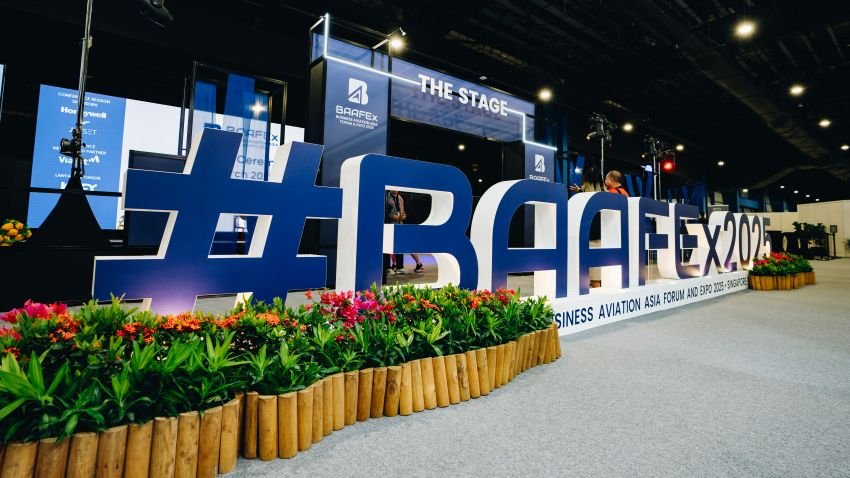
BAAFEx 2027 signals industry confidence as APAC Business Aviation gathers momentum

Singapore,4th August 2026:  Business Aviation Asia Forum & Expo 2027 (BAAFEx 2027) is attracting strong exhibitor interest from across the business aviation ecosystem, as the sector continues its growth trajectory across Asia Pacific. The second edition of BAAFEx will be held 22-24 March 2027 at Singapore’s Changi Exhibition Centre. BAAFEx 2027 will bring together business aviation stakeholders spanning aircraft manufacturing, aircraft ownership and management, charter operations, aviation fuel, flight support, inflight connectivity, cabin interiors, MRO, FBO, regulatory services, recruitment, specialised aviation solutions and more. BAAFEx 2027 is expected to welcome more than 3,000 industry professionals and trade visitors, and over 75 participating companies across exhibitions, sponsorships and a three-day forum programme. This represents a 50% increase in visitors and exhibitors as compared to BAAFEx 2025. Among the companies confirmed to participate are AEG Fuels, Amber Aviation, Boeing Business Jets and Lufthansa Technik. Leck Chet Lam, Managing Director of Experia Events, says: “The interest we are seeing for BAAFEx 2027 reflects the diversity and maturity of the business aviation ecosystem. Business aviation is not supported by one part of the industry alone. It depends on aircraft manufacturers, operators, regulators, airports and service providers working together to support the industry’s development. BAAFEx provides a focused platform for stakeholders to connect, exchange perspectives and drive the sector’s continued growth across the region.” This year’s forum further deepens the event’s value proposition, with sessions spanning the full business aviation landscape: market growth and fleet outlooks for Asia Pacific, sustainability and SAF adoption, infrastructure gaps and FBO development, connectivity advances, cabin interior trends, MRO and supply chain, and emerging opportunities in markets including Southeast Asia, China, India, and Australia. The three-day programme also features dedicated sessions on charter operations, advanced air mobility and women in business aviation. Aircraft Solutions: Serving Asia Pacific’s Demand for Range and Capability For aircraft manufacturers and solutions providers, Asia Pacific continues to represent a compelling long-term opportunity. As new high-net-worth individuals and corporate users enter the market, demand is shifting toward long-range, large-cabin aircraft capable of connecting the region directly to Europe and North America. New aircraft deliveries into Asia Pacific reached USD 2.24 billion in 2025, according to Asian Sky Group’s Business Jet Fleet Report YE 2025, with long range jets continuing to lead the market with a 34.9% revenue share. Joe Benson, President of Boeing Business Jets, says: “The Southeast Asian and Asia Pacific regions are extremely important for Boeing Business Jets as a growing number of customers look to the private jet space to meet their business travel demands. These customers look to productivity, comfort, convenience, range and reliability when making their purchasing decisions and Boeing Business Jets portfolio of commercial aircraft are ideally suited to meet these exacting demands. BAAFEx provides the perfect setting for us to engage our customers and partners in the region to better understand how business aviation is evolving in the region and how we can best meet those requirements.” Fuel Supply and Trip Support: The Operational Backbone Reliable fuel supply and operational resilience have never been more critical priorities for the business aviation industry. Recent geopolitical events have exposed structural vulnerabilities that operators across Asia Pacific are navigating in real time. As operators extend their reach across Asia Pacific’s diverse and complex markets, consistent access to aviation fuel and comprehensive trip support has become a critical enabler — and a growing area of focus for the industry. BAAFEx 2027’s forum programme will examine infrastructure and supply chain challenges affecting fuel availability at key gateways across the region, alongside pathways to sustainable aviation fuel adoption. Charter and Aircraft Management: Meeting the Demand for Flexibility Charter demand across Asia Pacific has evolved substantially. The sector is today increasingly considered a compelling alternative to ownership and a first point of contact with business aviation for a new generation of high-net-worth travellers. According to Asian Sky Group’s Charter Report 2025, 19 new-build aircraft were delivered to the Asia Pacific region as charter aircraft during the year, while 70 pre-owned aircraft joined the fleet, reflecting the continued depth of operator appetite for the charter market. The BAAFEx 2027 forum will devote a dedicated session to examining this shift, including the rise of on-demand platforms, membership-style access models, and the challenge of illegal and unregulated charter operations.

2026

Air India enters into codeshare partnership with Azerbaijan Airlines

New Delhi, 3rd August 2026: Air India and Azerbaijan Airlines have entered into a new codeshare partnership. The cooperation offers greater flexibility, enhanced connectivity, and more convenient travel options between Azerbaijan and India, as well as onward destinations through both airlines’ networks, while strengthening business, tourism, and cultural ties between the two countries. The new codeshare partnership enables Air India to place its ‘AI’ designator code on Azerbaijan Airlines-operated flights between India and Baku, thus opening Baku as a new destination for Air India customers, a market currently not served by Air India’s own metal. Under this codeshare, Air India’s ‘AI’ code will be applied to Azerbaijan Airlines daily flights operating between Delhi and Baku, and between Mumbai and Baku. Customers from Delhi, Mumbai, and beyond can now travel conveniently to Baku with an Air India ticket, on a flight bearing an Air India flight number, operated by Azerbaijan Airlines. The codeshare agreement builds on an existing interline agreement between the two carriers, which allows customers of both airlines to travel seamlessly on a single itinerary that combines flights operated by the two airlines. For instance, a passenger travelling from Bangkok can fly Air India to Delhi and connect onward to Baku on an Azerbaijan Airlines service with one itinerary, seamlessly. Nipun Aggarwal, Chief Commercial Officer, Air India, said: “At Air India, we believe every corner of the world should be within reach of our customers. Partnerships like this one with Azerbaijan Airlines are central to that vision; they allow us to extend our network beyond the destinations we fly to ourselves. Through this codeshare, our customers travelling to Baku will enjoy convenience and reliability from booking their ticket to check-in and touchdown. This is part of a broader effort to keep strengthening connectivity between India and the rest of the world.” Jamil Manizade, Chief Commercial Officer, Azerbaijan Airlines, said: “India is one of the world’s fastest-growing aviation markets and an increasingly important destination for both business and leisure travel. Our partnership with Air India is an important step in expanding Azerbaijan Airlines’ international connectivity through strategic partnerships. By bringing together the strengths of our networks, we are offering passengers greater choice, enhanced connectivity and a more seamless travel experience between Azerbaijan, India and beyond.” Since its privatisation in 2022, Air India has significantly expanded its global alliance network. Today, the airline maintains 26 codeshare partnerships and more than 120 interline agreements with leading carriers worldwide, providing seamless access for Air India customers to over 1,000 destinations globally.

FOREWORD

Dear Readers,


Welcome to the latest edition of Aviation World. This is an incredibly significant issue for us, perfectly timed to align with several prominent aviation events unfolding across the globe.


Chief among them is the Farnborough International Airshow, taking place from July 20th to 24th, 2026, in Hampshire, United Kingdom. Ranked as one of the world’s premier events for aviation, aerospace, and defense, this year’s airshow arrives at a crucial moment. Against a backdrop of geopolitical turbulence, Farnborough provides an invaluable platform to engage with global leaders and gain firsthand perspectives on the future of the industry. Inside, you will find our comprehensive curtain-raiser report focusing on the show’s core themes, as well as the highly anticipated static and aerobatic aircraft displays.


On our front cover, we are proud to feature Capt. Vaibhav Goutham Suresh, Director of the School of Aviation, Logistics and Tourism Management (SALTM) at Galgotias University. In an exclusive interview, Capt. Suresh highlights how SALTM bridges the gap between academia and the runway, delivering a comprehensive curriculum that ensures graduates are industry-ready from day one. Complementing this, our special feature on SALTM dives deeper into how the institution maintains world-class academic standards and a cutting-edge learning environment.


We are also privileged to bring you exclusive insights from a stellar lineup of industry trailblazers in this edition, including:

  • Robin Glover-Faure, Chief Customer Officer of Acron Aviation
  • Karim Makhlouf, CCO of Royal Jordanian Airlines
  • Pallavi Joshi & Vimal Priya, the leadership powerhouse behind AirFleet Managers &Aviatrics Global
  • Wg. Cdr. Prem Kumar Garg (Retd.), CEO of IndiaOne Air

Each shares a detailed perspective on driving innovation, navigating current market dynamics, and establishing progressive frontiers within their respective sectors.


Beyond these highlights, this issue is packed with curated features and analytical pieces designed to keep you informed and inspired.


Finally, we extend our heartfelt gratitude to our esteemed advertisers and partners. Your unwavering support empowers us in our ongoing endeavor to make Aviation World a truly world-class publication with global reach and recognition.


Happy Reading!


The Editorial Team


Aviation World

NEWSLETTER

Aviation World Magazine is India’s premier aviation magazine and has been actively supporting the development of the Indian and global civil aviation sector. We started our journey in year 2015 and its been 12 years now and the response and acceptance is really encouraging. Thanks to all our associates and writers who remained with us in our progressive journey.

We have started 2026 on a very positive note and we look forward to increase our footprints to more locations and induct many more new companies in our campaign.. Do write to us at : editor@aviationworld.in

Disclaimer

The contents published in this website are news covering Aviation, Aerospace and Defence sector. The objective is to provide news in informative form to keep our readers updated of the latest development. We also publish content featured in our print publication Aviation World.We try our best to avoid any factual errors or image displayed here but we ensure immediate corrections to any such thing brought to our notice that might have been published inadvertently. All images and contents are sourced from the relevant organisations media team.

Copyright ©2014 – 2026. AVIATION WORLD. All rights reserved.

Scroll to Top