
Author name: Aviation World

Features

Why Time Is Becoming Private Aviation’s Most Valuable Luxury

Drawing on European Business Aviation Association data and practical travel scenarios, Luca Zinnemann, Team Leader, Private & Commercial Jets DACH at Chapman Freeborn, examines why companies are increasingly evaluating private aviation not only in terms of comfort, but also as a time-management and logistics solution. The article explores the value of regional airport access, multi-stop itineraries and greater control over door-to-door journey times A meeting lasting just a few hours can sometimes require two days of travel. A limited flight schedule may mean leaving the previous evening, connecting through a major hub or completing a long ground transfer after landing. For business travellers, these additional hours can carry a cost that extends well beyond accommodation and airfare. This is changing how some companies assess private aviation. Comfort, privacy and exclusivity remain relevant, but the most valuable benefit may be something less visible: greater control over time. According to the European Business Aviation Association, business aviation serves more than 1,500 airports across Europe, around 1,000 of which have no scheduled airline service. The association estimates that business aviation passengers save an average of 127 minutes compared with the fastest available commercial alternative. The actual impact, however, is not measured by flight time alone. Time is measured from door to door When comparing private and scheduled aviation, the complete journey matters. A scheduled flight may reach the right country or nearest major city while still leaving several hours of onward travel. Connections, airport waiting times and overnight stays can turn a relatively short appointment into several days away from the business. The calculation becomes more significant when several employees are travelling together. In addition to the airfare, a company may need to consider accommodation, ground transport, lost working hours and the commercial consequences of arriving late. Luca Zinnemann, Team Leader, Private & Commercial Jets DACH at Chapman Freeborn, says this is gradually reflected in client priorities. “We increasingly see clients using private aviation primarily as a time management and logistics tool rather than for luxury or status,” he says. “Typical priorities include avoiding overnight stays, reaching regional airports closer to the final destination, combining several meetings in one day and having greater control over fixed arrival and departure times.” Regional access can change the entire itinerary Europe’s network of regional airports can make an important difference when meetings, manufacturing sites or project locations sit outside major cities. Where aircraft suitability, airport operating hours and local requirements allow, a charter can often operate closer to the final destination. This can reduce ground travel and make combinations of locations possible that would be difficult to accommodate using scheduled services. Zinnemann gives a representative example of how regional access can reshape a complex itinerary: “A typical example would be a team of around six passengers travelling to three regional destinations in Central and Eastern Europe over approximately two days. With scheduled airlines, the itinerary would have required connecting flights, longer transfers and potentially an additional overnight stay. The charter allowed the aircraft to remain with the group throughout the itinerary and operate according to the meeting schedule.” The value came not simply from flying privately, but from completing several appointments within a limited period and reducing the risk of one delayed connection affecting the remainder of the schedule. When arriving late has a commercial cost  Time becomes particularly valuable when a journey is linked to a customer meeting, site visit or operational deadline that cannot easily be moved. In another scenario, a team of around five passengers needed to reach a regional destination in the morning. The available commercial options required either a connecting flight or travel on the previous evening. A charter allowed the team to arrive in time for the meeting and return on the same day. “In such cases, the benefit is not simply convenience,” Zinnemann says. “Missing the meeting could mean losing a customer opportunity, delaying a project or requiring the entire team to repeat the journey.” The value of an hour therefore varies according to the purpose of the trip. A delay may have limited consequences for a flexible itinerary, but it can carry a much higher cost when a negotiation, project or customer relationship is involved. For some travellers, privacy adds another consideration. A team may need to review confidential information or prepare for a meeting during the journey. In these cases, productive travel time can form part of the wider value of the itinerary. A practical choice, not a universal solution Private aviation is not automatically the right option whenever time is limited. Scheduled services will usually remain the more practical and economical choice between well connected cities with frequent direct flights. The case for a charter becomes more relevant when regional access, multiple stops, several passengers or a fixed arrival deadline make the complete journey difficult to manage through scheduled services. This reflects a broader evolution in the meaning of luxury within private aviation. In the right circumstances, its most valuable benefit is not the aircraft itself, but greater control over time and what that time makes possible. (Views expressed are of the author) 

Features

How aviation careers take flight: give it one year, and it might last a lifetime

By Sandra Diaso,Head of Human Resources at KlasJet The reasons professionals are attracted to a career in aviation, while varied, are probably not that surprising. It is a sector brimming with dynamism and energy, promising international exposure, technology, travel, responsibility, and being part of something bigger than your individual role. A more complex question is this: why do professionals stay in aviation? It is a question that Sandra Diaso is well qualified to address. Starting out as a civil engineer, she has taken on various roles, including Training Manager, Crew Resources Specialist, and HR Business Partner. At present, she is Head of Human Resources at KlasJet, a private charter and ACMI operator. To anyone considering a career in aviation, Diaso’s advice is simple. “I would say: give aviation that first year everyone talks about. Just be careful, because it might turn into a career for life.” According to Diaso, multiple factors contribute to aviation becoming a life-long vocation. It offers opportunities beyond the ones we typically associate with the sector, and switching departments and roles is common. Careers can progress in a variety of ways beyond simply linear promotions – professionals learn new skills, work on new projects, and switch locations. And aviation companies are proactively working to ensure employees can keep on growing. Careers beyond technical and operational roles When we think of aviation careers, our minds inevitably turn to technical and operational roles – pilots, cabin crew and engineers. And there are certainly huge career opportunities in these roles, with Boeing forecasting that more than 2.4 million professionals will be needed in the next 20 years. But they cannot do their jobs without a wide range of supporting functions, from IT and finance, to HR and legal. “What’s really fascinating is that you don’t have to be a pilot or an engineer to carve out a career in aviation,” Diaso shares. “Airlines, private charter and ACMI operators, MRO providers, ground handlers, and other aviation companies are always on the lookout for talent in HR, finance, IT, commercial, legal, operations, and many other functions. Without these functions, the industry simply won’t function. And indeed, as millions more technical and operational professionals are hired, the importance of supporting functions is only going to increase.” Shifting departments is the norm in aviation One reason why careers in aviation often develop into lifelong journeys is that shifting departments is common. “Aviation is extremely interconnected,” Diaso says. “No department really operates in isolation. Operations, crew, maintenance, commercial, HR, finance, safety, and compliance constantly cross paths, so people naturally get exposure to areas far beyond their own job description. I think this creates curiosity. You start in one role, but through daily work you begin to understand another part of the business, meet the people behind it, and sometimes discover that your skills could be valuable there too.” In some cases, professionals switch lanes entirely, and Diaso counts this among the most interesting things about the aviation industry. “I find it remarkable how a ticketing agent can evolve into a compliance specialist, or how a cabin crew member might find themselves in HR. This trend is especially noticeable in larger aviation groups, which often combine everything from charter services, wet leasing and maintenance to ground handling, staffing, and training all in one place,” she explains. Career growth in aviation isn’t a straight line The interconnected character of the aviation industry opens up a multitude of internal opportunities for individuals to progress their careers. Crucially, this career growth is multi-faceted, and far more complex than simply promotions up a corporate ladder. “I don’t think there is a single answer anymore to the question of what career growth actually looks like inside aviation today. And that is actually an important change,” Diaso explains. Her own journey encompassed six different roles, ranging from civil engineering, through training and crew resources, to HR leadership. It perfectly illustrates the kind of winding path she describes. “Career growth does not necessarily mean promotion or a more prestigious title. For some people, it means taking on a leadership role, while for others it’s about gaining additional expertise, joining a new project, moving between different areas within aviation, or gaining international experience. In aviation, careers are rarely linear, and I see that as a strength of the industry, with learning and development underneath all of these opportunities,” Diaso comments. Proactively keeping employees in love with aviation “Aviation can attract people with its energy. Building an environment where they can grow is what turns that attraction into a career,” argues Diaso. In order to build this environment, it is up to aviation companies to proactively focus on employee welfare and growth. “The pace is high, responsibility is real, and change is constant. That can be exciting for a few years, but for someone to build a long-term career, there needs to be something beyond the excitement: opportunities to develop, take on bigger challenges, move between roles or markets, and feel that their experience is actually taking them somewhere,” adds Diaso. This is not necessarily straightforward in a context where today’s employees have a different set of priorities. “People’s expectations have demonstrably changed,” comments Diaso. “If we look back five or ten years, a solid salary, job stability, and a clear role might have sufficed. But today, people are demanding a lot more from their employers. They want flexibility, transparency, opportunities for growth, and a real say in what happens. Employees are eager to understand not just their tasks, but also the rationale behind decisions and the company’s future direction, and they’re much more open to questioning leadership, company culture, and traditional ways of doing things.” “I also notice a growing demand for personalized treatment,” she goes on. “People don’t want to be just a name on a roster. They expect leaders to recognize that various career stages and life circumstances call for different approaches.” This means that loyalty is no longer a given, but instead is something companies must consistently earn. To

2026

Bahrain International Airshow’s Eighth Edition Rescheduled to November 2028

Manama, Bahrain, 8th September 2026: The Supreme Organising Committee of the Bahrain International Airshow has announced that the eighth edition of the event, previously scheduled for 18–20 November 2026 at Sakhir Air Base, will now take place from 15 to 17 November 2028. The revised dates are intended to allow for broader international participation from visitors, exhibitors, delegations and industry partners, enabling them to take full advantage of the opportunities offered by an airshow renowned for its standing on the global stage. The Supreme Organising Committee said it looks forward to staging the eighth edition of the Bahrain International Airshow from 15 to 17 November 2028, creating the right conditions to attract wide international participation and to strengthen the presence of the aviation community in the Kingdom of Bahrain. “Preparations for the eighth edition are continuing in close coordination with stakeholders, partners and the international aerospace community,” the Committee said. “This will reinforce the airshow’s role in building partnerships, supporting business and international trade opportunities, and cementing the Kingdom of Bahrain’s position as a leading destination for specialised international events. We look forward to welcoming exhibitors, visitors, delegations and partners to the Kingdom of Bahrain in November 2028.” The Bahrain International Airshow was launched in 2010 and has since become an established fixture on the global aerospace calendar, drawing leading aviation and aerospace companies, senior government officials, military and civilian delegations, and industry specialists from around the world.

Top Stories

Centrum Air launches direct flight from Hyderabad to Tashkent

Hyderabad, 8th September 2026: Centrum Air of Uzbekistan has officially launched the direct flight between Hyderabad and Tashkent at an event in Hyderabad. It has the presence of senior representatives from Embassy of Uzbekistan, Centrum Air, Uzbekistan Tourism Committee, Aeroprime Group, leading travel agents, OTAs and other industry stakeholders. The new service is set to provide travellers from Hyderabad and the wider Telangana and South India market with enhanced access to Tashkent and onward travel opportunities across Uzbekistan and beyond, while creating greater opportunities for tourism, business and trade between the two markets. Speaking at the occasion, Adil Mirza, Head of Agents Division, Centrum Air, said: “The launch of our Hyderabad–Tashkent service marks an important milestone in Centrum Air’s international expansion and our commitment to the Indian market. Hyderabad is a dynamic and strategically important market with strong potential for both business and leisure travel. We are delighted to connect Hyderabad directly with Tashkent and offer travellers greater access to Uzbekistan and onward destinations. We look forward to building strong relationships with the travel trade and our partners in India as we continue to expand our presence in the country” Abhishek Goyal, Executive Director & CEO, Aeroprime Group, said: “The launch of direct Hyderabad–Tashkent connectivity marks another significant milestone in Centrum Air’s India growth story. With the launch of Hyderabad, Centrum Air will now operate seven weekly flights from India — five from Delhi and two from Hyderabad — achieved in less than a year of entering the Indian market. This rapid expansion reflects the airline’s strong confidence in the Indian market and the growing demand for connectivity between India and Central Asia. We are extremely proud to have contributed to this journey and to see Centrum Air reach this important milestone in such a short span.” The launch also highlighted the broader importance of India–Uzbekistan connectivity. H.E. the Ambassador of Uzbekistan addressed the gathering on the growing ties between India and Uzbekistan and the role of direct air connectivity in fostering tourism and trade between the two countries.    

2026

DAC clears capital acquisition proposals worth about Rs 1.10 lakh crore for the defence forces

New Delhi, 8th September 2026: The Defence Acquisition Council (DAC), under the chairmanship of Raksha Mantri Shri Rajnath Singh on September 07, 2026 accorded Acceptance of Necessity (AoN) i.e., in-principle administrative approval to various acquisition proposals of the Defence Forces at an estimated cost of about Rs 1,10,000 crore. For the Indian Army, approval was granted for the procurement of Chemical Biological Radiological and Nuclear (CBRN) Recce Vehicles, High Mobility Vehicles (HMV), Self-Propelled Mechanical Mine Layers (MML), Advanced Light Helicopters (ALHs), Trawl Tanks and Sarvatra Bridge System. The CBRN Recce Vehicles will be capable of detecting, identifying, monitoring and marking of areas contaminated with CBRN agents. The HMVs will enhance operational capabilities, logistic support and mobility in challenging terrains. The MMLs will achieve the desired operational capability in terms of fast and responsive minelaying in difficult terrains. The ALHs will execute complex missions across all terrains and operational situations for the Indian Army and the Indian Air Force. The Trawl Tanks and Bridge System will be utilised to provide composite crossings to fighting formations during operations in varied terrains. For the Indian Navy, AoN was accorded for the procurement of Arudhra Radars, Design & Development and subsequent procurement of Marine Gas Turbines (MGT). Arudhra Radar will replace the existing Air Route Surveillance Radars at various Naval Air Stations and MGT, a warship propulsion system, will reduce dependency on foreign vendors. For the Indian Air Force, approval was granted to various proposals to enhance the war-fighting capability of fighters, transports and helicopters. Approval was also accorded for procuring Ground-Based Multi-Purpose Jammer (GBMPJ) and installing Defence Forces Secure Access Card (DEFSAC) System. The GBMPJ will provide effective jamming against radars of adversaries and DEFSAC will replace existing paper based Identity Card/Passes/Permits with an interoperable Radio Frequency Identification-based smart cards system. Of the total AoNs accorded, approximately 98% of procurements will be made from the Indian Industry. (News Source: PIB) 

Defence

IAF’s Sarang Helicopter team reaches Egypt for the El Alamein International Airshow

Cairo, 7th Sept 2026: The Sarang Helicopter Display Team of Indian Air Force has reached Egypt to participate in the 2nd edition of the EI Alamein International Airshow, scheduled to be held from 08 to 10 September 2026 at EI Alamein International Airport. The IAF Sarang team is the world’s only five helicopter display team. The team will showcase precision, professionalism and flying skills through a series of meticulously choreographed displays. This marks another significant milestone in international engagements by the Indian Air Force reflecting growing defence and diplomatic ties between India and Egypt. Flying the indigenously designed and manufactured Advanced Light Helicopter (ALH) Dhruv, the Sarang team is renowned for its demanding formation manoeuvres close-proximity flying and synchronised aerial sequences. The display highlights not only the exceptional skill and discipline of its pilots but also the capabilities of India’s indigenous aerospace industry. The Sarang team will display its famous “Dolphin Leap” manoeuvre and also present a new manoeuvre called the Spot Stall Turn. The team’s participation will provide an opportunity for spectators and aviation enthusiasts from across the world to witness the versatility and agility of the ALH Dhruv while witnessing the bold spirit of the Indian Air Force. The El Alamein International Airshow brings together leading Air Forces as well as professionals in the aerospace, defense, and space sectors from around the world The Sarang display over Egyptian skies will add a distinctive dimension to the event, besides strengthening ties with other International teams from across the world. Aviation World is the official Media Partner of EI Alamein International Airshow 2026.

2026

India Has the Feedstock. The Challenge Is Collecting It

Used Cooking Oil Could Play a Critical Role in Meeting India’s Immediate SAF Mandate — A Key Issue at the 2nd India SAF Conclave & Awards 2026 New Delhi,Sept 5th,2026: As India moves from SAF policy to implementation, feedstock availability and mobilisation are emerging as critical to meeting the country’s Sustainable Aviation Fuel (SAF) ambitions. India generates an estimated 1.8–2.6 million tonnes of used cooking oil (UCO) annually, yet only around 110,000–156,000 tonnes—approximately 6%—is formally collected. India consumes approximately 29–30 million tonnes of edible oil each year, making UCO one of the country’s most immediately available domestic waste-based feedstocks for SAF. The Government’s indicative SAF blending targets for international flights are 1% in 2027, 2% in 2028 and 5% by 2030. A 5% blend would require approximately 0.4–0.5 million tonnes of SAF annually. While UCO cannot meet the entire long-term requirement, substantially improving its collection could make a meaningful contribution to near-term supply. The challenge is converting an available resource into verified, traceable and certifiable feedstock at scale. Formalising UCO collection could strengthen energy security, support the circular bioeconomy, prevent used oil from re-entering the food chain and create livelihoods across the collection ecosystem. A policy assessment has indicated potential annual import savings of Rs. 20,000–30,000 crore, industry value creation of Rs.10,000–20,000 crore and possible public-health savings of Rs.50,000–80,000 crore, subject to further techno-economic assessment. The SAF Association has proposed a Used Cooking Oil Extended Producer Responsibility (EPR) framework to the Ministry of Petroleum and Natural Gas, covering mandatory collection targets, EPR certificates linked to verified recovery, registration of collectors and aggregators, digital traceability and recognition of the last-mile collection workforce. The objective is to create a transparent supply chain from kitchen to collector, aggregator, refinery and certified SAF production. Industry Perspective at India SAF Conclave 2026 Rohit Kumar, Secretary General, SAF Association and CMAI, said: “India is not short of feedstock; it is short of the systems that can turn available feedstock into verified, sustainable and commercially viable SAF supply. Feedstock mobilisation must receive the same policy attention as technology, finance and airline offtake. We need to build the supply chain now, not after the mandate arrives.” Manish Marwaha, Founder & CEO, Byufuel, said: “India’s SAF programme will be shaped not only by technology, but by feedstock. The challenge is creating a credible proof and traceability layer—from the kitchen to the refinery—so that this under-utilised domestic resource can be reliably verified and unlocked for India’s SAF transition.” Byufuel collects UCO from food businesses across 70+ Indian cities and supplies it to refineries through certified supply chains supported by digital chain-of-custody systems. India’s SAF Opportunity: From Domestic Resource to Global Opportunity The 2nd India SAF Conclave & Awards 2026, under the theme “Powering the SAF Transition Together,” will connect Indian stakeholders with global expertise, technology, finance and markets, with discussions spanning feedstock mobilisation, SAF technologies, sustainability, airline offtake, project finance, CORSIA, certification and international partnerships. With its growing aviation market, diverse feedstock resources, refining capabilities and industrial base, India has the potential to become a major SAF market, producer and investment destination—turning domestic resources such as UCO into verified, scalable and internationally recognised SAF supply. 2nd India SAF Conclave & Awards 2026 28–29 September 2026 | Bharat Mandapam, New Delhi Theme: Powering the SAF Transition Together 25+ Countries | 1,000+ Delegates | 100+ Speakers Registration & Full Agenda: www.safassociation.com

Upcoming Events

Aero India 2027 – 16th Edition

Event Date: 8-12 February 2027 Organised By :Department of Defence Production, Ministry of Defence Venue: Air Force Station, Yelahanka,Bengaluru Aero India, Asia’s largest air show and one of the world’s premier aerospace and defence exhibitions, is all set to return with its 16th edition at Air Force Station, Yelahanka in Bengaluru, Karnataka from February 8 to 12, 2027. Organised by the Department of Defence Production, Ministry of Defence, the event will bring together leading global aerospace and defence companies, policymakers, technology experts, innovators, industry stakeholders and defence forces personnel on a common platform. Aero India has emerged as a flagship international event showcasing the nation’s growing capabilities in aerospace, defence manufacturing, emerging technologies and innovation. It provides a dynamic platform for business engagement, technology exchange, international cooperation and strategic dialogue, while highlighting India’s expanding defence industrial ecosystem and its growing role in the global aerospace and defence sector. The five-day event will feature a comprehensive exhibition and a range of business and strategic engagements, providing opportunities for industry-to-industry interactions, government-to-industry engagements, technology demonstrations and collaborations. It will also feature spectacular aerial displays by the Indian Air Force and participating international flying teams, offering visitors an opportunity to witness advanced aviation capabilities in action. A dedicated web-based portal has been developed for Aero India 2027 to facilitate seamless participation and provide comprehensive services for exhibitors as well as visitors. Online registration and booking of exhibition space will be facilitated through www.aeroindia.gov.in, with exhibitor registrations scheduled to commence from September 3, 2026. Aero India 2027 is expected to provide a significant impetus to India’s vision of Aatmanirbhar Bharat and its emergence as a trusted partner in the global defence and aerospace supply chain. The event will facilitate greater participation of Indian defence industries, including MSMEs and start-ups, while creating avenues for partnerships, investments, exports and technology collaboration.

Defence

Raksha Mantri holds bilateral talks with Belgium’s Defence Minister in New Delhi

New Delhi, September 4th 2026: Raksha Mantri Rajnath Singh held a bilateral meeting with the Minister of Defence and Foreign Trade of Belgium Theo Francken in New Delhi on September 03, 2026. During the interaction, the two sides reviewed the entire spectrum of defence and industrial cooperation. The two ministers agreed to expand bilateral ties through defence cooperation dialogue, high-level visits, training and capacity building. Both leaders also discussed issues of regional peace & security and acknowledged the need for maritime security collaboration in the Indo-Pacific. They reiterated that the partnership between India and Belgium is based on shared values of mutual trust & respect. The meeting was conducted on the sidelines of a meeting between Prime Minister Narendra Modi and the Prime Minister of Belgium Bart De Wever in New Delhi.

2026

Ramco Systems signs MoU with Safran Helicopter engines for seamless engine data integration

Chennai, September 04, 2026: Global aviation software provider Ramco Systems announced that it has signed a Memorandum of Understanding (MoU) with Safran Helicopter Engines, to collaborate on enabling seamless integration of Safran’s engine data with Ramco Aviation Software. Through this MoU, Ramco and Safran Helicopter Engines will work together to enable engine information post shop visits to flow directly from Safran into the Maintenance Information System (MIS) within Ramco Aviation Software, reducing manual data entry for helicopter operators and allowing them to focus more on keeping aircraft in service. The outcome of this collaboration will be the award by Safran Helicopter Engines of the EngineLife® Connect label, which identifies the best connectivity solutions compatible with its range of products and services. As part of the MoU, the companies will work on enabling engine configuration, usage metrics, and maintenance events to be automatically ingested into Ramco Aviation Software, improving data accuracy and consistency across maintenance operations. The partnership will focus on enabling: Engine data ready to use: Building the technical link to allow Safran’s engine information, including configuration, hours, and events, to be directly loaded into Ramco Aviation Software. A trusted data exchange:Defining joint business processes to ensure reliable and continuous both way data flow between Safran and Ramco. Better digital services for operators: Using improved data flow to strengthen the digital services provided by Safran to its customers. The collaboration will also include joint evaluation of data exchange formats and establishment of operational processes to ensure ongoing compatibility. For operators, the partnership is expected to reduce the time and effort required for engine data initialization within the MIS, while improving the structure, quality, and consistency of data supporting airworthiness and maintenance planning. Sam Jacob, Executive Vice President & SBU Head – Aviation, Aerospace and Defense, Ramco Systems, said, “With several of the world’s largest helicopter operators on our platform, Ramco sits at a unique intersection of the aviation MRO ecosystem — connecting OEMs and operators through a single digital backbone. We’re delighted to partner with a leader like Safran Helicopter Engines to enable this seamless digital exchange: Safran gains richer engine maintenance data to strengthen reliability, while operators receive OEM information directly into their systems, cutting manual work and improving productivity. Powered by AI and agentic automation, Ramco Aviation Software is built to make exactly this kind of connected, intelligent ecosystem possible.”

FOREWORD

Dear Readers,

The Asia-Pacific aviation sector is expanding rapidly, driving growth far beyond aircraft numbers into crucial verticals like MRO, training, logistics, and aerospace supply chains. In this edition of Aviation World, we bring you exclusive interviews and features from across these sectors, offering direct industry insights from top global leadership.

Our cover story highlights Shveta Gupta, CEO of Divyanshi Aviation. Under her dynamic leadership, the company has established itself as one of India’s premier aerospace supply chain providers, partnering with leading global manufacturers. Our corporate feature delves into Divyanshi Aviation’s core operations, paired with an exclusive interview where Ms. Gupta candidly shares her professional journey and vision for the company’s future.

This issue also features exclusive conversations with prominent industry leaders, including:

  • Ron Nye, President of Avionics, Acron Aviation
  • Bob Gibbs, Vice President, Defense & Special Missions Sales, Textron Aviation
  • Sudhir S. Rajeshirke, President – Aerospace, Jubilant Enpro
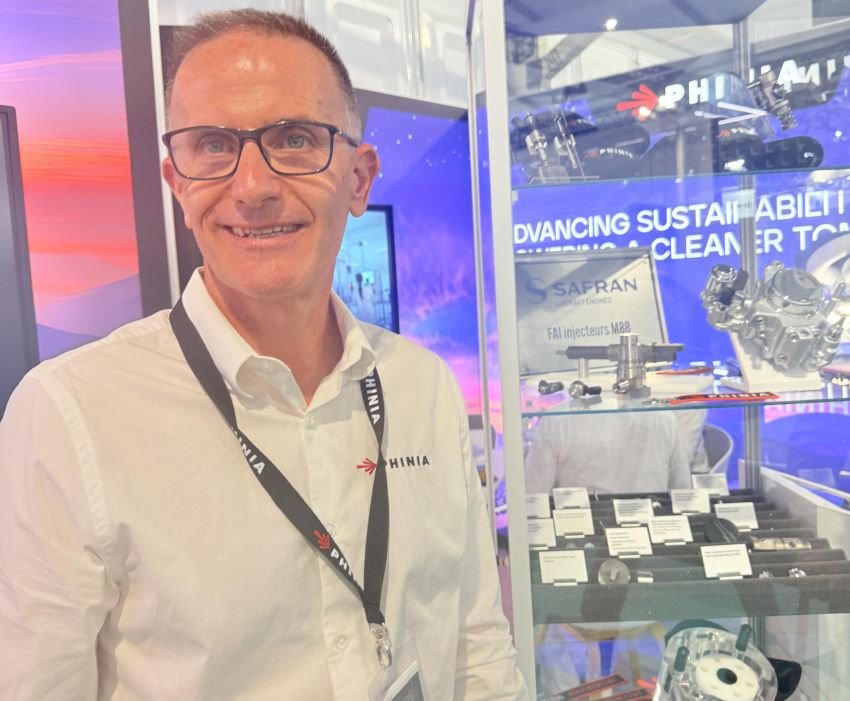
  • Emmanuel Simon, Program Manager and Aerospace Leader, PHINIA
  • Arved von zur Muehlen, Chief Commercial Officer, Saudia Group
  • Simon Azar, Vice President, Civil Aviation, Asia Pacific, CAE

Each leader offers key perspectives on their organization’s strategic initiatives and their growing contributions to the Indian aviation and aerospace ecosystem. Additionally, you will find expert-authored analytical features offering deep dives into current sector trends.

Aviation World continues to expand its global footprint as an official media partner for major domestic and international aviation events. Our editorial team will be participating in several upcoming global forums, and we look forward to connecting with industry peers and exploring new collaborations.

We extend our sincere gratitude to our advertisers and partners whose continued support fuels our endeavor.

Happy Reading!

The Editorial Team

Aviation World

NEWSLETTER

Aviation World Magazine is India’s premier aviation magazine and has been actively supporting the development of the Indian and global civil aviation sector. We started our journey in year 2015 and its been 12 years now and the response and acceptance is really encouraging. Thanks to all our associates and writers who remained with us in our progressive journey.

We have started 2026 on a very positive note and we look forward to increase our footprints to more locations and induct many more new companies in our campaign.. Do write to us at : editor@aviationworld.in

Disclaimer

The contents published in this website are news covering Aviation, Aerospace and Defence sector. The objective is to provide news in informative form to keep our readers updated of the latest development. We also publish content featured in our print publication Aviation World.We try our best to avoid any factual errors or image displayed here but we ensure immediate corrections to any such thing brought to our notice that might have been published inadvertently. All images and contents are sourced from the relevant organisations media team.

Copyright ©2014 – 2026. AVIATION WORLD. All rights reserved.

Scroll to Top