
Author name: Aviation World

2026

Thakur Institute of Aviation: Shaping the Future of Aviation Professionals in Mumbai

The aviation industry is one of the fastest-growing sectors in the world, creating exciting career opportunities for young professionals who aspire to work in airlines, airports, customer service, and aviation operations. With the increasing demand for skilled aviation personnel, choosing the right training institute plays a crucial role in building a successful career. Among the leading aviation training institutes in Mumbai, Thakur Institute of Aviation has established itself as a trusted destination for students seeking industry-oriented aviation education and career opportunities. Located in Kandivali (East), Mumbai, Thakur Institute of Aviation (TIA) is committed to providing quality aviation training that combines theoretical knowledge with practical exposure. The institute is approved as a training partner by the National Skill Development Corporation (NSDC) and focuses on preparing students for careers in various segments of the aviation industry. Industry-Focused Aviation Courses Thakur Institute of Aviation offers specialized programs designed to meet the requirements of the modern aviation industry. The institute provides training in: Cabin Crew / Air Hostess Airport Ground Handling Commercial Pilot License (CPL) Private Pilot License (PPL) These courses are carefully structured to equip students with industry-relevant skills, communication abilities, customer service expertise, personality development, grooming standards, and operational knowledge required by airlines and airport organizations. The Cabin Crew and Air Hostess program is among the most sought-after courses at TIA. Students receive comprehensive training in passenger handling, inflight service procedures, aviation safety, emergency response, communication skills, and professional grooming. The course aims to prepare candidates for rewarding careers with domestic and international airlines. The Airport Ground Handling program focuses on airport operations, passenger services, baggage management, customer service, aviation security awareness, and airline coordination. This training enables students to pursue careers in airport operations and ground services. For aspiring pilots, TIA offers guidance and training pathways for Commercial Pilot License (CPL) and Private Pilot License (PPL) programs, helping students move closer to achieving their dream of becoming professional pilots. Practical Learning and Modern Training Infrastructure One of the key strengths of Thakur Institute of Aviation is its emphasis on practical learning. The institute believes that aviation education must go beyond classroom teaching and provide students with real-world exposure. Students benefit from hands-on practical training, industry-oriented workshops, first-aid training, grooming sessions conducted by experts, fire-fighting awareness programs, and exposure to aviation equipment and operational procedures. The institute also provides opportunities for industrial visits that help students understand the functioning of the aviation ecosystem. TIA is known for maintaining professional training standards and providing practical exposure that helps students gain confidence before entering the workforce. The focus on industry-relevant curriculum ensures that students are prepared for the expectations of recruiters and aviation employers. Experienced Faculty and Professional Development The success of any educational institution depends largely on the quality of its faculty, and Thakur Institute of Aviation takes pride in its experienced and certified trainers. Students are guided by professionals who understand the practical requirements of the aviation industry and help them develop both technical and soft skills. In addition to aviation-specific knowledge, students receive training in personality development, communication skills, interview preparation, customer service excellence, teamwork, and professional etiquette. These skills are essential for building successful careers in airlines, airports, hospitality, and customer-facing industries. Strong Placement Support and Career Assistance Placement assistance is one of the most important factors students consider while selecting an aviation institute. Thakur Institute of Aviation has established a dedicated Placement Assistance Cell that works closely with students and recruiters to facilitate employment opportunities after course completion. The institute conducts placement support activities, interview preparation sessions, and on-campus recruitment drives. Through its industry connections, TIA helps students connect with airlines, airport service providers, hospitality organizations, travel companies, and customer service employers. Over the years, students from TIA have secured opportunities with reputed aviation and airport organizations. The institute’s placement page highlights successful student placements with leading industry employers, reflecting its commitment to helping students launch their careers. The combination of practical training, industry exposure, and dedicated placement assistance provides students with a strong foundation for professional success. Many students have shared positive experiences about the confidence, skills, and career opportunities they gained through their training at TIA. Why Choose Thakur Institute of Aviation? Students choose Thakur Institute of Aviation for several reasons: NSDC-approved training partner Industry-relevant aviation curriculum Experienced and certified faculty Practical and hands-on learning approach Personality development and grooming programs Industrial visits and real-world exposure Dedicated placement assistance Strong industry network and career support Focus on global aviation opportunities Convenient location in Mumbai’s educational hub at Kandivali (East Conclusion As India’s aviation industry continues to expand, the demand for trained aviation professionals is expected to grow significantly. For students seeking a career in cabin crew services, airport operations, ground handling, or pilot training, Thakur Institute of Aviation offers a comprehensive platform to acquire industry-ready skills and professional confidence. With quality education, practical training, experienced faculty, and dedicated placement assistance, Thakur Institute of Aviation continues to play an important role in shaping the next generation of aviation professionals in Mumbai and beyond. For aspiring aviation professionals, TIA represents a pathway to exciting career opportunities in one of the world’s most dynamic industries.  

Civil Aviation

Air India and THAI Airways signs MoU to deepen interline partnership

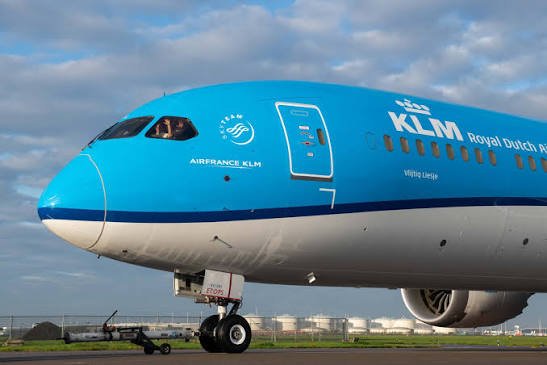
New Delhi, 8th June 2026: Air India and Thai Airways International (THAI), Thailand’s national carrier, have signed a Memorandum of Understanding (MoU) building on their existing interline agreement, to explore a deeper partnership aimed at boosting connectivity between Thailand, India, and destinations beyond, leveraging each other’s global network strengths. The MoU was signed on 07 June 2026 on the sidelines of the ongoing IATA AGM in Rio de Jeneiro, Brazil. Air India and THAI intend to enter into a codeshare agreement in 2026, subject to the requisite regulatory approvals, designed to expand travel options for travellers between India and Thailand and deliver enhanced customer value across their respective networks. The two Star Alliance member carriers intend to place their respective designator codes (‘AI’ for Air India and ‘TG’ for THAI) on each other’s flights between India and Thailand as well as on select international routes from the two countries, providing their customers with convenient access to several destinations across Asia, North America, and Europe. The specific terms governing the proposed codeshare agreement will be announced in due course. Campbell Wilson, Chief Executive Officer & Managing Director, Air India, said: “India and Thailand are connected by longstanding cultural ties, growing economic engagement, and strong flows of tourism and business travel. As Asia reinforces its position at the centre of global growth, deeper collaboration between leading airlines will be key to enabling that growth by making travel more seamless and accessible. This MoU with Thai Airways brings together two carriers with complementary strengths and a shared commitment to service excellence. It also supports Air India’s broader ambition to strengthen India’s connectivity with the world, offering our customers more choice and greater value.” Chai Eamsiri, Chief Executive Officer, THAI, stated: “The MoU with Air India marks a meaningful milestone in our strategy to strengthen the regional connectivity and better serve to passengers traveling between Thailand, India and destination beyond. It also reflects the shared commitment of both airlines to supporting economic growth, promoting people-to-people exchanges, while contributing to broader cooperation between the two countries.”

People

Daher appoints Michel Denis as its Chief Executive Officer

Orly, France, June 8, 2026:  The Board of Directors of Daher, chaired by Thibault Scaramanga, has decided to establish a strengthened executive leadership structure, composed of a Chief Executive Officer and Aymeric Daher, the Executive Deputy CEO – reflecting a commitment to complementary leadership and continuity. The Board appointed Michel Denis as the Group’s Chief Executive Officer beginning July 1. He has  held several senior executive positions in demanding industrial and service-sector environments. He currently serves as Chief Executive Officer of Manitou Group, a family-owned company. “Michel Denis brings top-tier industrial expertise to Daher, both in leading corporate transformations and in managing the stakeholders of a family-owned business,” said Thibault Scaramanga, Chairman of the Daher Board of Directors. “He also will bring a fresh perspective to our Executive Committee. Together with Aymeric Daher, whose knowledge of the aerospace ecosystem is unparalleled, they will form a complementary and ambitious leadership team dedicated to the Group’s development – today and for the future.” Michel Denis stated, “I would like to thank the Board of Directors for its confidence. It is with great pride and a deep sense of responsibility that I join the Daher Group. Its global stature, family roots, long-term and responsible vision, and leading market position are all remarkable strengths. Mindful of the value of this heritage, I will fully dedicate myself to ensuring its continued prosperity.” Thibault Scaramanga will continue to serve as the Daher Group’s Interim Chief Executive Officer in coordination with Aymeric Daher and the entire Executive Committee until Michel Denis assumes his duties on July 1.

Top Stories

Etihad and TAROM Open New Links Across Eastern Europe

Delhi, 8th June 2026: Etihad Airways and TAROM, the national airline of Romania, have signed a codeshare agreement that connects Etihad’s global guests with Romania and Eastern Europe, and links travellers from Romania to Abu Dhabi. The agreement was signed at the IATA Annual General Meeting in Rio de Janeiro. Under the partnership, Etihad guests can book a single ticket on TAROM flights from Bucharest to six cities across Romania: Baia Mare, Cluj-Napoca, Iasi, Oradea, Suceava, and Timisoara. The codeshare also extends to four Eastern European capitals: Belgrade, Budapest, Chisinau, and Sofia. Guests from Romania, in turn, can reach Abu Dhabi from Bucharest on Etihad’s new service. The codeshare supports the launch of Etihad’s new Abu Dhabi–Bucharest service on 17 December 2026. Once the new service begins, guests can travel on a single ticket between Bucharest and destinations across Etihad’s network, with bags checked through to the final stop. Arik De, Etihad Airways Chief Revenue & Commercial Officer, said: “TAROM gives Etihad real depth in Eastern Europe: a flag carrier shaped by more than seven decades of European aviation, and an established network reaching across the country and the wider region. Launching this codeshare ahead of our own Bucharest service means we enter a fast-growing market with genuine scale from day one.” Mircea Nicolae Cotoros, TAROM Chief Commercial Officer, said: “This codeshare with Etihad Airways extends TAROM’s international reach and gives passengers a new connection between Bucharest and Abu Dhabi. It strengthens the link between Romania and the Middle East, supports the continued growth of our network and fostering cultural and economic exchanges.” With the addition of TAROM, Etihad’s partner network now spans 47 codeshare and over 130 interline partners, the largest of any non-alliance airline, giving guests single-ticket and through-fare access to over 350 destinations worldwide.

Business Aviation

RoyalJet appoints Ashok Kumar as VP for Resources and Transformation

UAE,8th June 2026:  RoyalJet, the Abu Dhabi-based global private jet operator, has announced the appointment of Ashok Kumar as Vice-President for Resources and Transformation. He is a seasoned C-suite executive and aviation industry specialist with over 30 years of experience spanning financial leadership, corporate services, and operational excellence. A member of the Institute of Chartered Accountants of India and a Chartered Financial Analyst, he brings a rare combination of deep financial expertise and sector-specific knowledge that has made him a trusted leader across some of the region’s most prominent aviation organizations. Having previously served as Vice President of Finance and Corporate Services at RoyalJet, Ashok has spent nearly two decades with RoyalJet. During his tenure, he oversaw a portfolio generating approximately AED 1 billion in annual revenue and led a team of over 400 employees, driving robust financial management, cost optimization, and enterprise-wide risk strategy. Prior to RoyalJet, Ashok served as Financial Business Support Manager at Gulf Air, one of the Middle East’s legacy carriers. Before that, he spent nine years as Management Accountant at Presidential Flight — the UAE’s elite government aviation directorate, originally established under the late Sheikh Zayed Bin Sultan Al Nahyan. There, he developed a deep expertise in high-security, mission-critical financial operations. He launched his career at Ernst & Young, where he built a strong foundation in accounting, risk management and financial controls.He is recognised for his ability to maximise profitability through rigorous financial discipline, drive enterprise-wide risk strategies, and lead diverse teams across all organisational levels “I am honoured to take on this expanded mandate at RoyalJet, an organisation I have had the privilege of serving for nearly two decades. As we enter this next chapter, my focus will be on digital transformation and fleet replacement, two strategic priorities that will position RoyalJetfor sustainable growth” said Ashok Kumar, Vice-President, Resources and Transformation, RoyalJet.  

Top Stories

Philippine Airlines to Join oneworld Alliance

RIO DE JANEIRO ,6th  June 2026: Philippine Airlines (PAL), the national flag carrier of the Philippines, will become oneworld’s 16th member airline following the signing of a Memorandum of Understanding (MOU) at the International Air Transport Association’s 82nd Annual General Meeting in Rio de Janeiro, Brazil. “This is a defining and transformative moment for Philippine Airlines,” said PAL Holdings, Inc. President Lucio C. Tan III. “Becoming a member of the oneworld Alliance and strengthening Southeast Asia’s representation within the group significantly brings the Philippines and the region closer to the world like never before. Together with our partners, we will deliver greater choice, consistent journeys, and a world-class travel experience that reflects the warmth of Filipino hospitality.” Philippine Airlines was invited to join oneworld as a member-designate airline by the oneworld Governing Board, comprising the chief executives of all member airlines. “Philippine Airlines’ entry into oneworld supports our long‑term strategic growth and strengthens our connectivity across key markets in the Asia Pacific region,” said Robert Isom, American Airlines Chief Executive Officer and chairman of the oneworld Governing Board. “The airline has a proud heritage and will serve a critical role in our Southeast Asia network.” Philippine Airlines will further expand oneworld’s global network, adding 31 unique destinations throughout the Philippines and beyond. The airline’s growing international network will support customer demand across Asia, North America, Europe, the Middle East and Australia, complementing existing services currently offered by oneworld members. “Philippine Airlines is a globally respected carrier with a strong commitment to innovation and customer service that aligns with oneworld’s reputation for delivering a premium experience across the travel journey,” said Ole Orvér, oneworld Chief Executive Officer. “This decision is an endorsement of oneworld, and its global customer offering. We look forward to welcoming Philippine Airlines into the alliance.” Following its entry into oneworld, members of Philippine Airlines’ Mabuhay Miles programme will enjoy reciprocal opportunities to earn and redeem miles and points across all oneworld member airlines. The airline’s eligible top tier customers will enjoy access to oneworld Priority benefits and access to more than 700 premium airport lounges, including oneworld’s branded lounges in Amsterdam’s Schiphol and Seoul’s Incheon airports, as well as First Class lounges and check-in areas, a benefit unique to oneworld fliers.

Business Aviation

Cessna SkyCourier enters service in the Philippines with first delivery to Leading Edge Air Services Corporation

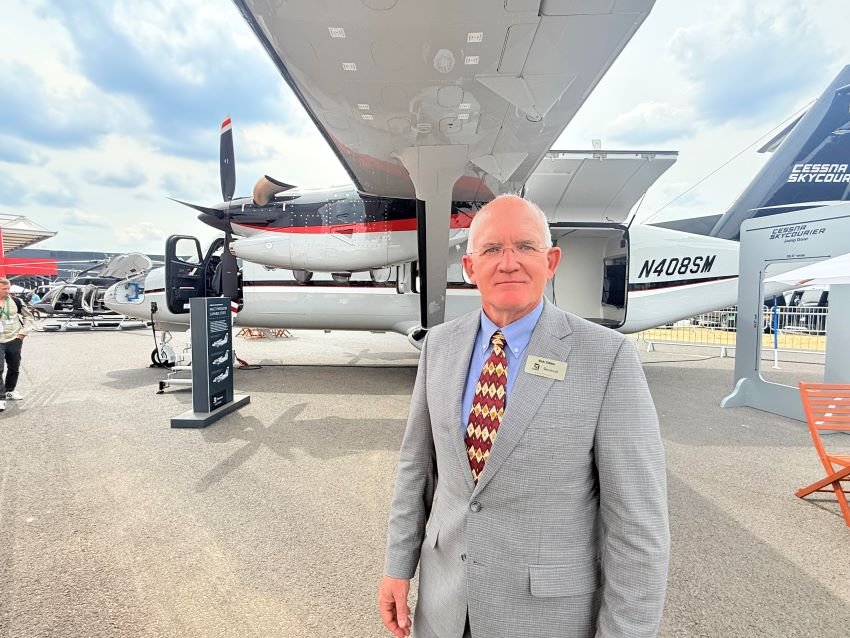
Wichita,5th June, 2026: Designed and manufactured by Textron Aviation Inc., a Textron Inc. company, the Cessna SkyCourier has entered service in the Philippines with the first delivery to Leading Edge Air Services Corporation (LEASCOR), expanding passenger and cargo connectivity across the country’s island communities through a versatile, mission-ready turboprop. The aircraft delivered to LEASCOR, a wholly owned subsidiary of ACDI Multipurpose Cooperative, is a 19‑passenger variant equipped with the optional passenger‑to‑freighter conversion kit. The configuration allows operators to quickly transition between full passenger and full cargo missions, supporting a wide range of domestic transport, tourism and logistics operations.   “Being able to shift seamlessly between passenger and cargo missions is critical for operators serving remote and regional markets,” said Juan Escalante, vice president, SkyCourier Sales. “The Cessna SkyCourier provides a dependable, versatile platform that enables operators to respond quickly to changing transportation needs while maintaining efficiency.” Engineered for dependable performance in rugged environments, the twin‑engine, high‑wing turboprop combines generous payload capacity with excellent short takeoff and landing performance. Its large cargo door supports efficient loading while fixed landing gear and Pratt & Whitney Canada PT6A‑65SC engines contribute to durability and operational confidence across a variety of mission profiles. LEASCOR was established in 2016 as the air chartering arm of ACDI Multipurpose Cooperative, which serves members of the Armed Forces of the Philippines and other uniformed personnel, including active service members, retirees, reservists and civilian employees. “The arrival of our first Cessna SkyCourier marks a defining milestone for Leading Edge Air Services Corporation,” said Maj. Gen. Gilbert S. Llanto, Armed Forces of the Philippines (Ret). “It strengthens our ability to provide reliable air connectivity to communities that depend on consistent passenger and cargo service, particularly in remote areas.” “With the SkyCourier, we are strengthening our capability to open underserved routes, enhance logistics and support regional economies. It allows us to respond faster, serve farther and operate more efficiently, advancing our goal of helping build a resilient, future ready aviation network for the Philippines.” – Maj. Gen. Gilbert S. Llanto, Armed Forces of the Philippines (Ret).   “What makes the SkyCourier invaluable is its purpose-built versatility, supported by twin-engine reliability, high payload capacity and the ability to operate on short and unpaved runways. These capabilities enable seamless passenger and cargo operations, even in remote areas.With the SkyCourier, we are strengthening our capability to open underserved routes, enhance logistics and support regional economies. It allows us to respond faster, serve farther and operate more efficiently, advancing our goal of helping build a resilient, future ready aviation network for the Philippines,” said Maj. Gen. Llanto.

Interviews

From Ramp to Regulator: An Indian First in Global Aviation-Harish Venkateswaran

In an exclusive interview with Aviation World, Harish Venkateswaran, Designated Airworthiness Inspector and Vice President, Technical and Head of CAMO,  AirFleet Managers discusses his multifaceted role in aviation maintenance and engineering. Excerpts… Q: You’ve just completed 25 years in aviation. Take us back to where it all started? A: I started my career in Line Maintenance with Jet Airways at Mumbai airport, working directly on aircraft in a live operational environment. It was a hands-on, high-pressure setting that built my foundation in aviation—discipline, precision, and real-time decision-making. Q: How did your career evolve from those early days in Line Maintenance? A: After starting in Line Maintenance, I moved into the Powerplant Group, which gave me deeper technical exposure, particularly around engine performance and reliability. From there, I transitioned into the Maintenance Control Centre, where the perspective shifted from individual aircraft to fleet-level operations and real-time decision-making. The next major shift was into Aircraft Lease and Asset Management, where I moved into the commercial and contractual side of aviation—working on lease negotiations, maintenance reserves, inductions, and redeliveries. Each move built on the previous one—expanding my scope from hands-on maintenance to technical, operational, and ultimately commercial and strategic responsibilities.   Q: You’re known for having worked across multiple functions—Line Maintenance, Powerplant, Maintenance Control, Aircraft Leasing, and CAMO. How rare is that combination? A: It’s relatively uncommon, because most aviation careers tend to stay within a defined track—either Maintenance, CAMO, or a specific technical specialization. In my case, each role added a different layer of understanding. Line Maintenance built operational discipline and the ability to work under real-time pressure. Powerplant work added technical depth and a stronger grasp of engine performance and reliability. The Maintenance Control Centre introduced fleet-level operational thinking and decision-making. The move into Aircraft Lease and Asset Management was a defining phase. It brought in the commercial dimension—lease negotiations, maintenance reserves, inductions, and redeliveries—where technical decisions directly influence financial outcomes. Now, leading CAMO and Asset Management functions brings all of that together—long-term airworthiness planning, regulatory compliance, and asset value preservation. That combination provides a complete view of the aircraft lifecycle—from line operations to asset strategy. Q: You are the first resident Indian to serve as a Foreign Regulatory Airworthiness Inspector. What does that role involve? A: Yes—and being the first Indian in this role makes it particularly significant. As a Designated Airworthiness Inspector with the 2-REG Aircraft Registry, I am responsible for independently reviewing aircraft and technical records and recommending issuance of Certificates of Airworthiness, Export Certificates, Permits to Fly, and AMP approvals. It’s a role that requires complete objectivity. You are not representing an operator or a lessor—you are upholding the standards of the registry and ensuring that every aircraft meets the required airworthiness criteria. Having worked on the operator and asset management side, I understand the practical challenges. But in this role, the perspective is different—it’s about consistency, compliance, and maintaining regulatory integrity. Very few roles allow you to see the same aircraft through operational, commercial, and compliance lenses—that’s where the real insight comes from. Q: You also lead CAMO and Technical Asset Management functions at AirFleet Managers. How do you balance operational, commercial, and compliance priorities? A: That balance is central to what I do today. On the CAMO side, the focus is on continued airworthiness—AMP development, AD and SB compliance, regulatory coordination, and ensuring the aircraft remains fully compliant throughout its lifecycle. On the Asset Management side, the focus shifts to value—pre-purchase inspections, technical records evaluation, engine shop visit management, mid-term inspections, and redelivery planning. Because I’ve worked across both areas, I can anticipate issues early—whether it’s a compliance gap, documentation risk, or potential cost exposure during lease transitions. It’s about aligning technical decisions with both regulatory expectations and commercial outcomes.    Q: You’ve had deep involvement in lease negotiations and maintenance reserves. How important is that expertise for technical professionals? A: It’s extremely important, and often underestimated. Lease agreements are not just legal documents—they are highly technical. Maintenance reserves, return conditions, and escalation clauses all have a direct financial impact. During my work on aircraft inductions and redeliveries, I was closely involved in evaluating and negotiating lease terms. Through effective planning and execution, we achieved significant cost efficiencies, including savings of up to USD 7 million in one phase. Technical professionals should actively seek exposure to this side of the business—it fundamentally changes how decisions are made. Q:Having worked with operators, lessors, and regulators, what are the biggest gaps you see in the industry today? A: The biggest gap is alignment. Operators focus on efficiency and operations. Lessors focus on asset protection. Regulators focus on compliance and safety. All three priorities are valid—but challenges arise when expectations are not aligned early. Many issues during audits or redeliveries are not due to lack of capability, but due to gaps in communication and interpretation of requirements. Bridging that gap early makes a significant difference. Q: You’ve led aircraft inductions, redeliveries, and international projects. Any standout experiences? A: Several. Working on aircraft inductions across international locations and coordinating with multiple stakeholders was particularly valuable. Managing redelivery projects with zero compensation outcomes was especially satisfying—it reflects strong planning and execution. These projects bring everything together—technical expertise, coordination, negotiation, and the ability to manage timelines under pressure. Q: Outside aviation, you’ve pursued long-distance running and classical vocal music at a professional level. How do these fit into your life? A: They provide balance. Long-distance running builds discipline and mental endurance. I’ve completed multiple half marathons, and it helps maintain focus and consistency. Classical music is a very different space—it requires patience, depth, and expression. Performing at festivals in Australia, France, and across India has been a deeply enriching experience. In many ways, both pursuits require the same qualities—discipline, consistency, and the ability to perform under pressure. Q: After 25 years, what continues to motivate you? A: The constant learning. Aviation is dynamic—technology evolves, regulations evolve, and business models evolve. No two situations are the same. Whether it’s an audit,

Features

Engineering Partnerships 4.0

The Next Chapter in the Aerospace & Defense Transformation Journey By Sam Swaro, Senior Vice President & Head –North America, Transportation,Cyient The Inflection Point: What Engineering Partnerships 3.0 Didn’t Solve The Aerospace and Defense (A&D) industry has undergone multiple waves of transformation—from labor arbitrage to globally distributed engineering ecosystems and the rise of Global Capability Centers (GCCs). These models enabled scale, efficiency, and access to global talent. However, while Engineering Partnerships 3.0 optimized for cost and distribution, it left critical gaps unaddressed—particularly around resilience, sovereignty, and accountability in increasingly complex and regulated environments. Engineering Partnerships 4.0 emerges at this inflection point, shaped by a world defined by shifting geopolitical realities, evolving risk boundaries, and the rise of intelligence-driven engineering. What Changed in the Last Five Years The world shifted beneath our feet. The pandemic stress-tested supply chains. Geopolitics redrew risk maps. A new tariff alignment moment on April 2, 2025, which many in the industry shorthand as ‘Liberation Day’, accelerated a pivot from pure offshoring to pragmatic friendshoring. Meanwhile, advanced tools and AI evolved from experimentation into practical accelerators, led by deep domain knowledge and human engineering authority. Together, these forces rewired the questions Aerospace and Defense leaders ask. No longer, “Where is the cheapest talent?” but “Where is the most resilient, sovereign, technically deep, compliance-first ecosystem I can trust?” Since then, India’s Global Capability Centers have scaled rapidly, growing from Rs. 1,580 in FY23 to Rs. 1,700 in FY24, and projected to reach Rs. 2,200–2,400 by 2030, underscoring their move from cost centers to strategic innovation hubs. Across the product lifecycle, AI adoption has moved fast, from systems engineering and requirements mining to design exploration, development, verification and validation, manufacturing quality, supply chain optimization, and aftermarket support. Two examples illustrate the momentum: Predictive maintenance at scale:For a global aerospace OEM, we delivered Predictive Maintenance+ and Fleet Performance solutions that help airlines avoid hundreds of delays annually and reduce operational interruptions, using cross-fleet machine-learning models on aircraft and engine systems. Engine health intelligence:For a leading engine manufacturer, we implemented data-driven monitoring and digital-thread analytics that detect and prevent hundreds of unplanned maintenance events per year, accelerating fault resolution from days to near real-time. Together, these advances shift the operating model from scheduled checks to condition-based and predictive interventions, with measurable gains in safety, availability, and cost. In parallel, recent high-profile safety incidents involving major commercial and cargo airlines have catalyzed unprecedented regulatory scrutiny and a renewed first-time-right focus across the aerospace supply chain. In safety-critical industries, intelligence earns acceptance only when it strengthens trust before it accelerates change. Top Trends Defining Engineering Partnerships 4.0 Engineering Partnerships 4.0 is not incremental. It is architectural. Five structural trends now define how Aerospace and Defense designs, certifies, manufactures, and sustains products across trusted geographies. Friend shoring Becomes the Backbone: Engineering and build-to-print networks are being realigned around allied, tariff-aligned geographies. Resilience, dual sourcing, and locality of compliance matter as much as cost. Sovereignty Driven Delivery Models:Geo-distributed, compliance-first execution (ITAR/EAR, export controls, data residency) is the new default. Onshore, nearshore, and offshore nodes operate under one quality and security system. Intelligence First Engineering (AI as Amplifier):AI accelerates concept to certification when fused with domain depth.MBSE, model-based certification aids, verification automation, knowledge graphs, and safety evidence generation are where intelligence earns permission in aerospace. Integrated Engineering and Manufacturing: OEMs and Tier 1s increasingly prefer fewer, deeper partners who can take accountability from specification through qualification and design led manufacturing through aftermarket. Outcome Economics:Outcome-based contract, and productivity commitments replace time and materials thinking. Five Initiatives for Offshore Service Companies   To stay relevant and grow, service providers must redesign their operating model for sovereignty, intelligence, and accountability. Build Sovereign, Multi Geo Delivery Fabrics: Stand up onshore and nearshore trusted cells across the US, EU, UK, Canada, Australia, Japan, and India, with unified AS9100 governance, export control compliance, and secure enclaves for restricted programs.   Make Intelligence First Real:Embed AI across the V model: requirements mining, design space exploration, verification automation, anomaly detection, and certification evidence packaging, with human engineering authority firmly in the loop. In aerospace, intelligence is valued when it augments expert judgement, reduces workflow friction, and brings accumulated knowledge back into active use.  Shift From Labor to Outcomes: Offer build-to-spec and turnkey work packages with shared risk, using MBSE and the digital thread to commit to schedule, quality, and cost metrics rather than hours.   Price for predictability, not just effort, and establish joint KPI baselines that both OEMs and partners can govern transparently: FPY (First Pass Yield) NFF (No Fault Found) reduction MRB burndown (Material Review Board non-conformance closure) Certification evidence velocity Supported by shared, real-time dashboards and outcome telemetry.As Marty Cagan emphasizes, high-performing product organizations succeed when teams are empowered, deeply connected to the customer problem, and accountable for value, usability, feasibility, and outcomes, not activity. Translating this into Aerospace and Defense, Engineering Partnerships 4.0 demands partners who own results end-to-end: Improving manufacturability Accelerating certification Reducing sustainment burden Strengthening supply chain resilience Enhancing fleet availability   This is the shift from “providing engineering capacity” to solving mission-critical problems and delivering measurable operational and business value, the product mindset that the industry increasingly expects. Co-create With Captives and Primes: Treat captive centers as force multipliers. Establish joint roadmaps, shared competency academies, and friendshored supplier development programs. Go to market together, where it helps the OEM win.   Fuse Engineering with Design-Led Manufacturing:Integrate design, NPI, and certified manufacturing. Collapse handoffs and design for manufacturability and sustainment from day one.   Positioning for Engineering Partnerships 4.0Organizations that succeed in this new paradigm will demonstrate four core capabilities: Deep domain expertise Sovereign, compliant delivery models Intelligence-driven execution Integrated engineering and manufacturing An integrated approach—combining engineering, digital capabilities, and design-led manufacturing—enables end-to-end ownership from requirements through certification, production, and sustainment, with accountability for outcomes across schedule, quality, cost, and reliability. In Aerospace and Defense, that idea has a very practical meaning. Companies that apply AI, data, and automation with discipline, inside the realities of safety, regulation,

Features

West Air War: Effect on Aviation Globally

The Aviation industry plays a critical role in global, regional and domestic economy across the world. It goes beyond merely being a transport system of Passengers and Cargo and is a key contributor to the global ecosystem of being a connected World as we see and experience it.In this strongly interconnected World even a small disruption in a region has its impact on the global scale. War in West Asia is a contemporary example of this disruption, and this article covers the various paradigms of Aviation in this situation which has been explained below. By Amit Mittal Oil Shock: ATF (Aviation Turbine Fuel) As we all know, ATF (Aviation Turbine Fuel) is a big chunk of the operating cost of an airline, so as the increase in prices of Crude Oil price reached unprecedented levels, the increase in ATF prices was inevitable. Airlines which have huge consumption of ATF do fuel hedging and even airlines with advanced fuel-hedging strategies are taking a major financial hit, leading to margin pressure and significant overall losses. The Smaller airlines rely on spot fuel prices, as they do not do fuel hedging. of their Some reports note that spot jet‑fuel prices have more than doubled in part of 2026. This squeezes margins, especially for carriers without fuel‑hedging or thin pre‑war profits. Differential Pricing on ATF The pricing on ATF has been kept in control by the Government of India up to some extent, wherein the Price of ATF is lower for Airlines flying domestically within India. However, the ATF price is higher for international Flights, General Aviation and Non-Scheduled operations. As major chunk of the passengers are domestic travelers in India there is relief to some section of the flyers. One way to reduce price on ATF: GST instead of VAT ATF falls under State Value Added Tax (VAT); rates can vary drastically across the country. Major airport hubs in certain states charge significantly higher VAT, leading to varying fuel costs depending on where the airline chooses to refuel. To reduce the price on ATF I will suggest that bring ATF under GST With Safeguards such as: 1. Implement 12–18% GST slab with full Input Tax Credit (ITC)         2.Create a price stabilization buffer mechanism to absorb global crude shocks 3.Mandate state-level uniformity to eliminate tax arbitrage This could have an immediate impact such as 15–20% cost reduction, improved airline liquidity, and fare stability Safety Risks to Civil Aviation are the most serious concerns which the airlines face in a hostile or war situation because there could beMissile activity near civilian flight corridors which could lead to accidental shoot downs, GPS spoofing and navigation interference,and Drone threats. IATA and aviation safety groups have warned that conflict-zone risks are increasing globally. Accordingly, Airlines tend to spend far more onReal-time threat monitoring,Security intelligence and working out the most suitable Route by doing Route risk analysis. Rerouting and Capacity Cuts due to the closure of Airspace over Pakistan and Iran, the disruption has hit India particularly the Indian Airline operators flying to Europe and US where longer detours, more operational cost and fuel burn and cancelled routes have caused US-India airfares to jump by up to 150%. Crippled Middle Eastern Hubs over this period is also a concern. The Middle East is a vital global transit gateway, usually handling about 14% of global transit activity. Surging Fares and Shifting Demand Travelers are facing higher ticket prices, increased fuel surcharges, and a significant drop in seat availability—especially on long-haul routes connecting India to Europe and US. Financial Strain and Industry Restructuring Smaller budget carriers with less cash reserves are bearing the brunt of the crisis. Global airline market capitalization has plummeted, and the industry faces an uncertain summer travel season. Unequal Impact on Airlines Not all airlines are affected equally.Most affected are the Indian carriers ,European airlines flying to Asia and Airlines dependent on Gulf transit routes Less affected or temporarily advantaged are Airlines operating shorter regional networks and Certain local carriers enjoying reduced competition There is Economics of the airlines globally The balance has been disrupted by this conflict. Major long-term consequences are Lower profits, Delayed aircraft expansion plans, Increased insurance premiums, Higher maintenance and crew costs due to refueling on long haul routes instead of direct flights, Reduced tourism demand and prolonged conflict could materially slow international aviation growth. Environmental Impact as longer routes means More fuel consumption and Higher carbon emissions. IATA estimates that detours around conflict zones can increase fuel burn by around 13–15% on affected routes. That directly affects aviation sustainability goals. When multiple corridors close simultaneously: Indian airlines lose their geographic advantage European and Gulf carriers may operate more efficiently Nonstop flights become harder economically This is why Indian aviation has been under exceptional pressure recently. A large chunk of European and American operators with a presence in West Asia have suspended operations, including American Airlines, United, Lufthansa, Swiss, British Airways, and Air France. While these carriers have previously railed against West Asian hub carriers, they maintained a presence in the region—either in partnership with the local airlines or as part of their networks—to funnel passengers into their systems, largely driven by major global alliances like Star Alliance, Oneworld, and SkyTeam. Impact of War on Airports Specific operational and financial impacts on airports and the broader global industry include Airspace Closures & Hub Disruptions: Major transit hubs like Dubai (DXB), Doha (DOH), and Abu Dhabi (AUH) have experienced periodic halts and operational shifts. Broad airspace closures over Iran, Iraq, Israel, Kuwait, and the UAE have triggered thousands of flight cancellations, leaving passengers stranded. Some International Airlines flying to India have benefited because of Shifting Passenger Demographics: Due to the severe cancellations and longer detours faced by regional carriers, many overseas and foreign airlines have gained market share on routes to and from India and other affected regions. Let’s hope that the war situation gets over soon and the global aviation industry comes back to normalization. Views expressed are

FOREWORD

Dear Reader’s,


The current edition of Aviation World has covered many areas of Aerospace & Defence based on the latest development in the sector. The front cover highlights three different images, first for the Union Civil Aviation Minister ….. who is leading from the front to steer Indian Civil Aviation sector to witness one of the most interesting phases. He is also facing most tumultuous timing due to the ongoing financial stress in the Aviation sector due to ATF rising cost and long airspace restrictions resulting in mounting losses for Indian carriers. Despite of all the ground level challenges,the minister is addressing new things on regular basis which keeps the sector motivated. We have featured many such developmental works in this edition done under his guidance which will be interesting to read.

Our lead story on “ The West War” is another important feature which covers the ground level reality of the challenges faced by the Aviation sector. Its though time ahead and we believe it will pass soon .

There are features on Regional connectivity and MoCA revised rules on the UDAN 2.0 and how its going to transform the flying experience within India.

In this edition, we have covered topics on MRO,Various Policy changes,Sea Plane Operations by SkyHop Aviation, TATA-Airbus joint project on C295 military aircraft under Make In India which is expected to roll out soon and many other interesting contents which will be good to read.

We are covering Farnborough International Airshow 2026 from 20-24July 2026 in London and our next edition will be based on the same event.For features, you may contact our team on priority basis.


Happy Reading!

NEWSLETTER

Aviation World Magazine is India’s premier aviation magazine and has been actively supporting the development of the Indian and global civil aviation sector. We started our journey in year 2015 and its been 12 years now and the response and acceptance is really encouraging. Thanks to all our associates and writers who remained with us in our progressive journey.

We have started 2026 on a very positive note and we look forward to increase our footprints to more locations and induct many more new companies in our campaign.. Do write to us at : editor@aviationworld.in

Disclaimer

The contents published in this website are news covering Aviation, Aerospace and Defence sector. The objective is to provide news in informative form to keep our readers updated of the latest development. We also publish content featured in our print publication Aviation World.We try our best to avoid any factual errors or image displayed here but we ensure immediate corrections to any such thing brought to our notice that might have been published inadvertently. All images and contents are sourced from the relevant organisations media team.

Copyright ©2014 – 2026. AVIATION WORLD. All rights reserved.

Scroll to Top