

Features

Features

Willie Walsh on India’s Aviation Industry

By Willie Walsh, IATA’s Director General 2025 will be an exciting year for Indian aviation. June will be a highlight when Delhi will turn into the global aviation capital as industry leaders from around the world gather for the 81st IATA Annual General Meeting and World Air Transport Summit, sponsored by IndiGo. Those gathering for the event will be impressed. India’s place in global aviation has changed dramatically over the last decade. With record aircraft orders, impressive growth, and world-class infrastructure developments, India is firmly established as the fourth largest market (domestic & international) for aviation in the world. And within this decade IATA’s own projections point to India rising to be the third largest. India’s rapidly modernizing and expanding aviation sector is a huge good news story for the country. The aviation industry in India employs 369,700 people directly and generates USD 5.6 billion of economic output. When you include the additional benefits that aviation brings, such as tourism, the number rises to 7.7 million jobs in India and USD 53.6 billion in economic contribution. That is 1.5% of India’s GDP! Throughout my career, I have been a keen observer of India’s aviation industry. The potential that everybody could see for decades is finally being realized. I have never been more excited about India’s aviation prospects. Part of the excitement is due to the remake of India’s airline sector. Air India’s rebirth with new ownership is placing renewed focus on its service with exciting developments in its fleet and product offering. And IndiGo has built-up a very impressive footprint across India and regionally. With a world-leading market capitalization, there is enormous confidence in its prospects. India’s consumers have never been so well-served by its domestic carriers – with a rapidly expanding network, additional frequencies and connections, and growing competition. And with gateway airport capacity expansions in Delhi, Mumbai, Bangalore and Hyderabad, along with the imminent commissioning of second airports in Delhi and Mumbai – before IATA’s AGM in June – the potential for further aviation development is well-laid. Critically, India has the talent needed to achieve a growing future, unlike many parts of the world which are facing some challenges. With the highest proportion of female commercial pilots in service, India clearly demonstrates that aviation is a solid career choice regardless of gender. And more great jobs will be created as India recognizes the opportunity for greater investment in maintenance, repair and overhaul facilities. We are also seeing policy measures by the Indian government, and the Civil Aviation Ministry in particular, that are supporting future success. There are several examples. Clarity was established with regard to the rights of aircraft lessors in the context of India’s bankruptcy laws – and an impending parliamentary bill ratifying and aligning India’s stance with international conventions will help with predictability and consistency. Airline objections against overreach by India’s GST investigation agencies were addressed. The government exempted the import of services into India between airline HQs and their local branches, respecting international conventions. AERA—the Airports Economic Regulatory Authority of India —is establishing a track record of countering the natural monopolistic behavior of airports and protecting consumer interest. While we can truly celebrate these achievements, we must not take for granted the continued success of India’s aviation future. There is more work to be done. In particular, I would highlight three areas: costs, airspace and sustainability. Costs Aviation is not a high margin industry. At the global level, the net profit margin is just 3.6%. So every cost, charge, and tax matters. India would do well to look at rationalizing fuel (ATF) costs; easing out some of the complex compliance and regulatory burdens for the industry; and continued oversight on airport user charges and their linkage to service and performance standards. Airspace The amazing developments in India’s airport infrastructure need to be matched with developments in India’s airspace. With thousands of aircraft due to join India’s fleet in the coming years, investments to further modernize airspace management are critical—in particular for oceanic and continental airspace. India must not follow the underinvestment example of Europe which results in widespread inefficiency. Sustainability Airlines’ global commitment to achieve net zero by 2050 is determined and firm. We expect the bulk of aviation’s decarbonization to be achieved with sustainable aviation fuel (SAF), which is a real opportunity for India. India is the third largest ethanol producer and consumer in the world. This is proof of the potential for it to become a key SAF producer utilizing the Alcohol-to-Jet (AtJ) pathway. This would contribute to India’s energy security, propel the aviation sector’s growth and enhance India’s hub status in the region—delivering enormous social and economic benefits for India’s development. Bringing the IATA AGM and World Air Transport Summit to Delhi in June is sure to be a highlight for the global aviation community. It is an opportunity for India to cement its rise in global aviation by continuing to put in a policy and economic environment that will realize, and most likely exceed, the potential that we all see for aviation in India. Content Courtesy: IATA ( This feature is sourced from IATA website and published  unedited on as it is basis with due courtesy. IATA is organising its AGM hosted by IndiGo in June in New Delhi, Aviation World as an accredited media has published this content as part of the information purpose only.)  https://www.iata.org/en/pressroom/opinions/willie-walsh-india-aviation-industry/#:~:text=By%20Willie%20Walsh%2C%20IATA’s%20Director,Transport%20Summit%2C%20sponsored%20by%20IndiGo.

Features

High-Tech robots redefine safety and performance in ground handling operations

Aviation World Feature Each year the aviation industry develops new solutions to improve ground handling operations efficiency and increase worker safety. More and more companies are adopting enhanced ground support equipment (GSE) that can benefit both by advancing operational performance and helping to avoid incidents at work. A good example of such useful GSE is automated aircraft-cleaning robots. These modern cleaning systems can optimise productivity and protect workers from significant risks associated with manual cleaning operations. Veronika Andrianovaite, CCO of Nordic Dino Robotics AB, explains how robotic cleaning systems can transform daily airline operations by prioritising worker safety and setting new industry standards. Although manually cleaning aircraft exteriors is considered standard in aviation, it presents several risks. Exposure to hazardous chemicals, physical strain, and working at dangerous heights – all of these factors pose potential dangers to personnel. As well, the process of manually cleaning an aircraft involves repetitive motions, lifting heavy equipment, frequent bending and stretching. Over time this can lead to fatigue and strain among maintenance workers. To address this issue, ground handling companies could adopt robotic cleaning systems like Nordic Dino, which help reduce human labour. “These advanced machines are designed to handle the most demanding aspects of cleaning, reaching high and low surfaces effortlessly. The shift toward robotic aircraft-cleaning systems significantly reduces risks for those working in the industry and also enhances efficiency, thereby reducing ground handling costs,” says Veronika Andrianovaite. One more issue is the use of powerful cleaning agents – chemicals that help remove dirt, grime, and environmental contaminants that accumulate on the aeroplane exterior. But when workers are frequently exposed to them, these chemicals can pose serious health risks. Veronika Andrianovaite warns that direct contact with harsh substances may lead to respiratory problems, skin irritation, and other long-term health concerns. “Robotic systems provide a safer alternative by automating the application of cleaning agents. It ensures precise and controlled distribution of the chemicals and minimises human interaction with potentially harmful substances. Moreover, those modern systems help to optimise the use of cleaning materials and, at the same, time reduce waste, environmental impact, and water consumption,” comments the CCO of Nordic Dino Robotics AB. According to the International Air Transport Association (IATA), the most frequently reported injuries among ground handling staff include slips, trips, falls, being struck by objects, and injuries related to lifting, carrying, pushing, or pulling. Falls from heights, though less frequent, are among the most severe. Working at elevated heights is a serious threat that workers face while cleaning the aircraft exterior manually. To clean the upper surfaces of an aircraft, the personnel often use scaffolding, lifts, or platforms, bringing the risk of falls and severe injuries. Furthermore, specific weather conditions, such as strong winds or rain, can increase the danger of harming yourself. “Advanced aircraft cleaning robots are equipped to navigate and clean elevated areas autonomously or by using remote operation. This allows workers to remain safely on the ground. These days, modern robots like Nordic Dino can prevent workplace accidents and enhance safety standards,” notes Andrianovaite. As the aviation industry continues to evolve, robotic cleaning systems are proving to be an invaluable asset to ground handling operations. Automated systems help airlines maintain the pristine appearance and operational efficiency of aircraft. Alongside this, high-tech robots protect the health and enhances the safety of those who keep the aircraft in top condition. (Views Expressed are personal)

Features

Accelerating aerospace lightweighting and design efficiency via simulation technology

By Dilip Kumar Damera: In the fast-evolving aerospace industry, the quest for lighter and more efficient designs has become a priority. Aerospace lightweighting is the strategic reduction of weight in aircraft and spacecraft using innovative manufacturing techniques, advanced materials, and optimising the structural design. This method not only augments fuel efficiency and reduces operational costs, but also improves performance and environmental sustainability. By integrating lightweight materials like carbon fibre composites, titanium alloys, and high-strength aluminium, along with advanced computational design tools, engineers can restructure development processes and attain advanced levels of design efficiency. This collaboration between lightweighting and design optimisation is restructuring the future of aerospace engineering. Simulation in Aerospace Lightweighting Simulation plays a key role in advancing aerospace lightweighting and improving design efficiency. With accurate, high-fidelity simulations of structural, thermal, and aerodynamic performance, simulation lets engineers assess the behaviour of lightweight materials and complex geometries under real-world conditions. This occurs long before physical prototypes are even built. This ability cuts the need for expensive time-consuming testing considerably and allows quick iterations and design optimisation. Mechanical, Fluent, and Composite PrepPost tools allow engineers to model stress distribution, fatigue life, and material interactions accurately to ensure structural integrity while also reducing weight. The integration of Multiphysics simulations and automated design work flows also quickens innovation, and so aerospace teams are able to meet strict performance, safety, and regulatory requirements in an efficient manner. From reducing fuel consumption and CO₂ emissions to enhancing manoeuvrability and cost-efficiency, the demand for lighter, more efficient aircraft structures is what is shaping the next generation of aerospace innovation.The benefits are manifold and include reduced reliance on costly physical prototypes, quicker iteration cycles, higher confidence in final part performance, better material selection and validation and compliance with rigorous aerospace standards. So, what are some of the vital facets of aerospace lightweighting? Use of Advanced Materials: Lightweighting commences with selecting the right materials. Granta empowers engineers with Material Intelligence by giving access to widespread, validated materials databases and tools to make data-driven material decisions. Engineers can digitise material properties and effortlessly incorporate them into CAE/CAD systems. This allows consistent and efficient material selection across organizations. Usage of composite materials like carbon fiber-reinforced polymers has shepherded in a new era of design flexibility and performance in aerospace structures. Nevertheless, simulating these materials accurately is still one of the most demanding engineering tasks. Unlike traditional isotropic materials, composites display anisotropic behaviour depending on fiber orientation, layering, and thickness as these variables must be precisely modelled to predict behaviour under stress. Composite PrepPost allows engineers to build layered composite structures, simulate fiber orientation, and assess failure modes like delamination or matrix cracking. This guarantees that the designs exploit the full potential of composite strength-to-weight ratios and that too without any compromise on safety. With the aerospace sector increasingly adopting high-performance alloys like titanium and advanced grades of aluminium, it is even more impactful as their behaviours under dynamic loading and varying temperatures can be simulated using non-linear and thermal analysis tools. In the development of a critical turbine component, a leading global aerospace supplier leveraged advanced simulation techniques to enable the use of lightweight metal powder-bed fusion, while still meeting the strict tolerances required by the aerospace industry Advanced Manufacturing Processes Additive manufacturing or 3D printing, has transformed aerospace part production completely as they are enabling geometries that were previously deemed impossible. With additive manufacturing (AM), engineers can apply material only where needed and it enables highly optimised, organic shapes and lattice structures. Nevertheless, the thermal history and scan patterns used in the AM process have a direct impact on the material micro-structure and, eventually, part performance. Additive Solutions provide a comprehensive simulation workflow for AM processes including Directed Energy Deposition (DED), Powder Bed Fusion (PBF), and Metal Sintering. They simulate part distortion, residual stresses, thermal profiles, and microstructure evolution. They are all key to ensuring the reliability of lightweight parts. For example, at a leading global aerospace company, distortion prediction and compensation through advanced simulation enabled the successful additive manufacturing of a large, geometrically complex component, achieving the required ±1 mm surface profile tolerance. The digital-first approach curtailed trial-and-error iterations and augmented the support structures and scan strategies required to print perplexing geometries – saving time and cost. Simulation is key to predicting these process-induced changes. One can simulate everything from powder bed fusion process parameters to the residual stress build up and resultant shape distortion. The scan vectors of specific machines can be simulated, helping to forecast defects like warping, keyholing, or balling, and guiding design modifications pre-print. The loop between ideation, design validation, and production quality is thus closed. Post-processing steps including support removal, heat treatment, and surface finishing can also be simulated. They are all key to aerospace applications where dimensional precision and fatigue life are mission critical. Design Optimisation Techniques Design optimization is at the core of lightweighting. Simulation allows engineers to explore thousands of design variations to identify the lightest, strongest, and most cost-effective solutions by automating design workflows. Topology optimization tools allow engineers to automatically generate geometry that meets performance requirements using the least amount of material. By identifying load paths and eliminating mass that is unnecessary, simulation’s optimization engine helps create material-efficient structures. Topology optimization tools, parametric studies, and multi-physics simulation allow aerospace teams to uncover performance trade-offs and attain optimal results sooner. Multiphysics simulations, including thermal, electrical, and fluid dynamics, are often incorporated into design iterations so that designs meet multiple objectives like aerodynamic performance, thermal dissipation and electromagnetic compatibility. Since aerospace components are exposed to extreme environments and high-stress conditions, this is relevant. In composite design, optimization also enables local tailoring of fiber orientation to meet directional load demands. Simulation tools provide an integrated platform for parametric optimization and engineers can explore dozens of configurations using high-performance computing. At a leading global aerospace supplier, iterative geometry compensation based on simulation feedback played a crucial role in the successful development of a lightweight component. The initial design exhibited significant deformation in unsupported

Features

AI-Driven Digital Transformation: Redefining Air Travel

By Suresh Khadakbhavi We’ve come a long way in air travel, haven’t we? Remember those days of clinging to paper boarding passes, terrified of losing them and facing a total nightmare? Or reaching the airport hours early just to slog through endless manual check-ins and security lines? One has to hover near crackly PA systems, ears perked for any word on flight delays or gate switches, always on edge. Now, thanks to technology, those pain points are fading into memory. Today, technology has transformed every step of the journey into something smoother, guided by real-time updates and clever innovations. It’s worth noting how artificial intelligence is driving this evolution, with technologies like Machine Learning (ML), Natural Language Processing (NLP), and Robotic Process Automation (RPA) reshaping aviation. These innovations deliver remarkable benefits while presenting challenges that demand careful navigation. Several AI technologies underpin this transformation across the aviation ecosystem. Like Digi Yatra’s advanced biometric systems enable passengers to use their faces as a digital token, reducing airport entry times to seconds. Elsewhere, Computer Vision powers similar systems, such as at Singapore’s Changi Airport, where facial recognition verifies identities at gates. Machine Learning enhances operational precision — airlines using Rolls-Royce engines leverage it for predictive maintenance, analyzing sensor data to preempt engine issues, while air traffic systems like the U.S. NextGen optimize flight paths with satellite precision. Natural Language Processing elevates passenger interactions. Advanced chatbots, such as those planned for Digi Yatra with Large Language Models, will offer multilingual support via text or voice. Globally, airlines like KLM leverage NLP assistants for bookings and updates. Robotic Process Automation streamlines backend tasks — automating check-in data or baggage tracking — allowing staff to prioritize service quality. Benefits of AI-Driven Transformation The advantages are transformative. Efficiency is significantly enhanced; biometric systems eliminate repetitive document checks, while AI/ ML-driven scheduling reduces delays — Emirates, for instance, uses AI to anticipate weather disruptions. Decision-making is improved as well. Airlines harness ML for dynamic pricing, adjusting fares based on demand, and airports forecast passenger volumes to optimize resources. Cost savings follow—fewer delays, reduced fuel use through optimized routes, and automation of routine tasks lower expenses, benefiting the industry and travelers alike. Challenges in Adoption Adoption remains a challenge since people always hesitate to opt for new digital tools. This could be due to privacy concerns, low digital proficiency, or a lack of awareness. To ensure that technological progress benefits all travellers, efforts must continue to create awareness among the masses about tech adoption and how it redefines their travel as a seamless experience. Data privacy and security are critical, particularly with biometric systems. Digi Yatra addresses this with a decentralized model, storing PII data only on the users’ devices and the shared credentials to airport verifiers are deleted within 24 hrs of the STD of their flight, adhering to standards and policies. The entire Digi Yatra Ecosystems are audited by CERT-In empanelled agencies on a periodic basis to ensure compliance. Globally, organisations adopting facial recognition and analytics ensure robust encryption of PII data and compliance with regulations like GDPR. The skill gap poses another challenge. Implementing ML or NLP requires specialized expertise, which is not yet universal in aviation. Training initiatives are vital to bridge this divide. Additionally, integrating AI with legacy systems, such as outdated radar-based air traffic control or manual check-in desks, presents technical and financial hurdles. Modernizing these to support RPA or Computer Vision requires strategic investment. Transforming Air Travel Globally Beyond Digi Yatra’s success in India, where >12 million passengers have embraced touchless travel, numerous technologies are revolutionizing airports worldwide. The transition from radar to satellite-based air traffic management, as seen in NextGen, boosts precision and sustainability. Digital twins — virtual aircraft models — enable engineers to simulate maintenance, a technique used by Airbus. In-flight, Wi-Fi and AI-driven entertainment systems, like those on Qatar Airways, personalize passenger experiences, replacing static screens with tailored content. Airports are evolving into interconnected digital hubs. Biometric boarding at Atlanta’s Hartsfield-Jackson mirrors Digi Yatra’s approach, while RPA-powered automated baggage systems minimize losses. ML optimizes runway usage, reducing wait times. These advancements ensure faster, more reliable, and environmentally conscious travel, with AI aiding fuel-efficient flight planning. A Future in Flight A blend of Machine Learning, Natural Language Processing, Computer Vision, and Robotic Process Automation will create a smarter, more efficient industry. From predictive maintenance to biometric check-ins, these technologies deliver streamlined operations, informed decisions, and cost reductions. Challenges such as privacy, workforce skills, and legacy integration are significant but addressable through collaboration and innovation. As AI becomes more advanced, it will not only optimize operational efficiency but also redefine how we interact with travel technology. The aviation industry is just getting started on this AI-powered journey, and the sky is truly the limit! (The writer of this article is the CEO of Digi Yatra Foundation & Key Advisory Member of Inter Passenger Terminal Show)

Features

Ensuring flight safety: Doesn’t slip through comprehensive de-/anti-icing training

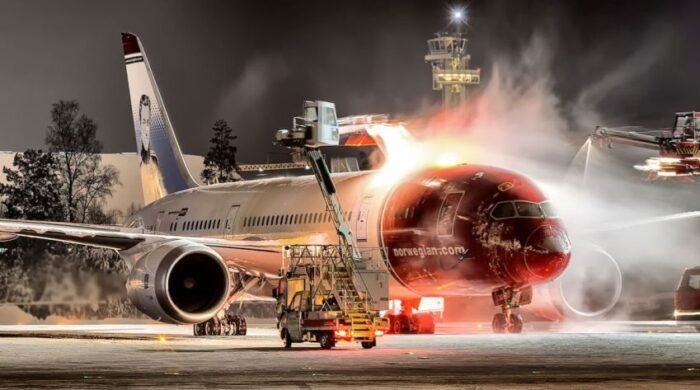
De-/anti-icing of an aircraft is a critical pre-flight procedure that ground handling teams around the world undertake ahead of take-off and is mandatory if ice, frost, or snow has accumulated on major surfaces including an aircraft’s wings or fuselage. Effective de-/anti-icing training is crucial for ensuring flight safety and enables safe and timely aircraft operations during winter weather conditions. Aviator Airport Alliance, a full-range provider of aviation services at 15 airports across the Nordics and a family member of Avia Solutions Group, delivers insights on how the importance of equipping their team with comprehensive de-icing training is critical for successful operations across Northern Europe, spanning the Baltics, Nordics, and Scandinavia. Anders Søreide, Head of De-Icing & Safety Advisor at Aviator, outlines the structure of the training program that operates within his team, “Our training program is based upon SAE (Society of Automotive Engineers) aerospace industry standards. The main objective is to train our staff to perform de-/anti-icing operations according to the SAE standards to ensure flight safety.” Theoretical and Practical Integration Training includes both theoretical and practical training and is renewed through annual recurrent training before each season. Theory in the classroom provides the foundations but potential candidates are often curious to understand how the practical training is delivered. Anders commented, “Practical de-/anti-icing training consists of both simulated scenarios and actual operations performed under supervision. Simulated exercises may vary between stations, but a typical simulated exercise would include a vehicle driving through an ‘obstacle course’ to develop driving patterns.”   Operational Excellence and Safety As well as ensuring safe movement around high value aircraft, teams must also know how to correctly spray de-icing fluid onto key areas of the aircraft. Anders continued, “Spraying exercises on a suitable surface, communication with other vehicles, drivers, and flight crews are essential. Operators also need to understand the emergency procedures and visual interpretation of contamination (where ice, frost, or snow accumulates) in order to safely prepare the aircraft for departure.” During simulated exercises, the focus is on operator confidence as there are many tasks to be mastered simultaneously. The exercises are repeated and are accommodated for individual learning processes as some staff require more practice than others. The simulated exercises are extremely important to ensure familiarity with the necessary equipment and procedures and for teams to be able to focus on the contamination at hand. For live operations, all staff perform at least the minimum SAE requirements for operations under supervision. Continuous Learning and Improvement In the aviation safety industry, it’s extremely important to optimize operations continuously, which is why Aviator performs annual reviews of their training materials. This review is primarily based upon new revisions in the SAE standards, as well as feedback from instructors and reported incidents. Aviator also attends live SAE meetings each year. “Reviews, monitoring, and revisions of the training material are performed by the Aviator de-/anti-icing working group which meets pre-season, mid-season, and post season. Additionally, Aviator performs several internal inspections to assess training at their stations, in addition to being audited by the DAQCP (De-icing/Anti-icing Quality Control Program). Aviator emphasizes transparency and trust-based relationship with our customers, and since flight safety is a collaborative effort, feedback and/or reports from our airline customers are valuable sources for potential improvements,” commented Søreide. One of the biggest challenges for training operators is the sometimes lack of actual de-/anti-icing events, especially at smaller stations. Initial training at a large busy station may be performed in a matter of weeks but operators typically perform de-/anti-icing operations together with more experienced staff for a longer period. At smaller stations, training can last over several seasons as the practical training requires actual de-/anti-icing operations to be performed. At Aviator, Anders’ team have frequently used their stations at Bardufoss and Tromsø in northern Norway as support stations for de-/anti-icing training, as they offer frequent winter weather and highly competent staff and instructors. This ensures trainees have the necessary guidance and experience before being certified to undertake live operations back at their home stations. De-/anti-icing is a service that is critical for flight safety and operators are the last line of defence ahead of a flight. This means that the selection process must be rigorous. “Typical requirements at Aviator for our initial operators are for ramp agents with some years’ experience, and who have completed all the required courses. Their driver’s license must be applicable to our vehicles and local regulations, while they also must have completed applicable de-/anti-icing training program. Being able to communicate proficiently in English is also a prerequisite for the role.” However, the most important requirement for Anders is personal suitability for a flight safety critical service. “Our operators must be able to handle and operate several tasks simultaneously, being able to manage a stressful environment, with safety being their number one priority at all times,” commented Søreide. (Content & Image Courtesy: Aviator-Avia Solutions Group Company) (Views Expressed are personal.)

Features

Cabin Crew Fatigue

Fatigue poses an important safety risk, especially in aviation, where tasks are conducted around the clock. Psychologist PhD John A. Caldwell noted that pilots’ fatigue has been a top-of-mind issue for the National Transportation Safety Board (NTSB) since 1990. One of tragic fatigue examples is the crash of the 2010 Air India Express Flight 812 on arrival into Mangalore. Based on The Court of Inquiry India report, the aircraft cockpit voice recorder showed the captain had been asleep for most of the flight, for 1 hour and 40 minutes of the 2 hours and 5 minutes journey. Fatigue may arise from numerous forms of causes, mostly including decreased alertness and reduced performance, that can jeopardize an individual’s capabilities to operate safely. Exhaustion leads to slower reaction times and impaired concentration and decision making. Besides decreasing performance in-flight (chronic) fatigue has negative long-term health effects, such as sleep loss, extended time awake, and circadian phase irregularities. “Managing crew exhaustion is not just about guidelines. It is a severe problem that can have a detrimental effect on pilots’ health and the safety of the flight. Therefore, regulatory policies and compliance with fatigue management programs are vital to ensure the safety of every passenger and crew member,” notes Abdelmagid Bouzougarh, CEO of Aerviva. What is fatigue? The International Civil Aviation Organization (ICAO) defines fatigue as “a physiological state of reduced mental or physical performance capability, resulting from extended wakefulness that can impair a crew member’s alertness and ability to safely operate an aircraft or to perform safety related duties”. In other words, fatigue is a direct result of prolonged strenuous physical or mental effort. It occurs when the body’s resources are depleted at a greater rate than that at which they are being replaced. Mental fatigue is mainly caused by time-on-task and cognitive load. In the aviation mental type and sleepiness have been mentioned as the most important form of fatigue. This type of fatigue may result from mental strain or mental stress, over stimulation and understimulation, as well as jet lag, boredom, lack of sleep, diseases and depression. Fatigue can be physiological or subjective. The first one reflects the need for the body to replenish and restore. This condition may have a connection with the current health of the person, physical activity, circadian rhythms, and consumption of alcohol. It is very important to understand that in this case a person needs to rest properly. An individual’s perception of how sleepy they feel is defined as subjective fatigue. This form of fatigue is influenced by factors such as sleep deprivation and motivation levels. The connection between fatigue and vigilance According to The Federal Aviation Administration (FAA), there are common effects associated with tiredness, such as increased reaction times, inability to make decisions, decreased alertness and situational awareness. Situational awareness ties in with vigilance, which refers to an individual’s ability to pay close and continuous attention to a field of stimulation for a period of time. When it comes to pilots, flight crew attentiveness is key. This involves being aware of and anticipating the stages of the flight, its development, weather conditions, communication with Air Traffic Control (ATC), and monitoring times and waypoints. Long-haul pilots usually associate their fatigue with jet lag, caused by time-zone crossing flights, while short-medium-haul pilots associate their fatigue with the high operational demand during the flight duty period. The fatigued pilot may not easily accept an assessment of their degraded performance or be able to improve their performance despite increased effort. Even when feeling tired, a person tends not to link that directly with a loss of vigilance. Sometime people easily overrate their capacity. But often, reduced vigilance is shown by unwanted outcomes of decisions and actions. In the article “The impact of cognitive fatigue on airline pilots’ performance”, based on data from the European Cockpit Association (ECA), obtained through questionnaires applied to more than 6,000 European airline pilots, it is known that about 80% of them have to deal with fatigue in the cockpit. A significant part of the pilots has already fallen asleep unexpectedly (i.e. without notifying the other pilot beforehand) during a flight (Nuno Quental, João Rocha, Jorge Silva, Lídia Menezes, Jorge Santos, 2021). According to BBC, aviation accidents are still extremely rare, but when they have occurred, figures show that 80% are a result of human error, with pilot fatigue accounting for 15-20% of human error in fatal accidents. In 2009 Colgan Air Flight 3407 crashed in Buffalo (USA), the cause of the accident was indicated as inadequate training, unnecessary conversation amongst aircrew during takeoff and landing, pilot flying after failing proficiency tests, and fatigue. Both pilots had long commutes and slept in the crew lounge, instead of a hotel before the flight. Shared responsibility makes a significant difference The main causes of pilot fatigue are the disturbance of circadian rhythms, continuous wakefulness, and cumulative sleep loss. But there are other factors such as length of a duty day, shift irregularities, multiple layovers, restricted time available for sleep, and even poor cockpit ergonomics. Crew members are trained to identify the signs of exhaustion in teammates and encouraged to report their own tiredness before the flight. According to the European Union Aviation Safety Agency (EASA), a crew member should not perform duties if they know, or suspect, that their personal state renders them unfit to operate, to the extent that the flight may be endangered. The collaboration and empathy between the crew members can reduce the risk of human error during the flight. The cabin crew can help each other and pilots to avoid fatigue by cross-checks and monitoring, paying extra attention to their colleagues who seem to appear tired as they are intended to take more risky decisions, and their reaction time might be longer. During the flight the cabin crew can reassure that pilots do not experience dehydration by offering refreshments. Consideration should be given to caffeine intake, which can later affect sleep quality. A cabin crew shall not distract flight crew during

Features

Exploring the Helicopter Business Boom in Emerging Economies: Growth Potential, Market Size, and More

Isn’t interesting to know that the world of the helicopter business is so exhilarating especially for the emerging economies like India and others across the globe. As aviation enthusiasts and industry experts, we’re thrilled to unpack the growth potential, market size, types of helicopters, and critical manufacturer support systems driving this dynamic sector. Whether you’re an investor, a business owner, or simply curious about aviation trends, this feature has full insight to keep you engaged and informed. Let’s take flight! When it comes to the emerging economies of the world, the top names that pop up in mind is about India, China, Brazil, Indonesia, and few others, which are significantly witnessing a helicopter revolution. But Why? These nations are characterized by rapid urbanization, expanding infrastructure, and a growing need for efficient transportation solutions. Helicopters, with their ability to bypass traffic-clogged roads and reach remote areas, are becoming indispensable tools for economic growth. From emergency medical services (EMS) to corporate travel and resource exploration, the demand is soaring. The Helicopter Business Revolution in Emerging Economies The global helicopter market is on an upward trajectory, valued at USD 32.6 billion in 2022 and projected to reach USD 71.6 billion by 2032, boasting a robust CAGR of 8.4 per cent. Within this, emerging markets are key players. For instance, the commercial helicopter market in India alone is expected to hit USD 524.7 million by 2030, growing at a CAGR of 7.4 per cent from 2024 to 2030. Compare this to China, where the operational fleet stood at 741 helicopters in 2022, with a significant portion dedicated to multi-mission roles. These numbers signal a seismic shift—emerging economies aren’t just catching up; they’re setting the pace. Why Helicopters Thrive in Emerging Markets? So, what’s fuelling this growth? Let’s break it down: Infrastructure Challenges: In countries like India, with over 1,000 helipads but vast rural expanses, helicopters bridge the gap where roads and railways falter. Indonesia, an archipelago of 17,000+ islands, relies on rotorcraft for inter-island connectivity. Urbanization and Traffic: Megacities like Mumbai, São Paulo, and Jakarta face crippling congestion. Helicopters offer a swift alternative for VIPs, executives, and emergency services, cutting travel time dramatically. Resource Exploration: Emerging economies rich in natural resources—India’s offshore oil fields, Brazil’s Amazon basin, or Africa’s mining regions—depend on helicopters for logistics and crew transport. Government Initiatives: India’s UDAN scheme, launched to boost regional aviation, includes helicopter operations, while China’s push to open low-altitude airspace is unlocking new opportunities. Rising Wealth: With millionaires on the rise (Saudi Arabia boasted 354,000 in 2022), private helicopter ownership and luxury travel are surging. As a result, there is a perfect storm of demand, making helicopters a cornerstone of progress in these regions. Market Size: A Comparative Look Let’s zoom into the numbers for a clearer picture: India: The civil helicopter fleet hovers around 250 units, a fraction of the global total, yet its potential is immense. By 2030, the market could reach USD 524.7 million, driven by medium and light helicopters for EMS, tourism, and corporate use. China: With 741 helicopters in 2022 and a focus on domestic manufacturing, China leads Asia-Pacific growth. Its market is projected to expand rapidly as infrastructure and EMS demands rise. Brazil: A leader in Latin America, Brazil’s helicopter market benefits from domestic production (e.g., by Helibras ( an Airbus subsidiary) and diverse applications, from oil and gas to disaster relief. Global Context: The global commercial helicopter market was valued at USD 5.88 billion in 2021, expected to grow at a CAGR of 5.4% to 2030. Emerging economies contribute significantly, with Asia-Pacific being the fastest-growing region (CAGR of 7.8% through 2030). Comparatively, while North America dominates with a 35 per cent share (USD 32.03 billion in 2022), emerging markets are closing the gap, fuelled by necessity and innovation. Types of Helicopters in Demand Helicopters come in various flavours, each tailored to specific needs. Here’s what’s buzzing in emerging economies: LIGHT HELICOPTERS: Type: Airbus H125, Bell 505, Robinson R66 Uses: Tourism, aerial photography, EMS, and training Why They Shine: The machines are affordable, agile and fuel-efficient and light helicopters dominate India’s market (55 per cent share in 2023) and are ideal for short hops in congested cities or remote terrains. MEDIUM HELICOPTERS: Type: Airbus H145, Leonardo AW139, Bell 429 Uses: Offshore oil and gas support, corporate transport, Search and Rescue (SAR) Why They Matter: In India, medium helicopters led with a 50.75 per cent revenue share in 2023, prized for their versatility and capacity (up to 12 passengers). HEAVY HELICOPTERS: Type: Sikorsky S-92, Airbus H225 Uses: Heavy-lift operations, long-range offshore missions Growth Potential: Fastest-growing segment in India due to industrial applications, though still niche compared to lighter models. MILITARY VARIANTS: Type: HAL Prachand (India), Mil Mi-17 (Russia) Uses: Défense, disaster relief Trend: India’s order for 156 Prachand helicopters in 2022 reflects a dual-purpose trend—military and civilian support. Each type caters to unique demands, from India’s lightweight tourism boom to Brazil’s heavy-lift needs in the Amazon. Major Manufacturers and Their Support Systems The helicopter business isn’t just about aircraft but it’s about the ecosystem behind them. Here’s how leading manufacturers support emerging markets: Airbus Helicopters: Market Presence: Leads India’s civil market (over 50% share since 2010) and globally with a 48% share in 2020. Support: Dedicated customer centers in India (since 2010), offering spares, training, and maintenance. Partnerships with HAL for local production (e.g., Cheetah and Chetak models). Innovation: Launched the H145 for India’s energy sector in 2024, enhancing aerial support. Bell Textron: Market Presence: Strong in India and Brazil, with models like the Bell 429 gaining traction. Support: Regional service hubs, pilot training programs, and a focus on aftermarket support ensure uptime for operators. Leonardo: Market Presence: Holds 20% of the global market, with the AW139 popular in offshore roles. Support: Strategic partnerships and MRO (maintenance, repair, overhaul) facilities in Asia-Pacific and Latin America keep fleets flying. Hindustan Aeronautics Limited (HAL): Market Presence: India’s homegrown champion, producing the Dhruv and Prachand. Support: Local manufacturing reduces costs, while government backing

Features

Sustainable Aerospace and Aviation: Collaborative efforts toward a greener future

By Kumar Bhagvandas, CEO, Rossell Techsys: As climate change accelerates and environmental concerns take centre stage, the aerospace and aviation industries face growing scrutiny over their carbon footprint. In India, where the aviation sector is witnessing rapid expansion, striking a balance between economic growth and sustainability is becoming increasingly critical. The challenge lies in reducing carbon emissions while maintaining the sector’s upward trajectory—an issue that holds significance not just at the national level but also in the global fight against climate change. Aviation plays a crucial role in driving global economic development, facilitating international trade, tourism, and connectivity. The industry—spanning commercial, cargo, and military aviation—serves as a backbone for worldwide mobility and economic integration. However, this progress comes with an environmental cost, with carbon emissions being the most pressing concern. As air travel demand surges both globally and in India, the push for greener technologies and sustainable practices is no longer optional—it is imperative. Significant Challenges in Reducing Carbon Emissions in Aviation Reducing carbon emissions in the aviation industry presents formidable challenges. The sector remains heavily reliant on fossil fuels, mainly jet fuel, making decarbonization a complex issue. While advancements in aircraft design and fuel efficiency have helped curb emissions, the absence of commercially viable alternatives —such as Sustainable Aviation Fuel (SAF) or electric propulsion—continues to hinder significant progress. Additionally, the high costs associated with new technologies, retrofitting existing aircraft, and the lack of adequate infrastructure for alternative fuels pose substantial financial and logistical barriers. Achieving meaningful reductions in emissions will require sustained investment, innovation, and global cooperation. Global and National Efforts Towards Sustainable Aviation Worldwide, the aviation industry has set ambitious sustainability targets, including achieving carbon-neutral growth and reducing net CO2 emissions by 50% by 2050 compared to 2005 levels. These goals are being supported by advancements in technology, such as the development of Sustainable Aviation Fuel (SAF) and more fuel-efficient aircraft designs. Additionally, improvements in air traffic management and operational efficiencies are playing a crucial role in reducing fuel consumption and emissions. India, too, is making significant strides toward a greener aviation future, with a growing focus on fuel efficiency, cleaner technologies, and alignment with global emission-reduction efforts. The Indian government has prioritized emission control within the aviation sector as part of its broader climate action strategies. Initiatives such as the National Biofuels Policy and various government programs promote the adoption of non-conventional fuel sources, including SAF, while expanding airport operations powered by renewable energy. Furthermore, India’s participation in international climate agreements underscores its commitment to fostering a sustainable airline industry and reducing its overall environmental impact. Aerospace Sector Sustainability Efforts and Data The aerospace sector is actively pursuing sustainability through groundbreaking technological advancements aimed at reducing its environmental impact. Industry leaders are exploring alternative propulsion methods, such as hydrogen-powered and electric propulsion systems, which have the potential to significantly lower carbon emissions. Hydrogen propulsion, for instance, could cut the carbon footprint of air transport by up to 75% per passenger. Meanwhile, hybrid-electric power systems, which integrate conventional combustion engines with electric power, have demonstrated the potential to reduce fuel consumption and emissions by as much as 50%, according to recent studies. Beyond propulsion, the industry is also focusing on making aircraft manufacturing more sustainable. The use of lightweight materials and advanced manufacturing techniques helps reduce energy consumption and waste. Additionally, artificial intelligence (AI) and data analytics are playing a crucial role in optimizing aircraft design and operations, improving fuel efficiency, and minimizing in-flight emissions. These combined innovations in aircraft configuration, materials, and propulsion systems are expected to be key drivers in helping the aerospace sector meet its long-term sustainability goals. However, for these advancements to be effective, their adoption must be supported by robust infrastructure and policy frameworks that encourage large-scale implementation. Policy Framework for Sustainable Aviation The Indian government has introduced a range of policies and initiatives aimed at reducing carbon emissions and promoting sustainability in the aviation sector. These policies can be categorized into key areas: 1. Alternative Fuels & Biofuels One of the most significant initiatives is the National Biofuels Policy, which aims to reduce dependence on fossil fuels by promoting the production and consumption of biofuels, including those derived from non-food crops. This policy encourages the development of Sustainable Aviation Fuel (SAF), providing a cleaner alternative to conventional jet fuel and aligning with global efforts to decarbonize aviation. 2. Renewable Energy & Airport Sustainability To support a low-carbon economy, India has set ambitious renewable energy targets, focusing on solar and wind power. Airports across the country are increasingly integrating solar power into their operations, reducing reliance on fossil fuels and enhancing energy efficiency. The National Action Plan on Climate Change (NAPCC) further supports these renewable energy goals, promoting the adoption of green technologies and sustainable infrastructure in aviation. 3. Air Traffic Management & Efficiency Improvements Beyond alternative fuels, the government is also focusing on enhancing Air Traffic Management (ATM) to optimize flight routes and reduce fuel consumption. The Modernization of Airspace and Air Traffic Management program aims to integrate cutting-edge technologies that minimize fuel wastage while improving operational efficiency within Indian airspace. 4. Regulatory Commitments & International Agreements India is actively participating in international climate agreements and aviation sustainability commitments, reinforcing its dedication to reducing emissions in alignment with global aviation standards. Policies such as the UDAN (Ude Desh ka Aam Nagrik) scheme promote the use of smaller, fuel-efficient aircraft for regional connectivity, ensuring that aviation growth aligns with environmental sustainability goals. Through these well-structured policy measures, India is positioning itself as a leader in sustainable aviation and setting a benchmark for other emerging economies in the pursuit of greener air travel. The Path Forward: Overcoming Challenges & Strengthening Collaboration While technological innovations and government policies provide a foundation for sustainability, collaboration between industry stakeholders, research institutions, and regulatory bodies is crucial for meaningful progress. The aviation sector must accelerate its adoption of SAF and other green technologies, supported by infrastructure development and investment incentives. Additionally, fostering international partnerships can help drive

Features

The Dhruv Story

In a body blow to the government’s continual Atmanirbhar campaign, Indian Air Force (IAF)announced that Tejas, the Light Combat Aircraft (LCA) and Dhruv, the Advanced Light Helicopter (ALH) – both showpieces of indigenous aerospace prowess – would be benched for the 2025 Republic Day Parade fly past, an extremely popular and keenly awaited spectacle over Kartavya Path (erstwhile Rajpath). While the reason for the Tejas being kept away was an IAF policy decision to disallow single engine aircraft due to safety concerns, the Dhruv was kept away as it had been grounded after an India Coast Guard (ICG) Dhruv crashed at Porbandar Airport on January 5 this year. All three crew members perished during the accident and an investigation is ongoing. At the time of writing this, the final report of the defect investigation team, initially expected on March 3, is still awaited.This article looks at the chequered history of the Dhruv, the build up to the grounding, and suggests prescriptive action to render the Dhruv a reliable platform. By Gp. Capt. AK Sachdev (Retd.): The Dhruv Story The Dhruv story is a cause for Indian pride as the helicopter is an indigenous aerospace success story. It has been used extensively, including at high altitude, and in many roles including transport of passengers and cargo, utility, reconnaissance, medical evacuation, and weaponized roles over land and sea.Designed by the Rotary Wing R&D Centre of Hindustan Aeronautics Limited (HAL), it is a twin-engine helicopter in the 5.5 ton plus category (i.e. the Maximum Take Off Weight or MTOW is 5500 kg). It first flew in 1992, entered military service in 2002, and received type certification from Directorate General of Civil Aviation (DGCA) for civil operations in 2004. Some reports claim that more than 400 Dhruvs have been produced but, according to HAL’s own website, the figure until June 2024 is 345 of which 313 were for Indian defence services (including ICG). Interpolating the production figures, another 15 could have been manufactured since June 2024 thus taking the total produced to around 360. There are four military versions numbered Mk-I, Mk-II, Mk-III and Mk-IV, the last one being a 5.8 ton machine. While the first two are utility versions and use a Turbomeca (now Safran Helicopter Engines) TM333-2B2 powerplant, the latter two use the ARDIDEN 1H1 engine (developed in collaboration with Safran and named Shakti). The Mk-III is a utility role platform suitable for high altitude operations while the Mk-IV is essentially a Mk-III with weapon systems and mission sensors and is called Rudra while another version, the Light Combat Helicopter (LCH), or Prachand, is also based on the Dhruv design. The Sarang air display team of the Indian Air Force (IAF) also uses the Dhruv. HAL’s Trials, Users’ Tribulations The Porbandar airport accident was the third crash involving the Dhruv in four months. The Dhruv has flown more than 4,00,000 hours reportedly since induction but in the last 23 years, there have been 30crashes of which 13 were fatal, leading to loss of 39 valuable crew lives. Of these, four were in Ecuador and the rest in India, with IAF and Indian Army suffering the majority — a total of 20 accidents. Of these,thirteen were attributed to technical faults and that is a very high proportion. The remaining are either unsolved or have been pinned on human error but when one views the tenor and texture of the technical issues that surfaced with each successive crash (and averted accident), one is nudged into considering the possibility that even the crew who erred could have been operating in the presence of what air safety professionals term as hazards inherent to the helicopter’s design or its manufacturing process. Understandably, the findings of military Courts of Inquiry are not revealed in their entirety to the public domain. However, DGCA is mandated to “issue Airworthiness Directives (ADs) in respect of any Indian civil registered aircraft,engine, propeller and appliance fitted to such aircraft to make good of any feature orcondition affecting safety of the aircraft. (sic)” ADs issued by DGCA consequent to each Dhruv accident/incident reveal an interesting tale of their own. DGCA’s official site has details of AD’s issued from July 2008 until July 2023 up to which date 39 Ads have been issued of which one has been superseded. Of the 38 current ones, 34 relate to Dhruv. Some more could have been issued before July 2008 and at least three more would definitely have been issued after July 2023 (after the accidents since then). This statistic is significant when juxtaposed to the fact that the civil Dhruvs are a handful in number. The ADs and public domain reports from pilots who have flown and/or test flown the Dhruv point to one major problem being vibrations on the Integrated Dynamic System or IDS which comprises the Main Gear Box (MGB), upper controls and the rotor head. The IDS is a critical component that transfers the power produced by the engine to the rotors above it. A system built into the original design did not serve its purpose well and so another system was retrofitted to reduce the vibrations in the area occupied by the crew and passengers. The failure to assault the root cause led to cascading events and destructive failures along the entire transmission system and the allied control systems. So, with successive accidents patch solutions were found e.g. when an accident revealed broken control rods, they were replaced with stronger, stainless steel ones (without addressing the MGB platform vibrations). As a result, the problem shifted upwards to the swashplate, a mechanical device that translates input via the helicopter flight controls into motion of the main rotor blades. HAL Chairman and Managing Director (CMD) DK Sunil reportedly attributed the Porbandar Airport Dhruv crash to “swashplate fracture”. Space constraints limit description of many such reports which underscore not just the quantitative but also the qualitative texture of the defects revealed by successive accidents. Some experts feel that the swash plate (and the IDS) are

Features

Time Flies: Bringing together Aviation and Horology

Time Flies: Bringing together Aviation and Horology. For decades, aviation has inspired some of the most iconic luxury timepieces, with Swiss luxury brands creating pilot watches that embody precision, functionality, and adventure. Bangalore Watch Company™, founded by Nirupesh Joshi and Mercy Amalraj in 2018, is bringing this legacy closer to home, crafting modern timepieces that tell Indian stories, including a celebrated collection inspired by India’s aviation milestones. In this exclusive interview, Nirupesh Joshi discusses the unique journey of building an independent luxury watch brand, how aviation has shaped the brand’s ethos, and what it means to combine a passion for flight with the art of horology.             “We’ve always believe that a watch should tell a story, and for us, MACH 1 is that story.” What led you to create Bangalore Watch Company™? Bangalore Watch Company™ started with a simple idea: to create luxury watches that tell the stories of modern India. It was created to fill a gap in the Indian watch industry. We saw that while international brands were producing watches with exceptional quality and captivating stories—like those inspired by space, aviation, and sports—Indian watch brands lacked both world-class craftsmanship and modern storytelling. Most Indian watches focused on traditional themes, like gods or monuments, which didn’t resonate with the current times. What is the inspiration of the MACH 1 collection, and how does it align with the brand’s vision? The MACH 1 collection came from a deep desire to honour India’s aviation history and the courageous people who shaped it. We’ve always believed that a watch should tell a story, and for us, MACH 1 is that story. Each watch in the MACH 1 collection represents the achievements of visionaries who have helped shape India’s aviation journey. This collection is not just about making watches; it’s about telling the story of India’s aviation history and connecting people to it. It aligns with our brand’s goal of creating watches that go beyond telling time – so we take themes from across aviation like the Air Force, Civil Aviation, and Naval Aviation. How does Indian Aviation influence the MACH 1 collection? The collection honours the legacy of Indian aviation through unique design elements and materials. For instance, the MACH 1 Admiral features a dial made from steel recovered from the INS Vikrant R11, paying tribute to India’s naval aviation. The MACH 1X took inspiration from the MiG-21 Type 77, incorporating design from the aircraft, and a special edition uses aluminium from a mission flown decommissioned MiG-21 Type 77 fighter jet. We’re proud of our women in Indian aviation. Indian women contribute 15% to piloting roles in India, and this number is much higher than some mature aviation markets in the west. So, the MACH 1 Silk Scarf, with its “Aerobloom” dial colour, celebrates the women of Indian aviation. Each watch in the MACH 1 collection is a story brought to life through its design. They connect people to India’s aviation journey, whether or not they are aviation enthusiasts, making every piece more than just a watch – it’s a piece of history. What is the story of the MACH 1 Synchro? Watchmaking is all about timing and precision, so we looked for inspiration in the aviation world for this. The MACH 1 Synchro is a limited-edition watch that celebrates the precision and teamwork of India’s Formation Aerobatics team – Suryakiran. With its unique design elements inspired by the iconic aerobatic displays, including a 9-aircraft diamond formation at the 9H position and a red-and-white minute hand inspired by cockpit Airspeed indicators, the watch embodies the skill and synchronization of these elite pilots. Produced in just 125 pieces, it’s a watch that honours 25 years of India’s formation aerobatic skills. This is a very special watch to us                           “We hope to inspire a sense of pride and connection in those who wear our watches” Who are your customers? I think we can safely agree that we don’t need a watch to tell time anymore. We only wear a watch because there is a sentimental value to it. Our customers are looking for unique watches that tell stories. When they put on a watch, they feel a shared connection with our aviation, space or cricket inspired watches. These could be businessmen, lawyers, doctors, bankers, and senior leaders in the industry. 70% of our business is in India, while 30% of our business is overseas. We have shipped our watches to over 30 countries over the past 7 years. Ultimately, we hope to inspire a sense of pride and connection in those who wear our watches, while setting a benchmark for what an Indian luxury brand can achieve in the cluttered luxury watch market. ( Advertorial) 

FOREWORD

Dear Reader’s,


The current edition of Aviation World has covered many areas of Aerospace & Defence based on the latest development in the sector. The front cover highlights three different images, first for the Union Civil Aviation Minister ….. who is leading from the front to steer Indian Civil Aviation sector to witness one of the most interesting phases. He is also facing most tumultuous timing due to the ongoing financial stress in the Aviation sector due to ATF rising cost and long airspace restrictions resulting in mounting losses for Indian carriers. Despite of all the ground level challenges,the minister is addressing new things on regular basis which keeps the sector motivated. We have featured many such developmental works in this edition done under his guidance which will be interesting to read.

Our lead story on “ The West War” is another important feature which covers the ground level reality of the challenges faced by the Aviation sector. Its though time ahead and we believe it will pass soon .

There are features on Regional connectivity and MoCA revised rules on the UDAN 2.0 and how its going to transform the flying experience within India.

In this edition, we have covered topics on MRO,Various Policy changes,Sea Plane Operations by SkyHop Aviation, TATA-Airbus joint project on C295 military aircraft under Make In India which is expected to roll out soon and many other interesting contents which will be good to read.

We are covering Farnborough International Airshow 2026 from 20-24July 2026 in London and our next edition will be based on the same event.For features, you may contact our team on priority basis.


Happy Reading!

NEWSLETTER

Aviation World Magazine is India’s premier aviation magazine and has been actively supporting the development of the Indian and global civil aviation sector. We started our journey in year 2015 and its been 12 years now and the response and acceptance is really encouraging. Thanks to all our associates and writers who remained with us in our progressive journey.

We have started 2026 on a very positive note and we look forward to increase our footprints to more locations and induct many more new companies in our campaign.. Do write to us at : editor@aviationworld.in

Disclaimer

The contents published in this website are news covering Aviation, Aerospace and Defence sector. The objective is to provide news in informative form to keep our readers updated of the latest development. We also publish content featured in our print publication Aviation World.We try our best to avoid any factual errors or image displayed here but we ensure immediate corrections to any such thing brought to our notice that might have been published inadvertently. All images and contents are sourced from the relevant organisations media team.

Copyright ©2014 – 2026. AVIATION WORLD. All rights reserved.

Scroll to Top