
MRO

MRO

Air Astana Engineers Complete 50th C-Check

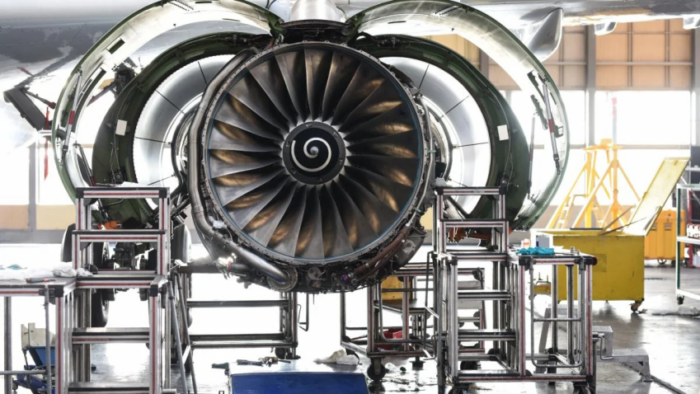
Astana, 17th February 2026: Air Astana has completed a milestone 50th C-check on an Airbus A320 family aircraft at its in-house Engineering and Technical Center in Astana. This achievement marks an important step in enhancing the airline’s technical capabilities and in the development of heavy aircraft maintenance capacity in Kazakhstan. The completion of 50 C-checks reflects years of systematic investment in engineering infrastructure, workforce training and the expansion of in-house maintenance capabilities within the Air Astana Group. Each C-check involves tens of thousands of scheduled maintenance tasks, including comprehensive structural and systems inspections carried out in full compliance with global aviation standards, and requires up to more than 20,000 manhours. “The 50th C-check milestone is the result of our consistent investments in engineering expertise, infrastructure and human resources,” – says Robert Dando, Director of the Astana Technical Centre. “Performing complex maintenance checks in-house enables full control over work quality, reduces reliance on overseas maintenance providers and contributes to the development of domestic technical expertise in civil aviation.” As of today, Air Astana independently performs all types of C-checks on Airbus family aircraft at its technical bases in Almaty and Astana. Since 2019, the airline has completed a wide range of maintenance checks, from standard to the most complex, including twenty-eight of C1-checks, five of C2-checks, ten of C6-checks and seven of C12-checks. Over this time, the company established a highly qualified team of certified engineers and mechanics, who hold internationally recognised EASA Part 66 licences in line with global aviation best practice. The consistent expansion of high-technology maintenance capabilities underlines Air Astana’s contribution to the development of Kazakhstan’s aviation industry, strengthening technological self-sufficiency and supporting high standards of aircraft reliability and safety.

MRO

Airbus and ST Engineering to jointly explore new 3D radar capabilities and AI-powered space solutions

Singapore, 7th February 2026: Airbus Defence and Space and ST Engineering have signed two Memorandums of Understanding (MoUs) to jointly explore and develop advanced satellite capabilities and digital solutions at Singapore Airshow 2026. Signed at the Space Summit on the sidelines of the Singapore Airshow, the agreements establish a framework for cooperation in next-generation Synthetic Aperture Radar (SAR) capabilities and Artificial Intelligence (AI)–enabled geospatial analytics to meet evolving market and customer needs. “These MoUs reflect our shared ambition to push the boundaries of geospatial intelligence,” said Zakir Hamid, Head of Region for Asia-Pacific, Airbus Defence and Space. “By combining Airbus’ space and geospatial expertise with ST Engineering’s strong digital and satellite systems capabilities, we are well positioned to deliver next-generation solutions for customers in Asia-Pacific, Europe and beyond.” ST Engineering is a global technology, defence and engineering group with a diverse portfolio of businesses including aerospace, smart city, defence and public security segments. “We are excited to deepen our collaboration with Airbus Defence and Space, leveraging our capabilities in the design and manufacture of Earth observation satellites and other imagery solutions. In combination with our expertise in AI and digital tech, we are confident of creating innovative Space solutions and services together with Airbus,” said Low Jin Phang, Chief Operating Officer for Defence & Public Security, and President for Digital Systems, ST Engineering. This MoU formalises the collaboration to explore a joint partnership between Airbus and ST Engineering in developing a new satellite imaging concept known as multi-static Synthetic Aperture Radar (SAR), with ST Engineering to develop the companion satellites to operate alongside the PAZ-2[1] satellite manufactured by Airbus and the commercialisation of this service. This “3D SAR” approach involves one satellite transmitting radar signals and three others receiving them from different angles. By combining these perspectives, the system can generate richer, more detailed and more reliable 3D models of the Earth’s surface. This multi-satellite approach ensures high-accuracy imaging regardless of darkness, weather, or ground interference. These reliable, real-time insights will significantly enhance missions in defense, border surveillance, and disaster response, where timely and dependable information is critical. The second MoU will see Airbus and ST Engineering develop a Generative AI system for advanced satellite imagery analysis. By applying advanced AI techniques to geospatial data, the collaboration will enhance object detection, change monitoring, and automated reporting, providing faster and more accurate insights for decision-makers. To further support innovation and scaling, the collaboration will also assess opportunities to tap into Singapore’s local expertise to accelerate the development and deployment of satellite and AI technologies. These new MoUs build on a long-standing history of cooperation between Airbus and ST Engineering. ST Engineering Geo-Insights has been a long-term reseller of Airbus satellite imagery services, providing customers in the region with access to high-quality Earth observation data. By working closely together, Airbus and ST Engineering aim to help customers respond more effectively to security challenges, natural disasters and everyday operational needs, delivering practical solutions with real-world impact.

MRO

India’s rotary-wing maintenance ecosystem just entered a new era

Trans Bharat Aviation has elevated its DGCA CAR-145 mandate at AONE Helipad, Jaipur. One of India’s prominent NSOP, Trans Bharat Aviation(TBA) has secured DGCA CAR-145 maintenance mandate at AONE Helipad, Jaipur which is a decisive elevation of its national MRO architecture and India’s technical sovereignty in rotary-wing aviation. With this enhancement, TBA now commands a truly integrated, end-to-end maintenance continuum, comprising: • A3 Rating: Aircraft Inspections across Bell 407 series, Bell 206L series & AS350 B3. • B1 Rating: Engine Inspections on the Rolls-Royce M250-C47 series, C30 series & RR300 series. • C7 Rating: C47 series, C30 series, RR 300 series. • C10 & C11 Rating: O/H of Main Rotor Hub Assy, Mast Assy, Freeweheel, T/R Hub, Swashplate Assy,Transmission Assy,TGB Assy, Rotor Brake Calipers, Brake Disc on 206 A/B/L series and Bell 407 series Helicopter—an exceptionally rare and formidable spectrum under a single Indian MRO. The strategic consequence is profound: Compressed inspection cycles, Superior fleet readiness, Materially reduced Aircraft on-Ground exposure, and the establishment of a strong regional maintenance—all executed under the highest stratum of safety, regulatory fidelity, and engineering exactitude. With this latest approval, TBA now operates one of the most comprehensive helicopter maintenance infrastructures in the Indian sub-continent, supported by dedicated, DGCA-approved hangars, engine workshop, component workshops, and live operational helipad access at Jaipur. Approved Maintenance Scope on Bell Helicopters Under our revised CAR-145 Approval Schedule, TBA is now authorised for the following extensive capabilities on Bell platforms: A3 – Aircraft (Helicopters): • Bell 407 Series (RR M250-C47 Engines) • Bell 206L Series (RR M250-C30 Engines) • AS350 B3 Helicopter Series Full airframe, systems, lubrication and out-of-phase inspections as per DGCA and OEM requirements. B1 – Turbine Engines: • Rolls-Royce M250-C47 Series • Rolls-Royce M250-C30 Series • Rolls-Royce RR300 Series Engine inspection and maintenance up to 2000 hours including module-level support as per OEM manuals. C7 – Engine Components: Component inspection, repair and replacement on M250-C47, C30 and RR300 engines as per CSP21001, 14W2 and CSP21009. C10 & C11 – Dynamic & Transmission Components: Overhaul and repair of: • Main Rotor Hub Assembly • Mast Assembly • Freewheel Assembly • Tail Rotor Hub Assembly • Swash-plate Assembly • Pitch Link Assembly • Transmission Assembly • Tail Rotor Gear Box (TGB) • Tail Drive Shaft & Hanger Assemblies • Rotor Brake Calipers & Brake Disc (All approved on Bell 206 A/B/L and Bell 407 series as per Bell CR&O and AMM provisions) Trans Bharat Aviation is exhibiting at Wings India 2026. Visit them at : Hall C ; Booth 49 C(A)

MRO

MRO Trends from AI Readiness to Digital Traceability

By Saravanan Rajarajan S, AVP & Head of Consulting – Aviation, Aerospace & Defense, Ramco Systems The Aviation Maintenance, Repair, and Overhaul (MRO) industry witnessed significant transformation in 2025, driven by the need for greater efficiency and resilience. Organizations focused on strengthening data readiness for AI adoption, integrating intelligent planning tools, and accelerating digitization across engine maintenance workflows. These initiatives represented a strategic shift toward smarter operations and improved decision-making. As we look ahead to 2026, the pace of innovation is set to intensify. AI will move beyond isolated applications to become an integral part of the MRO ecosystem, enabling predictive insights, prescriptive maintenance actions, and real-time compliance validation. This article explores the major trends that shaped 2025 and provides a forward-looking perspective on what lies ahead in 2026. Major MRO Trends Witnessed in 2025 1.Data readiness for AI adoption had become a strategic priority To unlock AI’s potential, MROs are revisiting their data platforms and data quality. MROs are examining their underlining data capabilities and quality of the source systems. Existing infrastructures are reassessed for clear processes to collect the right data and governed by the right workflow controls. The MROs are holistically looking into different types of data, data formats, and relationships between structured and unstructured data sets; for example, task data available in AMM in digital formats correlated with MPD and customer work scope to derive meaningful and accurate information. 2.Maintenance Planning Leads Aviation’s AI adoption to Drive Efficiency Gains MROs are prioritizing AI integration in fleet maintenance planning to drive efficiency gains. Base maintenance MROs are focusing on the getting maximum productivity of their manpower by leveraging the process, data and technology. Repetitive tasks like night halts and A Checks are automated by considering multiple factors such as due dates, work centre capability, capacity, fleet routing, conflicting tasks, and staffing. By learning from historical data and operational constraints, AI systems continuously improve their scheduling capabilities, ensuring tasks are neither prematurely scheduled nor left overdue. MROs are moving beyond task-level planning to a more granular approach, breaking work down into subtasks and assigning them based on specific skill requirements. The operations are sequenced, timed and optimized to addresses both efficiency and capacity issues. 3.Engine MRO digitisation is deepening across the lifecycle Engine MRO saw a significant acceleration in digital adoption as they tackled rising shop visit volumes, labor shortages, and parts delays. Engine MROs and independents adopted cloud-native systems to manage their complex work scopes, parts forecasting, supply chain lags and ensured their systems to support seamless data exchange with customers and OEMs. MROs have leveraged AI solution to simulate shop visits, capacity, material forecasts and scrap rates to model their cost and margin predictions. This surge in digital tools is enabling engine MRO providers to deliver faster turnarounds, greater work scope accuracy, and improved margins. While 2025 was about laying the foundation through strengthening data platforms, automating planning processes, and digitizing engine MRO workflows, 2026 promises to build on these gains with transformative applications. The focus will shift from isolated digital initiatives to integrated ecosystems, where AI augments human expertise, predictive analytics becomes prescriptive, and compliance moves to real-time digital validation. In short, the industry is moving from digital adoption to digital orchestration. Key MRO Trends Expected in 2026 1.AI-Augmented Workforce and Increased Automation The MRO workforce in 2026 will work smarter, not just harder, thanks to AI and automation tools becoming standard practice. Rather than replacing human mechanics, AI will act as a co-pilot for technicians, providing decision support and information at their fingertips. We will see maintenance staff routinely using AI-driven decision support systems that analyse historical fault data to suggest troubleshooting steps or pinpoint likely problem areas. Mechanics might interact with these systems via natural language (or voice) to quickly pull up technical guidance, diagrams, or past repair solutions. This human-tech collaboration addresses both efficiency and the chronic labour shortage in the MRO field, by amplifying what each technician can do. 2.Predictive Maintenance Programs Will Evolve, Driving Greater Adoption and Maturity Predictive analytics will evolve into a holistic, connected ecosystem with the integration of Internet of Things (IoT) sensors and more sophisticated machine learning models. Predictive maintenance will transition from simply forecasting failures to providing prescriptive fixes, i.e. recommending specific corrective actions before a fault occurs. Another area of potential high adoption is inventory management – using predictive algorithms to auto-adjust spare parts stock and forecast demand, so the right part is on hand at the right time. 3.Smart Certificates to Replace Paper Trails with Real-Time Validation Parts traceability is expected to undergo a major transformation, moving from fragmented paper-based systems to digitally unified, tamper-proof ecosystems. Driven by growing concerns over counterfeit parts, authorities (like FAA and EASA) are expected to introduce stricter digital traceability mandates and audit standards by 2026, especially for engines and critical flight systems. Standardized digital documentation to replace traditional PDF or paper certificates will see increased adoption, with each part carrying a persistent, verified digital ID for instant airworthiness validation. Cloud-based traceability systems will increasingly support automated authenticity checks, document validation, and anomaly detection – especially critical in detecting unapproved parts entering the supply chain. The Road Forward for MRO The trends of 2025 and the outlook for 2026 highlight a clear message: the future of MRO is intelligent, connected, and proactive. Organizations that invested in data readiness and digital tools last year are now well-positioned to leverage AI-driven insights, predictive maintenance, and smart certification systems. As regulatory bodies tighten traceability standards and customers demand faster turnarounds, MROs that embrace these innovations will gain a decisive edge. The coming year will be about embedding technology into every facet of operations to create a resilient, agile, and future-ready MRO ecosystem. Those who act now will lead the next wave of transformation in aviation maintenance. (Views expressed are personal)

MRO

Saudia Group selects GE Aerospace GEnx-1B Engines to Power New 787 Dreamliners

Washington, D.C. – December 03, 2025 Saudia Group has announced a strategic agreement with GE Aerospace to equip Saudia Airlines with GEnx-1B engines for its 2023 order of 39 Boeing 787-9 and 787-10 aircraft. The agreement includes the supply of engines, a multi-year maintenance, repair, and overhaul (MRO) program, and spare engines. It also encompasses a series of capability-building initiatives—delivered through Saudia Technic, the Group’s maintenance and engineering arm—designed to expand and localize the Kingdom’s aerospace expertise through technical training and knowledge transfer. His Excellency Engr. Ibrahim Al-Omar, Director General of Saudia Group, said, “This strategic partnership with GE Aerospace not only transforms the Group’s long-haul capability and expands our air connectivity, but also accelerates the localization of high-technology aviation expertise in the Kingdom. Through this agreement, we will be able to develop in-country technical capability for engines we previously maintained abroad, ensuring that investment, skills, and value remain within the Kingdom, in alignment with the Saudi Vision 2030.” GE Aerospace Chairman and CEO H. Lawrence Culp, Jr., added, “We are honored to support Saudia Group’s growth and are grateful for their trust in us. The GEnx engines will provide reliability, efficiency, and durability to power the airline’s expanded widebody fleet. Our collective efforts to further develop a skilled aerospace workforce that benefits the Kingdom and the United States will support our industry for decades to come.” Engineered with advanced materials and cutting-edge technologies, the GEnx engine family represents a major leap in modern propulsion with higher time-on-wing and reliability. Since its introduction in 2011, the GEnx family has accumulated more than 70 million flight hours and today powers two-thirds of all 787 aircraft in operation. GE Aerospace has a relationship spanning more than 40 years with the Saudi aerospace sector and continues to collaborate with Saudi partners to advance Vision 2030 by developing local talent and strengthening technical capabilities. GE Aerospace and its joint ventures currently power Saudi Arabia’s four largest commercial carriers and support the largest F110 fleet outside the United States.

MRO

Airbus update on A320 Family precautionary fleet action

Toulouse,28 November 2025: Analysis of a recent event involving an A320 Family aircraft has revealed that intense solar radiation may corrupt data critical to the functioning of flight controls.Airbus has consequently identified a significant number of A320 Family aircraft currently in-service which may be impacted. Airbus has worked proactively with the aviation authorities to request immediate precautionary action from operators via an Alert Operators Transmission (AOT) in order to implement the available software and/or hardware protection, and ensure the fleet is safe to fly. This AOT will be reflected in an Emergency Airworthiness Directive from the European Union Aviation Safety Agency (EASA). Airbus acknowledges these recommendations will lead to operational disruptions to passengers and customers. We apologise for the inconvenience caused and will work closely with operators, while keeping safety as our number one and overriding priority. (Pix Courtesy: Pedro Aragão/Airbus)

MRO

Safran steps up “Make in India” plans for civil and military aviation

Hyderabad, November 26, 2025 At a ceremony in Hyderabad with the participation of Prime Minister Narendra Modi of India; in presence of Ross McInnes, Chairman of Safran’s Board of Directors; and Olivier Andriès, Chief Executive Officer, Safran inaugurated its largest MRO (maintenance, repair, overhaul) center for the CFM International[1] LEAP engine. The Group also announced two defense investments to support the Rafale program in India. These moves underscore Safran’s deepening commitment to “Make in India,” bolstering local manufacturing and creating jobs in the civil and military aerospace sectors. Safran CEO Olivier Andriès said: “I want to thank Prime Minister Narendra Modi and the Indian Government for their support and trust, which makes our growth in India possible. The two new MRO centers in Hyderabad dedicated to the LEAP and M88 engines — and our new joint venture with BEL — underscore India’s importance to our Group. We’re proud to support the rapid growth of India’s civil and defense aerospace markets and actively contribute to the country’s Make in India policy and strategic autonomy. Safran will triple its revenue in India to exceed 3 billion euros by 2030, of which half will be generated by our sites in India. At the same time, Safran will multiply by five its sourcing in the country.” The new LEAP engine MRO center represents a total investment of €200 million and will be operational in 2026. The 45,000-square-meter facility will ramp up to a capacity of 300 LEAP shop visits a year and boast a next-generation test bench. It will support the rapid growth in the region of the CFM International LEAP fleet, which powers most latest-generation narrowbody aircraft, including the Airbus A320neo and Boeing 737 MAX. India is CFM’s third-largest market, with five Indian carriers operating more than 400 LEAP-powered aircraft and 2,000 engines on order. The new site will employ more than 250 people at launch and up to 1,100 at full capacity. An on-site training center will train more than 100 Indian technicians and engineers each year, building skills and driving operational excellence. Safran also officially announced a new MRO shop dedicated to the M88 engine powering the Dassault Aviation Rafale fighter jet. Located in Hyderabad, adjacent to the LEAP engine center, the 5,000-square-meter facility represents an investment of over €40 million. It will provide MRO services for more than 600 engine modules a year and will employ up to 150 people at full capacity. Prioritizing engines on aircraft operated by the Indian Air Force (IAF), it will also perform MRO for other M88 export customers. India is a long-standing customer for Safran’s military engines. The country recently ordered 26 Rafale M naval variants and already operates 36 Rafale and 47 Mirage 2000 fighters. In addition, on 24 November in New Delhi, Safran signed a Joint Venture and Cooperation Agreement with Bharat Electronics Limited to manufacture Safran Electronics & Defense’s “Hammer” modular air-to-surface weapon. The Hammer can be integrated on multiple aircraft types, including the Rafale and India’s single-seat HAL Tejas. During the visit, Safran CEO Olivier Andriès also flagged two additional investments announced in February 2025, totaling more than €30 million: An engineering center in Bangalore specializing in avionics and actuators, now operational and growing to 250 employees. An electronics and actuation manufacturing facility in Bangalore with 400 employees, starting operations in 2026. Safran has been a strategic partner to the Indian Armed Forces for 70 years, notably in helicopter engines with Hindustan Aeronautics Limited (HAL). Defense cooperation has deepened in recent years, as illustrated by SAFHAL, the joint venture between Safran Helicopter Engines and HAL. In 2024, SAFHAL began designing the Aravalli engine for two future heavy helicopters for the Indian Armed Forces. Safran has operated in India for more than 70 years and today has 18 sites and employs 3,000 people in the country.

MRO

Satair to acquire Unical Aviation, boosting USM capabilities

Denmark, 7th November 2025: Satair, an Airbus company, has entered into an agreement to acquire Unical Aviation Inc. (“Unical”), a global aircraft parts and components supplier of Used Serviceable Material (USM) and its subsidiary ecube, a global expert in aircraft storage, disassembly, and transition services. This strategic acquisition represents a significant milestone in Satair’s strategy in the USM space, and reinforces its commitment to providing comprehensive and integrated aftermarket solutions. The acquisition includes Unical’s and ecube’s seven operational sites and offices across North America, Spain, and the United Kingdom, with combined 2024 revenue of $298 million and headcount of 413, adding a strategic expansion to Satair’s global footprint. The transaction is subject to the customary regulatory approvals and is expected to be finalised in early 2026. Both the expertise and infrastructure of Unical and ecube across will play a key role in enhancing Satair’s capabilities as a reliable provider of USM solutions, complementing its current offering supported by its subsidiary, VAS Aero Services – acquired by Satair in 2022 – and leveraging VAS’s capabilities across engine, multi-fleet USM and end-of-life support. Richard Stoddart, CEO of Satair and Head of Airbus Material Services, said: “We are absolutely delighted to welcome Unical and ecube to Satair.” He added: “At its core, this acquisition is about enhancing aircraft lifecycle management capabilities in the aerospace aftermarket. Prolonging the lifespan of material resources is essential – not only is it the most effective way to maximise the value of assets, it is also integral to establishing responsible material practices that benefit both our customers and our industry’s long-term future.” Sharon Green, CEO of Unical, commented: “We are delighted to join forces with Satair. This partnership marks a pivotal moment for Unical, and I have full faith that together we will unlock significant value for our customers, employees, and stakeholders. As a global leader in USM and a premier provider of aircraft storage, disassembly, and transition services, Unical and ecube are a powerful and natural match for Satair’s ambitions in services growth, material availability, and sustainability. We’re proud of what we’ve built—and even more excited for what’s ahead.”

MRO

Air Astana Group conducts six year and twelve year C-checks for the first time

Astana, 13th October 2025: Air Astana Group is simultaneously conducting 6-year and 12-year C-Check on Airbus A320 aircraft for the first time. The complex maintenance procedure is being carried out at the Engineering centre in Astana. Both procedures are among the most complex types of maintenance requiring almost complete disassembly of the aircraft followed by test flights to confirm full serviceability. These inspections cover all aircraft systems, with the 6-year C-Check limited the standard depth of inspection and the 12-year C-Check including expanded inspection of structures and components. Conducting such specialist inspections require highest level of qualification for engineering and technical staff, and compliance with international aviation safety standards. Since 2019, Air Astana has independently performed 42 C-Checks based at the Engineering centres of Almaty and Astana, including the first 6-year C-Check in 2023 and first 12-year C-Check in 2024. The current simultaneous 6-year and 12-year C-Checks are respectively being undertaken on an Air Astana Airbus A321neo and a FlyArystan Airbus A320ceo.

MRO

Expleo and Deutsche Aircraft sign strategic agreement for engineering services

Weßling, Germany, 02 October 2025 : Expleo, provider of engineering, technology and consulting services, and Deutsche Aircraft announce the signing of a cooperation agreement to deliver engineering services for the aircraft programme. Under this agreement, Expleo will become one of four First Tier Suppliers, playing a central role in Deutsche Aircraft’s supply chain. Expleo is a long-standing partner of Deutsche Aircraft, providing a comprehensive suite of advanced engineering services and was the recipient of the ‘Best Engineering Services Supplier’ award at the aircraft manufacturer’s annual Supplier Day in 2025. Graham Younger, VP Global Aerospace of Expleo, commented, “Expleo is committed to creating a more sustainable aerospace industry. We’re proud to renew our long-standing partnership with Deutsche Aircraft, an organisation whose vision for more sustainable aviation reflects our own. Expleo’s proven expertise in aerospace engineering will bring operational efficiencies to Deutsche Aircraft’s programmes as it sets standards in reducing the carbon footprint of air travel.” Nico Neumann, CEO of Deutsche Aircraft, said, “At Deutsche Aircraft, we are committed to redefining regional aviation through innovation and digital excellence. Our partnership with Expleo strengthens our operations by combining our vision for a greener future with Expleo’s engineering excellence. Together, we are setting new standards for operational efficiency and environmental responsibility in air travel.”

FOREWORD

Dear Reader’s,


The current edition of Aviation World has covered many areas of Aerospace & Defence based on the latest development in the sector. The front cover highlights three different images, first for the Union Civil Aviation Minister ….. who is leading from the front to steer Indian Civil Aviation sector to witness one of the most interesting phases. He is also facing most tumultuous timing due to the ongoing financial stress in the Aviation sector due to ATF rising cost and long airspace restrictions resulting in mounting losses for Indian carriers. Despite of all the ground level challenges,the minister is addressing new things on regular basis which keeps the sector motivated. We have featured many such developmental works in this edition done under his guidance which will be interesting to read.

Our lead story on “ The West War” is another important feature which covers the ground level reality of the challenges faced by the Aviation sector. Its though time ahead and we believe it will pass soon .

There are features on Regional connectivity and MoCA revised rules on the UDAN 2.0 and how its going to transform the flying experience within India.

In this edition, we have covered topics on MRO,Various Policy changes,Sea Plane Operations by SkyHop Aviation, TATA-Airbus joint project on C295 military aircraft under Make In India which is expected to roll out soon and many other interesting contents which will be good to read.

We are covering Farnborough International Airshow 2026 from 20-24July 2026 in London and our next edition will be based on the same event.For features, you may contact our team on priority basis.


Happy Reading!

NEWSLETTER

Aviation World Magazine is India’s premier aviation magazine and has been actively supporting the development of the Indian and global civil aviation sector. We started our journey in year 2015 and its been 12 years now and the response and acceptance is really encouraging. Thanks to all our associates and writers who remained with us in our progressive journey.

We have started 2026 on a very positive note and we look forward to increase our footprints to more locations and induct many more new companies in our campaign.. Do write to us at : editor@aviationworld.in

Disclaimer

The contents published in this website are news covering Aviation, Aerospace and Defence sector. The objective is to provide news in informative form to keep our readers updated of the latest development. We also publish content featured in our print publication Aviation World.We try our best to avoid any factual errors or image displayed here but we ensure immediate corrections to any such thing brought to our notice that might have been published inadvertently. All images and contents are sourced from the relevant organisations media team.

Copyright ©2014 – 2026. AVIATION WORLD. All rights reserved.

Scroll to Top